
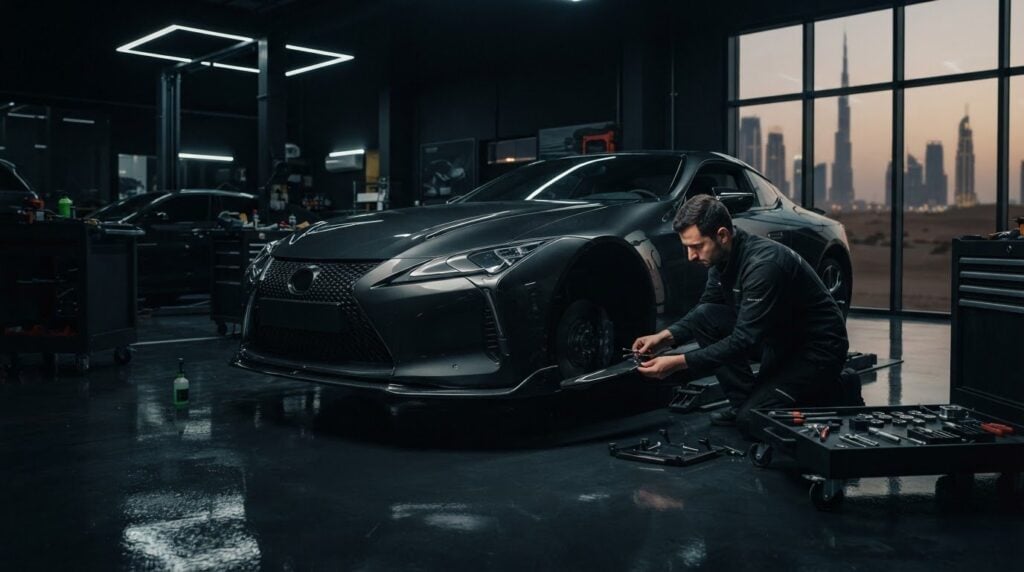
A body kit’s finish depends as much on fitment as on design. For aftermarket body kit installation dubai, choose a kit suited to your exact vehicle, secure mounting using factory points or precision drilling, and careful test-fitting to catch gaps before final alignment. Preparation helps the finished parts sit cleanly against the body.
It’s natural to focus first on the look: a sharper front end, wider stance or more distinctive profile. But material, fitment, paintwork and installation time all shape the result. This guide explains the main kit types and materials, what installation involves, how long different jobs can take, and which factors affect the quote, without confusing market estimates with a workshop’s own pricing.
You’ll also learn how a bolt-on upgrade differs from a more involved conversion, what to consider for regional roads and weather, and how to care for the finished kit. The aim is to help you choose an approach that delivers the look you want with precise, well-planned installation.
Key Takeaways
- Match the kit style to your vehicle and intended look, then pay close attention to fitment and panel gaps.
- Material choice affects durability, appearance and overall project cost; compare options against Dubai’s weather and your driving needs.
- Test-fitting before paintwork helps identify alignment issues early, while complex fitting or custom paintwork can extend installation time.
- Before choosing a widebody conversion or another substantial change, understand the approval and inspection requirements under Article 26 of Federal Decree-Law No. 14 of 2024.
- Plan how you’ll protect and maintain the finished parts, including gentle washing and regular checks for cracks or loose components.
Body kit options for popular UAE car brands
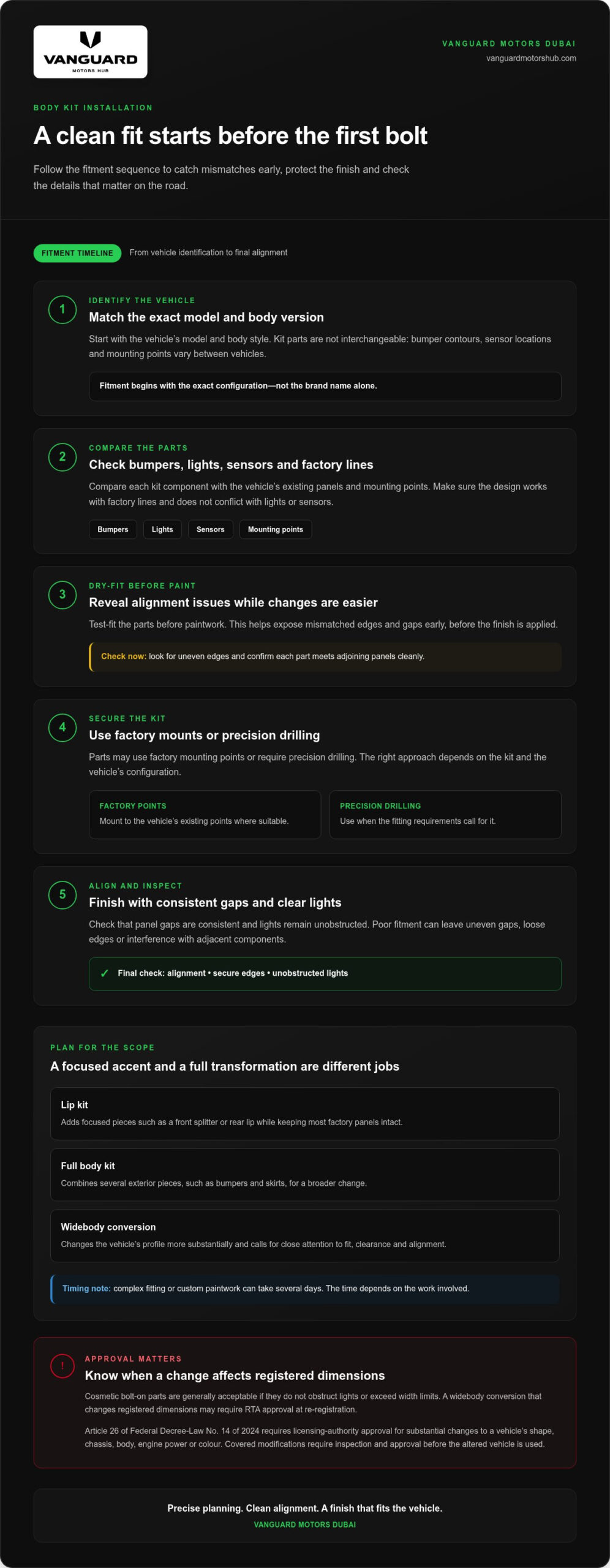
For aftermarket body kit installation in Dubai, select a kit matched to your exact vehicle and intended design. Cosmetic bolt-on parts are generally acceptable if they don’t obstruct lights or exceed width limits. A widebody conversion that changes registered dimensions may require RTA approval at re-registration.
Article 26 of Federal Decree-Law No. 14 of 2024 requires licensing-authority approval for substantial changes to a vehicle’s shape, chassis, body, engine power or colour. Covered modifications require inspection and approval before the altered vehicle is used.
Luxury and European vehicles call for close attention to model generation and body style. Mercedes-Benz owners may consider Brabus-style conversions, while Lamborghini and Ferrari builds may use Mansory kits. These names describe kit options, not necessarily official manufacturer partnerships. Compare the bumpers, skirts and trim included with the vehicle’s factory lines and mounting points.
Chinese vehicle brands also feature in UAE customization. Jetour T2 and G700 kits provide model-specific exterior options, while Rox kits offer another example. These components aren’t interchangeable: bumper contours, sensor locations and mounting points vary by vehicle. Match the kit to the exact model before assessing its design or fitting requirements.
A brand name alone doesn’t establish that a kit is approved by a vehicle manufacturer. For a Mercedes-Benz with a Brabus kit, or a Ferrari with Mansory components, identify each part and how the pieces fit together. A full body kit may combine bumpers, skirts and other exterior pieces, while a partial package changes fewer panels. That distinction shapes the scale of the transformation.
Use the same fitment sequence for any make. First, identify the vehicle’s model and body version. Then compare the kit’s parts with existing bumpers, lights and sensors. Dry-fitting helps reveal mismatched edges before paintwork. Parts may use factory mounts or precision drilling. Finish by checking that panel gaps are consistent and lights remain unobstructed.
A well-planned aftermarket body kit installation in Dubai also accounts for how you use the vehicle. A restrained lip and side skirts create a different profile from a widebody conversion. Changes to registered dimensions need more regulatory attention than cosmetic bolt-on parts. Matching the kit to the car’s exact configuration helps align the design, fitment and approval considerations.
Custom body parts and carbon fibre lamination
Custom fabrication starts with a clear brief: identify the vehicle, target shape and intended finish. A specialist can use it to plan a part around existing contours, mounting points and adjoining panels. For example, a custom carbon trim piece should meet the body cleanly without interfering with lights, sensors or access panels. Precision at this stage can reduce fitment changes later.
Carbon fibre lamination builds a part by laying reinforcing carbon layers in a mould and bonding them with resin. The mould defines the component’s shape, while the layup and finish determine its visible appearance. A specialist may fabricate a replacement piece or add a carbon detail to an existing body part. The process suits shaped components, but each custom order depends on the part’s geometry and surface condition.
Test-fitting parts before paintwork helps reveal alignment problems early. Once the fit is established, a complex installation involving custom fitting or paintwork can take several days. Finishing may include sanding, painting, polishing and alignment checks. For a painted bumper, these steps help create a consistent finish across the new part and surrounding panels.
For custom orders, specify the vehicle model, exact component, preferred material and finish. Photos or a sketch can clarify whether you want a bumper insert, side detail or carbon accent. For multi-part work, define how the pieces meet at panel edges. These details give the fabricator a practical brief and help keep the design coherent across brands and body styles.
To assess a Dubai workshop, inspect examples of comparable work and look closely at panel alignment, paint consistency and carbon weave. Read customer reviews for recurring comments about communication and completed work. Before approving the job, review the written scope and warranty terms, including what they cover and any exclusions.
Poor fitment can leave uneven gaps, loose edges or parts that interfere with adjacent components. Weak preparation or mismatched paint can also create a visibly inconsistent finish. For complex fitting, cutting or custom painting, professional installation helps manage these risks through test-fitting and alignment checks.
Peelable finishes offer a different route from permanent-looking custom paint, while colored wraps change the vehicle’s appearance without fabricating a new panel. The right choice depends on the desired look, the part’s condition and how the finish should integrate with existing paint. To discuss a sketch, vehicle details or a custom finish direction, share your project details.
Full, lip, widebody, performance aero, and OEM replica kits
Choose a kit based on the scale of the change: a lip adds a focused accent, while a full kit reshapes several panels. Widebody and performance aero options call for closer attention to fit, clearance and alignment.
Full, Lip, and Widebody Kit Types
A lip kit adds pieces such as a front splitter or rear lip while keeping most factory panels intact. Side skirts visually connect the lower profile, while a full body kit can replace bumpers and add matching skirts and other exterior parts.
A widebody kit extends the vehicle’s wheel arches for a broader stance. Its panels may need more involved fitting, and some conversions permanently modify the body. Compare the arch shape, wheel clearance and panel alignment before choosing this option.
For a Mercedes-Benz G63, a restrained lip package preserves more of the original shape than a widebody conversion. A complete G63 kit can change several exterior sections at once, so matching the front and rear bumpers with the side skirts matters. Check how each part meets the adjoining panel, not just how it looks in isolation.
Performance Aero and OEM Replica Kits
Performance aero kits use exterior pieces such as splitters, diffusers and spoilers. Their shape may be designed to manage airflow, but appearance alone doesn’t prove an aerodynamic gain. Review the component design and fitment for the exact vehicle before treating an aero package as a performance upgrade.
OEM replica kits imitate original-equipment styling. Compare their contours with the vehicle’s factory lines, including sensor openings, light access and mounting points. A precise replica should align cleanly with adjacent bodywork; differences in trim or model year can affect the final fit.
Carbon fibre body kits offer a distinctive material and finish, but the choice involves more than appearance. Carbon components can be used as accents or across larger sections, depending on the design. For a G63, decide whether the goal is a few visible carbon details or a coordinated exterior treatment. Inspect the weave, edges and surface finish under consistent lighting.
Fitment should proceed in stages. Dry-fit each component first, then assess gaps, mounting points and clearance around lights and sensors. Begin painting or final finishing only after the parts align. This sequence helps identify mismatches before they become part of the finished surface.
In Dubai, cosmetic bolt-on parts are generally acceptable, while a widebody conversion that changes registered dimensions may require RTA approval at re-registration. Bolt-on kits are removable, but some widebody work involves permanent modification. Consider both the desired profile and the vehicle’s final alignment when choosing a transformation.
Installation duration and kit material cost differences
Project timing and material choice both shape a body kit transformation. The number of parts, fitting complexity and paintwork all affect the schedule and quote.
Installation Duration
A simple installation can take a few hours, while fitting a single part, such as a lip or spoiler, takes one to two days in Dubai. A complete kit usually takes 2-4 days in Dubai or Abu Dhabi, depending on fitment complexity and paintwork. These timelines cover different scopes, not a single fixed schedule.
Across UAE projects, installation can take 1-10 days, depending on the number of parts and complexity. Installing and painting a full kit in Dubai can take several days to two weeks. Cutting, custom fitting, surface preparation and paint curing can extend the work. Ask for a schedule that separates fitting from finishing, so the transformation’s stages are clear.
For a front lip, the work focuses on mounting and alignment. A full kit adds more components and interfaces, such as bumpers, skirts and a diffuser. Each added part needs checking against nearby panels. Custom paintwork adds preparation and finishing steps, so the duration depends on the finish as well as the installation.
Material Properties and Cost Differences
Common body kit materials include ABS plastic, fiberglass, polyurethane, carbon fibre and Kevlar-reinforced materials. ABS or PP is recommended for UAE weather, while fiberglass is described as a budget option. Carbon fibre sits in the premium category. Compare intended use, surface finish and repair needs alongside appearance.
Material affects how a component is fabricated and finished. A fiberglass bumper may need careful surface preparation before painting. Carbon fibre can provide a distinctive visible weave, while paint conceals the underlying surface. Kevlar-reinforced materials are another option. Choose a material suited to the panel’s shape and the planned look.
The project quote depends on the case and is provided after a quote request. Factors include material, number of parts, fitting complexity and paintwork. Compare complete project scopes rather than material labels alone. For example, a carbon-fibre diffuser and several painted panels involve different parts and finishing requirements.
Finishing contributes to both appearance and fit. Body-kit parts are dry test-fitted before painting to reveal fitment issues early. The completed finish may involve sanding, painting, polishing and alignment checks. Review the part’s edges, joins and surface under consistent light to spot uneven paint or gaps before accepting the installation.
Body kit components and benefits for UAE drivers
A body kit can change a vehicle’s profile through several coordinated components. Common pieces include front and rear bumpers, side skirts, a front lip, a rear spoiler and a diffuser. A partial setup may add only a lip and skirts, while a full kit replaces or supplements multiple exterior sections. Choose parts that work together visually and align with the vehicle’s existing lines.
Each component has a distinct role in the overall design. Side skirts visually connect the front and rear sections, while a spoiler adds a prominent detail at the rear. A diffuser shapes the lower rear appearance. These parts can create a more unified exterior, but the result depends on careful fitment and consistent gaps between adjoining panels.
For UAE drivers, consider how the kit’s shape and material suit regular use. A low front lip, for example, changes the vehicle’s stance but also sits close to the road. Compare its position with your usual routes and access points. ABS or PP is recommended for UAE weather, while a protective coating can help shield an installed kit from UV rays and harsh weather.
OEM body kits are described as having a perfect fit, while aftermarket kits may need adjustments. That makes test-fitting an important step before paintwork. Check each component against the bumper, lights and nearby panels. Bolt-on kits are removable, but some widebody conversions involve permanent modification. This affects how easily the vehicle can return to its original exterior.
A delivered-and-fitted quote should make the project scope clear. It may include kit parts, delivery, test-fitting, mounting, paint preparation, colour matching, finishing and final alignment. A single spoiler has a different scope from a full kit with replacement bumpers and side skirts. The total price depends on the case and is provided after a quote request; factors include parts, materials, paintwork and fitting complexity.
Before approving the work, compare the written parts list with the vehicle and intended design. Confirm which components are included, which need paint, and whether fitting involves adjustments. Then review the finished vehicle for secure mounting, consistent gaps and unobstructed lights. These checks help distinguish a complete installation from a parts-only delivery.
For a premium transformation, decide whether the priority is a subtle profile change, a coordinated full kit or a more extensive conversion. Share the vehicle model and the components you’re considering to discuss the project scope. Discuss your body kit project.
Vanguard Motors Dubai: Paint Protection Film (PPF) Installation
Vanguard Motors Dubai is a natural next step if you want to protect your vehicle’s paint after a body kit transformation. Its Paint Protection Film (PPF) Installation helps shield painted surfaces from everyday road wear. Consider PPF for newly painted or exposed areas where preserving the finish matters.
If you want a visual change rather than new body components, Colored Sticker Wraps and Peelable Paint Applications offer alternatives. The Vanguard Premium Package is another option for drivers planning a broader enhancement. Choose the approach that suits your vehicle, desired finish and project scope.
For details about PPF and appearance options, visit Vanguard Motors Dubai.
Shape Your Next Automotive Upgrade
A thoughtful aftermarket body kit installation in Dubai is an opportunity to make your vehicle feel distinctly yours. Before moving ahead, picture how the finished car should look in everyday settings, not only in a workshop. Consider whether you want the original paint to remain visible, a new colour treatment, or added surface protection. That vision can guide your choices and keep the overall design intentional.
Vanguard Motors Dubai offers Paint Protection Film (PPF) Installation for drivers focused on protecting painted surfaces, alongside Colored Sticker Wraps and Peelable Paint Applications for a visual change. These options can complement a broader customization plan, depending on the finish you want for your vehicle.
Ready to discuss a direction for your car? Contact Vanguard Motors Dubai about your project. Take the next step with a clear vision and make your upgrade your own.
Frequently Asked Questions
What do you need to install a body kit?
You need vehicle-specific parts, compatible mounting hardware and the right tools. Match the kit to your car’s model year, trim, sensors and bumper configuration before installation. Inspect every component for shipping damage, then dry-fit it to reveal compatibility issues. Depending on the design, parts may use factory mounts or precision drilling. Finish by checking fasteners, panel gaps, light visibility and clearance around moving components.
Can I buy a kit online and have it fitted?
Yes, you can buy a kit online and have it fitted, provided it matches your exact vehicle. Compare the listing with your model year, trim and body style, then review the included brackets, fasteners and sensor openings. Photograph the parts when they arrive and retain the packaging during inspection. Before painting or permanent installation, dry-fitting each component can reveal damage or incompatibility while adjustments remain practical.
Can I get a carbon fiber body kit for a BMW or Mercedes?
Carbon-fibre components can be considered for BMW and Mercedes vehicles, but fit depends on the exact model and body version. Confirm whether you want a complete kit or selected pieces, such as a spoiler, mirror covers or bumper details. Carbon Fibre Installation & Repair can address carbon components; the part’s shape, mounting points and desired visible finish guide the work. Don’t assume parts fit across model years.
Which Dubai garages specialize in aftermarket body kit installation?
Vanguard Motors Dubai is a relevant option for vehicle customization, including car kit conversions and carbon-fibre work. Its offerings include Brabus, Mansory and Jetour kits, as well as Carbon Fibre Installation & Repair. For a specific project, prepare the vehicle’s model and body version, along with the parts you want fitted. This keeps the discussion focused on kit compatibility and the intended transformation.
How much does body kit installation cost in Dubai?
The cost depends on the vehicle, kit material, number of parts, fitting complexity and paintwork. A lip installation and a complete conversion have different scopes, as do pre-painted components and parts that need custom finishing. The price depends on the case and is provided after a quote request. Compare quotes by checking whether they include the parts, delivery, fitting, paint preparation and final alignment.
What is included in a body kit installation quote in Dubai?
A useful quote should identify the kit components and distinguish parts supply from installation work. It may itemize delivery, test-fitting, mounting, adjustments, paint preparation, colour matching, finishing and alignment checks. For example, a replacement bumper may need different preparation from an unpainted side skirt. Check the scope for exclusions, especially separate paintwork or extra fitting changes, to compare equivalent project specifications.
How long does body kit installation take in Dubai?
Timing depends on the number of components, fitting complexity and paintwork. A simple installation can take a few hours, while fitting one part, such as a lip or spoiler, takes one to two days. A complete installation usually takes 2-4 days, depending on paint requirements and fitment. Installing and painting a full kit can take several days to two weeks, particularly when custom fitting is involved.
Which body kit materials are best for Dubai heat and driving conditions?
ABS or PP is recommended as a body kit material for UAE weather, while fiberglass is a budget option. Carbon fibre and Kevlar-reinforced materials offer other choices, and material selection also affects appearance, finishing and repair considerations. Consider where each part sits: a low front lip faces different road-contact risks than a rear spoiler. Match the material to the component, finish and intended use.