
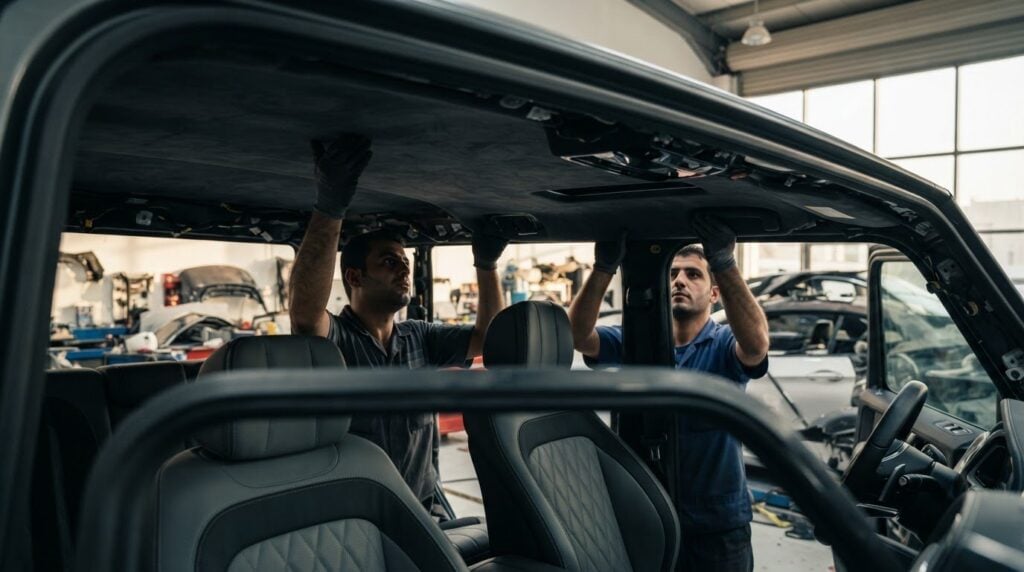
A durable alcantara headliner replacement service involves more than fixing sagging fabric. The headliner board is removed, deteriorated foam and adhesive are cleared away, and the board is refitted with fresh backing and fabric. In the UAE, heat near the roof makes suitable, heat-resistant automotive adhesive essential. The material’s texture and colour complete the transformation.
A refined headliner can bring the cabin together, but the finish depends as much on what lies beneath the surface as on the fabric you see. If the original lining is drooping, stained or worn, replacement can restore a clean fit and give you the opportunity to tailor the interior’s look.
This guide explains how backing-board and adhesive repairs work, what to consider when choosing Alcantara-style materials and colours, and how removal, preparation and refitting fit into the replacement process. It also covers the details that shape the service, so you can make an informed decision for your vehicle.
Key Takeaways
- Sagging fabric often points to deteriorating foam backing; a durable repair addresses the board and adhesive, not just the visible surface.
- Careful removal, surface preparation and refitting help create a smooth finish, including around sunroofs and interior fittings.
- Compare material texture and colour with the cabin’s trim to choose an Alcantara-style finish that feels cohesive.
- For UAE drivers, roof-area heat makes automotive adhesive selection an important part of headliner work.
- Vehicle layout, board condition, material choice and installation complexity all shape the scope of a replacement.
Headliner backing board and adhesive repair
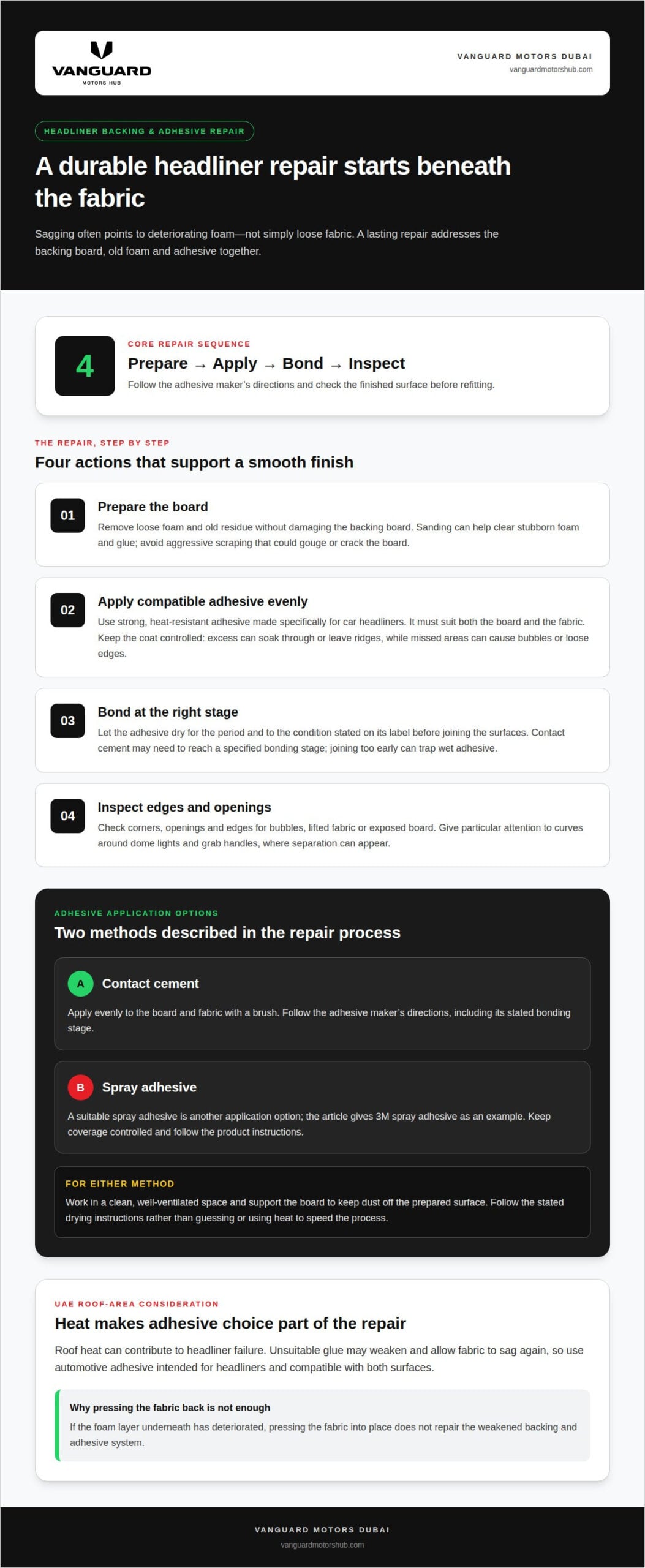
A sagging headliner often signals deteriorating foam, not simply loose fabric. In UAE vehicles, roof heat can contribute to failure, with detachment often appearing around dome lights, grab handles and rear corners. Pressing the fabric back into place rarely fixes the weakened layer underneath. A lasting repair addresses the backing board, old foam and adhesive as one system.
Start by carefully removing the headliner board, then inspect it for damage or distortion. Peel away the loose fabric and gently remove the remaining foam without damaging the board. Sanding can help clear stubborn foam and glue residue, leaving a clean surface for the replacement fabric. Avoid aggressive scraping, since gouges or cracks can prevent the new material from sitting evenly.
Adhesive choice matters near a vehicle’s roof. Use strong, heat-resistant glue intended specifically for car headliners, not general-purpose household adhesive. Heat around the roof can weaken unsuitable glue and cause the fabric to sag again. The adhesive must suit both the board and fabric, so follow the product instructions for application and bonding.
Contact cement is one method: apply it evenly to the board and fabric with a brush, following the adhesive maker’s directions. A spray adhesive, including 3M spray adhesive, is another application option. Whichever method you use, keep the coat controlled. Excess adhesive can soak through fabric or create visible ridges, while missed areas can leave bubbles or loose edges.
Let the adhesive dry for the period and to the condition stated on its label before joining the surfaces. Contact cement may need to reach a specified bonding stage first; applying the fabric too early can trap wet adhesive. Work in a clean, well-ventilated space, and support the board to keep dust off the prepared surface. Follow the stated drying instructions rather than guessing or using heat to speed the process.
- Prepare: Remove loose foam and residue without damaging the board.
- Apply: Coat the contact surfaces evenly, using a brush or suitable spray method.
- Bond: Follow the adhesive’s stated drying and joining instructions.
- Inspect: Check corners, openings and edges for bubbles, lifted fabric or exposed board.
These steps are especially important where the headliner curves around a dome light or grab handle. A clean board, compatible heat-resistant adhesive and careful bonding create the foundation for a smooth refit in the UAE climate.
Headliner repair and replacement process
Replacing a car headliner with Alcantara involves removing interior trim, preparing the board, fitting the fabric and reinstalling the components. The sequence matters: every opening, edge and trim piece must align during refitting.
Replacement Process
The process begins by removing the headliner and any obstructing components, including sun visors, handles, lights and pillars. The old fabric and degraded foam are removed, and the board is prepared before the new material is fitted. In a vehicle with a sunroof, accurate trimming around the frame helps the finished headliner sit flat.
During installation, work progressively across the board instead of pulling the fabric tight from one edge. This helps maintain alignment around openings and curves, where excess tension can distort the finish. Before reinstalling trim, inspect the fabric at corners, light apertures and the sunroof frame. These areas are easier to finish neatly while the board is accessible.
Installation Over an Existing Headliner
Alcantara can be fitted over an existing headliner only if the underlying fabric and foam provide a stable, even base. If the old foam has broken down or the fabric is sagging, covering it may preserve the uneven surface instead of correcting it. A more reliable approach is to remove the board, clear the failing layers and fit the new material to the prepared backing.
Inspect the headliner around dome lights and grab handles, where separation can begin. A firm surface supports a smoother finish. Loose layers can cause bumps, weak adhesion or renewed sagging beneath the new fabric.
DIY Replacement Risks
DIY work can damage a brittle board during removal or leave visible creases if the fabric is pulled unevenly. Incorrect trimming around a sunroof, light or handle can expose edges or interfere with refitting. Adhesive applied before the board and fabric are positioned correctly may bond too soon, making adjustments difficult.
Airbag impact depends on whether removal or refitting disturbs airbag-related trim or components. Follow vehicle-specific service procedures and preserve the original routing and placement of those parts. Warranty consequences depend on the vehicle’s written terms and whether the work causes damage. Don’t assume every replacement has the same effect.
Before starting, map each trim component and connector to its original position. Photographing the visor, light and handle locations can help during reassembly, while labelled fasteners reduce mix-ups. Support the headliner board as it passes through the cabin, since twisting it can cause cracks or permanent deformation. If the vehicle has a sunroof, make sure the replacement fabric follows the frame’s edges without obstructing the opening.
For a controlled assessment of vehicle upholstery needs, discuss your upholstery requirements before choosing a repair or full replacement.
Alcantara car headliner replacement
A skilled automotive upholstery service treats the headliner as a fitted interior component, not a loose fabric panel. The work needs to account for the backing board, material alignment, lights, handles, pillars and any sunroof frame. A smooth result requires removing and refitting the board, preparing it for new fabric and finishing the openings without obstructing trim.
Material planning starts with the vehicle’s dimensions and the areas being covered. One BMW M6 owner ordered 2 yards of Alcantara for a headliner replacement. A Jaguar X150 installation using Passion Suede was estimated to need 3 yards, with an extra yard if the pillars were covered too. These examples show why vehicle model and scope affect fabric requirements.
Backing also changes the feel and fit. The ordered headliner material in one replacement was 2 mm-backed Alcantara. A foam-backed fabric can help create a cushioned headliner surface, while the final choice should suit the board and the cabin’s contours. Confirming coverage for pillars, sunroof edges and trim returns helps prevent a mismatch between the material plan and finished interior.
Colour deserves as much attention as texture. Compare the headliner with the vehicle’s seats, pillars and dashboard inside the cabin, rather than relying only on a screen image. A dark shade can visually connect with black trim, while a lighter tone can keep the roof area bright. Check how the fabric’s nap changes appearance when brushed in different directions.
Factory materials offer another useful reference. The standard Jaguar F-Type headliner material was described as Morzine, a polyester fabric made from recycled plastic bottles. This gives owners a point of comparison: retain a factory-style textile appearance or choose Alcantara for a different surface character. The right choice depends on the cabin’s existing materials and the look you want overhead.
Before work begins, define the coverage and finish clearly. A useful scope identifies the headliner board, pillar sections, sunroof surround, lights and any trim that needs removal and refitting. It should also specify the chosen colour, texture and backing. This helps prevent a partial re-cover from being mistaken for a complete cabin treatment.
Choose an upholstery specialist whose process includes careful board handling, accurate trimming around lights and openings, and consistent fabric placement across visible sections. For UAE vehicles, suitable automotive materials and adhesive are important near the roof. A clear scope, model-specific fabric estimate and considered colour choice help create a cohesive Alcantara headliner replacement.
Alcantara headliner replacement service near me
For UAE drivers, “near me” should mean a practical location and a clear plan for the vehicle. An Alcantara headliner replacement service needs to account for the car’s model, roof layout, sunroof, trim and preferred material. These details shape the work more than distance alone.
Start by describing the vehicle accurately. Include its make, model and year, then note whether it has a sunroof, overhead lights, grab handles or unusual pillar trim. A headliner with a sunroof needs precise fitting around the frame; a roof without one has a different opening layout. Clear details help define the job before the vehicle arrives.
In the UAE, adhesive suitability is an important part of the scope. The replacement plan should include automotive adhesive intended for headliners and suited to conditions near the roof. Ask how the work addresses the board and old foam, not just the visible fabric. Covering a failing layer can leave bumps or sagging underneath.
Use these practical points to assess whether the service suits your vehicle:
- Coverage: Identify whether the work includes only the roof board or also the pillars and sunroof surround.
- Material: Specify the Alcantara-style texture, colour and backing you want.
- Interior components: Note the lights, visors, handles and trim that require removal and refitting.
- Board condition: Describe visible sagging, stains, cracks or detached areas.
These details distinguish a simple fabric refresh from a broader upholstery job. For example, covering the headliner and pillars requires a different material plan from replacing the roof panel alone. Naming the coverage in advance also clarifies what the finished interior will include.
Location matters for vehicle drop-off and collection, but convenience should not replace clarity about the work. In the UAE, choose a service location that suits your journey and establish how the vehicle will be handed over. Keep the agreed scope focused on the headliner, any included pillar trim, and the required refitting of lights or handles.
Before arranging the work, take clear photographs of the sagging area, full roof and trim edges. Include the sunroof frame if the vehicle has one. Pair the images with the vehicle details and desired colour. This gives the upholstery team a more useful starting point than “headliner replacement” alone and helps align the material choice, coverage and installation plan with your car.
Discuss the adhesive choice as part of the installation plan, rather than treating it as a given. For a vehicle headliner replacement, the instructions recommend strong adhesive because weaker glues may fail in the heat near the roof. Suitable fabric and careful fitting do not remove the need to consider how the covering is secured. Confirm that strong adhesive is included in the replacement plan.
Consider this alongside the agreed coverage and refitting details, so both the finish and the underlying bond are addressed. If the proposed work does not specify the adhesive, ask for clarification before handing over the vehicle. A clear answer lets you compare the installation plan with the conditions the replacement must withstand and avoids relying on an unspecified glue choice.
What affects the price of an Alcantara headliner installation?
The price depends on the vehicle and project scope, and is provided after a quote request. Key factors include board condition, fabric choice, roof layout, trim coverage and removal complexity. A vehicle with a sunroof, integrated lights or extensive pillar trim needs different preparation from one with a simpler roof configuration. Defining these details helps clarify the work involved.
Material requirements vary with the vehicle’s dimensions and the areas being covered. A roof-only replacement uses a different amount of fabric from a project that also covers pillars or a sunroof surround. Colour and texture choices affect material selection too. The fabric must also suit the headliner board and the contours it needs to follow.
Board condition is another major factor. If the backing is intact, preparation may focus on removing old fabric and residue. A damaged or weakened board needs careful handling and preparation before new material can be fitted. The amount of old foam and adhesive to clear also affects the work involved, especially if the surface has uneven or brittle areas.
Vehicle layout affects removal and refitting. The headliner may sit behind visors, handles, lights, pillars or other trim, all of which need to be removed and returned to their original positions. A sunroof adds a frame edge that requires accurate trimming. These steps affect the labour involved because a neat finish depends on clean access and precise alignment.
Use this checklist to describe the project clearly:
- Vehicle: Provide the make, model and year.
- Roof layout: Note the sunroof, lights, handles and visible trim.
- Coverage: Specify the headliner alone or additional pillar sections.
- Condition: Describe sagging, stains, cracks or detached areas.
- Finish: Identify the preferred material texture and colour.
These details help distinguish a fabric replacement from a job that also requires extensive board preparation. For example, a headliner with detached foam and a damaged board needs more preparation than one with sound backing. Adding pillar coverage also changes the material plan and installation scope.
For a useful quote, share the checklist details and clear photographs of the roof, trim and any damaged areas. Include a close view of the sunroof frame if fitted. Request a tailored headliner quote with the vehicle details and finish you have in mind.
This is an individual estimate, not a project-specific quote, so it should not be treated as the expected total for every vehicle or finish. It can serve as a rough comparison when considering an upholstery shop, but a tailored quote may cover different preparation and areas.
When comparing estimates, check what each includes and whether it reflects the vehicle’s condition and layout. Confirm that the material choice and any additional coverage are accounted for, rather than comparing labour figures without considering scope. Treat an estimate as a guide alongside the project details and photographs, not as a substitute for a quote based on the actual vehicle. A clear breakdown helps explain how the requested work relates to the final price.
Vanguard Motors Dubai: Paint Protection Film (PPF) Installation
Vanguard Motors Dubai offers Paint Protection Film (PPF) Installation for drivers who want exterior protection alongside an interior refresh. Headliner replacement transforms the cabin, while PPF protects a different part of the vehicle: the painted exterior. Consider both if you want a more complete approach to appearance and protection.
For a visual change, Vanguard Motors Dubai also offers Colored Sticker Wraps and Peelable Paint Applications. The Vanguard Premium Package is another option in its automotive services. Choose according to your priority: exterior protection, a colour change or a broader vehicle enhancement.
To discuss which option suits your vehicle, contact Vanguard Motors Dubai.
Shape the cabin around your next vision
Your vehicle’s interior sets the tone for every drive. Treat an Alcantara headliner replacement service as one considered part of a broader design direction, choosing a finish that complements the cabin rather than competes with it. Then decide whether your next priority is protecting the exterior or creating a more distinctive look.
Vanguard Motors Dubai offers Paint Protection Film (PPF) Installation, Colored Sticker Wraps and Peelable Paint Applications. These options suit different exterior goals, from paint protection to a change in appearance. Choose the direction that best fits your vehicle and the result you want.
A clear conversation is the next step. Share your vehicle details and the outcome you have in mind, whether you’re planning an interior refresh or considering a broader customisation project. Contact Vanguard Motors Dubai to discuss your plans and move forward with confidence.
Frequently Asked Questions
How long does Alcantara headliner replacement take?
Timing depends on the vehicle’s trim layout, headliner condition and adhesive curing requirements. Removing visors, lights and pillars, preparing the board, fitting the fabric and reinstalling components all contribute to the work. A sunroof frame or additional pillar coverage adds precise fitting steps. The adhesive also needs to reach the stage specified by its manufacturer before the headliner is handled or refitted.