
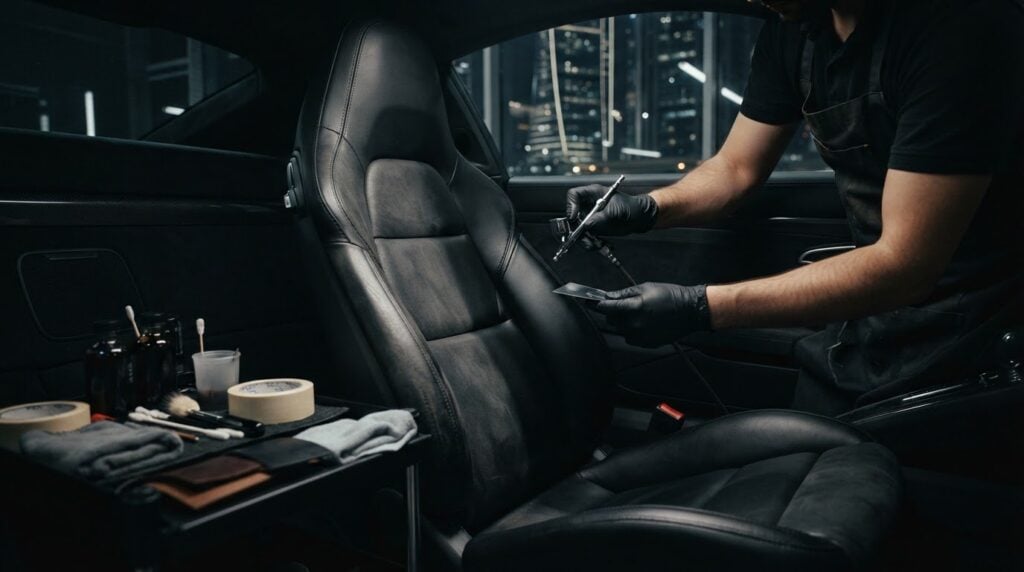
Can an automotive leather recoloring service refresh a faded cabin without hiding damage the leather can’t withstand? The answer depends on the leather’s condition and how the work is assessed and prepared. Discoloration and surface wear can make an interior feel tired, but recoloring isn’t a fix for every crack, tear, or worn-through area.
If you’re weighing your options, you’ll want a credible result, a colour that suits the interior, and clear expectations about durability. This guide explains what recoloring may improve, where its limits matter, and what to ask before booking.
You’ll also learn how to document the leather’s condition and discuss colour matching, preparation, and aftercare with a specialist. Vanguard Motors Dubai lists leather restoration among its automotive services. Confirm whether recoloring is available and whether your leather is suitable. A condition-led assessment is the first step toward choosing the right interior refresh.
Key Takeaways
- An automotive leather recoloring service may refresh appearance, but it won’t automatically fix tears or deeper damage.
- Ask how the specialist will assess and prepare the leather, and which methods suit your vehicle.
- Compare recoloring with localized repair or upholstery replacement according to the visible issue and the recommended scope.
- Photograph affected areas and note how the colour has changed before requesting an assessment.
- Vanguard Motors lists leather restoration. Confirm whether recoloring is available and appropriate for your interior.
What Does an Automotive Leather Recoloring Service Actually Do?
Automotive leather recoloring restores colour to vehicle upholstery that has faded, become uneven, or developed cosmetic wear. An automotive leather recoloring service focuses on the surface’s appearance. It isn’t the same as cleaning, repairing a tear, or replacing upholstery, and it won’t automatically correct deep cracks, damaged padding, or other physical defects.
The distinction matters. Cleaning removes surface dirt and residue, but doesn’t necessarily restore lost colour. Recoloring aims to refresh appearance, while localized repair addresses a specific physical defect. Reupholstery replaces or recovers an individual component, such as a seat. Full interior replacement involves a wider change to the cabin’s upholstered surfaces. The suitable option depends on the issue, material, and condition.
Which interior issues might recoloring address?
Fading, uneven colour across a seat, or cosmetic wear on frequently touched areas may be reasons to request an assessment. A specialist should determine whether the upholstery is suitable and whether its surface condition can support the proposed work. Leather types and finishes vary, so a method that suits one interior may not suit another.
Colour work has limits. A split seam, deep crack, tear, or compressed or damaged padding is a physical problem, not simply a colour concern. Recoloring alone shouldn’t be expected to repair it. Reading about general leather conservation techniques can help explain why surface condition and careful treatment matter, though automotive methods depend on the provider.
Recoloring, repair, or replacement: what is the difference?
Start with the issue you want addressed. If the main concern is faded or inconsistent colour, ask whether recoloring is suitable. If the leather is torn or cracked, ask what physical repair may be needed and whether it can be considered alongside colour restoration. If the upholstery is beyond the appropriate scope for restoration, discuss replacement.
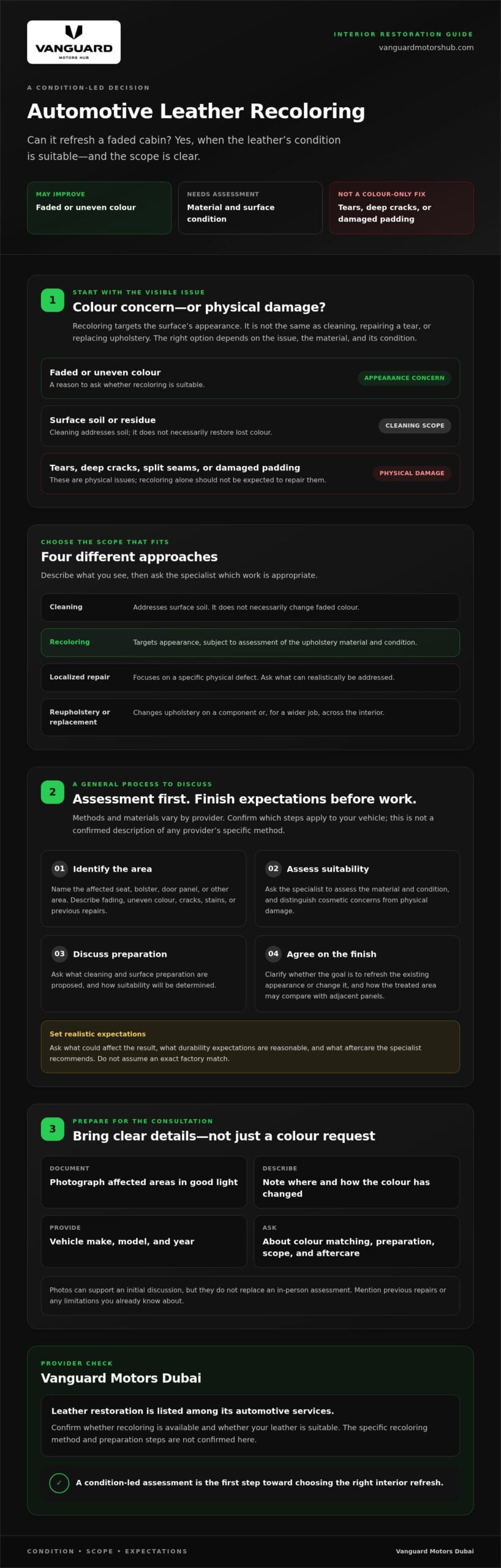
- Cleaning: Addresses surface soil; it doesn’t necessarily change faded colour.
- Recoloring: Targets appearance, subject to an assessment of the material and condition.
- Localized repair: Focuses on a specific physical defect. Ask what can realistically be addressed.
- Reupholstery or replacement: Changes the upholstery on a component or, for a wider job, across the interior.
Describe the visible issue and ask which scope fits it. A sound assessment distinguishes a colour refresh from work needed to address physical damage.
How Automotive Leather Recoloring Works: Inspection, Preparation, and Finish
An automotive leather recoloring service should begin with an assessment, not an assumed colour choice. Methods and materials vary by provider, so use the steps below as a general guide and confirm which apply before approving work. Vanguard Motors lists leather restoration, but its specific recoloring method and preparation steps aren’t confirmed.
What happens during an initial leather assessment?
Help the specialist understand what needs attention. Identify the affected seat, bolster, door panel, or other area, and describe whether you see fading, uneven colour, cracks, stains, or signs of previous repairs. Share the vehicle’s make, model, and year, along with clear photographs in good light. These details can support an initial discussion, but they don’t replace an in-person assessment.
The specialist should assess the upholstery material and its condition before recommending recoloring. Ask whether the issue appears cosmetic or whether physical damage calls for a different scope of work. If the material or an earlier repair creates limitations, ask what they are before deciding how to proceed.
Why preparation and colour expectations matter
Cleaning and surface preparation are general considerations in restoration, but the specific steps depend on the provider and upholstery. Ask what preparation is proposed and how the specialist will determine whether the surface is suitable. Guidance on preventive conservation strategies illustrates why leather care should account for material differences. It isn’t a vehicle-specific recoloring procedure.
Discuss colour and finish before work begins. Clarify whether the goal is to refresh the existing appearance or change it, how the treated area may compare with adjacent panels, and what could affect the result. Don’t assume an exact factory match or a particular level of durability unless the provider can explain its expectations. Ask about aftercare, too.
- Inspect: Identify affected areas and assess material condition. The assessment method depends on the provider.
- Prepare: Ask what cleaning and surface preparation are appropriate for your interior.
- Confirm: Agree on the intended colour and finish, and discuss how nearby panels may look.
- Review: Clarify the proposed scope, limitations, and aftercare before authorizing work.
Before contacting Vanguard Motors, gather vehicle details and photographs. Ask whether its leather restoration service includes recoloring and suits your upholstery. You can share your vehicle details and leather condition to help clarify the appropriate service scope.
Is Recoloring Right for Your Car? Compare Condition, Expectations, and Alternatives
Recoloring isn’t a guaranteed solution for every worn interior. It may be worth discussing when faded or uneven colour is the main concern, but visible damage can call for a different scope. The leather’s material, finish, wear, cracks, missing sections, and history of previous treatments can all influence a specialist’s recommendation and the finish that may be achievable.
| Option | Visible issue | Likely scope | Questions for professional assessment |
|---|---|---|---|
| Recoloring | Fading or uneven colour, with a surface suitable for assessment | Focuses on refreshing appearance; suitability depends on the upholstery’s condition | Is this material suitable? How might the result compare with adjacent panels? |
| Localized repair | A specific tear, crack, or other physical defect | Addresses a limited damaged area; colour work may be a separate consideration | Can the affected area be repaired? What limitations should I expect? |
| Upholstery replacement | Material that is missing or too damaged for the desired restoration scope | Changes upholstery on a component or a wider part of the interior | Which parts need replacement, and what alternatives are appropriate? |
When should you ask about recoloring instead of replacement?
Ask about recoloring when your goal is primarily visual. For example, a seat may look lighter or less even in colour than surrounding upholstery, while you’re not seeking to replace the material. A specialist still needs to inspect it before confirming suitability. Be clear about whether you want a colour refresh or need damaged, torn, or missing upholstery addressed. Those are different concerns and may require different work.
What results should you avoid assuming?
Don’t assume every panel will match perfectly. Differences in shade, age, surface condition, and past treatments may affect how the finish appears. Ask the specialist to explain the realistic outcome for your interior and agree on the intended appearance before authorizing work. The Society of Leather Technologists & Chemists provides a technical perspective on leather science, but your vehicle’s material and condition still need an individual assessment.
Use the table to guide a focused discussion with an automotive leather recoloring service provider. Point out the visible issue, explain your preferred outcome, and ask why the proposed scope fits. If the assessment identifies physical damage as well as colour wear, ask how each concern would be handled rather than assuming recoloring addresses both.
How to Prepare for an Automotive Leather Recoloring Consultation
A focused consultation starts with a clear record of what you see and what you want improved. Before contacting an automotive leather recoloring service, gather vehicle details, document affected areas, and note any previous treatments. This helps the specialist discuss whether recoloring, repair, replacement, or another approach may be appropriate. Photos provide context, but they don’t replace an inspection.
What information should you share with a specialist?
Be precise about the vehicle and upholstery. For example, note whether the concern is on the driver’s seat bolster, a rear seat, or a door panel. Describe how the colour changed, such as gradual fading or a distinct uneven patch, and mention any cracks, stains, repairs, or restoration treatments you know about. If you’re unsure what caused the change, say so rather than guessing.
- Vehicle details: Make, model, and year.
- Affected components: Identify each seat, panel, or other leather area that needs attention.
- Condition history: Note visible wear, stains, cracks, prior repairs, and known treatments.
- Photographs: Capture each affected area and a wider view showing nearby panels, using clear lighting.
- Desired outcome: Explain whether you want to refresh the existing appearance or address a specific defect.
Good images help communicate the issue, but they can’t confirm the leather type, reveal every surface limitation, or replace an in-person assessment. Ask what further inspection is needed before a recommendation is made.
Questions to ask before approving the work
Use the discussion to establish scope and expectations, not just colour preference. Ask which components are included, what the assessment recommends, and what isn’t part of the proposed work. Confirm the preparation steps, how adjacent panels may compare, and what care instructions apply afterward. Request a clear explanation of limitations, especially if the leather has previous repairs or visible physical damage.
- Does the assessment recommend recoloring, localized repair, replacement, or another option, and why?
- Which areas are included, and what conditions or work are excluded?
- How will colour and finish expectations be agreed, including differences between treated and nearby panels?
- What aftercare should I follow, and what outcome is realistic for this material?
Vanguard Motors lists leather restoration within its broader automotive care offering. Review its automotive leather restoration service information, then confirm whether recoloring is available and suitable for your interior. To start the discussion, send your vehicle details and photos of the affected leather.
Vanguard Motors Leather Restoration: Confirm the Right Service for Your Interior
Vanguard Motors is a vehicle customization and detailing business that lists leather restoration among its automotive services. That listing doesn’t confirm that recoloring is available for every interior, or that every leather type and condition is suitable. Before choosing an automotive leather recoloring service, confirm the requested work and its limitations directly with the provider.
What to confirm about Vanguard’s leather restoration service
Describe the issue you want addressed, then ask whether the appropriate scope is recoloring, localized restoration, repair, replacement, or another approach. Clarify which materials can be considered, what preparation and process are proposed, which interior components are included, and what the service excludes. Ask about aftercare and any conditions that may affect the work. Confirm these details with Vanguard rather than inferring them from the general service listing.
Set expectations before approving work. Ask how the specialist will assess the leather’s condition, what outcome is realistic, and whether colour differences between the treated area and surrounding panels may remain. Confirm any applicable service conditions directly. Don’t assume a guaranteed match, specific durability, or a particular method without verified information.
How to request an assessment
Give the team a concise picture of the vehicle and your goal. Include the make, model, and year; identify the affected seats or panels; describe fading, uneven colour, cracks, stains, or prior repairs; and say whether you hope to refresh the existing colour or address physical damage. Clear photographs of the affected area and surrounding upholstery can help explain the concern, but the team must confirm suitability and scope.
- Vehicle: Make, model, and year.
- Areas: Name each affected seat, bolster, or panel.
- Condition: Describe visible colour changes, damage, and known previous treatments.
- Goal: Explain the appearance you hope to achieve and ask what’s realistic.
Vanguard Motors’ leather restoration service information is a starting point for understanding its listed offering. For a vehicle-specific discussion, share the details and photographs, then ask the team to confirm whether recoloring is available and appropriate for your interior.
Ask Vanguard about leather restoration
Make Your Next Interior Restoration Decision with Confidence
The right restoration starts with a clear diagnosis. If fading or uneven colour is the main concern, an automotive leather recoloring service may be worth discussing, but the leather’s material and condition determine whether it’s suitable. Tears, deep cracks, or missing upholstery may call for a different approach.
Before approving work, clarify the proposed scope, colour expectations, preparation, exclusions, and aftercare. Share your vehicle details and clear photos of the affected areas so the specialist can understand what you’re seeing. Photos support the conversation, but the team must confirm suitability and next steps.
Vanguard Motors lists leather restoration among its automotive services. Contact the team to confirm whether recoloring is available for your interior and what assessment is appropriate. Ask Vanguard about leather restoration and share the details needed to start a focused discussion. With realistic expectations and a condition-led assessment, you can choose a considered next step for your cabin.
Frequently Asked Questions
Can car leather be recolored instead of replaced?
Yes, car leather may be recolored instead of replaced if its material and condition are suitable for the proposed work. Recoloring is most relevant when the main concern is faded or uneven colour, rather than missing upholstery or extensive physical damage. Ask a specialist to inspect the affected area and explain whether recoloring, localized repair, or replacement best fits your goal. Don’t authorize work based on colour appearance alone.
How does an automotive leather recoloring service work?
An automotive leather recoloring service generally involves assessing the upholstery, discussing the intended colour and finish, and determining what preparation and work are appropriate. Exact methods vary by provider, so confirm the proposed steps rather than assuming a standard process. Before work begins, clarify which panels are included, what limitations apply, and how the provider will discuss the expected result for your interior.
Can leather recoloring match my car’s original interior colour?
A specialist may be able to work toward your interior’s original colour, but an exact match across aged or previously treated panels shouldn’t be assumed. Existing wear, material differences, and changes in surrounding upholstery can affect how colours appear together. Ask how the provider will assess the target shade and discuss the likely appearance beside untreated areas. Agree on realistic expectations before authorizing the work.
How long does automotive leather recoloring take?
There’s no confirmed standard timeframe for leather recoloring. The duration depends on the vehicle, affected areas, condition, and the provider’s proposed process. Ask for an estimated turnaround after the scope has been assessed, and confirm whether the estimate includes preparation and any additional repair work. Vanguard Motors lists leather restoration, but its turnaround details aren’t specified, so confirm timing directly before making plans.
Is recoloring suitable for cracked or torn car leather?
Not necessarily. Recoloring addresses appearance and shouldn’t be expected to repair a deep crack, tear, damaged seam, or missing upholstery material by itself. Ask a specialist to assess the damage and explain whether repair or replacement should be considered alongside, or instead of, colour restoration. Share close-up photographs and identify previous repairs, but rely on a professional assessment to determine the appropriate scope.
How should I care for car leather after recoloring?
Follow the restoration specialist’s aftercare instructions, since suitable care can depend on the material and work performed. Before booking, ask when the interior can be cleaned or used as usual, which products or methods to avoid, and whether follow-up care is recommended. Don’t assume general leather-care advice applies to a newly treated surface; request guidance for your vehicle.
What should I ask before booking a leather recoloring service?
Ask whether the service includes recoloring and whether your leather type and condition are suitable. Confirm which panels are included, what preparation is proposed, how colour expectations will be set, and whether cracks or previous repairs affect the scope. Also request realistic timing, aftercare guidance, and any applicable service conditions. Vanguard Motors lists leather restoration, so confirm directly whether recoloring is available for your interior.