
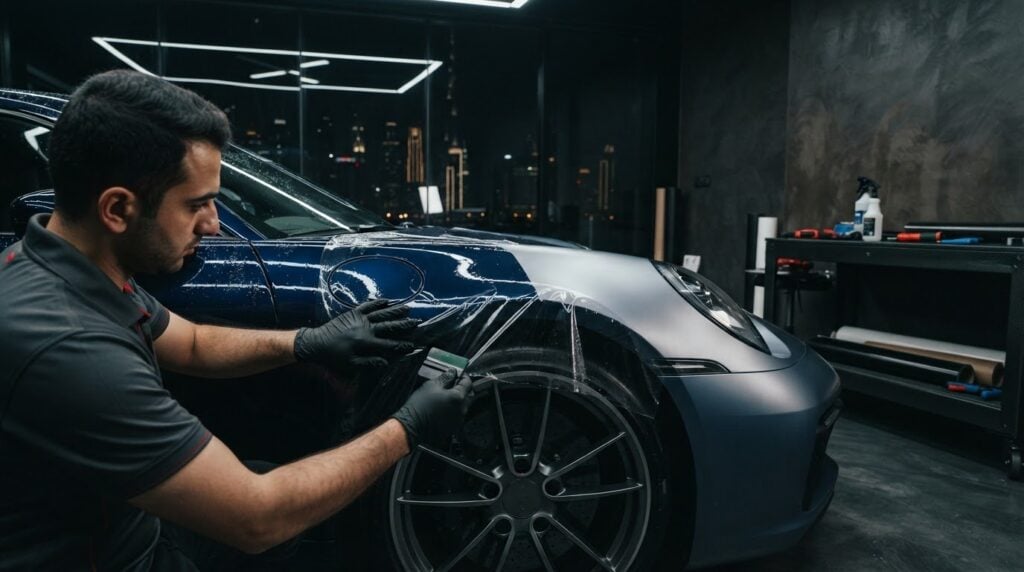
There’s no single set price for automotive protection film in the UAE: the cost depends on the vehicle, coverage area, film choice, finish and paint condition, with pricing provided after a quote request. Quality PPF in the UAE is stated to last 7 to 10 years, while warranty terms depend on the film and installation package.
It’s natural to weigh the cost against the protection and finish you want for your car. This guide explains what affects an automotive protection film UAE quote, how self-healing film works, what warranty coverage may include and which finishes are available. You’ll also learn how coverage and installation details affect the result, so you can compare options and decide what suits your vehicle.
Key Takeaways
- Compare coverage area, vehicle size, film choice and finish to understand what shapes a PPF quote.
- Read warranty terms alongside the film’s expected lifespan, since they describe different aspects of ownership.
- Learn how heat-activated self-healing can improve the appearance of fine scratches.
- Weigh clear, satin and coloured finishes against the look you want to preserve or create.
- Explore how professional PPF installation and other finish options can support your vehicle’s protection and appearance goals.
How much does paint protection film cost for a car?
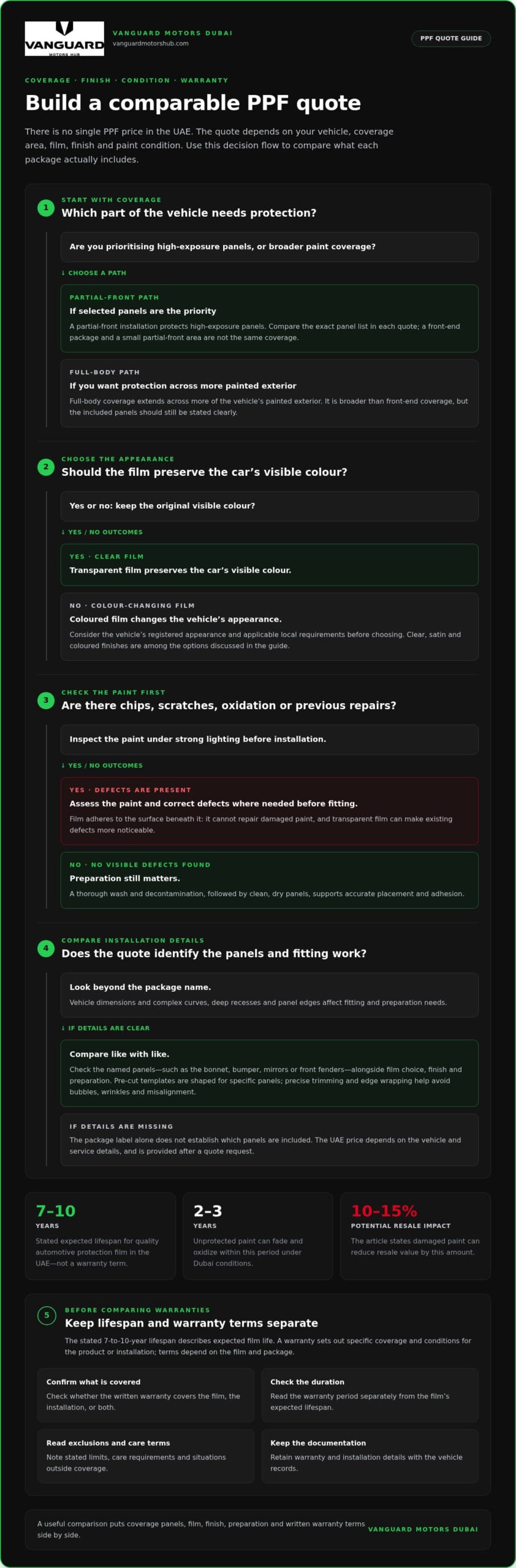
There’s no single price for paint protection film in the UAE. The quote depends on vehicle size, coverage, film choice, finish and paint condition. A front-end package protects different panels from full-body coverage, so compare the areas included before comparing quotes.
For UAE traffic and inspection considerations, don’t assume every colour or finish has the same implications. Transparent film preserves the car’s visible colour, while coloured film changes its appearance. Consider the vehicle’s registered appearance and applicable local requirements before choosing.
PPF also has trade-offs. Poor installation can leave bubbles, wrinkles or misalignment, and film can make existing chips or paint defects more noticeable. On older or previously repainted panels, assess the paint first: film adheres to the surface beneath it and cannot repair damaged paint.
In Dubai, paint protection has a practical role in preserving a vehicle’s finish. The UV index exceeds 8 for most of the year, and unprotected paint can fade and oxidize in two to three years under Dubai conditions. PPF adds a transparent barrier against UV-related discoloration, stone chips, chemical stains, acid rain and bird droppings. It can also make contaminants easier to remove and reduce frequent paint repairs.
Coverage is a key factor in a quote. A partial-front installation protects high-exposure panels, while full-body coverage protects more of the vehicle’s painted exterior. Vehicle shape matters too: complex curves, deep recesses and panel edges require careful fitting. Clear film preserves the original colour; colour-changing film serves a different visual purpose. Compare the exact panels and finish in each quote.
Preparation affects both appearance and adhesion. Start with a thorough wash and decontamination, then inspect the paint under strong lighting for chips, scratches, oxidation or previous repairs. Correct defects before installation where needed, because transparent film can make them more visible rather than conceal them. Clean, dry panels give the installer a better surface for accurate placement.
Pre-cut film templates are shaped to match specific vehicle panels, helping installers position material consistently. Trimming and wrapping edges still require precision, especially around mirrors, bumpers and curved panels. 3M describes PPF installation as a delicate and intricate process. Accurate fitting helps prevent bubbles, wrinkles and misalignments that can undermine clarity and finish.
Paint preservation may matter when resale is part of the ownership plan. Damaged paint can reduce resale value by 10-15%, and 60% of cars in the market are sold within five years. PPF can help preserve original paint against daily wear, but it doesn’t remove existing damage or replace careful upkeep. Match coverage to the panels most exposed to road debris and the finish you want to maintain.
PPF warranty coverage
A PPF warranty and a film’s expected lifespan describe different things. Quality automotive protection film UAE is stated to last 7 to 10 years, but that figure isn’t a warranty term. A warranty sets out the specific coverage and conditions attached to a product or installation. Read its written terms rather than treating a lifespan estimate as a promise of flawless performance.
Warranty coverage depends on the film and package applied to the vehicle. Before comparing options, identify what the warranty covers, how long it lasts, and which exclusions or care requirements apply. The document should clarify whether it covers the film itself, the installation, or both. Those distinctions matter if you later notice a change in appearance or adhesion.
Coverage size affects the scope of protection and the quote. Partial protection covers selected panels, while full-body coverage extends across more of the vehicle. Full-front coverage is broader than a small partial-front area, but it still differs from a complete exterior application. Ask for the included panels to be named clearly, such as the bonnet, bumper, mirrors or front fenders.
Prices by coverage and service vary with vehicle dimensions, panel complexity, film selection, finish and preparation needs. A price for one vehicle or coverage package won’t establish the price for another. The price depends on the case and is given after a quote request. Compare quotes by their included panels and film, not just by the package label.
Use this short checklist to review a written warranty:
- Identify the covered material: Match the warranty document to the film applied to your vehicle.
- Check the duration: Distinguish the stated warranty period from the film’s expected 7-to-10-year lifespan.
- Read exclusions: Note any stated limits, care conditions or situations outside coverage.
- Keep the paperwork: Retain the warranty and installation details with your vehicle records.
Choose coverage to suit how you use and maintain the vehicle. A driver prioritising front-end protection may choose a full-front package; someone seeking broader paint coverage may prefer full-body film. Neither option protects panels outside its stated coverage. Clear documentation helps you understand what was applied and where, without assuming every package includes identical protection or warranty terms.
For a practical comparison, set the package name beside its panel list, film details and warranty wording. Then compare like with like. If you’re weighing coverage options for your vehicle, discussing coverage and warranty options can help frame the right questions for your quote.
Self-healing film
Self-healing is a surface feature of some paint protection films, not a repair for damaged paint. Knowing what heat can do helps set realistic expectations for everyday scratches.
Self-Healing Film Properties
Some modern PPF can make fine scratches disappear when exposed to heat from sunlight or warm water. This healing action concerns minor marks in the film’s surface, not deep cuts, stone chips or damage to the original paint. When comparing self-healing properties and finish, consider the film’s coating.
For example, a light surface mark may become less visible after the film warms in sunlight. A scratch that has cut through the film won’t be restored by this process. Self-healing can help preserve a neat appearance, but it doesn’t make the film scratch-proof. Distinguish fine surface marks from physical damage.
Self-Healing Film Technology
Heat-responsive self-healing works at the film’s outer surface: warmth allows certain fine marks to recede from view. Sunlight and warm water are two stated heat sources. The exact response depends on the film’s properties, so compare the product description rather than assuming every PPF behaves identically.
Remember the limits: heat-activated healing doesn’t replace paint correction, remove contamination or restore torn film. Hot water isn’t a universal remedy; some films simply respond to warmth. If you see a mark, first identify whether it sits in the coating or has penetrated deeper.
How PPF Works
Automotive paint protection film, or PPF, is a clear or coloured protective layer applied over a vehicle’s painted panels. It creates a physical barrier between the original paint and everyday contact, including stone chips and chemical stains. The film takes some surface wear, helping preserve the finish beneath it.
Self-healing is one possible film property, not the definition of PPF. A film without this feature can still provide a protective layer. Compare the coverage area, appearance and stated properties, then consider whether self-healing matters for your driving conditions and desired finish.
Self-cleaning is different from self-healing. PPF can make contaminants easier to remove and reduce how often you need to wash the vehicle, but that doesn’t mean the surface cleans itself. Bird droppings and road residue still need appropriate removal. Clear film maintains the original colour’s appearance, while coloured film changes the visible finish.
For UAE driving, consider how you use the vehicle: frequent highway journeys expose front panels to road debris, while regular outdoor parking increases sun exposure. A self-healing surface may help fine scratches become less visible with heat, but its resistance has limits. Compare the film’s finish and coverage with the areas you want to protect.
Clear, satin and coloured film finishes
Finish changes how a vehicle looks, even when the goal is car paint protection. Clear PPF is transparent, so the original colour remains visible beneath it. Satin film softens a glossy appearance, while coloured PPF changes the visible colour. When choosing automotive protection film in the UAE, decide whether you want to preserve, refine or transform the car’s existing look.
Clear film suits owners who want a protective shield without a noticeable colour change. For example, a clear layer over a dark bonnet keeps the paint colour visible while adding a protective surface. View the film on a similar paint colour, since light and dark finishes can affect how it appears.
Satin film creates a different visual effect from clear film. On a glossy black car, a satin finish can create a softer, less reflective appearance. The change is in the finish, not necessarily the vehicle’s base colour. Consider how selected panels will look beside untreated areas, especially if coverage stops partway across a panel.
Coloured PPF combines a colour change with a protective film layer. It gives a vehicle a new appearance, with the original paint no longer visible as the exterior finish. Consider the whole vehicle, including door jambs and areas not covered by exterior panels, when choosing a colour. Full-vehicle application creates a more continuous look than partial coverage.
Protection wraps differ by material and finish. Coloured sticker wraps are another way to change a vehicle’s appearance, while PPF prioritises a protective film layer. The options aren’t interchangeable by name alone. Compare the intended visual effect, panel coverage and maintenance needs before choosing.
- Clear: Keeps the original paint colour visible beneath transparent film.
- Satin: Changes the sheen, creating a softer appearance on glossy paint.
- Coloured: Alters the vehicle’s visible colour while applying film over selected panels.
- Partial coverage: Can create a visible transition where treated panels meet untreated paint.
For a considered choice, view finish samples beside the vehicle’s paint in daylight and indoor lighting. A silver car, for example, can look different in direct sun than inside a showroom. Check the surface from multiple angles, then compare the sample with adjacent trim and panels. This helps reveal differences in sheen and colour before you select a finish.
Match coverage to the look you want. A clear front section can preserve the factory colour elsewhere, while coloured film across the full exterior creates a stronger transformation. Film options vary in appearance and properties, so compare product descriptions and finish samples rather than relying on a colour name alone. With automotive protection film in the UAE, balance paint protection with the look you want to see every day.
PPF warranty and expected lifespan
Quality paint protection film in the UAE is stated to last 7 to 10 years. Choose an installer by reviewing the installation scope, finish quality and written warranty; some UAE PPF installations carry a 10-year manufacturer warranty, but terms vary.
Expected Film Lifespan
A 7-to-10-year expected lifespan is a useful planning guide, not a substitute for warranty wording. Film longevity depends on the film, its exposure and how the vehicle is maintained. For example, a car frequently driven on highways faces regular road debris, while a parked vehicle still needs careful cleaning to limit contaminant buildup.
Inspect the film’s appearance over time. Lifting edges or visible damage are different from ordinary surface wear. Keep installation details and care information with the vehicle’s records, so you can identify the film and coverage if concerns arise.
Warranty-Backed Film Options
A warranty-backed option pairs a specific film with written terms. The 10-year manufacturer warranty cited for a UAE PPF installation is one example, not a universal term for every film. Compare the stated duration, covered issues, exclusions and maintenance conditions before choosing. Make sure the document identifies the film applied to your vehicle.
Coverage matters, too. Read a warranty alongside the list of protected panels, since partial and full-body applications don’t cover the same area. Keep the invoice and warranty document together; those records link the original installation to its stated coverage.
Film Brands and Warranties
Film brands can differ in product properties and warranty terms, so a familiar name alone doesn’t explain what’s covered. Compare the written warranty for the exact film selected, including its duration and any stated care requirements. A brand’s warranty and an installer’s workmanship terms may address different parts of the job.
For a clear comparison, match each film name to its warranty document and installation record. Check that the vehicle, coverage area and product description align. This helps avoid confusing a manufacturer’s product warranty with coverage for installation-related issues.
Installer Reputation and Warranty
To assess an installer, examine completed PPF work for clean edges, consistent alignment and a smooth finish. Review the written installation scope and warranty before booking. A precise record should identify the film, panels covered and applicable warranty terms, rather than relying on a verbal summary.
Ask how the installer documents the film applied and what care instructions accompany the installation. For example, written aftercare guidance makes cleaning expectations clear. A 10-year manufacturer warranty is meaningful only when you understand its scope, conditions and exclusions.
Keep three records after installation: the invoice, the film warranty and the care instructions. These documents help establish what was applied, which panels received coverage and what terms govern the film. If you’re ready to discuss PPF installation and warranty details, request a PPF installation quote.
Vanguard Motors Dubai: Paint Protection Film (PPF) Installation
Vanguard Motors Dubai installs Paint Protection Film (PPF) for drivers looking to protect their vehicle’s finish from everyday exposure. It’s a natural next step when you’ve chosen coverage and finish to suit your car and want professional installation.
For a different visual direction, Colored Sticker Wraps and Peelable Paint Applications offer alternative ways to change a vehicle’s appearance. The Vanguard Premium Package is another option to explore. Consider what matters most: preserving the existing paint appearance, changing the colour, or combining protection with a new look.
Share your vehicle details and preferred coverage when discussing the work, so the conversation can focus on the panels and finish you have in mind. Contact Vanguard Motors Dubai to discuss Paint Protection Film installation.
Choose the finish that fits your next drive
Choose how you want your vehicle to look and feel in daily use. When considering automotive protection film in the UAE, decide whether preserving the existing paint appearance or creating a fresh colour direction matters more. That choice can help focus your discussion on suitable coverage and finish.
Vanguard Motors Dubai offers Paint Protection Film (PPF) Installation, Colored Sticker Wraps and Peelable Paint Applications. These options address different goals: protective film, a wrapped colour change or a peelable paint finish. Share your preferred look and vehicle details when discussing the right approach.
Contact Vanguard Motors Dubai to discuss your vehicle’s finish and protection needs. Move forward with a choice that reflects your priorities and keeps your car’s appearance intentional.
Frequently Asked Questions
How long will PPF last on a car?
Quality PPF in the UAE is stated to last 7 to 10 years, though exposure and care affect its condition. Check the film periodically for lifting edges, visible damage or changes in appearance. Keep the installation record and care instructions together, especially if the vehicle changes owners. That documentation helps identify the film and its coverage when arranging future maintenance.
What are the best PPF brands available in the UAE?
There’s no single best brand for every vehicle or finish. Named film brands include XPEL, 3M, Hexis and STEK. Compare the exact product’s finish, coverage suitability and written warranty instead of relying on brand recognition alone. For example, a driver prioritising a clear factory appearance may choose differently from someone seeking coloured film. The installation and warranty documents should identify the selected film.
How much does car PPF installation cost in Dubai, Abu Dhabi, and other UAE cities?
PPF installation costs depend on the vehicle, selected film, finish, coverage and preparation required. The price is provided after a quote request. For a useful comparison, ask for the same panels and finish to be included in each quote, then compare what the scope covers. A quote for partial protection isn’t directly comparable with one covering the entire vehicle.
How do PPF prices compare with ceramic coating and vinyl wraps in the UAE?
There’s no reliable price ranking without comparing the exact service scope. PPF is a film layer, ceramic coating is a surface coating, and vinyl wraps focus on changing a vehicle’s appearance. Each serves a different purpose, so compare the result and coverage rather than price alone. For example, a colour-change quote may not provide the same protection coverage as PPF installation.
Which PPF coverage packages are available in the UAE, from high-impact areas to full-body coverage?
Common coverage choices include selected high-impact panels, partial-front protection, full-front coverage and full-body film. The exact panel list matters more than the package label. A front-focused option may include areas such as the bumper, bonnet and mirrors, while full-body coverage extends to more painted panels. Match the coverage to your regular routes and the areas you most want protected.
How long does PPF last in the UAE’s heat, sun, and sand?
Quality PPF in the UAE is stated to last 7 to 10 years, including in the country’s demanding outdoor conditions. How the film looks over time depends on its exposure and care. Regularly inspect exposed panels and film edges, especially after heavy road use. If a vehicle spends long periods outdoors, consistent cleaning helps remove accumulated contaminants before they remain on the surface.
How should PPF be maintained in the UAE, and are there restrictions on car washes?
A weekly maintenance wash is recommended for PPF-protected cars in Dubai. Follow the care instructions for the specific film, and use a gentle wash routine that avoids aggressive scrubbing across film edges. Remove contaminants such as bird droppings rather than leaving them on the surface. Follow the film’s care guidance for wash restrictions, including any instructions for automated car washes.
Do UAE vehicle inspection or traffic rules restrict PPF colors, finishes, or installation?
Consider the vehicle’s registered appearance and applicable local requirements before choosing coloured film: transparent film preserves the visible colour, while coloured film changes it.