
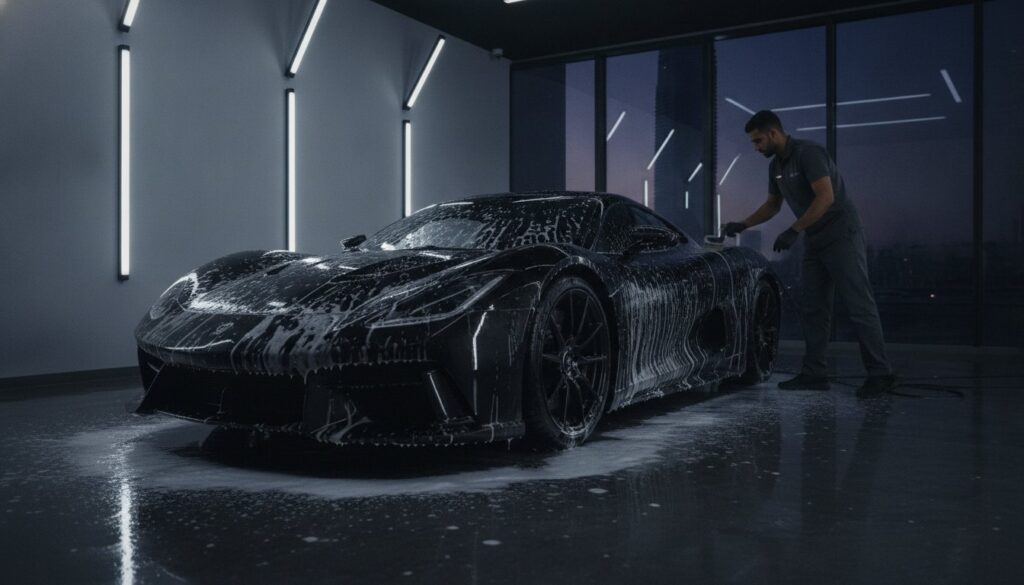
Did you know that over 95% of the swirl marks marring your paint weren’t caused by road debris, but by your own wash mitt? It’s a frustrating reality for every enthusiast who demands perfection. You spend hours meticulously cleaning, only to find that your efforts left behind a map of micro-scratches and unsightly water spots visible under the midday sun. We understand that maintaining a black finish feels like a constant battle against physics and immediate dust attraction. It’s the most rewarding color to own when it’s right, but it’s also the most unforgiving when your methods fall short of elite standards.
This 2026 guide is designed to end that cycle of frustration by revealing the best washing technique for black cars. We’re moving beyond basic soap and water to explore the high-performance world of friction management and graphene-infused protection. You’ll master the meticulous detailing secrets required to maintain a mirror-like, swirl-free finish that stands up to the closest inspection. From adhering to the latest 2026 environmental regulations to utilizing advanced pH-neutral foam technology, we’ll provide the technical blueprint you need to transform your maintenance routine into a professional-grade operation.
Key Takeaways
- Understand why black paint is uniquely vulnerable to micro-marring and how improper contact creates permanent damage.
- Eliminate up to 90% of surface grit before you ever touch the paint by mastering the touchless pre-wash ritual.
- Implement the two-bucket method with grit guards to ensure you’re using the best washing technique for black cars available in 2026.
- Stop wash-induced damage during the drying stage by adopting professional blotting techniques rather than traditional dragging.
- Explore how high-end Paint Protection Film (PPF) acts as a definitive shield to maintain that showroom-quality mirror finish.
Understanding the “Black Car Curse”: Why Your Technique Matters
Owning a black vehicle is a bold statement of intent. It represents the pinnacle of automotive aesthetics, offering a depth and clarity that no other color can match. However, this beauty comes with a significant technical challenge often called the “Black Car Curse.” Black paint acts as a high-definition lens. It absorbs the majority of the visible light spectrum, which means any deviation in the surface level is immediately highlighted by the light it fails to absorb. While a silver car might mask a decade of neglect, a black car records every single mistake you make during maintenance.
Preserving this finish in 2026 requires a shift in perspective. You aren’t just cleaning a surface; you’re managing a delicate clear coat that is thinner than a human hair. Modern luxury manufacturers have refined their paint processes to be more environmentally conscious, but this often results in finishes that are susceptible to physical trauma. Finding and mastering the best washing technique for black cars is the only way to prevent your investment from looking weathered and dull within months of delivery.
The Science of Micro-Marring and Light Refraction
Micro-marring is the physical displacement of clear coat. When you view a black car in direct sunlight and see those circular, web-like patterns, you’re looking at thousands of microscopic scratches. These grooves catch the light at different angles, reflecting it back to your eyes as a hazy “spiderweb” effect rather than a crisp, mirror-like reflection. Proper Auto detailing focuses on minimizing the friction that creates these defects. It’s vital to distinguish between loose surface dust and embedded contaminants. Dragging a single grain of silica across the paint is enough to create a permanent mark that requires professional machine polishing to remove.
Common Washing Mistakes That Ruin Black Paint
The most common enemy of a pristine finish is the traditional automatic car wash. These systems utilize high-speed friction brushes that harbor grit and metallic fallout from every vehicle that passed through before yours. Using one is essentially consenting to have your car sanded by industrial machinery. Even at home, several common habits can be just as destructive:
- Dirty Wash Media: Reusing old sponges or traditional chamois leathers is a recipe for disaster. These materials trap dirt on their surface, pressing it into the paint as you move.
- Direct Sunlight: Washing your car in the heat of the day causes water and chemicals to evaporate prematurely. This leads to mineral deposits and permanent water spotting that can etch into the clear coat.
- Excessive Pressure: There’s a dangerous misconception that “more pressure” equals a cleaner car. In reality, the best washing technique for black cars relies on high-lubricity soaps and light, purposeful passes to lift dirt safely.
By understanding these optical realities, you can begin to implement a routine that prioritizes paint integrity over speed. It’s about working with the physics of light refraction rather than against them.
The Pre-Wash Ritual: Eliminating Grit Without Contact
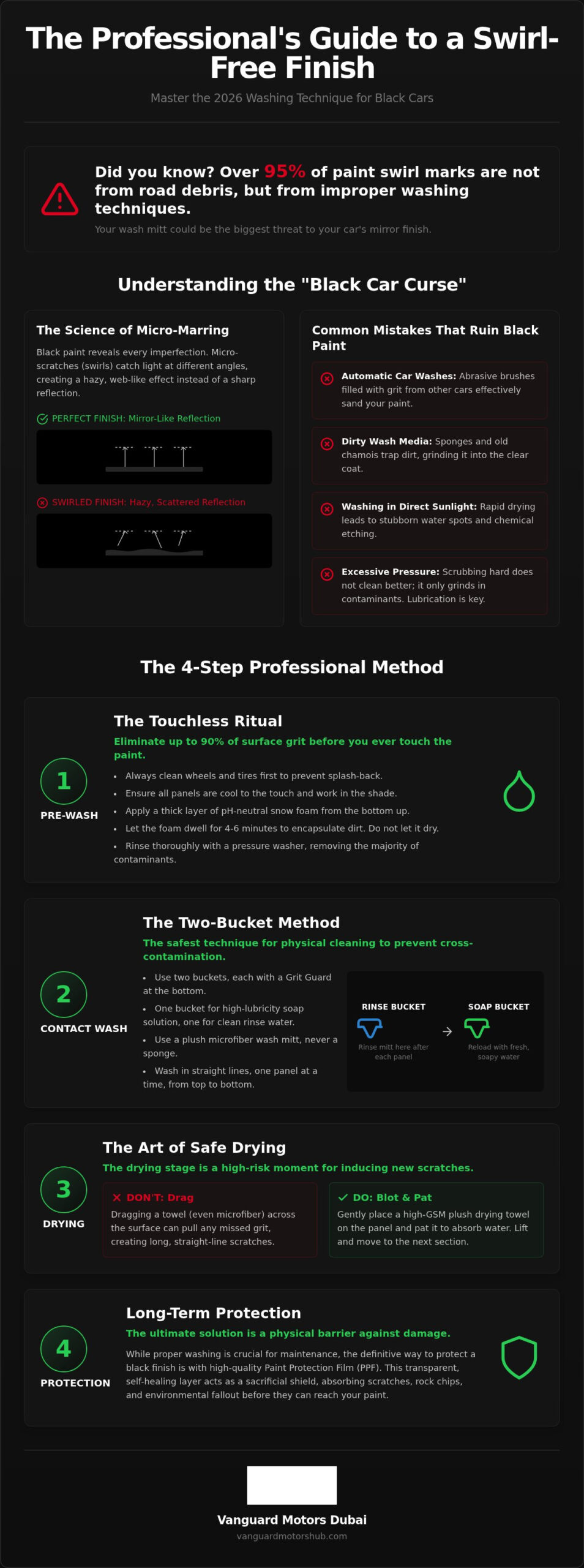
The best washing technique for black cars begins long before a mitt touches the clear coat. In the professional world, we adhere to a “Touchless First” philosophy. This approach aims to remove up to 90% of surface contaminants through chemical and hydraulic action alone. By eliminating abrasive grit while the paint is still untouched, you drastically reduce the risk of dragging microscopic particles across the delicate black finish. It’s a proactive strategy that preserves the depth of your paint and extends the life of any applied protection.
Before addressing the bodywork, you must focus on the wheels and tires. These areas harbor the most aggressive metallic brake dust and road grime. Cleaning them first prevents dirty water from splashing onto a freshly cleaned panel later. In high-heat environments, managing surface temperature is equally critical. Black paint can reach temperatures that cause cleaning chemicals to flash-dry instantly, leading to permanent etching. Always ensure the panels are cool to the touch and work in a shaded environment to maintain chemical stability.
Pressure Washing and Snow Foam Mechanics
Snow foam is not just for visual flair; it’s a sophisticated encapsulation tool. To maximize its effectiveness in 2026, follow this five-step process: 1. Cool the surface with a low-pressure rinse. 2. Coat the vehicle in thick, pH-neutral snow foam from the bottom up. 3. Monitor the dwell time for four to six minutes without letting it dry. 4. Agitate badges and trim gaps with a soft detailing brush. 5. Rinse thoroughly using a wide-angle pressure nozzle. Keep the nozzle at least 12 inches from the surface to protect delicate parking sensors and trim seals from high-pressure intrusion.
Chemical Decontamination: Iron and Tar Removal
Black paint is notorious for hiding industrial fallout and iron particles until they begin to oxidize and pit the clear coat. Even if the car looks clean after the foam stage, chemical decontamination is necessary to achieve a truly smooth surface. Apply a dedicated iron remover to see the “bleeding” effect as it dissolves metallic bonds. Similarly, road tar and organic debris should be dissolved with specialized solvent-based cleaners rather than aggressive scrubbing. This chemical preparation ensures that when you finally move to the contact wash, the mitt is gliding over a surface free of jagged contaminants. If your vehicle requires a professional reset after months of exposure, speak with our master detailers about a bespoke decontamination package.
The Two-Bucket Method: Mastering the Contact Wash
Once the pre-wash ritual has safely removed the bulk of surface grit, you’re ready for the most critical phase of the best washing technique for black cars. The contact wash is where most damage occurs, yet it’s also where you achieve that deep, mirror-like clarity. The two-bucket system is your primary defense against micro-marring. This setup requires one bucket filled with a high-lubricity shampoo solution and a second filled with pure, clean rinse water. Both must be equipped with Grit Guards. These plastic inserts act as a one-way filter, trapping heavy sediment at the bottom of the bucket so your mitt remains uncontaminated throughout the process.
Your choice of wash media is equally vital to the outcome. Sponges and wool mitts are often too aggressive or trap dirt right against the clear coat. We recommend professional-grade, high-pile microfiber mitts. These fibers are engineered to draw contaminants deep into the fabric, keeping them away from the paint surface. Always follow a strict top-down strategy. By starting with the roof and hood before moving to the doors and bumpers, you ensure that the heaviest road grime found on the lower panels doesn’t get transferred to the most visible upper surfaces.
The Mechanical Process: Linear Strokes vs. Circular Motions
Precision in your physical movement is what separates a professional detailer from an amateur. You should always use straight, linear strokes that follow the airflow of the vehicle. Circular motions are a significant mistake; they create the multi-directional scratches that result in the dreaded “spiderweb” swirl marks discussed earlier. These circular defects catch light from every angle, making them impossible to hide on black paint. After every single panel pass, you must dunk your mitt into the rinse bucket and agitate it against the Grit Guard to release trapped debris. The mitt should glide, never be pressed into the paint. Let the weight of the water and the quality of the lubricant do the work for you.
Choosing Professional-Grade Lubricants
Lubrication is the ultimate insurance policy for your clear coat. Standard “grocery store” car soaps often lack the advanced surfactants needed for safe detailing on dark colors. High-lubricity detailing shampoos are formulated with specialized polymers that encapsulate any remaining dirt particles, creating a slippery barrier between the mitt and the paint. This is particularly important for maintaining the integrity of existing Paint Protection Film. Harsh detergents can dry out the top coat of your PPF, leading to premature yellowing or loss of self-healing properties. Using a pH-neutral, professional-grade shampoo ensures you’re cleaning the surface without stripping away essential protection or dulling the finish.
The Art of Drying: Preventing Water Spots Without Scratches
It’s a cruel irony that the final step of the wash often undoes all your previous care. In professional detailing circles, we recognize that approximately 70% of wash-induced damage happens during the drying stage. When you drag a towel across the surface, any microscopic particle left behind acts like a stylus, etching a line into the clear coat. This is why the best washing technique for black cars prioritizes minimal contact and maximum lubrication. You’ve spent time lifting dirt safely; don’t ruin that progress with a careless final wipe.
The “Blotting” technique is the professional standard for hand-drying a dark finish. Instead of dragging a towel, you lay a high-quality microfiber flat across a panel and pat it gently to absorb water. This vertical pressure eliminates the lateral friction that causes marring. For enthusiasts seeking a truly flawless finish, forced air drying is the ultimate solution. It clears water from intricate crevices, door mirrors, and badge work where towels cannot reach, preventing those annoying “run-down” streaks that appear minutes after you finish.
Air Drying vs. Premium Microfiber
Using a dedicated car dryer is the safest method to eliminate touch-points entirely. These machines use filtered, warm air to sheet water off the surface. This is essential for vehicles equipped with complex aerodynamic features or bespoke carbon fiber kits. If you must use a towel, ensure it’s a premium, high-GSM (Grams per Square Meter) microfiber. A towel with a rating of 1000+ GSM offers the necessary pile depth to safely trap moisture. In arid, high-heat environments, you must manage “flash drying” aggressively. If water evaporates before you can dry it, mineral deposits will etch into the paint, requiring a professional concierge detailing solution to correct.
The Role of Quick Detailers and Drying Aids
Lubrication shouldn’t stop once the hose is turned off. Applying a drying aid or a maintenance spray while the car is still wet provides an extra layer of slickness for your towel. Modern 2026 formulations often include SiO2 or graphene-infused polymers that boost gloss on black paint while you dry. These aids help prevent towel marring and ensure a streak-free finish on glass and carbon fiber trim. By integrating a high-performance drying aid, you’re not just removing water; you’re reinforcing the vehicle’s protective barrier. This meticulous attention to detail ensures your black car retains its mirror-like depth without a single new swirl mark appearing under the sun.
Beyond the Wash: Long-Term Protection for Black Paint
Even the best washing technique for black cars cannot overcome the natural degradation of an unprotected clear coat over time. In the 2026 automotive landscape, traditional carnauba waxes have become largely obsolete for high-value assets. They lack the thermal stability and chemical resistance required to survive harsh environmental factors. Instead, professional Supercar Detailing now centers on advanced ceramic coatings and graphene-infused barriers. These technologies create a high-tension hydrophobic surface. When water beads and rolls off effortlessly, it carries away surface dust, significantly simplifying your maintenance routine and reducing the physical contact required to keep the car clean.
Before any protection is applied, the paint must undergo a multi-stage correction process. This surgical refinement removes the micro-marring and oxidation that dull the finish. Sealing a black car without first correcting the paint is a mistake that only highlights existing flaws. Once the surface is optically perfect, we apply the final shield to ensure that mirror-like clarity remains permanent and the depth of the black paint is fully realized.
Why PPF is the Ultimate Solution for Black Supercars
Paint Protection Film (PPF) stands as the “Holy Grail” for owners who demand perfection without the stress of constant monitoring. Modern 2026 films are engineered with remarkable self-healing properties. If a light swirl mark is accidentally introduced during a wash, the film’s top layer reacts to heat from the sun or warm water to erase the defect automatically. This technology eliminates the need for aggressive machine polishing over the vehicle’s life, preserving the original factory clear coat. PPF provides a thick, transparent barrier that maintains the deep “wet look” of black paint while offering unmatched resistance to stone chips and industrial fallout.
The Vanguard Approach to Automotive Preservation
Maintaining a show-room shine requires a synergy between elite products and expert execution. At Vanguard Motors Hub, we integrate professional maintenance with high-end protection packages tailored to the specific needs of black vehicles. Our mobile detailing van offers a sophisticated concierge solution, bringing our technical precision directly to your doorstep. This ensures that every wash follows the strict protocols we’ve outlined, preventing the gradual accumulation of wear. By combining professional-grade PPF installation with a structured maintenance schedule, you aren’t just cleaning a car; you’re preserving a high-performance investment. Protect your investment with Vanguard Motors Hub and ensure your black finish remains flawless for years to come.
Securing the Future of Your Black Finish
Mastering the best washing technique for black cars is about more than aesthetics; it’s a commitment to preserving a high-performance asset. You’ve learned that elite maintenance requires a shift from aggressive scrubbing to meticulous friction management. By prioritizing touchless pre-wash rituals and adopting the two-bucket method, you eliminate the grit that threatens your clear coat’s clarity. Remember that the drying stage remains the most vulnerable moment for your paint, making forced air and premium lubricants your primary defense against water spots and marring.
Vanguard Motors Hub stands as your partner in this pursuit of perfection. We’re specialists in high-end PPF and ceramic applications, providing the ultimate insurance for your vehicle’s depth and gloss. Our UAE-wide mobile detailing van offers a concierge-level care solution for luxury and supercars, bringing technical precision directly to your driveway. It’s time to move beyond standard cleaning and embrace a comprehensive preservation strategy that keeps your finish looking like a liquid mirror.
Explore Vanguard Premium Protection Packages today and let our master detailers safeguard your investment. Your car deserves nothing less than elite care.
Frequently Asked Questions
Is it better to hand wash or use a touchless car wash for a black car?
A professional hand wash using the two-bucket method is significantly better than any automated system. Touchless car washes rely on aggressive, high-alkaline chemicals to strip dirt without physical contact. These harsh formulations can dull your black finish and strip away protective waxes or sealants over time. A meticulous hand wash allows for precise grit removal while ensuring that the most delicate areas of your vehicle receive specialized attention.
How often should I wash my black car to prevent paint damage?
You should aim to wash your vehicle every one to two weeks to maintain its integrity. Black paint absorbs more thermal energy and reveals environmental fallout much faster than lighter shades. Frequent cleaning prevents contaminants like bird droppings, tree sap, or industrial dust from etching into the clear coat. Utilizing the best washing technique for black cars consistently ensures that abrasive particles don’t accumulate and cause permanent micro-marring.
Can I use dish soap to wash my car if I run out of car shampoo?
No, you should never use dish soap on automotive paint. Dish soaps are engineered to strip grease and food waste, which means they will aggressively remove your car’s wax, sealants, and essential clear coat oils. This leaves your black paint vulnerable to oxidation and environmental damage. Always use a dedicated pH-neutral detailing shampoo that provides the high-lubricity barrier needed to safely glide a mitt over the surface without scratching.
What is the best time of day to wash a black car in a hot climate?
The optimal time is during the early morning or late evening when the panels are cool to the touch. In the intense 2026 climate, washing a black car in direct sunlight causes water and chemicals to evaporate almost instantly. This rapid drying leads to stubborn mineral deposits and potential chemical etching on the clear coat. Working in the shade during cooler hours is essential for achieving a streak-free, professional result.
How do I remove water spots that have already dried on black paint?
Dried water spots require a specialized mineral deposit remover to dissolve the calcium and magnesium bonds safely. If the minerals have already etched into the clear coat due to heat exposure, you’ll likely need a professional machine polishing service to level the paint. Preventing these spots is a primary goal of the best washing technique for black cars, which is why we emphasize using forced air or high-GSM drying towels.
Does ceramic coating make a black car easier to wash?
Yes, ceramic coatings create a high-tension hydrophobic surface that significantly simplifies maintenance. This technology causes water and contaminants to bead and roll off rather than sticking to the paint. While it doesn’t eliminate the need for washing, it reduces the amount of physical agitation required to lift dirt. This minimizes the risk of introducing swirl marks during the contact wash and keeps the black finish looking deeper and glossier for longer.
What is the difference between a swirl mark and a deep scratch?
Swirl marks are microscopic abrasions in the top layer of the clear coat, often appearing as circular spiderwebs under direct light. These are typically caused by improper washing or drying habits. A deep scratch penetrates further into the clear coat or even reaches the primer layer. While swirl marks can usually be removed through standard paint correction, deep scratches may require more intensive cosmetic repair or professional paintwork to fully restore the panel.
Will PPF change the look of my black paint?
High-end Paint Protection Film is engineered to be virtually invisible while actually enhancing the optical clarity of your finish. It provides a deep, wet-look shine that often exceeds the factory clear coat’s gloss levels. Modern 2026 films are also available in matte or satin finishes if you desire a bespoke aesthetic change. Regardless of the style, PPF acts as the ultimate shield, preserving the underlying paint from physical damage and environmental degradation.