
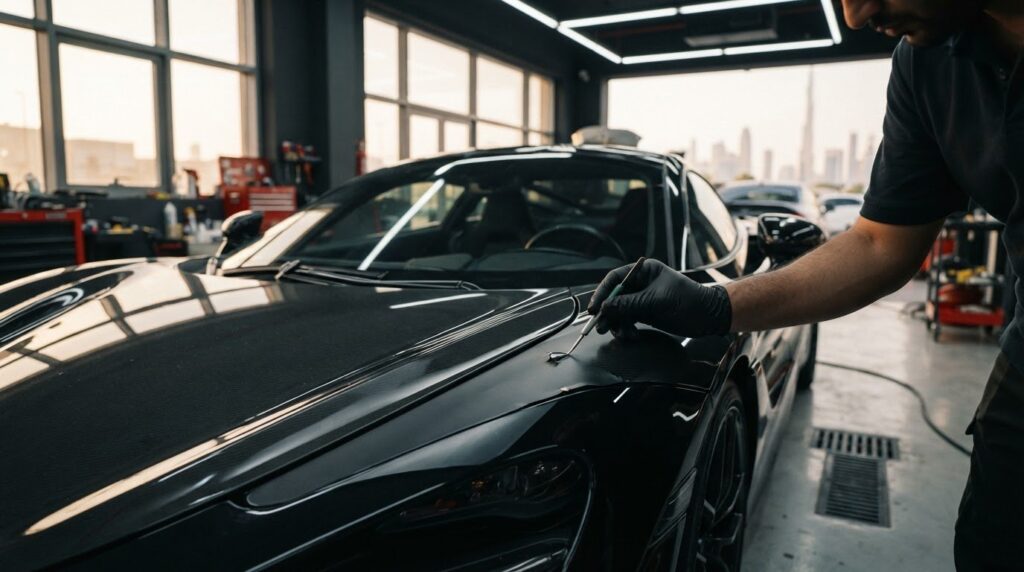
Yes, you can repair damaged peelable paint in some cases. A small, isolated defect may be repaired locally if the surrounding coating is firmly attached. If peeling is widespread or the coating has lost adhesion, removing and reapplying it may be a better solution.
It’s frustrating when a finish chosen for its bold look develops a tear, chip or lifting edge. In the UAE, ultraviolet rays, heat and moisture can contribute to deterioration over time, so the size of the damaged area is only one part of the assessment.
This guide explains how to assess the damage, which repair options suit different conditions, and when replacement is worth considering. Use these points to evaluate the finish and decide what to do next.
Key Takeaways
- A small, isolated defect may be repairable; widespread lifting often calls for removing and replacing the coating.
- Assess how far the coating has lifted and whether the surrounding finish still adheres before choosing a repair.
- Ultraviolet exposure, heat and moisture can contribute to paint deterioration over time.
- For a minor peeling spot, an assessment can help determine whether a touch-up is appropriate.
- Vanguard Motors Dubai offers peelable paint applications and Paint Protection Film (PPF) installation for drivers considering a refreshed finish or another protection option.
Can you repair damaged peelable paint
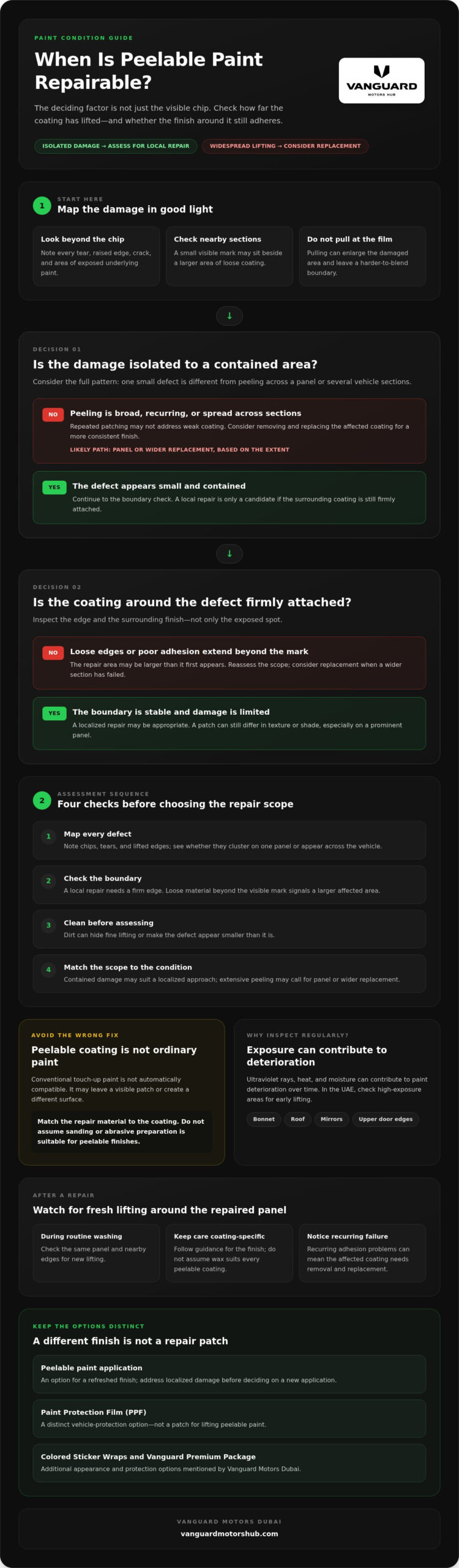
Repair is possible when damage is isolated and the surrounding coating remains firmly attached. A small nick or short lifted edge needs a different approach from broad peeling across a bonnet or door. Consider the size of the damaged area, the condition of its edges and whether the coating still adheres around the defect. If peeling has spread across a panel, removing and replacing the coating can create a more consistent finish than repeatedly patching weak areas.
Inspect the surface carefully in good light. Look for raised edges, cracks, exposed underlying paint and damage that extends beyond the visible chip. Check nearby sections too: a small mark at a door edge may sit beside a larger area of loose coating. Avoid pulling at the film-like material. Doing so can enlarge the damaged area and leave an uneven boundary that is harder to blend in a local repair.
Choose between a local repair and replacement
A local repair is suited to a contained defect with stable coating around it. For example, a small chip on one door with no nearby lifting is a better candidate than a bonnet with several curling edges. Even then, a patch may differ in texture or shade, particularly on a prominent panel. Consider replacement if peeling recurs, reaches multiple sections or leaves broad areas with poor adhesion.
- Map the damage. Note each chip, tear, and lifted edge, then identify whether the defects are clustered on one panel or spread across the vehicle.
- Check the boundary. A repair area needs a firm edge. Loose material beyond the visible mark signals that the affected section extends farther.
- Keep the surface clean. Remove dirt before assessing the coating. Contamination can hide fine lifting or make the defect appear smaller than it is.
- Select the scope. Use a localized approach for contained damage; choose full panel or wider replacement when peeling is extensive.
Do not treat peelable coating like ordinary automotive paint. Advice to use touch-up paint on small spots of conventional paint peeling does not establish that it is compatible with a peelable finish. A conventional touch-up product may leave a visible patch or create a different surface. Match the repair material to the coating already on the vehicle instead of applying standard touch-up paint by default.
Why peeling starts and how repair is carried out
Ultraviolet rays, extreme temperatures, and moisture can break down paint bonds over time. In the UAE, strong sun and heat make regular visual checks especially useful for spotting changes early. Inspect high-exposure areas such as the bonnet, roof, mirrors, and upper door edges. Catching a lifting edge before it spreads helps define the repair area and prevents unnecessary disturbance to sound coating.
For conventional car paint, a panel repair can involve sanding the affected section, then applying primer, base coat, and clear coat in sequence. Fine-grit sandpaper around 400-grit is recommended for lightly sanding peeling paint edges. That process is not an automatic instruction for peelable coating: sanding can cut through layers or damage the finish beneath. Use the coating’s appropriate repair method and avoid abrasive preparation unless it is suitable for that specific material.
After repair, check the same panel and nearby edges during routine washing. Wash away corrosive substances, look for new lifting and park in covered areas when possible. Wax can protect paint, but do not assume it is compatible with every peelable coating. Follow care guidance for the specific finish. These checks can help identify whether a local repair remains stable or recurring adhesion failure means the affected coating needs to be removed and replaced.
As car paint ages, it can lose flexibility and adhesion, so assess the surrounding coating rather than focusing only on the visible tear. If the edge is secure and the damage is limited, keep the repair confined to that area. If the boundary is loose or a wider section has failed, reconsider the scope before proceeding. A repair should address the coating’s condition, not just hide the exposed spot. If the extent is unclear, inspect the nearby surface again before choosing a patch.
Vanguard Motors Dubai: Paint Protection Film (PPF) Installation
Vanguard Motors Dubai offers Peelable Paint Applications for drivers seeking a refreshed finish, as well as Paint Protection Film (PPF) Installation for vehicle protection. These are distinct options: PPF is not a patch for lifting peelable paint. If widespread damage calls for a replacement finish, consider the look you want and discuss the suitable service for your vehicle.
For a localized defect, address the damaged coating before deciding on a new application. With broader peeling, a replacement finish may provide a cleaner starting point. Vanguard Motors Dubai also offers Colored Sticker Wraps and the Vanguard Premium Package as additional options for your vehicle’s appearance and protection.
Contact Vanguard Motors Dubai to discuss your vehicle and the available options.
Choose the Finish That Fits Your Next Drive
Deciding whether you can repair damaged peelable paint is also an opportunity to consider what you want from the finish going forward. A local repair may suit contained damage, while a broader refresh can renew the vehicle’s appearance. The right approach depends on the coating’s condition and the result you want.
Vanguard Motors Dubai offers Peelable Paint Applications, Paint Protection Film (PPF) Installation and Colored Sticker Wraps. Each option serves a different appearance or protection goal. Consider your vehicle’s condition and your priorities to choose a suitable next step, rather than treating every damaged finish the same way.
For a practical discussion of your vehicle’s finish and available options, contact Vanguard Motors Dubai. Make your next finish a deliberate choice, and move forward with confidence.