
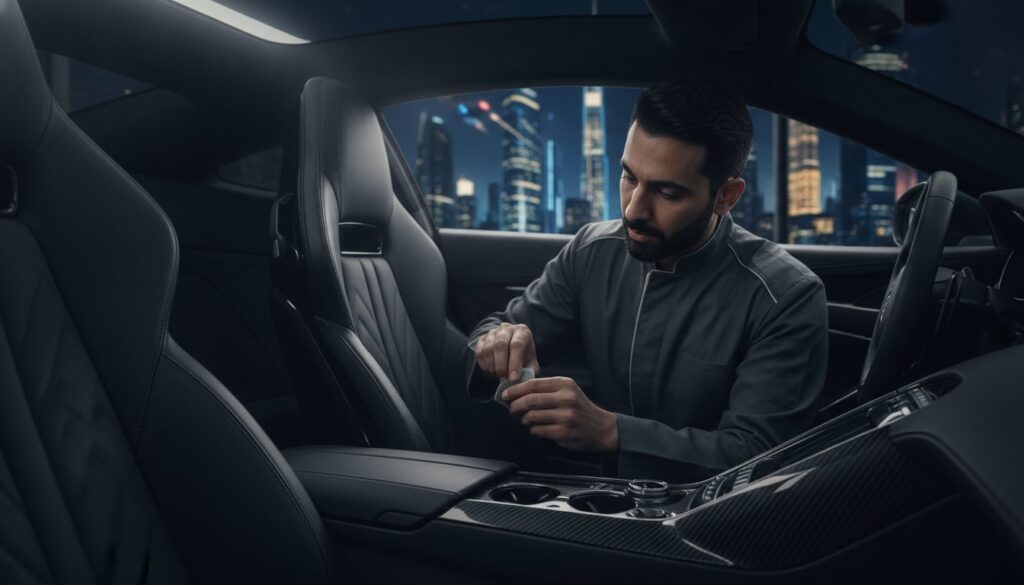
Your driver’s seat bolster is the first point of contact and the first place where your vehicle’s luxury begins to fade. It’s a frustrating reality for any high-performance enthusiast: that initial scuff on the leather doesn’t just ruin the aesthetic; it signals a decline in the car’s structural soul. You likely worry that a car interior leather repair will result in an unnatural, patched appearance or that the dyes will fail under the relentless heat of a desert climate. These concerns are valid because a premium cabin deserves more than a superficial cosmetic fix.
We agree that preserving the original factory feel is non-negotiable for any elite vehicle. This 2026 guide provides the expert insights you need to master professional restoration, focusing on techniques that prioritize structural preservation and seamless aesthetics. You’ll discover how advanced leather bonding and precision dye matching can return your interior to its showroom glory while protecting your vehicle’s resale value. We’ll take a deep dive into the technical process of leather restoration, from repairing unsightly bolster wear to ensuring your cabin meets the elite standards required for Brabus or Mansory level excellence.
Key Takeaways
- Identify the primary causes of leather fatigue, ranging from UV-driven oil evaporation to mechanical wear on seat bolsters.
- Evaluate the financial and aesthetic benefits of a professional car interior leather repair compared to invasive and costly reupholstery.
- Explore the technical engineering behind restoration, including the use of flexible resins and heat-activated structural fillers for seamless results.
- Implement high-performance maintenance routines using pH-neutral solutions to safeguard your restored interior from future degradation.
- Understand how elite restoration preserves the resale value and heritage of luxury cabins found in bespoke supercar conversions.
The Science of Degradation: Why Premium Car Leather Fails
The interior of a high-performance vehicle is a masterpiece of engineering, yet it exists in a state of constant chemical combat. Premium hides are not static materials; they are organic structures that respond aggressively to their surroundings. Understanding why these materials fail is the first step toward a successful car interior leather repair. If the underlying cause isn’t addressed, even the most meticulous cosmetic fix will eventually succumb to the same environmental pressures.
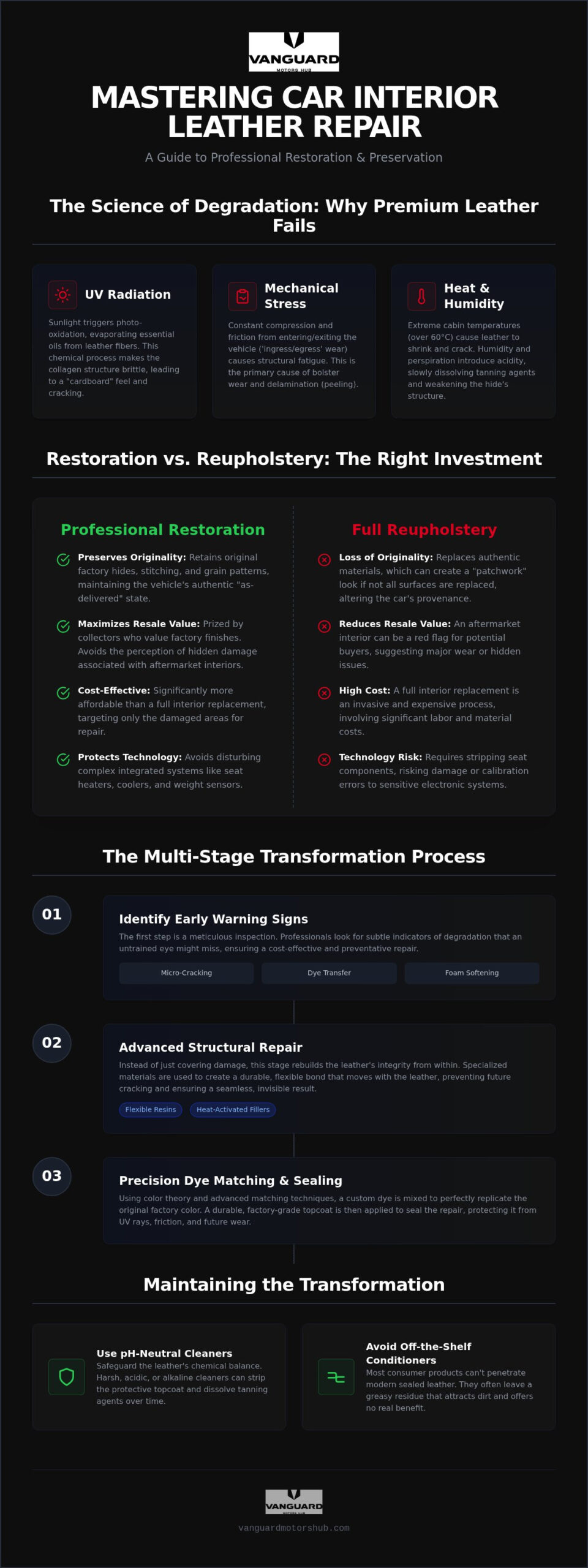
UV radiation acts as a silent catalyst for destruction. As sunlight penetrates the glass, it triggers a process of photo-oxidation that evaporates the essential oils and plasticizers trapped within the leather fibers. Without these lubricants, the collagen structure becomes brittle and prone to snapping under tension. This degradation mirrors the foundational principles found in professional leather conservation and restoration techniques, where the goal is to stabilize the material before it reaches a point of total failure. Once these oils are gone, the leather loses its elasticity, leading to the characteristic “cardboard” feel of neglected upholstery.
Mechanical stress compounds this chemical breakdown. Every time you enter or exit your vehicle, the seat bolsters endure intense compression and friction, a cycle known as ‘ingress/egress’ wear. This repeated loading leads to structural fatigue, especially in softer Nappa or aniline leathers that lack the heavy protective coatings of standard top-grain hides. Leather delamination is the primary cause of unsightly peeling in modern luxury cabins. This occurs when the bond between the leather substrate and its decorative topcoat fails, leaving behind a ragged, unfinished surface that demands expert intervention.
Environmental Impact on Interior Longevity
In regions with extreme national temperatures, a vehicle’s cabin can reach over 60°C within minutes. This intense heat causes the hide to contract and expand rapidly, leading to permanent shrinkage and deep-set cracking. Humidity and perspiration further complicate the issue by shifting the leather’s natural pH balance toward acidity, which slowly dissolves the tanning agents. Most off-the-shelf conditioners cannot penetrate modern sealed leathers, as their molecular structure is too large to pass through the factory-applied polyurethane topcoats, often leaving a greasy residue that attracts more dirt.
Identifying Early Warning Signs
Early intervention is critical to a cost-effective car interior leather repair. Micro-cracking appears as fine, spider-web lines in the finish; these are often reversible if caught before they become deep fissures that reach the suede side of the hide. You should also watch for dye transfer from dark denim or leather belts, which can create permanent stains if the topcoat has been compromised. Finally, if you notice the seat foam softening or losing its shape, it creates excess leather tension that leads to permanent wrinkling and eventual structural tearing.
Restoration vs. Reupholstery: Making the Right Investment
Choosing between restoration and a complete interior overhaul is a strategic decision for any luxury vehicle owner. For high-value assets, the priority is maintaining the vehicle’s “as-delivered” state. A professional car interior leather repair excels here. It retains original factory hides. This ensures grain and stitching patterns remain consistent throughout the cabin. This approach avoids the “patchwork” look that often plagues amateur fixes or partial re-trims.
A localized repair is significantly more cost-effective than a total interior replacement. Beyond immediate savings, preserving original materials is a major advantage for supercar resale. Collectors and connoisseurs prioritize authentic factory finishes. An aftermarket interior, no matter how well-executed, can often signal hidden damage or a lack of original provenance. If you’re unsure whether your cabin can be saved, consult with a technical specialist to evaluate the depth of the damage.
Restoration also offers the “invisible” benefit of preserving integrated seat technology. Modern luxury seats house complex heating, cooling, and weight-sensor systems. Reupholstery requires stripping these components, which can lead to sensor errors or reduced efficiency if not handled with absolute precision. While restoration is powerful, it has limits. The science of leather degradation shows that once chemical oxidation destroys the underlying fiber matrix, the material loses its structural integrity. At this stage, bonding resins cannot find a stable anchor.
When to Choose Professional Repair
Choose repair when the damage is localized and the leather remains supple. This includes scuffs from watches or jewelry, small cigarette burns, and shallow surface scratches. Faded areas caused by sun exposure or improper cleaning chemicals are also prime candidates for restoration. If the minor cracking hasn’t yet penetrated the base fiber layer, a technician can bridge the gap with flexible resins, returning the seat to its original aesthetic without removing the hide.
When Full Reupholstery is Necessary
Reupholstery becomes the logical choice when the leather has reached a state of dry rot. If the material feels brittle or “cardboard-like” when pressed, the internal fibers have snapped. Large structural tears that span multiple panels or compromised seams also demand replacement for safety and longevity. Finally, if you desire a complete aesthetic transformation, such as a full color swap or custom stitching to match a Brabus or Mansory conversion, a full interior overhaul is the only path forward.
The Professional Leather Repair Process: A Multi-Stage Transformation
Professional car interior leather repair is an exacting engineering discipline. It’s far removed from the quick “touch-ups” offered by basic detailing services. True restoration requires a multi-stage protocol designed to stabilize the material’s chemical structure before any aesthetic work begins. Without this foundation, the repair is merely a temporary mask that will fail under the stresses of daily driving.
The first critical phase is deep decontamination. Over years of use, leather absorbs body oils, perspiration, and silicone-based dressings. These contaminants act as release agents, preventing new finishes from adhering. Technicians use high-grade solvent cleaners to strip these layers without dehydrating the hide. Once the surface is chemically “open,” structural bonding begins. This involves using heat-activated fillers and flexible resins to bridge cracks and fissures. Unlike rigid household glues, these resins mimic the natural movement of leather. This ensures the repair doesn’t snap or delaminate under the weight of a passenger.
Achieving a seamless result requires meticulous grain replication. Technicians use specialized molding compounds to lift the texture from an undamaged area of the seat. This texture is then pressed into the still-pliable filler. Whether your cabin features the smooth, buttery surface of Nappa leather or the rugged texture of pebbled hide, this step ensures the repair is visually invisible. Digital scanning technology then analyzes the specific pigment levels of the surrounding leather. This accounts for the unique way light reflects off the surface, ensuring a perfect match that transcends simple color charts.
The Art of Color and Texture Matching
Color matching is a bespoke process. Technicians don’t rely on generic factory codes because every interior fades differently depending on its exposure to UV. They create custom dye blends that match the current state of the leather. The addition of chemical cross-linkers is essential here; these agents create a permanent molecular bond between the new pigment and the original hide. Finally, we adjust the sheen to replicate everything from the dead-matte finish found in modern performance cars to the high-gloss luster of vintage luxury interiors.
Curing and Protection Phases
The final stages focus on long-term durability. Controlled drying times are non-negotiable. Rushing this process leads to moisture entrapment, which is the primary cause of future peeling or bubbling. We apply a high-performance topcoat that serves as a sacrificial barrier against friction and UV radiation. This layer ensures the repair remains flexible and resilient under extreme heat. Every project concludes with a rigorous inspection protocol to confirm the finish is tactilely indistinguishable from the factory leather.
Maintaining the Transformation: Post-Repair Care Guide
A professional car interior leather repair is an investment in your vehicle’s legacy. Once the structural bonding and precision color matching are complete, the focus shifts from restoration to meticulous preservation. The longevity of your cabin’s new finish depends entirely on the chemical environment you maintain. Standard retail products often contain harsh degreasers that can compromise the delicate bond of a fresh restoration. To protect this craft, you must adopt a high-performance maintenance protocol.
The first golden rule is the absolute use of pH-neutral cleaners. High-performance interiors feature intricate dye work that reacts poorly to alkaline or acidic solutions. These harsh chemicals strip the protective topcoat, leading to premature fading and peeling. We also recommend the application of interior ceramic coatings. These coatings act as a clear, sacrificial barrier. They provide an additional layer of defense against liquid spills, denim dye transfer, and the abrasive friction of daily use. For those seeking a comprehensive approach to vehicle longevity, we recommend exploring our Supercar Detailing reference guide for holistic maintenance insights.
Daily Habits for Interior Preservation
Daily environmental management is your strongest defense against degradation. Extreme heat is the primary enemy of leather health. Using high-quality sunshades and ceramic window tinting significantly reduces cabin temperatures, preventing the leather from shrinking or becoming brittle. You should also prioritize the regular removal of dust. Fine particulates act like sandpaper under the weight of a passenger, grinding into the grain and creating micro-scuffs. If a spill occurs, blot the area immediately with a clean microfiber towel. Never scrub, as mechanical agitation can trigger a chemical reaction with the repaired surface.
Seasonal Professional Maintenance
Daily-driven luxury vehicles require a professional deep-cleaning at least once every quarter. This frequency ensures that oils and contaminants don’t have the opportunity to penetrate the topcoat. During these sessions, technicians can re-apply protective conditioners that are specifically formulated for modern, sealed leathers. These products replenish the essential moisture without leaving a greasy residue. Seasonal inspections also allow for the early detection of new wear points. Identifying a scuff early prevents the need for major car interior leather repair in the future, keeping your cabin in a permanent state of excellence.
Secure your vehicle’s interior legacy and maintain its elite aesthetic by scheduling a professional leather assessment today.
Leather Restoration at Vanguard Motors: Elite Interior Care
Vanguard Motors represents the intersection of high-octane passion and professional precision. We don’t view car interior leather repair as a mere utility; it’s a vital component of automotive curation. Our team treats every cabin as a masterpiece that deserves meticulous preservation. By integrating advanced leather restoration into the Vanguard Premium Package, we provide a holistic strategy for total vehicle excellence. This ensures that the tactile luxury of your interior remains as sharp and resilient as the high-performance engine under the hood.
Our commitment to technical mastery allows us to handle the world’s most delicate luxury and supercar cabins with absolute confidence. This service acts as the essential interior counterpart to our exterior protection systems. While our PPF and peelable paint applications shield your car from the environment, our restoration techniques safeguard the sanctuary inside. This synergy perfectly complements our Cosmetic Car Repair services, creating a unified approach to vehicle aesthetics. We combine an aspirational eye for detail with a proactive engineering mindset to deliver results that are both visually stunning and structurally sound.
Bespoke Solutions for Every Supercar
Luxury conversions from elite houses like Brabus and Mansory require a level of precision that standard workshops simply cannot provide. These vehicles often feature bespoke stitching patterns, unique perforations, and exotic leather hides that demand specialized handling. Our technicians are experts in restoring these rare materials, including Alcantara accents and ultra-soft Nappa finishes. We understand the heritage of these brands and ensure that every repair respects the original design language. This level of national-level craftsmanship is why elite owners across the UAE trust Vanguard Motors to maintain the value and integrity of their most prized assets.
Start Your Interior Transformation
The path to a pristine cabin begins with a professional assessment. We evaluate the specific condition of your leather, identifying everything from surface scuffs to deep-seated structural fatigue. Once restored, we offer seamless integration with our mobile detailing van for ongoing maintenance. This allows you to keep your interior in showroom condition with the convenience of a service that comes directly to you. Our proactive approach ensures that new wear points are addressed before they require major intervention. Elevate your driving experience with Vanguard Motors leather restoration today.
Secure the Future of Your Vehicle’s Interior Excellence
Your vehicle’s cabin is a sanctuary of engineering and aesthetic expression. Preserving that environment requires a deep understanding of the chemical forces at play and a commitment to technical precision. We’ve explored how targeted car interior leather repair saves original factory materials while maintaining the structural integrity of your seats. Whether you’re managing the specialized interior standards of a Brabus or Mansory conversion or simply restoring a daily-driven supercar, professional intervention is the only way to ensure a seamless, high-performance result.
Vanguard Motors specializes in these elite standards, providing national coverage across the UAE for owners who demand nothing less than perfection. Our multi-stage process ensures that every repair is tactilely indistinguishable from the original hide. Don’t let minor wear diminish the soul of your vehicle. It’s time to protect your investment and rediscover the thrill of a flawless interior sanctuary. Our team is ready to deliver the meticulous care your high-performance machine deserves.
Book Your Bespoke Leather Restoration at Vanguard Motors and experience the absolute peak of automotive preservation today.
Frequently Asked Questions
Can deep cracks in car leather be permanently repaired?
Yes, deep cracks can be stabilized and repaired using flexible structural resins that bond with the hide’s fiber matrix. These fillers bridge the fissure and restore the surface without sacrificing flexibility. A professional car interior leather repair is permanent if the underlying material hasn’t reached a state of dry rot. If the leather is brittle or cardboard-like, we may recommend panel replacement to ensure the structural integrity of your luxury cabin.
How long does a professional leather repair take to complete?
A standard professional restoration typically requires between 24 and 48 hours to complete correctly. This duration accounts for deep decontamination, structural bonding, and the essential curing phases required for modern topcoats. Rushing the drying process can lead to moisture entrapment and future peeling. Complex projects involving bespoke grain replication or multiple seat bolsters may require additional time to ensure the finish meets our elite standards of precision.
Will the repaired leather feel different or stiffer than the original?
No, a high-end repair will not feel stiff or unnatural. We utilize advanced resins specifically engineered to mimic the natural elasticity and softness of premium hides. Unlike generic DIY kits that leave a plastic-like residue, our professional techniques maintain the buttery texture expected in luxury interiors. The result is a finish that is tactilely indistinguishable from the original factory leather, even in high-performance cabins like those found in Mansory conversions.
Can you match the exact color of a limited-edition supercar interior?
We achieve a perfect match through digital scanning and bespoke pigment blending. Technicians don’t rely on standard factory codes because UV exposure and heat cause leather to fade uniquely over time. By manually adjusting the dye to match the current state of your upholstery, we ensure a seamless transition between the repaired area and the original panels. This precision is essential for maintaining the aesthetic integrity of limited-edition supercars.
Is leather repair durable enough to withstand daily use?
Modern restoration is designed to withstand the rigors of daily high-performance driving. We use chemical cross-linkers to create a permanent molecular bond between the new pigment and the original hide. This ensures the finish remains resilient against the friction of ingress and egress. When combined with our protective topcoats, the repair becomes a durable barrier that resists heat, humidity, and the typical wear patterns found in daily-driven vehicles.
What is the cost difference between leather repair and reupholstery?
Localized repair is a significantly more economical investment than a full interior overhaul. While a professional car interior leather repair involves meticulous craft, it costs a fraction of a total re-trim. Beyond the immediate savings, restoration preserves your original factory materials and integrated seat technology. This approach maintains the vehicle’s authenticity and provenance, which is a major financial advantage when it comes to the resale of high-value luxury assets.
Does leather restoration help maintain my car’s resale value?
Yes, professional restoration is vital for protecting your vehicle’s market value. Collectors and elite buyers across the national market prioritize original factory finishes over aftermarket replacements. A cabin showing signs of neglect, such as scuffed bolsters or deep cracks, can significantly reduce a car’s appeal. Professional restoration corrects these flaws, signaling a history of meticulous care and ensuring your supercar commands its maximum potential price during resale.
Can you repair perforated leather seats without blocking the holes?
We utilize precision tools to ensure that perforated patterns remain entirely functional and visually correct. This is a critical step for vehicles equipped with seat ventilation and heating systems. Technicians meticulously clear each individual hole after the application of dyes or structural fillers. This level of detail prevents the repair from blocking airflow, ensuring that your cabin’s luxury features perform exactly as they did when the vehicle left the showroom.