
What determines when you get your car back after a PPF appointment? The car PPF installation timeline includes more than applying the film. Preparation, coverage, vehicle complexity and final checks can all affect the handover. If you’re arranging transport or fitting the appointment around a busy schedule in the UAE, knowing what to ask about the timing helps.
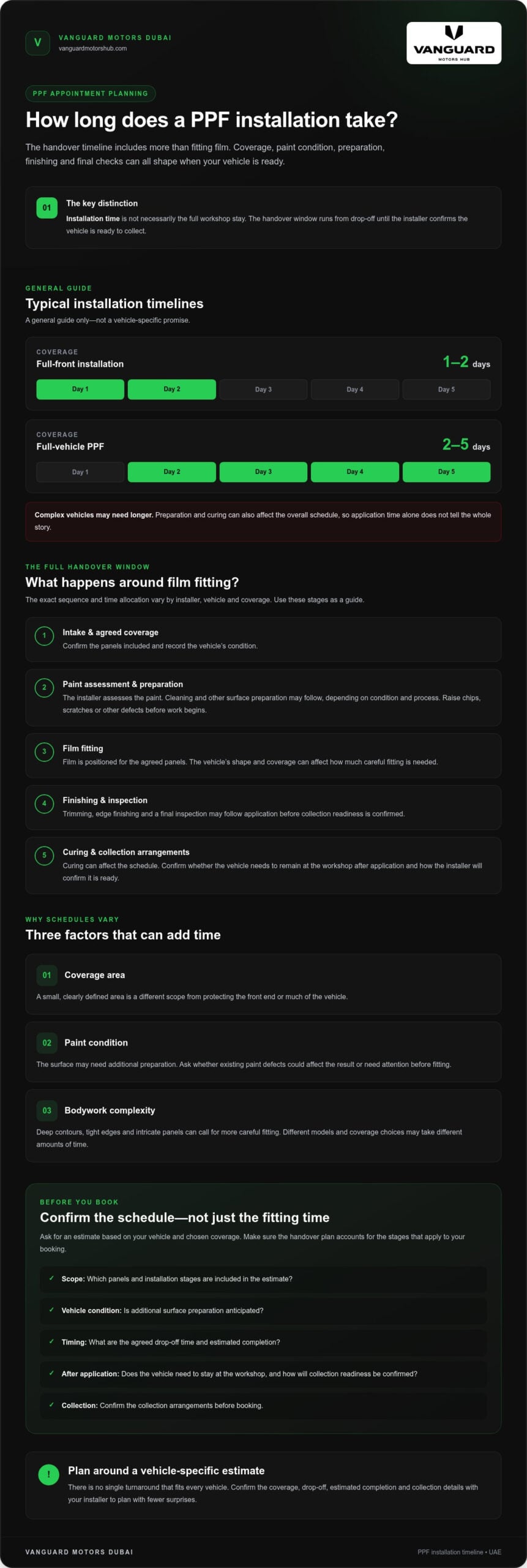
There isn’t one timeline that suits every vehicle. As a general guide, a full-front installation may take 1 to 2 days, while full-vehicle PPF typically takes 2 to 5 days. Complex vehicles may need longer. Preparation and curing can also affect the overall schedule, so application time alone doesn’t give you the full picture.
This guide explains the stages of a PPF installation, why coverage, paint condition and bodywork complexity can change the schedule, and how to plan drop-off and collection. You’ll also find practical questions to ask your installer, including what the estimate covers and whether the vehicle needs to remain at the workshop after application. For planning, start with an estimate based on your vehicle and chosen coverage.
Key Takeaways
- The car PPF installation timeline should cover the full handover, not just the time spent fitting film.
- Ask which installation stages are included and how the provider’s process may affect your schedule.
- Coverage, paint condition and complex bodywork can influence preparation and fitting time.
- Before booking, confirm the agreed coverage, drop-off time, estimated completion and collection arrangements.
- Request a vehicle-specific schedule from your installer to plan with fewer surprises.
Car PPF Installation Timeline: What the Full Process Includes
The car PPF installation timeline is the time from handing over your vehicle until the installer confirms it’s ready for collection. It includes more than positioning film. Intake, paint assessment, surface preparation, fitting, finishing and final inspection may all form part of the workshop schedule.
In short: workshop time is the period your vehicle is booked in for the work. The handover window runs from drop-off until the installer says it’s ready to collect. The distinction matters when arranging transport or planning your day. Ask which milestones the estimate includes instead of treating film application as the whole job.
If you’re new to the process, this Paint protection film (PPF) overview offers background on the material and its common applications. For scheduling, focus on how your chosen coverage and the vehicle’s condition affect the work.
What counts as PPF installation time?
At intake, the installer can assess the paint and confirm the panels included in your agreed coverage. This is separate from hands-on film application, but it may fall within the booked workshop period. Depending on the vehicle and the installer’s process, preparation may include cleaning and decontamination. Paint correction may also be considered if the surface needs attention before fitting.
Fitting is not necessarily the final step. Trimming, edge finishing and inspection may follow, with collection readiness confirmed afterward. Before booking, check whether the estimated handover window includes each stage or whether any work is scheduled separately.
Why one universal turnaround promise can mislead
A small, clearly defined coverage area is a different job from protecting the front end or much of the vehicle. The car’s condition may change the preparation required, while deep contours, tight edges and intricate panels can call for more careful fitting. One turnaround figure can’t account for every combination.
Ask the installer to assess your vehicle and the coverage you want before confirming a collection estimate. The exact sequence and time allocation depend on the provider’s process, so check what the quoted schedule includes rather than relying on a general promise.
Use this workflow to guide the questions you ask. Your installer can confirm which steps apply to your booking:
- Intake: How will the vehicle’s condition and agreed coverage be recorded?
- Preparation: Is any additional surface preparation anticipated?
- Fitting and finishing: Which tasks are included in the booked schedule?
- Inspection and collection: When will the vehicle be checked, and how will you know it’s ready?
Vanguard Motors Dubai provides professional PPF installation for customers across the UAE. Request a schedule based on your vehicle and chosen coverage, then confirm drop-off and collection details before booking.
The PPF Installation Stages That Shape Your Vehicle’s Schedule
A PPF booking involves more than laying film onto paint. The car PPF installation timeline takes shape across several steps, from confirming the vehicle’s condition and coverage to checking the finished application and arranging collection. The order and time allocated to each step vary by installer, vehicle and scope. Treat the following workflow as a guide, not a guaranteed description of every provider’s process.
Preparation and paint inspection before film fitting
Clean, properly prepared paint gives the film a more precise surface to fit against. At intake, the installer can assess the paint and confirm which panels are included in your selected coverage. Cleaning and other surface preparation may follow, depending on the vehicle’s condition and the provider’s process.
Raise any existing chips, scratches or other paint defects before work begins. Ask whether they could affect the result or need attention before film application. Preparation can change the schedule, so confirm what is included rather than assuming every vehicle follows the same process. For a technical view of the care involved, see the manufacturer’s official installation guidelines.
Film application, finishing, and final inspection
Once the surface is ready, the installer positions the film to suit the agreed panels and shape of the vehicle. They then work through the edges and finish. Complex curves or tight transitions may call for careful attention, so don’t assume fitting will take the same amount of time across different models or coverage choices.
A final inspection gives the installer a chance to review the application and identify any areas that need attention. Before leaving with the vehicle, ask what to expect after collection, including care instructions and whom to contact if you have questions about the film.
Use this typical workflow to clarify what your booking includes:
- 1. Intake and coverage check: Confirm the vehicle, selected panels and visible paint condition.
- 2. Cleaning and preparation: Ask what surface preparation is planned and whether any paint concerns could affect the work.
- 3. Film fitting and finishing: Confirm how the installer handles panel fit and edge finishing for your vehicle.
- 4. Inspection and collection: Ask how completion is confirmed, when collection is expected and what aftercare guidance you’ll receive.
Installers may organise these stages differently. For a schedule tailored to your vehicle and chosen coverage, ask Vanguard Motors Dubai about a vehicle-specific PPF schedule before booking.
What Makes One Car PPF Installation Timeline Longer Than Another?
Two PPF bookings can involve very different amounts of work, even if both are described as an installation. The car PPF installation timeline depends on the agreed coverage, the vehicle’s paint condition and the effort needed to fit film around its design. A general estimate may help with early planning, but a vehicle-specific schedule is more useful when arranging transport or deciding how long you’ll be without your car.
How coverage area changes the work involved
Protecting selected high-impact panels is a different scope from covering the front end or a broader area of the vehicle. More coverage generally means more film to position, fit and finish. Panel count alone doesn’t tell the whole story, though. The shape and layout of the surfaces matter too. Ask the installer to list the panels included so you can compare estimates on the same basis.
How condition, design, and finish expectations affect scheduling
Paint condition can affect the preparation required before fitting. Discuss existing defects during the assessment so the installer can clarify whether they affect the planned work. Complex curves, edges, vents or closely spaced panels can also require careful fitting and finishing. Share your vehicle’s make and model, desired coverage and any finish expectations early, since these details help define the scope.
To compare estimates clearly, ask each provider to outline the same details. This makes differences in scope and collection planning easier to spot:
- Coverage: Which panels are included, and are any areas excluded?
- Preparation: What surface preparation is included, and could the paint condition change the plan?
- Inspection: Is a final application check included before collection?
- Collection estimate: What handover window applies to your vehicle and chosen coverage?
Use one column per provider and the same four details for each estimate. Don’t compare a partial-panel quote with a full-front scope, or assume the same collection estimate applies to vehicles with different body shapes and paint conditions.
Before arranging transport, ask for an estimate based on your exact vehicle and coverage. Confirm the expected drop-off and collection window with the installer, and ask what could change it after the vehicle has been assessed. This gives you a practical basis for planning without relying on a general duration that may not match your job.
How to Plan Your PPF Appointment and Avoid Schedule Surprises
A confirmed appointment window makes it easier to organise your day, but the estimated completion time may change if the vehicle’s condition or agreed work differs from what was expected. Before booking transport or making plans around collection, clarify what the estimate includes. A few direct questions can turn the car PPF installation timeline into a practical plan rather than a guess.
Questions to ask before handing over your vehicle
Confirm the coverage panel by panel, then ask which preparation steps are included. Check the planned drop-off time, estimated vehicle release time and whether the estimate includes a final inspection. Find out how the provider will notify you if the schedule changes. At the same time, ask what to expect at collection, including any film care guidance.
- Coverage: Which panels are included, and does the estimate match the exact scope you want?
- Vehicle condition: Should you flag visible paint damage or other concerns before the assessment?
- Preparation and inspection: What preparation is covered, and is an application check included before release?
- Timing: What are the agreed drop-off and estimated collection windows, and how will updates be shared?
- Aftercare: What instructions should you follow after taking the vehicle away?
Planning transport and post-installation care
Arrange alternative transport around the provider’s confirmed appointment window, not an assumed finish time. If you need the car back for another commitment, leave a buffer in your plans. An estimate helps with coordination, but it isn’t a guaranteed release time.
At handover, ask for the installer’s specific guidance on washing and caring for the newly applied film. Don’t assume a universal curing period or apply generic advice without checking. Recommendations can depend on the film and installation process. Make sure you know when normal washing can resume and whom to contact if you have questions after collection.
Keep the agreed coverage and timing details together so you can refer to them if plans change. For a schedule based on your vehicle and coverage, ask about a PPF installation schedule.
Book a PPF Installation with a Clear, Vehicle-Specific Timeline
A useful handover plan starts with four details: the coverage you want, your vehicle’s condition, the installer’s process and an estimated collection window. Together, these give you a more practical car PPF installation timeline than a general turnaround figure. Vanguard Motors Dubai provides Paint Protection Film installation for customers across the UAE. Before booking, share enough information for the team to discuss a schedule for your vehicle and chosen coverage.
What to include in your installation enquiry
Give the installer your vehicle’s make and model, and mention any known paint concerns, such as chips or scratches. Explain whether you’re considering selected panels, front-end coverage or broader protection. If you have a preferred appointment window or need the vehicle back by a particular time, say so upfront. These details help the provider understand the scope and discuss an appropriate estimate.
- Vehicle: Share the make and model.
- Paint condition: Mention visible marks or known concerns that may affect preparation.
- Coverage: Specify the panels or areas you want protected, even if you’re still deciding on the scope.
- Scheduling needs: State your preferred drop-off window and any collection constraints.
What a useful timeline confirmation should cover
Before confirming your booking, ask the provider to clarify the expected drop-off, estimated completion and collection window. Check whether the schedule includes preparation and final inspection, and how you’ll be updated if the assessment reveals additional work that could affect timing. Ask what happens if the agreed scope or preparation needs change.
Also request the provider’s instructions for collection and post-installation care. Find out what to expect at handover and how to care for the newly applied film. Keep these instructions with your appointment details so they’re easy to find after you leave.
Clear answers make it easier to plan transport without building your day around an assumed finish time. Vanguard’s PPF installation service is an option for UAE vehicle owners seeking professional film installation. Share your vehicle details, requested coverage and scheduling needs to start a focused conversation.
Request your PPF installation timeline
Plan Your PPF Handover with Confidence
The car PPF installation timeline depends on more than fitting film. Coverage, paint condition and vehicle design can influence the work, while preparation, inspection and collection shape the full handover window. Before booking, confirm what the estimate includes and ask for timing based on your vehicle and chosen coverage.
Clear details make planning easier. Share your vehicle information and scheduling needs, then confirm the expected drop-off, completion and collection arrangements with the installer. Vanguard Motors Dubai provides PPF installation for customers across the UAE.
Ready to plan your appointment? Request a vehicle-specific PPF installation timeline and discuss the coverage and schedule for your car. Get the key details answered before drop-off so you can plan with greater confidence.
Frequently Asked Questions
How long does car PPF installation take?
There isn’t one reliable duration for every vehicle. Your car PPF installation timeline depends on the coverage area, paint condition, panel complexity, preparation needs and the installer’s process. Ask for an estimate based on your vehicle and selected coverage. Confirm whether it includes preparation, final inspection and collection readiness. Treat any general time range as a benchmark to check with the installer.
Can PPF be installed on a car in one day?
Some limited-scope jobs may fit a shorter appointment, but don’t assume a one-day turnaround for every vehicle or coverage choice. Preparation, panel complexity and finishing all affect the schedule. Ask what work is included and whether the estimate refers to workshop time or the full handover period. Confirm the expected vehicle release time before arranging transport or making plans around collection.
Why does full-car PPF take longer than partial coverage?
Broader coverage involves more surfaces to prepare, fit with film and finish than a smaller selection of panels. The vehicle’s shape and paint condition can also affect the work. For a useful estimate, ask the installer to specify the panels included and the preparation, fitting and inspection steps covered. This lets you compare schedules on the same basis.
Does my car need paint correction before PPF installation?
Not every vehicle needs the same preparation. An installer should assess the paint and discuss visible defects before applying film, since PPF protects the surface beneath it rather than repairing paint. Ask whether the assessment has identified preparation needs and whether additional work could affect your appointment schedule. Confirm the recommendation for your vehicle before booking, especially if you’ve noticed chips, scratches or other paint concerns.
Will I need to leave my car with the installer overnight?
That depends on the coverage, vehicle condition, workshop process and provider’s schedule. Don’t assume your car will be ready the same day or that an overnight stay will always be required. Before booking, confirm the drop-off time, estimated completion and collection arrangements. Also ask how the installer will contact you if the schedule changes so you can plan transport around the latest update.
How long should I wait before washing my car after PPF installation?
Follow the specific aftercare instructions supplied by your installer. Guidance can depend on the film and application process, so a generic online waiting period may not suit your vehicle. Before collection, ask when washing is appropriate, which cleaning methods to avoid and whom to contact if you notice an edge or have a concern about the application. Keep the instructions available after handover.
What information should I provide to get an accurate PPF timeline?
Share your vehicle’s make and model, its current paint condition and the panels or coverage area you’re considering. Mention any scheduling needs, then ask what the estimate includes, from preparation through final inspection. These details help the installer provide a more useful vehicle-specific estimate. Check whether an assessment or additional preparation could change the planned collection time, and confirm how schedule updates will be communicated.