
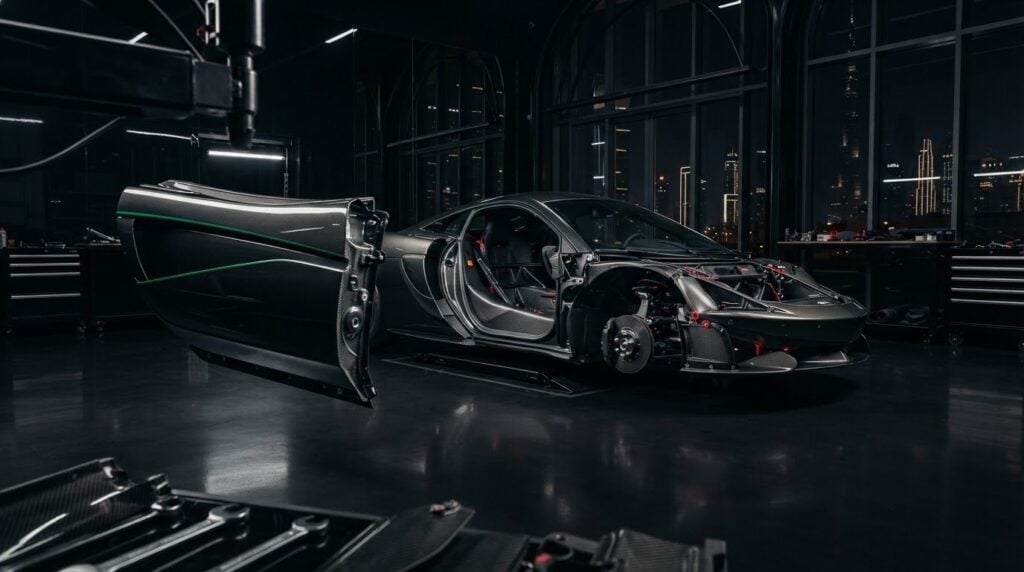
What if the carbon-fiber panel that looks most substantial is only there for style, while a less visible component helps support the vehicle’s structure? On a modern supercar, carbon weave and a premium finish can’t tell you a part’s job. Understanding carbon fiber body panels structural vs cosmetic modern supercars starts with one principle: engineered function matters more than appearance.
It’s easy to assume a carbon hood, roof, or body-kit component is structural. Yet some panels primarily serve an aesthetic or aerodynamic purpose, while others may contribute to chassis rigidity or crash performance. The distinction matters because decisions about damage, replacement, or modification should reflect the specific part’s role, not just its material or finish.
This guide explains how structural and cosmetic carbon-fiber components differ, which vehicle-specific information can help identify them, and when a professional inspection is sensible. You’ll also learn why visible weave, finish, and construction alone aren’t reliable proof. For owners considering carbon-fiber installation or repair, a careful assessment helps keep customization aligned with the vehicle’s engineered design.
Key Takeaways
- Judge a panel by its engineered role, not its visible weave or finish. Appearance alone can’t confirm whether it contributes to vehicle structure.
- For carbon fiber body panels structural vs cosmetic modern supercars, manufacturer documentation and vehicle-specific details are essential to verify a component’s function.
- Build a reliable assessment from the vehicle identity, component records, and clear documentation of damage, previous repairs, and modifications.
- Don’t remove bonded components yourself. Repair or replacement decisions depend on the damage, panel design, material, and manufacturer guidance.
- Before discussing carbon-fiber installation or repair, share accurate vehicle details and damage records with a specialist when the panel’s role is unclear.
What Makes a Carbon Fiber Body Panel Structural or Cosmetic?
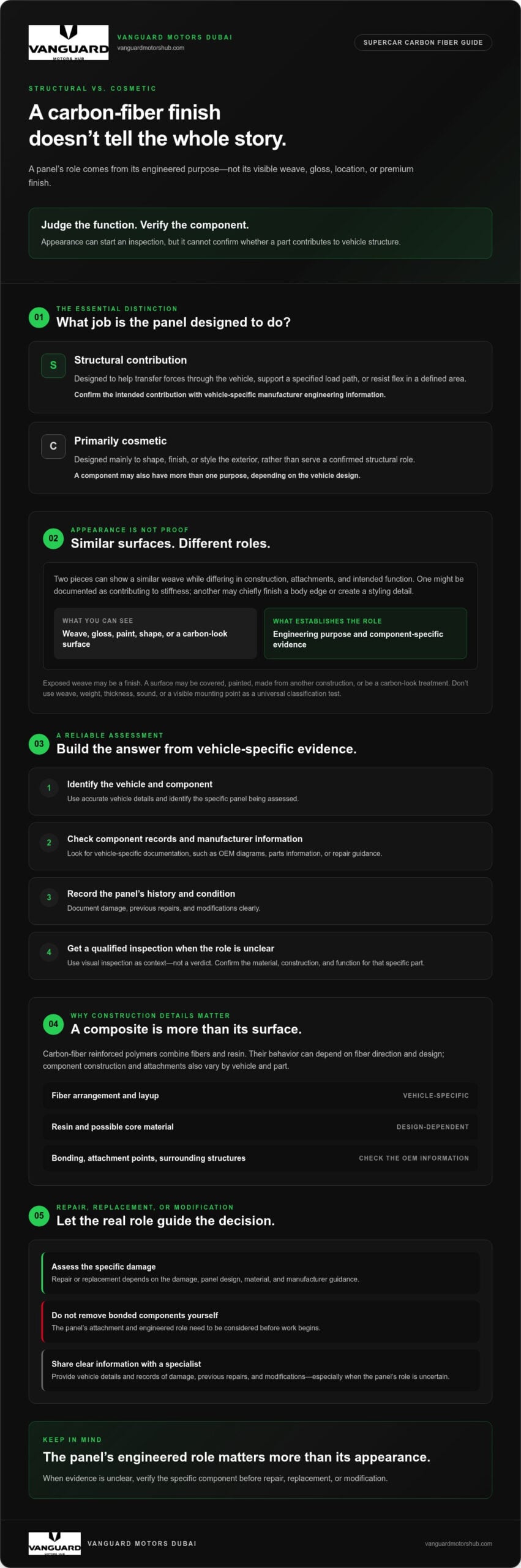
A carbon-fiber panel’s role comes from its engineered purpose, not the weave visible on its surface. A structural panel is designed to contribute to specified load paths or stiffness; a cosmetic panel is primarily designed to shape, finish, or style the exterior. This distinction is central to understanding carbon fiber body panels structural vs cosmetic modern supercars, and it can’t be settled by appearance alone.
Some components may serve more than one purpose. A panel could help manage airflow while also contributing to stiffness, depending on the vehicle’s design. Confirm its exact function for that specific vehicle and component before making repair or modification decisions.
What qualifies a carbon-fiber panel as structural?
A structural component is designed to help transfer forces through the vehicle or resist flex in a defined area. It may help connect parts of the body’s load path or help an assembly maintain its shape under particular forces. The manufacturer’s engineering information, rather than a panel’s location or appearance, should establish its intended contribution.
Carbon-fiber reinforced polymers combine fibers and resin, but the material alone doesn’t determine a component’s role. As the Carbon fiber reinforced polymers overview explains, composite properties can depend on fiber direction. Layup, attachment points, surrounding structures, and vehicle design all matter. Check claims about a particular panel against manufacturer documentation. The same type of part can have different functions on different vehicles.
Why visible carbon does not prove structural function
A glossy twill weave can look technical and purposeful, but it doesn’t reveal how a panel is engineered or what job it performs. A visible surface may be genuine composite material, a finish over another construction, or a carbon-look treatment. Reliable component information or a professional assessment is needed to confirm what it is.
Hypothetical example: imagine two exterior pieces with a similar visible weave. One is documented as contributing to stiffness through its design and mounting; the other is fitted chiefly to finish a body edge or create a styling detail. Their surfaces may look alike, yet their roles and appropriate repair decisions differ.
Use visual inspection as a starting point, not a verdict. If documentation is unclear, record the vehicle and component details and seek an informed assessment before repairing, replacing, or modifying the part.
How Modern Supercar Carbon Panels Differ in Construction and Purpose
Two panels can share a similar silhouette yet differ in material, internal construction, attachment method, and intended role. One may be designed to contribute to vehicle stiffness; another may primarily form an exterior surface or styling feature. Material appearance alone cannot confirm a panel’s structural contribution.
Exposed weave is only the visible finish. A component may be painted or covered, while a carbon-look surface doesn’t, by itself, prove the part is made from structural carbon-fiber composite. Confirm the actual material and construction through vehicle-specific documentation or a qualified inspection.
Construction clues need vehicle-specific confirmation
Composite construction can involve layers of fiber, resin, and, in some designs, a core material. Fiber arrangement, bonding, and attachment points may affect how a component behaves, but these features vary by vehicle and part. A visible edge or mounting point may offer context, but it isn’t a reliable classification test on its own.
Use manufacturer information and a workshop inspection to establish what applies to the specific component. Don’t treat a panel’s apparent weight, thickness, sound, or weave as a universal test. Verify technical details against the relevant OEM information.
A practical comparison of function and evidence
Use this table to decide what to check, not to classify a panel by appearance alone. The evidence listed can guide the assessment, but it doesn’t replace vehicle-specific confirmation.
| Intended role | Evidence to check | Suitable next step |
|---|---|---|
| Structural contribution, such as supporting a specified load path or stiffness | OEM diagrams, parts documentation, repair guidance, and component-specific construction details | Seek a qualified assessment before repair, replacement, or modification |
| Primarily cosmetic, shaping or finishing an exterior surface | Parts descriptions, installation information, and confirmation of material and attachment | Discuss cosmetic work or replacement options once the part’s role is verified |
| Unclear or potentially combined function | Conflicting records, uncertain prior repairs, or details that don’t clearly identify the component | Have the vehicle and panel assessed rather than relying on visual clues |
This is the practical distinction behind carbon fiber body panels structural vs cosmetic modern supercars: establish the purpose from reliable evidence, then choose an appropriate next step. If OEM information is inconclusive, a specialist assessment can help clarify whether carbon-fiber installation or repair is suitable for the component. You can discuss carbon-fiber panel assessment with Vanguard Motors Dubai.
How to Assess a Carbon Fiber Panel Without Guessing
A careful assessment starts with identification, not assumptions. Follow this sequence to establish what the component is and what is known about its condition before considering repair or modification:
- 1. Identify the vehicle. Record its make, model, year, and relevant specification details so the correct manufacturer information can be checked.
- 2. Identify the component. Note the panel’s location and name, then check manufacturer repair information, parts diagrams, and verified vehicle specifications for its intended role.
- 3. Establish its history. Ask whether the panel is original, replaced, repaired, or modified. Keep available invoices, parts records, and previous inspection notes.
- 4. Document its condition. Record visible cracks, impact marks, surface changes, and repair areas. Take clear photographs from several angles, but don’t treat them as a structural diagnosis.
- 5. Confirm the next step. If its role or condition remains unclear, seek a qualified assessment before repair, replacement, or customization.
Aftermarket descriptions can help identify what a seller claims a part is, but they aren’t proof of its structural role or suitability. Compare those claims with vehicle-specific documentation and qualified professional judgment. Don’t remove bonded components yourself to investigate their construction.
When should an owner seek professional assessment?
Arrange an assessment after an impact, if you see cracking or other damage, if repair history is uncertain, or if you can’t confirm what the panel does. A sound-looking surface doesn’t rule out concerns, and photographs alone can’t establish structural safety. The appropriate inspection depends on the vehicle, component, available manufacturer guidance, and a qualified professional’s judgment.
For repair-specific information, look for the published Carbon Fibre Car Parts Repair guide. If OEM documentation and the visible condition still leave questions, a specialist assessment can help clarify whether carbon-fiber repair or installation is appropriate for that component. Share vehicle details, known repair history, and clear damage records when discussing the work. You can discuss carbon-fiber panel assessment with Vanguard Motors Dubai.
In short, carbon fiber body panels structural vs cosmetic modern supercars is a question of evidence, history, and vehicle-specific inspection, not guesswork.
Choosing Between Structural Repair, Cosmetic Work, and Replacement
The right repair path depends first on the panel’s role, then on the damage and vehicle-specific repair guidance. A finish issue doesn’t prove structural damage, and a polished surface can’t establish that a damaged component is sound. For carbon fiber body panels structural vs cosmetic modern supercars, keep appearance goals separate from structural evaluation.
- Structural concern: If damage may affect a load-bearing component, have it assessed before cosmetic refinishing. Follow manufacturer repair procedures and vehicle-specific recommendations. Don’t assume a surface repair is appropriate.
- Cosmetic damage: If the component’s role and condition are understood, restoration may focus on its visible finish. The suitable approach still depends on the material, damage, and repair guidance.
- Replacement: Consider this when the component’s design, damage, or manufacturer guidance makes repair unsuitable, or when replacement is the preferred option. Confirm fitment and compatibility for the specific vehicle.
There’s no universal rule that a cracked panel must be replaced or that every surface flaw can be repaired. Repairability depends on the damage, component design, material, and manufacturer guidance. A qualified assessment helps establish which considerations apply; it can’t promise a particular outcome.
When the priority is structural integrity
Suspected structural damage needs qualified assessment before refinishing. Appearance work doesn’t resolve questions about a component’s engineered role or condition. Use manufacturer repair procedures and verified vehicle-specific recommendations to guide the decision. For more repair-focused context, see the published Carbon Fibre Car Parts Repair guide. The separate Cosmetic Car Repair in 2026 guide can help frame surface-restoration considerations, but it isn’t a substitute for structural evaluation.
When the goal is appearance or personalization
For cosmetic carbon-fiber work, consider finish, fit, and compatibility with the vehicle and adjacent components. A change in weave, surface finish, or replacement part can alter the visual result, but a cosmetic upgrade doesn’t establish improved structural performance. Confirm the component’s role and suitability before installation, especially if documentation is unclear.
After the panel work is assessed and completed, owners may also consider Paint Protection Film (PPF) installation to protect exterior finishes. Vanguard Motors Dubai provides carbon-fiber installation and repair, but whether a particular panel is suitable depends on its vehicle-specific design and condition. Discuss carbon-fiber panel repair or installation with Vanguard Motors Dubai.
Plan Carbon Fiber Installation or Repair Around the Panel’s Real Role
Before approving work, follow a clear sequence: identify the panel, verify its role through vehicle-specific information, document its condition, then discuss the options. This keeps cosmetic preferences separate from structural requirements and gives a specialist useful context before considering carbon-fiber installation or repair.
Prepare the details that can shape the discussion:
- Vehicle make, model, year, and relevant specification details.
- The panel’s location and any available parts or manufacturer documentation.
- Known repair or modification history, including whether the component is original or has been replaced.
- Clear records of visible damage, such as photographs from different angles and notes about any known impact.
- Your objective, whether you’re seeking an assessment, repair, replacement, or a cosmetic change.
This information doesn’t determine the outcome on its own. It helps a specialist distinguish what’s known from what still needs verification, particularly when carbon fiber body panels structural vs cosmetic modern supercars are difficult to classify from appearance alone.
Questions to ask before approving carbon-fiber work
Ask how the provider will confirm the panel’s role and identify applicable vehicle-specific repair requirements. Clarify the proposed work, material and fitment compatibility, finish, and any known limitations before authorizing a repair or modification. If there may be structural concerns, ask that these be assessed separately from cosmetic goals. A clear explanation of what the work can and can’t address helps you make an informed decision without assuming a particular result.
Discuss your vehicle’s carbon-fiber needs with Vanguard Motors Dubai
Vanguard Motors Dubai provides carbon-fiber installation and repair. Share your vehicle details, repair history, and damage records, then explain whether you’re seeking installation or repair. The appropriate next step depends on the component’s verified role, condition, and relevant manufacturer guidance.
Ready to discuss the panel and your objectives? Discuss carbon-fiber installation or repair with Vanguard Motors Dubai.
Make Your Next Carbon-Fiber Decision With Confidence
The key to carbon fiber body panels structural vs cosmetic modern supercars is to assess purpose, not appearance. A visible weave can’t confirm a panel’s role, and the right choice between repair, cosmetic work, and replacement depends on the component, its condition, and vehicle-specific guidance.
Start with the vehicle and panel details. Check manufacturer information, record damage and previous work, then discuss the options before authorizing installation or repair. Keeping structural concerns separate from finish preferences helps protect the vehicle’s engineered function while supporting your customization goals.
Vanguard Motors Dubai provides carbon-fiber installation and repair as part of its automotive customization and protection services. Share your vehicle details and what you’re considering to discuss the work. Discuss your carbon-fiber requirements with Vanguard.
With the right information and a considered approach, you can pursue a refined result while making decisions grounded in the panel’s real role.
Frequently Asked Questions
Are all carbon-fiber body panels on supercars structural?
No, carbon-fiber body panels aren’t all structural. Some are engineered to contribute to stiffness or transfer forces through a vehicle, while others primarily shape or finish the exterior. The material or appearance alone doesn’t establish a panel’s function. Its role depends on the specific vehicle and component, so check manufacturer documentation before making repair, replacement, or customization decisions.
How can I tell whether a carbon-fiber panel is structural?
Check vehicle-specific manufacturer repair information, parts diagrams, and documentation that identifies the component’s role. Confirm whether the panel is original, replaced, repaired, or modified, since its history can affect the assessment. Weight, thickness, sound, and visible weave aren’t reliable universal tests. If records are incomplete or unclear, ask a qualified professional to assess the component before approving work.
Can a cosmetic carbon-fiber panel improve a supercar’s structural strength?
Not simply because it’s made from carbon fiber. A cosmetic panel or upgrade doesn’t establish a structural contribution or improve the vehicle’s strength by default. That depends on the part’s engineering, material construction, attachment, and compatibility with the vehicle. If a performance or structural benefit is claimed, verify it through credible, vehicle-specific documentation rather than relying on an appearance-focused description.
What happens if a carbon-fiber panel is damaged?
The next step depends on the panel’s role, the type and extent of damage, and manufacturer guidance. Record the damage and any known impact or repair history, then seek a qualified assessment if there’s cracking, impact damage, or uncertainty about the component’s function. Don’t assume a polished or refinished surface confirms the panel’s condition, and don’t remove bonded parts yourself to inspect them.
Can a cracked carbon-fiber panel be repaired?
Sometimes, but a crack doesn’t reveal whether repair is suitable. Repairability depends on the damage, component design, material, and manufacturer guidance. A qualified assessment should establish whether the panel has a structural role and what repair procedures apply before cosmetic work begins. Vanguard Motors Dubai provides carbon-fiber repair, but suitability and the appropriate approach must be determined for the specific vehicle and component.
Does exposed carbon fiber mean a panel is made from structural carbon fiber?
No. Exposed weave shows a surface appearance, not necessarily the panel’s construction or engineering purpose. A visible finish may be genuine composite, a covering over another construction, or a carbon-look treatment. Confirm the component’s material and role through manufacturer or parts documentation, or seek a qualified assessment. Don’t infer structural function from gloss, weave pattern, or visual detail alone.
Should I choose carbon-fiber panels for appearance or performance?
Choose based on a clear objective, then verify the part’s compatibility and intended function. For appearance, consider finish and fit. For a claimed performance or structural benefit, ask for vehicle-specific supporting information and confirm relevant manufacturer guidance. The phrase carbon fiber body panels structural vs cosmetic modern supercars captures the key decision: material and styling don’t prove performance. Discuss proposed work before authorizing installation.