
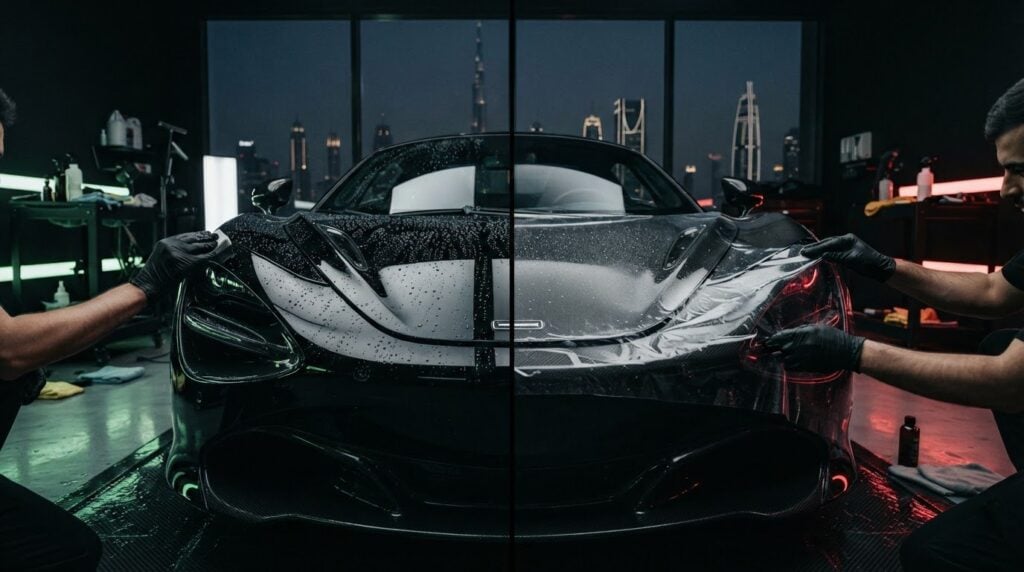
A flawless new-car finish can face its first stone chip long before it needs its first polish. That’s why Ceramic Pro vs PPF for new cars isn’t simply a choice between two levels of protection: one is a surface coating, while the other is a physical film barrier. If you’re weighing both, ask whether a coating can resist chips as effectively as film. It can’t. Each serves a different purpose.
This guide compares what Ceramic Pro and paint protection film are designed to do, where their strengths differ, and when combining them may be worth discussing with a qualified professional. Your driving habits, the panels you want covered, and your preferred care routine can all shape the right approach, whether you use the car regularly or want to preserve a high-value vehicle’s finish.
We’ll also cover practical questions to ask before booking, including paint preparation, coverage, aftercare, and product-specific claims. If you’re considering professional PPF installation, discussing vehicle-specific coverage and fitting considerations with an experienced installer can help you make an informed choice.
Key Takeaways
- Compare Ceramic Pro and PPF by their different roles, rather than assuming one automatically replaces the other.
- Match your choice to the paint risks you prioritize, your driving exposure, preferred upkeep, and desired coverage.
- Consider whether combining a coating and PPF fits your goals. Confirm product-specific claims and care requirements before deciding.
- Before arranging PPF, ask about the film product, panel coverage, paint preparation, workmanship, and aftercare for your vehicle.
Ceramic Pro vs PPF for New Cars: What Each Protection Actually Does
A new car’s factory finish looks its best before daily driving begins, so wanting to protect it from the first trip is understandable. The key is choosing protection for the risks you want to address. In the Ceramic Pro vs PPF for new cars comparison, the distinction is clear: a coating changes the surface; film adds a physical layer.
Ceramic Pro is a brand associated with ceramic coatings, but its products, formulations, and claims can vary. Don’t assume every coating has the same composition, performance, or care instructions. Check current manufacturer documentation for the exact product, and ask what its stated benefits do and don’t cover. A smooth, treated finish is not the same as a film barrier against physical impacts.
What Ceramic Pro coating is designed to do
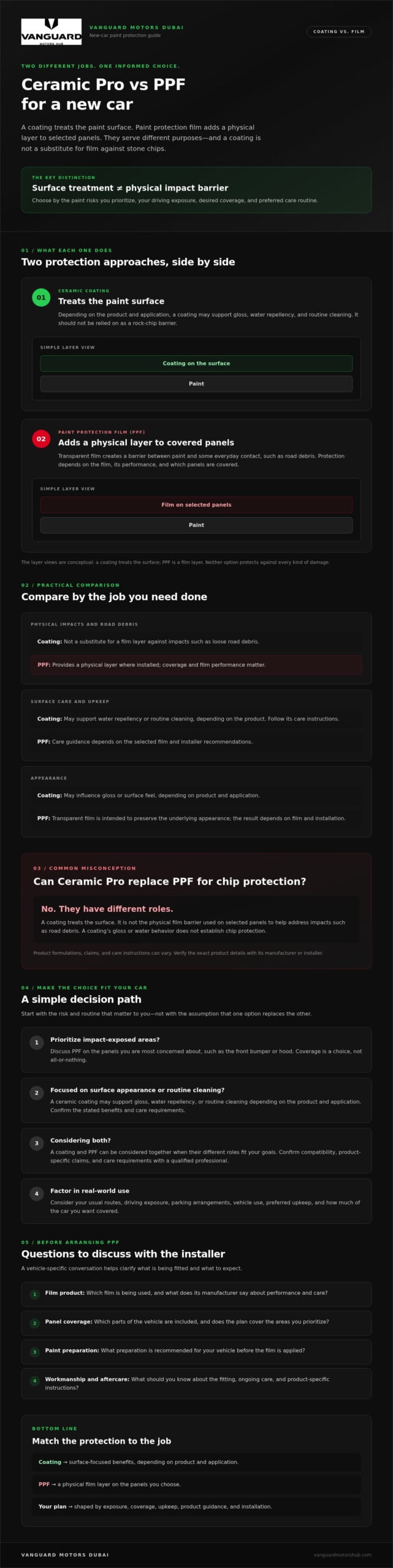
A ceramic coating is a surface treatment, not a substitute for PPF. Depending on the product and application, a coating may support gloss, water repellency, and routine cleaning. Those benefits shouldn’t be treated as proof that the paint is protected from rock chips. Confirm performance claims and maintenance requirements with the manufacturer or installer. Results depend on the coating, preparation, application, and ongoing care.
What paint protection film adds to new-car paint
Paint protection film is a transparent film applied over selected painted surfaces. It creates a physical layer between the paint and some everyday contact, such as road debris. The Paint protection film overview explains the material’s background and common uses. For a particular installation, confirm the film’s care guidance with its manufacturer and installer.
Coverage is a choice, not an all-or-nothing decision. An owner might prioritize impact-exposed areas, such as the front bumper or hood, or discuss protecting more of the vehicle. The right plan depends on your car, driving exposure, and priorities. Consider your usual routes, parking arrangements, and vehicle use rather than relying on broad protection claims. Ask an installer which panels can be covered and what preparation they recommend.
In practical terms, coatings focus on the paint’s surface and may make upkeep easier when product guidance supports that expectation. PPF adds a film layer to the panels you choose. Neither option should be judged by a headline durability claim alone: product, installation quality, coverage, and owner care all matter. To learn about professional paint protection film installation, discuss your vehicle and desired coverage with Vanguard Motors Dubai.
Ceramic Pro vs PPF: Compare Protection, Appearance, and Upkeep
The practical difference is what sits between your paint and everyday exposure. A ceramic coating treats the surface; paint protection film (PPF) adds a physical layer to the panels it covers. Neither is a shield against every kind of damage. Results depend on the product, installation, coverage, and how you care for the vehicle.
| Consideration | Ceramic coating | Paint protection film |
|---|---|---|
| Physical impact barrier | Not a substitute for a film layer against impacts such as loose road debris. | Creates a physical barrier on covered panels. Protection is limited to the film’s coverage and performance. |
| Surface-care role | Depending on the product, may support water repellency and easier routine cleaning. Check product documentation. | Primarily adds a film layer. Specific care and performance guidance depends on the film. |
| Appearance | May influence gloss or surface feel, depending on the product and application. | A transparent film is intended to preserve the underlying appearance, though the result depends on the film and installation. |
| Maintenance | Requires care appropriate to the selected coating and its instructions. | Requires care appropriate to the selected film and installer guidance. |
Which option better addresses chips, marks, and road exposure?
On a highway, a stone or loose debris may strike the front of a vehicle. In a car park, contact with another object can leave a mark. PPF can provide a physical layer where it’s installed, while a coating treats the paint surface and shouldn’t be relied on as a chip barrier. Film doesn’t cover every panel by default, so confirm whether your chosen coverage includes the areas you’re most concerned about. For additional expert insight on PPF, compare its physical role with that of ceramic coatings.
How do appearance and routine care differ?
A coating may change how the paint looks or how water behaves on it. Check current documentation for the exact Ceramic Pro product rather than assuming a particular finish or benefit. PPF is a film layer, and its appearance can depend on product choice and installation. Neither approach makes ownership maintenance-free. Follow the relevant care instructions, and don’t treat broad claims about scratch healing, chemical resistance, durability, or warranty as universal.
When comparing Ceramic Pro and PPF for a new car, start with the protection you want, then assess appearance and upkeep. If you’re weighing PPF coverage, PPF suitability can be discussed with Vanguard Motors Dubai.
The Biggest Misconception: Does Ceramic Pro Replace PPF on a New Car?
No. A ceramic coating and paint protection film serve different roles, so they aren’t interchangeable. A coating treats the paint surface; PPF is a physical film layer applied to selected panels. A finish that feels smooth or sheds water doesn’t mean there’s film between the paint and road debris. That distinction is central to Ceramic Pro vs PPF for new cars.
If you’re assessing a coating, verify the exact product’s current claims and care instructions instead of assuming all coatings perform alike. J.D. Power’s overview of what ceramic coating is can help clarify its general role, but the manufacturer’s documentation should guide product-specific expectations.
When coating alone may match the owner’s priorities
A coating may suit an owner whose main priorities are surface appearance and a preferred routine-care experience, rather than a physical impact barrier. Set realistic expectations: confirm what the chosen coating is designed to do, how it should be maintained, and what its claims exclude. A coating also doesn’t extend PPF coverage to unfilmed panels. If no film is installed on a panel, a coating doesn’t turn it into a film-protected surface.
When PPF or a combined approach deserves consideration
If your priority is a physical barrier on frequently exposed painted areas, such as the front of a car used regularly on highways, discuss PPF coverage with a professional. Protection applies only where film is installed, so panel selection is part of the decision. An installer can help assess your vehicle’s condition, likely exposure, and desired coverage before you choose an approach.
Some owners may consider both technologies, with PPF on selected panels and a coating as an additional surface treatment. That isn’t a universal requirement or an automatic upgrade. Before layering products, ask whether the specific coating is suitable for application over the specific film, and follow both manufacturers’ guidance. Confirm compatibility, preparation, and care instructions rather than assuming they are suitable.
Use this distinction as your decision filter: coating treats the surface; PPF provides physical film coverage. Vanguard Motors Dubai provides professional PPF installation for owners considering a physical film layer. The vehicle and the panels you want covered are useful starting points for discussing an installation plan.
How to Choose Ceramic Pro, PPF, or Both for Your New Car
The right answer to Ceramic Pro vs PPF for new cars depends on what you want to protect, how you use the vehicle, and what care you’re prepared to follow. Before speaking with an installer, identify your vulnerable panels and preferred appearance. Then work through these four questions:
- What are you most concerned about? Decide whether your priority is surface appearance and routine care, a physical film barrier against road exposure, or a combination of goals.
- Which panels matter most? Note areas you’re especially keen to protect, such as the front bumper, hood, or other frequently exposed painted panels. PPF only protects areas where it’s installed.
- How and where do you drive? Compare daily commuting with occasional use, and consider your usual routes and parking arrangements. Your actual driving and parking conditions are more useful than a broad assumption about every owner’s exposure.
- What ongoing care suits you? Consider the product-specific cleaning and maintenance guidance you’re willing to follow. Neither option means maintenance-free ownership.
Your answers help clarify whether a coating, selected PPF coverage, or both deserve consideration. They also make a professional discussion more specific. Instead of asking which option is “best,” explain the risks and finish you’re prioritizing.
What to confirm before approving installation
Ask the professional to explain the proposed coverage, preparation steps, installation process, and aftercare. Request manufacturer documentation supporting performance and maintenance claims for the exact products being considered. If you’re considering a coating over film, confirm that the specific combination is suitable according to the relevant manufacturers rather than assuming compatibility.
For PPF, discuss the vehicle’s paint condition and the panels you want covered before approving installation. Vanguard Motors Dubai provides professional PPF installation. Details about PPF coverage for your vehicle can be discussed on WhatsApp.
Paint protection is only part of ownership. For a broader perspective on caring for a high-performance vehicle’s presentation, explore this supercar detailing care guide.
Professional PPF for a New Car: Prepare for the Next Step
Before arranging installation, discuss your new car’s paint condition and the coverage you want. “New” doesn’t tell an installer whether the finish needs attention or which panels match your priorities. Be ready to describe how you use the vehicle, identify the areas you’re most concerned about, and ask what the proposed work will include.
A clear conversation helps you assess the installation plan without relying on broad promises. Use these questions to guide it.
Questions to ask a PPF installation professional
- Which panels are included? Ask for a clear explanation of the proposed coverage and which painted areas will remain exposed.
- How will you assess and prepare the paint? Ask what the inspection and preparation involve, and how the installation process is planned for your specific vehicle.
- Which film product is proposed? Request the product name and current manufacturer information supporting any performance claims.
- How is workmanship assessed? Ask what you should inspect at handover, including film edges and visible areas, and how any concerns should be raised.
- What aftercare is recommended? Request written or manufacturer-backed instructions, including any guidance for the period immediately after installation.
Confirm product-specific terms directly with the provider. If you’re also considering a coating, ask whether the exact film and coating combination is supported by their respective manufacturer guidance. Don’t assume compatibility or treat a general claim as a product-specific commitment.
Discuss your new-car protection priorities with Vanguard
Vanguard Motors Dubai provides professional Paint Protection Film installation, including for luxury and supercars. If PPF is part of your decision after comparing Ceramic Pro vs PPF for new cars, share your vehicle details and the panels you’re considering. This gives the installation discussion a practical starting point without presuming one coverage plan is right for every car.
For more background before speaking with a professional, visit the PPF protection guide. Information about discussing PPF for a new car, including vehicle details and preferred coverage areas, is available by messaging Vanguard on WhatsApp.
Choose Protection with Confidence
Make the decision around your ownership priorities, not a headline claim. Ceramic Pro vs PPF for new cars comes down to the type of protection you want: a surface treatment for care and appearance, a physical film layer on selected panels, or a carefully assessed combination. Your driving patterns, preferred upkeep, and the specific areas you want covered should guide the choice.
Before moving ahead, get a clear installation plan. Confirm the panels included, how the paint will be assessed and prepared, which product documentation supports performance claims, and what aftercare is recommended. Those details help you compare options based on realistic expectations rather than broad promises.
Vanguard Motors Dubai specializes in professional Paint Protection Film installation and high-end vehicle protection and aesthetic enhancements. If you’re considering a physical film layer for your new car, share the vehicle and coverage areas you have in mind when discussing PPF protection for your new car with Vanguard.
Start with a clear priority, ask precise questions, and choose the approach that fits your car. A considered decision can help you enjoy its finish with greater confidence.
Frequently Asked Questions
Is Ceramic Pro the same as paint protection film?
No. Ceramic Pro is a brand associated with ceramic coatings, while paint protection film, or PPF, is a physical film applied to selected painted panels. A coating treats the paint’s surface; PPF adds a layer over the areas covered. They have different roles, so compare the exact product claims and intended use rather than treating the names as interchangeable.
Can ceramic coating prevent stone chips on a new car?
No. A ceramic coating shouldn’t be relied on to prevent stone chips. It’s a surface treatment, not a physical film barrier against impacts from road debris. If chip protection is a priority, discuss PPF coverage for the panels most exposed during your usual driving, such as the front bumper or hood. Check the chosen coating’s manufacturer documentation for its specific claims and limitations.
Is PPF or Ceramic Pro better for a new car?
Neither is universally better. The right choice depends on what you want to protect. PPF adds a physical layer to covered panels, while a Ceramic Pro coating treats the paint surface and may support appearance or routine care according to its product documentation. When comparing Ceramic Pro and PPF for a new car, consider your driving exposure, preferred upkeep, and desired panel coverage before deciding.
Can you apply ceramic coating over PPF?
Possibly, but don’t assume every coating is suitable for every film. Before combining them, ask the installer to confirm compatibility using guidance for the exact PPF and coating products. Also clarify which surfaces would receive each treatment, how the vehicle will be prepared, and what aftercare applies. Base the decision on manufacturer instructions, not a general promise that layering always improves protection.
How much of a new car should be covered with PPF?
There’s no single coverage amount that suits every new car. Some owners focus on frequently exposed painted panels, while others consider broader coverage based on their driving, parking, and protection priorities. Ask the installer to identify exactly which panels are included and what remains uncovered. Then weigh that plan against your vehicle’s use and the areas you’re most concerned about.
What happens if I apply ceramic coating without PPF?
The coating treats the paint surface, but it doesn’t add a physical film layer to panels without PPF. Depending on the specific product and application, it may offer surface-care benefits described by its manufacturer. Follow the product’s maintenance instructions and keep expectations grounded in its documented claims. If you want a physical barrier on selected areas, discuss PPF separately with an installer.
Does a new car need paint protection before its first drive?
No, paint protection isn’t automatically required before a new car is driven. It’s a personal decision based on your priorities, expected use, and willingness to maintain the chosen treatment. If you’re considering PPF, discussing paint condition and desired panel coverage before installation can help clarify the plan. Ask about preparation, the product being used, and its recommended aftercare before approving work.