
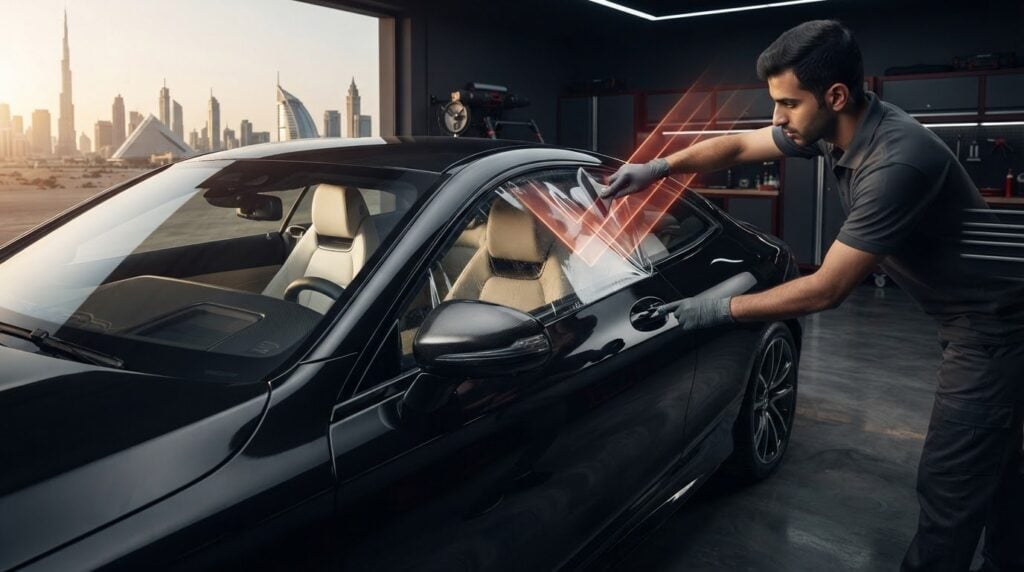
The darkest tint isn’t always the strongest defence against cabin heat. Clear heat control window film for cars can help manage solar heat while preserving a bright, close-to-original appearance, but transparency alone doesn’t show how well a film performs.
It’s reasonable to wonder whether a nearly invisible layer can make a noticeable difference, especially when products use different measurements to describe performance. Compare the published specifications rather than judging by shade. This guide explains how to read total solar energy rejected (TSER), infrared rejection (IRR), solar heat gain coefficient (SHGC) and visible light transmission (VLT), so you can weigh heat control against clarity and visibility.
You’ll also learn how clear film compares with darker tint, why glass compatibility matters and what to ask before booking professional window tinting in the UAE. Vanguard Motors Dubai offers vehicle window tinting. Ask whether clear heat-control film is available for your vehicle and request its specifications before deciding. Choose based on documented performance, fit and appearance, not headline claims alone.
Key Takeaways
- Assess clear heat control window film for cars by its documented performance, not by how transparent or dark it looks.
- Use VLT, IRR and TSER to compare different aspects of a film. These measurements are not interchangeable.
- Weigh clear film against darker tint based on your visibility preferences, appearance goals and vehicle-glass compatibility.
- Before installation, ask how the film suits your existing glass and verify current UAE requirements with an appropriate authority.
- Vanguard Motors Dubai offers vehicle window tinting. Ask whether a suitable clear heat-control option is available for your specific vehicle.
What Is Clear Heat Control Window Film for Cars, and What Can It Do?
Clear heat-control film is a thin layer applied to vehicle glass to manage selected parts of incoming solar energy while keeping the window relatively transparent. It can influence what passes through the glass without necessarily creating the darker look associated with traditional tint. “Clear” describes appearance, though, not a guaranteed level of heat control.
Solar radiation includes visible light, infrared energy and ultraviolet radiation. These are different measurement categories, so a film can appear light while targeting some wavelengths more effectively than others. For an overview of the broader film category and its properties, see What is Window Film? For a specific product, request its technical sheet and check what each performance claim measures.
How can clear film affect sunlight without looking dark?
Visible light affects a window’s brightness and appearance. Infrared and ultraviolet measurements describe other parts of the solar spectrum. Some film constructions are designed to manage selected wavelengths while transmitting more visible light, but technology and results vary by product. Ask for documented specifications rather than assuming a film will reject heat because it is labelled clear or uses a particular technology.
What does window film protect or change inside a car?
Depending on its verified specifications and the vehicle, film may affect perceived warmth, brightness and glare. The experience can vary because glass type, existing glazing and installation all matter. Assess heat-management and UV-protection claims separately: request supporting figures for each, and check whether they apply to the film alone or to a film-and-glass combination.
Clear heat control window film for cars is one part of cabin comfort, not a substitute for the air conditioning system, shade or sensible parking choices. Avoid relying on a promised cabin-temperature reduction without product- and vehicle-specific evidence. Before choosing, ask which glass the film suits, what measurements support its claims, and how the installed result may affect visibility and the vehicle’s original appearance.
Which Window Film Specifications Reveal Real Heat-Control Performance?
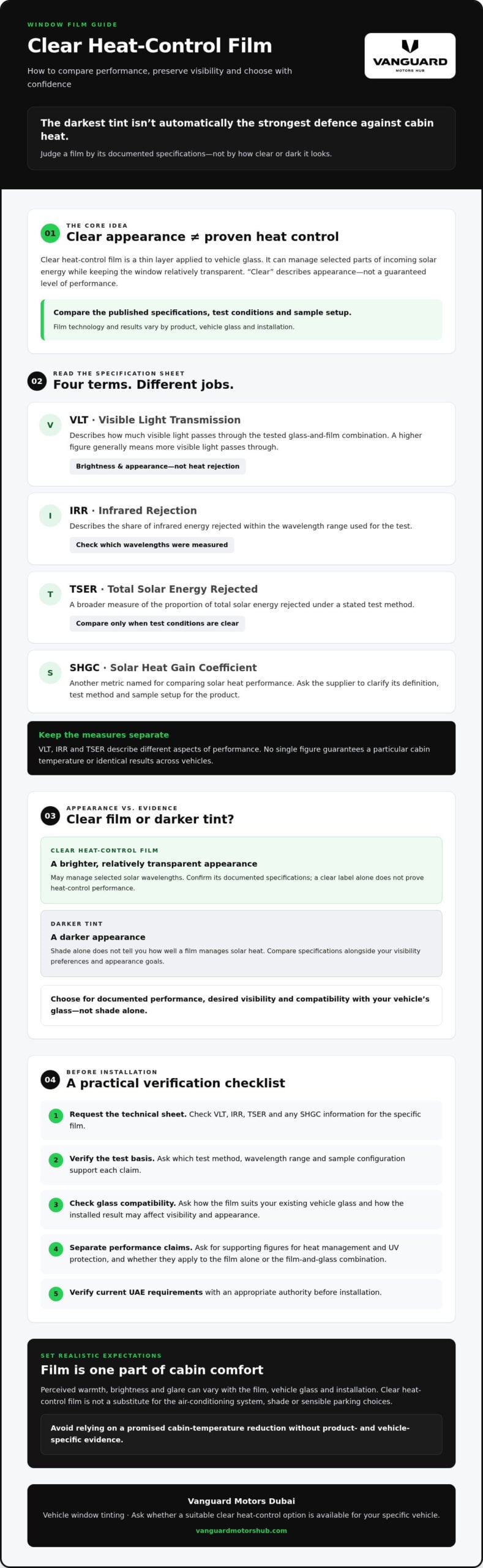
Compare the numbers behind a film’s claims, not just its shade or marketing language. Three common specifications describe different aspects of performance: visible light transmission, infrared rejection and total solar energy rejected. None alone guarantees a particular cabin temperature or identical results across vehicles.
| Specification | What it describes | How to read it |
|---|---|---|
| Visible Light Transmission (VLT) | The amount of visible light passing through the tested glass-and-film combination. | A higher figure generally means more visible light passes through. It describes brightness, not heat rejection. |
| Infrared Rejection (IRR) | The share of infrared energy rejected within the wavelength range used for the test. | Check which wavelengths were measured. A high figure for one range doesn’t describe all solar energy. |
| Total Solar Energy Rejected (TSER) | The proportion of total solar energy rejected under a stated test method. | This broader measure can aid comparison, but only when the test conditions and sample setup are clear. |
What do VLT, infrared rejection, and total solar rejection mean?
VLT concerns visible light, while IRR concerns a portion of the solar spectrum. TSER provides a broader measure of solar energy rejected, but definitions, wavelength ranges and test conditions matter. The International Window Film Association provides industry information on window-film performance. Use manufacturer documentation to verify the exact figures for the film you’re considering.
How should you compare manufacturer performance claims?
Start with the technical sheet. Check whether each figure applies to the film alone or to a film installed on a specified glass sample. Then compare the test method, sample configuration, film specification and any stated wavelength range. You can’t fairly rank one clear heat control window film for cars against another if their headline figures come from different methods or setups.
Be cautious with unsupported percentages. Ask the supplier to identify the source and test conditions behind each claim, and request clarification if the documentation is incomplete. Even comparable laboratory results don’t guarantee the same real-world cabin experience. Existing vehicle glass, installation and driving conditions can all affect the result.
Before discussing window tinting, prepare your vehicle details and ask which documented specifications are available for its glass. You can ask Vanguard about vehicle window tinting and whether a suitable clear option is available for your vehicle.
Clear Film vs Dark Tint: Which Option Fits Your Priorities?
Choose based on what you want to see, how you want the cabin to feel and what the film’s documentation supports. A darker appearance doesn’t automatically mean stronger heat control. Performance depends on verified specifications and compatibility with the vehicle’s existing glass, not shade alone.
| Priority | What to consider |
|---|---|
| Preserving the original look | Clear film may suit drivers who want brighter windows and a relatively unchanged exterior appearance. Check how it looks on your glass. |
| A darker aesthetic or added privacy | Visible tint may better match your styling or privacy preferences, but consider sightlines and night-driving visibility. |
| Heat management | Compare supporting performance data under consistent test conditions. Don’t use darkness as a substitute for documented evidence. |
When does clear heat-control film make more sense?
Consider clear film if you value a bright cabin, want to retain more of the vehicle’s original glass appearance or prefer not to add an obvious tint effect. Check how the product looks and performs on the specific windows you intend to treat. Ask whether it’s available for your vehicle, request product-specific evidence and confirm compatibility with the existing glass. A “clear” label alone establishes neither performance nor fit.
When might a darker tint be the better fit?
Darker tint may better suit your styling preference or your desired balance of brightness and privacy. Assess it from inside the car as well as outside. Consider visibility at night, the needs of all occupants and how the tint will interact with factory glazing. Before selecting a visible tint level, verify current UAE requirements with an appropriate authority. Don’t assume one shade suits every window or vehicle.
Neither appearance tells the whole story. Compare documented performance on a like-for-like basis, check the film against your vehicle’s glass, then decide how appearance and visibility rank against heat management. If your goal is a body-colour change rather than a glass treatment, explore car wrap options. A wrap changes the vehicle’s exterior finish; window film is applied to glass. Clear heat control window film for cars is a glass choice, so check its availability and supporting evidence for your vehicle before booking.
How to Choose and Prepare for Car Window Film Installation
A suitable film needs to match both your priorities and your vehicle. Use this checklist before booking to keep the discussion focused on documented performance, glass compatibility, visibility and aftercare.
- 1. Identify your priorities. Decide whether clarity, heat management, glare, appearance or privacy matters most, and which windows you’re considering.
- 2. Confirm the glass. Share your vehicle details and ask how the proposed film will work with its existing glass, sensors and any previous treatments.
- 3. Compare the evidence. Request the exact film specification and manufacturer documentation. Check that figures refer to a relevant glass-and-film combination and comparable test conditions.
- 4. Check current requirements. Ask what requirements apply to the intended windows, then verify the details independently with an appropriate UAE authority.
- 5. Discuss installation and care. Confirm preparation, installation conditions, curing guidance, cleaning restrictions and aftercare for that specific product.
What should you ask before choosing a film and installer?
Ask for the precise film specification, its technical documentation and an explanation of how it’s matched to your vehicle’s glass. Confirm whether sensors, existing coatings or previous treatments affect suitability. Before work begins, request product-specific instructions covering preparation, curing, when to clean the glass and which cleaning methods or products to avoid. Aftercare instructions can vary by film, so don’t assume one provider’s guidance applies to every product.
What should you check about visibility and UAE requirements?
Visibility needs can differ by window position and driving conditions. Discuss the front and rear glass separately, and consider sightlines in low light as well as during the day. Ask the installer to explain any relevant current UAE requirements, then verify them with an appropriate authority before selecting a tint level. A film’s colour or transparency alone doesn’t establish compliance.
Prepare your questions before contacting an installer. Vanguard Motors Dubai offers vehicle window tinting. Ask whether clear heat-control window film for cars is available for your vehicle, and request its specifications before making a decision. For general advice on maintaining vehicle surfaces carefully, see this professional detailing guidance.
Ask Vanguard about window tinting for your vehicle and whether a clear option is available.
Discuss Clear Heat Control Window Film for Your Vehicle with Vanguard
The right choice comes down to verified specifications, compatibility with your vehicle’s glass, the visibility you want and current requirements for the windows you plan to treat. A clear appearance alone doesn’t confirm heat-control performance or suitability. Review the documentation and vehicle fit before deciding.
Vanguard offers car and vehicle window tinting, giving you a starting point to discuss your priorities and possible options. Ask directly whether clear heat-control film is available for your vehicle, which vehicles it suits and what specifications it offers before deciding whether to book.
What vehicle details help an installer assess suitability?
Share your vehicle’s make, model and year, and identify the windows you’re considering. Mention whether the glass already has film or another treatment, and describe any relevant glass features or sensors. Explain your visibility priorities, such as preserving a bright cabin or reducing glare. Then ask which films are available for your vehicle and request the exact specifications and manufacturer documentation for each option discussed.
For a useful comparison, ask whether performance figures apply to the film alone or to a film-and-glass combination. Confirm the measurement method and request product-specific information on installation and aftercare. If details aren’t available, pause and ask for clarification rather than assuming the film will deliver a particular result.
How can readers take the next step confidently?
Explore Vanguard’s automotive tinting and protection services for relevant service context. When you enquire, include your vehicle details, the windows you’re considering, your visibility preferences, and any existing film or special glass features that may need assessment. Ask whether clear heat-control film is available for your vehicle and which specifications, installation guidance and warranty terms can be provided.
That conversation can help establish fit and evidence before you commit. In the UAE, verify current requirements with an appropriate authority rather than relying on a film’s colour or transparency as an indication of compliance.
Ask about clear heat-control film for your vehicle and include its make, model, year and the windows you have in mind.
Choose Film with Confidence
Clear heat control window film for cars can preserve a lighter appearance, but transparency alone doesn’t establish performance. Compare documented specifications on consistent terms, check compatibility with your vehicle’s glass and consider visibility across the windows you intend to treat. Before choosing a tint level in the UAE, verify current requirements with an appropriate authority.
Vanguard Motors offers car and vehicle window tinting, giving you a starting point for discussing your priorities. Ask whether clear film is available, and request its specifications, warranty terms and suitability for your vehicle before deciding.
Share your vehicle’s make, model and year, the windows you’re considering, and any existing film or glass features. Then ask about clear heat-control film for your vehicle, including which options and supporting specifications are available. A focused conversation helps you assess whether a product matches your priorities before you commit.
Frequently Asked Questions
Can clear car window film reduce heat without making windows look dark?
Yes, some clear films are designed to manage selected solar energy while retaining a relatively transparent appearance. Assess clear heat control window film for cars using its documented specifications, not its label alone. Results depend on the film, the vehicle’s glass, the testing method and installation. Ask whether the figures apply to the film alone or to a tested glass-and-film combination, and don’t assume they guarantee a specific cabin temperature.
What is the difference between infrared rejection and total solar energy rejection?
Infrared rejection describes how much infrared energy a film rejects within the wavelength range used for its test. Total solar energy rejection is a broader measure of the solar energy rejected under specified test conditions. These figures describe different aspects of performance, so a high infrared figure isn’t interchangeable with a high total rejection figure. For a fair comparison, check the test method, sample configuration and glass used, then compare products tested under matching conditions.
Does clear heat-control film block UV rays?
It may, but ultraviolet protection is product-specific and shouldn’t be assumed from a heat-control claim or a clear appearance. Heat management and UV protection describe different performance characteristics. Check the manufacturer’s documentation for the exact film and tested glass combination, including the stated UV measurement and test conditions. If the documentation doesn’t clearly support a UV claim, ask the supplier to clarify rather than relying on a general statement about the film category.
Is clear window film better than dark tint for reducing car heat?
Not automatically. Darkness describes visible appearance, not overall heat-control performance. Compare documented specifications using matching test conditions, then weigh them against your visibility and appearance priorities. Also confirm that the film suits your vehicle’s glass and check applicable requirements before choosing a tint level. A lighter film may have relevant heat-control data, while a darker option may suit other preferences. Neither shade nor one isolated specification proves the best real-world result for your car.
Can clear film be installed on any car window?
No single film should be assumed suitable for every window. Compatibility can depend on the vehicle’s glass, the window’s position, existing film or treatments, and the selected product’s installation instructions. Ask an installer to assess the specific windows and explain any relevant compatibility considerations. Before proceeding, verify current UAE requirements for those windows with an appropriate authority. Transparency or film colour alone doesn’t confirm that an installation is suitable or compliant.
How long does car window film installation take?
There isn’t one reliable duration for every vehicle. Timing can vary with the vehicle’s design, the number and shape of windows being treated, preparation needs and the installer’s process. To plan accurately, provide the vehicle make, model and year, and identify the windows you’re considering. Ask the installer for a vehicle-specific estimate and whether the schedule includes preparation and any product-specific guidance to follow after installation.
How should I clean windows after film installation?
Follow the care instructions for the selected film and the installer’s guidance. Cleaning recommendations can differ by product, so don’t assume a particular cleaner, cloth or waiting period is suitable without confirmation. Before installation, ask when the treated glass can be cleaned, which products or tools to avoid, and how to care for the film afterward. If the instructions aren’t clear, check with the installer or film manufacturer before cleaning.