
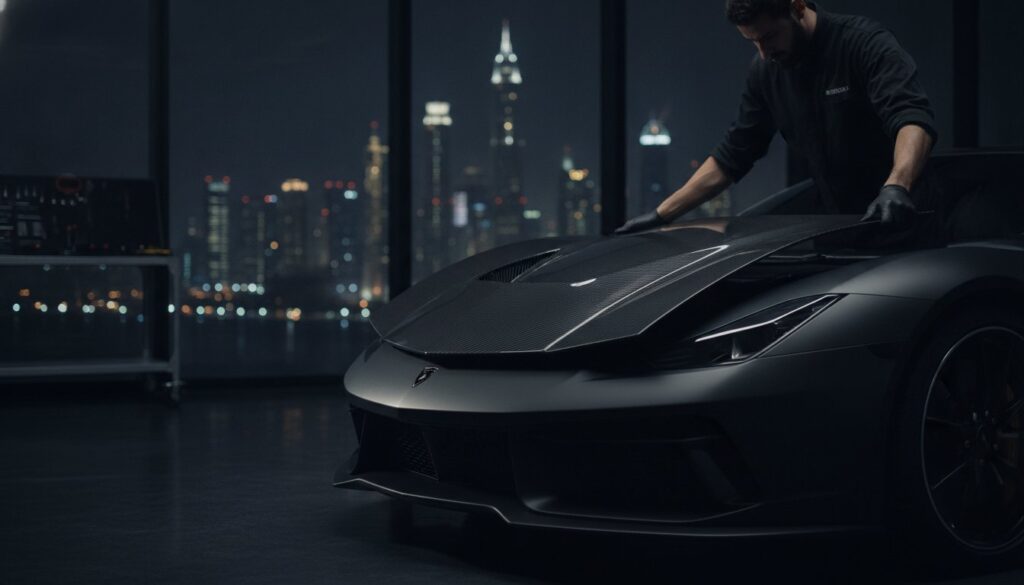
A carbon fiber hood is more than a lightweight replacement; it’s a high-performance transformation that demands surgical precision. You’ve likely seen the horror stories of warped resins and mismatched panel gaps that plague low-quality installations. You want that aggressive, track-ready aesthetic, but you also need the peace of mind that comes with factory-level fitment and long-term durability. Understanding the total cost to install carbon fiber hood components is the first step toward achieving a result that enhances your vehicle’s value rather than detracting from it.
In this 2026 premium guide, we’ll break down the investment required for a professional-grade upgrade in the UAE. We’ll explore the technical nuances of dry versus wet carbon, the labor hours required for meticulous alignment, and the specialized protection needed to survive the intense Gulf heat. From initial shipping logistics to the final application of heat-resistant coatings, you’ll learn exactly what it takes to secure a flawless finish that stands up to both the track and the elements.
Key Takeaways
- Evaluate the performance trade-offs between wet and dry carbon to determine which manufacturing process best suits your vehicle’s weight reduction goals.
- Calculate the total cost to install carbon fiber hood components by accounting for premium part selection, international shipping, and specialized technician labor.
- Recognize the safety risks of improper fitment, focusing on how expert alignment prevents latch failure and maintains structural integrity at high speeds.
- Secure your investment against the harsh UAE climate by integrating UV-protective clear coats and Paint Protection Film (PPF) into your installation budget.
- Gain insights into the bespoke installation process for high-end conversions, ensuring seamless integration with elite kits like Brabus and Mansory.
Understanding the Value of Carbon Fiber Hood Upgrades
High-performance automotive design in the Emirates has evolved beyond simple horsepower. In the competitive automotive landscape across the UAE, true performance is defined by the power to weight ratio. Carbon fiber reinforced polymer (CFRP) has become the gold standard for enthusiasts who demand both technical excellence and a commanding presence. Replacing a heavy factory steel hood with a lightweight composite alternative isn’t just a cosmetic choice; it’s a strategic engineering upgrade that changes how your vehicle handles every corner.
The primary advantage lies in shedding significant weight from the front of the vehicle. This reduction lowers the center of gravity and improves turn-in response, making the car feel more agile and balanced. Beyond the scales, a premium hood often incorporates functional cooling vents and aerodynamic contours that are impossible to achieve with traditional metal stamping. These features extract heat from the engine bay more efficiently, which is a critical benefit during the intense UAE summer months. When you evaluate the total cost to install carbon fiber hood components, you’re investing in a part that protects your engine’s longevity through superior thermal management.
Wet Carbon vs. Dry Carbon: What Are You Paying For?
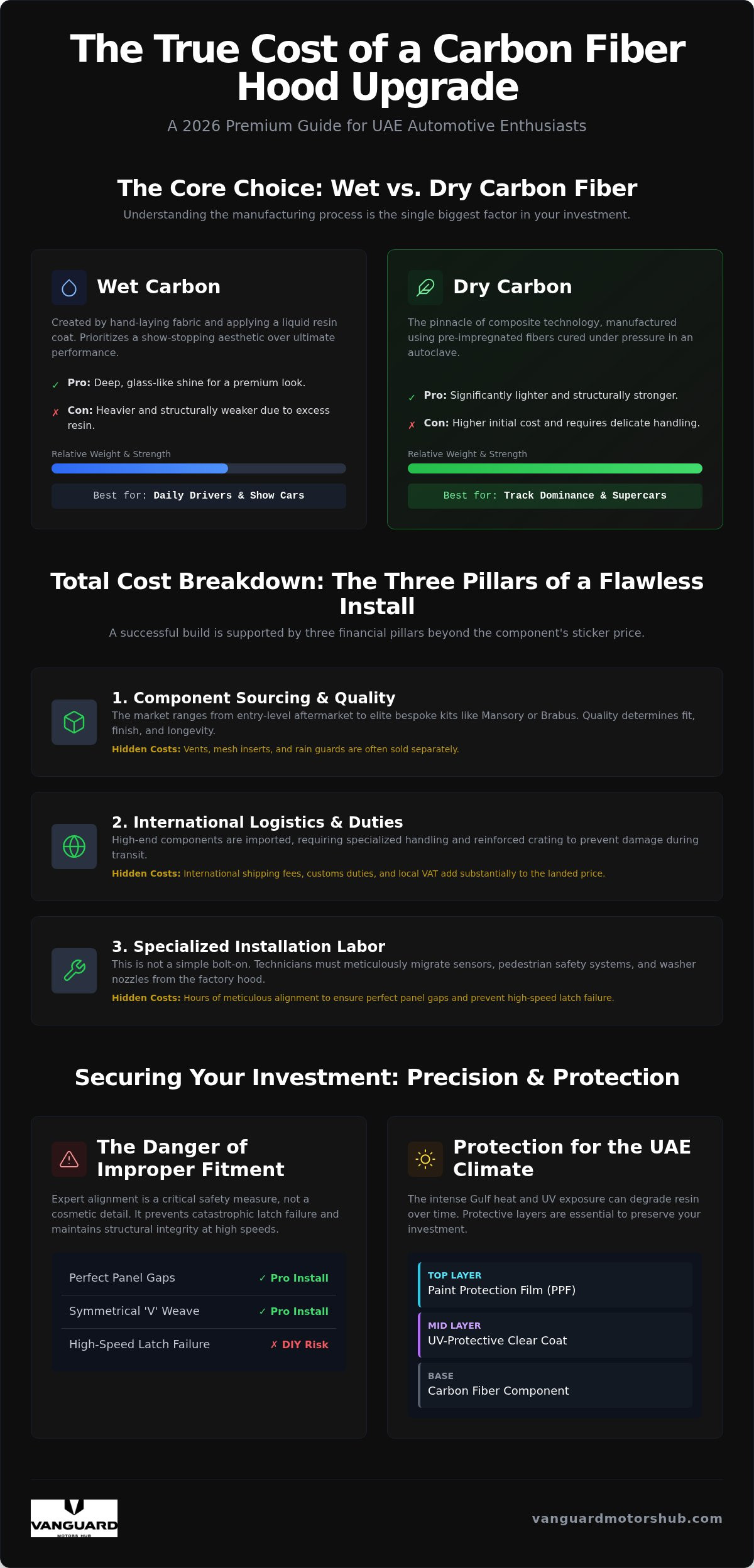
The manufacturing process is the single biggest factor in your initial investment. Wet carbon fiber is created by hand-laying fabric and applying a liquid resin coat. It’s known for its deep, glass-like shine, but it remains heavier than its professional-grade counterpart due to the excess resin. It’s a popular choice for those prioritizing a show-stopping look for their daily driver.
Dry carbon fiber represents the pinnacle of composite technology. It’s manufactured using pre-impregnated fibers that are cured under immense pressure in an autoclave. This vacuum-sealing process removes all unnecessary resin, resulting in a part that’s significantly lighter and structurally stronger. If your goal is track-day dominance or a high-end conversion for a supercar, dry carbon is the only logical choice. This distinction is vital when calculating the cost to install carbon fiber hood upgrades, as dry carbon requires more delicate handling and precise fitment techniques.
The Aesthetic Advantage of Exposed Weave
Aesthetics are where precision meets passion. A high-quality carbon hood features a perfectly symmetrical “V” weave pattern that aligns at the center line of the vehicle. Lower-grade parts often suffer from distorted patterns or “wavy” weaves that instantly signal a lack of quality. For owners of luxury marques, matching the hood’s weave to existing factory carbon trim is essential for a cohesive look. At Vanguard Motors Dubai, we focus on this visual continuity, ensuring that your new hood complements the aggressive lines of bespoke kits from Brabus or Mansory. A flawless exposed weave doesn’t just look fast; it projects an image of meticulous care and elite craftsmanship.
Total Cost Breakdown: From Purchase to Final Fitment
Calculating the total cost to install carbon fiber hood upgrades requires looking far beyond the sticker price of the component itself. A successful build is supported by three financial pillars: the procurement of the part, the logistics of international transit, and the specialized labor required for a concours-level finish. Failing to account for the technical complexity of the installation often leads to budget overruns and compromised safety. Understanding the full cost to install carbon fiber hood components is the first step toward a result that matches the prestige of your vehicle.
Component Sourcing and Logistics
The market offers a wide spectrum of quality, ranging from entry-level aftermarket options to elite bespoke kits from brands like Mansory or Brabus. High-end components are often imported directly into the UAE, incurring significant international shipping and crating fees. Because carbon fiber is exceptionally fragile before it’s mounted, specialized handling and reinforced wooden crating are non-negotiable expenses. You must also factor in local customs duties and VAT, which add a substantial percentage to the landed price. Before purchasing, verify if your kit at Vanguard Motors Dubai includes essential accessories like vents, mesh inserts, and rain guards, as sourcing these separately is often more expensive and time-consuming.
Professional Labor and Shop Rates
Expert installation isn’t a simple bolt-on procedure. Modern luxury vehicles are equipped with complex sensor arrays, pedestrian safety systems, and integrated washer nozzles that must be meticulously migrated from the factory hood. This technical migration, combined with the need for precise panel alignment, drives the labor requirement. A comprehensive review of carbon fiber in automotive applications highlights that structural integrity depends heavily on how these components are secured. Technicians spend hours adjusting hinge points and latch heights to ensure perfectly even panel gaps across the fenders and bumper.
Beyond basic fitment, you must budget for essential finishing and safety. Unlike steel, raw carbon fiber requires a high-quality UV-protective clear coat or Paint Protection Film (PPF) to prevent the resin from yellowing under the intense heat of the UAE. This step is frequently missed in generic quotes but is vital for long-term aesthetics. Additionally, lightweight hoods often require performance hood pins for added security at high speeds, and factory gas struts may need to be replaced with lower-pressure alternatives to prevent structural stress. If you’re planning a transformation, you can consult with our technicians for a detailed fitment assessment to ensure every variable is accounted for in your project.
Why Precision Fitment Justifies Professional Installation
Precision fitment is the invisible barrier between an elite automotive build and a dangerous liability. While online communities often suggest that a hood swap is a simple task involving a few bolts, the reality of high-speed aerodynamics tells a different story. A hood that isn’t perfectly flush can catch air at high speeds, leading to “hood flutter” or, in catastrophic cases, total latch failure. When you calculate the cost to install carbon fiber hood components, you’re investing in the technical expertise required to secure your vehicle’s front end against the immense pressures of highway driving.
The Art of Panel Alignment
Achieving a factory-level finish requires a meticulous eye for detail and a deep understanding of body geometry. Technicians must balance the hood across multiple axes, adjusting hinges and latches to ensure consistent panel gaps that align perfectly with the fenders and front bumper. This process is particularly challenging with aftermarket parts, which may have slight manufacturing variances compared to OEM steel. Proper alignment isn’t just about aesthetics; it prevents the carbon frame from striking engine components, strut bars, or cooling ducts. In the UAE’s heat, materials expand and contract. Only a professional can set the tolerances correctly to ensure the hood remains flush and functional across all temperature ranges.
Safety and Structural Integrity
Safety systems represent the most complex phase of a professional installation. Modern luxury vehicles utilize sophisticated latching mechanisms and pedestrian safety sensors that must be perfectly recalibrated. One of the most common mistakes in DIY projects is the failure to address gas strut pressure. Factory struts are designed to lift heavy steel hoods. When applied to lightweight carbon fiber, this excessive pressure can warp the frame or cause the resin to crack over time. Professional installers often replace these with lower-pressure alternatives to preserve the hood’s structural integrity.
For high-performance applications or track-focused builds, secondary mechanical locks are essential. We frequently integrate performance hood pins to provide an extra layer of security, ensuring the hood remains locked even if the primary latch fails under extreme stress. At Vanguard Motors Dubai, our specialists are experts in structural carbon fiber repair and the integration of elite kits like Brabus and Mansory. We ensure that every conversion maintains the highest safety standards while delivering the aggressive, lightweight profile you desire. Don’t risk a structural failure by cutting corners on fitment; the safety of your vehicle and its occupants depends on mechanical precision.
Protecting Your Investment: Post-Installation Care
Installing a carbon fiber hood is a significant financial commitment, but the work doesn’t end once the last bolt is tightened. In the harsh environment of the UAE, where the UV index frequently reaches extreme levels, raw resin is under constant biological and chemical attack. Without a dedicated protection strategy, even the highest-quality dry carbon can begin to degrade within months. You must view post-installation care as an extension of the initial cost to install carbon fiber hood components, ensuring your vehicle maintains its showroom finish for years to come.
UV Protection and Clear Coat Standards
The primary enemy of carbon fiber isn’t heat alone, but the relentless ultraviolet radiation that penetrates the surface resin. Low-quality aftermarket hoods often come with a thin, “gel-coat” finish that lacks long-term UV inhibitors. Over time, this leads to a milky, yellowed appearance that ruins the aesthetic of the exposed weave. To prevent this, a professional application of high-solids UV-protective clear coat is essential. This secondary coating acts as a sacrificial barrier, absorbing radiation before it can reach the structural resin. UV oxidation in automotive carbon fiber is the chemical degradation of the surface resin caused by ultraviolet radiation, leading to a visible yellowing effect and a loss of structural integrity. Investing in a premium clear-coat finish during the installation phase saves you from the expensive reality of structural carbon fiber repair later.
PPF and Ceramic Coating Integration
While clear coats provide a chemical shield, they don’t protect against the physical impact of road debris. High-gloss carbon is particularly prone to visible stone chips that can lead to resin cracking if left unaddressed. At Vanguard Motors, we recommend a dual-layer protection approach. First, an application of Paint Protection Film (PPF) provides a self-healing physical barrier that absorbs impacts from sand and gravel. This is followed by a specialized ceramic coating designed for composite surfaces. The ceramic layer adds a hydrophobic quality, making it significantly easier to wash away the fine dust that characterizes the Gulf climate while enhancing the “depth” of the carbon weave.
Maintaining a “new” look requires more than just a quick wax. Standard waxes don’t offer the thermal stability needed for carbon fiber engine covers or hoods that sit inches away from a high-performance engine. By integrating PPF and ceramic layers into your project, you’re effectively future-proofing your build against oxidation and physical wear. If you want to ensure your upgrade remains a permanent asset to your car’s resale value, you can book a professional protection consultation with our detailing experts today to discuss the best film and coating combinations for your specific vehicle.
Bespoke Carbon Fiber Services at Vanguard Motors
Vanguard Motors operates at the technical apex of automotive customization. We recognize that high-end carbon fiber is more than a material; it’s a precision-engineered component that defines your vehicle’s character. Our process is designed for the discerning owner who demands perfection from initial sourcing to the final reveal. When you’re calculating the cost to install carbon fiber hood upgrades, the technical expertise of the installer is the most critical variable. We provide a transparent, elite-tier service that removes the uncertainty from luxury modifications, ensuring your build meets the highest standards of excellence.
Elite Kit Conversions and Customization
We’ve built our reputation on the seamless integration of world-class body kits. Our team specializes in bespoke Car conversion kit applications, including the prestigious Brabus Kit and Mansory Kit. We understand the unique mounting requirements of these elite components, ensuring that every vent and latch operates with factory-level reliability. Beyond the hood, we offer bespoke matching for interior and exterior trim, creating a unified look that elevates your car’s visual impact. Whether it’s a Jetour Kit or a Lamborghini transformation, we provide the meticulous alignment that generic shops simply cannot match.
Our consultation process is holistic. We don’t just bolt on parts; we evaluate the entire vehicle’s aerodynamic profile and aesthetic balance. This includes matching weave patterns across different components and ensuring that new carbon elements complement your vehicle’s existing lines. We act as a sophisticated guide for those who value both form and function, delivering a result that is as structurally sound as it is visually aggressive.
Your Next Step in Performance Aesthetics
Vanguard is the premier choice for supercar enthusiasts across the UAE who refuse to compromise on quality. We offer specialized carbon cosmetic repair and structural restoration for components that have suffered from environmental wear or minor impacts. This expertise ensures that your investment remains a long-term asset rather than a temporary upgrade. We combine this technical proficiency with a deep passion for aesthetics, treating every vehicle as a unique masterpiece of engineering.
Every project at our facility begins with a detailed professional consultation. We map out your specific goals, from weight reduction targets to visual styling, and provide a clear roadmap for your vehicle’s transformation. We invite you to experience the Vanguard advantage, where elite quality is the baseline and meticulous care is the standard. Ready to upgrade? Start your carbon fiber transformation today.
Secure Your High-Performance Transformation
Investing in carbon fiber is a commitment to elite automotive excellence. As we’ve explored, the true cost to install carbon fiber hood components encompasses far more than the initial purchase price. It requires a meticulous approach to panel alignment, the migration of complex OEM sensors, and the application of specialized UV protection to withstand the UAE’s intense climate. Prioritizing these technical details ensures your vehicle remains a masterpiece of both form and function.
At Vanguard Motors, we operate a state-of-the-art facility dedicated to precision carbon repair and high-end supercar detailing. As authorized installers for Brabus and Mansory kits, our technicians understand the unique structural requirements of luxury composites. We don’t just fit parts; we engineer a seamless integration that enhances your car’s resale value and aggressive profile. Our team is ready to guide you through every phase of your bespoke project with professional care and technical expertise.
Take the first step toward a lighter, more aerodynamic build today. Consult with our carbon fiber experts on WhatsApp to discuss your specific vision. Your journey toward a transformed, track-ready aesthetic starts with a single conversation.
Frequently Asked Questions
Is it expensive to install a carbon fiber hood professionally?
Professional installation is a premium investment because it requires technical precision beyond simple mechanical mounting. Technicians must meticulously migrate factory sensors, recalibrate safety systems, and adjust hinges for perfect panel gaps. While the cost to install carbon fiber hood components varies based on vehicle complexity, skipping expert labor often leads to structural damage or poor fitment that devalues your car and compromises high-speed safety.
Does a carbon fiber hood require special maintenance compared to steel?
Carbon fiber demands specialized care to survive the UAE’s intense UV radiation. Unlike steel, the resin in carbon fiber can yellow or oxidize if it isn’t protected by a high-solids clear coat or Paint Protection Film (PPF). You should avoid abrasive polishes and instead use pH-neutral cleansers. Regular applications of ceramic coatings help maintain the deep weave aesthetic and provide a hydrophobic barrier against fine desert dust.
Will a carbon fiber hood fit my car perfectly out of the box?
Perfect fitment is rare for aftermarket composite parts. Manufacturing variances mean that even high-quality hoods usually require manual adjustment of the latch, hinges, and bumpers to achieve flush alignment. Professional installers spend several hours dry fitting the component to ensure it doesn’t strike engine bay parts or leave uneven gaps. This meticulous process is what separates a factory-level finish from a standard DIY project.
Can a cracked carbon fiber hood be repaired?
Yes, specialized technicians can perform carbon fiber repair on both structural and cosmetic damage. Minor cracks in the clear coat or resin are often restorable through sanding and re-coating. However, deep structural fractures in the weave require professional composite bonding to maintain safety. Our facility specializes in these delicate restorations, ensuring the hood retains its integrity and visual symmetry without needing a full, expensive replacement.
Do I need hood pins for a carbon fiber hood installation?
Hood pins are strongly recommended for any lightweight hood, especially if you drive at high speeds or participate in track events. While many hoods utilize the factory latch, the reduced weight and different material properties can lead to hood flutter under aerodynamic pressure. Performance pins provide a secondary mechanical lock that prevents catastrophic latch failure. They are a vital safety addition that protects both your investment and your occupants.
How long does a professional carbon fiber hood installation take?
A comprehensive professional installation typically requires three to five labor hours. This timeframe accounts for the removal of the OEM part, the migration of washer nozzles and sensors, and the extensive alignment process. If your project involves applying Paint Protection Film or a secondary clear coat for UV resistance, the total turnaround time will increase. Precision takes time, and rushing the fitment often results in permanent structural stress.
Does installing a carbon fiber hood affect my car insurance?
Modifying your vehicle with a carbon fiber hood generally requires a declaration to your insurance provider in the UAE. Because these components change the car’s value and potentially its safety profile in an accident, failing to disclose the upgrade could void your coverage. Some insurers may require a professional fitment certificate to confirm the installation meets safety standards. Always check with your broker to ensure your premium reflects your new performance parts.
What is the difference between wet and dry carbon fiber hoods in terms of cost?
Dry carbon fiber is significantly more expensive than wet carbon due to its complex manufacturing process. It’s produced in an autoclave under high pressure, resulting in a lighter, stronger part with a matte or consistent finish. Wet carbon is hand-laid and uses more resin, making it heavier but more affordable. When considering the total cost to install carbon fiber hood upgrades, dry carbon is the superior choice for elite performance and maximum weight reduction.