
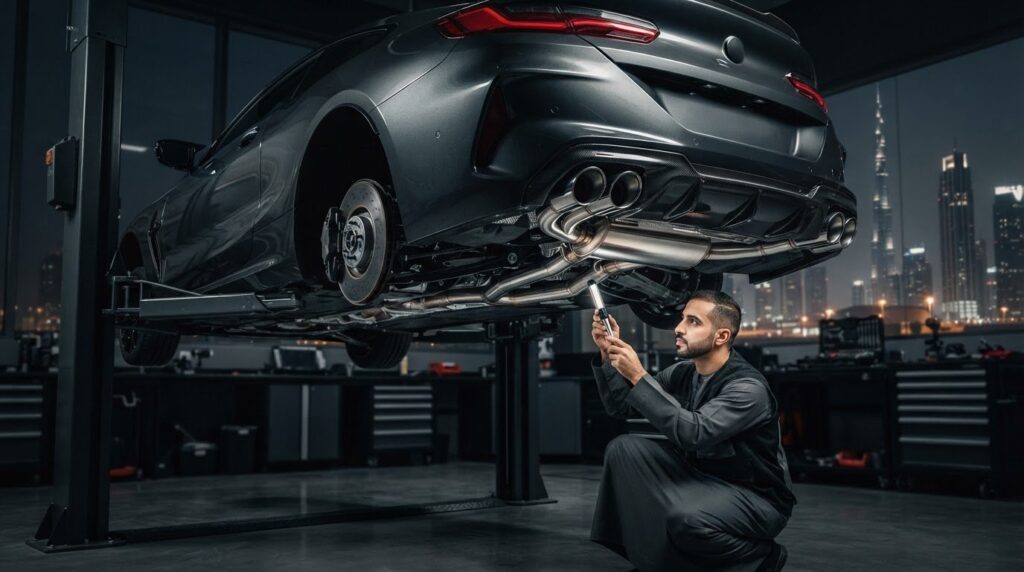
The right exhaust note is engineered, not guessed. At Vanguard Motors Dubai, custom exhaust installation starts by matching the system layout, sound, and performance goals to the vehicle, then fitting or fabricating the components and tuning the setup. The finished system is checked for sound and performance before handover.
A more purposeful tone can transform the driving experience, but it should suit how you use your car. Learn how pipes, mufflers, and tips shape the result, what fabrication and testing involve, and how sound preferences differ from warranty coverage.
This guide explains how to compare exhaust configurations and materials, which details shape the work, and how an exhaust modification can be tailored to your vehicle. The aim is to clarify the process, from choosing a sound character to assessing the finished installation.
Key Takeaways
- Define the sound and performance character you want before selecting an exhaust layout; those priorities guide component choices and tuning.
- Understand what an exhaust warranty covers, and distinguish product coverage from workmanship terms and expectations about sound.
- Learn how installation checks, tuning, and final sound and performance tests help assess the finished setup.
- Compare axle-back and cat-back layouts, mufflers, resonators, pipes, and tips to see how each can shape tone and appearance.
- Explore custom fabrication for a vehicle-specific fit, and consider paint protection or colour changes separately from exhaust work.
Exhaust warranties and sound satisfaction guarantee
A warranty and a sound satisfaction policy cover different expectations. Warranty terms describe the components or installation work covered, while sound satisfaction concerns the tone and volume the driver wants. Before approving custom exhaust work in Dubai, read the written terms for coverage, exclusions, claim steps, and any conditions affecting modified parts. A component defect and a preferred sound that differs from expectations are separate issues.
Look for a clear description of covered parts, such as a muffler, valve actuator, pipe joint, or exhaust tip. Installation coverage should explain which workmanship issues qualify and how a concern is assessed. Keep the invoice and warranty record with the vehicle’s service documents. If the exhaust combines several components, the paperwork should specify which component each term applies to.
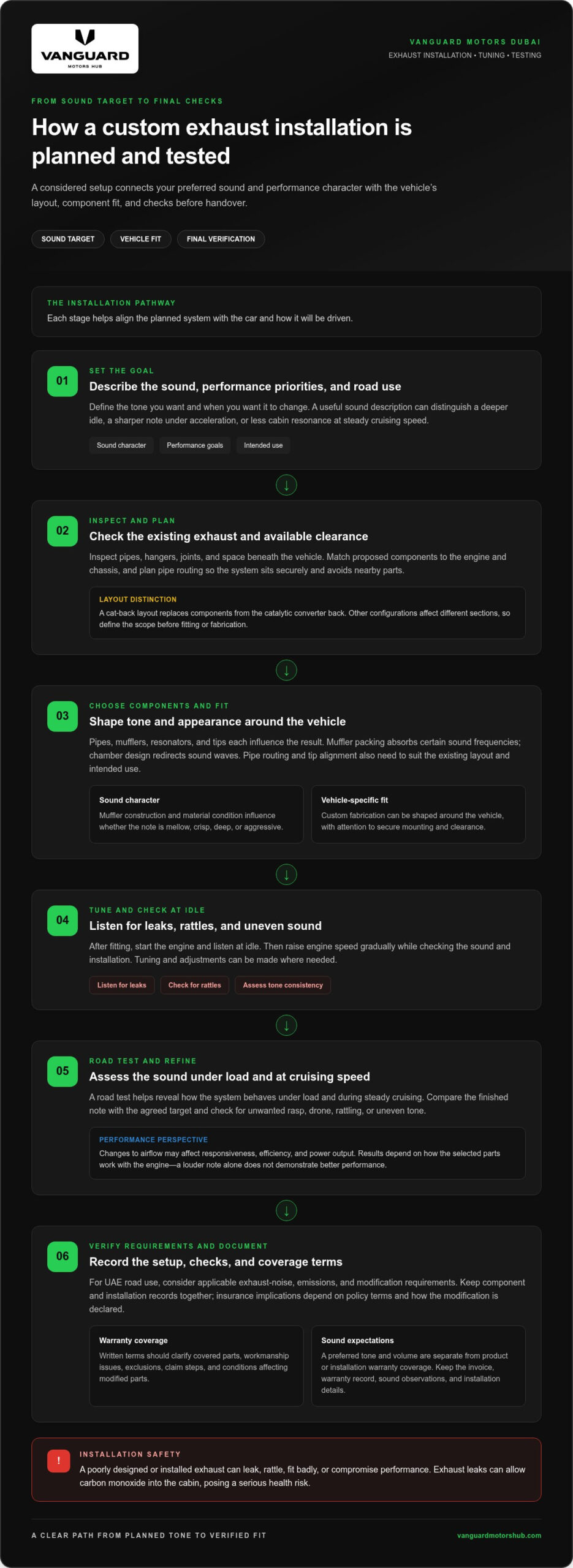
Describe your sound expectations with examples, not labels alone. “Sporty” could mean a deeper idle, a sharper note under acceleration, or less cabin resonance during steady driving. Exhaust flow and tone can be adjusted to suit your preferences. Explain when you want the sound to change, then listen at idle and during controlled revs after installation.
A valvetronic exhaust uses a valve to change the path exhaust gases take through the system. With active sound control, the valve alters the sound profile between operating modes. A quieter setting may suit a calm departure, while a more pronounced note may suit spirited driving. The vehicle’s configuration and valve operation determine how distinct the modes feel.
Sound testing should follow a repeatable sequence. Technicians can listen at idle, raise engine speed gradually, and assess the sound during a road test. They can then adjust valve settings or system tuning and repeat the sound and performance checks. This process helps identify unwanted rasp, drone, rattling, or uneven tone before handover.
Muffler soundproofing materials also shape the final note. Absorptive packing inside a muffler reduces certain sound frequencies, while chamber design redirects sound waves. Material condition and muffler construction influence whether the result is mellow, crisp, deep, or aggressive. A sound that seems refined outside the vehicle may create cabin drone at cruising speed, so assess both.
Before sign-off, compare the finished sound with the agreed target and document any follow-up covered by the warranty terms. A useful handover record includes the selected valve mode, sound observations, and installation details. Keep it as a reference if a component issue develops or the system needs later adjustment.
Installation and performance testing process
A well-planned installation connects your sound target with component fit, airflow, and final testing. The process should account for the engine, exhaust layout, and intended road use.
Custom Performance Exhaust Systems
Stock exhaust systems prioritize the original vehicle’s balance of sound, emissions control, and everyday operation. A performance exhaust changes components or routing to alter tone and airflow, while a custom system is shaped around the vehicle and your goals. The difference depends on the parts selected, not simply the system’s label.
Start by inspecting the existing pipes, hangers, joints, and available clearance. Technicians can then match proposed components to the engine and chassis, checking that pipes sit securely and avoid nearby parts. A cat-back layout replaces components from the catalytic converter back; other configurations affect different sections. This distinction defines the work before fabrication or fitting begins.
Sound and Performance Tuning
Exhaust modifications can change tone and airflow. Less restricted flow may improve engine responsiveness and efficiency, while improved airflow can enhance performance and power output. Results depend on how the selected parts work with the engine, so a louder note alone does not demonstrate better performance.
After fitting, the system is tuned to its intended setup. Testing includes starting the engine, listening at idle, increasing engine speed, and checking for leaks, rattles, or uneven sound. A road test can reveal how the exhaust behaves under load and at steady cruising speed. Technicians then check sound and performance, making adjustments where needed before handover.
Rules and Vehicle Requirements
For road use in the UAE, exhaust noise, emissions, and modification requirements should shape your system choice. A configuration that changes emissions behavior or creates excessive noise may affect whether the vehicle meets applicable requirements. Keep the original system details and modification records together for inspection-related discussions.
Installation can affect inspection or registration if the changed system alters emissions behavior, sound, mounting, or vehicle configuration. Insurance implications depend on policy terms and how you declare the modification. Keep component and installation records, and give your insurer accurate details about the change.
Pricing depends on the vehicle, materials, selected components, fabrication requirements, and installation scope; the price is provided after a quote request. A poorly designed or installed exhaust can leak, rattle, fit badly, or compromise performance. Exhaust leaks can also allow carbon monoxide into the cabin, posing a serious health risk.
For an exhaust modification discussion, outline your sound target, vehicle use, and performance priorities.
Fitting pipes, mufflers and exhaust tips
Pipe routing, muffler selection, and tip alignment shape an exhaust’s sound and appearance. Each part must suit the vehicle’s existing layout and intended use.
Start by inspecting the pipes, joints, hangers, and clearance beneath the vehicle. Corrosion, dents, loose mounts, or a poor seal can affect exhaust flow and create noise. A technician can identify whether the issue calls for repair or component replacement before new parts are fitted.
Pipe diameter and routing influence how gases move through the system. Wider pipes are not automatically better: the engine and remaining components also affect the result. A sharply bent section or pipe positioned too close to surrounding parts can cause fitment problems. During installation, check that joints align, hangers support the system, and pipes clear nearby components.
The muffler directly affects exhaust sound. A quieter setup may retain a muffler designed to soften the note, while a performance-oriented choice can create a deeper or sharper character. Muffler repair begins by locating a leak, rattle, or damaged connection. Inspect the adjoining pipe and mount too, since replacing one part will not resolve a separate fault elsewhere.
Resonator and muffler deletes remove sound-control components to produce a louder, more aggressive exhaust note. Depending on the vehicle and remaining system, the change can also create a harsher tone or cabin drone. Treat a delete as a sound decision, not a guaranteed performance upgrade. Compare the intended driving experience with the full system configuration before altering components.
Exhaust tips provide a visible finishing detail, but their position and fit matter. For example, twin tips should sit evenly within the bumper openings and remain securely attached. Tip shape and finish can make the rear of a vehicle look sportier, while an oversized or poorly aligned tip may seem out of proportion. Confirm clearance and alignment after the system reaches its final position.
After fitting, inspect each joint and mount, then start the engine and listen for leaks or vibration. Check the system again once it warms, since heat can reveal contact or movement. A final inspection helps catch a loose clamp, uneven tip, or rattling muffler before handover. Careful fitting preserves the intended sound, appearance, and exhaust efficiency.
Dubai offers durable, corrosion-resistant stainless steel and titanium. The Car Lab Auto Repair Center says performance exhaust lets gases escape with less restriction, improving responsiveness and efficiency; systems include high-performance brands and custom-built solutions.
Exhaust tips and custom fabrication
Custom fabrication allows an exhaust system to suit a vehicle’s specific layout and desired appearance. In Dubai, the work can involve shaping pipes, joining sections, and positioning tips to match the rear bumper. A practical starting point is to define the intended sound, driving use, and visual finish, then assess the existing exhaust routing and available clearance.
Fabrication begins with inspecting the vehicle from the engine outlet to the tailpipe. The catalytic converter’s position and the existing pipe route help establish where replacement sections can connect. Measurements guide pipe bends and joint placement, while clearance checks help avoid contact with the chassis, suspension, or underbody panels. A custom-built system can then be shaped around these vehicle-specific constraints instead of treated as a universal fit.
Material choice affects the system’s weight and durability. Stainless steel and titanium are options for exhaust modification, with material selection influencing fabrication and fitment decisions. Titanium exhaust systems are often 40-50% lighter than comparable alternatives. The finished choice should suit the vehicle’s intended use and the design of its other exhaust components, not weight alone.
Welding and alignment matter as much as pipe design. A technician can position each section, tack it in place, and check its route before completing the joints. For example, a bend that clears the underbody at rest must also leave room for movement while driving. Once assembled, inspect welds and connections for visible gaps, then check the system for secure mounting and leaks.
Exhaust tips and finishes offer a visible design choice. A polished metal tip can create a clean, refined look, while a darker finish can make the rear appear more understated. Custom tips and finishes can give a vehicle a sportier appearance. Their diameter, shape, and position should complement the bumper openings; twin outlets, for instance, need even spacing and alignment to look intentional.
Brands offer different shapes, materials, and finishes, but custom fabrication focuses on matching the individual vehicle. Compare the tip style with the body lines, then assess how its outlet position relates to the bumper. During final fitting, confirm that the tip is secure, aligned, and clear of surrounding trim. This inspection brings the fabrication together with the vehicle’s appearance and intended driving character.
Car exhaust services in Dubai
Dubai exhaust work ranges from repairing a damaged connection to upgrading a system’s sound or flow. The right service depends on the fault, vehicle layout, material choice, and driving priorities.
Car Exhaust Service Options
Start by assessing the existing system. A leak, loose hanger, damaged muffler, or corroded pipe calls for diagnosis before selecting replacement parts. For a sound change, an axle-back system replaces components behind the rear axle and offers a direct way to alter tone and appearance. A cat-back system replaces components from the catalytic converter back.
For performance-focused changes, headers and downpipes can increase exhaust flow for horsepower gains. Stainless steel and titanium offer durability and corrosion resistance. Material, routing, and compatibility with the vehicle’s current setup all matter. A free-flowing system may reduce engine strain and improve fuel efficiency over time, but results depend on the complete configuration.
Custom exhaust installation in Dubai can involve a ready-made system, a tailored configuration, or a repair followed by an upgrade. The vehicle’s layout and your desired sound help determine the right approach. For example, an owner seeking a different tone may prioritize muffler and outlet choices, while a flow-focused build may involve headers or downpipes.
Choosing a Reputable Shop
How can you choose a custom exhaust service that suits your needs? Look for a process that starts with your vehicle and goals, rather than a preset sound or part. Discuss daily driving, preferred tone, and performance priorities before selecting components. The proposed layout and installation steps should be explained, including how pipes, mounts, and joints will be assessed.
A good process also distinguishes repair from upgrade options. For example, a leaking joint may need attention without replacing the full exhaust, while a tone change may call for a different configuration. Discuss material choices such as stainless steel alongside fit and intended use. Clear explanations help you understand what the work addresses and what the selected components are designed to change.
Before approving the work, understand how installation and final checks fit into the process. A sound and performance check before handover helps identify issues such as a leak, rattle, or poorly seated component. Have the completed work and relevant warranty terms documented. Keep those records with the vehicle’s service history, especially when the exhaust configuration changes.
For custom exhaust installation in Dubai, share your vehicle’s make and model, current exhaust concern, and preferred sound. If the vehicle has a fault, describe when it occurs, such as during startup, acceleration, or steady driving. These details help focus the discussion on your priorities and the system’s configuration.
Ready to discuss your vehicle’s exhaust goals? Share your vehicle details and preferred exhaust sound.
Vanguard Motors Dubai: Paint Protection Film (PPF) Installation
Vanguard Motors Dubai is a natural next step if your exhaust project is part of a broader vehicle customization plan. Once you have settled the mechanical changes, consider how the exterior should look and be cared for. Paint Protection Film (PPF) Installation suits owners seeking added paint protection, while Colored Sticker Wraps and Peelable Paint Applications offer ways to change the vehicle’s appearance. The Vanguard Premium Package is another option in its customization offering.
Choose a service based on your priority: preserving the existing finish, changing the colour, or exploring a peelable paint treatment. These exterior services complement an exhaust upgrade without replacing the separate decisions about system fitment, sound, and testing.
To discuss your vehicle’s customization plans, contact Vanguard Motors Dubai.
Shape the Next Stage of Your Build
Your exhaust choice can be part of a more considered vehicle identity. Before committing to custom exhaust installation dubai, decide how the car should feel and look as a complete build, from driving character to exterior finish. A clear design direction helps each modification feel intentional rather than isolated.
Vanguard Motors Dubai can complement that vision with Paint Protection Film (PPF) Installation, Colored Sticker Wraps, and Peelable Paint Applications. These options serve different priorities: protecting the existing finish, changing the vehicle’s appearance, or choosing a peelable paint treatment. Select the direction that best reflects how you want to enjoy and present your car.
For a focused conversation about your vehicle and customization plans, contact Vanguard Motors Dubai. Bring your ideas and preferred direction, then take the next step toward a build that feels distinctly yours.
Frequently Asked Questions
Which Dubai garages specialize in custom exhaust design and installation?
Vanguard Motors Dubai offers exhaust modification, including custom exhaust work. For custom exhaust installation in Dubai, share your vehicle’s make and model, describe its current setup, and clarify your preferred sound and driving priorities. This provides a practical starting point, whether you want a different exhaust character or need to address a specific concern. A clear brief connects your goals with an appropriate system approach.
How long does a custom exhaust installation take?
Installation time depends on the vehicle’s exhaust layout, the components involved, and the amount of fabrication required. A direct-fit replacement follows a different process from a system that needs custom pipe shaping or revised routing. The vehicle’s condition matters too: damaged joints or mounting points can add work. The scope determines the schedule, so an estimate follows assessment of these practical factors.
What custom exhaust systems and materials are available in Dubai?
Options include axle-back and cat-back layouts, performance components, and custom-fabricated systems. Stainless steel and titanium are material choices for exhaust modifications. Match the system scope to your goal: changing tone and appearance involves different decisions from a broader flow-focused upgrade. Vehicle fit, engine configuration, and component compatibility should guide your selection.
What is the step-by-step process for custom exhaust installation?
For custom exhaust installation in Dubai, start by documenting your vehicle details, current setup, and desired sound or performance outcome. Assess the exhaust route and select compatible components. Fit or fabricate the sections, secure connections and mounts, and check alignment. Finish by assessing the running system for leaks, vibration, and sound, then complete a performance check before handover.
Do Dubai exhaust shops offer warranties, maintenance, or post-installation testing?
Warranty coverage depends on the written terms, so distinguish component coverage from workmanship coverage. Maintenance can include checking visible joints, hangers, and pipes for looseness, damage, or leaks. Post-installation testing can assess sound and performance before handover. Keep installation records and warranty documents together as a reference if the vehicle needs servicing or you have a coverage question.
What are Dubai and UAE rules for exhaust noise, emissions, and vehicle modifications?
For road use in the UAE, choose a system that meets applicable noise, emissions, and modification requirements; excessive noise or changed emissions behavior may affect compliance. Changes to emissions, sound, mounting, or vehicle configuration can affect inspection or registration, so keep component and installation records and declare the modification accurately to your insurer.