
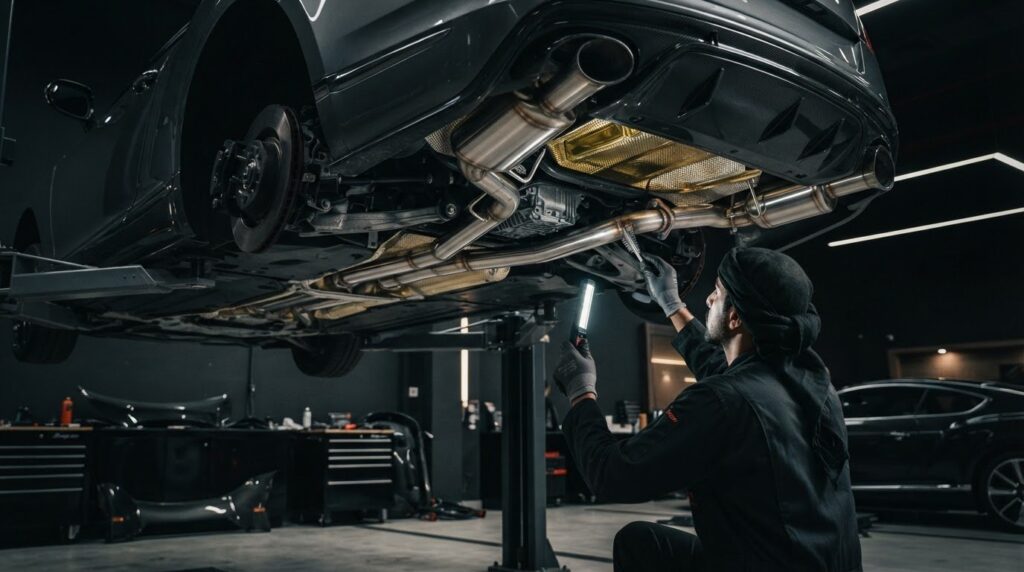
A custom exhaust needs regular inspection, careful cleaning, and prompt attention to leaks, corrosion, unusual sounds, or loose components. To understand how to maintain a high-performance custom exhaust, focus on keeping gases flowing properly, managing heat, and preventing dirt and moisture from accelerating wear.
It’s easy to focus on a custom exhaust’s deeper tone or performance character. But the system also directs combustion gases away from the engine and cabin, reduces noise, and supports efficient operation, so even small changes can matter.
This guide explains what a custom exhaust does and how to spot early signs of trouble. You’ll learn how coatings can help manage heat, how to clean exhaust components, and which inspection habits can help limit rust, especially in coastal conditions. The aim is to preserve the system’s condition and performance, and to recognize when a noise, smell, or visible change needs professional attention.
Key Takeaways
- Learn which visible changes, smells, and drops in fuel efficiency can signal exhaust trouble and when they call for professional assessment.
- Understand how exhaust coatings can help manage heat beneath the vehicle and why hangers and heat shields matter.
- See how regular cleaning and underside inspections help limit corrosion, especially in coastal conditions.
- Recognize how rattling, hissing, or droning sounds can point to leaks or loose fittings.
- Explore the factors that shape maintenance costs in the UAE, plus how exterior protection options relate to preserving your vehicle’s finish.
Early warning signs of exhaust trouble
Leaks, corrosion, loose fittings, or physical damage can turn a small exhaust fault into a larger repair. Watch for changes in sound, fuel efficiency, warning lights, smell, and visible condition.
Recognizing Exhaust Leaks
An exhaust leak is an unintended opening or failed connection that lets gases escape before reaching the tailpipe. A new hissing sound, a stronger exhaust smell, or smoke from an unusual point can signal a leak. Because escaping gases may enter the cabin, take these signs seriously. Arrange a professional assessment rather than relying on sound alone to locate the fault.
Common Exhaust Problem Signs
Other early signs include a sudden drop in fuel efficiency, a dashboard warning light, visible rust, or damage beneath the vehicle. A loose muffler or pipe may vibrate or rattle over uneven roads. These clues can point to a problem before a component fails completely. Note when each symptom appears.
Compare the symptoms with the vehicle’s normal behavior. For example, note whether a rumble began after a road impact, fuel use changed on familiar journeys, or a warning light appeared with unusual noise. One symptom won’t identify the exact cause, but several changes together can help describe the problem clearly during an assessment.
Look for visible changes during routine checks, without touching hot components or reaching beneath an unsupported vehicle. From a safe position, note rust spots, dents, separated joints, or a tailpipe that appears misaligned. Damage can affect pipes, hangers, or the muffler. A visual check won’t reveal every hidden fault, so unexplained symptoms still need attention.
- New sound: Note whether it’s hissing, rumbling, or rattling.
- Changed operation: Track reduced fuel efficiency or a dashboard warning light.
- Visible change: Record corrosion, impact damage, or a loose-looking component.
- Unusual smell or smoke: Treat either as a reason for prompt assessment.
Describe the timing and combination of symptoms, not just “the exhaust sounds different.” A mechanic may use smoke testing, backpressure measurement, or sensor diagnostics to locate a fault. That assessment can distinguish an exhaust leak from a loose fitting or another system issue. For owners of performance exhaust systems, preserving the intended sound, torque, and longevity starts with identifying changes early, before continuing to drive as though nothing has changed.
Exhaust coatings and heat reduction
Exhaust coatings can help protect pipes and reduce heat beneath a vehicle. This is especially relevant with high-horsepower engines, which produce more exhaust heat than stock systems.
How coatings manage exhaust heat
Ceramic coatings insulate exhaust pipes, reducing the heat they release compared with uncoated systems. By limiting heat radiating from the pipework, a coating can help protect nearby underbody components from excess exposure. It doesn’t replace a heat shield, repair a leak, or correct poor clearance. Treat it as one part of heat management, not a solution to every temperature-related concern.
Choose a coating and application suited to the exhaust material, pipe routing, and vehicle use. For example, a system routed close to underbody components needs adequate clearance as well as surface protection. A coating can help protect the system, but it can’t compensate for a pipe touching surrounding parts or a damaged shield that no longer directs heat effectively.
Inspecting mounts and heat shields
Exhaust hangers support the pipework, while heat shields help protect nearby areas from radiant heat. Cracked or weakened hangers can let the exhaust sag or vibrate; a loose or damaged shield can shift out of position. Either condition can expose components to more heat or cause further physical damage as the vehicle moves.
During an inspection, look for a pipe hanging lower than usual, a loose-looking shield, or fresh contact marks around the exhaust route. Don’t reach near hot components. If the vehicle needs to be raised, use safe lifting equipment, never work beneath a car supported only by a jack.
- Check the coating: Look for peeling, cracking, or bare sections that may need assessment.
- Check clearance: Note any exhaust pipe touching nearby components.
- Check supports: Watch for sagging, vibration, or a visibly weakened hanger.
- Check shields: Look for movement, damage, or missing sections.
Pipe diameter also affects exhaust flow, but larger isn’t automatically better. An oversized pipe can reduce performance, while an appropriate diameter helps the system work as designed. Coatings focus on heat control and protection, not a guaranteed increase in torque or fuel efficiency. If heat, clearance, or support concerns arise together, a tailored exhaust assessment can help identify the underlying issue. You can discuss your vehicle’s exhaust setup with the team.
Custom exhaust pipes can be coated to reduce heat, while machine-formed bends can create smooth curves for exhaust gases. An exhaust system helps direct combustion gases away from the engine and cabin and can reduce engine noise. A well-designed exhaust system can also help manage backpressure, which may affect performance and efficiency. These are separate considerations: coatings address heat, while pipe bends affect gas flow.
Factory exhaust pipes may use crush bends that crimp the pipe and restrict exhaust flow by reducing its diameter at bends. Aggressive driving can place excessive stress on exhaust components, including the muffler, catalytic converter, mountings, and pipes. Approach speed bumps cautiously to reduce impacts on the underside. Pipe diameter, bend shape, and heat management all affect an exhaust setup, while driving conditions can add further stress.
Cleaning and rust prevention
In the UAE, sand and road dirt can collect beneath a vehicle, while coastal humidity increases corrosion risk. Mild steel is especially prone to rust in coastal conditions, so regular undercarriage cleaning and inspection matter.
During routine vehicle washing, remove loose dirt and road debris from the exhaust and underbody. Pay attention to pipe surfaces, joints, and places where grime can become trapped. Clean the undercarriage too, since dirt and salt buildup can contribute to premature exhaust rust. Avoid handling hot components, and ensure safe access before inspecting underneath.
Short trips may not heat the exhaust enough to evaporate internal moisture. A longer drive once a week can help dry the system and reduce conditions that contribute to internal rust. This doesn’t replace cleaning or inspections; it addresses moisture that can remain after repeated short journeys, such as quick trips between home and nearby destinations.
- Clean: Remove dirt, carbon buildup, and road debris from accessible exhaust surfaces.
- Inspect: Look beneath the vehicle for rust, holes, or loose parts.
- Consider the material: Give mild steel particular attention in coastal areas.
- Review the driving pattern: Repeated short trips can leave moisture inside the system.
Stainless steel can be polished to a bright finish, which can suit show cars with visible exhausts. Cleaning still matters: dirt and deposits can obscure the finish and make new marks harder to spot. Use an approach suited to the component’s material and finish. A polished appearance doesn’t prove that every section, joint, or hidden surface is free from corrosion.
During a visual check, compare both sides of the exhaust route where accessible. Look for discoloration, rough patches, holes, or loose components, and note their location. A small rust spot differs from a hole or weakened connection; recording the change helps a mechanic assess what needs attention. Don’t scrape corrosion aggressively, as this can damage the surface and obscure its condition.
Cleaning and inspection work best together. Washing away sand, for example, can reveal a rust patch hidden beneath dirt. If a spot has become a hole or a component is loose, cleaning alone won’t prevent further deterioration. Prompt repair helps limit continued corrosion and protect the system’s longevity. Make underbody checks part of routine care, especially if you regularly drive near the coast.

Listening for unusual exhaust noises
A change in exhaust sound can reveal a loose fitting, leak, or damaged component. Compare what you hear with the vehicle’s usual tone, then note when the sound occurs. A rattle over uneven roads differs from a steady hiss during acceleration. This detail can help narrow down the cause instead of treating every new noise as the same fault.
Listen to the character and location of each sound. Hissing can point to escaping exhaust gases, while rattling or droning may indicate a leak or loose fitting. A deeper rumble that suddenly grows louder also deserves attention. Note whether the noise comes from beneath the cabin, near the engine, or around the tailpipe, but don’t crawl under an unsupported vehicle to investigate.
Record the conditions surrounding the sound. Note whether it starts with a cold engine, appears during acceleration, or continues at idle. Check whether the noise coincides with vibration, an unusual smell, reduced fuel efficiency, smoke, or a dashboard warning light. Several signs together provide a clearer picture than sound alone, though they don’t identify the failed part by themselves.
- Hiss: Note whether it changes with engine speed or acceleration.
- Rattle: Record whether it occurs over bumps or at idle.
- Drone or rumble: Compare its volume and tone with the exhaust’s normal sound.
- Accompanying change: Note warning lights, vibration, smell, or altered fuel use.
The catalytic converter is part of the exhaust system and converts harmful emissions into less harmful ones. A noise near it may come from another exhaust component, so sound location alone isn’t a diagnosis. A check engine light alongside a new noise or reduced fuel efficiency is a reason to arrange prompt assessment. Don’t dismiss the warning just because the engine still runs.
A technician can use smoke testing to reveal escaping gases, backpressure measurement to assess restrictions, or sensor diagnostics to examine system signals. These tests help distinguish an exhaust leak from a loose connection or another fault. Share the sound’s timing, location, and related symptoms. Clear observations are more useful than a general report that the vehicle sounds louder.
After a custom exhaust installation, establish its normal tone during ordinary driving. A sudden change from that baseline matters more than a sound that has remained consistent since installation. Exhaust modifications can intentionally alter the tone, but new hissing, rattling, or droning still calls for inspection. Timely diagnosis can protect the system’s condition and performance before a small fault causes further damage.
What does custom exhaust maintenance cost in the UAE?
Custom exhaust maintenance costs in the UAE depend on the vehicle, the system’s condition, and the work required. A visual inspection differs from diagnosing a leak, repairing damaged pipework, or replacing a component. The price depends on the case and is given after a quote request, with factors including parts, materials, access, and diagnostic work.
The exhaust’s condition is a major cost factor. A loose fitting or isolated area of damage may call for a narrower repair than extensive corrosion, a failed catalytic converter, or multiple worn components. A technician needs to identify the cause before estimating the work. Otherwise, a quote may address a symptom without resolving the underlying fault.
Custom specifications also affect the work involved. Pipe diameter, routing, material, bends, and muffler placement can influence how a component is repaired or replaced. Limited access around the exhaust may require more labour to inspect or reach the affected area. These details help explain why two vehicles with similar symptoms can need different work.
- Inspection: Assess visible damage, connections, hangers, and the system’s general condition.
- Diagnosis: Identify the fault using methods such as smoke testing, backpressure measurement, or sensor diagnostics.
- Repair scope: Separate a local repair from work involving several components or a full section.
- Parts and materials: Account for the type of pipe, muffler, converter, or other required component.
- Access and fit: Consider the vehicle layout and any custom routing or clearance requirements.
Ask for an itemised explanation of the proposed work. It should distinguish diagnostic labour, replacement parts, repair tasks, and any custom fabrication. A quote to locate a suspected leak, for example, isn’t the same as a quote to replace damaged pipework. A clear scope makes it easier to understand what the work addresses and what remains unchanged.
In the UAE, describe the vehicle’s symptoms and driving conditions when requesting an estimate. Mention whether you’ve noticed a new rattle, reduced fuel efficiency, corrosion, or a warning light. Share any recent exhaust modifications too. Accurate details help connect the estimate to the actual fault instead of assuming every performance system needs the same maintenance.
For a tailored assessment of exhaust modification or repair needs, request an exhaust quote.
Warranty considerations are separate from the maintenance estimate. In Australia, an exhaust modification does not necessarily void an entire vehicle warranty, though exhaust-related issues may not be covered. A quote describes the proposed diagnosis and work; it does not establish whether a warranty covers a particular fault. Do not assume that a modification ends all vehicle warranty protection, or that an exhaust-related issue will be covered. When discussing a repair, clarify whether your concern is the work needed, possible warranty coverage, or both. Keep the estimate focused on the vehicle’s symptoms and the proposed repair scope. The Australian warranty position should not be treated as a statement about UAE warranty terms. For UAE owners, checking the relevant warranty details separately can help distinguish the expected maintenance cost from any question of coverage.
Vanguard Motors Dubai: Paint Protection Film (PPF) Installation
Vanguard Motors Dubai installs Paint Protection Film (PPF) to help protect your vehicle’s exterior while you maintain its mechanical performance. PPF protects paint, not exhaust components, so it complements rather than replaces exhaust inspection, cleaning, or repair.
Consider exterior protection if you’re refreshing a performance vehicle or want to preserve its finish alongside routine maintenance. For a different look, Vanguard Motors Dubai also offers Colored Sticker Wraps and Peelable Paint Applications. Choose the option that suits your appearance goals, while keeping exhaust care focused on the system’s condition and needs.
For information about PPF Installation, contact Vanguard Motors Dubai or visit the website.
Keep Your Next Drive in Focus
Build a maintenance routine around what your vehicle shows, rather than waiting for a change to become impossible to ignore. Keep notes on new sounds, visible wear, or altered performance, and use them to guide your next inspection. This practical record helps you make informed decisions as your setup evolves.
Knowing how to maintain a high-performance custom exhaust also means treating mechanical care and exterior presentation as separate priorities. If you want to refresh and protect your vehicle’s finish, Vanguard Motors Dubai offers Paint Protection Film (PPF) Installation, Colored Sticker Wraps, and Peelable Paint Applications. These options complement a considered ownership approach but don’t replace exhaust inspection or repair.
Choose the next step that fits your vehicle and the result you want. Contact Vanguard Motors Dubai to discuss your vehicle’s finish. Keep your standards high, and enjoy every drive with confidence.
Frequently Asked Questions
How often should a custom performance exhaust be inspected and maintained?
Inspect the system during routine vehicle maintenance, and sooner after an impact, modification, or change in performance. To maintain a high-performance custom exhaust, track its condition over time instead of relying on a universal schedule. For example, note new changes after driving over rough roads. Coastal exposure and frequent short trips can also affect how closely you monitor the system.
How to check for exhaust leaks, loose hangers, and damaged joints?
With the exhaust fully cool, look from a safe position for misaligned joints, sagging pipes, or visibly damaged hangers. Don’t crawl beneath a vehicle supported only by a jack or touch exhaust components. Note when a new sound or smell occurs, then share those details with a technician. A professional can use smoke testing to locate escaping gases and inspect joints and supports with suitable equipment.
How to clean and prevent corrosion in stainless steel, titanium, or aluminized exhaust systems?
Wash accessible surfaces gently, then dry them to remove residue without scratching the finish. Suitable polishing can restore a bright appearance to stainless steel; aluminized steel resists rust but still benefits from cleaning and inspection. Titanium finishes may need material-appropriate care, so avoid abrasive tools. In coastal conditions, include less-visible joints in your checks. These material-specific habits help you maintain a high-performance custom exhaust over time.