
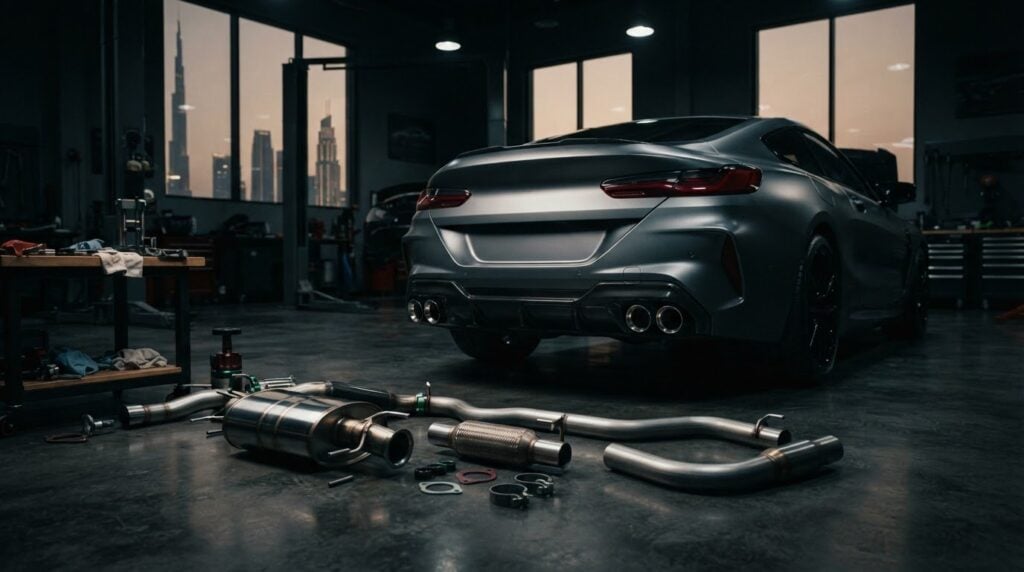
A custom exhaust sound upgrade can give your vehicle a louder, sportier note or keep it smooth and balanced. The result depends on the muffler, resonator, pipe design and diameter, so the loudest setup is not automatically the best fit. The right combination shapes the sound while preserving everyday comfort and performance.
It is natural to focus on the exhaust note first. But the components that create it also affect fit, airflow and the driving experience. Some configurations can introduce unwanted cabin drone.
This guide explains how exhaust parts affect tone and volume, what matters for a clean installation, and when an engine remap may be relevant. It also covers vehicle-specific fit and UAE noise and emissions considerations, so you can choose a setup that delivers character without overlooking practicality.
Key Takeaways
- Choose an exhaust note that suits how you drive, rather than assuming louder always means better.
- Mufflers, resonators, pipe diameter and bends all influence tone, volume and airflow.
- Vehicle-specific fit matters: clearance around sensors and other components can shape the installation.
- Whether an engine remap is useful depends on the engine type and the exhaust setup.
- Consider UAE noise and emissions requirements when weighing changes to your exhaust system.
The Benefits of Custom Exhaust Systems: Why Upgrade?
A custom exhaust can shape your vehicle’s sound and support later modifications. The right setup balances the exhaust note with airflow, emissions control and everyday use.
Factory and Custom Exhaust Differences
A factory exhaust is the vehicle’s original system; a custom exhaust changes its components or configuration. Factory systems are generally designed for quiet operation and cost-effectiveness, while an aftermarket setup gives drivers more choice over sound and performance. That distinction matters when choosing a sound for a luxury saloon or a sports car used regularly.
Think of the exhaust system as a foundation for future changes. It carries gases away from the engine, helps control noise and emissions, and influences airflow. A well-matched configuration can provide a coherent starting point if later modifications change engine output or driving priorities. For example, a restrained tone may suit daily use better than a louder setup designed mainly for track-style character.
In the UAE, keep the exhaust within applicable local noise limits. Choosing a particular volume does not establish compliance. Noise and emissions requirements both matter, so a louder sound is no substitute for ensuring the configuration meets them.
Aftermarket exhaust modifications are not automatically compliant just because they fit the vehicle. A system that exceeds local noise limits or affects emissions control can create compliance concerns in Dubai or another emirate.
An exhaust change that alters emissions control can affect emissions compliance. Registration and insurance outcomes depend on applicable vehicle requirements and policy terms, so do not assume a sound modification leaves them unchanged.
Materials and Complete System Upgrades
A complete aftermarket exhaust upgrade replaces or changes multiple sections rather than only one rear component. Materials such as grade 304 stainless steel are used for durability and corrosion resistance, while titanium offers another material choice. The selection matters because material, system layout and intended use all shape the final build.
A complete system coordinates piping, mufflers and other exhaust sections as one configuration. This makes it easier to plan the exhaust note and airflow together, rather than choosing a part without considering its effect on the rest. For example, removing sharp bends may improve flow and increase sound, while muffler design influences how much noise is controlled. Bigger piping is not automatically better: an oversized diameter can reduce exhaust velocity and affect engine efficiency.
For future modifications, treat sound and hardware as connected decisions. A custom exhaust sound upgrade can be tuned for a louder, sportier note or a quieter, more balanced character. Either way, matching the material and full-system layout to the vehicle helps avoid prioritising one dramatic feature at the expense of the overall setup.
Custom exhaust installation and fit
Good fitment aligns the exhaust with the vehicle’s layout, sound goals and existing components. Clearance and connection details matter as much as an aggressive note.
Installation Fit and Timing
Custom fitment positions the exhaust around the vehicle’s existing layout and nearby components. Tow bars, barn doors and parking sensors can affect clearance, so the planned pipe route and outlet position need to account for them. An experienced fabricator can adapt the layout to these constraints, rather than forcing a standard configuration into a space it doesn’t suit.
Custom exhaust installation typically takes an hour or two. The work depends on the chosen modifications: replacing a rear section differs from fitting headers or reshaping piping around a tow bar. Stainless steel components must also align correctly with existing connections, and removing a section can change the space available for its replacement.
Fitment is also about balance. An outlet that clears a bumper but sits unevenly can undermine the vehicle’s finish, while a pipe routed too close to another component can cause practical issues. On a sports car with tight packaging, the route beneath the vehicle may determine what can be fitted cleanly.
Professional Exhaust Installation
Professional installation matches exhaust components to the vehicle and ensures the connections fit correctly. Complex changes, such as straight pipes or headers, require careful fitment to help avoid exhaust leaks. A sound-focused modification still has to work as part of the vehicle’s complete exhaust system.
A fabricator can account for details such as existing sensors, clearances and tailpipe position. For example, a setup designed around a parking sensor must preserve practical clearance instead of treating the outlet as a standalone styling choice. Precise alignment also helps the finished system sit consistently beneath the vehicle.
Installation quality affects how well the chosen system integrates with the vehicle. A rushed connection or poorly routed pipe can undermine the intended result, whether you want a smoother tone or a more aggressive exhaust note. Consider the entire route, from connection points to tailpipe position.
Choosing an Exhaust Shop
Choose an exhaust specialist in the UAE whose process accounts for your exact vehicle, desired sound and fitment constraints. This helps you assess whether the proposed modifications can enhance the exhaust note while maintaining clearance around components such as tow bars and parking sensors.
Ask for a clear explanation of the proposed work, including which sections will change and how the layout will fit. A useful discussion distinguishes a straightforward rear-section replacement from more involved header or straight-pipe modifications. These examples show whether the plan considers your vehicle’s actual configuration.
For vehicle-specific exhaust modification, discuss your exhaust fitment requirements and sound priorities before settling on a configuration.
Do I need to get my engine remapped with a custom exhaust?
An exhaust upgrade does not automatically require an engine remap; the need depends on the engine and setup. A mismatched pipe diameter can lower exhaust velocity and affect engine efficiency. A remap paired with an exhaust can help the engine breathe and improve power and torque.
Engine Types and Exhaust Upgrades
Naturally aspirated and forced-induction engines can respond differently to exhaust changes, so engine type matters when setting expectations. Turbocharged and supercharged engines typically gain more horsepower from exhaust upgrades than naturally aspirated engines. The actual change still depends on the engine model and exhaust configuration, not simply the presence of a larger pipe.
If you have a naturally aspirated engine, focus on matching the exhaust to its airflow needs rather than assuming a dramatic power increase. For a turbocharged vehicle, a less restrictive arrangement may support improved breathing. Either way, a change in exhaust note and a performance gain are separate outcomes; the system’s design determines how they relate.
Performance, Engine, and Warranty Risks
A compatible exhaust setup, engine performance and the vehicle’s warranty terms all involve trade-offs. An oversized pipe can reduce exhaust velocity and affect efficiency, so a larger diameter does not automatically mean better performance. Warranty treatment depends on the specific vehicle terms; an exhaust change alone does not establish whether coverage is affected.
Engine remapping is recommended to maximise an exhaust upgrade’s benefits, particularly when the aim extends beyond sound. Pairing a custom exhaust with a remap can improve engine breathing, power and torque. The horsepower change depends on the engine model and setup, so drivers should distinguish possible improvements from guaranteed results.
For forced-induction cars, consider the exhaust and calibration together. Turbocharged and supercharged engines typically gain more horsepower from exhaust upgrades than naturally aspirated engines. Engine type is a useful starting point, but it does not determine the exact result. Both the exhaust arrangement and calibration shape the outcome.
An X-pipe is another component to consider on V-engine cars, particularly V8s. It can create a smoother, louder tone by changing how exhaust pulses interact between the banks. Its purpose is primarily tone shaping; it doesn’t mean every V-engine needs one, or that an X-pipe alone replaces calibration decisions.
For a sound-led modification, whether to remap depends on how extensively the exhaust changes. A setup focused on a different note differs from a flow-oriented upgrade intended to support engine output. Consider engine type, exhaust layout and desired result together. This keeps the decision grounded in your vehicle rather than treating remapping as an automatic add-on.
Mufflers, resonators, piping shape, and pipe diameter
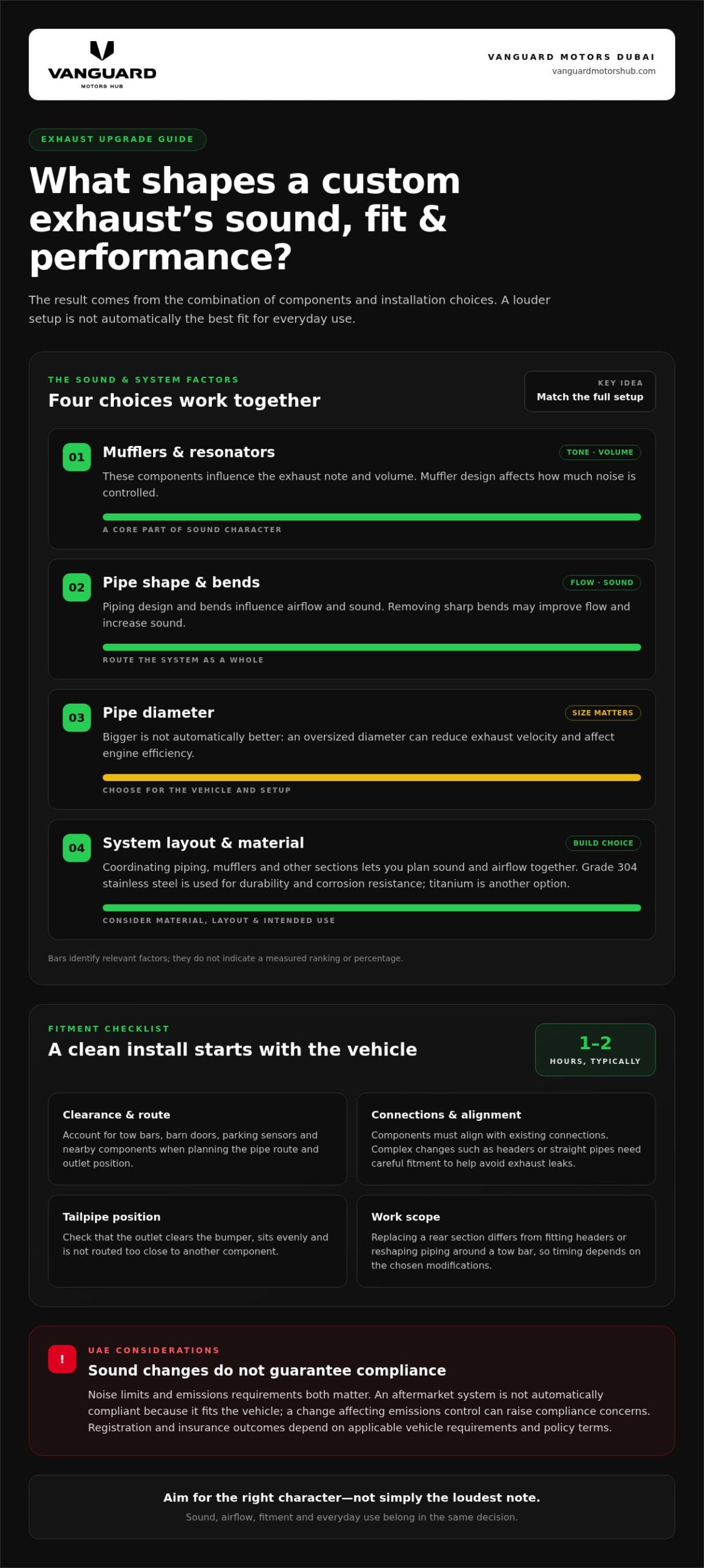
Mufflers, resonators and pipe geometry let you shape an exhaust note without making volume the only goal. Each component affects sound and flow differently, so the combination matters.
Mufflers and Resonators
A muffler controls exhaust noise, while a resonator filters particular sound frequencies. Choosing a different muffler design or adding a resonator can make a system quieter and more controlled. For example, a performance muffler can deliver a stronger exhaust note without the rawness of removing sound-control components.
Removing a resonator lets sound waves pass with less filtering, increasing volume and creating a rawer tone. That may suit a driver seeking a sharper sound, but it can be excessive for a vehicle used every day. Consider the muffler and resonator together, since each contributes to the final character.
Pipe Shape, Diameter, and Exhaust Flow
Pipe shape and diameter influence exhaust flow, sound and engine efficiency. Smoother bends can reduce turbulence and back pressure, while a larger-diameter pipe can increase flow and produce a deeper, slightly louder tone. The correct balance depends on the engine and the intended setup, not simply on choosing the largest available pipe.
An oversized pipe can reduce exhaust velocity and affect engine efficiency, so increasing diameter does not automatically increase horsepower. For example, a custom exhaust sound upgrade designed around sound preferences may use a different diameter from one intended to meet a particular engine’s flow requirements. At Vanguard Motors Dubai, carefully positioned silencers also help manage noise within the layout.
Available Custom Sound Upgrades
Common options include a performance muffler, adding or removing a resonator, changing pipe diameter and adjusting bends. These choices can create a louder, sportier note or a smoother, more restrained sound. Exhaust tips may alter the note slightly, but they do not dramatically change overall volume.
Material can influence sound character too. Titanium exhausts are associated with an aggressive, higher-pitched note, while pipe layout and silencer placement shape how that sound carries. Consider how you use the vehicle alongside your sound preferences: a dramatic tone on a sports car may not suit a daily-driven luxury saloon.
A balanced setup coordinates sound control with airflow. For instance, retaining a resonator while choosing a different muffler can change the tone without removing all filtering. Removing the resonator, by contrast, creates a rawer note. These choices let you tune volume and character while keeping pipe diameter suited to engine efficiency.
How exhaust upgrades change exhaust sound
A performance muffler can deepen the exhaust note without the excessive noise of a muffler delete. Sound changes depend on component choice, pipe diameter and how you drive.
Changes to Exhaust Sound
An exhaust upgrade changes how sound waves travel through the system, affecting tone and volume. A larger-diameter pipe can produce a deeper, slightly louder note, while exhaust tips may alter the sound only slightly. Tips alone will not dramatically increase volume, making them a subtle option if you want a small change.
Muffler design determines how much sound is controlled before it exits the tailpipe. A performance muffler can offer a sportier exhaust note without excessive noise, while a muffler delete produces a rawer, louder character. The result depends on the full configuration, not simply the visible exhaust tip.
Driving conditions also affect how an exhaust sounds in practice. Engine load and acceleration change the sound as gases move through the system. A tone that feels controlled during gentle driving may become much more prominent under acceleration, so consider both daily use and spirited driving.
Material and layout add further character. Titanium systems are associated with an aggressive, higher-pitched note, while pipe diameter can shift the sound towards a deeper register. These are distinct qualities: deeper does not necessarily mean quieter, and a louder system is not automatically more satisfying on every drive.
Deeper Sound and Cabin Drone
For a deeper sound without excessive cabin drone, consider a performance muffler and carefully chosen pipe diameter rather than a muffler delete. A muffler delete can create cabin drone, a persistent unwanted sound that may become tiring during regular driving. The muffler helps retain sound control while changing the exhaust’s character.
A larger pipe can produce a deeper, slightly louder note, but diameter alone does not determine comfort. Muffler design and the overall setup also shape the sound. For a daily-driven luxury car, a balanced note may suit longer journeys better than a raw, aggressive sound intended mainly for brief acceleration.
Let your listening goal guide the component choice. If you want more depth, a performance muffler is a more controlled option than removing the muffler. If you want a sharper, louder sound, recognise that a muffler delete may bring drone along with volume. The practical question is how the sound feels during the driving you actually do.
Share your preferred exhaust tone and driving priorities through a conversation about exhaust sound options.
Vanguard Motors Dubai: Paint Protection Film (PPF) Installation
Vanguard Motors Dubai offers Paint Protection Film (PPF) Installation for owners planning wider vehicle customization. After choosing an exhaust note that suits your car, consider how its exterior appearance and paint protection fit the same overall vision.
For a different look, Colored Sticker Wraps and Peelable Paint Applications offer further aesthetic options. The right choice depends on whether your priority is paint protection or changing the vehicle’s appearance.
To discuss exterior customization alongside your vehicle plans, contact Vanguard Motors Dubai.
Shape the Next Stage of Your Build
Your next modification can bring the whole vehicle closer to your vision. Treat a custom exhaust sound upgrade as part of a considered build, giving sound, performance and appearance their own clear roles. Decide what you want the car to communicate on the road, then let that guide your choices.
For the exterior, Vanguard Motors Dubai offers Paint Protection Film (PPF) Installation, Colored Sticker Wraps and Peelable Paint Applications. Each serves a different goal, from protecting paint to changing the vehicle’s appearance, and can complement a broader personalization plan.
Ready to discuss the next step for your vehicle? Contact Vanguard Motors Dubai to start a conversation about your plans. Make every detail feel intentional, and build toward a result that reflects your style.
Frequently Asked Questions
Will a custom exhaust change my car’s sound?
Yes. Changing exhaust components can alter your car’s volume and tone. A custom exhaust sound upgrade might make a sports car’s note deeper, louder or more restrained, depending on its muffler, resonator and pipe layout. The engine and existing system also influence the result. Consider how the sound comes across during gentle acceleration and stronger throttle, not only while the car is stationary.
Can a custom exhaust be fitted to any vehicle?
A custom exhaust can be tailored to almost any vehicle, including classic cars, family vans and performance models. The design still needs to suit the available space and existing components. For example, a tow bar, barn doors or parking sensors can affect pipe routing and outlet clearance. A bespoke layout addresses these constraints instead of assuming one standard configuration fits every model.
Does a custom exhaust improve performance?
It can, but a change in sound alone does not demonstrate a performance improvement. Exhaust design influences gas flow, and the result depends on the engine and configuration. For example, a layout with smoother bends may support airflow, while a poorly matched setup can reduce engine efficiency. Judge the modification by its intended purpose, whether sound, airflow or both.
Does an Aftermarket Exhaust Improve Horsepower?
It may, but horsepower gains depend on the engine model and exhaust setup. That does not mean every forced-induction car will gain the same amount. For a more complete performance change, pairing an exhaust with an engine remap can improve breathing, power and torque.
Will a custom exhaust require more maintenance?
Not necessarily. Grade 304 stainless steel custom exhausts resist rust and corrosion and require virtually no maintenance. Material choice matters: a system’s durability and upkeep needs can differ with its construction and exposure. Routine attention can still help you spot a loose connection, damage or a change in sound. If the exhaust note suddenly changes, have the system inspected for a possible leak.
How do cat-back, axle-back, muffler delete, and resonator delete compare for sound?
A cat-back changes the exhaust section behind the catalytic converter, while an axle-back replaces only the rear section. A muffler delete removes the muffler, producing a louder, rawer note; a resonator delete removes frequency filtering and also increases volume. These changes are not interchangeable: a muffler delete can create cabin drone, while removing a resonator changes how sound waves are filtered.
How is a custom exhaust sound upgrade installed, and how long does it take?
Installation involves fitting the chosen exhaust components to the vehicle, adapting pipe routing where needed, and aligning the connections and outlet. Complex changes, such as headers or straight pipes, require professional fitment to help avoid leaks. Custom installation typically takes an hour or two. Tow bars, parking sensors and other clearance constraints can affect the work and final fit.