
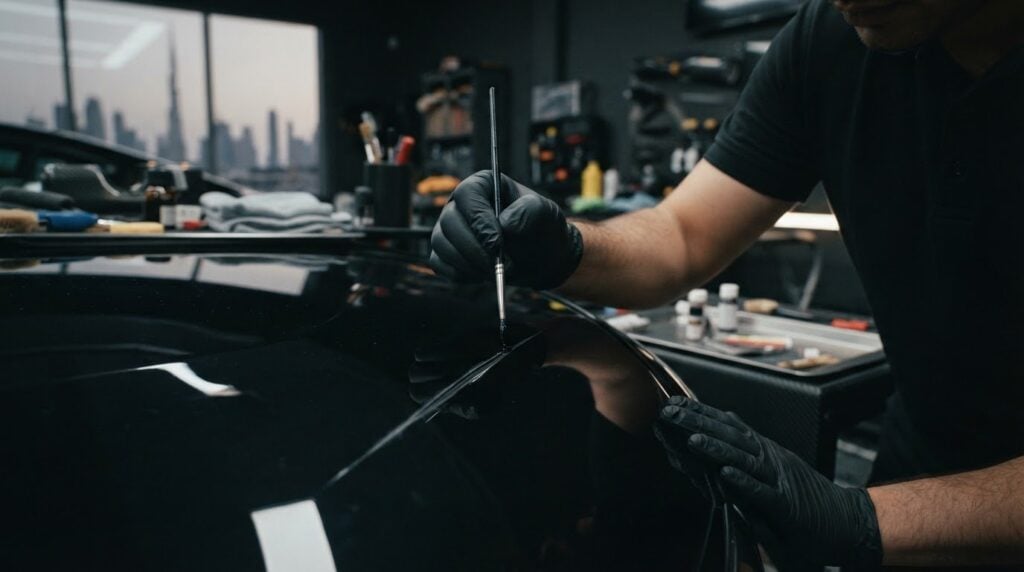
Can a few careful dabs of paint make a deep scratch disappear? Touch-up paint can cover an exposed area and soften the contrast, but it won’t recreate a factory-smooth finish when damage cuts through multiple layers. If you’re considering a deep scratch paint chip touch up at home, first work out what the mark may have reached: the clearcoat, colour coat, primer, or bare metal. The wrong approach can leave a raised patch, a colour mismatch, or an unstable repair.
Assess the damage before choosing a fix. This guide explains how to inspect a scratch or chip, what the fingernail test can and can’t tell you, and when DIY touch-up may suit a small defect. You’ll also learn when polishing, smart repair, or panel repainting may be more appropriate, particularly on a prominent panel or demanding finish. Vanguard Motors Dubai provides cosmetic repair and car damage repair for damage that may need professional assessment. The goal is to help you protect the finish and choose a realistic approach, without expecting touch-up paint to erase serious damage.
Key Takeaways
- Learn to distinguish a paint chip from a scratch and assess whether the damage may extend beyond the surface.
- Understand what deep scratch paint chip touch up can improve, and why texture or colour differences may still show.
- Compare touch-up paint, smart repair, and panel repainting to identify an approach suited to the damage.
- Follow careful preparation and application guidance for minor, stable chips, including the paint manufacturer’s curing instructions.
- Recognize warning signs such as corrosion, peeling, or widespread damage, and know what to ask before seeking professional repair.
Deep Scratch Paint Chip Touch Up: First Identify What the Damage Reaches
A chip removes paint from a small spot; a scratch cuts a line or groove across the surface. Touch-up paint can cover a small exposed area and reduce contrast, but it isn’t a guaranteed invisible restoration. Before attempting a deep scratch paint chip touch up, assess the damage itself, not just how noticeable it looks.
Depth, location, and the condition of the surrounding finish all matter. A small mark in a less prominent area may be a reasonable DIY candidate if the paint around it is stable. A defect on a prominent panel, along a sharp body line, or beside peeling paint calls for more caution. Previous repairs can also affect how new paint adheres and matches.
How to assess a scratch or chip without damaging the paint
Wash the area gently, dry it, then inspect it in bright, indirect light. Don’t scrape at the mark or use a tool to test its depth. You can lightly pass a clean fingernail across the scratch: if it catches, the damage may extend beyond the clearcoat. Treat this as a rough clue, not a definitive diagnosis. Look for flaking, rust, sharp edges, or a scratch that crosses panel boundaries. These signs can point to a more complex repair than a simple dab of paint.
What the visible layers reveal about repair needs
Automotive finishes are built in layers. The automotive paint layers help explain why marks that look similar can need different repairs. Clearcoat is the transparent outer layer. The colour coat gives the vehicle its colour, while primer sits below it to help the paint system adhere to the panel. Metal forms the base on steel or aluminium panels.
Clearcoat damage affects the transparent surface; colour-coat loss exposes a different layer; primer or bare metal means the protective finish has been breached. A light scratch limited to clearcoat may respond to polishing, while missing colour usually needs more than polishing alone. Primer exposure or bare metal can require preparation and repair beyond a basic cosmetic dab, particularly if corrosion is present. Don’t assume a touch-up pen will properly seal a deep defect.
Plastic bumpers and other plastic panels don’t rust, but damage still needs suitable preparation and materials for that surface. If you can’t identify the exposed layer, the mark is spreading, or the surrounding finish is unstable, a professional assessment can help determine an appropriate repair. Vanguard Motors provides cosmetic repair and car damage repair; confirm the suitable method for the vehicle and damage.
What Deep Scratch Paint Chip Touch Up Can, and Cannot, Fix
Correctly matched touch-up paint can cover a small exposed area and make a chip or short scratch less conspicuous. It may also help shield the exposed spot, but the result depends on the damage and how the paint is applied. A deep scratch paint chip touch up is best viewed as a targeted cosmetic improvement, not a way to rebuild the original finish.
Protection and cosmetic improvement are different goals from invisible restoration. A brush can leave raised texture, a slight colour shift, or a visible edge where new paint meets the original finish. These differences are often more noticeable on long scratches or deep damage. Simply filling the mark won’t recreate the surrounding layers or the smooth appearance of the panel.
Visibility also depends on the defect’s location and the surrounding finish. A short chip low on a panel may draw less attention than a similar mark near a handle or body line. Metallic and pearl paints can be especially challenging to blend because their appearance changes with light and viewing angle. Faded, peeling, or previously repaired paint can further complicate colour matching and adhesion.
When DIY touch-up may be a reasonable option
DIY may suit a small, isolated chip or short defect with stable paint around it. Check the vehicle’s paint code, then confirm that the touch-up paint is compatible with its paint system. A colour that looks close in the container may appear different on the panel, so test it on a discreet area or sample surface if possible. Follow the paint manufacturer’s instructions rather than adding extra layers to force a match.
When a deep scratch needs professional assessment
Seek an assessment if the clearcoat is failing across a broad area, paint is peeling, corrosion is visible, or damage crosses a body line. Exposed metal should also be evaluated so the repair can account for the panel’s condition, not just cover the mark. Premium finishes and highly visible panels warrant added care because a small mismatch can stand out against an otherwise immaculate surface.
Ask how the proposed repair will handle preparation, colour matching, blending, and the finish you can realistically expect. Vanguard Motors provides cosmetic repair and car damage repair, though the suitable method depends on the vehicle and defect. If you’re unsure whether DIY is appropriate, you can ask about professional damage assessment.
Touch-Up Paint vs Smart Repair vs Panel Repainting
The right repair depends on more than the mark’s size. Damage depth, surrounding paint condition, panel material, and finish all influence which approach is suitable. Use this comparison as a starting point, not a diagnosis. Inspection determines the method, and no option can promise an exact colour match or an invisible result in every case.
| Approach | Typically suited to | Likely finish consistency | Scope and limitations |
|---|---|---|---|
| Touch-up paint | Small, isolated chips or short defects with sound paint around them. | Can reduce contrast, but brush texture, colour variation, or a visible edge may remain. | Targets a small spot. It may not address deeper damage, failing surrounding paint, or a broader finish issue. |
| Cosmetic smart repair | Localised cosmetic damage that a specialist considers suitable after inspection. | May integrate the repair with nearby paint, though the result depends on colour, finish, location, and condition. | Focuses on a limited area. It may not be appropriate for extensive damage or compromised paint across a larger section. |
| Repainting the affected panel | Wider damage, multiple defects, or a finish that cannot be addressed convincingly with a small-area repair. | Can provide a consistent finish across the panel, but blending and colour matching still require care. | Addresses a broader area and involves more extensive paintwork. The existing finish and adjacent panels can affect the final appearance. |
Which repair method fits the size and depth of the damage?
A single shallow chip on a panel with stable surrounding paint may be a candidate for careful touch-up. For a localised scuff or scratch, cosmetic smart repair may be considered if inspection confirms the finish and substrate are suitable. Broader paintwork may be more appropriate where defects are extensive or the finish is visibly compromised. A guide to fixing a deep scratch on a car can help illustrate why deeper damage may call for more than a quick dab, but it can’t determine the right method for your vehicle.
How paint finish and panel location change the decision
Metallic, pearl, and multi-layer finishes can make blending more demanding because their appearance shifts with light and viewing angle. A broad, flat panel may reveal repair edges more readily than a less prominent area. Existing fading or previous repairs can also complicate colour matching. For a premium finish or highly visible panel, ask the repairer to explain the proposed scope and realistic finish expectations before work begins.
Vanguard Motors provides cosmetic repair and car damage repair. Confirm the suitable approach for the vehicle, panel material, and condition of the paint.
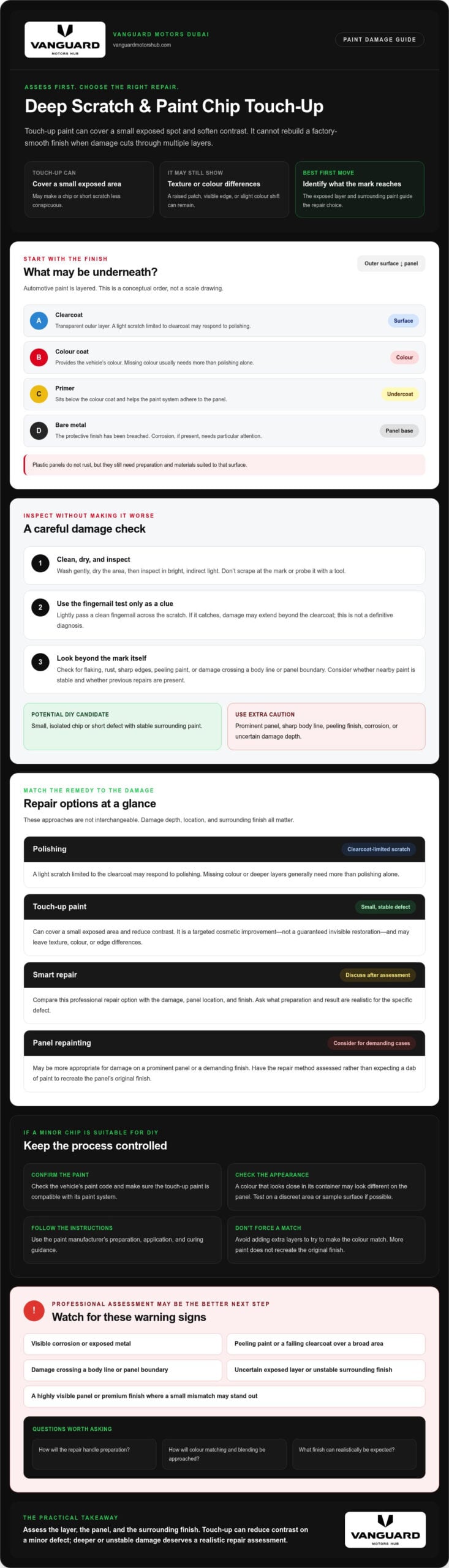
How to Touch Up a Minor Paint Chip Safely
These steps are general guidance for a small, stable chip, not a substitute for assessing deeper or spreading damage. A deep scratch paint chip touch up can make a minor defect less conspicuous, but rushing preparation or applying too much paint can leave a raised, uneven patch. Read the product instructions first, and follow them for surface preparation, application, drying, and curing.
Prepare the surface and verify the colour
Work on a cool, dry panel in a clean, shaded setting. Wash and dry the area gently, then remove suitable surface contamination using a method that won’t abrade the finish. Find the vehicle’s paint code and confirm that the touch-up product is compatible with its paint system. Don’t paint over wax, loose paint, rust, or trapped dirt. If any of these are present, pause and seek repair advice.
Apply conservatively and evaluate the result
Use a fine applicator and place a small amount of paint only inside the damaged area. Resist the urge to fill the chip in one heavy pass. Excess paint can dry above the surrounding finish and create a noticeable bump. Follow the product’s instructions precisely, including any required preparation between coats and the full curing period.
- Start small: Apply a thin layer within the chip rather than brushing over the surrounding paint.
- Let each layer cure: Don’t add another coat or handle the repair until the instructions say it’s ready.
- Avoid aggressive sanding: Sanding can remove sound clearcoat or enlarge the damaged area. Only use an abrasive if the product instructions call for it and you understand the procedure.
- Check before continuing: Stop if the repair spreads, lifts nearby paint, or looks worse as it dries. Don’t try to correct a poor result by adding more paint immediately.
Colour can look different under changing light, so inspect the cured repair from several angles before deciding whether it needs further attention. Don’t polish, wax, or apply a protective coating until the touch-up product’s instructions allow it. If the chip exposes a deeper layer or the surrounding finish is unstable, additional DIY work may complicate the eventual repair.
Unsure whether the damage is suitable for a home repair? Vanguard Motors provides cosmetic repair and car damage repair, with the appropriate approach confirmed for the vehicle and defect. Ask about a professional damage assessment before applying paint.
When Professional Cosmetic Repair Is the Better Next Step
A basic touch-up may not be the right response if the damage reaches primer or metal, corrosion is visible, paint is peeling, or the defect covers a broad area. Deep scratches that cross body lines can also need careful preparation and blending. A professional assessment helps establish what the damage involves and which repair options may suit the vehicle, without assuming every mark can be made invisible.
Vanguard Motors provides cosmetic repair and car damage repair. Discuss the repair method and achievable finish after the vehicle and damage have been assessed. Before approving work, ask how the plan addresses the affected layers, surrounding paint, and your expectations for the finished panel.
Questions to ask before approving a repair
- What did the inspection reveal? Ask how deep the damage appears and whether the surrounding finish is stable.
- What work is proposed? Clarify the repair scope, including how the area will be prepared and how colour matching and blending will be approached.
- What result is realistic? Confirm whether the repair may remain visible under certain lighting or viewing angles.
- Is protection appropriate afterward? Ask how the surface will be prepared before considering Paint Protection Film (PPF).
Protect repaired paint after the work is complete
Follow the repair provider’s guidance on washing, curing, and returning the vehicle to normal use. Don’t assume the surface is ready for washing, polishing, or film installation until the provider confirms it. Paint Protection Film is a separate protective service, not a way to repair a scratch or conceal an unfinished surface. Consider it only after the paint repair is complete and the surface is suitably prepared.
For more context on post-repair protection and cosmetic repair options, explore The Ultimate Shield: Why Paint Protection Film is the Standard for Excellence in 2026 and Cosmetic Car Repair in 2026.
If you’re weighing a deep scratch paint chip touch up against professional repair, share the damage details and ask what assessment may be appropriate. Send Vanguard Motors details about the damage and ask about an assessment.
Choose the Right Repair for a Lasting Finish
The best repair starts with understanding what the damage reaches. Small, isolated chips may suit careful touch-up when the surrounding paint is sound, while deep exposure, peeling, corrosion, or broader damage deserves professional assessment. Touch-up paint can protect and disguise a defect, but a perfectly invisible result isn’t guaranteed.
Use the deep scratch paint chip touch up guidance in this article to decide whether DIY is appropriate, compare touch-up with smart repair or panel repainting, and avoid making the damage worse through rushed preparation or application. The right choice depends on the vehicle, panel, paint condition, and finish.
After paint repair and suitable surface preparation, Paint Protection Film may be considered separately to protect the finish, not to repair existing damage.
Not sure which approach fits your vehicle? Ask Vanguard Motors about your paint damage and discuss whether an assessment is appropriate. With a clear diagnosis and realistic expectations, you can move forward with confidence and care for your vehicle’s finish.
Frequently Asked Questions
Can I touch up a deep scratch on my car myself?
DIY touch-up may be suitable for a small, isolated defect with stable surrounding paint, but assess a deep scratch carefully first. If the mark reaches primer or metal, crosses a body line, or has peeling paint or corrosion, a small dab may not protect or improve it adequately. Check the damage in good light and follow the paint manufacturer’s preparation and curing instructions. Seek professional advice if you’re unsure.
How do I know if a scratch has reached the primer?
You may see a different colour beneath the vehicle’s paint, but appearance alone can’t confirm the exact layer. A fingernail catching on the scratch is a rough clue that the damage may extend beyond the clearcoat, not a diagnosis. Inspect the cleaned, dry area under bright, indirect light without scraping it. If the layer is unclear or the panel is peeling, ask a repair professional to assess it.
Will touch-up paint make a deep scratch invisible?
No. Touch-up paint can reduce contrast and cover a small exposed area, but it can’t reliably recreate the original finish over deep damage. A raised brush mark, colour variation, or visible edge may remain. Metallic and pearl finishes, long scratches, and prominent panel locations can make the repair easier to notice. Set expectations around protection and cosmetic improvement rather than assuming the mark will disappear completely.
Can I apply touch-up paint over a paint chip with exposed metal?
Possibly, but don’t simply cover exposed metal without checking its condition and the product requirements. Dirt, loose paint, or rust can interfere with a repair, and a basic cosmetic dab may not be suitable for deeper exposure. Confirm the correct paint system and preparation instructions first. If corrosion is present, or you can’t tell what the chip has exposed, have the area assessed before applying touch-up paint.
What happens if I leave a deep paint chip untreated?
If a chip has breached the protective paint layers, the exposed area may be more vulnerable to corrosion on a metal panel, depending on its condition and environment. Peeling or spreading damage can also make the affected area more extensive. Plastic panels don’t rust, but their damage can still need suitable preparation. Inspect the chip and seek advice if you see exposed metal, rust, loose paint, or increasing damage.
Should I use touch-up paint or get a professional smart repair?
Choose touch-up paint for a small, stable chip only if you’re comfortable with a cosmetic result that may remain visible. A professional smart repair may suit localised damage, but the appropriate method depends on inspection, panel material, paint condition, and finish. For broad damage, peeling, or exposure to primer or metal, ask about the full repair scope.