
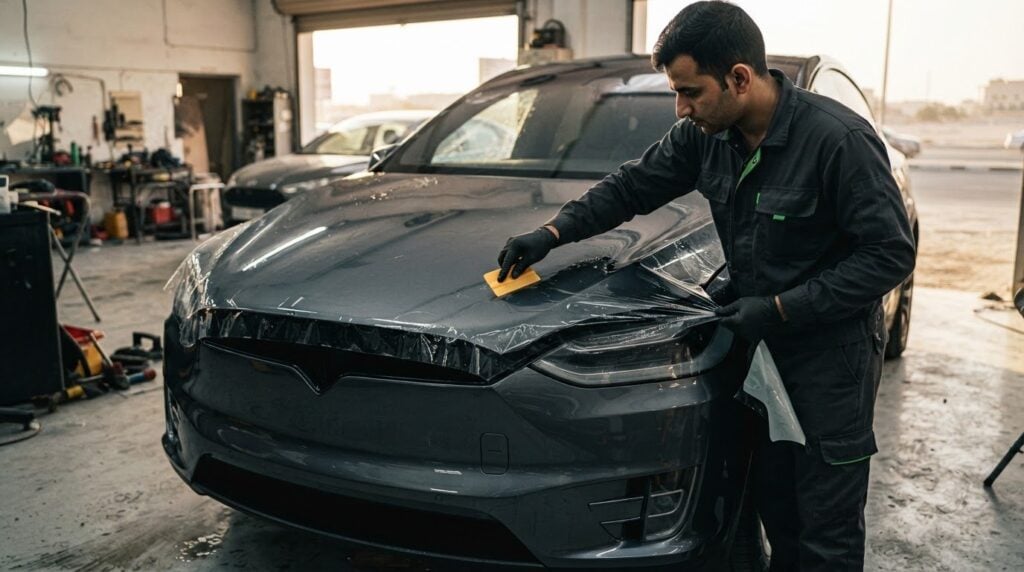
The UAE’s demanding roads and climate expose a vehicle’s finish to sand, stone chips, scratches and intense sun. Vanguard Motors Dubai provides professional EV paint protection film solutions across the country, applying a physical polyurethane layer over painted surfaces to help safeguard against everyday damage, including road debris and chemical stains from bird droppings or tree sap.
PPF differs from ceramic coating. It forms a robust barrier against physical impacts, while ceramic coating adds a smooth surface layer for enhanced gloss and water repellency but does not absorb impacts. The right option depends on what you want to protect against and which parts of your EV need coverage.
This guide explains how PPF works, the road and climate hazards it can help guard against, and how it compares with ceramic coating. You’ll also learn how coverage, film type and vehicle contours affect installation, helping you make an informed choice for your EV’s finish.
Key Takeaways
- Understand how a physical film layer helps protect painted surfaces from road debris and everyday damage.
- Learn what to look for in film quality and precise installation across your EV’s contours.
- See how Dubai’s climate and road conditions can affect paint, and which areas may need focused protection.
- Compare PPF’s impact protection with ceramic coating’s role in gloss and surface care.
- Explore how professional PPF installation can help protect your EV’s finish, with coverage suited to your priorities.
What Is Paint Protection Film (PPF) for a Car’s Paint?
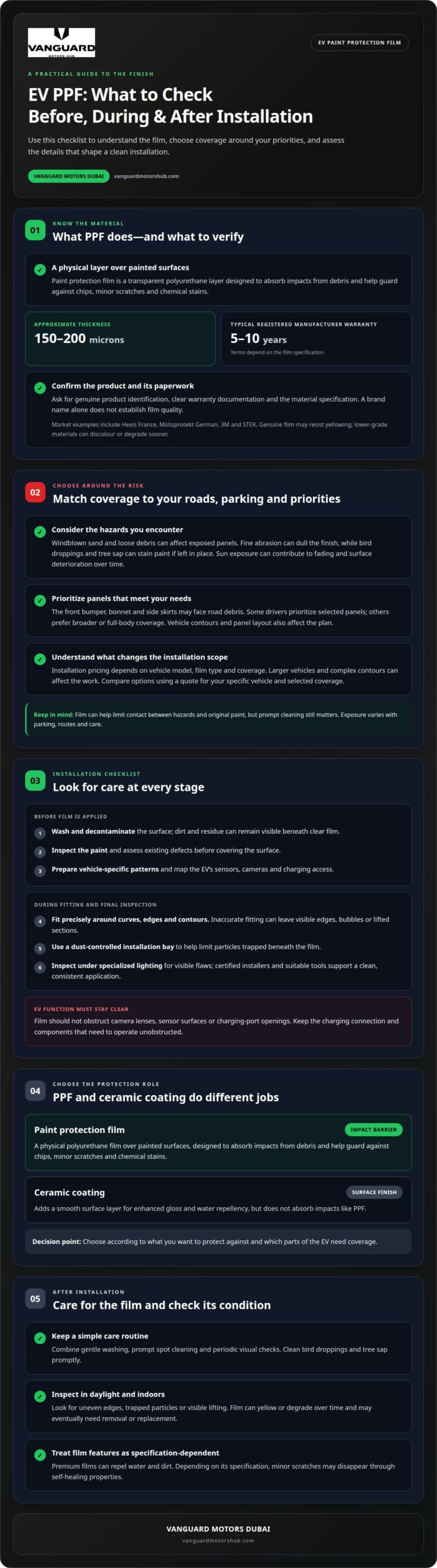
Paint protection film is a transparent polyurethane layer applied over painted vehicle surfaces. At approximately 150-200 microns thick, it creates a physical barrier against chips, minor scratches and chemical stains. On an EV, carefully placed film can protect the original finish while keeping the bodywork visible. Unlike ceramic coating, which adds a surface layer, PPF is designed to absorb impacts from debris.
Dubai market examples include Hexis France, Motoprotekt German, 3M and STEK. A registered manufacturer PPF warranty typically lasts 5-10 years; its terms depend on the film specification. The brand name alone doesn’t establish film quality. Genuine product identification, clear warranty documentation and consistent material details matter. A genuine film may resist yellowing, while lower-grade materials can discolour or degrade sooner. Ask what film is being applied and what the manufacturer warranty covers.
On an EV, safe application means treating sensors, cameras and charging ports as functional areas, not paint panels. Film should be fitted around these features without obstructing lenses, sensor surfaces or port openings. The installer should map the vehicle’s features before application, keeping film clear of the charging connection and components that need to operate.
Installation starts with washing and decontaminating the surface. The technician inspects the paint, prepares vehicle-specific patterns and applies the film with professional tools. Precise fitting matters around curves, edges and body contours. A dust-controlled installation bay helps limit particles trapped beneath the film, while a final inspection under specialized lighting can reveal visible flaws. Certified installers and suitable tools support a clean, consistent application.
Preparation affects the result. Dirt, residue and existing paint defects can remain visible beneath clear film, so the surface needs careful cleaning and assessment first. The film is positioned, worked into the panel contours and inspected. Depending on its specification, minor scratches may disappear through self-healing properties. Film can yellow or degrade over time, and may eventually need removal or replacement. Poor preparation can trap dust, while inaccurate fitting can leave visible edges, bubbles or lifted sections.
Installation time can vary with the extent of body coverage. Installation pricing depends on the vehicle model, film type and coverage, with a quote provided after a request. These factors shape the scope of work, from selected panels to broader coverage. For EV paint protection film in Dubai, the useful comparison is the film’s documented specification, warranty terms and the installer’s preparation and fitting process, not the brand name alone.
Why Dubai’s climate and roads can damage vehicle paint
Driving in Dubai exposes a vehicle’s finish to more than routine contact. Windblown sand can strike exposed panels, and loose road debris can chip paint on the front bumper, bonnet and side skirts. Repeated fine abrasion can dull the finish, especially on surfaces touched during washing. PPF helps limit direct contact between these hazards and the original paint.
Sun exposure matters for a car parked outdoors or regularly driven in open areas. UV rays can contribute to fading and surface deterioration over time. Bird droppings and tree sap can also stain paint if left in place. Protective film creates a layer between contaminants and the paint, but prompt cleaning still matters. The level of exposure varies with parking, driving routes and care.
Luxury and performance vehicles often have sculpted panels, prominent front ends and distinctive paint finishes. These features help determine where protection is most useful. One driver may prioritize the bonnet and bumper, while another may choose broader coverage. For an EV, the plan should also account for the panel layout and keep cameras, sensors and charging access unobstructed.
The cost of PPF installation depends on the vehicle model, film type and coverage selected. A selected-panel application covers fewer surfaces than full-body coverage, while larger vehicles and complex contours can affect the installation work. Request a quote based on your specific vehicle and chosen coverage rather than relying on a generic vehicle category.
PPF can help preserve a vehicle’s appearance by reducing exposure to chips, scratches, sand and chemical stains. Keeping more of the finish intact may support resale presentation, although resale value also depends on the vehicle’s overall condition and market demand. Ceramic coating serves a different purpose: it adds a surface layer and gloss but does not absorb impacts like PPF. Choose according to the damage you most want to limit.
Dubai also has specialist automotive protection studios that apply PPF to electric vehicles. Vehicle colour wraps and branding offer a separate visual route: they change the exterior appearance, while clear PPF is selected to protect painted panels. Coverage, finish and the vehicle’s intended look shape the decision. For a tailored discussion of EV protection priorities, discuss PPF coverage for your EV.
Maintaining a car’s appearance and resale value
Good PPF care helps maintain the finish after installation, particularly when a vehicle regularly encounters sun, road residue and chemical contaminants. A practical routine combines gentle washing, prompt spot cleaning and periodic visual checks.
Film Transparency and Appearance
Clear PPF keeps the original paint visible while adding a shield over painted panels. Premium films can also repel water and dirt, helping routine washing maintain a clean appearance. Inspect the film in daylight and indoors for uneven edges, trapped particles or visible lifting that could distract from the finish.
Matte and gloss films create different visual effects, so choose a finish that suits the vehicle’s appearance. Film will not conceal paint defects beneath it, and existing marks can remain visible after installation. A clean, well-maintained film keeps the paint colour and detailing in view rather than replacing the vehicle’s original look.
PPF Lifespan and Ongoing Care
A quality PPF installation can typically last 5 to 10 years, depending on the film, fitting, driving conditions and daily care. The film can yellow or degrade over time, so inspect exposed edges and high-contact panels during regular washing. A damaged or aged section may need removal and replacement to maintain the protective layer.
After application, allow 24 hours before washing or waxing. For ongoing care, use pH-neutral car shampoo, rinse away dirt, and dry the vehicle with a clean, soft cloth. Remove bird droppings and tree sap promptly because prolonged contact can leave chemical stains. Avoid harsh chemicals that could affect the film’s surface or appearance.
Water and dirt repellency can make premium film easier to clean, but careful washing is still necessary. Wash gently rather than scrubbing grit into the film. If a mark remains, avoid abrasive tools and aggressive cleaners, which can damage the surface and affect the film’s appearance.
Care for Resale Value
Maintaining the film can help keep the underlying paint presentable, which matters when showing a vehicle to a future buyer. PPF can help preserve a car’s resale value by 10% to 15%, although the vehicle’s overall condition and market demand also shape its selling value.
Keep care consistent: wash with pH-neutral shampoo, remove bird droppings and sap promptly, and avoid harsh chemicals. Before presenting the vehicle, check for lifted edges, visible damage or areas needing attention. Clean, intact film and documented maintenance give buyers a clearer view of the paint beneath the protective layer.
PPF compared with ceramic coating
PPF and ceramic coating serve different purposes on an EV’s painted panels. Polyurethane PPF forms a physical barrier that can absorb impacts from debris. Ceramic coating adds a chemical layer for gloss but does not absorb impacts. In practical terms, choose PPF for physical protection or ceramic coating for surface appearance and easier care.
Consider an EV driven regularly on Dubai roads. Its front bumper and bonnet face debris that can chip paint, making a film barrier relevant. Ceramic coating does not provide the same impact resistance. If gloss and water repellency matter more than impact protection, ceramic coating may better suit your priorities. Each option addresses a different concern, so consider how you use the vehicle and the finish you want.
Ceramic coating is often chosen to enhance shine and create a hydrophobic surface that makes water and dirt easier to remove. Premium PPF can also repel water and dirt, but its defining role is physical protection. The two treatments may overlap in appearance and maintenance, but they are not interchangeable. A glossy surface does not mean the paint has an impact-absorbing barrier.
A vinyl wrap offers another option: a colour or graphic change rather than clear protection alone. A driver seeking a different exterior appearance may consider coloured vinyl, while one prioritizing paint protection may choose clear PPF. Match the coverage and finish to your goal. A wrap changes the look; PPF protects the paint.
PPF is available in gloss and matte finishes. Gloss can preserve a polished look, while matte changes the surface appearance without changing the vehicle’s colour. Ceramic-coated PPF combines a film barrier with a ceramic surface treatment: the film addresses impact exposure, while the coating contributes gloss and water repellency. Choose a finish that suits the EV’s paint and the appearance you want.
Use this simple guide: choose PPF when stone chips and scratches are the main concern; choose ceramic coating when shine and routine surface care matter most. Consider both if you want a physical film layer alongside a coated surface. Coverage matters too: selected high-exposure panels offer a different level of protection from full-body coverage. The right balance depends on driving conditions, desired finish and the surfaces you want protected.
If you’re weighing these options for an EV, judge each treatment by its purpose, not its label. PPF is an impact barrier, ceramic coating is a chemical finish layer, and vinyl wrap changes appearance. Comparing those functions helps you match protection and styling to your vehicle without expecting one treatment to do everything.
Protection from sand, stone chips, scratches, and UV exposure
Driving in Dubai can expose painted panels to windblown sand, loose road debris and strong sun. PPF adds a physical layer over selected surfaces, helping limit direct contact with common paint hazards.
Sand and Debris Protection
Fine sand can repeatedly strike the bonnet, bumper and side panels during everyday driving. PPF forms a barrier between debris and paint, helping reduce abrasion and visible wear. Coverage determines which panels receive protection: front-focused application shields exposed leading edges, while broader coverage protects more of the vehicle’s finish.
Sand trapped in a wash mitt or drying cloth can scratch the paint during cleaning. Rinse loose grit away before washing, then use gentle, pH-neutral car shampoo. Film does not remove the need to wash; careful routine care helps protect the paint beneath it.
Stone-Chip Protection
Small stones thrown up by traffic can strike the front bumper, bonnet and lower side panels. PPF can absorb some impact from debris, helping prevent paint chips and scratches. It is a protective layer, not a guarantee against every impact: the result depends on the force, angle and location of contact.
For a vehicle that spends substantial time on highways, prioritize panels facing into road debris. A stone chip that penetrates the film may still damage the paint beneath it, but intact film provides an additional barrier. PPF protects paint, not the body structure, so it should not be treated as dent protection.
Scratch Protection
PPF helps reduce the risk of scratches from everyday contact, including light abrasion from road grit or careless handling near painted panels. Depending on the film specification, minor surface scratches may disappear through self-healing. This does not repair deeper cuts or damage that penetrates the film, so the film’s condition and specification matter.
Check exposed edges and high-contact areas during routine cleaning. If film lifts or gets a deep cut, the damaged section may need attention to maintain coverage. Avoid abrasive pads and harsh chemicals, which can affect the film’s surface instead of protecting it.
UV Ray Protection
Sun exposure can affect a vehicle’s paint over time, particularly on panels often left outdoors. PPF helps shield covered paint from UV rays, sand and other everyday hazards. Protection applies only where film is installed, so uncovered panels remain exposed to the same conditions.
Choose coverage according to where the vehicle is most vulnerable and how it’s used. Regular inspection can reveal discolouration or deterioration as film ages. For a tailored discussion of coverage against Dubai road and climate exposure, discuss PPF protection for your vehicle.
Vanguard Motors Dubai: Paint Protection Film (PPF) Installation
Vanguard Motors Dubai installs Paint Protection Film (PPF) to help protect an EV’s painted surfaces from road debris, scratches and climate exposure. It’s a practical next step once you’ve identified which panels need protection and whether you prefer focused or broader coverage.
Discuss your vehicle, driving conditions and finish priorities to plan an installation around your needs. If you want a visual change rather than a clear protective layer, Colored Sticker Wraps and Peelable Paint Applications offer different ways to transform the exterior.
For EV paint protection film in Dubai, the right solution depends on your vehicle and priorities. Contact Vanguard Motors Dubai to discuss PPF for your EV.
Choose the Finish That Fits Your EV
Start by deciding what you want from your vehicle’s exterior. A clear protective layer serves a different purpose from a dramatic colour change. Your choice depends on how you drive, what the vehicle is exposed to and the look you want to keep. Set those priorities first, then plan coverage and finish together.
Vanguard Motors Dubai installs Paint Protection Film (PPF) to protect paint, and offers Colored Sticker Wraps and Peelable Paint Applications for exterior transformation. If you’re considering EV paint protection film in Dubai, describe your vehicle and the result you want. That gives the conversation a practical starting point, whether you want a discreet shield or a distinctive new appearance.
Contact Vanguard Motors Dubai to discuss your EV’s finish. Make your next decision with clarity, then move forward with a look that feels right for your vehicle.
Frequently Asked Questions
How Does Car PPF Work Against UAE Environmental Elements?
PPF gives painted panels a protective layer against sand, road grit, stone impacts, UV exposure and chemical contaminants. A vehicle regularly driven on busy roads may benefit from protection on front-facing panels, while one parked outdoors may need attention to other exposed surfaces. Film shields only the areas it covers. Promptly cleaning bird droppings and tree sap helps limit stains on both filmed and uncovered paint.
How much should PPF actually cost in the UAE?
PPF pricing depends on the vehicle model, film type and selected coverage, so request a quote for your specific car. A compact EV with selected panels and a larger vehicle receiving broad coverage involve different amounts of material and installation work. Decide which panels matter most, then request pricing for that scope. The quote should describe the planned coverage and film choice.
Why Choose PPF in Dubai?
Choose PPF if your priority is protecting painted panels from road impacts and everyday abrasion. It can suit an EV used for frequent commuting, especially when preserving the finish matters more than changing its colour. Consider how the vehicle is driven and parked, then choose coverage to match those conditions. PPF is less suited to a goal focused only on gloss, which ceramic coating addresses differently.
What is paint protection film (PPF) for electric vehicles?
For an electric vehicle, PPF is a transparent film fitted over selected painted body panels. It does not protect the battery or replace vehicle safety equipment. The installation plan should account for the EV’s body design and leave cameras, sensors and charging access unobstructed. Match the film specification and coverage plan to the vehicle, protecting painted surfaces without covering functional components.
How much does EV paint protection film cost in Dubai?
The cost of PPF for an EV depends on its model, the film selected and the extent of coverage. When requesting a quote, specify whether you want selected high-exposure panels or broader protection, since that affects the installation scope. There is no single figure that suits every electric vehicle. Share your vehicle details and coverage priorities to receive project-specific pricing.
How do PPF packages compare: front-end, partial, and full-body coverage?
Front-end coverage focuses on leading panels exposed to road debris. Partial coverage protects selected additional areas, such as door edges or side panels, while full-body coverage extends film across painted exterior panels. For a highway-driven EV, front-facing areas may be the first priority. An owner seeking more consistent protection across the finish may prefer broader coverage. The package name matters less than the exact panels included.
How long does PPF installation take for an electric vehicle in Dubai?
PPF installation generally takes 1 to 3 days, depending on body coverage. A focused application involves less panel work than a full-body installation, while EV contours and careful trimming require precise fitting. The installation schedule should allow time for surface preparation, film application and a final inspection. Plan around the agreed coverage rather than assuming every vehicle has the same installation duration.
How does Dubai’s heat and climate affect PPF durability and maintenance?
Sun exposure and environmental contaminants can affect film over time. PPF can yellow or degrade, so check its appearance and edges during routine care. Wash with pH-neutral car shampoo, remove bird droppings and sap promptly, and avoid harsh chemicals. Film lifespan also depends on its specification, installation, driving conditions and daily care. Regular gentle cleaning helps keep the film presentable as it ages.