

The more prestigious exhaust brand isn’t automatically the better match for your car. In the Fi Exhaust vs Ryft comparison, the deciding details are often vehicle-specific: fitment, sound character, valve behavior, materials, and installation requirements.
Both names appeal to drivers seeking a distinctive performance sound, but reputation and online demonstrations aren’t enough to choose confidently. Recordings can be misleading when the cars, exhaust configurations, or recording conditions differ. Features and compatibility also depend on the exact vehicle and setup, so broad brand claims may not answer the questions that matter for your car.
This guide compares Fi Exhaust and Ryft on the details to check before purchase: sound, valve control, construction, fitment, and installation scope. You’ll learn how to assess evidence for a specific application, identify the system behavior that suits your priorities, and prepare useful questions for an exhaust specialist. The aim is a decision based on your car and intended use, not reputation alone.
Key Takeaways
- Compare Fi Exhaust and Ryft systems made for your exact vehicle, rather than choosing by brand reputation alone.
- Use comparable sound demonstrations and verify valve controls, materials, and included components against current manufacturer information.
- Separate the sound you prefer from performance claims, and ask for vehicle-specific evidence to support claimed gains.
- Before requesting a quote, gather your vehicle details, intended use, sound goals, and information about existing modifications.
- An exhaust specialist can help clarify fitment and installation scope. Confirm whether the specific system can be sourced or installed before proceeding.
Fi Exhaust vs Ryft: What Should You Compare Before Choosing?
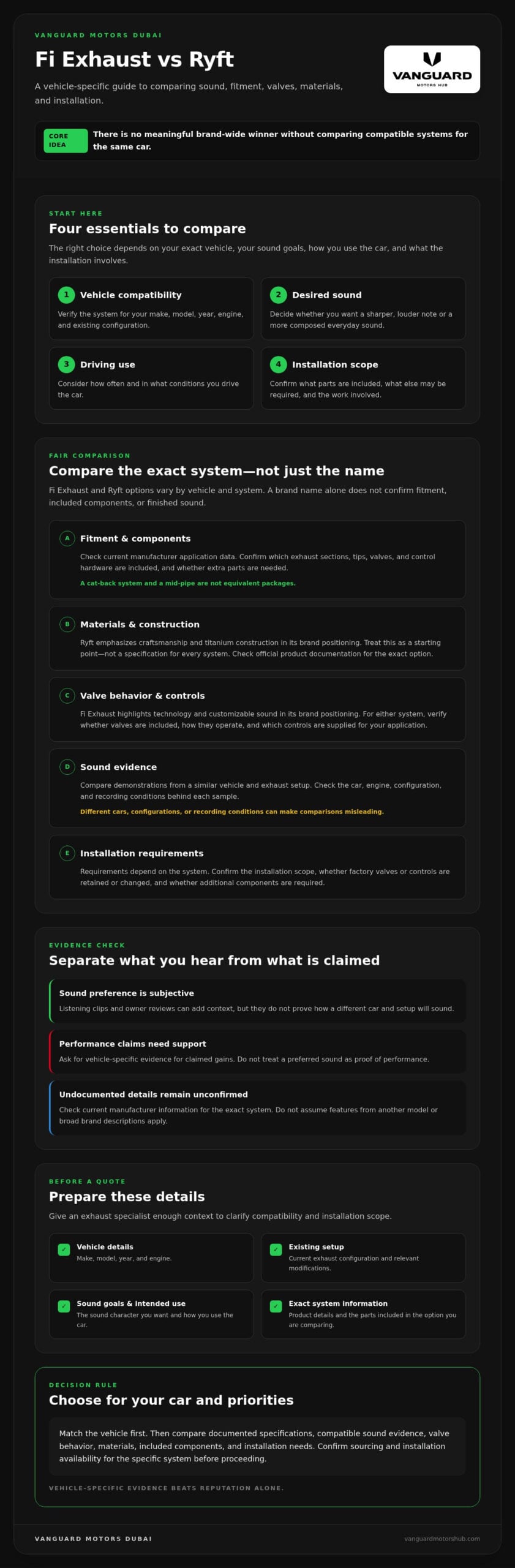
There isn’t a meaningful brand-wide winner without comparing systems made for the same vehicle. Fi Exhaust and Ryft options vary by vehicle and system, so start with your exact car and the configuration you’re considering. A brand name alone doesn’t confirm fitment, included components, or how the finished setup will sound.
Assess each option against four essentials: vehicle compatibility, desired sound, driving use, and installation requirements. Separate documented specifications from owner impressions and promotional language. Manufacturer application data can help establish compatibility. A listening clip or owner review can add context, but neither proves how a different car and setup will sound. Check claims about performance, materials, or valve functions against current information for the specific system.
Why the exact vehicle and exhaust configuration matter
Start with the make, model, year, and engine. Record the existing exhaust configuration and any modifications that could affect compatibility. Then identify the exact system and components you’re comparing. Exhaust packages can include different sections and parts, so a cat-back system and a mid-pipe, for example, aren’t equivalent packages. For a foundational overview of how the exhaust system is assembled, review its main components before comparing product descriptions.
Check every fitment statement against current manufacturer application data. Ask which parts are supplied, whether factory valves or controls are retained or changed, and whether the setup requires additional components. Don’t assume a system fits because it’s listed for the same model family. The year, engine, and existing configuration may also matter.
What “better” means for your driving priorities
Define the result you want before weighing brand positioning. Are you looking for a sharper, louder note, flexible valve control, a more composed sound during routine driving, or a particular visual finish? Consider how often you drive the car and in what conditions. A setup that appeals for occasional spirited use may not suit someone who wants a more restrained cabin experience day to day.
Fi Exhaust highlights technology and customizable sound in its brand positioning, while Ryft emphasizes craftsmanship and titanium construction. Treat these as starting points for questions, not proof that every system has the same features. Verify the materials, controls, and sound evidence for each vehicle-specific option. Sound preference is subjective. Measurable performance claims need supporting evidence for the relevant car and configuration.
For broader context on system choices and modification planning, consult the existing Supercar Exhaust Modification guide. Ultimately, Fi Exhaust vs Ryft is a comparison between compatible systems and your priorities, not a verdict that applies to every vehicle.
Fi Exhaust and Ryft: How to Assess Their Systems Fairly
A useful Fi Exhaust vs Ryft comparison puts two compatible systems for the same vehicle side by side. Check current manufacturer product information for each application, then compare the details below. If a specification isn’t documented for that exact system, treat it as unconfirmed rather than assuming another model’s features apply.
| Comparison point | Fi Exhaust | Ryft | What to verify |
|---|---|---|---|
| Fitment | Vehicle-specific options | Vehicle-specific options | Confirm the exact system against current manufacturer application data for your make, model, year, engine, and existing configuration. |
| Components | Varies by system | Varies by system | Check which exhaust sections, tips, valves, and control hardware are included, and whether additional parts are required. |
| Materials | Brand-level descriptions aren’t a system specification. | Brand-level descriptions aren’t a system specification. | Check the material and construction in official product documentation for the exact system. |
| Valve controls | Control method may vary by application. | Control method may vary by application. | Confirm whether valves are included, how they operate, and which controls are supplied for the exact system. |
| Sound evidence | Listen for a comparable vehicle and setup. | Listen for a comparable vehicle and setup. | Check the vehicle, engine, exhaust configuration, and recording conditions behind each sample. |
| Installation | Requirements depend on the system. | Requirements depend on the system. | Confirm the installation scope and whether extra parts or modifications are needed. |
Fitment, components, and materials to verify
Start with the exact vehicle application, then compare official product descriptions rather than relying on retailer summaries alone. A material or component listed for one model doesn’t establish what another system contains. Ask for the latest compatibility information and a written breakdown of supplied parts. A specialist can review your existing setup and clarify the likely installation scope. Vanguard Motors Dubai offers exhaust modification. Confirm whether the specific Fi Exhaust or Ryft system you’re considering can be sourced or installed.
Valves, sound character, and useful evidence
Check whether each system has valves and how its controls work. Don’t assume a button, remote, or app feature is included unless documentation for that application confirms it. Sound clips are most useful when both samples identify the vehicle, engine, configuration, and recording context. Microphones, distance, and surroundings can change how a clip sounds, so treat it as an impression rather than a guaranteed in-car result. Describe performance figures and sound claims as manufacturer-stated unless independent evidence supports them.
For buyers in the UAE, don’t treat US information as a statement of local requirements. The EPA’s page on aftermarket defeat devices covers the US Clean Air Act context. Check applicable UAE requirements separately before choosing a configuration. To discuss your vehicle and preferred exhaust outcome, contact Vanguard Motors Dubai about exhaust modification.
Fi Exhaust vs Ryft: Which Priorities Should Guide Your Decision?
Choose the system that fits how you want the car to feel and sound, not a reputation-led idea of which brand is “better.” In the Fi Exhaust vs Ryft comparison, turn your preferences into questions about the exact vehicle application. This keeps subjective sound choices separate from technical claims that need evidence.
| Your priority | Question to ask the installer |
|---|---|
| Daily refinement | How does this exact system sound in each available valve setting, if it has valves? |
| A more distinctive tone | Is there a comparable sound sample for my vehicle and configuration? |
| Performance | What test data supports the claimed gain on this exact setup? |
| Visual finish | Which tip or finish options are documented for this system, and what’s included? |
| Flexible sound control | How are the valves operated, and which controls come with the system? |
If daily refinement matters as much as sound
Think about the quieter parts of your routine, such as cruising, traffic, and longer drives. If the specific system is valved, ask how each setting behaves and whether the controls are practical for your use. Don’t infer cabin comfort from an exterior recording. Compare vehicle-matched samples where possible, then discuss expected cabin sound with a specialist who can assess your car and configuration.
If the priority is a distinctive performance character
Describe the tone precisely before choosing: deeper, sharper, more prominent under acceleration, or more restrained at steady speeds. These terms help an installer understand your target without treating “louder” as a complete specification. Ask whether the proposed system can deliver that character on your vehicle, and request comparable evidence rather than relying on a clip from a different engine or setup.
Sound preference is personal. Horsepower is measurable. If a system is promoted with performance gains, request credible test data for the same vehicle and relevant exhaust configuration, including how the result was measured. Don’t assume a manufacturer claim applies to your car, or that a sound-focused change guarantees a specific gain.
Fi Exhaust and Ryft may each offer options that align with different priorities, but features can vary by application. Verify the relevant specifications and installation scope before committing. The right choice is the one that meets your sound goals without overlooking daily use, controls, or evidence behind performance claims.
Vanguard Motors Dubai offers exhaust modification. To discuss your vehicle and preferred outcome, discuss your exhaust goals with Vanguard and confirm whether the specific system can be sourced or installed.
How to Choose Between Fi Exhaust and Ryft: A Practical Checklist
Turn your comparison into a clear brief before requesting a quote. Gather your vehicle details, intended use, sound goals, and existing modifications first. This gives an exhaust specialist the context to check the right application rather than relying on a broad brand comparison.
- Record your vehicle and setup. Note the make, model, model year, engine, and current exhaust configuration. Include modifications that could affect fitment or installation.
- Define how you’ll use the car. Explain whether it’s primarily for regular driving, occasional spirited use, or another purpose. Describe the sound you want in specific terms, such as deeper, sharper, or more prominent under acceleration.
- Compare documentation for the exact systems. Review current manufacturer information for Fi Exhaust and Ryft options listed for your vehicle. Note confirmed materials, components, and valve features, along with any gaps that need clarification.
- Assess sound evidence carefully. Look for owner feedback and sound examples from the same vehicle, engine, and comparable exhaust configuration. Ask how recording conditions or setup differences might affect what you hear.
- Request written confirmation. Before proceeding, ask the installer to confirm fitment, included parts, valve and control method, installation scope, and any additional components or vehicle checks that may be required.
Questions to ask an exhaust specialist
Use the consultation to resolve specifics, not just confirm a brand preference. Ask: “Does this exact system match my vehicle and existing setup?” “What work and supporting components may installation require?” “How do the valves and controls operate on this application?” “Which details are confirmed by manufacturer documentation, and which remain uncertain?” Written answers make it easier to compare options on equal terms.
Confirm whether the specific Fi Exhaust or Ryft system you’re considering can be sourced or installed, and ask for the proposed scope to be clarified before committing. For broader context on upgrade planning and installation, refer to the existing Supercar Exhaust Modification guide.
A considered Fi Exhaust vs Ryft decision comes down to documented compatibility and a setup that suits your goals. Discuss your vehicle and exhaust plans with Vanguard to explore the assessment and installation questions before you choose.
Plan Your Fi Exhaust or Ryft Installation with an Exhaust Specialist
A product page can narrow your options, but an installation discussion helps turn a promising system into a vehicle-specific plan. Before work begins, an exhaust specialist can review compatibility, explain the proposed scope, clarify controls, and set realistic expectations for the finished setup. This is especially useful if your car already has exhaust modifications or the system description leaves questions unanswered.
That doesn’t mean a particular Fi Exhaust or Ryft system is stocked or available for installation, so confirm this directly before making plans. The goal is a clear assessment, not an assumption based on the brand name.
What to provide for a useful fitment discussion
Share the details that identify your vehicle and priorities. A precise brief helps an installer check the relevant application and ask better follow-up questions.
- Vehicle: Make, model, year, engine, and any existing exhaust changes or other modifications that could affect fitment.
- Desired result: Describe the sound you’re aiming for, such as deeper or more pronounced, and explain how you typically drive the car.
- Valve preferences: If you’re considering a valved system, explain how you want its modes to work in daily use. Ask how the controls operate on the exact application.
- System details: Identify the specific option you’re considering and ask whether it can be sourced or installed for your vehicle.
Ask for confirmation of the system’s compatibility, included components, control method, and installation requirements. If additional parts or modifications may be needed, clarify those before agreeing to the proposed work. Keep manufacturer information available so the specialist can verify details rather than infer them from another model’s system.
Move from brand comparison to a confident plan
Once the vehicle-specific information is confirmed, summarize the proposed system in writing: what it includes, what the installation involves, how any valves are controlled, and which expectations are supported by evidence. If something remains uncertain, resolve it before proceeding. This is also the point to discuss whether the configuration suits your intended use and any requirements that apply to your vehicle.
The Fi Exhaust vs Ryft decision becomes more practical when fitment and scope are clear. For an installation discussion, message Vanguard Motors about exhaust modification. Share your vehicle details and preferred outcome, then confirm whether the specific system can be sourced or installed before committing.
Make Your Next Exhaust Choice With Confidence
The right answer to Fi Exhaust vs Ryft depends on the system available for your exact vehicle, not brand reputation alone. Compare confirmed fitment, components, materials, valve controls, and installation requirements. Use sound examples from comparable vehicles as a guide, and ask for credible, configuration-specific evidence behind measurable performance claims.
Before committing, share your vehicle details, existing modifications, driving habits, and preferred sound with an exhaust specialist. Vanguard Motors provides automotive customization, including exhaust modification. Confirm directly whether the specific Fi Exhaust or Ryft system you’re considering can be sourced or installed.
Discuss your vehicle and exhaust goals with Vanguard Motors to plan your next steps. With the details verified, you can choose a setup that suits your car and the way you drive.
Frequently Asked Questions
Is Fi Exhaust better than Ryft?
Neither brand is universally better. The right choice depends on the compatible system for your exact vehicle and your priorities. Compare documented fitment, included components, materials, valve controls, sound evidence, and installation requirements. In a Fi Exhaust vs Ryft comparison, use current manufacturer information for each specific application rather than assuming a feature listed for one model applies to another. The best match is the system that meets your needs and can be confirmed for your car.
Which is louder, Fi Exhaust or Ryft?
There’s no reliable brand-wide answer because sound varies by vehicle, engine, exhaust configuration, and system. Compare recordings only when they identify those details and provide useful recording context. A clip recorded with a different setup may not reflect what you’ll hear in your car. Ask for examples from a closely matched application, and discuss expected cabin sound with an exhaust specialist before choosing based on volume alone.
Are Fi Exhaust and Ryft systems compatible with every car?
No. Exhaust systems are designed for specific vehicle applications, and compatibility can depend on the make, model, year, engine, and existing exhaust configuration. Check current manufacturer fitment information for the exact system, then confirm it with an installer. Also verify which components are included and whether other parts or modifications may be needed. A brand’s overall range doesn’t establish that a particular system fits your vehicle.
Do Fi Exhaust or Ryft systems increase performance?
Some systems may be promoted with performance claims, but any gain depends on the exact vehicle and exhaust configuration. Ask for credible test data that matches the system under consideration, including how performance was measured. Don’t treat a brand-level claim or a result from another model as a prediction for your car. Sound changes and measurable performance improvements are different outcomes, so assess them separately.
Can a valved exhaust be comfortable for everyday driving?
It can be, depending on the specific system, its valve settings, and how you use the car. First confirm that the system is valved, then ask how each mode operates and what controls are supplied. Look for sound examples from a comparable vehicle and setup, and discuss cabin expectations with an installer. Valve flexibility doesn’t guarantee a particular noise level or comfort in every driving situation.
What should I check before installing a Fi Exhaust or Ryft system?
Confirm exact fitment for your vehicle, the system’s included parts, material specifications, valve controls, and installation scope. Share the make, model, year, engine, existing exhaust changes, and intended use with the installer. Ask whether supporting components or additional work may be required, and request current manufacturer documentation for uncertain claims. Confirm system availability and installation arrangements directly before committing to a specific brand or configuration.