
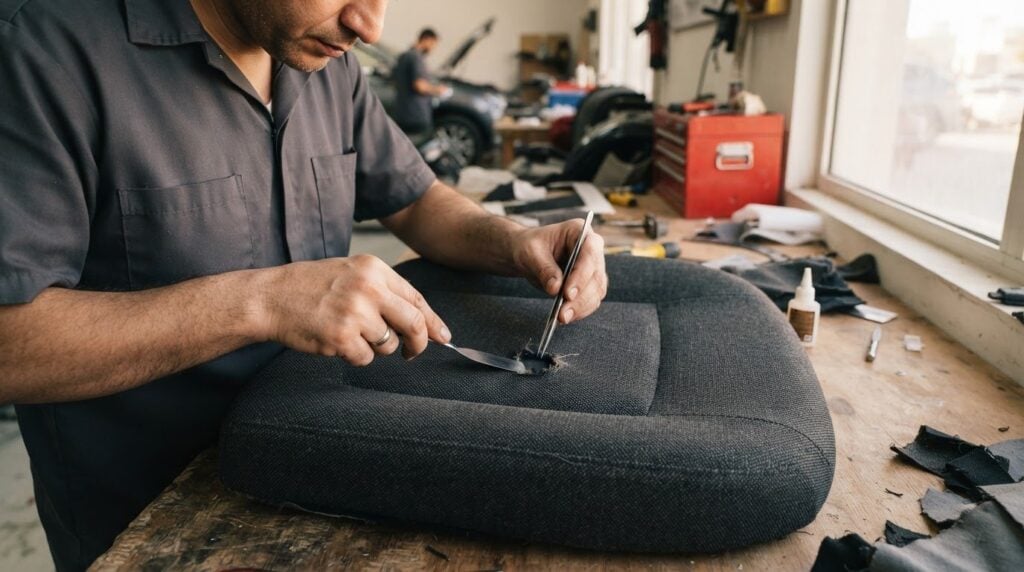
A cigarette burn doesn’t automatically mean a seat needs replacing. Fixing cigarette burns in car upholstery can be practical when the damage is small and the surrounding fabric is sound. A larger hole, fraying, or weakened material may require replacing the affected upholstery. Prompt attention can also help stop the opening from spreading and the seat from deteriorating.
A visible mark may be only part of the problem. The right option depends on the burn’s size and depth, the upholstery material and condition, and whether a burnt odour remains after the surface is treated.
This guide explains when a fabric patch may restore a seat, when replacement is more suitable, and what a professional considers when assessing the finish. It also covers how lingering odours are addressed, helping you choose a repair that restores a clean, composed appearance to the cabin.
Key Takeaways
- A small, localised burn in sound fabric may suit a professional patch; the damage and surrounding upholstery determine whether it can blend well.
- Prompt repair can help stop a burn hole from spreading and the seat from deteriorating further.
- Lingering burnt odour may need attention beyond treating the visible mark, especially if the source remains in the upholstery.
- Replacement becomes more suitable when damage is extensive or the surrounding material is weakened, frayed or difficult to restore consistently.
- Vinyl requires a repair approach suited to its surface and finish, so the repair decision differs from fabric upholstery.
Having a fabric patch professionally applied over a burn
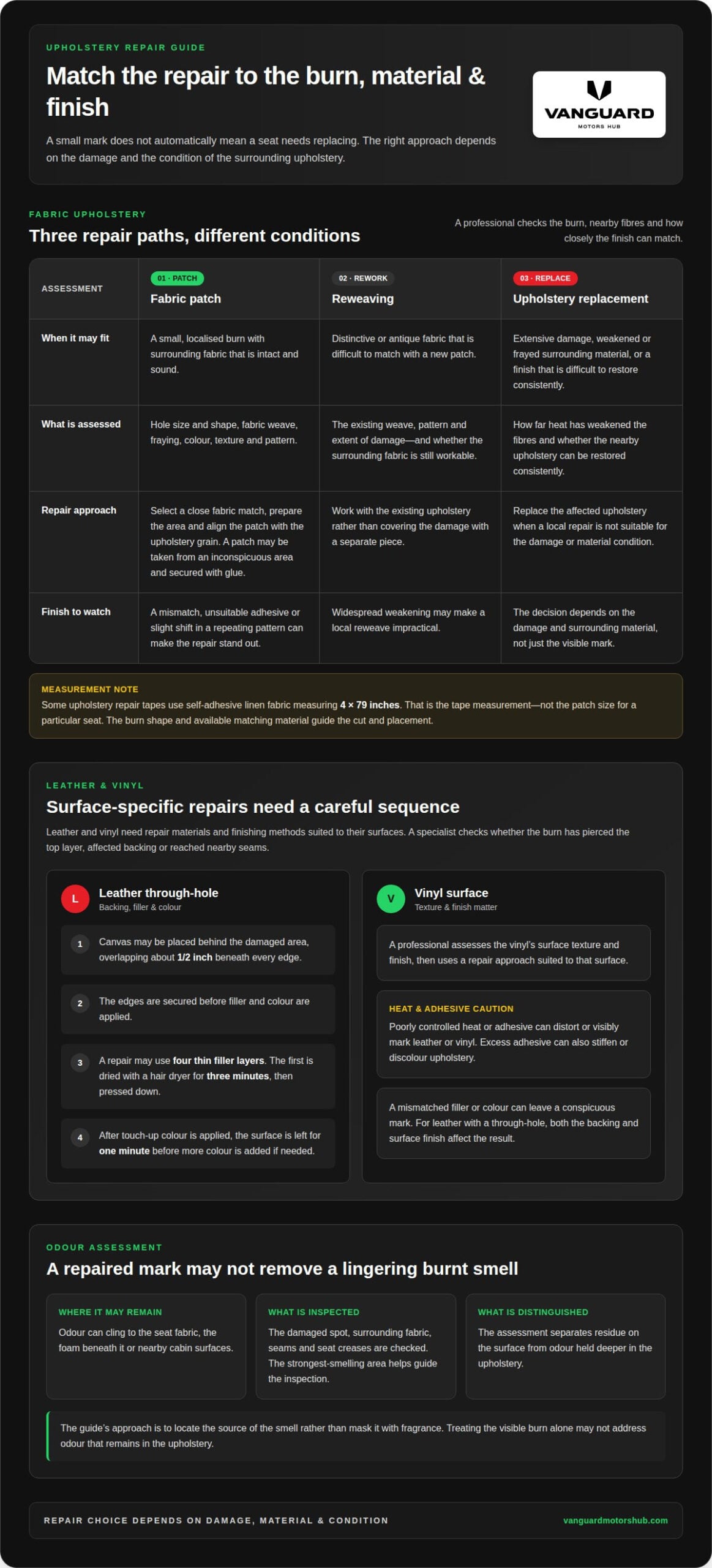
A fabric patch may suit a small cigarette burn when the surrounding seat material is intact. A professional examines the hole, the fabric’s weave, and any fraying around the edges to determine whether it can be covered cleanly or needs another repair. For example, matching a neat burn in patterned cloth presents different challenges from repairing plain fabric.
For a patch repair, the technician selects fabric that closely matches the seat’s colour, texture, and pattern. A piece may be taken from an inconspicuous area of the upholstery and fitted over the burn. This approach uses glue to secure the patch. The professional assesses the material before selecting an adhesive, since a visible mismatch or unsuitable bond can affect the finish.
Some upholstery repair tapes use self-adhesive linen fabric and measure 4 × 79 inches. That measurement describes the tape, not the patch size needed for a particular seat. A technician considers the burn’s shape and the available matching material before cutting or positioning anything. The aim is to cover the damaged fibres while keeping the repair as discreet as possible.
Professional repair involves more than hiding the hole. The technician checks whether heat has weakened fibres beyond the visible mark, then prepares the area and aligns the patch with the upholstery’s grain. Even a slight shift can make a repair stand out on a seat with a repeating pattern. Close colour and texture matching also matter, particularly in a cabin with contrasting stitching or distinctive cloth.
Reweaving is another option, particularly for antique fabrics that are difficult to match with a new patch. Rather than covering the damage with a separate piece, a specialist works with the existing upholstery to retain its original fabric. The weave, pattern, and extent of damage determine whether reweaving is suitable. It can preserve distinctive material, but widespread weakening may make a local repair impractical.
Insurance coverage for cigarette-burn damage depends on the policy terms and the circumstances. The policy’s exclusions and claims conditions determine whether a repair is covered, and the insurer assesses each claim. For the repair decision, the technician considers the burn’s size, the fabric’s condition, and how closely it can be matched. A small hole in sound cloth may suit a patch, while damaged surrounding fibres may call for reweaving or upholstery replacement.
Why cigarette burns in upholstery should be repaired
A small cigarette burn can become a broader upholstery defect if loose fibres spread. Promptly fixing cigarette burns in car upholstery helps limit damage and lets a professional assess nearby seams and material before the deterioration extends.
Leather and Vinyl Seat Repairs
Leather and vinyl need repair materials and finishing methods suited to their surfaces. A specialist checks whether the burn has pierced the top layer, affected backing, or reached nearby seams. For a through-hole in leather, the repair may use canvas behind the damaged area, overlapping about 1/2 inch beneath every edge. The technician secures the edges before applying filler and colour.
A leather repair may involve four thin layers of filler. The first layer is dried with a hair dryer for three minutes, then pressed down. After touch-up colour is applied, the surface is left for one minute before more colour is added if needed. For vinyl, a professional assesses the surface texture and finish. Poorly controlled heat or adhesive can distort or visibly mark either material.
Professional Costs and DIY Risks
In the UAE, professional cigarette-burn repair pricing depends on the upholstery material, damage extent, and repair method. The price depends on the case and is given after a quote request, with the burn’s location, surrounding condition, and material requirements shaping the assessment.
Professionals select materials and tools to suit the seat. A repair may require matching fabric or leather, backing material, adhesive, filler, touch-up colour, and controlled heat for drying. A repair kit may group these materials, but it cannot replace an assessment of the damage and surface match. The components differ for cloth, leather, and vinyl.
DIY work can make a small defect more visible. Excess adhesive may stiffen or discolour upholstery, while poorly controlled heat can deform nearby material. A mismatched patch, filler, or colour can leave a conspicuous mark. These risks matter on a leather seat with a through-hole, where both the backing and surface finish affect the result.
Professional car upholstery repair in the UAE starts with identifying the seat material and burn extent. The assessment considers nearby seams, existing wear, and whether a local finish can blend with the surrounding surface. For fabric, weave and colour guide the match; for leather or vinyl, texture and finish are key. A professional approach to fixing cigarette burns in car upholstery helps align the repair method with the material, rather than treating every burn alike.
Professional removal of lingering burnt odours
A cigarette smell can remain after the visible burn has been repaired. The odour may cling to the seat fabric, the foam beneath it, or nearby cabin surfaces. A professional locates the strongest smell rather than masking it with fragrance. If the scent is concentrated around one seat, for example, that area becomes the first inspection point.
Assessment distinguishes residue on the surface from odour held deeper in the upholstery. The technician checks the damaged spot, surrounding fabric, seams, and seat creases. A smell that returns after the cabin has aired may indicate material beneath the visible surface. The repair plan should address that source rather than simply adding a stronger fragrance.
Material identification guides the cleaning method. Fabric, leather, and vinyl respond differently to cleaning products and moisture, so a technician considers the seat’s finish and condition before treating it. A product suitable for cloth, for instance, may leave leather looking dull or affect vinyl. Controlled, material-specific cleaning helps protect the upholstery while treating the affected area.
The professional process typically follows a clear sequence:
- Inspect the burn and nearby upholstery to locate odour-affected material.
- Remove loose residue from the affected area without spreading it.
- Clean the upholstery with an approach suited to its material and finish.
- Allow the treated area to dry, then reassess the cabin for remaining odour.
That final reassessment matters. A seat can smell clean while damp, then reveal a lingering scent as it dries. The technician checks the original burn area and nearby seams again. If odour remains, the next treatment should target its source rather than layer another scent over it.
Cleaning also needs to account for the repair itself. A fabric patch, leather filler, or colour treatment can be affected by excessive moisture or incompatible products. The professional coordinates odour treatment with upholstery repair so cleaning doesn’t undermine the repaired surface. On a cloth seat, for example, the technician considers both the damaged fibres and the surrounding fabric.
Fragrance alone isn’t a reliable substitute for removing residue. A strong cabin scent may temporarily mask cigarette odour without treating the affected upholstery. Professional treatment focuses on the seat and nearby surfaces where the smell persists. This targeted approach matters when the cabin still smells after the burn has been repaired and the interior has aired.
For a useful assessment, note where the smell is strongest and whether it returns after airing. A concentrated odour around one seat directs attention to its fabric, seams, and underlying layers. A broader cabin smell calls for checking nearby surfaces too. These observations help the professional select a treatment suited to the material and the source.
When to replace damaged upholstery
Replacement is more suitable when a burn affects more than a small, stable area. A hole with torn edges, spreading frays, or damage across a seat panel may not accept a discreet local repair. The professional assesses the visible surface and surrounding material together. A small mark beside a weakened seam, for example, raises different concerns from an isolated hole in intact cloth.
The condition of the upholstery around the burn matters as much as the mark itself. If the fabric pulls apart during normal seat use, a patch can cover the opening without restoring the surrounding material. Replacing the affected panel may then address the broader wear. A technician also checks whether an existing tear or previous repair has weakened the same area.
Material matching can also influence the decision. A patch should sit naturally beside the original upholstery, matching its colour, texture, and pattern. On a seat with faded cloth or a distinctive weave, a repair piece may remain conspicuous even if it covers the burn. Replacing a panel can create a more consistent finish when a close local match isn’t practical.
- Consider a local repair: the burn is isolated, and the surrounding material remains firmly intact.
- Consider panel replacement: fraying, tears, or several damaged areas extend beyond the burn.
- Inspect seams: damage beside stitching can compromise the appearance and stability of a patch.
- Compare the finish: strong fading or a patterned weave can make a patch stand out.
Leather requires the same careful distinction between surface damage and broader deterioration. A small burn in otherwise sound leather may be treated locally, while cracked, stretched, or torn material around it may not hold a consistent finish. A professional examines the adjacent surface and backing before choosing repair or replacement. A burn beside an existing split, for example, needs a wider assessment than a clean, isolated mark.
Replacement doesn’t always mean changing the entire seat. The affected upholstery section may be the right scope when damage is limited to one panel. The technician considers how that section joins the rest of the seat, whether its material can be matched, and how wear varies across the cabin. A single damaged cushion and a seat with deterioration across several panels call for different plans.
Compare repair and replacement by the finish each can achieve, not just by the size of the hole. A small opening in weakened cloth can be harder to restore than a larger burn surrounded by sound material. A professional assessment maps the damage, checks nearby seams, and weighs material condition and matchability. This helps determine when a local repair is appropriate and when replacement offers a more consistent result.
How Pros Repair Cigarette Burns in Vinyl Car Upholstery
A vinyl seat needs a repair suited to its surface, not a fabric patch. The technician first confirms the material and examines the burn, nearby seams, and surrounding finish. A small, clean puncture differs from a charred opening with lifted edges. This inspection helps determine whether a local repair can restore the area or whether the damaged panel needs replacing.
Next, the professional assesses damage below the visible surface. A burn can affect the vinyl’s backing as well as its top layer. The technician checks whether the material around the opening remains stable and whether the damage extends into the seat’s contour. A hole close to a seam, for example, calls for careful assessment of the stitching and adjacent material.
Preparation focuses on creating a clean, stable repair area. The technician removes loose or damaged material and clears residue without enlarging the opening. A repair material is selected to suit the vinyl and the shape of the defect. Adhesive or filler may be used, depending on the damage and repair system. The professional controls placement to avoid a raised edge or excess material.
Once the damaged area is supported and filled as needed, the technician works to restore the surface profile. Vinyl has a distinct texture, so a smooth repair on a textured seat can remain conspicuous. The repair surface may be shaped to follow the surrounding contour, then finished to blend with the original grain. Colour is matched to the nearby seat, not chosen from the burn’s darkened appearance.
Final checks focus on appearance and repair edges. The technician examines the repaired spot from different angles and compares its colour and texture with adjacent vinyl. On a dark seat, a lighter repair can stand out under direct light; on a patterned surface, the grain can reveal an uneven finish. These details help determine whether the repair looks consistent across the seat.
Replacement is more suitable when vinyl is extensively charred, torn, or weakened beyond the local area. A repair can also be harder to blend when the burn crosses a seam or affects a broad section. The technician weighs the surrounding surface’s condition and the finish achievable with a local repair. This avoids treating widespread damage as a simple surface mark.
For a professional assessment of a burned vinyl seat, request a vinyl upholstery repair assessment. Sharing whether the damage is a surface mark or an open hole helps frame the inspection.
Vanguard Motors Dubai: Car body paint , vehicle body paint , car washing , vehicle washing , vehicle washing , car polishing , vehicle polishing , car upholstery , vehicle upholstery , paintless dent repair , pdr
Vanguard Motors Dubai provides car upholstery services for seats affected by cigarette burns, odour, or broader material damage. Turn to its team when a professional assessment can help determine whether the damaged area is suited to repair or needs replacement. The right approach depends on the upholstery material, the burn’s extent, and the condition of the surrounding seat.
For damage beyond the seat, Vanguard Motors Dubai also offers cosmetic repair and car damage repair. These services can address related interior or exterior concerns as part of a considered vehicle restoration plan.
Contact Vanguard Motors Dubai to discuss your car upholstery repair needs.
Choose the Next Step for Your Interior
Use the repair decision to define the finish you want for the cabin. A professional assessment for fixing cigarette burns in car upholstery can shape a plan around the seat’s condition and the appearance you want to preserve. Consider whether your priority is a discreet local repair, a refreshed interior, or a wider vehicle appearance project.
Vanguard Motors Dubai also offers Paint Protection Film (PPF) Installation, Colored Sticker Wraps, and Peelable Paint Applications. These services focus on exterior protection and styling, while upholstery work addresses the cabin. Keeping those goals distinct makes it easier to discuss the right scope for your vehicle without turning a seat repair into an unnecessary redesign.
Bring the damaged seat and your preferred outcome into the conversation. A clear starting point helps align the repair decision with the overall look you want. To discuss your next step, contact Vanguard Motors Dubai and move forward with confidence.
Frequently Asked Questions
What if the burn is too severe to repair?
If the burn has spread into torn, fraying, or weakened upholstery, replacing the affected section may be more suitable than a local repair. A professional assesses how far damage extends beyond the visible mark, including nearby seams and surrounding material. A hole beside a deteriorated seam, for example, can make a patch unstable or conspicuous. This assessment helps determine whether panel replacement can provide a more consistent finish.
Why is there a need to fix a cigarette burn?
Repair a cigarette-burn hole promptly because the fabric can spread open and the seat may deteriorate if the damage is ignored. A loose edge can turn a small defect into a wider area needing attention. A burn on a seat cushion, for example, may catch on clothing during regular use. Addressing the damage also lets a professional inspect nearby material before deterioration extends beyond the original spot.
How do professionals repair a cigarette burn in cloth car upholstery?
For a small burn in otherwise sound cloth, a professional may fit a matching fabric patch over the damaged area. The patch can come from an inconspicuous part of the upholstery and be aligned with the seat’s colour, pattern, and weave. With antique fabric, reweaving can preserve the original material. The specialist chooses between these approaches based on the burn’s location, the surrounding fabric’s condition, and how closely a patch can match.
How do professionals fix a cigarette burn in leather car seats?
A professional leather repair can support a through-hole with canvas placed behind the leather, overlapping about 1/2 inch beneath each edge. After securing the hole’s edges, the repair is left for 20 minutes. The technician applies four thin layers of leather filler; the first is dried with a hair dryer for three minutes before pressing. Touch-up colour can be built gradually, allowing one minute before another application if needed.
Can a professional cigarette-burn repair blend in, or will it be visible?
A repair can be subtle, but its appearance depends on the upholstery and the damage. Plain cloth may be easier to match than a patterned weave, while faded material can contrast with a newer patch. On leather, the texture and colour around the burn affect the finish. A professional compares the repair area with nearby upholstery from different angles to judge how naturally it blends.
How do professionals match car upholstery fabric, colour, and texture for a repair?
Professionals compare the damaged spot with intact upholstery nearby, looking at colour, weave, texture, and pattern direction. A patch taken from an inconspicuous part of the same seat may provide a closer match. With patterned cloth, the design must align as well as the colour. For leather, the technician focuses on surface texture and shade. Fading or unusual fabric patterns can make a local repair more noticeable.