

A failed RTA test is a repair instruction, not the end of your build. Preparing a modified car for RTA inspection means confirming that relevant changes are approved and the vehicle meets safety and environmental requirements. If it fails, fix the fault identified or restore a compliant configuration before arranging a retest.
It’s frustrating to invest in a modification and then face an inspection failure, especially when the issue is a detail such as visibility, exhaust noise or missing paperwork. A focused pre-test check can help you spot concerns early and approach the inspection with greater confidence.
This guide explains how to review modification approval and documents, check lights, windows and visibility equipment, and assess exhaust and emissions concerns. You’ll also learn how to respond to a failed result, make the necessary repairs and prepare for a retest. The goal is a clear, practical process that helps protect both your vehicle’s performance and its road compliance.
Key Takeaways
- Gather your vehicle registration, Emirates ID, modification details and supporting reports so the approval process has the relevant documentation.
- Keep stickers off the glass and clear of the rear view, and make sure off-road lights are covered for public-road driving.
- Review the tint on front, side and rear windows against the UAE visibility limits before inspection.
- If the car fails, use the inspection finding to guide the repair or return the modification to a compliant configuration before retesting.
- For appearance changes, distinguish cosmetic options such as wraps or PPF from modifications that affect vehicle compliance.
RTA-approved modifications and traffic violations
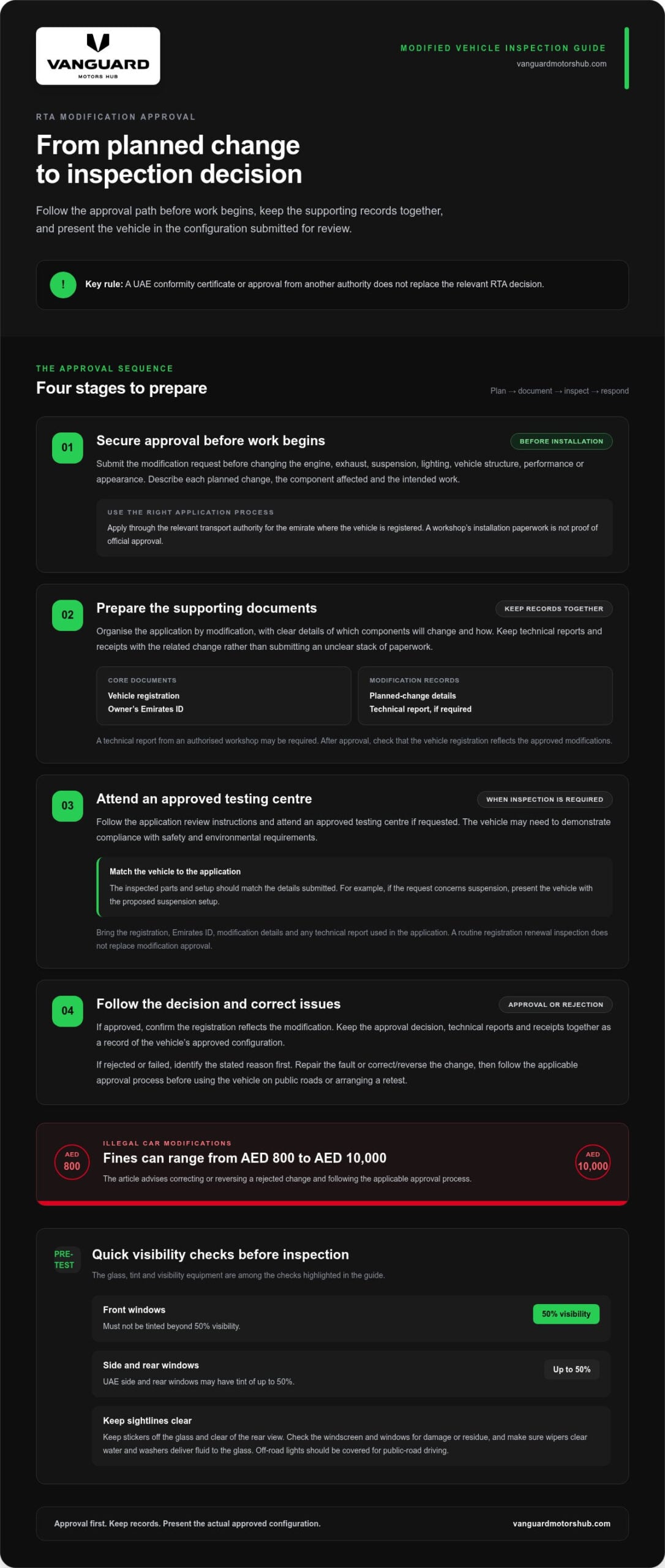
Before preparing a modified vehicle for inspection, obtain official approval for changes affecting its original structure, performance or appearance. For a UAE modification request, gather the vehicle registration, owner’s Emirates ID, details of the planned modifications and any technical report required for the application. A UAE conformity certificate or approval from another authority does not replace the relevant RTA decision.
-
Secure Approval Before Work Begins
Submit the modification request before work starts, especially for changes to the engine, exhaust, suspension, lighting or vehicle structure. In the UAE, modifications that change a car’s original structure, performance or appearance require official approval. Getting the decision first can help prevent corrective work if the proposed setup doesn’t meet requirements.
Describe each planned change clearly, including the component affected and the intended work. Use the relevant transport authority’s application process for the emirate where the vehicle is registered. Keep the approval decision with your records, and don’t treat a workshop’s installation paperwork as proof of official approval.
-
Prepare Inspection Documents
Gather the vehicle registration and owner’s Emirates ID before submitting the application. Include clear details of the planned modifications, such as which components will change and how. A technical report from an authorised workshop may be required, so keep it with your application documents when available.
Organise records by modification instead of submitting an unclear stack of receipts. Retain technical reports and receipts after the work is complete. These documents can help explain what changed during review. After approval, check that the vehicle registration reflects the approved modifications before renewal or later testing.
-
Attend an Approved Testing Centre
Follow the application review instructions and attend an approved testing centre if the request requires an inspection. The vehicle may need to demonstrate compliance with safety and environmental requirements. Make sure the installed parts match the details submitted with your request, since the inspection assesses the vehicle’s actual configuration.
Bring the registration, Emirates ID, modification details and any technical report used in the application. Keep the vehicle in the configuration presented for assessment. For example, if the request concerns suspension, ensure the inspected setup matches the proposed change. A routine registration renewal inspection doesn’t replace modification approval.
-
Address Approval Decisions and Corrective Work
Follow the authority’s decision after review or inspection. If the modification is approved, ensure the registration documents reflect it. Keep the decision, reports and receipts together as a record of the approved configuration for future vehicle testing.
If approval is rejected, identify the reason before arranging further work. A conformity certificate or approval from another authority doesn’t automatically establish acceptance by the RTA. Across the UAE, fines for illegal car modifications can range from AED 800 to AED 10,000. Correct or reverse the change, then follow the applicable approval process before using the vehicle on public roads.
Windscreen, windows, wipers and washer system
Clear sightlines support roadworthiness and safe traffic movement. When preparing a modified car for RTA inspection, check the glass, tint, stickers, wipers and washers, as well as your appointment details.
-
Check Window Tint Limits
Check the tint on front, side, and rear windows before inspection. Front windows must not be tinted beyond 50% visibility. UAE side and rear windows may have tint of up to 50%. Compare the film specification with the window position, since the front limit is expressed as visibility. If the installed tint exceeds the applicable limit, arrange correction before the inspection.
-
Check the Windscreen and Window Systems
Inspect the windscreen and each window from the driver’s seat. Look for damage, residue or accessories that interfere with your view of the road. Run the wipers and confirm they clear water without leaving broad unwiped areas. Test the washers, check that fluid reaches the glass, and clear any obstruction around the jets.
- Plan your arrival around the appointment instructions for your inspection. The applicable appointment window determines when to present the vehicle, so allow time to find the testing centre and organise your vehicle registration documents before leaving. Check the appointment details before setting off, and account for traffic conditions along your route.
Use the final minutes before check-in for a stationary visibility check. Adjust the mirrors, confirm the driver’s view is unobstructed, and test the wipers and washers again. Keep your appointment details and registration accessible instead of searching through the cabin at the testing centre.
- Remove window stickers and objects that block the rear view before testing. Large stickers may cause an inspection failure. Small body stickers can be acceptable if they aren’t on windows or blocking rear visibility. Check the rear glass from the driver’s seat, then remove items from the parcel shelf or attached to the glass.
Keep decorative changes away from the driver’s sightlines. If a tint adjustment is needed, discuss vehicle tinting as a focused cosmetic service.
- Finish with a complete control check before driving to the centre. Switch on the wipers at each setting, operate the washer and confirm the glass clears across the driver’s viewing area. Check that the side windows move smoothly and close fully. Clean the glass so you can spot film edges, adhesive marks or dirt that could affect visibility.
Keep the vehicle registration and appointment information together for check-in. These checks help you present a roadworthy vehicle with a clear field of view, working wipers and tint within the stated limits.
Correcting non-compliant modifications before retesting
Use the inspection result to identify each defect, then correct the specific issue before retesting. In the UAE, a modified vehicle must pass inspection after the work is completed.
-
Choose a Compliant Workshop
Choose a professional workshop experienced with the type of modification that failed. Ask for a technical report describing the repair and the vehicle’s resulting configuration. Keep invoices and reports with your modification records, as they can help document the work completed.
Match the repair to the inspection finding. For example, if altered lighting fails, address its configuration rather than making unrelated cosmetic changes. Imported vehicles not built to Gulf Specifications may need additional changes, including to headlight configurations or emissions systems. A workshop familiar with these technical issues can help identify the corrective work needed.
-
Check Wheels and Tire Compliance
Inspect every tire for age, condition, and visible damage before returning to vehicle testing. UAE vehicle testing fails tires more than 5 years old. Check the date markings on each tire, since a matched set can still include tires with different manufacturing dates. Replace tires that exceed the stated age limit before arranging the retest.
Examine the wheels for damage or changes that could affect safe operation. If custom rims, wheel colour changes or alloy repairs were part of the modification, make sure the finished setup matches the vehicle’s approved configuration. A cosmetic repair won’t resolve a compliance issue if the underlying wheel or tyre remains unsuitable for inspection.
-
Apply UAE Compliance Tips
Review the inspection findings against every non-compliant component, including lighting, exhaust, suspension and underbody equipment. RTA recommends removing aftermarket underbody protection before vehicle inspection. Metal bumpers are not accepted for RTA vehicle testing, so replace a non-compliant bumper before returning.
Cover off-road lights so they cannot be used while driving on public roads. For extreme modifications, check the vehicle against ESMA regulations. If an inspection fails because of non-approved changes, restore a compliant configuration or prepare documentation showing that the modification meets UAE regulations before retesting.
Use the inspection report as your repair checklist. Address each listed issue, retain supporting reports, and avoid driving with changes that require approval but lack it. A modified car that fails may need changes reversed or corrected before reapplying. Confirm that the completed work resolves the cited fault, not just its visible symptom.
Exhaust noise and emissions checks
Inspect the exhaust system and engine bay before vehicle testing. RTA inspectors assess whether modifications meet UAE safety and environmental standards.
-
Check Fluid Leaks and Exhaust Condition
Park on a clean, level surface and look beneath the engine and exhaust line. Check for fresh oil, coolant or other fluid marks, then identify their source before inspection. A leak can indicate a fault that needs repair, not just cleaning.
With the vehicle safely parked, inspect visible exhaust sections for loose fittings, corrosion, damage or signs of leakage. Listen for unusual rattling when the engine runs. Make sure the exhaust is securely mounted and does not contact nearby components. A repair should address the cause, not conceal a leak with sealant or a temporary patch.
Keep records of exhaust work with the vehicle’s modification documents. If an authorised workshop provides a technical report, retain it with your receipts. These records can help explain the installed system during an inspection or modification review.
-
Check Exhaust Noise Limits
Check the sound level of a performance exhaust with the engine fully warmed up. For RTA testing in the UAE, the exhaust should not exceed 95 dB under that condition. A cold-engine reading won’t reflect the stated test condition, so assess the system after it reaches operating temperature.
Listen for excessive noise, vibration or a sudden change in tone that could indicate a leak or loose component. Check that any exhaust valves work properly and that the system matches its approved configuration. Don’t rely on a cabin sound setting to judge exterior noise.
If the system is too loud, correct the exhaust setup before vehicle testing. Keep the repair documentation, especially if the work changes exhaust components. Sound is one consideration; inspectors also assess environmental and safety compliance.
-
Check Exhaust Emissions
Have the engine and emissions equipment checked if the dashboard shows a warning or the vehicle runs poorly. A warning light should prompt diagnosis of the underlying fault, not simply be cleared before inspection. Imported vehicles not built to Gulf Specifications may need emissions-system changes to meet UAE requirements.
Inspect visible exhaust parts for damage or missing components, and ensure repairs are completed properly. Avoid removing or bypassing emissions equipment to mask a fault. The authority assesses the vehicle’s actual environmental condition, so resetting a warning light alone doesn’t establish compliance.
Plan around the certificate period after passing. According to RTA service information, a Dubai vehicle technical inspection certificate is valid for 30 days. Complete any needed registration step within that period, and keep the technical inspection certificate with your vehicle documents.
Failed inspections, repairs and retests
A failed RTA inspection gives you a specific repair task, not a reason to guess. Preparing a modified car for RTA inspection after a failed result starts with understanding exactly what the examiner recorded.
-
Identify Modifications That Commonly Fail
Read each inspection finding and match it to the component or fault identified. Changes affecting the engine, exhaust, suspension, lighting, or structure can fail if approval is missing or safety and environmental requirements aren’t met. Other potential issues include excessive exhaust noise, obstructed visibility, and tyres more than 5 years old.
Separate approval problems from mechanical faults. For example, an illuminated engine warning indicator needs diagnosis of its underlying cause, not simply clearing. If the report cites an unapproved modification, determine whether it needs corrective documentation or a return to a compliant configuration.
Use the report as a repair checklist. Match each finding to the relevant part, approval record and technical report. If several faults appear, address them individually. A cosmetic change won’t resolve a separate safety or compliance failure.
-
Repair Failures and Arrange a Retest
Repair every listed fault before booking a retest. If a warning indicator remains illuminated, diagnose the underlying issue. If a modification isn’t approved, correct it or restore a compliant configuration. Keep repair invoices and technical reports together, then present them with the vehicle documents.
Reinspection fees depend on the vehicle category. Check the applicable charge for your vehicle class before arranging the appointment, and make sure the work addresses the original failure rather than just its visible symptom.
Before returning, compare the repaired vehicle with every item on the inspection report. Confirm that the corrected parts work properly and match the compliant configuration. Preparing a modified car for RTA inspection is more effective when you verify each repair against the recorded failure, rather than relying on a general workshop check.
For repair work involving exhaust changes or cosmetic damage, discuss an exhaust or cosmetic repair and retain the completed-work records for your retest.
Vanguard Motors Dubai: Paint Protection Film (PPF) Installation
Vanguard Motors Dubai offers Paint Protection Film (PPF) Installation for owners looking to protect their vehicle’s finish after addressing inspection concerns. For appearance changes, obtain any required approval before work begins, then choose an option suited to your styling plans.
Alongside PPF installation, options include Colored Sticker Wraps, Peelable Paint Applications and the Vanguard Premium Package. These services serve cosmetic goals; they don’t replace repairs, modification approval or a successful RTA inspection. Keep compliance and appearance as separate steps in your vehicle plan.
If you’re considering a finish change or paint protection, contact Vanguard Motors Dubai to discuss your vehicle.
Plan Your Next Step with Confidence
Preparing a modified car for RTA inspection is also an opportunity to plan what comes next. Once compliance work is complete, decide whether you want to preserve the current finish or create a new look. Keep styling choices separate from approval and repair decisions, so each step has a clear purpose.
Vanguard Motors Dubai offers Paint Protection Film (PPF) Installation, Colored Sticker Wraps and Peelable Paint Applications for owners considering protection or a finish change. Choose the direction that suits your vehicle and plans, and keep inspection and appearance work organised as distinct parts of vehicle ownership.
For a conversation about your vehicle’s next styling step, contact Vanguard Motors Dubai. Make your next move with clarity and confidence.
Frequently Asked Questions
What Happens If Your Vehicle Fails the RTA Test?
If your vehicle fails, use the inspection result to identify what needs correction before returning for a retest. Separate mechanical faults from approval or documentation issues: a warning light may need diagnosis, while an unapproved component may need corrective work or supporting compliance documents. Keep the inspection result and repair records together. This gives you a clear checklist and helps show what changed between inspections.
What Is Checked During RTA Vehicle Testing?
RTA vehicle testing assesses whether a vehicle is roadworthy and meets applicable safety and environmental requirements. Routine checks can include tyres, lights, indicators, hazard lights, glass, wipers, mirrors, the horn, seat belts, fluid levels and emergency equipment. A modified car may also receive scrutiny of changed components, such as the exhaust or suspension. Prepare the vehicle so its controls and equipment can be inspected clearly.
Why Do You Need RTA Approval?
Approval establishes that a modification has been reviewed for compliance before the vehicle is used on public roads. It also provides a formal basis for updating registration details where required. Without the necessary approval, an attractive or performance-focused change can create a compliance problem during inspection or traffic enforcement. Treat approval as part of the modification itself, not paperwork to handle only at registration renewal.
What Are the RTA Rules for Modified Cars in the UAE?
In the UAE, modifications that change a vehicle’s original structure, performance, or appearance require official approval. In Dubai, changes affecting the engine, exhaust, suspension, lighting, or structure must be approved before the car is driven on public roads. After the work, the vehicle must pass inspection, and its registration should reflect approved changes. Rules and processes are administered through the relevant emirate’s transport authority.
Which Car Modifications Require RTA Approval or a Permit?
Changes to the engine, exhaust, suspension, lighting, or vehicle structure require approval in Dubai before public-road use. The broader UAE rule covers modifications that change a car’s original structure, performance, or appearance. For example, a suspension alteration is different from routine maintenance because it changes the vehicle setup. Submit details of the proposed work before installation, then follow the approval process for the affected component.
How Do I Get a Modified Car Inspected by RTA in Dubai?
Submit a modification request through the RTA website or an approved service centre, providing the vehicle registration, Emirates ID and details of the planned changes. A technical report from an authorised workshop may be required. After review, the vehicle may need inspection at an RTA-approved testing centre. Keep application records and receipts together, then ensure the registration documents reflect approved modifications after a successful inspection.
Which Authorized Testing Centers Inspect Modified Cars in Dubai?
Modified vehicles that require inspection after application review may be assessed at an RTA-approved testing centre. The key is the centre’s RTA approval, not simply its ability to perform routine vehicle testing. Follow the inspection instructions associated with your modification request to identify the appropriate testing route. Bring the vehicle registration, Emirates ID, application details and any supporting technical report when attending.
How Much Does RTA Inspection and Modification Approval Cost?
Modification approval costs depend on the application and technical assessment involved.