
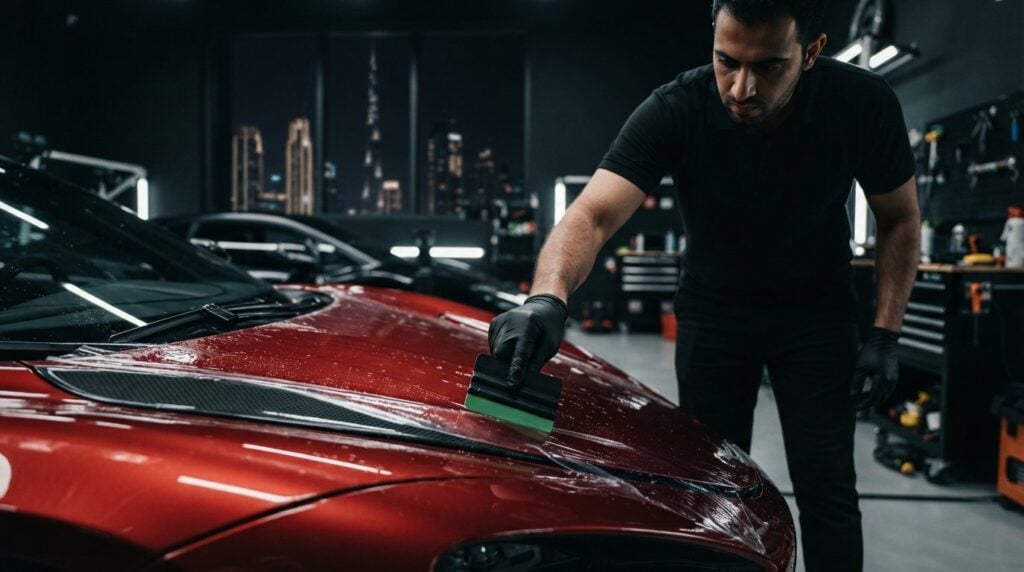
Paint protection film isn’t the final layer: ceramic coating can be applied over XPEL PPF to enhance water repellency and gloss. Avoid abrasive waxes and polishes, which can damage the film. Knowing the difference helps you care for the finish without compromising the surface.
It’s natural to want more than a barrier against road debris. You also want your vehicle to retain its finish, reflect your personal style, and be easier to care for. This guide explains how XPEL PPF helps protect against chips, light scratches, and scuffs, and what its self-healing, stain-resistance, and optical-clarity features mean in practice.
You’ll also learn how to choose between gloss and matte finishes, decide which areas need coverage, and care for the film after installation. From understanding what PPF can and can’t do to choosing a finish that complements your paint, you’ll have a practical framework for making an informed decision.
Key Takeaways
- Match coverage to the panels most exposed to road debris and the level of protection you want across the vehicle.
- Understand what self-healing and hydrophobic features do, so you can choose film based on practical benefits rather than assumptions.
- Learn how polyurethane film forms a protective layer over painted surfaces and what affects its appearance.
- Compare gloss and matte finishes with your vehicle’s existing paint before settling on a look.
- Use professional installation when you want coverage and finish choices tailored to your vehicle.
Protection against rock chips, scratches and wear
XPEL film creates a sacrificial barrier between painted panels and everyday road hazards. Its value depends on the impacts your vehicle faces and the areas you choose to cover.
Stone Chips and Road Debris
On highways, loose stones and road debris can strike a vehicle’s front surfaces. The film acts as a sacrificial layer, helping shield the paint from common stone chips and light impacts. The front bumper, bonnet, and mirrors are examples of exposed areas to consider. Choose coverage by weighing these impact zones against how much of the vehicle you want protected.
Scratch and Scuff Protection
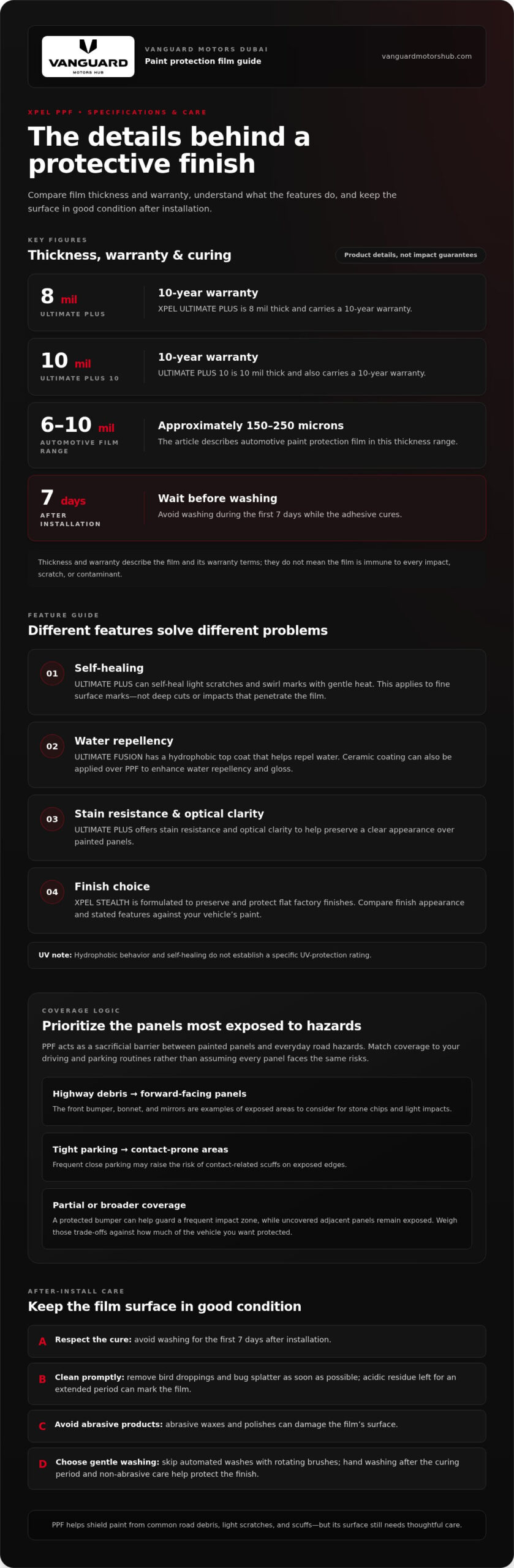
Paint protection film is designed to help guard against light scratches and scuffs, including marks from routine contact. XPEL ULTIMATE PLUS is 8 mil thick and has a 10-year warranty; ULTIMATE PLUS 10 is 10 mil thick and has a 10-year warranty. Those figures describe the film and warranty, not immunity from every impact. Consider your driving and parking routines when selecting coverage.
Different hazards call for different expectations. A small stone can chip exposed paint, while brushing contact may leave a light scuff. A film barrier helps keep these marks from reaching the paint directly, but it isn’t a substitute for careful driving or parking. For example, protecting the bumper addresses a frequent impact zone, while uncovered adjacent panels remain exposed.
Bird droppings and bug splatter are also a concern. Remove these acidic contaminants from the film as soon as possible, since leaving them for an extended period can cause marks. Prompt cleaning remains important even with a protective layer in place. The film helps defend the paint beneath, but its surface still needs care.
Choose coverage based on exposure rather than assuming every panel faces the same risks. A vehicle driven regularly on roads with loose debris may benefit from protection on forward-facing panels. Frequent tight parking may increase the risk of contact-related scuffs on exposed edges. Identify the surfaces most likely to encounter hazards, then compare partial and broader coverage.
Finally, treat film thickness and warranty as product details, not guarantees against all wear. ULTIMATE PLUS and ULTIMATE PLUS 10 offer different thicknesses, while both have a 10-year warranty. Neither specification means the film cannot be marked by every stone, scratch, or contaminant. The practical goal is a protective layer that takes common wear before the painted surface does.
Self-healing, hydrophobic, and UV-protection features
Film features vary by product, so compare the finish, surface behavior, and care requirements before choosing. Self-healing and water repellency serve different purposes, and neither indicates a specific UV-performance rating.
Self-Healing Film
XPEL ULTIMATE PLUS is made from elastomeric polyurethane and can self-heal light scratches and swirl marks with gentle heat. It also offers stain resistance and optical clarity, helping preserve a clear appearance over painted panels. XPEL STEALTH is another option, formulated to preserve and protect flat factory finishes.
Available types include ULTIMATE PLUS and STEALTH, which serve different finish preferences. To compare XPEL with 3M, SunTek, and other brands, assess stated features, film appearance, and warranty terms rather than assuming one brand is universally better. For a leased or financed vehicle, the film’s function is unchanged, while the vehicle agreement determines any requirements for exterior modifications.
Heat-Activated Healing
Heat helps fine marks in the film’s surface settle back, restoring a smoother appearance. This self-healing effect applies to light scratches and swirl marks, not every type of damage. A deep cut or impact that penetrates the film is different from a shallow surface mark, so assess the damage before expecting heat to improve it.
Care also affects the surface. After installation, avoid washing the vehicle for the first 7 days while the adhesive cures. Remove bird droppings and bug splatter promptly, since acidic residue left for an extended period can mark the film. Avoid abrasive waxes and polishes, which can damage its surface.
Hydrophobic and UV-Protection Features
XPEL ULTIMATE FUSION has a hydrophobic top coat and self-healing properties. Its hydrophobic surface helps repel water, while self-healing addresses fine marks. Ceramic coating can also be applied over paint protection film to enhance water repellency and gloss. These features don’t establish a specific UV-protection rating, so don’t infer one from water repellency or self-healing.
There’s no single UAE price for xpel ppf. The cost depends on factors such as vehicle size, selected coverage, panel complexity, and the film chosen. Request a quote for your vehicle and preferred coverage.
For upkeep, skip automated car washes with rotating brushes because they create unnecessary friction. Hand washing after the curing period and using non-abrasive care helps protect the film’s finish. If you’re weighing features against your vehicle’s finish and coverage needs, discuss your PPF priorities before choosing.
What paint protection film is and how it works
Paint protection film is a clear or coloured thermoplastic polyurethane layer applied over vehicle paint. Depending on the product, automotive film ranges from 6 mil to 10 mil thick, approximately 150-250 microns. It acts as a sacrificial barrier, taking contact from common road debris before the painted surface.
XPEL ULTIMATE PLUS is a urethane film described as virtually invisible. Its transparent appearance lets the original paint show through while the film covers selected panels. The material is fitted to the vehicle’s contours, so coverage and edge placement influence the finished look. On the bonnet, for example, film protects the surface without changing its underlying colour.
The principle is straightforward: the film sits between the environment and the paint. When a stone or other debris strikes a covered panel, the film can take the abrasion instead of the paint. It cannot prevent every kind of damage, particularly when an impact is severe or a surface is uncovered. Coverage decisions matter as much as the material itself.
Windshield protection film is separate from paint film. A windshield is glass, not painted bodywork, so don’t assume a film designed for painted panels is suitable for glass. When comparing windshield protection, focus on products designed for that surface and their intended use. Keep the distinction clear: exterior paint PPF protects painted panels, while glass needs a compatible solution.
XPEL BLACK is designed as a glossy black protective film for glossy finishes. Unlike transparent ULTIMATE PLUS, its black appearance changes the covered surface. Consider the vehicle’s existing colour and the visual effect you want before choosing it. A gloss-black panel, for instance, creates a more deliberate contrast than clear film over the original paint.
Interior protection film is intended for a different surface. Cabin trim may include glossy panels, screens, or decorative inserts, which don’t share the finish of exterior paint. Don’t assume exterior paint film is suitable inside the vehicle. Match any protective film to the surface and its intended application, then consider whether its appearance suits the trim.
Make a focused choice by identifying the surface, selecting a compatible film, and deciding whether you want a clear or visible finish. For painted exterior panels, XPEL PPF can preserve the paint’s appearance while adding a protective layer. Glass and cabin trim require separate, surface-specific choices, not an automatic extension of body-panel coverage.
Full-car and full-front-end coverage
Coverage determines which painted surfaces receive protective film and which remain exposed. Compare full-front and full-car coverage by mapping your vehicle’s impact zones, appearance priorities, and everyday use before choosing a layout.
Full-front coverage focuses on forward-facing panels exposed to road debris. A typical plan may include the front bumper, bonnet, front wings, and side mirrors. These surfaces have different shapes and angles, so exposure varies by vehicle design. A low front bumper, for example, may need particular attention when planning coverage.
Full-car coverage extends the protective layer across the vehicle’s painted exterior. It can suit drivers seeking consistent protection across panels rather than prioritizing only the front. This means considering the doors, rear wings, boot lid, and other painted sections. Glass, trim, and interior surfaces are different materials, so don’t assume they’re included.
Choose coverage with a panel-by-panel review. Start with your regular routes and parking conditions, then identify where contact or debris is most likely. A vehicle used mainly on highways may call for priority coverage on the front bumper and bonnet. Frequent tight parking may make door edges and side panels more relevant.
- Front bumper and bonnet: Consider their direct exposure to stones and road debris.
- Mirrors and front wings: Include them in the review because they sit beyond the central front panels.
- Doors and rear panels: Weigh their exposure to everyday contact and your preference for broader coverage.
- Full exterior: Assess whether consistent protection across painted panels suits your goals.
Panel shape also affects the finished result. Curved bumpers, sculpted bonnet lines, and sharp edges need careful film placement. A coverage plan should account for where film edges fall and how visible they may be against the paint. On a dark vehicle, an exposed edge may be easier to notice than on a lighter finish, depending on its position and the panel’s contours.
Consider future care, too. If a covered panel is damaged, the film can be assessed separately from the paint beneath it. Coverage boundaries matter because damage can occur where protected and unprotected sections meet. For example, covering only the bumper leaves the bonnet unprotected, even though both panels face the road.
For a balanced decision, list the panels you most want protected, compare them with the vehicle’s body layout, and decide whether targeted or broad coverage better suits your priorities. Full-front coverage focuses on forward-facing paint; full-car coverage extends across more exterior panels. Choose a scope that aligns with your exposure, finish preferences, and plans for the vehicle.
PPF appearance and matte-finish options
Paint protection film can preserve a factory finish or change its appearance. XPEL STEALTH is formulated for flat factory finishes and can also be applied over gloss paint for a different look. Choose based on the finish you want across the vehicle, not protection alone.
On factory matte paint, STEALTH is designed to protect the existing flat appearance. The finish is therefore part of the decision: a glossy film would change the visual effect, while film formulated for flat finishes is intended to retain it. Compare the film’s appearance with the vehicle’s paint before selecting coverage.
On gloss paint, STEALTH offers another option. Applying it can create a distinct appearance without repainting the panels. For example, a gloss-black vehicle can take on a flatter look where the film is applied. Since the change is visual, consider whether you want that finish on selected panels or across more of the vehicle.
Assess the vehicle in consistent lighting before choosing. View the paint outdoors and in a shaded area, then compare the finish across several panels. A bonnet may reflect light differently from a door because of its angle and contours. Reviewing both helps you anticipate how the film will look across the car.
Decide whether you want to retain the existing finish or create contrast. A factory matte vehicle calls for a finish that respects its flat appearance. With a gloss vehicle, you can keep the current look or choose a visibly different one with STEALTH. The right choice depends on your preferred aesthetic, not a universal rule.
Coverage also shapes the overall effect. If only selected panels receive a different finish, the transition between treated and untreated paint becomes part of the design. For instance, a matte bonnet against adjacent gloss panels creates deliberate contrast. Broader coverage produces a more consistent finish across the body.
Before installation, identify the paint finish, choose the visual effect you want, and decide which panels should carry it. Keep these decisions connected: a matte appearance on one section can look intentional when panel boundaries are planned. XPEL STEALTH suits flat factory finishes and can change the look of gloss paint, supporting both preservation and appearance goals.
If you’re considering a matte effect or want to retain a flat factory finish, discuss your preferred PPF finish and coverage priorities.
Vanguard Motors Dubai: Paint Protection Film (PPF) Installation
Vanguard Motors Dubai installs Paint Protection Film (PPF) for drivers who want to protect painted panels with coverage suited to their vehicle. Consider the service once you’ve decided which areas to cover and whether you want to preserve the existing appearance or choose a different finish.
If your priority is a visible colour change rather than protection alone, Colored Sticker Wraps and Peelable Paint Applications offer other ways to transform your vehicle’s appearance. Choose according to whether your main goal is paint protection, a new look, or both.
Share your preferred coverage and finish with Vanguard Motors Dubai to plan the next step. Request a quote or book a service at vanguardmotorshub.com.
Make Your Next Finish Decision With Confidence
Turn your priorities into a clear brief: the vehicle’s intended look, the panels you want protected, and how much of its original finish you want to preserve. This gives your PPF decision a purpose beyond choosing a film name. Whether you’re considering xpel ppf for paint protection or a more visible change, define the result you want first.
Vanguard Motors Dubai installs Paint Protection Film (PPF), Colored Sticker Wraps, and Peelable Paint Applications. Each option serves a different goal, from adding a protective layer to refreshing the exterior appearance. Share your preferred finish and coverage priorities, then choose the direction that suits your vehicle.
Ready to shape your next step? Contact Vanguard Motors Dubai about your vehicle’s finish. A considered plan can help you move forward with clarity and confidence.
Frequently Asked Questions
Can I apply wax or coating on top of PPF?
Yes, ceramic coating can go over PPF to enhance water repellency and gloss. Avoid abrasive waxes and polishes, which can harm the film’s surface. If you’re considering a finishing product after installation, choose a compatible, non-abrasive option and follow its care instructions. Coating adds a surface treatment; it doesn’t replace the film’s protective role or repair damage that has already reached the paint.
Can PPF be installed on any vehicle?
PPF can be considered for vehicles with painted exterior panels, though the vehicle’s condition and panel shapes matter. Existing peeling paint, deep damage, or a recently repaired panel can affect installation and the result. Before planning coverage, identify the surfaces you want protected and note any paint concerns. A sharply contoured bumper, for example, may need a different fitting approach from a broad, flat bonnet.
How long does the PPF warranty last?
Warranty length depends on the film model. XPEL ULTIMATE PLUS and ULTIMATE PLUS 10 each have a 10-year warranty; STEALTH has a 10-year warranty, while XTREME has a 5-year warranty. A warranty period isn’t the same as a guaranteed service life. Read the terms for the specific film selected, including what conditions apply and which film-related issues the manufacturer covers.
What Is PPF?
PPF is a protective film applied to vehicle surfaces, most commonly painted exterior panels. Think of it as a replaceable outer layer: if a covered area takes light abrasion, the film receives the contact before the paint. It differs from repainting, which changes the underlying finish. Before choosing PPF, decide whether you want to preserve the current paint appearance or select a film that changes the look.
Will PPF change my vehicle’s appearance?
Clear PPF is designed to preserve the appearance of the paint beneath it, while some films intentionally create a different look. For example, XPEL STEALTH can protect flat factory finishes and change the appearance of gloss paint. Coloured film creates a more visible transformation. Compare the intended finish with the vehicle’s paint in different lighting, especially where covered panels meet uncovered ones.
Will removing PPF damage the paint?
When paint protection film is professionally removed at an XPEL authorized installer, it comes off cleanly without damaging the paint. The paint’s condition before installation matters, too: film cannot restore pre-existing peeling, weak, or damaged paint. If you’re planning removal, avoid pulling at an edge yourself. A professional can assess the film and painted surface, then remove the material using an appropriate process.
What is XPEL paint protection film (PPF)?
XPEL paint protection film is a range of films designed to protect vehicle surfaces, with options for different appearances and features. ULTIMATE PLUS is a virtually invisible urethane film, while STEALTH is formulated for flat factory finishes. These differences matter if you want to preserve the original gloss or prefer a matte look. Choose by matching the film’s intended finish and features to your vehicle.
How long does XPEL PPF last, and what warranty does it include?
Warranty duration varies by XPEL film: ULTIMATE PLUS, ULTIMATE PLUS 10, and STEALTH each carry a 10-year warranty; XTREME carries a 5-year warranty. These terms don’t establish one lifespan for every vehicle or use pattern. Film care, exposure, and the specific product all influence its condition over time. Check the warranty terms for the selected model to understand its coverage and requirements.