
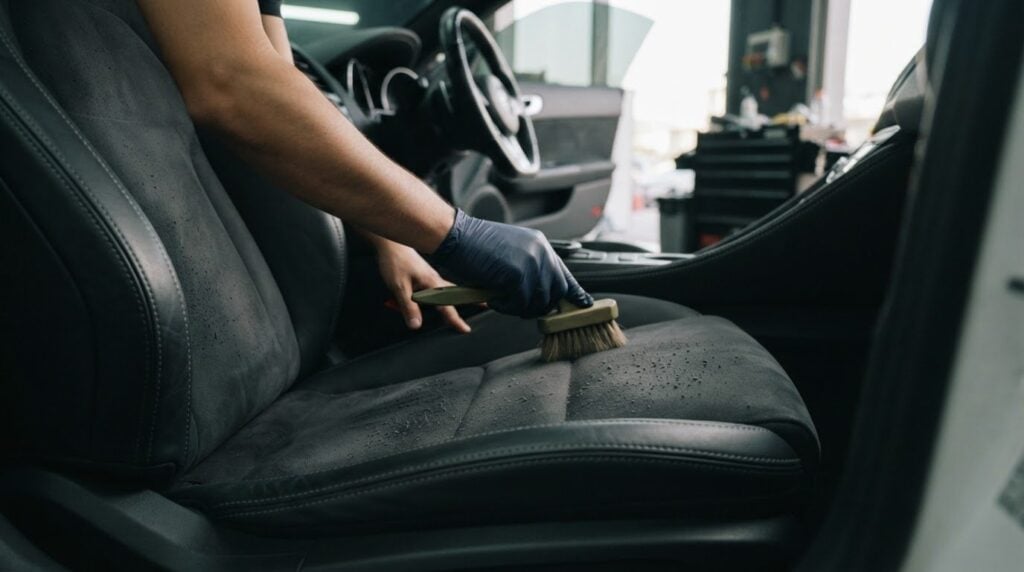
Those small fibre balls usually result from friction, not simply dirt. Effective Alcantara pilling removal and restoration starts with understanding the fibres: rubbing can tangle them into bobbles or uneven streaks. Gentle brushing may lift the surface, while blotting spills instead of rubbing helps prevent further friction.
If the material looks greasy or shiny, residue may be part of the problem. Leather conditioner, for example, can clog Alcantara’s fibres and leave a greasy film. Scrubbing or reaching for a stronger product may seem tempting, but aggressive cleaning can disturb the surface further.
This guide explains what causes pilling and shine, and how to care for the finish. Learn when brushing and blotting can help, how to remove light bobbles without treating Alcantara like ordinary fabric, and when persistent wear may call for more considered restoration. The aim is a cleaner, more even-looking surface, with the fibres treated gently throughout.
Key Takeaways
- Recognize pilling as tangled fibres caused by friction, so you can address the surface gently rather than scrubbing harder.
- Use careful brushing to lift the nap, and blot spills instead of rubbing them into the material.
- Avoid leather conditioners on Alcantara, since they can clog fibres and leave greasy residue.
- Choose a de-pilling method suited to the surface, then vacuum loose fibres after sanding.
- When wear or shine persists, learn when professional restoration may be a better next step than further home treatment.
Pilling: what are the small fibre balls on Alcantara?
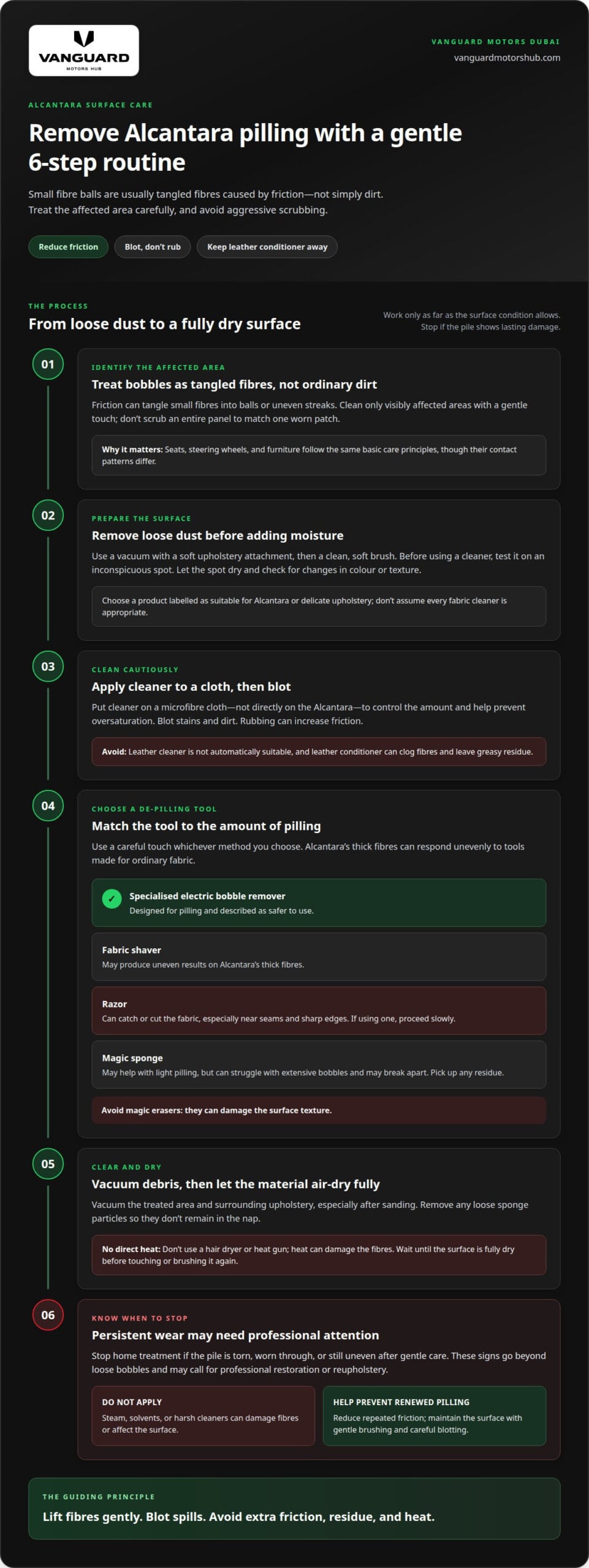
- Start by identifying bobbles rather than treating them as ordinary dirt. Friction tangles small fabric fibres into larger balls or uneven streaks. Seats, steering wheels, and furniture follow the same basic care principles, though their contact patterns differ. Clean only visibly affected areas with a gentle touch. Don’t scrub an entire panel to match one worn patch.
- Remove loose dust before adding moisture. Use a vacuum with a soft upholstery attachment, followed by a clean, soft brush. Test any cleaner on an inconspicuous area first. Let the spot dry, then check for changes in colour or texture. Choose products labelled as suitable for Alcantara or delicate upholstery rather than assuming every fabric cleaner is appropriate.
- Use cleaner cautiously on stains and dirt. Apply it to a microfibre cloth, not directly to the Alcantara. This helps control the amount and prevent oversaturation. Blot the mark with the cloth; rubbing can increase friction. Leather cleaner is not automatically suitable for Alcantara, and leather conditioner can clog the fibres and leave greasy residue.
- Choose a de-pilling tool carefully. A specialised electric bobble remover is designed for pilling and is described as safer to use. Fabric shavers may produce uneven results on Alcantara’s thick fibres. A razor can catch or cut the fabric, especially near seams and sharp edges, so proceed slowly if using one. A magic sponge may help with light pilling but can struggle with extensive bobbles. Avoid magic erasers, which can damage the surface texture.
- Clear away debris after removing pills. Vacuum the treated area and surrounding upholstery, especially after sanding. A magic sponge may break apart during use, so pick up its residue rather than leaving particles in the nap. Once cleaning is complete, let the surface air-dry fully before touching or brushing it again. Don’t use a hair dryer or heat gun, as heat can damage fibres.
- Stop home treatment if the pile is torn, worn through, or still uneven after gentle care. These signs go beyond loose bobbles and may call for professional restoration or reupholstery. Steam, solvents, and harsh cleaners can damage fibres or affect the surface, so avoid applying them. To help prevent renewed pilling, reduce repeated friction and maintain the surface with gentle brushing and careful blotting.
Alcantara material and fibre structure
- Identify the surface before choosing a treatment. Alcantara is a branded textile developed in Japan in the early 70s. Its suede-like appearance comes from a fine, raised surface rather than a leather grain. That distinction matters: leather conditioners designed for hide can leave residue on Alcantara. Treat the material as a delicate textile, not as leather simply because it feels soft.
- Examine the nap under steady light. The nap is the fine surface layer, and its fibres can lie in different directions. On a seat cushion, an area may look lighter after brushing because the fibres reflect light differently. Check the surface from more than one angle before deciding that a colour change or dark patch is a stain.
- Use a clean, soft brush to understand the pile’s direction. Make a short, gentle stroke on an inconspicuous section, then compare it with the surrounding material. Avoid forceful, back-and-forth scrubbing. The aim is to lift or align surface fibres, not flatten them or pull them from the textile.
- Inspect high-contact areas separately. A steering-wheel grip, seat bolster, and seat centre experience different patterns of contact and compression. Compare each area with a less-used panel of the same upholstery. A shiny patch on a bolster may reflect compressed fibres, while a mark elsewhere may be caused by surface soil or product residue.
- Keep the surface structure in mind during cleaning. Fine fibres can hold debris near the surface, while excess liquid can spread soil more widely. If cleaning is needed, apply an appropriate cleaner to a microfibre cloth and work on a small section. Blot instead of rubbing, then let the textile dry fully.
- Distinguish surface wear from a change in appearance. Directional sheen may shift when the nap is brushed; a worn or damaged area may remain uneven from different viewing angles. Check seams, seat edges, and repeated-contact zones for broken or flattened fibres. This helps distinguish a simple surface adjustment from damage requiring more substantial attention.
Keep products intended for other materials away from Alcantara. This guide advises against baby wipes because they can leave residue and discolour the material over time. A quick wipe may seem convenient, but it is not a substitute for careful, material-appropriate cleaning. If a mark remains, don’t increase pressure or apply an untested product. Gentle handling protects the raised fibres and prevents residue from becoming another surface concern.
This guide also advises against leather conditioners on Alcantara because they can clog its fibres and leave greasy residue. Softness alone does not make a textile suitable for products made for hide, so leave conditioners out of its care routine. After cleaning, let the material dry without direct heat. Heat guns and hair dryers can damage Alcantara fibres. Avoiding these products and drying methods helps preserve the textile’s fine surface structure. If the area still looks different once dry, inspect it in steady light and compare the nap from more than one angle before treating it again.
Causes of shiny or greasy Alcantara
- Inspect the shine before choosing a cleaner. Alcantara’s raised fibres change appearance when they lie in different directions. A compressed patch can reflect light differently from the surrounding nap. Check the area from several angles, then compare it with a less-used section. If the sheen shifts with your viewing direction, start by considering surface compression rather than treating it immediately as a stain.
- Look for repeated contact where shine appears. A steering-wheel grip, seat bolster, and armrest experience frequent pressure and movement. That friction can flatten surface fibres and make the finish look smooth or glossy. Identify the contact zone and note whether the change follows its shape. Avoid vigorous brushing at first, since extra friction can further disturb the nap.
- Consider product residue if the surface feels greasy. Leather conditioners are designed for leather, not Alcantara. They can clog Alcantara’s fibres and leave greasy residue. If you applied conditioner, don’t add another dressing to disguise the sheen. Remove loose dust first, then cautiously use a suitable cleaner on a microfibre cloth, following its care directions.
- Distinguish oily residue from ordinary dust. Dust can sit across the surface, while conditioner residue may feel coated or slick. Inspect a small, inconspicuous area before cleaning the affected panel. Apply cleaner to the cloth rather than pouring or spraying it onto the upholstery. This helps control moisture and reduces the risk of spreading residue across a larger area.
- Review cleaning habits that could create a new problem. Rubbing a greasy mark can spread it and press residue deeper among the fibres. Blot instead, using a clean part of the cloth for each pass. Don’t use leather conditioner afterward. Let the cleaned area air-dry fully, then assess its texture and appearance before deciding whether another careful cleaning pass is needed.
- Match your response to the cause. Directional sheen from flattened fibres calls for gentle nap care, while a greasy feel points to residue removal. Shine that persists after careful cleaning may indicate continued compression or wear, not dirt that needs stronger chemicals. Avoid solvents and harsh cleaners; aggressive treatment can damage delicate fibres. Reassess the surface under steady light before repeating any treatment.
Brushing and blotting technique
- Prepare the Alcantara before brushing. Remove loose dust with a vacuum and soft upholstery attachment. Choose a clean, soft brush, then start on a small section. Use light strokes rather than pressing into the pile. This controlled approach shows how the nap responds and helps prevent excessive force from flattening the fibres.
- Brush the affected panel in short, even passes. Follow the visible direction of the pile where possible, then inspect the surface under steady light. If the nap looks uneven, gently change direction rather than scrubbing back and forth. A seat bolster and its centre panel may reflect light differently, so assess each area separately.
- Blot fresh spills instead of rubbing them. Place a clean, dry microfibre cloth over the liquid and press lightly to absorb it. Lift the cloth, move to a dry area, and repeat until it stops picking up moisture. Rubbing pushes liquid across the fibres and increases friction, which can spread a mark or disturb the surface.
- For remaining dirt, test a suitable cleaner on an inconspicuous patch. Apply a small amount to a microfibre cloth, never directly to Alcantara. Dab the mark with controlled pressure, using a clean part of the cloth for each pass. Avoid soaking the upholstery; excess liquid can spread soil and make drying less even.
- Let the treated area air-dry fully before brushing the nap again. Don’t use a hair dryer or heat gun, as heat can damage fibres. Once dry, use a clean brush and gentle strokes to lift the surface. If a greasy feel remains, don’t add leather conditioner; it can clog fibres and leave residue.
- Keep the finish consistent with routine care. Vacuum Alcantara seats and steering wheels weekly, then spot-clean visible soil monthly. A full clean, nap restoration, and fresh fabric protectant every 3-6 months can support ongoing upkeep. Apply protectant from 20-30 cm away, leave it untouched for at least one hour, and use two coats with a light dry between coats.
For a spill, keep your first response gentle and deliberate. Blot Alcantara spills rather than rubbing them. Place the cloth over the wet area and apply only enough pressure to make contact; don’t drag it across the upholstery. When you lift it, check whether moisture has transferred, then use a clean, dry part of the cloth for the next press. This lifts liquid from the spot instead of sweeping it into surrounding fibres. Work patiently, especially near seams or between adjoining panels, where precise cloth placement can be harder.
Resist scrubbing if the mark remains visible after blotting. Reposition the cloth and continue with controlled presses, pausing to inspect the area between attempts. Keep the cloth’s clean side against the upholstery, and avoid a damp section that could transfer the spill elsewhere. The aim is to absorb the liquid while leaving the pile undisturbed. Once the cloth no longer picks up moisture, let the spot dry before deciding whether further cleaning is needed. A calm, measured approach is better than vigorous friction when treating a fresh spill.
How do you remove pilling from Alcantara without damaging it?
- First decide whether you’re seeing pills or broader surface wear. Work under steady light and inspect the affected patch from different angles. Pills appear raised; flattened or damaged areas may remain visibly uneven. Identify the problem area, then focus treatment there instead of working across the entire seat or panel. This keeps Alcantara pilling removal and restoration targeted.
- Prepare the work area before starting. Remove items that could brush against the upholstery, and focus treatment on one panel. Check nearby seams, piping, and edges, where a tool could catch. Don’t pull the fabric tight to make it easier to reach. Let the upholstery rest in its natural position while you work.
- Choose a de-pilling method suited to the amount and roughness of the pills. Start gently and treat only the raised bobbles, not the surrounding pile. Use controlled, short passes, then pause to inspect the result. Don’t try to make one patch match by removing more material from unaffected areas. A measured approach helps protect the original surface.
- Pay close attention to pressure and direction. Keep your hand steady, and don’t force a tool through resistance. If it snags, changes the texture, or starts cutting fibres, stop immediately. Let the material sit naturally and reassess the area before continuing. These checks are especially important near seams, corners, and curved seat bolsters.
- Review the treated patch before moving to another section. Compare it with the surrounding upholstery under the same light, rather than judging it from a changed angle. If the pills are reduced but the surface remains uneven, don’t keep removing material to chase a uniform appearance. Stop before further treatment affects intact fibres. Effective Alcantara pilling removal and restoration balances a neater finish with preserving the textile.
- After de-pilling, clear loose material and leave the surface undisturbed while you assess it. Don’t follow with a stronger treatment simply because a mark or sheen remains; those may have a different cause than pills. If you’ve cut or damaged the upholstery, further home abrasion can worsen it. If the vehicle also has leather requiring attention, contact Vanguard Motors Dubai about Leather Restoration.
Vanguard Motors Dubai: Leather Restoration
Vanguard Motors Dubai offers Leather Restoration for worn or damaged leather upholstery. Alcantara has a distinct textile surface, so leather restoration is relevant when the vehicle’s interior also includes leather that needs attention, not as a treatment for Alcantara fibres. If pilling remains after careful surface care, avoid further aggressive abrasion; persistent damage may need a different restoration approach.
For interior concerns, describe which material is affected and where the wear appears. That distinction helps direct attention to the right issue, whether it’s leather damage or Alcantara’s raised surface. Contact Vanguard Motors Dubai to discuss Leather Restoration for your vehicle’s leather upholstery.
Keep your interior care moving forward
Take a measured next step. If Alcantara still looks uneven after careful maintenance, pause before using stronger tools or products. Note where the change appears and whether nearby leather has separate wear; the materials need different care. A considered approach to Alcantara pilling removal and restoration distinguishes surface upkeep from damage requiring specialist attention.
For leather upholstery that needs attention, Vanguard Motors Dubai offers Leather Restoration. Its wider vehicle appearance services include Paint Protection Film (PPF) Installation, Colored Sticker Wraps, and Peelable Paint Applications. These are separate options, each suited to a different part of the vehicle’s finish.
Share your vehicle’s interior concern and discuss the relevant service with Vanguard Motors Dubai. A careful decision now helps you move ahead with confidence and keep your vehicle looking considered.
Frequently Asked Questions
Which products do you need for cleaning?
For routine upkeep, use a soft upholstery vacuum attachment, a clean brush, and a microfibre cloth. For marks, choose a cleaner labelled as suitable for Alcantara rather than a leather-care product. Match the tool to the task: a vacuum removes loose dust, while a cloth handles local spots. Keep clean areas of the cloth available so you don’t transfer soil from one section to another.
What tools and products are safe for cleaning and restoring Alcantara?
Choose tools designed for delicate upholstery: a soft brush, upholstery vacuum attachment, microfibre cloth, and specialised electric bobble remover for pills. Avoid leather conditioners, magic erasers, baby wipes, solvents, and harsh cleaners. When selecting a product, suitability for Alcantara matters more than a general “fabric” label. Use abrasive tools carefully, as they can alter the pile or cut fibres.
How do you brush Alcantara to restore its original nap and texture?
Use a clean, dry, soft brush on a fully dry section, with light, controlled strokes. Compare the nap’s appearance before and after each pass under steady light. For example, if a seat panel looks darker from one angle, brush gently and reassess from the same angle. Stop if fibres catch or the texture becomes rough. Brushing can align surface fibres, but it can’t repair torn or worn-through fabric.