
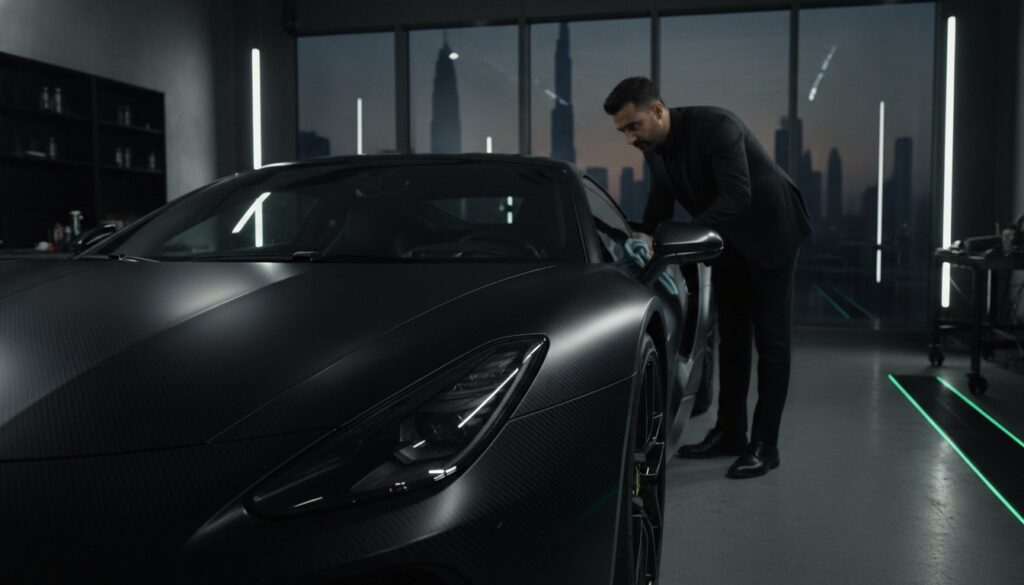
A high-end vehicle wrap is a precision-engineered skin that demands the same level of technical respect as a performance engine. You’ve invested in a sophisticated aesthetic upgrade. It’s natural to worry that an improper wash or the wrong chemical could compromise that flawless finish. Mastering how to care for a wrapped car is the essential final step in your vehicle’s transformation. It’s the difference between a finish that degrades under the sun and one that maintains its elite, showroom brilliance for years to come.
Your vehicle is a statement of both form and function. This guide provides the professional-grade maintenance protocols required to preserve the vibrant finish and structural integrity of your vinyl. You’ll discover the exact science of pH-balanced cleaning, the mechanics of a safe DIY wash, and the thermal management strategies needed to shield your investment from extreme UV degradation. We’re moving beyond basic cleaning to explore the intersection of technical skill and aesthetic preservation. From daily maintenance to knowing when to seek professional detailing, we’ll ensure your car remains an icon of automotive excellence.
Key Takeaways
- Respect the critical 72-hour curing window post-installation to ensure the adhesive bond reaches its peak structural integrity.
- Master the professional two-bucket wash method and pH-neutral chemistry to learn exactly how to care for a wrapped car without causing surface abrasions.
- Mitigate the destructive effects of UV radiation and thermal cycles that lead to adhesive fatigue and premature color degradation.
- Leverage the synergy of ceramic coatings to provide superior hydrophobic protection and streamline your routine maintenance.
- Implement specialized care protocols for high-performance aesthetic upgrades, including carbon fiber inserts and advanced peelable paint applications.
The Initial Phase: Post-Installation Curing and First Steps
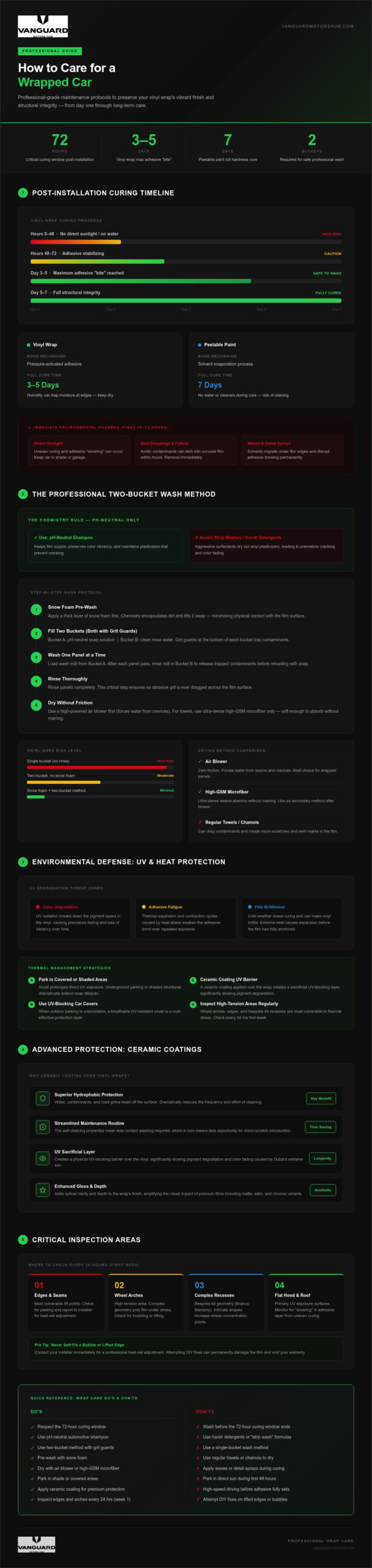
The first 72 hours after your vehicle leaves the studio are the most volatile. During this critical window, the adhesive bond is still stabilizing. This makes moisture and extreme heat your vehicle’s primary adversaries. Understanding how to care for a wrapped car begins with respecting this chemical settling process. Temperature fluctuations directly impact the initial set. Cold weather can make the vinyl brittle and slow the bond, while excessive heat can cause the film to expand before it has fully anchored to the substrate. Don’t assume the wrap is invincible just because it’s on the car; it needs a stable environment to reach its peak durability.
Meticulous owners should perform an immediate inspection protocol every 24 hours during the first week. Focus your attention on the edges, wheel arches, and the complex recesses of bespoke car kits. At Vanguard Motors, we recognize that custom conversions like a Brabus or Mansory kit involve intricate geometry where the film is under higher tension. A settling period is also vital before high-speed driving. Rapid airflow creates significant wind pressure that can catch a slightly lifted edge, leading to premature failure. If you spot a small bubble or a lifting corner, don’t touch it. Contact your installer immediately for a professional heat-set adjustment.
The Curing Timeline for Vinyl vs. Peelable Paint
The chemical bonding process differs significantly between traditional colored sticker wraps and innovative peelable paint applications. Vinyl wraps rely on pressure-activated adhesives that require approximately three to five days to reach maximum “bite” depending on the ambient humidity. High humidity levels can trap moisture near the edges, potentially compromising the seal. Conversely, peelable paint undergoes a solvent evaporation process. This “thick film” application requires a full week to achieve its final hardness. Avoid any contact with water or cleaning agents during this time to prevent staining or texture distortions in the finish.
Immediate Environmental Hazards
Protect your investment by avoiding direct, intense sunlight for the first 48 hours. While heat helps the adhesive flow, uncontrolled UV exposure can lead to uneven curing or “silvering” in the adhesive layer. Be vigilant about industrial fallout and bird droppings. These acidic contaminants are particularly aggressive on uncured surfaces and can etch into the film within hours. Resist the urge to apply detail sprays or waxes immediately after installation. The solvents in these products can migrate under the edges of the film and interfere with the adhesive’s ability to bond permanently with the paintwork.
Mastering the Wash: The Professional Two-Bucket Method
Washing your vehicle is a ritual of precision. Done incorrectly, it’s the fastest way to ruin a premium finish with swirl marks and micro-scratches. Learning how to care for a wrapped car requires a shift from convenience to chemistry. You must start with a pH-neutral automotive shampoo. Harsh detergents or “strip washes” contain aggressive surfactants that can dry out the vinyl’s plasticizers, leading to premature cracking or fading. Using the right chemistry ensures the film remains supple and the colors stay vibrant.
The two-bucket method is your primary defense against surface marring. Fill one bucket with your soap solution and the second with clean rinse water, ensuring both have a grit guard at the bottom. After each pass on a panel, rinse your wash mitt in the clean water to release trapped contaminants before reloading it with soap. This cycle ensures you never drag abrasive grit across the film. For the ultimate touchless decontamination, apply a thick layer of snow foam first. This allows the chemistry to encapsulate dirt and lift it away from the surface, significantly minimizing the physical contact required during the hand wash.
Drying is equally critical to prevent water spotting. To avoid friction, use a high-powered air blower to force water out of crevices and off the flat panels. If you prefer towels, only use ultra-dense, high-GSM microfiber. These specialized towels are soft enough to absorb water without marring the finish. If you need a professional touch to maintain that elite look, our luxury detailing experts can handle the entire decontamination process for you.
Pressure Washing: Rules of Engagement
Pressure washers are powerful tools that require disciplined use. Always maintain a safe distance of at least 12 inches from the surface. Keep the nozzle at a 45-degree angle relative to the panel. Aiming directly at the edges can force water under the film, causing it to lift or peel. Stick to moderate pressure settings to ensure the force doesn’t “burnish” or bruise the delicate vinyl or peelable paint layers.
Special Considerations for Matte and Satin Finishes
Matte and satin wraps require a specialized chemical approach. Standard “wash and wax” soaps are designed to add gloss, which is disastrous for a matte aesthetic. These soaps contain oils and waxes that fill in the microscopic texture of the film, creating permanent, uneven “sheen” spots. Use only dedicated matte-specific shampoos and sealants. These products provide essential UV protection without altering the flat, stealthy appearance of your vehicle’s skin.
Environmental Defense: Protecting Wraps from High Heat and UV
UV radiation is the silent killer of vibrant colored sticker wraps. Constant exposure to the sun’s energy destabilizes the pigments in the film, leading to premature fading and a loss of that original pop. Beyond aesthetics, excessive heat triggers adhesive fatigue. As your vehicle’s metal panels heat up and cool down, the wrap undergoes relentless expansion and contraction cycles. This “baking” effect can cause the adhesive to become brittle or, in extreme cases, fuse permanently to the paint, making future removal a technical nightmare. Protecting your investment requires a proactive defense against these thermal stressors.
Certain body panels act as “hot spots” due to their orientation. Horizontal surfaces like the hood, roof, and trunk lid receive direct, vertical sunlight, causing them to fail significantly faster than vertical side panels. Vigilance is also required at the fuel pump. A fuel spill is a genuine emergency for any vinyl surface. The harsh solvents in gasoline can instantly dissolve the topcoat of a gloss wrap or permanently stain a matte finish. If a spill occurs, neutralize the area immediately with water and a pH-neutral cleaner to prevent the chemicals from etching the film. Swift action prevents permanent structural damage to the vinyl’s polymer chains.
Strategic Parking and Storage
Long-term outdoor exposure is the primary cause of lost film elasticity. When the vinyl loses its flexibility, it becomes prone to cracking at the edges. While it’s tempting to use a car cover, these can often trap abrasive dust and moisture against the wrap, leading to micro-scratches as the wind moves the fabric. For luxury assets, indoor climate-controlled environments are the only way to truly halt environmental degradation. Keeping your vehicle out of the peak afternoon sun preserves the elite standard of excellence we deliver during installation.
Combating Chemical Contaminants
Acidic contaminants like bird droppings and tree sap are highly destructive. They can etch into the vinyl’s surface in as little as 24 hours when accelerated by heat. In regions with mineral-heavy water, water spotting poses a similar risk. These white, crusty deposits are difficult to remove once they’ve baked into the pores of the film. Use specialized, wrap-safe bug and tar removers for targeted cleaning. These products are formulated to break down organic bonds without stripping the protective layers of the film, ensuring you know exactly how to care for a wrapped car in demanding environments.
Advanced Protection: Ceramic Coatings and Sealants
Elevating your vehicle’s defense requires moving beyond basic decontamination. While a meticulous wash routine is foundational, advanced chemical barriers provide the structural reinforcement necessary for long-term excellence. The synergy of applying ceramic coatings over vinyl wraps or Paint Protection Film (PPF) creates a multi-tier defense system. This secondary layer doesn’t just sit on the surface; it bonds at a molecular level to fill the microscopic pores of the film. This process creates an ultra-slick, hydrophobic surface that makes your routine maintenance wash up to 50% faster by preventing road grime and brake dust from anchoring to the finish.
Many owners ask if a coating can help a wrap recover from micro-scratches. While the coating itself provides a sacrificial layer of hardness, many premium films and coatings feature thermal-reactive properties. When exposed to heat, these layers can “self-heal,” allowing minor surface swirling to vanish. Choosing the right protection involves a strict hierarchy. Waxes are prohibited, polymer sealants offer temporary relief, but ceramic coatings represent the elite standard for those who demand a pristine showroom finish. Understanding these distinctions is a vital component of knowing how to care for a wrapped car effectively.
Why Traditional Waxes are Forbidden
Traditional carnauba waxes are a relic of the past in the world of vinyl maintenance. These products are fundamentally incompatible with the porous nature of automotive film, especially on matte or textured finishes. Carnauba wax can become trapped in the texture, creating permanent white streaks or an uneven “cloudy” appearance that ruins the aesthetic. More dangerously, many affordable waxes contain petroleum distillates. These chemicals can slowly dissolve the adhesive bond at the edges of your wrap, leading to peeling and failure. For quick maintenance, only utilize specialized, wrap-safe spray sealants designed to enhance UV protection without chemical aggression.
The Longevity Benefit of Ceramic Pro over Wraps
Integrating a professional coating like Ceramic Pro can extend the functional life of your wrap by up to 24 months. This investment pays dividends by significantly enhancing the color depth and gloss levels of premium films, making a standard wrap look like a high-end bespoke paint job. The hydrophobic layer acts as a permanent shield, ensuring that acidic rain, bird droppings, and industrial fallout cannot penetrate the vinyl surface and cause permanent staining. To ensure your vehicle receives this elite level of protection, book your ceramic coating consultation with our technical experts today.
The Vanguard Standard: Professional Maintenance and Specialized Kits
Maintaining a standard vinyl application is a foundational skill, but preserving a high-performance conversion requires a higher level of technical discipline. When your vehicle features custom car kits from Brabus or Mansory, the geometry becomes significantly more complex. These upgrades often include intricate aerodynamic fins, deep cooling vents, and aggressive splitters that can easily snag a standard wash mitt. Mastering how to care for a wrapped car with these bespoke additions means using specialized soft-bristle brushes to reach into recesses where road grime accumulates. It’s about precision, not just pressure.
Professional restoration isn’t limited to the exterior. High-performance assets often feature bespoke leather interiors and carbon fiber accents that demand equal attention. Our mobile detailing van provides a surgical level of care, delivering professional-grade maintenance to your location. This ensures that every surface, from the forged carbon fiber inserts to the exhaust-proximate panels, remains in peak condition. If you notice soot buildup around your custom exhaust, it must be neutralized immediately. Failure to do so allows thermal cycles to bake the contaminants into the film, leading to permanent staining that no standard wash can remove.
Maintaining Brabus and Mansory Conversions
Aerodynamic components require a specific touch to avoid lifting the film at high-tension points. Forged carbon fiber requires different chemical considerations than a traditional 2×2 weave to preserve its depth and clarity. We recommend a dedicated inspection of the rear diffuser and side skirts after every long-distance drive. These areas are high-impact zones for road debris. Protecting these surfaces ensures your aesthetic investment remains as sharp as the day it was installed.
Holistic Care with the Vanguard Premium Package
True vehicle preservation is a holistic endeavor. The Vanguard Premium Package integrates exterior film protection with professional leather restoration to ensure a seamless luxury experience. Our technicians perform a 360-degree inspection to identify the earliest signs of edge-lifting or adhesive fatigue. This proactive approach is the elite standard for those who refuse to compromise on quality. To maintain your vehicle’s showroom brilliance, Schedule your professional detailing with Vanguard Motors and let our experts handle the technical precision your car deserves.
Secure the Future of Your Vehicle’s Finish
A premium wrap is more than a color change; it’s a commitment to automotive excellence. Mastering how to care for a wrapped car requires a disciplined approach to curing, chemical pH balance, and environmental management. By implementing the professional-grade protocols outlined in this guide, you ensure your investment retains its structural integrity and vibrant finish. From the initial 72-hour curing window to the application of hydrophobic ceramic coatings, every step is a calculated move toward long-term preservation.
As specialists in Brabus, Mansory, and Jetour kit conversions, we understand the technical nuances of elite vehicle protection. Our elite supercar detailing facility and advanced mobile detailing van are designed to deliver concierge-level care directly to your door. Whether you’re managing a complex vinyl application or innovative peelable paint, professional maintenance is the final component of a flawless aesthetic. There’s no substitute for expert precision when it comes to high-performance results.
Preserve Your Investment: Book a Vanguard Premium Detailing Session
Your vehicle is a masterpiece of design and performance. Keep it that way.
Expert Insights: Frequently Asked Questions
Can I take my wrapped car through an automatic car wash?
Avoid automatic car washes that utilize mechanical brushes at all costs. These rotating bristles are often laden with abrasive grit from previous vehicles, which can cause immediate micro-scratches and swirl marks on your film. While touchless systems are a safer alternative, the high-pressure jets and aggressive recycled chemicals can still degrade the adhesive over time. Hand washing remains the elite standard for preserving a showroom finish.
How long does a car wrap typically last with proper care?
A premium vinyl wrap typically lasts between five and seven years on vertical surfaces when maintained correctly. Horizontal panels like the hood and roof are subject to more intense UV radiation and may require replacement closer to the three-year mark. Consistent maintenance and the application of ceramic coatings can extend this functional lifespan, keeping the colors vibrant for the duration of the film’s life.
Is it safe to use a pressure washer on a vinyl wrap?
It’s safe to use a pressure washer if you strictly adhere to professional technical parameters. Keep the pressure below 2,000 PSI and maintain a minimum distance of 12 inches from the vehicle’s surface. Always use a wide-angle spray pattern and avoid aiming the nozzle directly at the edges. Mastering how to care for a wrapped car involves ensuring water isn’t forced under the film’s perimeter.
What should I do if my wrap starts peeling at the edges?
Seek professional assistance immediately if you notice the film lifting or peeling at the edges. Do not attempt to trim the vinyl yourself or use household adhesives, as these can cause permanent damage to your underlying paintwork. A professional installer can often heat-set the edge back into place if the area is clean and the adhesive hasn’t been contaminated by dust, wax, or road grime.
Can I use ceramic coating on top of a colored car wrap?
Applying a ceramic coating on top of a colored car wrap is highly recommended for maximum protection. The coating creates a semi-permanent hydrophobic barrier that repels water and prevents contaminants from anchoring to the vinyl. This secondary layer makes your routine maintenance much more efficient while providing a sacrificial shield against light surface abrasions and the destructive effects of UV degradation.
How do I remove bird droppings or tree sap from my wrap safely?
Remove acidic contaminants like bird droppings or tree sap as soon as they are detected. These organic substances can etch into the vinyl’s surface in as little as 24 hours when accelerated by heat. Use a pH-neutral detail spray and a clean, high-GSM microfiber towel to gently saturate and lift the debris. Avoid aggressive scrubbing, which can permanently mar the delicate finish of the wrap.
Does peelable paint require different care than vinyl wraps?
Peelable paint requires a unique “thick film” care protocol that differs slightly from traditional vinyl. While both benefit from pH-neutral hand washing, peelable paint needs a longer initial curing period of approximately seven days before its first exposure to water. It offers superior resistance to rock chips but requires specific spray sealants to maintain its surface tension and prevent permanent staining from environmental fallout.
Can I polish or buff a wrapped car to remove scratches?
Never use a high-speed rotary buffer or abrasive polishing compounds on a wrapped vehicle. This is especially critical for matte and satin finishes, where any friction will create permanent, uneven shiny spots that ruin the aesthetic. For gloss wraps, a very light hand polish with a specialized wrap-safe product can occasionally remove light haze, but mechanical buffing will likely burn or thin the film beyond repair.