
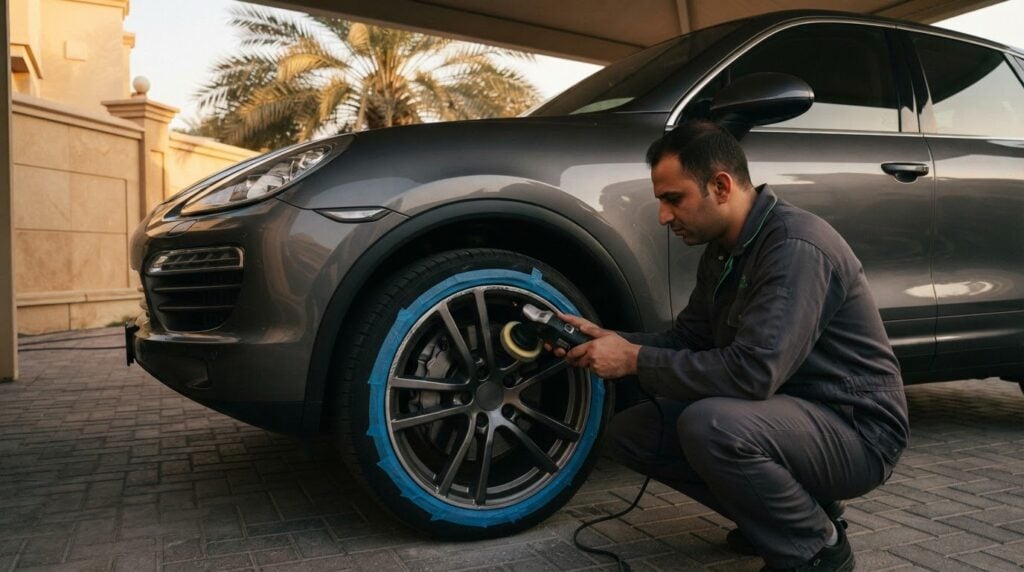
A kerb-scratched alloy wheel may be repairable while it remains on the vehicle. With on-site repair for scratched alloy wheels, a technician at Vanguard Motors Dubai can review clear photos, assess whether the damage suits cosmetic repair, then work on the fitted wheel and refine the repaired area.
That approach can be convenient across the UAE, where you may want to restore a wheel’s appearance without arranging a separate trip to a repair facility. But not every mark is the same: the depth and extent of the damage help determine whether an on-vehicle cosmetic repair is appropriate.
This guide explains what clear photos can show, how technicians assess repair suitability, and what the on-site process involves. You’ll also learn how buffing and polishing refine the finish, and when more extensive wheel damage calls for a different repair approach.
Key Takeaways
- Photos help technicians judge a scratch’s location and severity before deciding whether an on-vehicle cosmetic repair is suitable.
- Light surface scuffs differ from deep scratches, dents, or major rim damage, which need a more extensive repair approach.
- Careful preparation and allowing the clear coat to dry are important steps in protecting the repaired finish.
- Buffing and polishing can refine the repaired area, but the right process depends on the wheel’s finish and the condition of the damage.
- For a broader appearance change or a more extensive finish refresh, Vanguard Motors Dubai offers rim repaint, alloy repaint, and wheel colour change services.
Mobile alloy wheel and rim repair
Mobile rim repair addresses suitable cosmetic damage at the vehicle, avoiding a separate workshop visit. The result depends on careful cleaning, surface preparation, colour matching, coating, and drying.
Cost and Quality Compared with Workshop Repair
Mobile and workshop repairs can both restore suitable cosmetic damage; the setting alone doesn’t determine the finish. Cost depends on the scratch’s size and depth, the wheel’s finish, preparation, and materials. In the UAE, the price depends on the case and is given after a quote request. Quality is best assessed by the repaired area’s colour match, smoothness, and how it blends with the surrounding finish.
On-Site Repair Time
On-site repair time depends on preparation, damage, coating, and drying, so there isn’t one duration for every wheel. A filler used for deeper scratches usually takes a few hours to dry before sanding or polishing. Clear coat must also dry fully before the wheel is handled or driven on, which affects when the repair is ready for use.
Repair Durability and Warranty
Durability depends on the damage, surface preparation, and application of the finish. A second clear-coat layer can add protection after the first coat dries. Warranty coverage is a separate term from the repair process: the covered work, exclusions, and validity period define what it includes. These details matter more than assuming mobile or workshop repairs carry the same warranty.
A technician starts by cleaning the rim with an appropriate wheel cleaner or mild soap and water. A soft-bristle brush or sponge helps remove grime without adding scratches. The wheel must be completely dry before sanding begins, because moisture or dirt can affect preparation and the final surface.
For a light scratch, careful sanding with fine-grit paper, such as 800 grit, can smooth the damaged edge. Deeper scratches or chips may need suitable wheel-rim filler. Once it has dried for a few hours, the area can be sanded or polished to create a more even base for the finish.
Clear coat is sprayed from about 8-10 inches away, with a mask worn during application. After the first layer dries, a second layer adds protection. The repaired rim must remain untouched, and the vehicle must not be driven, until the clear coat is completely dry. These steps help protect the finish while it sets.
A sound preparation sequence keeps cleaning, drying, repair, and coating distinct. Choose an appropriate wheel cleaner or a mixture of mild soap and water to clean the rim before repair, then make sure the surface is completely dry before sanding the scratched area. Where damage is deep or includes chips, an appropriate wheel-rim repair kit containing filler material may be needed to prepare the area. When spraying clear coat, wear a mask. Keeping these steps in order supports careful work on the rim, while the appropriate cleaning method and repair materials depend on the damage being addressed. The repair should proceed only after the surface is ready for the next step.
On-vehicle repairs without removing or replacing wheels
On-vehicle cosmetic work leaves the wheel fitted while the technician repairs visible rim damage in place. It suits selected surface marks, not every scratch, chip, or wheel condition.
First, the technician examines the damage’s position and how far it extends across the rim. A short kerb scuff on the outer edge differs from a broad scratch crossing several spokes. The wheel’s profile and finish also affect access, masking, and how well the repair can blend with the surrounding surface.
Before sanding, the tyre edge can be protected with wide tape. This creates a barrier between the tyre and the abrasive, especially near the rim lip. For larger scratches or burrs, the repair area may be sanded with 120 to 240 grit before a patch is applied. That preparation helps smooth raised edges and gives the repair material a more even surface.
The technician works on the damaged section rather than replacing the wheel. This preserves the existing wheel and avoids removing it for suitable cosmetic repair. However, leaving the wheel fitted doesn’t make every kind of damage suitable for on-vehicle work. A dent, deep gouge, or damage extending beyond the visible finish needs a different assessment from a shallow mark.
After preparing the area, the technician applies suitable repair materials and finish in a controlled sequence. The aim is to keep the repair local and blend it with the surrounding rim. A flat face, curved lip, and narrow spoke each require different handling. Masking and precise application help keep materials within the repair area.
Touch-up paint may cover a limited cosmetic mark, but visible wear can return. Surface preparation and finish selection therefore matter. A paint pen can conceal a small blemish, yet may not match the sheen or texture of the whole wheel. For a more consistent result, the repair should account for the rim’s existing finish.
- Local scuff: Repair focuses on the marked section while preserving the rest of the wheel.
- Raised burr: Sanding can smooth the edge before patching and refinishing.
- Broad or deep damage: The repair approach depends on its extent and location.
For visible rim damage, an on-vehicle cosmetic repair assessment can help establish whether an in-place finish is appropriate.
Wide tape along the tyre edge protects it from abrasive work while the rim is sanded. The tape acts as a boundary as the technician works on the rim; it doesn’t change which part is being repaired. This protection supports careful preparation near the rim and tyre while keeping the tyre covered.
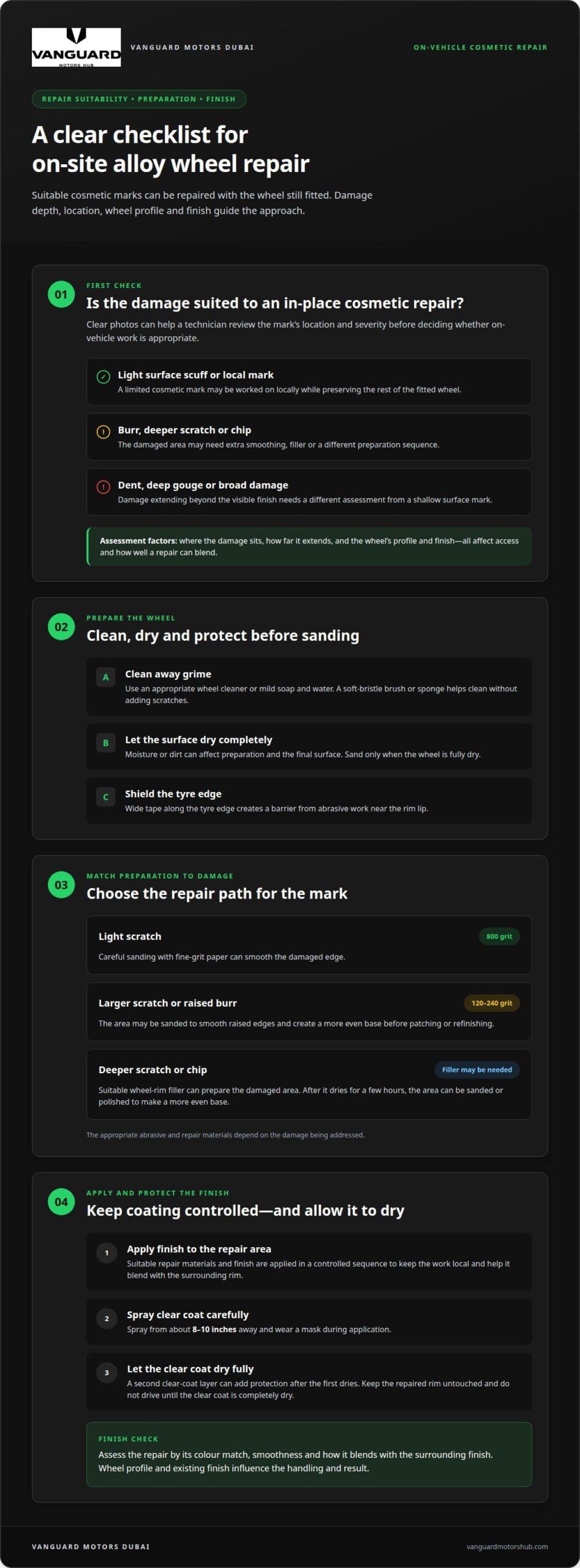
Photo assessment and suitability checks
Photos help a technician assess a wheel’s visible finish, scratch location, and apparent severity before arranging on-site cosmetic repair. They support an initial decision, but can’t reveal every detail hidden by dirt, reflections, or the tyre.
Useful images show the whole wheel and a close-up of the damage. A straight-on view reveals the wheel design and finish; an angled view can show whether a scratch catches the light or has a raised edge. Clear, well-lit photos help distinguish a surface scuff from a deeper gouge.
Technicians consider the mark’s position as well as its appearance. A scuff on the outer rim lip differs from damage across a spoke or machined face. The assessment also considers how much of the visible finish is affected and whether the mark appears isolated or part of a larger impact.
Reflections can disguise scratches, especially on polished or diamond-cut surfaces. Harsh glare may make a shallow mark look deeper, while a dark image can hide chipped coating. Comparing a close-up with a full-wheel view puts the damage in context and shows the surrounding finish.
Can diamond-cut alloy wheels be repaired on-site? A photo can help identify a diamond-cut finish and locate cosmetic damage, but it can’t establish every repair requirement. A surface mark may suit cosmetic attention, while damage across the machined face needs careful assessment.
Is on-site wheel repair safe for structural damage or deep cracks? Cosmetic repair does not correct structural damage, and a photograph alone cannot establish that a cracked wheel is safe. Visible cracks, deformation, or impact damage call for professional wheel assessment rather than on-site cosmetic treatment.
Photo review is one part of the decision. A technician also considers details images cannot confirm, such as the depth of a gouge, the condition beneath chipped paint, and whether an impact has altered the rim’s shape. These details help determine whether cosmetic refinishing is appropriate or the damage needs a different repair approach.
- Surface scuff: A clear close-up can show its position and visible extent.
- Diamond-cut face: Reflections and machined surfaces need careful interpretation.
- Crack or deformation: Cosmetic treatment isn’t a substitute for assessing wheel condition.
Once the wheel is examined in person, the technician can compare its actual condition with the photos and select a suitable approach. This visual check helps ensure cosmetic work is not used where the damage needs more extensive attention.
Buffing and polishing repaired areas
Buffing and polishing refine the visible surface after suitable cosmetic repair. A polishing compound and soft cloth can smooth the repaired area and help its finish blend with the surrounding alloy.
The work focuses on the transition between repaired and original surfaces. For example, a small scuff on a spoke may need attention across its edges, not just its centre. Polishing only the marked point can leave an obvious change in sheen; carefully refining the surrounding area can create a more even transition.
One wheel takes an average of an hour to polish. The time allows for controlled work across the rim’s face, spokes, and contours. A wheel with several repaired areas may need attention in more than one location, while the design also affects how easily a cloth reaches narrow sections.
For four alloy wheels, polishing takes half a day’s work. That estimate reflects a set of wheels, rather than a single repaired patch. The finish, wheel shape, and amount of surface needing refinement influence how the polishing work is distributed across all four rims.
A soft cloth helps control polishing on delicate surfaces. The compound is applied to the area being refined, then worked carefully across the repair and its edges. On a broad wheel face, the technician can assess the sheen as work progresses. On narrow spokes, the cloth needs to follow the contours and blend visible transitions.
- Repair edge: Blend the transition rather than polishing only the centre.
- Wheel face: Assess how the treated surface reflects light beside the original finish.
- Spokes and contours: Work methodically around each shape to avoid overlooked areas.
Polishing refines appearance; it doesn’t replace repair preparation or correct damage beyond the cosmetic surface. A deep gouge, dent, or crack needs assessment before polishing is considered. The compound and cloth address the finish, not the wheel’s underlying shape or structural condition.
After polishing, the repaired area can be compared with the adjacent rim under consistent lighting. A close visual review can reveal uneven gloss or a visible boundary that needs further refinement. The aim is a balanced finish, not an overly polished spot that stands apart.
What types of alloy wheel scratches can be repaired on-site?
On-site cosmetic repair generally suits localized damage to the visible wheel finish. A shallow kerb scuff on the rim edge, for example, differs from a deep gouge, dent, or crack. The decision depends on the damage’s depth, position, spread, and effect on the wheel’s shape.
Light surface scratches may be suitable when they remain within the finish and the surrounding rim is intact. The technician assesses the area, prepares the surface, and applies an appropriate repair finish. A small scuff confined to one section can be treated locally, while a mark crossing several spokes may need broader refinishing for a consistent appearance.
Chips and deeper scratches need closer assessment. They may require suitable filler before sanding and polishing, rather than paint alone. Repair materials must address the damaged surface, which needs preparation before refinishing. A chip at the rim edge and a deep groove across its face are different cases, even if both look small in photos.
Large scratches or burrs may need sanding with 120 to 240 grit before a patch is applied. That process can smooth raised edges and prepare the area. However, sanding and patching address cosmetic surface damage, not changes to the wheel’s shape. A technician considers the mark’s location and visible extent before choosing an on-site method.
- Localized scuffs: Surface marks limited to a small part of the rim may suit a cosmetic repair.
- Chips: Missing finish may need filler, preparation, and careful refinishing.
- Deep gouges or dents: Major rim problems call for professional repair assessment, not a simple touch-up.
- Cracks or deformation: These are not ordinary finish scratches and need assessment beyond cosmetic repair.
Wheel design also affects the visible result. A scratch on a painted spoke differs from damage on a polished or diamond-cut face. On a diamond-cut wheel, the technician assesses how the mark interrupts the machined appearance. Photos can indicate the finish and damage location, but an in-person inspection reveals details images may hide.
Touch-up paint may cover a minor blemish, yet visible wear can return after a few weeks. For that reason, the repair method should match the scratch’s depth and surrounding finish. Choosing a surface touch-up for a gouge, or cosmetic work for a dent, risks leaving the original problem unresolved.
For a closer assessment of a scratched rim, request an alloy wheel damage assessment.
Vanguard Motors Dubai: Engine carbon cleaning , rim repaint , alloy repaint , rim colour change , alloy colour change , wheel colour change , wheel paint , custom rims , custom exhaust , custom carbon
Vanguard Motors Dubai offers cosmetic repair, rim repainting, and alloy repainting to refresh scratched or marked wheels. When the existing finish needs more than a localized touch-up, broader refinishing may be more suitable. Wheel colour change is also an option if you want a different look rather than a close match to the current finish.
The right approach depends on the damage and the result you want. Surface scratches may suit cosmetic attention, while deeper damage needs assessment before choosing a finish. A photo can start the discussion, and an in-person assessment can clarify the wheel’s condition and refinishing needs.
For help deciding on a suitable wheel repair or finish, contact Vanguard Motors Dubai.
Choose the Right Finish for Your Next Drive
Match the repair to your wheel’s condition and the finish you want to preserve. Clear photos can help start the discussion, while an in-person assessment can guide the choice between localized cosmetic work and a broader refresh. For suitable surface damage, on-site repair for scratched alloy wheels can refresh the wheel’s appearance without turning a cosmetic mark into a larger project.
If your plans extend beyond the rims, Vanguard Motors Dubai also offers Paint Protection Film (PPF) Installation, Colored Sticker Wraps, and Peelable Paint Applications. These options suit different appearance goals, from paint protection to a colour change. The right one depends on the result you have in mind.
Share your wheel repair enquiry and discuss the finish that suits your vehicle. Contact Vanguard Motors Dubai to take the next step with confidence.
Frequently Asked Questions
On-site alloy wheel scratch repair services in the UAE
Vanguard Motors Dubai offers on-site wheel refinishing for curb rash and alloy damage in the UAE. The service suits cosmetic wheel concerns, such as visible scuffs that affect the rim’s appearance. For a localized scratch, on-site repair for scratched alloy wheels can address the finish without a workshop visit. Damage involving a crack or deformation needs assessment beyond cosmetic refinishing, because appearance work doesn’t resolve structural issues.
How does mobile alloy wheel scratch repair work?
Mobile alloy wheel repair starts with a review of the visible damage, often using photos to understand its location and appearance. A technician then assesses the wheel at the vehicle and determines a suitable cosmetic approach. The process may include surface preparation, repair of the marked area, refinishing, and polishing. The exact steps depend on the wheel’s finish and the damage, such as a scuff or chipped coating.
What should I check before booking an on-site alloy wheel repair in the UAE?
Before booking, identify the affected wheel and whether the concern is cosmetic or includes a visible crack or change in shape. Share clear photos of the full wheel and a close-up of the damage, and describe the finish you want to retain. Then request a quote for the specific repair. This context helps distinguish a localized touch-up from broader wheel refinishing.