
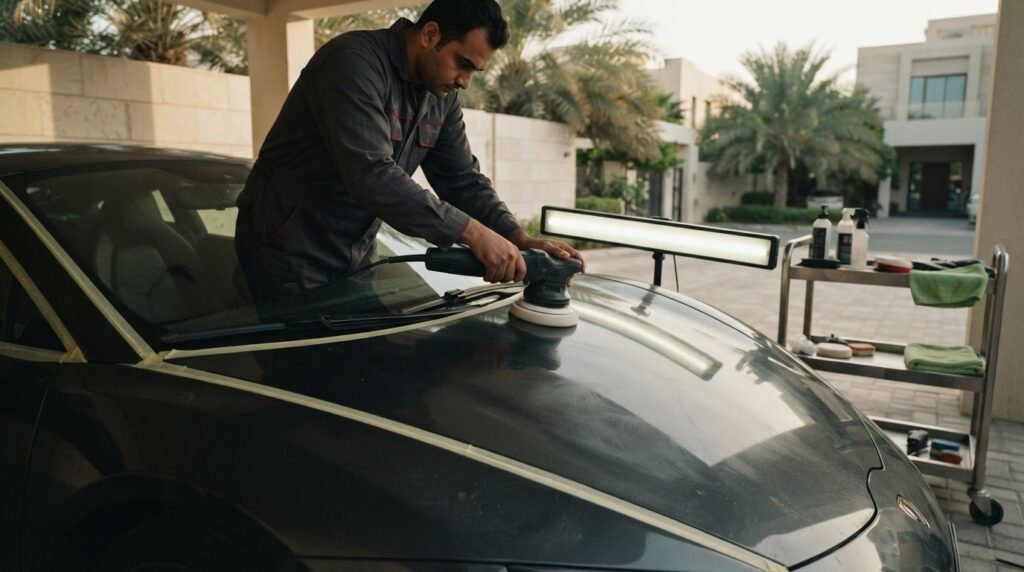
Light sand scratches confined to the clear coat can often be reduced with polishing. Scratches that reach the primer or metal need more than detailing. On-site vehicle paint correction uses machine polishing to refine the existing finish, but the result depends on the marks’ depth and how much paint can be safely corrected.
Regional conditions like heavy sand, dust, and frequent washing can leave a vehicle finish looking dull or covered in fine marks. It’s understandable to want those defects removed without unnecessary repainting. The right correction level depends on the paint’s condition, the type of damage, and the finish you want.
This guide explains what detailing can and can’t fix, what paint correction involves, and which parts of the service can be carried out on site. It also breaks down how pricing is structured for mobile services like those from Vanguard Motors Dubai, including the factors that affect a quote, so you can judge whether a single polish or a more intensive correction is the better fit.
Key Takeaways
- Fine marks and oxidation may respond to polishing, while scratches through to primer or metal need repair beyond detailing.
- Paint correction refines the surface before protection is applied, helping create a cleaner finish for PPF installation.
- Dubai quotes depend on the vehicle’s size, paint condition, defect severity and correction stages involved.
- Paint-thickness measurement helps guide correction and limit unnecessary removal of clear coat.
- Incorrect polishing can leave visible defects or damage the finish, so technique and careful preparation matter.
Does car detailing remove sand scratches in Dubai?
Yes. Detailing can reduce fine sand scratches in the clear coat, as well as swirl marks and oxidation. Scratches that reach the primer or metal need more than polishing.
Fine Scratch and Oxidation Removal
A deep clean and decontamination remove loose grit and bonded residue before machine polishing. This preparation is essential: polishing over trapped particles can create more marks. For example, a dusty bonnet needs a careful wash before a polishing pad touches the paint. Machine polishing then refines the surface, reducing light scratches, oxidation, haze and faded gloss while preserving the clear coat that remains.
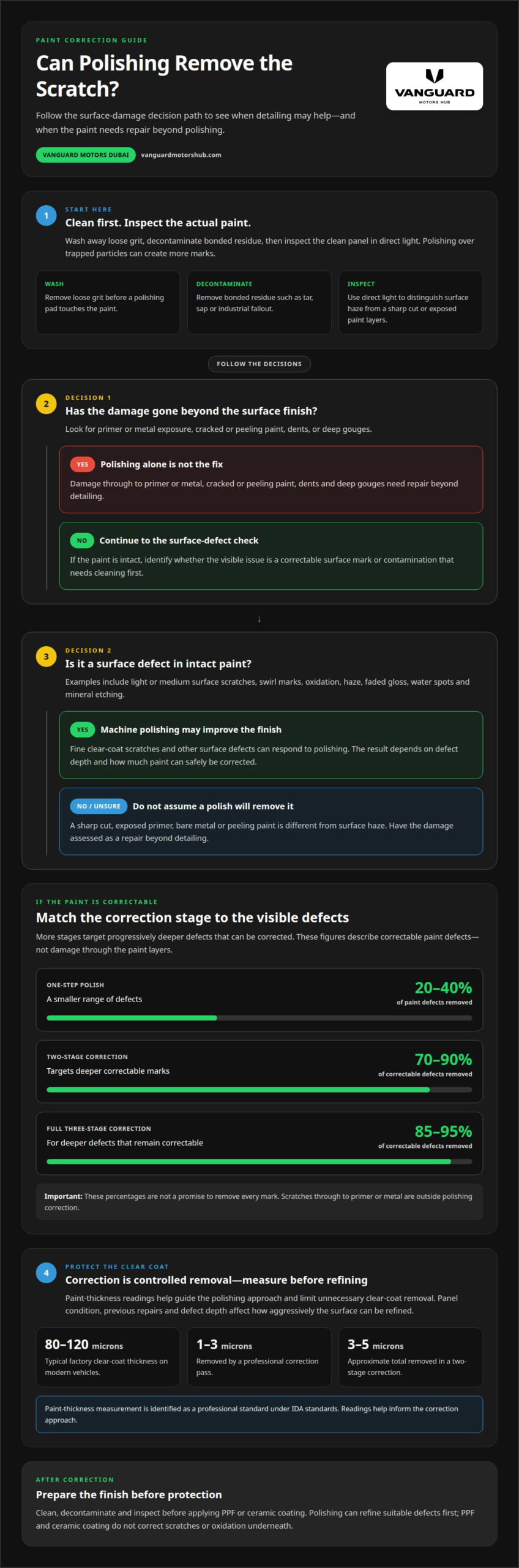
Look at the finish under direct light after cleaning. A cloudy panel with fine marks differs from peeling paint or a deep gouge. One-step polishing removes 20 to 40% of paint defects, while a fuller correction uses additional polishing stages for deeper, correctable defects.
Paint Defects Detailing Can Correct
Exterior detailing can improve swirl marks, light and medium surface scratches, oxidation, haze, faded gloss, water spots and mineral etching. It can also address early bird-dropping marks and bonded tar, sap or industrial fallout. Because these defects affect the surface finish, cleaning and polishing can improve clarity without treating every mark as body damage.
After a deep clean, check the defect’s appearance and location. A cloudy patch, water spot or wash-induced swirl pattern is different from a chip that exposes bare metal. Scratches reaching the primer or metal, cracked or peeling paint, dents and deep gouges need repairs beyond detailing.
Sand Scratch and Swirl Mark Correction
Sand scratches vary in depth. Fine marks within the clear coat can respond to machine polishing; deeper cuts cannot be erased through polishing alone. A two-stage correction removes 70 to 90% of defects on correctable paint, while a full three-stage correction removes 85 to 95%. These figures describe correctable defects, not damage through the paint layers.
Swirl marks often show up as circular lines under direct light, especially on dark paint. Multi-stage polishing can target deeper swirls and scratches than a single polish. Inspect the panels in strong light, then distinguish surface haze from a sharp cut or exposed primer before choosing the correction.
For a sand-marked panel, follow a practical sequence: wash away loose grit, decontaminate bonded residue, then inspect the clean paint in direct light. This helps distinguish removable surface contamination from scratches in the finish. If polishing is appropriate, match the correction stage to the visible defects rather than polishing every panel aggressively.
A bonnet with light wash swirls and faded gloss, for example, may need less correction than a panel with deeper sand marks. A one-step polish addresses a smaller range of defects; two-stage or three-stage work targets progressively deeper marks that can be corrected. The choice also affects how much polishing the paint receives.
- Surface haze, light scratches and swirl marks can be corrected with polishing.
- Water spots, tar and sap call for cleaning or decontamination before polishing.
- Primer exposure, peeling paint or deep gouges need repair beyond detailing.
Where sand and grit are common, preparation is especially important. A clean surface, careful inspection and appropriate polishing stages can improve the finish while preserving intact paint.
What Does Paint Correction Actually Do?
Paint correction uses controlled polishing to refine the clear coat and improve clarity before protective treatment. Preparation matters because PPF or ceramic coating covers the finish; it does not correct the defects underneath.
Paint Preparation Before Protection
Before applying Paint Protection Film (PPF) or ceramic coating, clean, decontaminate and inspect the surface. These steps remove residue and reveal marks that could remain visible beneath the protection. Polishing can then address suitable defects and create a more even finish for the next treatment.
Consider the protection you want and the visible condition of each panel. PPF is a physical film; ceramic coating is a surface treatment. Neither substitutes for correcting scratches or oxidation first. Preparation also reveals existing chips and deeper damage that polishing cannot resolve.
Correction Before Ceramic Coating
Paint correction before ceramic coating focuses on refining the paint before the coating is applied. Polishing can reduce haze, oxidation and fine marks, improving surface clarity. A one-step polish with an all-in-one product produces a 20 to 40% improvement in paint clarity.
After polishing, remove residue so the coating meets a clean surface. Match the correction level to the finish’s condition and your desired appearance. Inspecting each panel in direct light helps distinguish remaining surface defects from deeper damage before treatment.
Safe Paint Removal During Correction
Correction works by refining the clear coat, so preserving its thickness is central to the process. Modern vehicles typically have factory clear coat that is 80 to 120 microns thick. A professional correction pass removes 1 to 3 microns, while a two-stage correction removes approximately 3 to 5 microns in total.
Measuring paint thickness before correction is identified as a professional standard under IDA standards. Readings help show how much paint is present and inform the polishing approach. Panel condition, previous repairs and defect depth all affect how aggressively the surface can be refined.
Think of correction as preparation, not added protection. Polishing improves the finish; PPF or ceramic coating serves a separate protective role. Without a protective layer, new swirl marks and oxidation can develop on corrected paint in Dubai within 6 to 18 months.
For a finish being prepared for PPF or ceramic coating, discuss paint preparation as part of the treatment plan.
Paint-correction package prices in Dubai
Dubai paint-correction quotes reflect the work required, not simply the word “polish” on a package. A one-step service differs from a multi-stage correction, and adding an interior detail or paint protection changes the scope. Compare the listed work and finish goals before judging whether two quotes cover the same treatment.
A paint-correction quote depends on the vehicle’s size, paint condition, defect severity, correction stages and whether detailing is included. A sedan with light haze needs a different process from a large SUV with visible scratches across several panels. The vehicle’s condition is central to the assessment.
Package descriptions help clarify what a quote covers. A standalone machine polish focuses on refining paint, while a full detail may combine exterior correction with interior cleaning. A showroom-style package may include two-stage correction. Read the service description to understand the work included instead of comparing package labels alone.
Across Dubai, drivers should also distinguish paint correction from a car wash. Washing removes dirt; polishing refines the paint surface. A sealant or ceramic treatment may be a separate addition, so note whether the quoted scope includes protection after correction. That distinction matters when comparing a correction-only service with a package that includes further treatment.
Use these steps to assess a quote:
- Identify whether it covers a single polish or multi-stage correction.
- Compare the vehicle size and panels included, such as a sedan’s full exterior versus selected panels.
- Check whether a deep clean, interior detailing or protective treatment forms part of the package.
- Match the proposed work to the visible defects and finish you want.
Correction stages describe the process, not a guaranteed identical result for every vehicle. A one-step polish suits lighter paint refinement; two-stage or three-stage work involves more intensive correction. Paint condition and defect depth determine the appropriate scope. The quote should clearly explain the steps and the defects the work aims to address.
A car with light swirl marks may need a different package from one with deeper, correctable defects and dull paint. A large SUV also has more surface area than a compact sedan. These examples show why vehicle size, condition and correction stages affect the quote; a package name alone does not define the work.
Before choosing, write down the visible concerns: haze, oxidation, water spots or swirl marks. Then compare each proposed package against those specific concerns. If interior cleaning or a sealant matters, include it in the scope comparison. That practical checklist makes Dubai quotes easier to assess on equal terms.
How much paint can safely be removed during paint correction?
Correction removes a small amount of clear coat to refine the finish, so the goal is controlled improvement, not removing every mark. Modern vehicles typically have factory clear coat measuring 80 to 120 microns thick. The remaining thickness matters because clear coat protects the colour layer beneath it.
Understand the Removal Amount
A professional paint correction pass removes 1 to 3 microns of clear coat. A two-stage paint correction removes approximately 3 to 5 microns in total. These figures describe clear-coat removal, not the full thickness of the vehicle’s paint system. They also show why each additional polishing stage needs a clear purpose.
Light haze may need less refinement than deeper swirl marks. If you want a completely mark-free finish, achieving it could require removing more material. The practical aim is to improve visible clarity while retaining as much clear coat as possible. Correction should address defects that can be refined without excessive removal.
Measure Before Polishing
Measuring paint thickness before correction is identified as a professional standard under IDA standards. A gauge reading establishes the panel’s starting thickness before machine polishing and gives the technician a basis for a measured approach, rather than treating every panel as if it had identical paint.
Use inspection to guide the decision. Compare readings across panels, note areas with previous repairs, and consider the measurements alongside visible defects. A repainted door and an original bonnet may not have the same paint build. That makes panel-by-panel assessment more useful than relying on one reading for the entire vehicle.
Balance Defect Removal and Preservation
Correction depth should match the defect and available paint. A two-stage process removes approximately 3 to 5 microns, so choosing it solely to chase every scratch can sacrifice clear coat without proportionate benefit. Marks that reach primer or metal are beyond polishing’s scope; removing more clear coat won’t restore missing paint.
For a panel with light swirls, restrained correction can preserve more material than aggressive polishing. With deeper defects, the choice may be between accepting some visible marks and pursuing more correction. Make that trade-off after measurement and inspection, rather than assuming the most intensive process is automatically best.
Before correction, look for a documented thickness reading and a panel-specific plan. Ask what the intended polishing stages will address, and how the approach preserves clear coat. In Dubai, this measured process matters for vehicles exposed to frequent dust and washing, where repeated correction can gradually reduce available paint.
What are the risks of improper paint correction
Improper correction can leave a vehicle with less clear coat and a worse-looking finish. An overly aggressive pad or compound may cause haze, micro-marring or visible polishing trails. On a dark bonnet, those trails can look like holograms in direct light. The finish may appear glossy indoors but reveal defects clearly in sunlight.
Skipping washing and decontamination creates another risk: grit trapped between a polishing pad and paint can add fresh scratches across a panel. For example, polishing a dusty lower door before removing bonded road residue can spread contamination. A clean surface and suitable pad are essential, not optional finishing details.
Uneven technique can also leave inconsistent clarity. Holding a machine in one spot for too long concentrates heat and friction, while moving too quickly across a curved bumper can leave areas under-corrected. Edges, body lines and repainted panels need careful attention because their paint may respond differently from broad, flat areas.
Improper correction can disguise damage instead of resolving it. Polishing cannot replace paint missing from a chip or repair a scratch that reaches the primer. Repeated passes to chase these defects remove clear coat without restoring the exposed layer. Stop polishing where the damage exceeds what surface correction can address.
- New scratches: grit or residue beneath a pad can mark the paint.
- Haze and trails: an unsuitable finishing step can leave visible machine marks.
- Uneven finish: inconsistent pressure or coverage can leave panels looking different.
- Excess removal: aggressive repeat passes can reduce protective clear coat.
- Unresolved damage: chips and deep gouges remain when polishing cannot reach them safely.
A careful process includes inspection before polishing, clean pads during correction and lighting checks after each stage. Assess the bonnet, door and bumper separately instead of assuming one result represents every panel. Recheck the finish between stages, especially around edges and previous repairs. This helps identify defects early and avoid unnecessary passes over paint that is already refined.
The working area matters for on-site correction. Direct sunlight can make consistent inspection harder, while settling dust can contaminate the surface during polishing. A controlled setup, clean equipment and panel-by-panel inspection help limit these risks. The goal is a refined finish that preserves paint, not maximum defect removal at any cost.
Discuss paint correction and panel condition through a paint correction enquiry before work begins.
Vanguard Motors Dubai: Paint Protection Film (PPF) Installation
Vanguard Motors Dubai installs Paint Protection Film (PPF) for drivers seeking a physical layer against stone chips and abrasion. Paint correction refines existing defects; PPF serves a different purpose by protecting high-impact panels from everyday impacts. Consider PPF after assessing the finish and deciding which areas need added protection.
PPF is one option for preserving painted panels. Colored Sticker Wraps and Peelable Paint Applications offer alternatives for changing a vehicle’s appearance, and the Vanguard Premium Package is another option. The right direction depends on whether your priority is protection, a visual change or both.
For a vehicle protection or finish enquiry, contact Vanguard Motors Dubai or visit Vanguard Motors Dubai.
Choose the Finish You Want to Maintain
Start by defining what matters most: a clearer finish, protection for vulnerable panels or a visual change. That priority helps shape a focused plan instead of treating every surface and concern alike. For on-site vehicle paint correction, consider how you use the vehicle and what you want its finish to look like afterward.
Vanguard Motors Dubai can help you move from paint assessment to a suitable protection or styling option. A clear discussion of your vehicle’s condition and your goals is a practical starting point, whether you want to refine the finish or consider what comes next.
Contact Vanguard Motors Dubai to discuss your vehicle’s finish and next step. With a clear goal, you can make a confident choice and enjoy a finish that feels right for your car.
Frequently Asked Questions
What is on-site vehicle paint correction?
On-site vehicle paint correction is machine polishing carried out where the vehicle is parked, when the work area allows for clean, controlled preparation. It refines suitable paint defects rather than repainting panels. A car with light wash marks, for example, may need a different approach from one with a deep scratch. Correction improves the existing finish; it does not replace missing paint.
What paint defects can mobile paint correction remove?
Mobile correction can reduce suitable surface defects such as swirl marks, light or medium scratches, oxidation, haze, water spots and faded gloss. After proper cleaning, it can also improve early bird-dropping marks. A sharp scratch exposing primer, a stone chip down to bare metal, peeling paint or a deep gouge needs more than polishing. Inspect a clean panel in direct light to distinguish surface marks from deeper damage.
What are the steps in a professional paint correction service?
A professional process typically moves from washing and decontamination to paint inspection, correction and a final finish check. The technician chooses an approach based on the panel’s condition, then assesses the result under suitable lighting. A test area on the bonnet, for example, can help establish how the paint responds before other panels are treated. Protective treatment is a separate finishing choice, not part of correction itself.
How much does mobile vehicle paint correction cost in the UAE?
A quote depends on the vehicle’s size, paint condition, defect severity, correction stages and service scope. A sedan needing limited refinement differs from a large SUV requiring broader, multi-stage work. Compare what each service includes, such as panel coverage and any detailing or protection, rather than relying on the package name alone.
How long does on-site paint correction take?
Time depends on the vehicle and correction level. A one-step polish for a sedan takes 2 to 4 hours; a two-stage correction for a sedan takes 6 to 10 hours. A full three-stage correction can take considerably longer than a simpler polish, depending on the vehicle and its condition. Larger vehicles, extensive defects and additional detailing can affect the overall work plan, so the correction stage is a useful starting point for estimating time.
What equipment and conditions are needed for on-site paint correction?
Paint correction requires a machine polisher, suitable pads and compounds, clean preparation materials and lighting that reveals surface defects. A paint-thickness gauge helps assess panels before polishing. Keep the work area clean and protected from airborne dust, which can become trapped against the paint during machine work. A stable, shaded space also supports consistent inspection and polishing.
Is paint correction different from polishing, waxing, or ceramic coating?
Paint correction uses polishing to refine the existing finish. A basic polish may focus on gloss, while correction targets visible paint defects. Wax adds a surface layer for shine and short-term protection; ceramic coating is a separate protective treatment. Applying a coating will not remove an existing scratch, so surface preparation and correction decisions come first.
Does UAE heat or outdoor dust affect on-site paint correction?
Yes. Hot panels and airborne dust can make on-site work more challenging: heat affects how polishing products behave, while grit can mark the paint if it reaches the pad or panel. A clean, shaded work area supports controlled preparation and inspection. If the car is parked outdoors, check for settled dust before polishing rather than moving straight from parking to correction.