
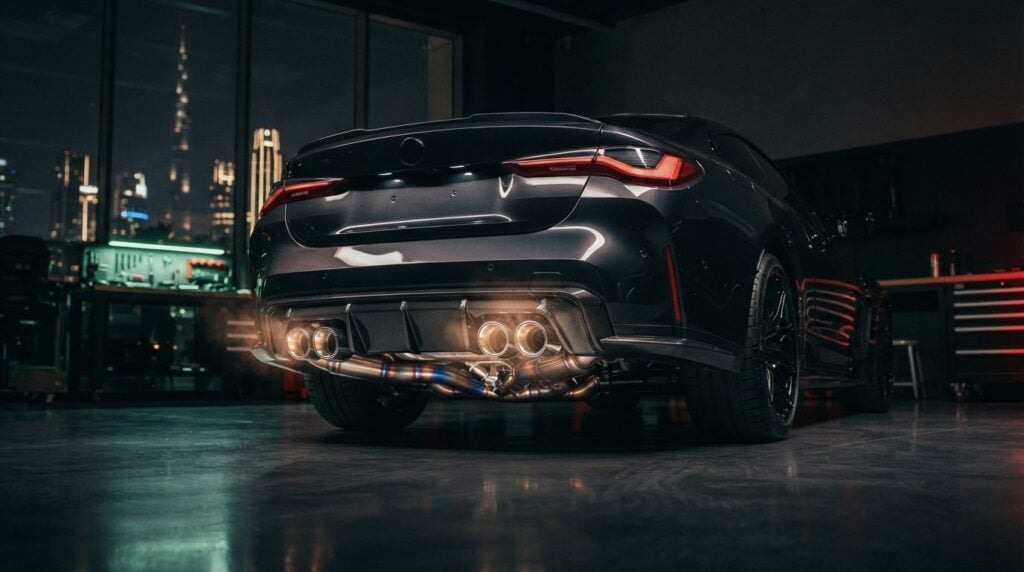
A louder exhaust isn’t automatically a better one. Performance exhaust upgrades for luxury cars should balance exhaust flow, engine character, and the sound you want in everyday driving. If your car has exhaust valves, they can regulate the sound and flow, allowing a quieter setting and a more aggressive note in performance-oriented modes.
It’s understandable to focus on sound first: it’s the most immediate change you notice. But the right setup also depends on whether the engine is turbocharged or naturally aspirated, how the system is designed, and which materials suit the car. A well-matched upgrade complements the vehicle rather than simply making it louder.
This guide explains how exhaust flow can influence turbo response, what titanium and stainless steel offer, and how electronically controlled valves can change the driving experience. It also compares key choices to consider when selecting an exhaust upgrade, helping you weigh sound, performance, and everyday comfort.
Key Takeaways
- Match an exhaust system to the engine type and build goals; a larger setup isn’t automatically the better choice.
- Compare aftermarket options by vehicle fit, sound character, construction, and how they integrate with factory controls.
- Valved systems can offer a quieter sound in some driving situations and a more pronounced note when the valves open.
- Weigh titanium and stainless steel by their material qualities and suitability for the vehicle, not appearance alone.
- For a separate exterior upgrade, Vanguard Motors Dubai offers PPF installation to help protect a luxury car’s finish.
1. Exhaust backpressure, turbo response, and sound
For a turbocharged engine, reducing exhaust backpressure can help the turbo spool faster and reduce turbo lag. Exhaust gas drives the turbine, so the route out of the engine affects how promptly boost builds. The result depends on the complete setup, including pipe diameter, bends, catalysts, silencers, and engine calibration. A freer-flowing exhaust may sharpen response, but it doesn’t guarantee a particular power or torque increase. For a naturally aspirated engine, an exhaust that’s too wide can slow gas flow at low revs and reduce torque.
Sound follows the same airflow path, but louder isn’t the only measure of quality. Pipe dimensions, resonators, silencers, and the engine’s cylinder arrangement shape the exhaust note. A turbocharged car may sound more pronounced after restrictions are reduced, while a naturally aspirated V8 can produce a deeper, more immediate tone. A well-chosen system can make acceleration more engaging without turning every journey into a high-volume driving experience. Sound also contributes to a car’s character and aesthetics, but should suit its everyday use.
Electronically controlled valves offer a practical way to vary the exhaust’s character. When the valves close, exhaust follows a quieter route; when they open in performance-oriented driving modes, the note becomes more aggressive. This lets you choose between a restrained setting for steady cruising and a fuller sound during spirited driving. Valve operation and sound levels depend on the system and vehicle, so assess the result at different engine speeds, not just with a stationary rev.
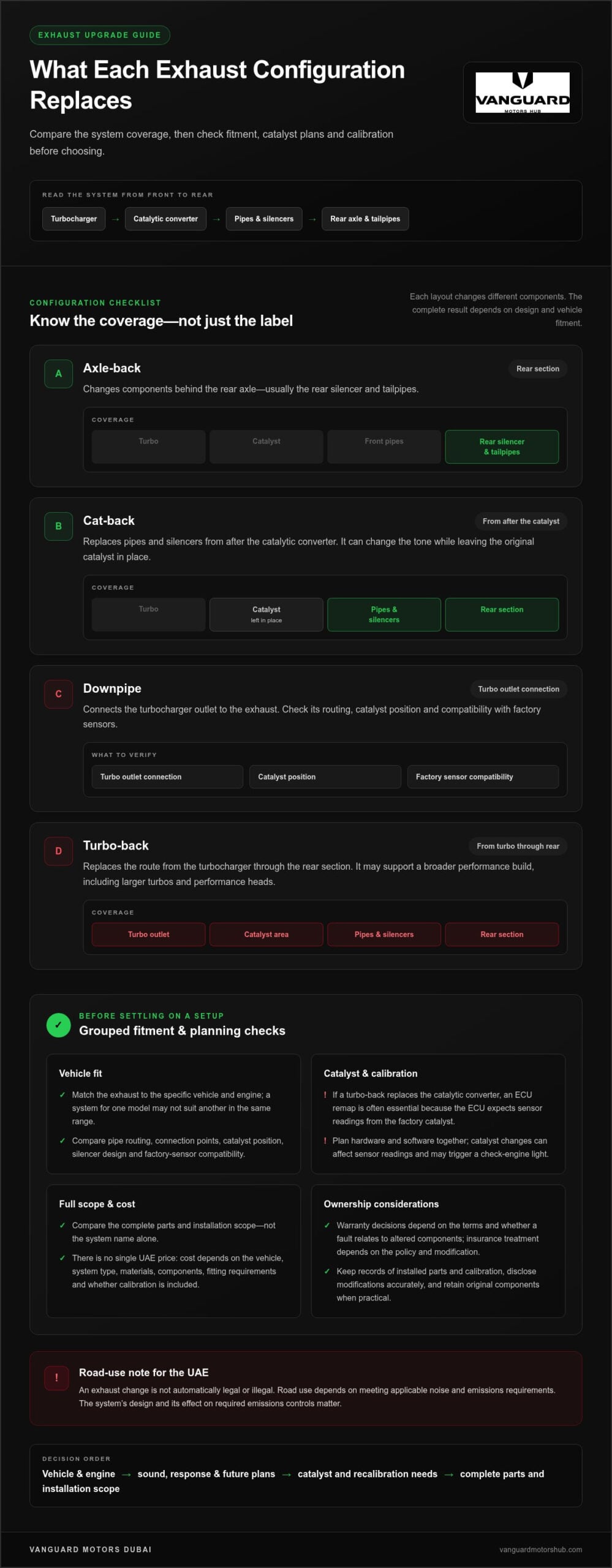
In the UAE, an exhaust change isn’t automatically legal or illegal. Road use depends on whether the fitted system meets applicable noise and emissions requirements. Don’t assume a louder exhaust or a change to emissions equipment is road-compliant simply because it fits the car. The system’s design and its effect on required emissions controls matter.
There are trade-offs. Poorly matched pipe sizing can weaken low-rev torque, while an unsuitable resonator and silencer combination can create drone at highway speeds. Exhaust changes involving a catalytic converter can also affect sensor readings and trigger a check-engine light. When replacing a catalytic converter, an ECU remap is often essential because factory calibration expects the original catalyst’s sensor readings. Before choosing a setup, identify the engine type, desired sound, and driving conditions, then match the exhaust design to those priorities.
2. High-performance exhaust systems
Choose an exhaust by deciding how much of the factory system to replace. An axle-back changes components behind the rear axle, usually the rear silencer and tailpipes. A cat-back starts after the catalytic converter and replaces the pipes and silencers from that point. A downpipe connects the turbocharger outlet to the exhaust; a turbo-back system replaces the route from the turbocharger through the rear section. Each configuration changes different components, so the name alone doesn’t tell you the result.
For a luxury vehicle, fitment matters as much as system layout. An exhaust designed for one engine or model may not suit another, even within the same vehicle range. Compare pipe routing, connection points, catalyst position, silencer design, and compatibility with factory sensors. A cat-back can change the tone while leaving the original catalytic converter in place. A turbo-back reaches farther upstream and may support a broader performance build, including larger turbos and performance heads.
That distinction matters when planning a remap. If a turbo-back installation replaces the catalytic converter, a remap is often essential because the engine control unit expects sensor readings from the factory catalyst. Changing those readings can affect how the system operates. A properly matched calibration can account for the installed components, so plan the exhaust hardware and software as one package, not as unrelated upgrades.
There isn’t a single UAE price for a luxury-car exhaust system. The amount depends on the vehicle, system type, materials, components, fitting requirements, and whether calibration is included. A price is provided after a quote request. A cat-back and a turbo-back involve different parts and work, so compare the complete configuration rather than the system label alone.
An exhaust modification can also affect warranty coverage, insurance, and resale. Warranty decisions depend on the terms and whether a fault relates to altered components; insurance treatment depends on the policy and modification. For resale, keep records of the installed parts and any calibration, since a future buyer may want to know what changed. Disclose modifications accurately and retain the original components when practical.
To narrow the choice, start with the vehicle and engine, then set priorities for sound, response, and future modifications. Next, identify whether the factory catalyst will remain and whether the ECU needs recalibration. Finally, compare the full parts and installation scope. If you’re weighing an exhaust configuration for your vehicle, you can discuss exhaust system choices with a specialist.
3. Titanium and stainless-steel exhaust materials
Material affects an exhaust system’s weight, durability, construction, and appearance. Titanium and stainless steel are valued for their light weight and durability, but neither material name alone tells you how a complete system will perform. Compare the material used in the pipes with the construction of joints, silencers, and tips. A stainless system with carefully made connections may suit a different build from a titanium system chosen primarily to reduce weight.
High-grade stainless steel is commonly used for performance exhaust parts and pipes. By contrast, factory systems generally use aluminized steel or lower-grade stainless steel, which can corrode and rust over time. That makes material grade worth considering for a luxury car driven regularly in the UAE. Climate and vehicle use are part of the ownership context, but material selection should still match the system’s fitment and construction rather than rely on a broad durability claim.
Titanium offers a lightweight option, while stainless steel is a familiar choice for exhaust pipes and components. The right combination depends on the vehicle and the priorities for the build. For example, a driver focused on reducing system weight can compare titanium construction; someone prioritizing a stainless setup can examine its grade and joint quality. Carbon tips are another finish option, but the tips alone don’t establish the material used throughout the exhaust.
- Titanium: Consider it when low weight and durability are priorities for the system.
- Stainless steel: Compare the grade used in pipes and other performance components.
- Carbon tips: Treat these as a finish choice, distinct from the exhaust’s pipe material.
Construction deserves equal attention. Exhaust joints and hangers face movement and repeated use, so alignment and installation matter alongside material. Properly welded joints and correct installation help reduce corrosion and rust issues. When comparing systems, look beyond a brand’s material headline: check which sections use titanium or stainless steel, how the parts join, and whether the layout matches the vehicle. A premium label cannot replace compatible components and sound workmanship.
Use a simple comparison before choosing: identify the vehicle and exhaust layout, note the material of each major section, then assess joints, tips, and fitment as a complete system. Consider how the chosen material supports your priorities for weight, durability, and appearance. This makes brand comparisons more meaningful, since two systems may use different material combinations for the same vehicle application. Consider tuning and other engine changes as part of the overall build, rather than assuming material alone determines the result. Material choice may support a performance-focused setup, but it doesn’t promise an increase in horsepower or a noticeable change in response.
4. Electronically controlled exhaust valves
Electronically controlled exhaust valves let a vehicle vary exhaust flow and sound using movable flaps. Mercedes-AMG Performance Exhaust Systems use these valves to regulate both. In a quieter setting, the valve position directs exhaust through a more subdued path. In performance-oriented driving modes, the valves open to produce a more aggressive note. The sound changes immediately, but that doesn’t mean the engine has gained horsepower or torque.
The control strategy is part of the experience. You select a mode, and the vehicle’s electronics operate the valves according to the system’s programming. This links sound to the car’s driving settings rather than relying on a separate manual adjustment. For enthusiasts, that flexibility can make one exhaust suitable for different situations: a restrained tone during a quiet departure, then a sharper note in a sportier mode.
Valve design matters as much as the electronic command. The flaps, actuators, wiring, and exhaust passages must work together within the vehicle’s layout. A valve that doesn’t move or seal correctly can compromise the intended sound variation. When comparing systems, identify how the valves are controlled, which driving modes operate them, and whether the exhaust retains the vehicle’s expected controls. These details help distinguish an integrated system from one that simply adds a louder note.
- Mode response: Confirm how the selected driving mode changes valve operation and exhaust sound.
- Control integration: Consider how the system interacts with the vehicle’s electronics.
- Sound range: Compare the quieter setting with the open-valve note, not just a stationary rev.
- System purpose: Separate sound adjustment from changes to engine output or tuning.
For UAE driving, think about where you’ll use each sound setting. A quiet mode can suit departures and steady cruising, while an open-valve setting can enhance a more spirited drive. Listen for the transition at different engine speeds, because a parked demonstration may sound different from driving under load. Also consider cabin resonance: a strong exterior note may become tiring if it creates unwanted drone inside the car on a long journey.
Electronic valves give you a choice of sound, not control over every aspect of performance. Their effect on airflow depends on the exhaust design and valve position; horsepower, torque, and response also depend on the engine and complete system. Judge a premium setup by its control behavior, fitment, sound range, and integration. With performance exhaust upgrades for luxury cars, that balance can deliver an adaptable character without treating maximum volume as the only goal.
5. Aftermarket exhaust brand comparisons
A brand comparison is useful only when it starts with the exact vehicle and engine. Exhaust manufacturers build systems for specific applications, and products from the same brand can differ in layout, materials, sound, and controls. Compare complete configurations, not logos or claims of a more aggressive tone. A system designed for one Mercedes-Benz model may not fit another with a different engine or chassis.
Which brands make systems for popular luxury models? Fitment varies by model, so a brand name alone can’t identify a suitable system. The Mercedes-AMG Performance Exhaust System is a named factory example with electronically controlled valves; compare aftermarket options against the exact vehicle application and equipment.
Start by comparing how much of the exhaust system each option covers. One aftermarket option may replace only the rear section, while another changes more of the exhaust route. These formats affect which factory components remain, the installation scope, and whether catalyst-related calibration becomes relevant. A cat-back and a turbo-back aren’t interchangeable just because both promise to transform sound or support spirited driving. Match each system’s stated configuration to the car’s existing hardware.
Next, compare construction details. Stainless steel is commonly used in performance exhaust pipes, while titanium is another lightweight option. Check which parts use each material, how the sections connect, and whether the system includes valve control. A polished tip can change the appearance, but it doesn’t establish the material or performance of the pipes behind it. Check what the complete system includes, from the downpipe connection to the rear silencer.
Sound claims also need context. A brand’s sound sample may feature a particular engine, valve setting, and recording environment. Compare like with like: the same vehicle, similar engine speed, and matching valve position. A deep idle note doesn’t show how a system behaves during acceleration or steady cruising. For UAE road use, include sound and emissions compliance in your comparison rather than treating maximum volume as the main measure.
Use a practical shortlist: confirm vehicle and engine fitment, identify which factory components are replaced, compare materials and valve controls, then review calibration needs. Finally, weigh the sound character against daily driving and the rest of the build. This method makes brand comparisons more useful than choosing by reputation alone. To discuss an exhaust configuration for your vehicle, compare exhaust options for your car.
Mercedes-AMG is the named factory example, with its Performance Exhaust System. Compare aftermarket systems against the exact vehicle application.
Vanguard Motors Dubai: Paint Protection Film (PPF) Installation
Vanguard Motors Dubai offers Paint Protection Film (PPF) Installation for owners who want to complement mechanical upgrades with care for the vehicle’s exterior. After choosing an exhaust for sound and response, you may also be considering the car’s appearance and paint protection. PPF addresses that separate goal. Colored Sticker Wraps and Peelable Paint Applications offer further ways to change the vehicle’s appearance, while the Vanguard Premium Package is another option.
Choose PPF when exterior paint protection is part of your ownership priorities, rather than as a substitute for exhaust work. For details about PPF or other appearance options, contact Vanguard Motors Dubai or visit vanguardmotorshub.com.
Build a Setup That Fits Your Drive
Before selecting performance exhaust upgrades for luxury cars, turn your preferences into a clear brief. Note how you use the vehicle, the sound character you want, and whether you want factory controls to remain part of the experience. This gives the installation discussion a practical starting point and keeps the focus on how the car should feel in daily use, not just how it sounds in a demonstration.
Think of the vehicle as a complete ownership project, too. A mechanical change can affect the character of the drive, while exterior choices shape how the car looks. Set those priorities together, then decide which work belongs in the current plan and which can wait. A considered sequence helps keep the result cohesive.
For a conversation about your vehicle’s customization priorities, contact Vanguard Motors Dubai. Bring your preferred sound and driving goals to the discussion, and take the next step toward a setup that feels distinctly yours.
Frequently Asked Questions
What about cars with exhaust valves?
Exhaust valves let a car switch between sound settings, but their controls vary by system. One setup may link valve movement to the selected driving mode, while another uses a separate control. Before choosing, consider which setting you’ll use for daily driving and whether you want to retain the factory controls. Valve operation changes the exhaust sound and flow path; it doesn’t, by itself, establish a horsepower gain.
What difference does the width of an exhaust make?
Pipe width affects how exhaust gas moves, so selecting the largest diameter isn’t automatically the best choice. An oversized exhaust can slow flow at low engine speeds in a naturally aspirated car, reducing low-rev torque. A turbocharged engine has different flow demands. Compare pipe sizing with the engine, turbo setup, and other exhaust components. The goal is a diameter matched to the vehicle, not a dramatic measurement chosen for appearance.
What do resonated and non-resonated mean?
A resonated exhaust includes a resonator designed to shape or reduce certain sound frequencies. A non-resonated version omits that component, often producing a sharper, louder note. The difference may be subtle at one engine speed and more noticeable under acceleration. If you drive on UAE highways, consider how the exhaust sounds inside the cabin at a steady speed, not just during a brief rev.
What performance exhaust upgrades are available for luxury cars?
Common choices include axle-back, cat-back, downpipe, turbo-back, and valved systems. Each changes a different part of the exhaust route or offers adjustable sound. A rear-section upgrade may suit an owner focused on tone, while a broader system may form part of a larger engine build. Fitment depends on the exact vehicle application, so identify the model and engine before comparing configurations.
How do cat-back, axle-back, and full exhaust systems compare for luxury cars?
An axle-back replaces components behind the rear axle, while a cat-back covers the route after the catalytic converter. A full system replaces more of the exhaust path, potentially including the downpipe. That wider scope can affect more factory components and may involve calibration considerations. Compare which parts remain in place, how the system connects, and whether the configuration suits the vehicle’s existing hardware.
What horsepower, torque, and sound gains do performance exhaust upgrades provide?
Output changes depend on the engine, exhaust layout, and related tuning, so one figure doesn’t apply to every luxury car. A market example reports around 10 BHP from a cat-back system on the Fiesta ST180, but that isn’t a prediction for another model. Sound changes are often easier to perceive; horsepower and torque depend on how the complete system works with the engine.
How do stainless steel and titanium exhaust systems compare in weight, durability, and price?
Titanium and stainless steel are both used in lightweight, durable performance systems, while high-grade stainless steel is common in exhaust pipes. Compare the material across the full system, not just the visible tips. For an exhaust project, the price depends on the vehicle, material, system coverage, valves, and installation scope, and is provided after a quote request. Construction and fitment matter alongside material choice.
How do I choose a compatible performance exhaust for a specific luxury car model?
Start with the exact model, engine, and exhaust configuration, then match those details to the system’s stated vehicle application. Check connection points, retained factory components, sensor compatibility, and whether existing valves or controls remain integrated. If the build includes a downpipe or catalyst change, include the ECU and emissions equipment in the planning. A system that fits the model name but not its engine configuration isn’t a precise match.