
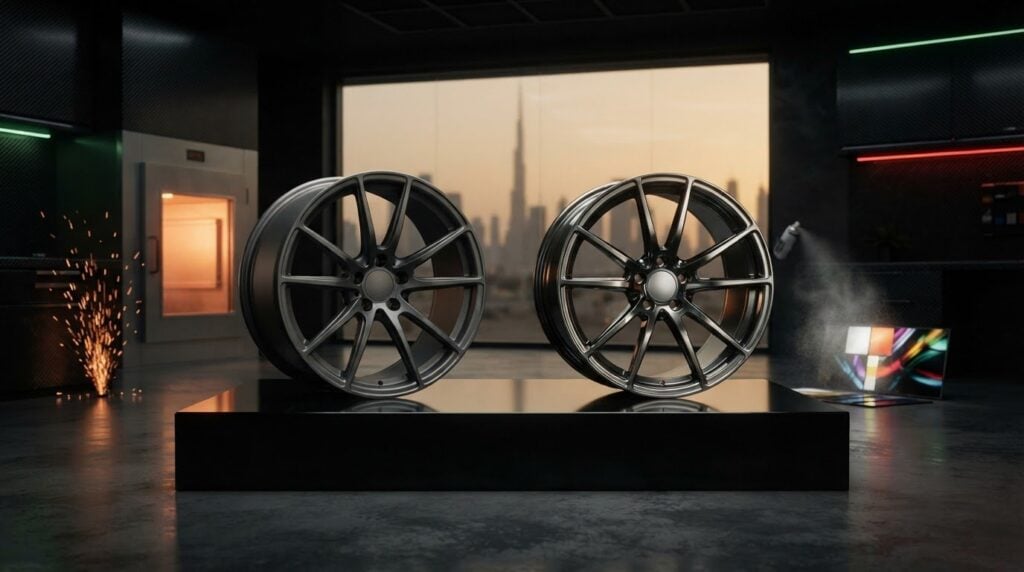
The most flawless, high-gloss wheel finish on the showroom floor can quickly turn into your biggest frustration after a single season of aggressive driving. When evaluating powder coat vs spray paint wheels, you aren’t merely selecting an aesthetic shade; you’re deciding how your vehicle withstands extreme brake heat, corrosive road grime, and flying debris.
Nothing compromises a vehicle’s stance faster than flaking clear coats or brake dust permanently etched into soft lacquer. At the same time, conflicting opinions surrounding thermal curing leave many drivers questioning whether high-temp baking ovens might degrade the structural integrity of their forged alloys. Balancing pristine color matching with durable, daily-driven resilience shouldn’t feel like a compromise.
You deserve absolute clarity before committing your alloys to a visual overhaul. In this definitive guide, you’ll discover the critical differences in coating thickness, chemical resistance, and finish customization to pinpoint the ideal refinishing method for your setup. Here is how specialized powder applications and liquid spray techniques truly measure up under intense driving conditions.
Key Takeaways
- Explore the core functional trade-offs of powder coat vs spray paint wheels to match your vehicle’s mechanical demands and aesthetic goals.
- Understand how electrostatic bonding delivers heavy-duty chip protection, while precision spray systems unlock hyper-accurate color matching and exotic effects.
- Learn why strict temperature control during thermal curing cycles is crucial to preserving the structural integrity and metallurgy of high-performance alloy wheels.
- Follow a definitive evaluation framework that pairs driving conditions, maintenance expectations, and exterior styling packages to your ideal refinishing process.
- Discover advanced post-cure protective measures, such as ceramic coatings, that shield newly restored wheels against high-friction brake dust and road debris.
The Wheel Refinishing Dilemma: Powder Coat vs Spray Paint Wheels
Your wheels endure a harsher operating environment than any other painted surface on your vehicle. Unlike body panels that primarily face wind and rain, alloy wheels confront sustained heat cycling, hot metallic brake dust, and constant road debris impacts. Choosing between powder coat vs spray paint wheels determines how your running gear withstands this physical abuse over thousands of miles.
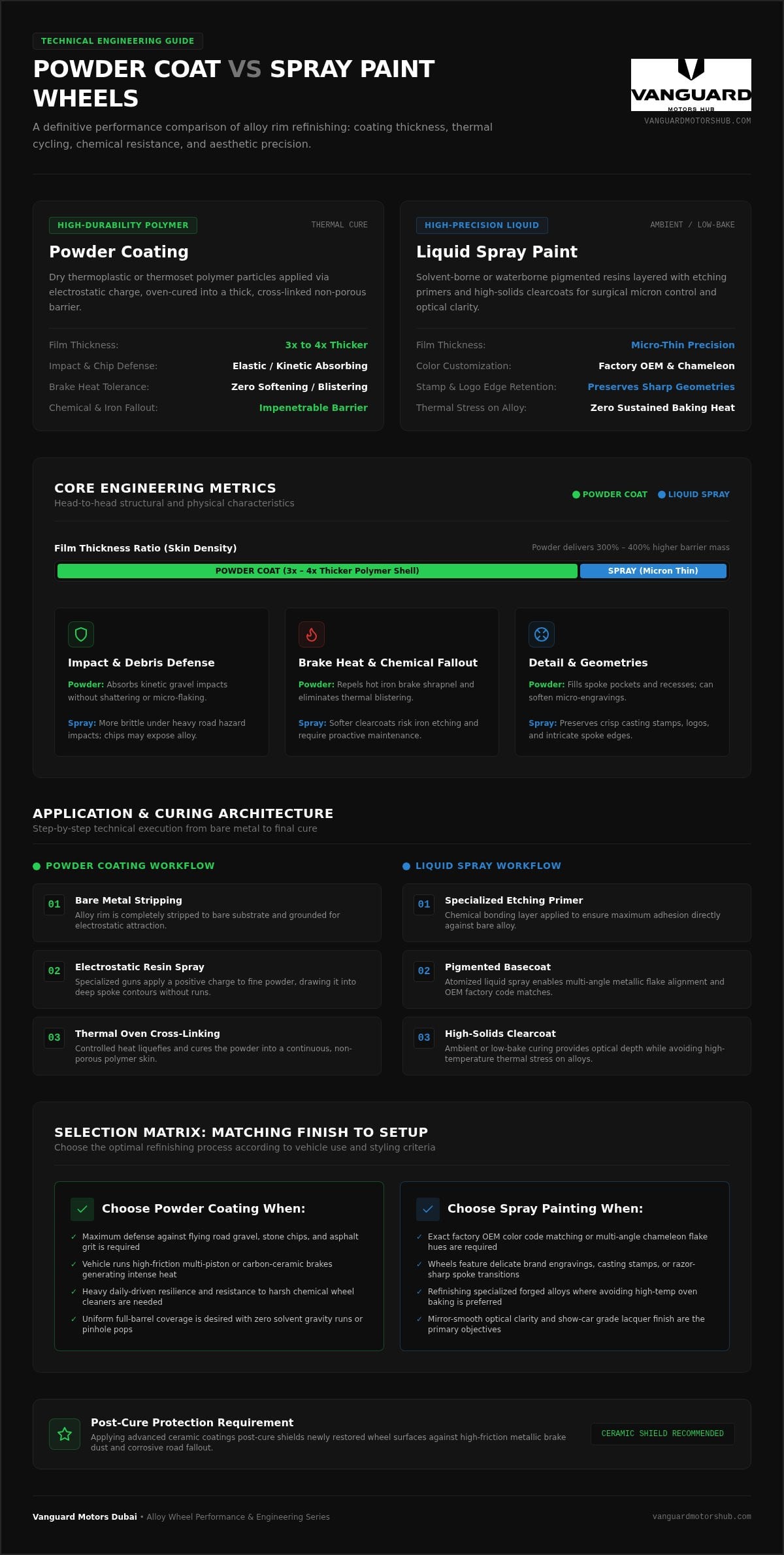
Every refinishing project balances three physical characteristics: tensile film strength, structural flexibility, and surface leveling. Powder coating relies on dry thermoplastic or thermoset polymer particles applied with an electrostatic charge and cured under thermal heat. Liquid automotive paint relies on solvent-borne or waterborne pigmented resins applied wet, curing through chemical cross-linking and carrier evaporation. Both deliver visual transformations, yet their chemical bonds behave differently under stress.
Understanding the Powder Coating Process for Alloy Rims
The industrial powder coating process starts with bare metal. Specialized guns impart a positive electrostatic charge to fine resin powder, spraying it toward a grounded aluminum wheel. This charge draws the particles uniformly into complex spoke pockets, lug recesses, and barrel contours. Once coated, the wheel enters a specialized oven. The powder liquefies, flows, and cross-links into a non-porous skin around 3 to 4 times thicker than traditional wet coatings. Because it uses no liquid solvents, this method completely prevents gravity runs, pinhole solvent pops, and thin coverage along sharp casting edges.
The Anatomy of Professional Automotive Wheel Spray Painting
Liquid wheel paint offers surgical precision. The multi-stage application utilizes specialized etching primers for bare alloy adhesion, pigmented basecoats for depth, and robust high-solids clearcoats for environmental defense. Technicians control the thickness down to individual microns:
- Crisp Edge Retention: Micro-thin films preserve crisp factory casting stamps, engraved wheel brand logos, and sharp spoke transitions without rounding off intricate geometries.
- Advanced Visual Effects: Liquid atomization permits multi-angle metallic flake alignment, high-contrast chameleon hues, and factory OEM color code matches.
- Controlled Thermal Exposure: Ambient or low-bake curing cycles completely avoid exposing high-performance alloys to sustained thermal stress.
Liquid finishes deliver mirror-smooth optical clarity, yet they lack the sheer impact resistance of dense polymer shells. Matching the right approach requires weighing your vehicle’s mechanical demands against your styling goals.
Head-to-Head Comparison: Durability, Heat Resistance, and Aesthetics
Performance driving exposes your running gear to violent kinetic impacts and extreme thermal friction. Settling the powder coat vs spray paint wheels debate requires analyzing how each coating handles mechanical force, corrosive heat, and aesthetic detailing over years of road exposure.
Mechanical Toughness and Road Hazard Defense
Powder coating forms an elastic, high-density shield around the alloy. Because the polymer shell cures at significant film thickness, it absorbs kinetic energy from flying road gravel, stone chips, and asphalt grit without shattering. Liquid spray paint, while resilient when layered with modern high-solids clearcoats, remains more brittle under heavy impact. High-velocity road debris can chip thin paint layers down to the bare alloy, initiating moisture creep and micro-flaking over time.
Thermal Cycling and Chemical Resistance
Hard braking converts kinetic momentum into intense thermal energy. High-performance multi-piston calipers and carbon-ceramic setups routinely radiate extreme temperatures directly into wheel barrels and spokes. Powder coatings handle these intense thermal cycles with zero risk of softening, yellowing, or thermal blister.
Corrosive brake dust presents an even harsher threat. Hot metallic iron shrapnel embeds easily into softer paint finishes, reacting with moisture to cause permanent chemical etching. Fully cross-linked powder finishes provide an impenetrable barrier that repels aggressive iron fallout and harsh wheel cleaners. Professional refinishing facilities operating under strict spray painting safety standards utilize advanced two-pack (2K) catalyzed clears to bolster chemical defense, but basic spray paints degrade rapidly under acid-based wheel brighteners.
Visual Appeal: Gloss Depth, Texture, and Color Variety
Liquid paint remains the undisputed benchmark for optical perfection and intricate color depth. A skilled painter can replicate exact factory color codes, dial in subtle metallic flake orientation, or create multi-tone spoke accents with zero surface texture. Powder coating technology has evolved with ultra-smooth gloss and satin sheens, but complex multi-color masking still heavily favors liquid techniques.
If your build demands concourse-level mirror gloss or factory paint code alignment, consider exploring tailored finish options. You can connect with our alloy customization team to determine whether high-durability polymers or bespoke liquid paints best elevate your vehicle’s stance.
Metallurgy and Surface Preparation: Crucial Safety Considerations
Flawless wheel aesthetics mean nothing if the refinishing process compromises structural safety. When weighing powder coat vs spray paint wheels, understanding metal behavior under heat and friction is critical. Wheel alloys carry immense structural loads, making proper workshop protocols the difference between reliable performance and alloy failure.
Heat Curing Risks: Forged vs Cast Aluminum Alloy Wheels
Baking cycles demand strict temperature discipline. Premium forged wheels rely on aerospace-grade 6061-T6 aluminum, an alloy artificially aged through precise thermal processing. Exposing forged wheels to uncontrolled oven curing around 400°F for extended durations risks over-aging the alloy, which degrades tensile yield strength. Cast wheels tolerate heat variations better, but their microscopic porosity requires pre-baking, known as outgassing. Skipping outgassing causes trapped air inside the porous casting to vent through the liquifying powder, creating ugly pinholes and surface craters. In contrast, automotive spray paints cure under ambient or low-bake conditions, entirely bypassing metallurgical thermal risks.
Stripping and Profiling the Substrate
Adhesion relies on surface preparation rather than topcoat chemistry. Safe, repeatable refinishing follows strict mechanical steps:
- Chemical Immersion: Neutral pH chemical dip tanks strip aged factory powder and clearcoats cleanly without pitting delicate alloy surfaces.
- Specialized Media Blasting: Blasting with crushed walnut shells or fine glass beads establishes an anchor profile without stripping metal off crisp spoke edges. Aggressive steel shot must never touch alloy wheels.
- Pre-Treatment Decontamination: Silane conversion coatings and chemical degreasers neutralize microscopic contaminants to prevent subsurface oxidation.
Touch-Up Feasibility and Curb Damage Restoration
Real-world driving eventually brings curb contact. Repairing scraped wheel lips alongside comprehensive cosmetic car repair differs fundamentally depending on the underlying coating system. Spray-painted wheels excel at targeted localized fixes. A technician can sand down curb rash, feather the transition, blend basecoat into the surrounding area, and spot-clear the repair without disturbing the entire wheel.
Powder-coated wheels do not offer localized blending. Attempting to melt fresh powder over an existing cured polymer creates visible witness lines and poor cross-coat adhesion. Repairing curb rash on powder coat properly requires stripping the entire rim to bare alloy and re-baking the complete wheel. For minor daily abrasions, specialized liquid touch-up pens offer a cosmetic stopgap, but true structural refinishing requires a complete reset.
Decision Framework: Selecting the Right Finish for Your Vehicle
Choosing between powder coat vs spray paint wheels comes down to how your car lives. A daily commuter taking brutal highway gravel needs a completely different coating than a low-mileage supercar bound for judged shows. Use this four-step decision matrix to match your refinishing method directly to your driving profile.
- Evaluate Duty Cycle and Operating Stress: Calculate the physical punishment your wheels endure. Daily drivers, fleet haulers, and performance track builds with aggressive semi-metallic pads demand heavy-duty polymer shells. Concourse vehicles and garage-kept performance cars thrive under precision liquid clearcoats.
- Define the Visual Ambition: Pinpoint your finish requirements. If you want factory satin bronze, stealth matte black, or heavy industrial gloss, modern powders perform exceptionally well. If your build calls for color-matched body panels, multi-tone diamond-cut accents, candy pearls, or metallic flake orientation, liquid paint is the required medium.
- Calculate Maintenance Commitment: Consider your cleaning habits. Drivers who wash their cars infrequently need the chemical resilience of powder to stop baked-in brake dust. Enthusiasts who perform meticulous two-bucket hand washes can maintain high-end liquid clears without premature micro-marring.
- Weigh Turnaround Timelines: Balance vehicle downtime against process depth. A full chemical dip, media blast, and thermal oven cycle takes several days of methodical workshop execution. Localized liquid paint repairs can often be completed faster for quick cosmetic turnaround.
Matching Finish to Vehicle Application and Driving Conditions
High-mileage road use demands the thick, elastomeric armor of powder coating. It deflects flying asphalt chunks, resists salt brine, and repels harsh tire cleaners effortlessly. Conversely, rare vintage classics and exotic cast wheels benefit from spray paint. Liquid coatings preserve ultra-fine casting numbers on rare magnesium or alloy faces, avoiding the film buildup that can soften sharp edges.
Turnaround Time, Project Complexity, and Custom Aesthetics
Hybrid workflows often solve complex customization challenges. On high-end multi-piece split rims, powder coating the inner barrels delivers impenetrable brake dust and rock chip defense, while wet-painting the outer faces unlocks limitless bespoke color palettes. Satin and matte finishes remain widely favored for contemporary styling, both delivering clean reflections across multi-spoke faces.
Ready to upgrade your stance with flawless surface execution? Consult our wheel customization specialists to map out your bespoke wheel color change or rim repaint package today.
Maximizing Wheel Longevity: Professional Finishing and Protection
Deciding between powder coat vs spray paint wheels is only half the battle; flawless execution and post-cure preservation dictate true longevity. Even the most resilient polymer formulation will fail prematurely if applied over contaminated aluminum or cured inconsistently. Lasting showroom perfection demands an elite workshop environment paired with disciplined maintenance habits.
The Value of Precision Facility Refinishing
Wheel refinishing requires strict environmental control. Positive-pressure spray booths filter airborne particulates to keep dust nibs and lint out of wet clearcoats. In thermal curing ovens, calibrated sensors track alloy substrate temperatures directly, ensuring complete polymer cross-linking while safeguarding structural temper.
Precision masking is equally critical. Experienced technicians mask hub mounting faces, center bores, and conical lug seats before applying coatings. Paint buildup on wheel mating surfaces can cause uneven wheel seating or loose lug hardware at highway speeds. Following coating application, comprehensive balancing verification guarantees smooth, vibration-free rotation under high-load cornering.
Post-Refinish Defense and Advanced Detailing
Once your rim repaint or alloy colour change cures, post-refinish protection seals the surface against daily road hazards:
- High-Temperature Ceramic Coatings: Specialized ceramic formulas bond to the topcoat, creating a slick hydrophobic shield that prevents red-hot brake dust from embedding into clear resin.
- Comprehensive Aesthetic Integration: Pairing fresh wheel coatings with multi-stage supercar detailing unifies the entire vehicle profile, matching rim gloss with protected paintwork.
- pH-Neutral Maintenance Wash Routines: Aggressive acid wheel brighteners strip protective sealants and cloud clearcoats. Clean your wheels using dedicated pH-balanced wheel shampoos and ultra-soft microfiber barrel wands.
Elevating your running gear transforms the entire attitude of your vehicle. Whether selecting high-durability polymer shells or mirror-finish liquid clears, scheduling a professional wheel finishing consultation ensures your bespoke alloy styling performs flawlessly across every mile.
Elevate Your Wheels with Precision Engineering and Flawless Style
Navigating the choice between powder coat vs spray paint wheels comes down to prioritizing structural defense or tailored optical depth. Electrostatic polymer shells provide relentless impact and chemical resistance for hard-driven vehicles. High-solids liquid paint delivers surgical color matching and pristine gloss for bespoke styling builds. When executed with rigorous thermal monitoring and meticulous surface preparation, either method completely revitalizes your vehicle’s stance while safeguarding its underlying metallurgy.
Vanguard Motors brings uncompromising craftsmanship to every transformation inside our advanced multi-stage wheel refinishing facility. From luxury and supercar fitments to delicate forged alloy restorations, our specialists ensure your running gear receives elite care and comprehensive aesthetic integration, including high-heat ceramic protection. Upgrade your wheels with bespoke finishes at Vanguard Motors and give your vehicle the bold road presence it commands.
Frequently Asked Questions
Is powder coating really more durable than spray painting on alloy wheels?
Yes, powder coating is significantly more durable against kinetic impacts and heavy chemical exposure. Because electrostatic application creates a cross-linked polymer layer up to four times thicker than liquid paint, it resists flying gravel, stone chips, and corrosive road grime far better. While high-solids spray paint offers respectable resilience, it chips more easily under aggressive highway conditions. In the debate of powder coat vs spray paint wheels, powder coating remains the undisputed benchmark for long-term daily endurance.
Will the heat from powder coat ovens weaken or damage forged aluminum wheels?
Uncontrolled oven heat can weaken forged aluminum, but professional temperature control eliminates this risk entirely. Forged wheels rely on heat-treated 6061-T6 alloy, which can lose structural yield strength if baked past its critical aging threshold. Professional facilities utilize calibrated sensors to keep curing temperatures strictly below 400°F and monitor bake durations closely. Cast wheels withstand thermal cycles more forgivingly, though they require meticulous outgassing to prevent bubbles.
Can you touch up or spot-repair a scratched powder-coated wheel?
True spot-repair isn’t feasible on powder-coated rims because fresh powder cannot seamlessly blend or re-flow over an existing cured polymer shell. Fixing localized curb rash or deep gouges requires completely stripping the wheel to bare alloy and applying a full re-bake. For quick cosmetic cover-ups, high-grade liquid paint touch-up pens can mask minor scuffs, but structural restoration demands a complete strip and recoat process.
Which finish provides a better gloss: powder coat or automotive spray paint?
Automotive spray paint delivers superior optical gloss depth and mirror-like reflection. Liquid clears level out flat with virtually zero surface texture, allowing metallics, pearls, and candy pigments to pop with crisp visual definition. Powder coating technology now achieves impressive high-gloss and satin sheens, yet it can occasionally display subtle orange peel. If your project prioritizes concourse-level reflection or exact factory body matching, liquid paint remains unmatched.
How do high-performance brake dust and track heat affect painted versus powder-coated rims?
Red-hot metallic brake dust and aggressive track heat degrade spray paint much faster than powder coat. High-performance calipers radiate intense heat that can soften or discolor standard clearcoats, allowing iron shrapnel to embed into the resin permanently. Powder coating tolerates extreme thermal cycling without blistering. Its dense chemical matrix prevents iron fallout from etching, making baked-on dust much easier to rinse off after spirited sessions.
Can multi-piece split rim wheels be powder coated safely?
Yes, but multi-piece split rims must be completely disassembled before powder coating. Coating a fully assembled multi-piece wheel bridges hardware bolts and destroys internal silicone sealing gaskets during the oven bake cycle. Professional refinishers separate the rim lips, inner barrels, and center faces. Barrels can be powder coated for ultimate debris defense, while intricate center faces are either powder coated or custom spray painted before reassembly and resealing.
How should I clean and maintain my wheels after a fresh color change?
Clean freshly finished wheels using dedicated pH-neutral wheel shampoos and plush microfiber barrel brushes. Avoid harsh acidic cleaners, caustic degreasers, or stiff bristle brushes that cause micro-marring on new clear finishes. When assessing powder coat vs spray paint wheels, applying a high-temperature ceramic coating after the initial cure creates a slick hydrophobic shield. This barrier repels brake dust effortlessly, allowing you to wash wheels with basic pressure rinsing.