
A car modification may affect vehicle warranty coverage if a claimed failure is directly attributable to that modification. Protecting your investment in car customizations means considering both the installation’s warranty and the vehicle manufacturer’s separate warranty.
It’s reasonable to expect a carefully chosen upgrade to protect your car or reflect your taste, and to want clear answers if something goes wrong. The key considerations are the type of customization, the quality of the work, the supplier’s warranty terms and how the change may affect future buyers.
This guide explains how paint protection film and other automotive films can help preserve your car’s finish, why extensive modifications may not return their full cost at resale, and what to know about customization and supplier warranties. It also shows how documenting professionally completed work can make a modification easier to explain when you sell.
Key Takeaways
- Choose paint protection based on the areas most exposed to chips, scratches and sun, and keep installation and warranty records.
- Don’t assume customization costs will be recovered at resale; extensive or highly personal changes can narrow the pool of interested buyers.
- Before modifying a financed or leased vehicle, understand how the agreement treats alterations and returning the car to its original condition.
- Use credible suppliers and suitable parts, and consider manufacturer approval when a modification could affect the vehicle warranty.
- Keep modification warranty terms separate from the vehicle warranty: a claim may be affected when the failure is directly attributable to the modification.
1. Paint sealants, paint protection film and ceramic coatings
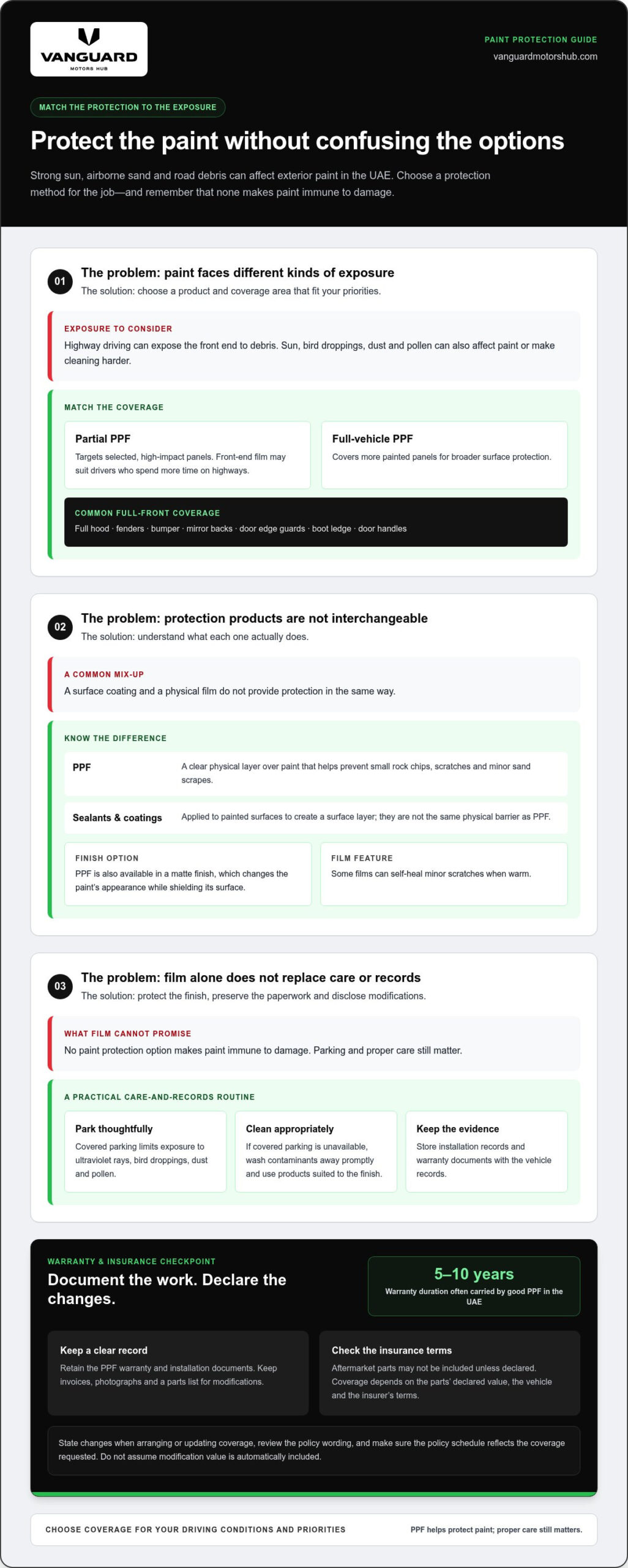
Paint protection starts with matching the product to the vehicle’s finish and exposure. Paint sealants and ceramic coatings are applied to painted surfaces, while paint protection film (PPF) adds a physical layer. In the UAE, strong sun, airborne sand and road debris can affect exterior paint, and each option serves a different role. None makes paint immune to damage, so proper care and parking still matter.
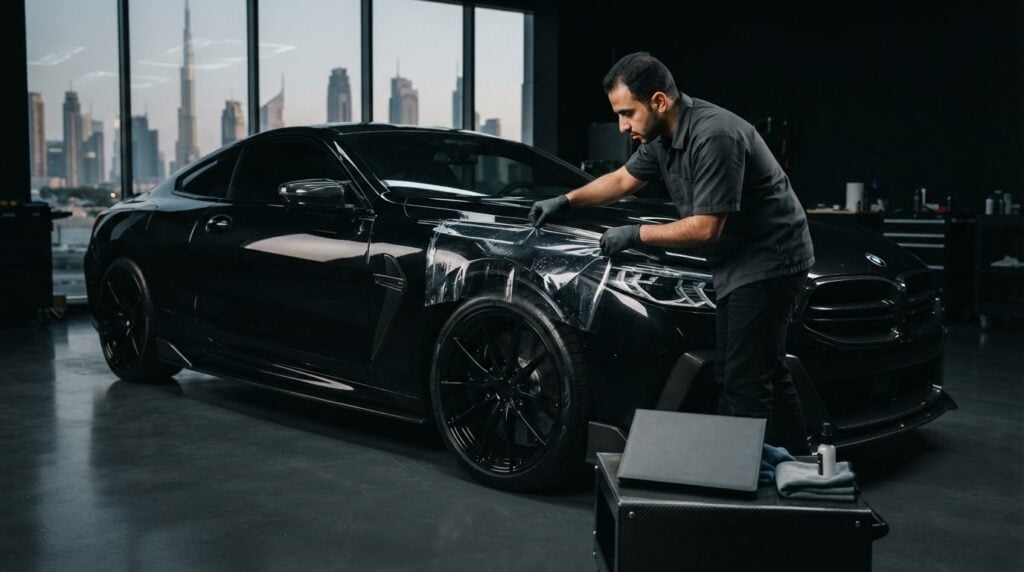
PPF is a clear film applied over paint to help prevent small rock chips, scratches and minor sand scrapes. Some films can self-heal minor scratches when warm. A partial installation can target high-impact areas, while full-vehicle coverage protects more painted panels. Common full-front coverage includes the full hood, fenders, bumper, mirror backs, door edge guards, boot ledge and door handles. Good PPF for cars in the UAE often carries a warranty lasting 5 to 10 years.
Choose coverage based on your driving conditions and priorities. If you spend more time on highways, film on the front end may help protect the areas debris hits first. Full-vehicle film covers more surface area, while partial coverage protects selected panels. PPF is also available in a matte finish, which changes the paint’s appearance while shielding its surface. Keep the warranty and installation documents with the vehicle records.
Covered parking is a simple daily step that limits exposure to ultraviolet rays, bird droppings, dust and pollen, which can affect paint or make cleaning harder. If covered parking isn’t available, wash contaminants away promptly and use products suited to the finish. Don’t treat film, sealant and ceramic coating as interchangeable: PPF is a physical barrier, while coatings and sealants create a surface layer.
Coverage for aftermarket parts depends on their declared value, the vehicle and the insurer’s terms. The premium reflects what is insured and the selected limit, so document the parts rather than assume their value is included.
Standard auto insurance doesn’t necessarily include undeclared modifications. State each change when arranging or updating coverage, and review the policy wording to understand how aftermarket parts are treated.
Set custom-car coverage limits based on the documented value of the vehicle and its modifications. Keep invoices, installation records, photographs and a parts list, then make sure the policy schedule reflects the coverage requested.
To protect modifications from theft, damage and wear, park in a covered, secure location, retain proof of installation and clean protected surfaces correctly. Performance upgrades, custom wheels and conspicuous exterior changes can affect premiums or make insurance harder to arrange because they change repair costs, vehicle value or risk.
2. Potential impact on resale value
A customization can improve a car’s appearance or suit its owner’s driving preferences, but resale value is a separate calculation. Extensive modifications may narrow the pool of potential buyers, and owners shouldn’t expect to recover what they spent. A car’s book value may also remain unchanged after modifications, even if the work involved substantial investment. The likely buyer’s preferences matter as much as the quality of the work.
Consider the next owner before committing to permanent changes. A custom exhaust, distinctive wheel colour or highly personal interior may appeal to one buyer, while others may prefer a vehicle closer to factory specification. Protecting your investment in car customizations means weighing that trade-off before choosing a highly individual upgrade. Reversible changes preserve more options when selling, especially if a future buyer prefers the original look.
Financing and leasing add another consideration. A lender may prohibit major modifications while the vehicle secures loan repayments because changes could reduce resale value. Finance terms can also determine whether alterations are allowed while the loan remains unpaid. If a lender retains the vehicle ownership certificate, major modifications may require changes to that document and contact with the bank.
For a leased vehicle, avoid irreversible work if you plan to return it. The car may need to be restored to its original condition, or you may be charged restoration costs. For a financed car, remember that repossession after missed payments can also mean losing modifications installed on the vehicle. Review the agreement before authorising a major change, and keep a copy of any relevant written approval.
To document and value customizations for an insurance claim, keep itemised invoices, installation records and clear photographs taken before and after the work. Record each part’s make, model and condition, then declare the modifications so the policy can reflect the coverage requested. Organised proof helps distinguish added equipment from factory-standard features.
Build a useful file as each upgrade is completed. For example, keep the invoice for a wheel colour change with photographs showing all four wheels, the vehicle registration details and the installation date. Add later repair receipts and updated images if the modification changes. These records also help explain the work to a prospective buyer reviewing the vehicle’s history.
Before listing the car, organise your records and describe modifications accurately. State which changes are reversible and include evidence of professional installation where available. Protecting your investment in car customizations also means presenting a transparent record, so buyers can assess the actual work rather than rely on broad claims. Clear documentation supports the conversation, though it doesn’t guarantee a higher sale price.
If a wheel refresh is part of your resale preparation, discuss rim repaint or alloy repair as a focused cosmetic update.
3. Benefits of automotive films
Automotive films protect surfaces from different kinds of exposure. Paint protection film sits on exterior paint, while window film is applied to glass. For a UAE vehicle, choose based on whether your priority is preserving painted panels or limiting ultraviolet exposure through the windows. These are distinct applications, not interchangeable products.
Paint protection film can help preserve a car’s original paint and resale value by reducing the need for costly touch-ups or repaints. That matters when a buyer compares a vehicle with intact factory paint to one with visibly repaired panels. Before installation, photograph the paint and note existing marks. Keep the installation record with the vehicle’s maintenance documents to show which areas received film.
Ceramic window tint can block up to 99% of UV rays. This can reduce ultraviolet exposure through treated glass, an important consideration for vehicles regularly parked or driven under strong UAE sun. The percentage describes UV blocking, not a promise that every interior surface will remain unchanged. Film selection and correct application still matter.
Signal compatibility is another practical benefit. Ceramic window tint doesn’t interfere with signals from GPS devices, cell phones, radios or other electronics. Drivers can use navigation and communication equipment without the interference concerns associated with some window-film materials. If your vehicle relies on a dashboard GPS or phone connection, ceramic tint offers this specific advantage.
Think about how each film supports ownership over time. For example, a driver focused on maintaining exterior paint may prioritise PPF on vulnerable panels, while someone seeking UV reduction may consider ceramic tint for the windows. Keep the product and installation details together. A future buyer can then understand what was fitted and why, rather than guess from the film’s appearance.
Films also make vehicle care more targeted. After a dusty drive, clean treated surfaces with products suited to the film, and avoid abrasive tools that could mark the finish. For window film, use a soft cloth and follow its care instructions. These simple steps protect the material and help maintain a neat appearance during ownership and resale.
For resale, focus on visible condition and records rather than assuming film automatically adds a fixed amount to the asking price. A clean, well-documented vehicle gives prospective buyers clearer evidence of care. Compare the film’s coverage with the areas shown in your installation documents, then accurately disclose the work when preparing the vehicle for sale.
Providing complete documentation offers a clearer basis for judging its condition and records. If a car has been modified, have a trusted automotive contact check its history before purchase. Treat that check as one part of deciding whether the vehicle suits your needs. You can consider the modification history alongside the visible condition and the film and installation details already available. Avoid assuming that the presence of film alone settles questions about the car. A careful review keeps the decision centered on the specific vehicle and the information you can assess.
4. Choosing credible modification suppliers
A supplier’s workmanship and parts affect reliability, warranty discussions and future resale. Engine performance changes must comply with applicable RTA regulations to remain safe and legal. Choose a supplier who understands the vehicle, explains the proposed work clearly and provides records to keep with its service history.
Start with the part itself. Parts from companies with suitable certifications are recommended for vehicle modifications, as are modifications completed by credible local companies. Ask for the part’s manufacturer and specification in writing. For example, an exhaust change should be documented with the components installed, not described only as a general performance upgrade.
Manufacturer approval can help you avoid losing the vehicle’s warranty. Before work begins, find out whether the proposed modification has manufacturer approval and keep any related written confirmation. This matters especially for engine or drivetrain changes, where a later fault may be assessed in relation to the altered component.
Keep a clear project record from the first discussion through handover. Store the quote, parts list, installation invoice, warranty terms and final photographs together. Record the vehicle identification details and work date on those documents. If the supplier later replaces a component or adjusts the installation, add that record too.
Performance modifications deserve particular care. Have them completed by experts and ensure the work follows local rules. An engine change can affect performance, fuel requirements and how the vehicle behaves on the road. The installer should explain the scope of the change and identify the altered components, so future servicing doesn’t rely on guesswork.
Before approving work, compare the written scope with the vehicle you’ll receive. A useful handover record identifies the fitted part, completed work and any maintenance guidance. Keep removed original components where practical, especially if the change can be reversed. That can preserve options for a future owner who prefers the factory configuration.
For a Chinese vehicle, choose a supplier familiar with the specific make and model rather than relying on a generic parts description. Compatibility affects fit, function and the quality of the finished installation. Ask for the exact components and work to be listed on the paperwork, then store those records with the vehicle’s existing maintenance history.
Treat compliance and quality as separate checks. A polished finish doesn’t establish that a performance modification follows RTA regulations, and suitable parts don’t replace careful installation. A disciplined supplier selection process supports safer driving, clearer warranty conversations and a more transparent record when the vehicle changes hands.
Treat compliance and expertise as inseparable: have performance modifications completed by experts and ensure they follow local rules. These are essential parts of the work, not optional finishing details.
5. Customization warranties
A customization warranty and the vehicle manufacturer’s warranty are separate protections. The modification warranty covers only the work or parts described in its terms. The manufacturer’s warranty may be affected if a claimed failure is directly attributable to a modification. For example, an engine change linked to an engine fault may raise different questions from an unrelated paint issue.
Read the written terms before approving the work. Identify which parts and labour are covered, how to report a fault and what exclusions apply. Keep the signed document, invoice and installation record together. If a custom exhaust is installed, make sure the paperwork identifies the work and components instead of using only a broad description such as “performance upgrade.”
Yes, modifications can affect vehicle inspection or registration if they make the vehicle non-compliant or change relevant recorded details. Engine modifications must comply with applicable RTA regulations. A vehicle deemed illegal after modifications may need restoration and retesting at an approved vehicle testing station before it can be driven again.
For a warranty claim, connect the fault to the relevant coverage. Note when the issue appeared, which system was affected and whether the modified component was involved. Provide dated photographs, service records and invoices. Document a fault in an unrelated system just as clearly, so the claim can be assessed against the actual work performed.
To insure custom parts and equipment, declare each modification to the insurer and provide itemised invoices, installation documents and photographs. State the parts’ value and identify the coverage limit requested. Keep the policy schedule with your records, then compare its listed modifications with the equipment installed on the vehicle.
Insurance and warranty records serve different purposes. An insurance schedule describes the agreed coverage, while a supplier’s warranty sets out repair obligations for specified parts or installation work. For example, a custom wheel claim could involve the insurer’s coverage terms, the wheel supplier’s warranty and evidence of installation. Keep each document accessible rather than assume one replaces another.
Before any change, save the vehicle’s current service and warranty documents. After installation, add the new paperwork and update the modification list used for insurance. This simple sequence creates a traceable record from the original configuration through later repairs. If you’re planning an exhaust change, discuss your exhaust modification and its documentation needs.
Vanguard Motors Dubai: Paint Protection Film (PPF) Installation
Vanguard Motors Dubai installs Paint Protection Film (PPF) for owners seeking a physical layer over their vehicle’s paint. It’s a practical option for protecting exposed panels from small chips and minor surface marks while keeping the original finish visible. Choose coverage according to the areas you most want to protect and how you use the car.
For a different exterior look, Vanguard Motors Dubai also offers Colored Sticker Wraps and Peelable Paint Applications. The Vanguard Premium Package is another option for drivers considering vehicle protection and customization together. Keep installation paperwork with the car’s service records to support future maintenance and resale conversations.
To discuss PPF or another suitable finish for your vehicle, contact Vanguard Motors Dubai.
Shape Your Next Customization With Resale in Mind
Decide what you want the vehicle to communicate and what you want to preserve for its next owner. A considered plan for protecting your investment in car customizations balances personal style with clean execution, clear records and changes that suit how you use the car. This makes each choice more intentional, from a subtle finish update to a distinctive transformation.
For exterior protection, Vanguard Motors Dubai offers Paint Protection Film (PPF) Installation. Colored Sticker Wraps and Peelable Paint Applications offer ways to change the vehicle’s appearance. Choose based on your priorities: protecting the finish, changing the look or combining both goals. Keep the intended outcome in focus and make the modification part of a broader ownership plan.
When you’re ready to discuss a finish or protection approach for your vehicle, contact Vanguard Motors Dubai. Make your next upgrade with purpose and enjoy a vehicle that reflects your vision.
Frequently Asked Questions
Are Your Installations Covered by Warranties?
Yes, Vanguard Motors Hub states that its warranty-backed work covers peeling, yellowing, bubbling and cracking, backed by Vanguard and the material manufacturers. Read the warranty terms for the specific installation and keep the paperwork with your vehicle records. For example, if film begins bubbling, dated photos and the installation document can help identify the affected area and support a warranty discussion.
Why Customize and Protect Your Vehicle Right Away?
Protecting a vehicle early can limit exposure before everyday driving leaves marks or wear. For example, arranging paint protection soon after a repaint helps preserve the finish before new chips or scratches appear. Early planning also lets you choose a modification that suits how you use the vehicle, rather than correcting damage or changing direction later. Consider the look you want, the areas most exposed and how long you plan to keep the car.
How do you choose a reputable customization shop and protect yourself with a written contract?
Use a written agreement that identifies the exact work, materials, vehicle details, warranty coverage and exclusions. Vanguard Motors Hub uses XPEL, 3M, Hexis and STEK materials, and its installers hold manufacturer certifications. Before work starts, make sure the paperwork matches the agreed scope. At handover, compare the completed installation with that scope and retain the invoice, warranty document and any care instructions alongside the vehicle’s service records.