

A performance modification isn’t automatically permanent, but it may not be easy to reverse. The most useful questions to ask your car customizer clarify what can return to factory condition, which original parts will be retained, and how the change may affect road use.
It’s reasonable to want a distinctive look or sharper performance without avoidable complications later. A discussion before work begins can help you understand the trade-offs, compare options, and choose changes that suit your car and how you use it in the UAE.
This guide covers reversible performance changes, custom seats and interiors, paint and finish options, road legality, and exterior upgrades. Use these practical prompts before approving a project to clarify its scope, materials, compatibility, and intended result.
Key Takeaways
- Ask which performance changes can be reversed and how the work could affect warranty or service-contract coverage.
- Discuss how custom seats, steering wheels, and audio upgrades will fit your vehicle and preserve essential safety features.
- Compare paint, wraps, decals, and paint protection by their finish, coverage, preparation needs, and project scope before reviewing a quote.
- Clarify how each modification may affect vehicle safety and compliance with UAE road requirements before approving the work.
- For body kits and exterior upgrades, discuss fitment, compatibility, and the finished look so the changes work as a cohesive design.
1. Are Performance Changes Permanent Or Reversible?
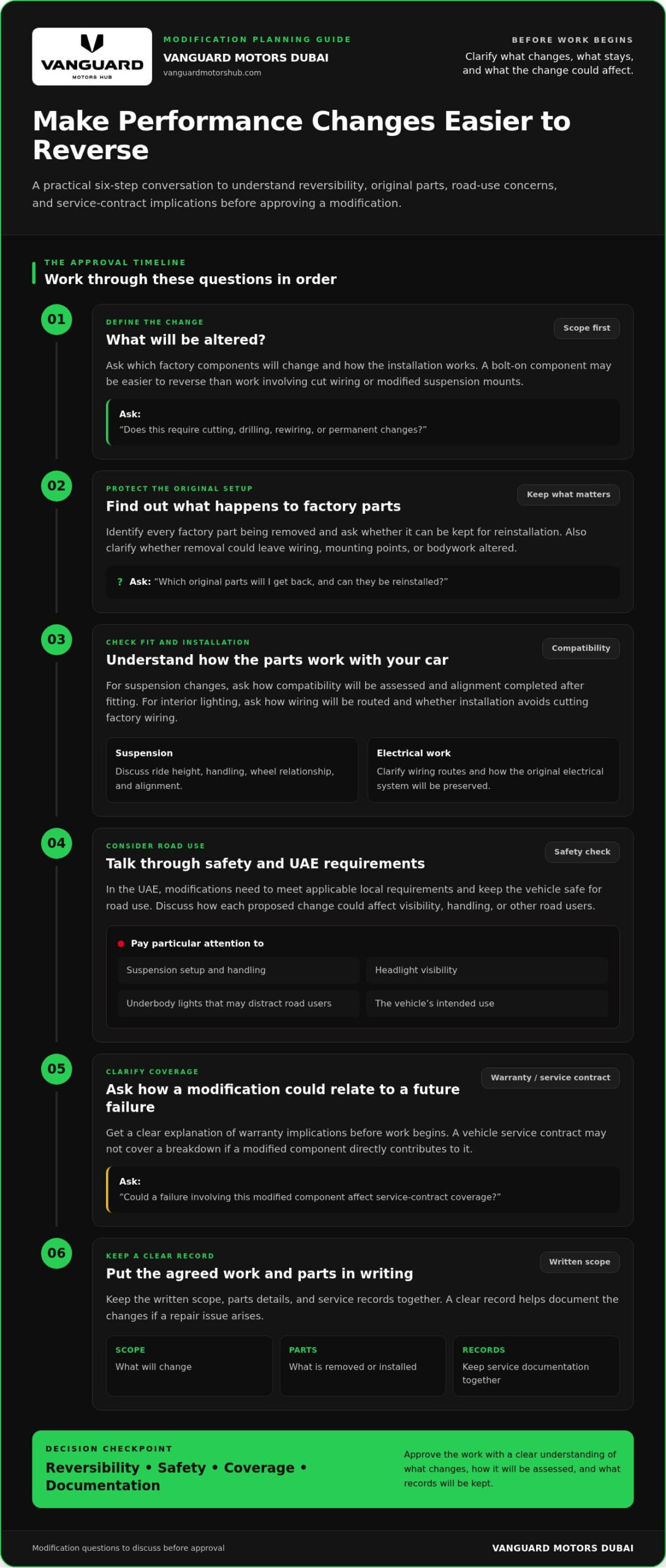
Some vehicle modifications can be removed; others alter factory components or require permanent installation. Before approving an upgrade, ask what will change, which original parts you’ll get back, and whether removal will leave wiring, mounting points, or bodywork altered. For example, a bolt-on component may be easier to reverse than a change that involves cut wiring or modified suspension mounts.
Ask for a clear explanation of warranty implications before work begins. A vehicle service contract may not cover a breakdown if a modified component directly contributes to it. Ask how the proposed change could relate to future failures and whether removed factory parts can be retained. Keep the written scope, parts details, and service records together. They help document the changes if a repair issue arises.
In the UAE, modifications are legal when they meet applicable local requirements and keep the vehicle safe for road use. Changes that affect visibility, handling, or other road users can create safety and legal concerns, so discuss the specific effect of each proposed modification before approving it.
Suspension changes need particular care. An upgrade can affect ride height, handling, and the vehicle’s relationship with its wheels. Ask how compatibility will be assessed and alignment completed after fitting. Lowering a car too far or using unsuitable springs can impair road handling; lifted off-road suspension also needs to suit the vehicle’s intended use. Ask how alignment and the finished setup will be assessed.
Lighting deserves the same scrutiny. Ask whether added or altered lights could reduce visibility or distract other drivers. Headlights that impair visibility and underbody LEDs that distract road users can raise safety concerns and attract attention on the road. For interior lighting, ask how the wiring will be routed and whether installation avoids cutting factory wiring. This matters if you want to remove the change later without disturbing the original electrical system.
Use these questions to make reversibility and risk concrete:
- Which factory parts will be removed, and can they be kept for reinstallation?
- Does the installation require cutting, drilling, rewiring, or permanent changes?
- How will suspension alignment and handling be assessed after the work?
- Could a failure involving the modified component affect service-contract coverage?
These questions to ask your car customizer help distinguish a removable enhancement from a lasting change. They also create a clearer record of the work, its intended use, and the factors that could affect safety or coverage.
2. Custom seats, steering wheels and audio systems
Cabin upgrades should suit your driving position, vehicle layout, and preferred aesthetic. For custom seats, ask about upholstery material, stitching, seat shape, and compatibility with factory controls. Model-specific seat covers can help airbags deploy correctly, so clarify how the design accommodates your vehicle’s airbag system.
For a steering wheel rewrap or cover, discuss the material, grip, thickness, and how the finish will follow the wheel’s contours. Ask whether the work changes access to controls or affects the airbag. For example, will a thicker covering interfere with paddle shifters or buttons on your wheel?
Audio upgrades need a precise scope, too. Identify the components being replaced or added, such as speakers, an amplifier, or a head unit. Ask how the new system will work with factory controls and whether installation involves cutting trim or altering wiring. For a clean result, establish where components will sit and how visible wiring will be managed.
Name the proposed materials, parts, and brands in the written specification. Ask for the exact upholstery material, wheel dimensions, audio component models, and exhaust parts proposed for your vehicle. Compare equivalent scopes, not different packages. An accurate quote describes the labour, parts, vehicle configuration, and project scope. The expected schedule also depends on the selected parts, installation steps, and any custom fabrication, so request it alongside the scope.
Aftermarket wheels can sharpen a car’s stance, but fitment matters more than appearance alone. Staying close to original-equipment wheel and tire sizing, while using the correct load ratings, helps keep an upgrade practical. Ask how the proposed wheel width and offset suit your vehicle and whether the tire size remains compatible with its setup. After installation, inspect tire wear and clearance during normal use.
Custom exhaust systems also need a clear specification. Ask which components will change, how the finished sound and appearance will differ, and what installation work the quote covers. A written scope for an exhaust modification helps you understand the proposed work before authorizing it.
For a useful comparison, give each estimate the same vehicle details and requested parts. Then compare the itemized scope, materials, labour, timeline, and terms. The quote and contract should identify the work, parts, agreed cost, payment schedule, timing, and how changes to the scope will be handled. Keep both documents with your vehicle records.
If your plans include an exhaust upgrade, you can discuss custom exhaust modification as part of the project scope.
3. How Much Does A Custom Paint Job Typically Cost?
There isn’t one useful price for every custom finish. A full repaint, colour change, small repair, and vinyl decals involve different materials and preparation. The price depends on the project and is provided after a quote request. Key factors include the vehicle’s condition, coverage area, finish, preparation, and bodywork. Define your desired result before comparing estimates, such as restoring the original colour or creating a contrasting exterior.
Paint preparation can shape the scope as much as the visible colour. Existing scratches, dents, peeling paint, and previous repairs may need attention before a new finish is applied. Ask which preparation steps are included, whether damaged areas need repair, and how the estimate changes if hidden defects appear during the work. A quote for one panel isn’t directly comparable with a full-body colour change.
Vinyl decals and coloured wraps offer a different option from repainting. They can add graphics or change the visible colour without applying a conventional paint finish. Ask which panels will be covered, how edges and complex curves will be finished, and what removal involves. Paint protection film has a different purpose: it helps protect painted surfaces. Clarify the intended coverage and how it differs from a decorative wrap.
For a custom paint project, request a written breakdown of the finish and work included. Metallic, matte, or multi-tone effects involve different application choices. Confirm whether door jambs, trim removal, blending, and clear coating are included in the agreed scope. These details affect how complete the transformation looks, especially with doors open or panels viewed in daylight.
Bodywork can add work before painting begins. Repairing a dent and repainting its panel, for example, is different from correcting damage across several panels. Ask whether the estimate separates repair and paint work, and how the proposed finish will blend with adjacent areas. If your vehicle needs smart repair rather than a full repaint, compare the scope with the size and location of the defect.
Wheels and body kits also change the final appearance, but they’re separate from a paint job. Changing wheel colour may require preparation and repainting; a body kit may need fitting work before its painted components can be finished. Ask for a separate scope for each item, so an exterior upgrade doesn’t obscure what the paint estimate covers.
When assessing a customizer’s reviews, certifications, and previous work, look for project examples with finishes similar to yours and reviews that mention workmanship and communication. A certification is relevant only if its stated scope applies to the work you’re considering.
Before deciding, compare estimates with matching coverage, preparation, finish, and repair scope. Ask for the exact colour or finish description, the panels included, and any exclusions in writing. This helps you weigh a paint refresh against wraps, decals, or protection, while keeping clear what will change from the original finish.
4. Safety and road legality
A modification can alter how a vehicle handles, how clearly others see it, or how well its safety systems work. Before approving work, consider a practical road-use example for each proposed change: lowering suspension may affect handling, while bright lighting may distract other drivers. Assess major modifications against local requirements and vehicle safety.
Do car modifications in the UAE need RTA or police approval? There isn’t one approval rule for every change. Whether approval or inspection applies depends on the modification and relevant local requirements, so establish the applicable process before work begins.
For an engine or exhaust change, ask which components will be altered and how the finished setup will affect the vehicle’s operation. A custom exhaust may change sound or emissions characteristics, while engine modifications can affect related components. Request a clear description of the work and how the installation will be assessed for safe road use.
Suspension and wheel changes need to work together. Ask how springs, ride height, wheel fitment, and tire sizing will affect handling and clearance. An incompatible wheel alloy or spring setup can affect safety, and lowering a car too far or fitting improper springs may impair road handling. Include alignment in the discussion after suspension work.
Lighting calls for a separate visibility review. Ask whether a headlight change could reduce your view of the road or distract oncoming drivers. Underbody LEDs may also distract other drivers or attract unwanted attention. If you’re considering interior lighting, discuss wiring routes and placement before installation, especially near controls or areas needed for safe driving.
Cabin accessories can affect safety, too. Model-specific seat covers can allow airbags to deploy correctly, while floor mats designed to lock into factory anchor points help prevent sliding beneath the pedals. Before adding either, ask how the design fits your vehicle and whether it leaves safety features unobstructed.
Use a practical review before authorizing the project:
- Describe the exact modification and the vehicle’s intended road use.
- Ask which safety systems, controls, or factory components could be affected.
- Establish whether local approval or inspection applies to that specific change.
- Document the installation scope and any required assessment in writing.
Compatibility matters across the whole vehicle, not just one part. A new wheel setup, for example, should suit the suspension, and added lighting should preserve visibility. Discussing these interactions before installation helps keep the design coherent and makes safety part of the plan, not an afterthought.
There is no single rule for every custom modification. Whether a change is legal depends on the modification and applicable local requirements. Changes must meet safety requirements, and you should establish any required approval or inspection before work begins.
5. Body kits and exterior personalization
A body kit changes more than a vehicle’s appearance. Front and rear bumpers, side skirts, grilles, and diffusers need to fit the specific model and work together as one design. Before choosing a style, identify the purpose of the upgrade: a sharper profile, a more distinctive finish, or a coordinated transformation. That helps define which components belong in the project.
Start with fitment. Ask whether each component is designed for your vehicle’s make, model, and trim, and how the installer will check alignment before finishing. A bumper that sits unevenly against the fenders can disrupt the whole exterior. Confirm how brackets and mounting points will be used, and whether fitting requires cutting or other permanent changes.
Material is another important choice. Body kit materials can differ in weight, flexibility, and repair requirements. Ask what each component is made from, how it will be prepared, and how damage can be repaired. If carbon fibre is part of the design, clarify whether the panels are genuine carbon fibre or another material with a carbon-style appearance.
For daily driving in the UAE, discuss ground clearance and ramp access before selecting a low front splitter or side skirt. Ask how the kit affects the vehicle’s clearance and whether its edges could contact steep entrances. Also discuss whether grilles or other front-end components alter engine airflow or restrict access to existing sensors.
Exterior changes should not interfere with safety equipment. Ask how a replacement bumper accommodates parking sensors and how work near the cabin avoids affecting airbags. If a kit changes the vehicle’s dimensions or covers lights, reflectors, or registration plates, raise those details before installation. The finished design should preserve visibility and leave essential components unobstructed.
Coordinate the kit with the rest of the vehicle. A contrasting wrap, matching wheel colour, or carbon-fibre accent can create a deliberate finish; unrelated textures can make the design feel unfinished. Request a written scope naming every component, its material, preparation, fitment work, and final finish. A project drawing or reference images can also clarify the intended appearance before installation.
Before approving the work, ask how the installer will inspect panel gaps, fasteners, sensor function, and clearance after fitting. Walk around the vehicle together and review the bumper edges, skirt alignment, and finish in consistent lighting. Recording these checkpoints gives you a practical way to assess the completed upgrade and address any mismatch with the agreed design.
For a tailored exterior project, discuss your body kit and exterior customization plans.
Vanguard Motors Dubai: Paint Protection Film (PPF) Installation
Vanguard Motors Dubai offers Paint Protection Film (PPF) Installation for drivers who want to add a protective layer to their vehicle’s finish. It’s a relevant option when preserving painted surfaces is the priority. For a visible colour change, Colored Sticker Wraps and Peelable Paint Applications offer alternatives for transforming the exterior. The Vanguard Premium Package is another option.
Before choosing, define your goal: protection, a new look, or a finish you can change later. Discuss which areas you want treated and how the approach fits your vehicle and planned customization. A clear project scope helps align the result with your priorities.
Discuss your vehicle and exterior plans with Vanguard Motors Dubai to choose an approach that suits your goals.
Shape Your Next Customization Project
Before choosing a finish, decide what you want the vehicle to express and how you use it every day. A concise project brief can capture your preferred appearance, functional priorities, and any changes you want to keep reversible. Use these questions to ask your car customizer to define a clear scope, rather than approving individual upgrades without a unified vision.
For exterior protection or a visual transformation, Vanguard Motors Dubai offers Paint Protection Film (PPF) Installation, Colored Sticker Wraps, and Peelable Paint Applications. Each option serves a different goal. Explain whether you want to protect painted surfaces, change the vehicle’s look, or choose a finish you can change later. A focused discussion can help align the approach with your intended result.
When you’re ready to develop an exterior plan, contact Vanguard Motors Dubai today to discuss your customization goals and take the next step with confidence.
Frequently Asked Questions
Are Performance Changes Permanent Or Reversible?
Some modifications are reversible, while others permanently alter wiring, mounting points, or factory components. The installation method matters: replacing a removable trim panel differs from reshaping bodywork or changing a control system. Before authorizing work, ask what restoration involves, whether original parts will be retained, and whether recalibration is needed afterward. For a future sale, keeping removed components and installation records makes the vehicle’s modification history easier to explain.
How Much Does A Custom Paint Job Typically Cost?
A custom paint job’s price depends on the project, not one standard figure. The price depends on the case and is provided after a quote request; vehicle condition, preparation, coverage, finish, and body repairs shape the scope. A colour change may involve more work than painting one panel, especially if surrounding areas need blending. Describe your desired finish and affected areas clearly when requesting a quote.
What Questions Should I Ask A Car Customizer Before Hiring Them?
Ask who will perform the work, what steps the project includes, and how changes to the agreed scope will be handled. Useful questions to ask your car customizer also cover project updates, approval before additional work, and the final handover. For example, ask whether you’ll inspect the vehicle together and receive records identifying installed parts. These details set expectations and help prevent misunderstandings during the project.
Will Customized Car Modifications Affect Insurance Or Vehicle Warranty?
Modifications can affect insurance premiums, and a vehicle service contract may not cover a breakdown if a modified component directly contributes to it. Before work starts, give your insurer an accurate description of the planned changes and ask how they affect your policy. Keep written responses with invoices and installation records. For warranty questions, distinguish the affected repair from unrelated vehicle issues, since the connection between a modification and a failure matters.
What Warranty Does A Car Customizer Provide On Parts And Workmanship?
Warranty terms vary, so review the written coverage for both supplied parts and installation before approving a project. Look for the duration, covered defects, exclusions, and steps for making a claim. Ask whether a parts issue and an installation issue follow different processes. Keep the agreement, invoices, and maintenance records together. A clear written warranty identifies the available remedy and applicable conditions, rather than relying on a verbal assurance.
What Risks Should I Consider Before Customizing My Car?
Consider safety, compliance, insurance, repair complexity, and resale value before committing. A modification can complicate later repairs if replacement or original components are unavailable, while replaced parts may not add equivalent trade-in value. Think through how the change affects everyday use, such as garage clearance or access to controls. Keeping factory parts and documenting the work can preserve options when you sell, restore, or service the vehicle.
What materials, parts, and brands will the customizer use?
The customizer should list the exact materials, parts, and brands in the written specification, including how they suit your vehicle.