
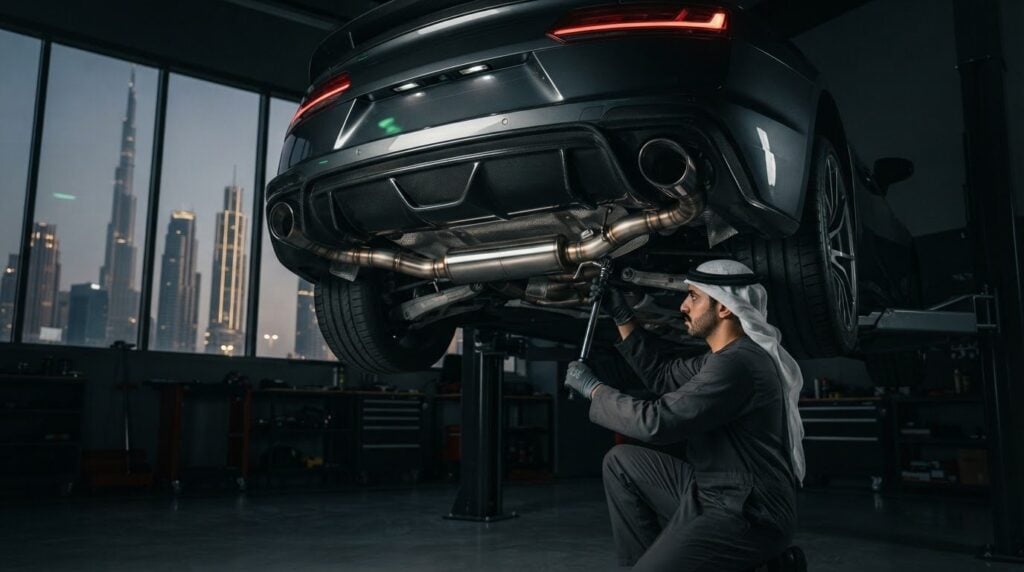
A louder exhaust isn’t automatically a better one. Vanguard Motors Dubai provides expert sports car exhaust modification to refine a car’s sound through component changes or custom fabrication, ensuring the setup still complies with local regulations. An excessively loud or modified exhaust may attract unwanted attention from authorities.
The right change depends on the sound you want and how you use the car. A resonator or muffler delete can create a louder, more aggressive note, while a carefully selected exhaust system can shape the tone without making volume the only goal.
This guide explains how the manifold, catalytic converter, resonator, muffler, and exhaust tips influence sound, and what cat-back and axle-back systems change. You’ll also learn what custom fabrication involves, how deletes can affect the driving experience, and why regional regulatory considerations should be part of the decision from the start.
Key Takeaways
- Match the exhaust setup to the sound you want, while considering how each component shapes tone and flow.
- Compare cat-back and axle-back systems to understand which parts change and how that affects the result.
- Custom fabrication can be tailored around vehicle fitment, material choice, and the character you want from the exhaust note.
- Resonator and muffler deletes can make a car louder, so weigh the sound change against everyday driving and Dubai’s rules.
- Plan the modification around local compliance as well as performance, rather than treating volume as the only measure of success.
Performance exhaust systems
Performance exhaust upgrades change exhaust-gas flow and a sports car’s sound. In Dubai, the right setup depends on the vehicle, desired tone, and whether the work requires custom fabrication.
Sports Exhaust System Options
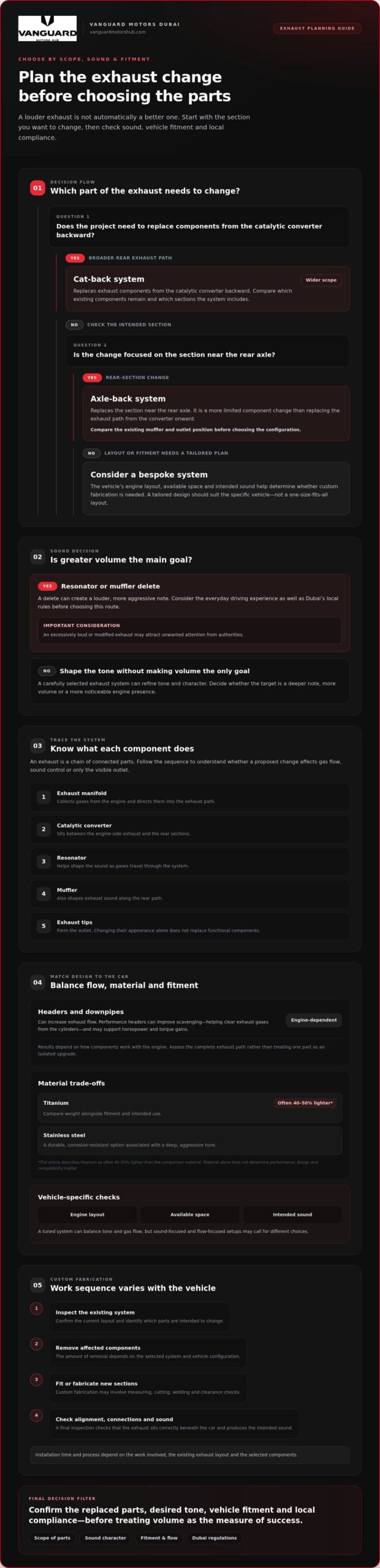
Workshops in Dubai offer bespoke exhaust solutions, including cat-back, axle-back, and custom systems. A cat-back replaces components from the catalytic converter backward, while an axle-back changes the section near the rear axle. Compare which parts each setup replaces to choose the right scope for your project.
For sports car exhaust modification in Dubai, look at the engine layout, available space, and intended sound. A system tuned for the vehicle’s engine can balance tone and gas flow. Luxury and sports-car owners should seek workshops that provide bespoke exhaust solutions, because the design needs to suit the specific vehicle rather than follow a one-size-fits-all layout.
Performance, Gas Flow, and Weight
Headers and downpipes can increase exhaust flow, while performance headers can improve scavenging. This helps clear exhaust gases from the cylinders and may support horsepower and torque gains. Results depend on how the components work with the engine, so assess the complete exhaust path rather than treating one part as an isolated upgrade.
Material choice also affects the system. Titanium exhaust systems are often 40-50% lighter than the comparison material, while stainless steel offers a durable, corrosion-resistant option. Consider weight alongside fitment and the intended use of the car. A premium material alone doesn’t determine performance; the system’s design and compatibility matter too.
Expected Sound and Performance Changes
A performance exhaust can alter tone, volume, and the character of acceleration. Stainless steel systems are associated with a deep, aggressive tone, while changes to resonators or mufflers can make the note louder. Since sound is subjective, decide whether you want a deeper note, greater volume, or a more noticeable engine presence.
Performance changes also depend on the vehicle. Improved flow can support horsepower and torque, but there is no single gain that applies to every sports car. Compare the planned components with the engine’s needs and intended use. A sound-focused setup and a flow-focused setup may call for different choices, even when both use a custom exhaust.
Installation Process and Timing
Installation time depends on the work involved. Replacing an axle-back system requires fitting and alignment, while custom fabrication adds measuring, cutting, welding, and clearance checks. The existing exhaust layout and selected components also shape the process. These steps explain why the work can vary from one sports car to another.
A typical workflow starts with inspecting the existing system and confirming which parts will change. The workshop removes the affected components, fits or fabricates the new sections, then checks alignment and connections. A final inspection confirms the exhaust sits correctly beneath the car and produces the intended sound. The process depends on the system and vehicle configuration.
Exhaust system components and how they work
An exhaust system is a chain of connected parts, not just the rear muffler or visible tips. Understanding each component helps you compare layouts and see what a proposed change actually replaces.
Exhaust System Components
The exhaust manifold collects gases from the engine and directs them into the exhaust path. The gases then pass through the catalytic converter, resonator, and muffler before exiting through the exhaust tips. Each component has a different role, so identify what an upgrade includes before comparing designs.
The catalytic converter sits between the engine-side exhaust and the rear sections. The resonator and muffler shape the sound as gases travel through the system. Exhaust tips form the outlet, but changing their appearance alone doesn’t replace functional components. For example, new tips can alter the rear styling while leaving the manifold, converter, resonator, and muffler in place.
Use the component sequence as a practical inspection guide: locate the manifold, trace the piping toward the rear, then note where the converter, resonator, and muffler sit. This clarifies whether a proposed part affects airflow, sound control, or only the visible outlet. The vehicle’s available space also influences fitment, especially with a distinctive exhaust layout.
Cat-Back and Axle-Back Options
A cat-back system replaces exhaust components from the catalytic converter backward. It changes more of the rear exhaust path than an axle-back system, which replaces the section near the rear axle. Compare the scope by checking which existing components remain and which sections the replacement includes.
An axle-back system focuses on the rear section and can change exhaust tone and appearance. It may suit a driver seeking a more limited component change rather than replacing piping from the converter onward. Before choosing this configuration, compare it with the existing exhaust, including the muffler and outlet position.
Vehicle-specific tuned exhaust systems are designed around an engine and its exhaust layout. In Dubai, bespoke exhaust solutions can account for different vehicle configurations and brands. Rather than selecting by brand name alone, compare the system’s fitment, replaced components, sound character, and intended use. Those details show whether a cat-back, axle-back, or tailored arrangement matches the project.
For a component-focused plan, outline the sound you want and the sections you’re considering changing. Discuss your exhaust setup with a workshop before selecting parts, so the proposed configuration can be considered against your vehicle’s layout.
Custom exhaust fabrication
A custom exhaust system is shaped around a vehicle’s engine, available space, and desired exhaust note. In Dubai, workshops offer bespoke exhaust fabrication using materials such as stainless steel and titanium. The design should connect those choices to the car’s layout and intended driving, rather than treating material or volume as the only decision.
Start by defining the outcome. A deeper note, a more prominent sound, and improved gas flow are different priorities, even if one system addresses more than one. Describe when you want to hear the exhaust most clearly, such as during acceleration or steady driving. This gives the fabricator a clear sound target and helps guide the component layout.
Material selection shapes the fabrication brief. Stainless steel is durable and corrosion-resistant, making it a practical option for a system exposed to road conditions. Titanium is also used for exhaust systems, and its lower weight can appeal to owners focused on reducing vehicle mass. Compare these characteristics with the project’s purpose, fitment needs, and desired finish.
Fitment is central to a bespoke build. The fabricator needs to account for the engine’s exhaust outlet, the route beneath the vehicle, and the position of existing components. A custom pipe layout must suit the available clearances and connect to the selected exhaust sections. For example, a sports car with limited underbody space needs a route designed for its specific layout, not a generic template.
A useful fabrication discussion follows a clear sequence:
- Set the brief: identify the vehicle, the sound character, and whether airflow or reduced weight is a priority.
- Map the layout: determine which sections will be custom-made and how they fit the existing exhaust path.
- Select the material: weigh stainless steel against titanium for the intended design.
- Review the finished fit: inspect connections, routing, and clearance beneath the vehicle.
Each step connects the chosen material and pipe arrangement to the car’s engine and intended use. The finished exhaust note depends on the complete configuration, including which sections are retained or replaced. A fabrication plan should specify both the desired sound and physical changes, giving the result a clear purpose beyond appearance.
For sports car exhaust modification in Dubai, custom work is most useful when a standard layout doesn’t suit the vehicle or owner’s goals. A tailored design can bring together fitment, material, sound, and airflow in one coordinated system. Start with a precise brief: name the vehicle, describe the intended exhaust note, and identify the driving characteristics that matter most.
Dubai workshops offering bespoke exhaust fabrication can tailor systems to luxury and sports cars, including their engine layout, available clearance, and desired exhaust note.
Resonator and muffler deletes
Removing a resonator or muffler can produce a louder, more aggressive exhaust note. These components sit in different sections of the exhaust, so identify which one you’re considering before deciding whether a delete suits your sports car and daily driving.
A resonator influences sound frequencies as exhaust gases pass through the system. A muffler reduces exhaust noise at the rear. Deleting either component changes the sound, but the final character depends on the engine and remaining exhaust layout. A resonator delete and a muffler delete are different modifications, not interchangeable terms.
The catalytic converter is a separate component positioned earlier in the exhaust system. A resonator or muffler delete means removing those sound-control sections, not automatically removing the catalytic converter. Be clear about the planned work to distinguish a sound-focused change from other exhaust modifications. Before approving the layout, identify which parts will remain, be replaced, or be removed.
Set a specific sound target before choosing a delete. Decide whether you want a deeper note, more volume during acceleration, or a stronger presence at idle. A muffler delete may create a much more noticeable change than a restrained adjustment. Maximum loudness isn’t the only measure of a successful setup, especially if you regularly drive on public roads.
Consider the practical trade-offs too. A louder system can become tiring on longer drives or draw attention in residential areas. In Dubai, excessively loud or modified exhausts may attract attention from authorities, so balance sound goals with local considerations. A stainless steel replacement section may support durability, but the material itself doesn’t determine how loud the finished system sounds.
Before work begins, use this short decision sequence:
- Identify the target: decide whether the resonator or muffler is the sound-control component you want changed.
- Describe the result: specify the desired tone and when you want it most audible.
- Review the complete layout: distinguish the planned delete from the catalytic converter and other exhaust sections.
- Consider road use: weigh the more aggressive note against everyday driving and Dubai’s local considerations.
A delete changes sound directly; it shouldn’t be treated as a guaranteed horsepower upgrade. Exhaust flow and power depend on the complete system and engine, not the absence of one sound-control component. For example, removing a rear muffler to increase volume is different from redesigning exhaust flow for performance. Match the modification to your goal instead of assuming louder means faster.
Dubai exhaust modification regulations
In Dubai, car owners should ensure exhaust modifications comply with local regulations. Excessively loud or modified exhausts may attract attention from authorities. This applies whether the change is a muffler delete, a custom exhaust upgrade, or a replacement system chosen for appearance.
Modifying a vehicle and knowing its compliance status are not the same thing. A louder sound or altered exhaust layout can draw attention, but that alone doesn’t establish whether a specific setup complies. Don’t treat an aggressive exhaust note, premium finish, or improved driving feel as proof of regulatory acceptance. Assess the planned configuration as part of the decision.
Build compliance into the design brief before replacing components. Describe the desired sound, identify which sections would change, and consider how the finished system affects everyday use around Dubai. For example, a system intended to be clearly audible during routine driving calls for more caution than a restrained tone change. The goal is an optimal balance between sound, function, and local rules.
Use these steps to frame the decision:
- Define the change: list the components to be retained, replaced, or removed.
- Set the sound target: distinguish a deeper tone from a substantially louder exhaust note.
- Consider where you drive: account for regular road use, including residential settings.
- Review the finished configuration: consider the complete exhaust system, not just its visible tips.
These planning steps aren’t a substitute for Dubai’s applicable requirements. Labels such as “sports exhaust” or “custom system” don’t establish whether an installation complies. A component change can affect sound differently depending on the remaining layout. Keep the scope clear, and don’t assume an upgrade is acceptable simply because similar parts appear on other vehicles.
Sound and appearance should remain secondary to a compliant setup. A resonator or muffler delete can make an exhaust louder, so consider that consequence before authorising the work. A less aggressive configuration may better suit drivers who use their sports car frequently on Dubai roads. Choose a setup that meets your desired character without overlooking local regulations.
For sports car exhaust modification in Dubai, make local compliance part of the specification before work begins. Outline the desired sound and proposed component changes in one brief, then use that brief to guide the installation discussion. Discuss your exhaust modification plan before choosing a louder setup or replacing components.
Vanguard Motors Dubai: Paint Protection Film (PPF) Installation
Vanguard Motors Dubai offers exhaust modification for sports-car owners, alongside Paint Protection Film (PPF) Installation for those looking to protect their vehicle’s exterior. If you’re planning an exhaust upgrade, exterior care can complement the project when preserving the car’s finish matters too.
For a different visual direction, Colored Sticker Wraps and Peelable Paint Applications offer additional ways to change your vehicle’s appearance. The Vanguard Premium Package is another option. These services address exterior presentation, not exhaust compliance or sound, so consider them separately in your customization plan.
Contact Vanguard Motors Dubai to discuss exhaust modification, Paint Protection Film (PPF) Installation, or other customization options.
Shape the Sound Around Your Vision
The strongest modification plan starts with a clear idea of how you want the car to feel, not simply how loud it should sound. Before moving forward with sports car exhaust modification in Dubai, decide what character best suits your driving and ownership priorities. A measured brief helps keep the result intentional rather than defined by volume alone.
Think of the exhaust as part of the car’s broader identity. The tone should feel right on open roads and during everyday use, while the setup should take Dubai regulations into account. That balance gives the project direction and aligns technical choices with the experience you want from the car.
For owners also considering the vehicle’s overall presentation, Vanguard Motors Dubai offers exterior customization services as a separate part of the ownership plan. Contact Vanguard Motors Dubai to discuss your vehicle plans. Take the next step with a clear vision and build a result that feels distinctly yours.
Frequently Asked Questions
How can I improve my exhaust sound?
Choose an exhaust change based on the note you want, rather than aiming for maximum volume. A resonator or muffler change can create a louder, more aggressive sound, while a replacement system can alter tone through its design and components. Before deciding, describe whether you prefer a deeper note or a more prominent sound under acceleration. Also consider how that sound will suit regular driving in Dubai.
Where can I get a sports car exhaust modified in Dubai?
Vanguard Motors Dubai offers exhaust modification for drivers planning a sports-car upgrade. Share the vehicle details, the sound you’re aiming for, and the components you’re considering changing. This gives the workshop a clear starting point for discussing a suitable configuration. If the project also includes exterior customization, treat that as a separate goal from exhaust sound and performance.
What are the UAE and Dubai laws on modified car exhausts and noise limits?
Modified exhausts should comply with local regulations in Dubai, and excessively loud or modified systems may attract attention from authorities. Don’t treat a particular sound or system label as proof of compliance. For example, a muffler delete designed for a more aggressive note deserves careful consideration before road use. Plan the sound target and proposed changes with local compliance in mind.
Do exhaust modifications require RTA approval or vehicle inspection in Dubai?
Whether a modification requires approval or inspection depends on the change and the vehicle’s circumstances, so a blanket yes or no would be misleading. Replacing a rear section and changing a larger portion of the system may not follow the same process. Before committing to a configuration, establish what the proposed work involves and how applicable vehicle requirements affect it.
Can an aftermarket exhaust affect car registration, insurance, or warranty in the UAE?
An aftermarket exhaust can be relevant to registration, insurance, and warranty discussions, but the consequences depend on the vehicle and terms involved. Keep a clear record of the parts changed and work performed. If discussing the modification with an insurer or warranty provider, describe the actual configuration rather than calling it simply a “sports exhaust.”
What is the difference between cat-back, axle-back, and full exhaust systems?
A cat-back system replaces components from the catalytic converter backward; an axle-back system changes the rear section near the axle. “Full exhaust” can describe a broader replacement, so focus on the specific components included rather than relying on the label. Ask which original parts remain, including the catalytic converter, and compare the scope with your intended result.
What are the risks of removing a catalytic converter or fitting a loud exhaust in Dubai?
Removing a catalytic converter changes an emissions-control component, while a loud exhaust can draw attention from authorities in Dubai. High-flow catalytic converters are designed to reduce exhaust restriction while allowing gases to flow more freely, offering a different approach to changing the system. Before choosing either route, consider emissions compliance, sound, and the exact components affected by the work.