
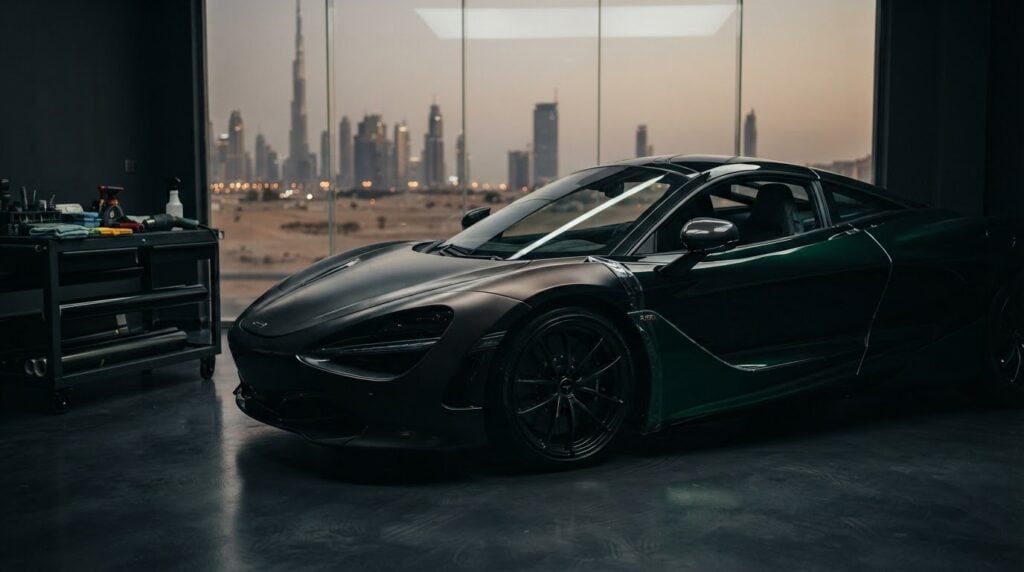
Stripping away your vehicle’s original factory finish to change its color might be the most expensive mistake you can make for its resale value. An aftermarket respray is permanent, labor-intensive, and often sidelines your car in a workshop for weeks. Fortunately, exploring modern alternatives to repainting a car lets you completely transform its aesthetics while keeping the pristine clear coat intact beneath the surface.
If you dread long body-shop turnaround times and the lingering fear of diminishing your vehicle’s market worth, you aren’t alone. Today’s automotive restyling market delivers engineered solutions that rival traditional paint in depth and gloss, all while providing active surface defense against harsh road elements. In this complete comparison guide, we break down vinyl wraps, colored paint protection film (PPF), peelable paint, and advanced cosmetic restoration. You’ll discover exactly how each option stacks up in durability, aesthetics, and long-term protection, giving you the clarity to select the ultimate finish for your vehicle.
Key Takeaways
- Preserve vehicle value and resale appeal by keeping the original factory finish intact instead of committing to an irreversible respray.
- Discover why colored vinyl wraps remain one of the most versatile alternatives to repainting a car for rapid styling changes.
- Combine intense aesthetic customization with heavy-duty rock chip defense using advanced colored Paint Protection Film (PPF) and peelable paint.
- Weigh crucial performance factors including UV resistance, expected lifespan, and maintenance routines before deciding on a transformation method.
- Evaluate your vehicle’s current clear coat health to choose between pure restyling, high-impact defense, or precision cosmetic restoration.
The Hidden Pitfalls of Repainting: Why Car Owners Seek Modern Alternatives
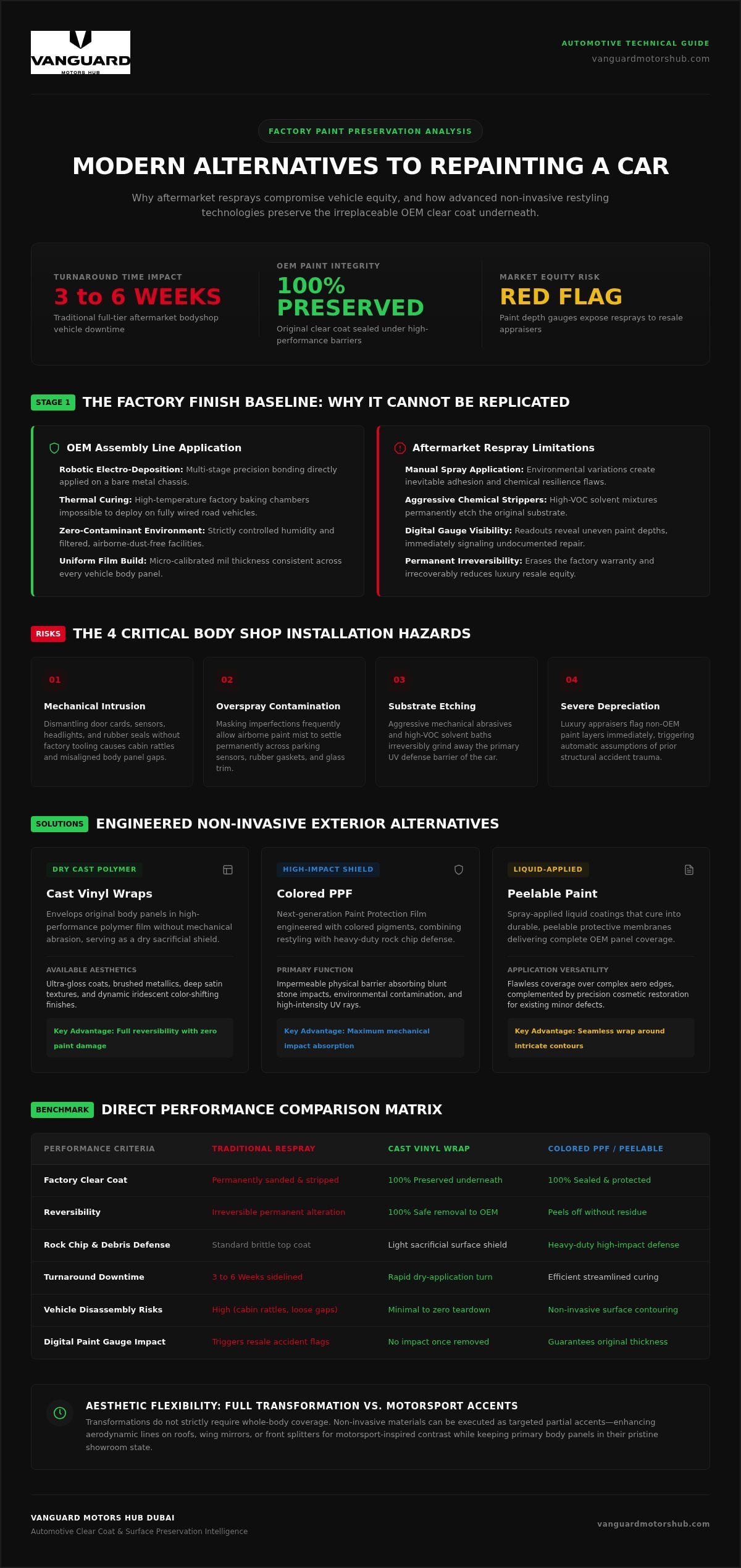
Automotive paint applied on the factory line cannot be truly duplicated in an aftermarket body shop. Original manufacturer paint undergoes multi-stage robotic electro-deposition and high-temperature thermal curing on a bare metal chassis. These robotic environments maintain zero airborne dust and strictly controlled humidity. Once a car leaves the assembly plant, replicating that standard of adhesion, uniform film build, and chemical resilience becomes practically impossible. For drivers seeking visual reinvention, modern alternatives to repainting a car provide a superior path forward by safeguarding that irreplaceable factory foundation.
Preserving Factory Paint and Resale Equity
Original equipment manufacturer (OEM) clear coat serves as your car’s primary shield against blistering UV exposure and environmental contamination. Sanding it down erases that protective layer permanently. In the luxury and sports car market, buyers and professional appraisers treat aftermarket paint as an immediate red flag. Digital paint depth gauges quickly reveal inconsistent mil thickness across panels, often triggering assumptions of undocumented structural collision repairs. You can sidestep that severe depreciation hit entirely with non-permanent styling layers. Advanced protective solutions like paint protection film (PPF) seal and preserve genuine factory paint beneath an impenetrable barrier, maintaining pristine trade-in value.
Bodyshop Downtime and Installation Risks
Traditional automotive resprays demand extensive physical commitment and logistical disruption. Transforming an exterior through standard paint channels introduces persistent risks that many vehicle owners overlook until it is too late:
- Extended Turnaround: A thorough, high-tier respray typically demands three to six weeks of downtime while the body shop disassembles, sands, sprays, and bakes each component.
- Mechanical Intrusion: Technicians must dismantle exterior door cards, headlights, sensors, and rubber seals. Reassembling these panels outside factory tooling often leads to persistent cabin rattles and misaligned body gaps.
- Overspray Contamination: Masking imperfections frequently allow fine paint mist to settle across rubber gaskets, sensitive parking sensors, and glass trim.
- Aggressive Solvents: Conventional refinishing relies on harsh chemical strippers and high-VOC solvent mixtures that permanently etch the vehicle’s original substrate.
Opting for non-invasive exterior restyling eliminates the headaches of workshop delays and invasive panel teardowns. By exploring engineered alternatives to repainting a car, you gain total aesthetic freedom while preserving the integrity, precision, and market value of your vehicle’s original shell.
Vinyl Car Wraps: Complete Aesthetic Transformations Without Permanent Commitment
Cast vinyl stands out as the benchmark among modern alternatives to repainting a car. Instead of submitting your vehicle to mechanical abrasives and harsh chemical strippers, vehicle wrapping envelops the original panels in high-performance polymer film. The underlying paint stays preserved exactly as it left the showroom floor. This approach creates remarkable design flexibility. You can completely reinvent your vehicle’s visual identity today and return it to factory specification years down the road without penalizing its market value.
Finish Variety and Customization Capabilities
Modern cast films deliver a depth of color that rivals high-end factory lacquers. Drivers can choose between ultra-gloss coats, brushed metallic sheens, deep satin textures, and iridescent color-shifting finishes that adapt dynamically to natural sunlight. You don’t have to wrap the entire vehicle to create an impact. Partial wrap accents highlight aerodynamic features on roofs, mirrors, or front splitters for a tailored, motorsport-inspired contrast. Investing in a professional premium car wrap allows you to execute bold styling concepts without permanent commitment. While some drivers explore liquid-applied solutions such as advanced peelable automotive paint, vinyl remains the most established dry-application medium on the market.
Durability, Maintenance, and Safe Removal
Automotive wraps serve as an active sacrificial shield against road grime, fine debris, and minor surface scratches. Integrated UV inhibitors shield factory pigments from intense sunlight, preventing premature clear coat oxidation across flat body surfaces like hoods and trunks. Upkeep is straightforward, requiring only standard two-bucket hand washes with pH-balanced automotive shampoos.
When you decide to update your look or sell the car, skilled technicians use controlled infrared heat to soften the adhesive layer, releasing the wrap without marring the clear coat. If you are ready to evaluate tailored color palettes, you can connect with styling specialists to review tactile material swatches and plan your exterior upgrade.
Colored PPF and Peelable Paint: The Elite Protective Alternatives
Automotive styling has evolved far beyond traditional vinyl wraps. Modern engineering delivers advanced materials that fuse deep, rich pigmentation with heavy-duty surface armor. These solutions bridge the historic gap between appearance and physical defense. Instead of choosing between a delicate styling film and a thick, clear shield, drivers now have access to high-performance alternatives to repainting a car that deliver both simultaneously. By eliminating the subtle orange-peel texture often seen in classic wraps, these methods provide a flawless, mirror-like depth that rivals the finest factory paint booths.
Color Paint Protection Film: Impact Armor with Pigment
Color-infused Paint Protection Film represents the pinnacle of protective styling. Engineered with an elastomeric polyurethane core, it absorbs high-velocity gravel impacts, road grit strikes, and environmental fallout that would easily tear through standard vinyl. The top layer features advanced heat-activated self-healing properties; fine swirl marks and light surface abrasions disappear under warm water or natural sunlight. High-grade paint protection film delivers lasting rock chip resistance while presenting rich, high-gloss shades that preserve your vehicle’s factory clear coat beneath an impermeable barrier.
Peelable Paint: The Seamless Sprayable Solution
For drivers who demand invisible edges, peelable paint offers an authentic liquid alternative. Professional technicians apply this specialized formulation through pneumatic spray guns inside climate-controlled booths, ensuring flawless coverage around complex body lines, door jambs, and emblem recesses:
- True Clear Coat Finish: Unlike basic rubberized coatings, peelable paint accepts wet sanding, machine compounding, and ceramic waxing just like real OEM clear coat.
- Total Edge Wrapping: The atomized liquid flows naturally into recessed areas, leaving no visible film seams, lift points, or relief cuts.
- Residue-Free Stripping: When you want to return to stock or change aesthetics, the durable membrane pulls away in complete sheets without damaging the factory finish underneath.
Deciding between dry-applied color films and liquid coatings comes down to your driving environment and finish expectations. You can consult detailing specialists via WhatsApp to evaluate your car’s exterior requirements and discover which high-tier protective transformation fits your build.
Comparing Alternatives to Repainting: Cost, Durability, and Finish Quality
Every vehicle transformation technique carries unique engineering trade-offs. While a full respray permanently alters body panels, modern alternatives to repainting a car allow you to balance aesthetic customization against real-world mechanical protection. Choosing the correct path requires weighing project turnaround, expected longevity, and impact resistance against your styling goals.
Side-by-Side Evaluation: Key Metrics Compared
Modern restyling treatments complete within days rather than the stressful multi-week delays typical of standard body shops. The breakdown below illustrates how each major alternative performs across core operational criteria:
| Restyling Method | Expected Durability | Impact Defense | Turnaround Time | Reversibility |
|---|---|---|---|---|
| Cast Vinyl Wrap | 3 to 7 Years | Light surface scuffs | 3 to 5 Days | 100% Removable |
| Colored PPF | 7 to 10 Years | High-impact rock chips | 4 to 6 Days | 100% Removable |
| Peelable Paint | Multi-year coverage | Moderate debris strikes | 5 to 7 Days | 100% Peelable |
| Bodyshop Respray | Permanent | Zero self-healing | 3 to 6 Weeks | Irreversible |
Cast vinyl offers unmatched color variety for drivers focused primarily on styling. Colored PPF delivers the absolute benchmark in high-speed impact absorption, making it the ideal investment for performance builds exposed to highway gravel and sand. Peelable paint bridges the aesthetic gap, giving an authentic, seam-free automotive clear coat shine that pulls away smoothly whenever you want to reveal the original base.
When Paint Correction and Spot Repair Suffice
Not every weathered car requires a total restyling layer. Frequently, cars brought in for complete color changes simply suffer from heavy swirl marks, localized oxidation, or isolated stone peppering. Precision compounding and multi-stage machine polishing safely level the clear coat, removing micro-marring to restore true depth and mirror-like clarity without applying films.
Targeted touch-ups resolve deep stone chips, bumper scrapes, and parking scuffs at a fraction of full-panel repainting downtime. Professional cosmetic car repair revives compromised sections while keeping surrounding factory clear coat untouched. When combined with localized clear bra protection, spot correction offers a practical route to preserve your original exterior.
Evaluating whether your exterior needs precision restoration, a bespoke vinyl finish, or high-velocity impact armor is simple. Schedule your vehicle evaluation via WhatsApp to compare material finishes and secure an expert assessment tailored to your driving habits.
How to Choose the Ideal Alternative for Your Vehicle Transformation
Locking down the right styling path depends heavily on the physical state of your bodywork and your long-term ownership vision. Unlike full resprays that indiscriminately grind down your exterior, high-performance alternatives to repainting a car amplify the underlying substrate. A meticulous assessment up front ensures you don’t trap defects under fresh film or select an aesthetic medium unsuited to your daily driving conditions.
Assessing Paint Condition and Project Objectives
Surface evaluation dictates your installation readiness. Because vinyl and thin elastomeric films mirror the topography beneath them, rock chips, failing clear coats, or surface oxidation will telegraph through the material. Addressing these flaws with localized spot leveling or comprehensive polishing prior to installation is essential for a seamless finish.
Your driving patterns should guide your material selection across the restyling spectrum:
- Daily Commuters and Track Enthusiasts: High-speed highway driving exposes front clips to relentless abrasive grit. Thicker color-infused PPF provides the heavy-duty rock chip absorption and elastomeric self-healing required to withstand intense road conditions.
- Aesthetic Enthusiasts and Trendsetters: Drivers seeking bespoke styling, satin metallics, or dynamic color-shifting effects gain complete versatility from cast vinyl wraps without permanent structural commitments.
- Concours Purists: Sprayable peelable coatings serve owners demanding factory-level depth, seamless emblem edges, and the ability to wet-sand surfaces while preserving the option to return to standard OEM trim.
Professional Installation and Maintenance Standards
Execution makes the difference between an unmistakable aftermarket film and a finish indistinguishable from factory paint. Certified installation centers operate dedicated cleanrooms equipped with commercial air filtration, positive atmospheric pressure, and uniform ambient temperature control. This sterile infrastructure prevents airborne dust contaminants from settling beneath the adhesive layer during delicate squeegee passes.
Post-installation care ensures your investment retains its showroom luster over years of heat and dust exposure. Stick strictly to touchless or two-bucket hand-wash routines, clean microfiber towels, and pH-neutral wash formulas. Applying dedicated ceramic coatings over your wrap or film seals the pores against harsh contaminants, bug splatter, and environmental fallout. If you want tailored technical guidance for your vehicle, you can book an exterior transformation consultation via WhatsApp to review swatches, evaluate surface health, and plan your restyling roadmap.
Elevate Your Vehicle’s Exterior Without Compromise
Transforming your car doesn’t require sacrificing its original paint or enduring weeks of body shop downtime. Modern alternatives to repainting a car give you complete control over your vehicle’s identity while shielding its vulnerable exterior. Whether you crave the striking presence of a satin vinyl wrap, the rugged rock chip defense of colored PPF, or the seamless edge-to-edge coverage of peelable paint, you keep your valuable factory clear coat completely intact beneath the surface.
Uncompromising styling demands elite execution. Operating within advanced climate-controlled cleanrooms, our facility specializes in enhancing luxury, exotic, and high-performance vehicles across full-spectrum protective films, wraps, and cosmetic detailing. Every edge, contour, and complex body line receives meticulous care to ensure a flawless, factory-grade finish. Ready to execute your design vision? Chat with our automotive customization specialists on WhatsApp to review tailored material swatches and plan your exterior upgrade.
Frequently Asked Questions
Is it cheaper to wrap a car or repaint it?
Wrapping is generally far more cost-effective than a high-caliber automotive respray. A premium paint job requires extensive manual teardown, panel sanding, and multi-stage oven baking, driving up labor expenses significantly. In contrast, wrapping avoids invasive mechanical labor, cutting turnaround time down to days. Wrapping also preserves the underlying clear coat, preventing the steep vehicle depreciation that often follows an aftermarket respray on luxury and performance models.
Can you change your car’s color without repainting the body panels?
Modern restyling technologies allow complete, dramatic color changes without touching your factory paint with sandpaper or spray guns. Cast vinyl wraps, color-infused Paint Protection Film (PPF), and liquid-applied peelable coatings deliver rich exterior hues ranging from ultra-gloss to brushed metal. These systems serve as non-invasive alternatives to repainting a car, giving you dynamic styling versatility while keeping the genuine OEM clear coat safely intact underneath.
What is the difference between colored PPF and a vinyl car wrap?
The primary difference lies in material thickness, impact defense, and optical clarity. Standard vinyl wraps utilize thin polyvinyl chloride designed primarily for aesthetic color transformation and light scratch defense. Colored PPF uses heavy-duty thermoplastic polyurethane that actively absorbs high-speed gravel impacts and road debris. It also features elastomeric self-healing properties and superior optical depth, eliminating the orange-peel texture sometimes seen in conventional vinyl films.
Does wrapping or peeling paint damage the original factory clear coat?
Professional vinyl wraps and peelable coatings do not damage sound, OEM-baked finishes. These materials are engineered with specialized adhesive bonds designed to release cleanly from factory clear coats without stripping pigment or leaving stubborn chemical residues. If the underlying paint is already chipped, cracked, or poorly resprayed before application, removal can pull loose clear coat with it. A thorough paint inspection ensures safe installation.
How long does a professional car wrap or peelable paint job last?
Professional restyling installations typically last anywhere from three to seven years, depending on your choice of material and sun exposure. High-grade cast vinyl wraps generally deliver three to five years of service, whereas advanced peelable paints and colored PPF can endure up to seven to ten years. Regular hand washing and applying dedicated ceramic coatings directly over the surface will significantly extend their lifespan in harsh climates.
Can paint correction fix faded car paint instead of repainting?
Precision multi-stage paint correction often restores dull, oxidized clear coats without requiring any repainting. Detailing specialists use specialized rotary buffers and micro-abrasive polishing compounds to safely level microscopic surface defects, eliminate heavy swirl marks, and revive factory gloss. If your clear coat has completely failed or flaked away to the primer, correction won’t work. In those severe cases, protective films and peelable coatings provide durable alternatives to repainting a car.
How do you maintain a car wrap or colored PPF compared to paint?
Maintaining modern films requires similar dedication to clear coat care, with specific precautions regarding heat and friction. Stick to two-bucket hand washes with pH-neutral automotive shampoos, avoiding automatic friction car washes with abrasive brushes. Skip petroleum-based waxes, which can stain film pores or ruin satin and matte textures. Instead, use ceramic-infused detailers formulated for wraps to keep the elastomeric top layer hydrophobic and slick.