

A factory-fitted option usually isn’t a modification: if it forms part of the vehicle’s manufacturer specification, it differs from a change made afterward. When understanding a car modification quote, the key question is whether the work changes the car from that specification, including changes made by a previous owner.
It’s easy to focus on the visible upgrade and overlook the details that shape a quote. The vehicle’s make and model, the exact work requested, the parts or materials involved, and the installation requirements all help define the scope. The price depends on the vehicle and work involved, and is provided after a quote request.
This guide explains what may count as a modification, what information helps produce a clear quote, and which installation and insurance checks matter before work begins. You’ll also see why factory options, aftermarket changes, and cosmetic upgrades can be treated differently, so you can describe your plans accurately and make informed decisions about your vehicle.
Key Takeaways
- Factory specification helps distinguish original equipment from later changes, including modifications made by a previous owner.
- A clearer quote starts with precise vehicle details and a specific description of the work, parts, and finish you want.
- Compare quotes by their stated scope, materials, installation work, and any exclusions, not by the total alone.
- Before work begins, consider how the installation affects the vehicle and tell your insurer about changes that may affect cover.
- For exterior protection or a visual transformation, explore options such as PPF installation, colored sticker wraps, and peelable paint applications.
Factory specification and previous-owner changes
A factory option is generally part of the vehicle’s original specification, not a later modification. Check the manufacturer’s build sheet, delivery documents, or equipment records to identify what was fitted before delivery. For example, factory-installed sport suspension differs from suspension changes made afterward. The distinction matters because a quote describes work against the vehicle’s current configuration, not just its model name.
Aftermarket parts can count as modifications even when they look like standard equipment. Alloy wheels, tinted windows, upgraded audio, custom paintwork, and revised interior trim can all change the car from its factory specification. Performance changes include an engine upgrade, a different exhaust, or an altered air intake. A change made for safety, such as upgraded brakes, still belongs in the vehicle’s modification history.
Previous-owner work matters too. A used car may have non-factory wheels, a wrap, or suspension changes that aren’t obvious from its service history. Compare the vehicle with its manufacturer specification and available records; inspect visible parts and ask about alterations recorded in earlier paperwork. If the car has tinted windows, establish whether the tint was factory fitted or installed later. In the UK, front windscreens must allow at least 75% of light through, according to UK Government. That UK figure should not be treated as a UAE rule.
For a quote, identify each known change separately. A previous owner might have changed the wheels while leaving the engine untouched. Another car may have a body kit, altered exhaust, and custom upholstery. These details help describe the vehicle accurately and clarify whether proposed work needs to accommodate existing parts. A cosmetic change can also affect the car’s appearance, value, or repair requirements.
In the UAE, labour rates and parts costs vary with the vehicle, requested work, components, and installation requirements. When dealing with Vanguard Motors Dubai, the price depends on the vehicle and work involved, and is provided after a quote request. A parts-only estimate won’t represent a job that also involves removal, fitting, adjustment, or finishing. Record the current setup before requesting a quote from Vanguard Motors Dubai, including changes made by previous owners. This gives pricing a clearer basis and helps prevent overlooked work from changing the scope later.
A modification isn’t automatically illegal because it differs from factory equipment. However, a quote alone doesn’t establish whether a change meets the applicable requirements for the vehicle’s use. Keep the distinction clear: factory specification describes the original build, while the modification record captures later changes, whether cosmetic or mechanical.
Include changes made before you owned the car, rather than treating them as original equipment. Owners may overlook declaring aftermarket wheels, non-factory window tints, upgraded audio equipment, suspension changes, and interior trim changes. A car owner may need to declare modifications added by a previous owner, such as tinted windows or upgraded wheels. Accessories or minor modifications can include roof racks, tow bars, and non-standard replacement parts. Listing each item separately helps ensure the description reflects what is fitted now, including changes that may seem minor.
Information to provide when requesting quotes
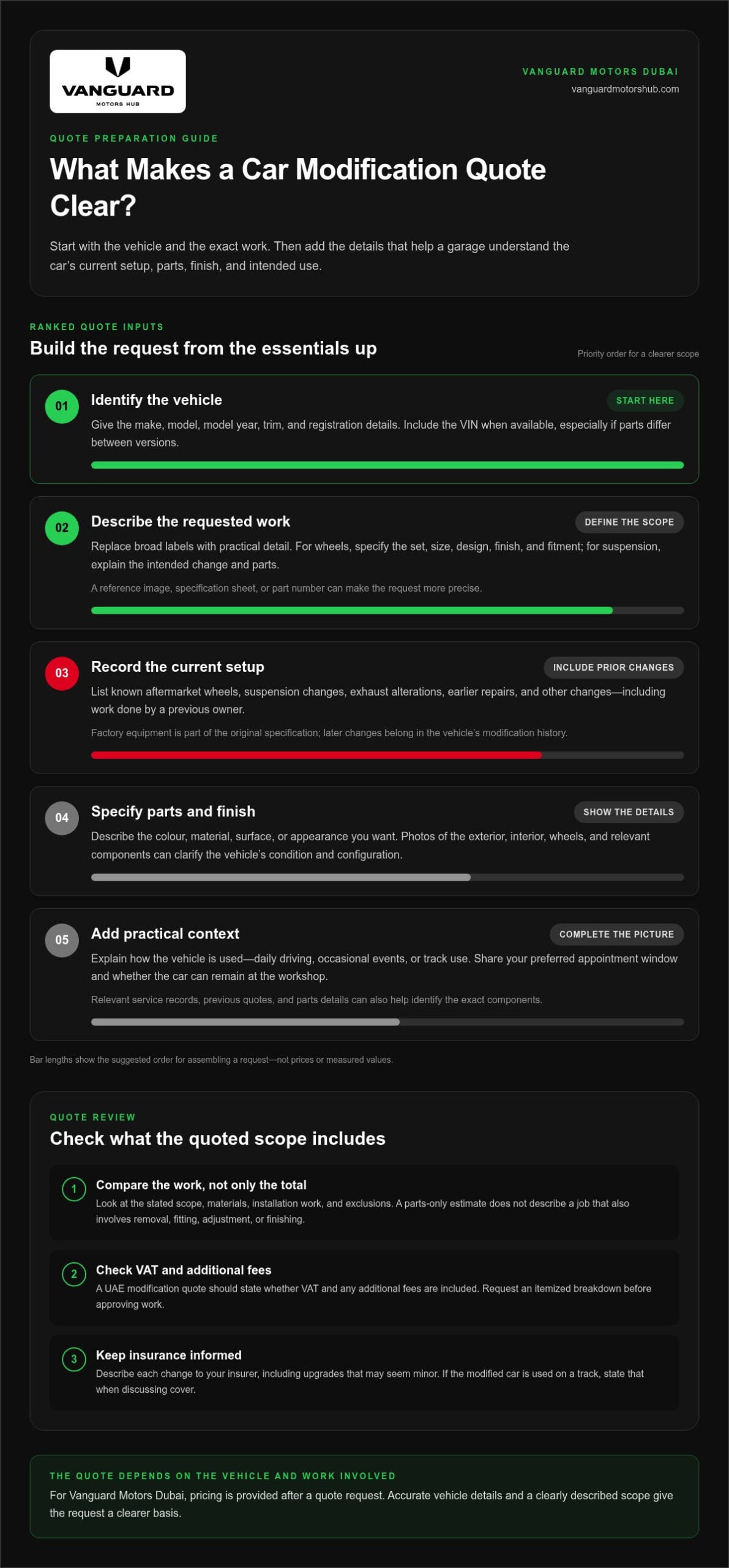
A precise request lets the garage assess the actual vehicle and work, rather than estimate from a broad label. Include the make, model, model year, trim, and registration details. Add the vehicle identification number when available, especially if parts differ between versions. Photos of the exterior, interior, wheels, and relevant components can clarify the car’s current condition and configuration. Understanding a car modification quote starts with giving the garage a clear picture of the vehicle.
Describe the requested change in practical terms. “New wheels” leaves open the size, design, finish, fitment, and whether existing components need attention. “Replace the current alloy wheels with the specified aftermarket set” gives a clearer scope. For suspension work, explain the intended change and provide the parts information. If you have a reference image, specification sheet, or part number, include it.
- Current setup: List known aftermarket wheels, suspension changes, exhaust alterations, and earlier repairs.
- Requested finish: Specify the colour, material, surface, or appearance shown in your reference.
- Use: Explain whether the driver uses the vehicle for daily driving, occasional events, or track use.
- Timing: Share any preferred appointment window and whether the vehicle can remain at the workshop during the work.
- Documentation: Provide relevant service records, previous quotes, and parts details that identify the exact components.
These details also help frame insurance questions. Insurers can define modifications differently, so describe each change clearly, even if it seems minor. Report brake upgrades, performance changes, and aftermarket alloy wheels to your insurer. If you use a modified car on a track, state that when discussing cover. The insurer may consider changes affecting value, repair costs, theft risk, or performance and handling; the premium can depend on those factors and the vehicle.
A UAE car modification quote should state whether VAT and any additional fees are included in the total. Request an itemized breakdown before approving work, so the quoted amount and its inclusions are clear.
Common hidden costs arise when the scope omits removal, refitting, adjustment, finishing, or parts needed after inspection. Warning signs include a vague description, unexplained exclusions, or a total without separate labour and parts details. Ask for any proposed scope change to be documented before work proceeds.
A clearer request makes understanding a car modification quote easier, because you can connect the stated price to the work and parts described. The price depends on the vehicle, parts, work scope, and installation requirements, and is given after a quote request. To discuss your modification requirements, share the details of your vehicle and project.
Safe installation and policy checks
Before authorising work, match the proposed parts to your car’s exact specification. Genuine parts should have identifiable manufacturer details, such as a part number, packaging, and purchase documentation. Compare those details with the vehicle identification number, model year, engine, and trim. For aftermarket parts, request the maker, model, fitment information, and any compatibility notes in writing. A matching appearance alone doesn’t prove authenticity or fit.
Ask the garage to explain how the installation will preserve safe operation. For suspension upgrades, discuss wheel clearance, tyre fitment, and how the changed setup affects driving. For an exhaust, clarify the proposed components and their fit with the vehicle. Body kits and tinted windows also need careful installation, since poor fit or restricted visibility can create practical safety concerns. Keep the agreed parts and installation scope on the quote.
Before accepting a quote, get clear answers to these points:
- Parts: What manufacturer, part number, and specification does the quote cover?
- Fitment: Which vehicle details were used to confirm compatibility?
- Work scope: Does the price include removal, fitting, adjustment, and finishing?
- Changes: How will the garage record additional work or parts before proceeding?
- Completion: What checks will be performed, and what documents will you receive?
Ask for any verbal explanation to be included in the written quote. This makes it easier to compare the agreed specification with the fitted components and completed work. Keep the quote, receipts, part information, and installation records with the car’s service documents.
Workmanship is easier to assess through evidence than broad claims. Review dated examples of the same type of work and inspect details such as panel alignment, consistent gaps, clean edges, and secure fittings. For carbon fibre, examine the finish and joins; for tinted windows, look for even coverage and clean edges. Written records of parts and work also help you track what has changed.
Ask the garage to explain its inspection process and how it handles a mismatch between the quote and the car. Confirm who will carry out the work, what the completion checks cover, and which written terms apply to the installation. These questions establish the expected standard without relying on an attractive estimate alone.
Declare fitted upgrades to your insurer, including changes that seem minor. Insurers can treat modifications differently, and failing to disclose changes could affect cover. This includes aftermarket wheels, suspension changes, exhaust work, body kits, and tinted windows. A mild engine remap should also be declared. Safety or security modifications may affect the premium in either direction, depending on the insurer’s assessment.
For a documented decision, compare the quote’s parts and installation details with the completed work, then update your insurance information. This record links the approved specification, the components fitted, and the changes disclosed to your insurer.
What should a car modification quote include?
A useful quote turns a modification request into a defined scope of work. It should identify the vehicle, the requested change, the parts involved, and the installation tasks. For an exhaust modification, for example, the document should describe the proposed exhaust components and fitting work, rather than simply stating “exhaust upgrade.” That level of detail helps you understand what the quoted total covers.
Vehicle identification matters because a model name alone may not identify the correct specification. The quote should record the make, model, model year, trim, and relevant engine details. If an existing modification affects fitment, such as an altered exhaust or replacement body component, it should also appear in the scope. This connects the estimate to the actual car presented for work.
Look for separate cost categories. A clear breakdown distinguishes parts from labour and identifies additional work, such as removing existing components, fitting replacements, adjustment, and finishing. The total should be stated in AED and make clear whether VAT and other applicable charges are included. The price depends on the vehicle, parts, work scope, and installation requirements, and is provided after a quote request.
- Vehicle details: Make, model, year, trim, engine, and relevant existing changes.
- Parts: Component description, manufacturer or part reference, and quantity where relevant.
- Labour: Installation, removal, adjustment, and finishing tasks included.
- Price: Parts, labour, VAT treatment, additional charges, and the total in AED.
- Scope terms: Exclusions, approval process for extra work, and payment arrangements.
Read exclusions as carefully as inclusions. If a quote covers an exhaust component but excludes related adjustment, the final scope may differ from your expectation. It should explain how the garage will handle additional parts or labour if inspection reveals a complication. A written approval step helps keep any change visible before the work expands.
Timing and completion details also help you plan. The quote can state the expected work period, any vehicle handover arrangements, and the checks that take place before collection. Avoid treating an estimate as a firm commitment if its wording leaves the scope open. Ask for unclear terms to be rewritten in plain language before approving the work.
Finally, keep the quote with the invoice and parts documentation. For a Chinese car brand modification, the records can show which vehicle specification and components the work addressed. If the completed installation differs from the written scope, compare the documents and request an itemized explanation. A precise quote makes the decision easier: you can assess the work, understand the cost structure, and retain a record of what was agreed.
How do I compare car modification quotes from different garages?
Start by comparing the same vehicle and requested specification. A quote for an exhaust change may cover different components, fitting tasks, or finishing work than another. Put each estimate beside your original request, then mark what each includes. A lower total isn’t directly comparable if it covers less work or different parts.
Check the parts description before comparing totals. Look for the manufacturer, part reference, material, finish, and compatibility with your vehicle. For a Chinese car brand modification, confirm each quote identifies the correct model and variant. If one estimate says “replacement component” and another names the exact part, ask for equivalent detail before drawing conclusions.
- Scope: Compare removal, installation, adjustment, finishing, and any additional work.
- Parts: Match component descriptions, specifications, and quantities.
- Cost breakdown: Compare parts and labour separately, with the total in AED.
- VAT and charges: Check whether VAT and other applicable fees are included.
- Terms: Review exclusions, approval for extra work, payment, and completion arrangements.
Next, compare how each quote handles unknowns. One estimate might describe a process for approving extra work; another might leave possible additions unclear. Check whether inspection, removal of existing parts, or adjustment is included. A clearly stated exclusion isn’t automatically a problem, but you should understand it before authorising work.
Review workmanship information alongside the written scope. Compare examples of similar work, such as exhaust fitting or wheel changes, and look closely at alignment, clean finishes, and tidy installation. Check what completion checks and documentation are described. These details help you assess whether each estimate explains the process, not just the final appearance.
Timing can also distinguish otherwise similar offers. Compare the stated work period, vehicle handover expectations, and how schedule changes are communicated. Keep the estimate, messages, and any revised scope together. If a garage updates its quote, compare the new version with the earlier one so added parts or labour don’t disappear inside a changed total.
For an accurate comparison, the price depends on the vehicle, parts, scope, and installation requirements, and is given after a quote request. Use one written specification for every estimate, then assess completeness, fit, workmanship, and terms before choosing. To discuss a modification quote against your vehicle’s requirements, send your vehicle and modification details to Vanguard Motors Dubai.
Also check whether a quoted modification raises compliance or insurance questions, and ask the garage to identify any relevant UAE regulatory requirements in writing. Rules can differ by region and by vehicle type, so do not assume that a price comparison alone establishes whether the proposed work is fully compliant with local traffic laws. If an exhaust change is included, compare what each garage says about the finished system and applicable noise limits within the United Arab Emirates.
Insurance information may also help frame questions, but it should not be treated as a guarantee regarding every customisation. Vehicle modifications in the UAE must be properly notified to your insurance provider and relevant authorities to ensure coverage remains valid. If you are comparing quotes for specific upgrades, clarify how the proposed specification complies with regional vehicle standards and insurer policies before authorising any work with Vanguard Motors Dubai.
Vanguard Motors Dubai: Paint Protection Film (PPF) Installation
Vanguard Motors Dubai offers Paint Protection Film (PPF) Installation for drivers considering a protective change to their vehicle’s exterior. If your priority is a different appearance, Colored Sticker Wraps and Peelable Paint Applications offer alternatives for a visual update. The right quote should clearly match the service you want and the vehicle involved.
Before requesting an estimate, note your car’s make, model, year, current finish, and the areas you want addressed. Share your preferred outcome so the proposed work can be scoped around your vehicle and priorities. For a broader option, ask about the Vanguard Premium Package.
Contact Vanguard Motors Dubai to discuss PPF installation or another suitable exterior option for your car.
Make Your Next Modification Decision With Confidence
Understanding a car modification quote is most valuable when it helps you move from an idea to a clearly defined result. Decide what you want your vehicle to achieve, whether that means added exterior protection or a refreshed appearance. Then focus the next conversation on the finish and outcome that matter to you.
For exterior projects, Vanguard Motors Dubai offers Paint Protection Film (PPF) Installation, Colored Sticker Wraps, and Peelable Paint Applications. Each option serves a different goal, from protection to a visible transformation. A focused discussion can help you identify which direction best fits your vehicle and priorities.
Bring your preferred outcome and vehicle details into the conversation, then explore the scope that suits your plans. Contact Vanguard Motors Dubai to discuss your modification. Take the next step with a clear vision and a considered plan for your car.
Frequently Asked Questions
Do Factory-Fitted Options Count As Modifications?
Usually, an option fitted by the manufacturer as part of the vehicle’s original specification isn’t a later modification. For example, a factory-installed upgraded audio system differs from an aftermarket system fitted after delivery. Keep the vehicle’s order or specification records to show what was original. If your insurer asks about modifications, describe the option accurately and follow its wording, since insurers may define modifications differently.
What labour rates and parts costs are typical for car modifications in the UAE?
Labour rates and parts costs vary with the vehicle, requested work, components, and installation requirements. The price is provided after a quote request.