

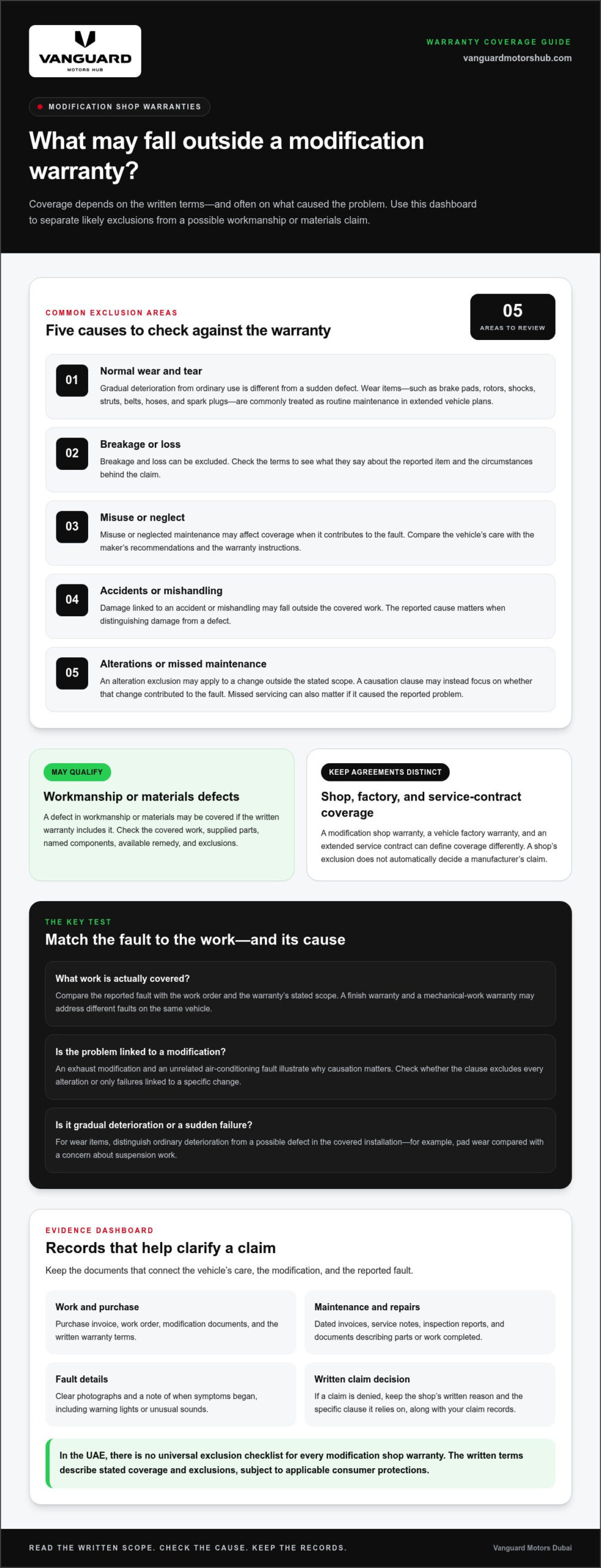
A modification warranty is not an all-purpose repair promise. What is not covered by a modification shop’s warranty depends on its written terms, but common exclusions include normal wear, breakage, loss, and damage linked to misuse, neglect, accidents, alterations, or missed maintenance. Defects in workmanship or materials may be covered if the warranty terms include them.
It is reasonable to expect a warranty to protect the work, but coverage has limits. Understanding those limits can help you distinguish a possible defect claim from damage or deterioration excluded by the terms.
This guide explains how warranty wording, maintenance, wear, breakage, loss, and manufacturing defects affect coverage for car modifications in the UAE. Learn why the cause of a problem matters, how routine care can affect a claim, and what to look for in the written terms.
Key Takeaways
- Separate a modification shop’s workmanship warranty from the vehicle’s factory warranty or an extended service contract; each can define coverage differently.
- Match maintenance records and care practices to the warranty terms, since missed servicing or misuse can affect whether a problem is covered.
- Learn how gradual deterioration differs from a sudden failure, especially for parts that wear through normal use.
- Distinguish accidental damage, loss, or mishandling from a defect in materials or workmanship when assessing a claim.
- Use the written terms to understand whether a manufacturing defect qualifies for coverage and what evidence may help clarify its cause.
Reviewing coverage levels, terms, and exclusions
A modification warranty may cover workmanship, supplied parts, or a named component while excluding unrelated faults. To understand what is not covered by a modification shop’s warranty, start with its written scope and exclusions.
Coverage Levels and Warranty Terms
A coverage level defines which work or parts qualify for a remedy under the warranty. Review the covered item, remedy, and exclusions before purchase, then compare them with the work order. In the UAE, the written terms set out the agreement’s coverage, subject to applicable consumer protections. For example, a finish warranty and a mechanical-work warranty may address different faults, even on the same vehicle.
Modification Exclusions and Causation
An alteration exclusion limits coverage for a change to the vehicle, while a causation clause links that change to a reported fault. The distinction matters if an exhaust modification and an unrelated air-conditioning fault occur on the same vehicle. Pre-existing faults and unrelated repairs may fall outside the work covered by the warranty. If a claim is denied, request the specific clause and reason in writing.
Excluded Wear Items
Wear items deteriorate through normal use, and extended vehicle plans commonly exclude them. Examples include brake pads, rotors, shocks, struts, belts, hoses, and spark plugs. These parts are replaced as routine maintenance, not because an installation failed. If a brake issue appears after suspension work, distinguish ordinary pad wear from a defect in the covered installation.
Altered Products and Aftermarket Modifications
An altered-product exclusion applies when a change, repair, or aftermarket part falls outside the warranty’s stated scope. An extended vehicle service contract may explicitly exclude modifications, with the contract setting the boundary. A factory warranty is a separate agreement, so a shop’s exclusion does not automatically decide a manufacturer’s claim. Check whether the clause excludes every alteration or only failures linked to a specific modification.
In the UAE, there is no universal exclusion checklist for every modification shop warranty. Applicable consumer protections still matter, while the written terms describe the stated coverage and exclusions. Pre-existing faults and unrelated repairs may be excluded if they fall outside the work described. Compare the fault with the work order and warranty wording.
If a shop denies a claim, request its decision and the relevant clause in writing. Compare the reported fault with the covered work, then gather the purchase invoice, maintenance records, repair documents, and clear photographs. Knowing what is not covered by a modification shop’s warranty helps you determine whether the decision relies on an exclusion or whether the fault may relate to the work. Keep copies of your claim and the shop’s response.
Following usage and maintenance guidelines
Maintenance records show whether a vehicle was cared for according to the manufacturer’s recommendations. That matters because neglect or misuse can affect coverage when it contributes to a fault. Use the owner’s manual as your guide, and keep invoices and service notes identifying the work completed, parts used, and date of each visit.
In the UAE, routine care matters in demanding driving conditions. Heat, dust, traffic, and frequent short journeys can affect vehicle use, but they do not replace the manufacturer’s schedule. If the manual calls for an inspection or fluid service, record the work rather than relying on memory. A dated invoice gives a clearer maintenance history than a general note saying the car was serviced.
Follow the vehicle maker’s schedule
Use the owner’s manual to identify the maintenance tasks and inspection intervals specified for your vehicle. The schedule can vary by model, engine, and driving conditions, so do not substitute a generic checklist. If a service record shows an oil change but omits an inspection listed for that visit, keep the workshop’s detailed invoice or service report with your other documents.
Care after a modification also depends on the type of work. A changed exhaust system, for example, may need different checks from a cosmetic alteration. The warranty terms and vehicle maker’s instructions help distinguish routine servicing from care specific to the modified component. Keep both sets of guidance together, and note any instructions provided with the completed work.
Keep evidence of maintenance and repairs
A useful record identifies the vehicle, service date, work performed, and parts or materials used. Save digital invoices, paper receipts, inspection reports, and written maintenance recommendations. If a warning light appears after a service, note when it began and which work came immediately before it. That timeline can help clarify whether the fault relates to maintenance, the modification, or another vehicle system.
- Keep the owner’s manual and modification documents together.
- File invoices that describe the actual work, not only the payment.
- Record symptoms promptly, including warning lights or unusual sounds.
- Retain repair reports if another fault is diagnosed or corrected.
Maintenance elsewhere doesn’t automatically explain a failure. The relevant questions are whether the work followed the producer’s recommendations, whether the required service was completed, and whether missed or incorrect care caused the reported fault. A documented inspection can help separate a maintenance issue from a workmanship concern. For guidance on care for a modified vehicle, share the relevant service history and describe the change involved.
Meaning of wear and tear
Wear and tear is gradual deterioration from ordinary use, rather than a sudden defect in the work. A seat surface becoming smoother through regular entry and exit differs from stitching that separates because it was poorly installed. This distinction matters because a warranty may cover defective workmanship while excluding normal aging. Consider the affected material, damage pattern, and how the vehicle is used.
For vehicle manufacturers, everyday wear can include scratches, fading, and parts wearing out over time. A trim piece faded after prolonged exposure differs from a coating that peels because it failed to bond correctly. The first may be treated as age or environmental wear; the second may point to a workmanship issue. Warranty wording sets the boundary, so identify the specific component and condition instead of describing the whole vehicle as damaged.
Wear is usually gradual. A surface may lose gloss, develop small marks, or thin at frequently touched edges. A sudden tear, detached panel, or finish lifting in one concentrated area presents a different pattern. These signs do not prove the cause, but they can help distinguish ordinary deterioration from a possible installation or materials fault. For example, consistent fading across exposed surfaces differs from one patch changing soon after work.
Use the covered work as your reference point. If a modification warranty concerns a newly installed component, damage to an unrelated part may fall outside its scope. If the modified surface deteriorates, compare the affected area with nearby untreated or less-exposed areas. A clear difference can help describe the issue, while the written terms clarify whether fading, abrasion, or surface marks are excluded.
Environmental exposure and use can also affect how a warranty treats a condition. A vehicle regularly used outdoors may show fading or surface wear differently from one kept under cover. Road debris can leave isolated marks, while repeated friction can wear an edge or contact point. These examples help explain the pattern, but the key question is whether the terms cover that type of damage and its cause.
When assessing a wear-related concern, record the affected area and compare it with the original work description. Keep the purchase invoice, warranty document, and dated photographs showing changes over time. Note whether the issue is gradual or sudden, localized or widespread, and whether it follows a contact point. For example, a mark beside a frequently used door handle suggests a different pattern from finish separation along an untouched edge. These details make the coverage discussion more precise.
Breakages and losses
A broken or missing modification is not automatically a warranty defect. Warranty coverage usually concerns faults within the written terms, while impact damage, mishandling, or loss may be excluded. A cracked trim piece after a collision, for example, differs from a component that detaches because its fitting failed. Describe what happened, where the damage appeared, and whether the part is still present. These details help distinguish damage to the work from a fault in the work itself.
The cause matters. A manufacturer’s warranty generally does not cover damage caused by negligence or improper use. Dropping or mishandling a product can also fall outside coverage. On a vehicle, an impact mark on a modified panel may indicate external damage, while a fitting that loosens during ordinary use raises a different question. Neither appearance alone settles coverage; the warranty terms and evidence about the failure are central.
Loss needs separate consideration from breakage. If a modified component is missing after an incident, the issue may involve theft, accidental loss, removal, or a failed attachment. A warranty may treat these situations differently, so read the exclusions for loss, external damage, alteration, and tampering. A missing decorative part after an impact, for instance, is not the same claim as a part that comes away without an identified collision.
Extended vehicle plans may exclude breakdowns linked to external damage or faults that existed before purchase. This distinction can matter when a repaired or modified vehicle later develops a problem. A pre-existing crack documented before the work differs from a new fracture appearing afterward. Keep earlier inspection reports, dated photographs, and repair records together. They can show the vehicle’s condition before modification and help clarify when the damage first appeared.
Build a clear record before making a claim. Photograph the damaged area from close and wider angles, preserve any detached component, and note the circumstances. A photo showing a cracked mount beside an intact surrounding panel tells a different story from an impact mark across both. Save the purchase paperwork and warranty terms, then describe the symptoms without guessing at the cause. A concise timeline can help distinguish an accident from a possible installation fault.
- Record when the breakage or loss was first noticed.
- Photograph the component, surrounding area, and any visible impact marks.
- Keep detached parts and related repair or inspection documents.
- Compare the reported damage with the warranty’s specific exclusions.
For a breakage claim, focus on the covered work and the event that preceded the damage. A cracked part after a collision may fall under an external-damage exclusion; a failed attachment without visible impact calls for closer review of the installation and terms. State what is known, include supporting records, and do not present an assumption as a confirmed cause. This keeps the discussion focused on coverage rather than unrelated vehicle damage.
Coverage for manufacturing defects
A manufacturing defect is a fault caused by defective materials or poor workmanship during production. A manufacturer’s warranty may cover such defects, subject to its written terms. A newly supplied component with a faulty internal connection, for example, differs from damage caused by impact after installation. The key distinction is whether the fault existed when the part was made or developed through later use, installation, or external damage.
For modified vehicles, the component’s warranty and the shop’s workmanship warranty may cover different failures. A supplied part might have a materials defect, while incorrect fitting could point to an installation issue. If a trim piece separates, check whether its material has split or its attachment has failed. The symptom alone does not identify responsibility; the component, work performed, and applicable terms define the coverage question.
External factors can change the assessment. A crack after a collision, a surface damaged through mishandling, or a fault following an unauthorized alteration may fall outside manufacturing-defect coverage. By contrast, a component that fails under ordinary use because of faulty materials may fit the manufacturer’s defect terms. Be precise: “the connector failed” is more useful than “the modification is defective” when the cause is still under review.
Evidence helps distinguish these possibilities. Preserve the purchase invoice, product details, installation record, and warranty document. Take dated photographs of the fault before repair or removal, and record when the symptom first appeared. If another technician inspects the part, retain the written findings and any replaced component. For example, a report identifying a fractured internal clip can help distinguish a materials issue from external impact.
Read the remedy as carefully as the definition of a defect. The manufacturer’s terms may describe repair, replacement, or another response, while a modification shop’s warranty may cover only specified workmanship. Check whether the written coverage applies to the part, the installation, or both. Also note exclusions for wear, misuse, neglect, accidents, or tampering, since these can limit coverage even when a part has failed.
Describe a claim without treating its cause as settled. State the affected component, when you noticed the issue, how the vehicle was used, and any recent repairs or incidents. Identify the warranty clause that appears relevant and, if the claim is rejected, ask for the reason in writing. This gives the discussion a clear technical focus and preserves a record of the manufacturer’s or shop’s response.
- Keep the failed component if it has been removed.
- Photograph the damage before repair or cleaning.
- Save invoices, installation records, and inspection findings.
- Compare the failure description with the written warranty terms.
A manufacturing defect concerns the part’s materials or production, not every fault that appears after installation. Matching the evidence to the warranty’s wording helps distinguish a possible defect from wear, impact, or installation damage. To discuss a vehicle modification project, share your modification requirements.
Vanguard Motors Dubai: Paint Protection Film (PPF) Installation
Vanguard Motors Dubai installs Paint Protection Film (PPF) for drivers seeking a protective finish for their vehicle’s paint. It can be a practical next step when planning a cosmetic modification and considering the service separately from warranty coverage. The written terms still determine how defects, wear, or damage are handled.
For a different look, Colored Sticker Wraps and Peelable Paint Applications offer alternatives for changing a vehicle’s appearance. Review the intended work alongside its warranty terms to set clear expectations about the modification and what the agreement covers.
Contact Vanguard Motors Dubai to discuss your vehicle modification requirements.
Plan Your Next Modification With Clarity
Understanding what is not covered by a modification shop’s warranty can guide your next decision, not just your response to a future fault. Before approving new work, define the finish or protection you want, then keep the service description and warranty terms together. This gives you a clear reference point as your vehicle evolves.
For a paint-focused project, Vanguard Motors Dubai offers Paint Protection Film (PPF) installation, Colored Sticker Wraps, and Peelable Paint Applications. Each suits a different approach to protecting or changing your vehicle’s appearance. Match the service to your priorities to move forward with a considered plan.
Ready to discuss your vehicle’s next transformation? Contact Vanguard Motors Dubai to talk through your project and take the next step with confidence.
Frequently Asked Questions
What exclusions are common in modification shop warranties?
Common exclusions include faults outside the modified work, pre-existing problems, accidental damage, and failures linked to misuse or missed maintenance. To understand what is not covered by a modification shop’s warranty, identify the exact work and component named in its terms. For example, if a claim concerns a newly fitted part, compare the invoice description with the reported fault before deciding whether it relates to that work.
Are modified or aftermarket parts excluded from a shop warranty?
An aftermarket part may be excluded, but the written warranty determines how it affects coverage. Some terms exclude a particular alteration, while others focus on failures linked to it. A vehicle with an earlier upgrade and a newly installed component may have separate coverage boundaries for each. Compare the warranty wording with the work order to see which parts and installation tasks the agreement addresses.
Does a modification shop warranty cover labor, parts, or both?
A modification warranty can cover labor, parts, or both, depending on its stated scope. Look for the remedy if the work fails: correcting the installation, replacing a supplied component, or another response. A work order that separates the part from the fitting can clarify what the warranty addresses. Also note whether coverage applies only to the named modification or extends to related work described in the agreement.
Are failures caused by misuse, racing, or neglect excluded from coverage?
Misuse and neglect are common reasons for excluding a related failure. Racing or track use may also matter if the contract restricts it or links it to the fault. Keep a factual record of the circumstances. For example, note whether a warning appeared during ordinary road use or after a track session. This helps distinguish the reported event from assumptions about how the vehicle was driven.
Does a shop warranty cover damage to other vehicle components caused by modifications?
Damage to another component is covered only if the warranty’s scope includes that type of resulting damage. A fault in a neighboring system needs a clear connection to the installation. For example, if a fitted component contacts a nearby part, an inspection report can describe the contact and resulting damage. Compare that report with the contract to see whether the remedy extends beyond the original modification.
How can customers check a modification shop warranty’s exclusions before authorizing work?
Read the warranty alongside the quotation and work order before authorizing a job. Identify covered parts and labor, available remedies, and exclusions for prior faults, other alterations, or specific vehicle use. Ask for unclear wording in writing, then keep the response with your purchase documents. This review clarifies what is not covered by a modification shop’s warranty before work begins and gives you a record of the agreed scope.