
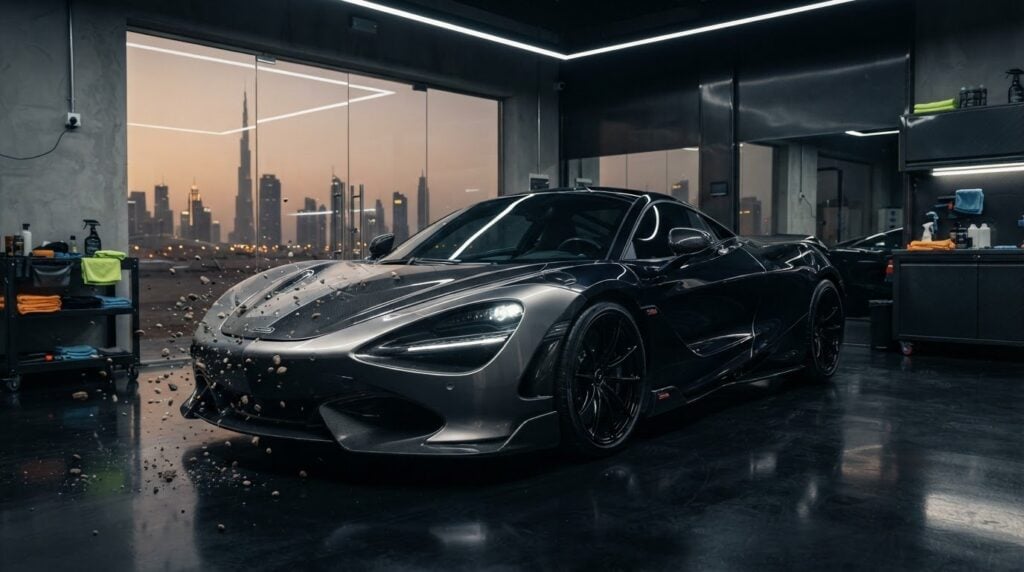
What if a finish that beads water and looks immaculate still leaves your paint exposed to flying road debris? If you’re asking what is better than ceramic coating, the answer depends on the damage you want to prevent. Ceramic coatings can enhance gloss, help resist chemical contamination, and make routine cleaning easier, but they aren’t a physical barrier against stone chips.
That distinction matters. Paint protection film (PPF) is a more relevant choice when impact protection is your priority. Colored wraps and peelable paint focus on changing appearance, while waxes and sealants offer simpler surface care. No single option is best for every vehicle or driving routine. This guide compares what each method is designed to do, what it can’t do, and how coatings, PPF, wraps, and traditional sealants differ. Use the comparisons to match a plan to your car, how you use it, and the finish you want.
Key Takeaways
- If you’re asking what is better than ceramic coating, start with the protection you need. PPF is designed to provide a physical barrier against impact damage.
- Separate surface-care benefits from impact protection when comparing PPF, ceramic coatings, waxes, and sealants.
- Choose wraps or peelable paint for appearance changes, not as substitutes for PPF’s impact-protection role.
- Assess road-debris exposure, driving frequency, parking conditions, and preferred finish before deciding on coverage.
- Before professional PPF installation, discuss your vehicle’s condition, panel coverage, finish, care requirements, and the film’s limitations.
What Is Better Than Ceramic Coating for Paint Protection?
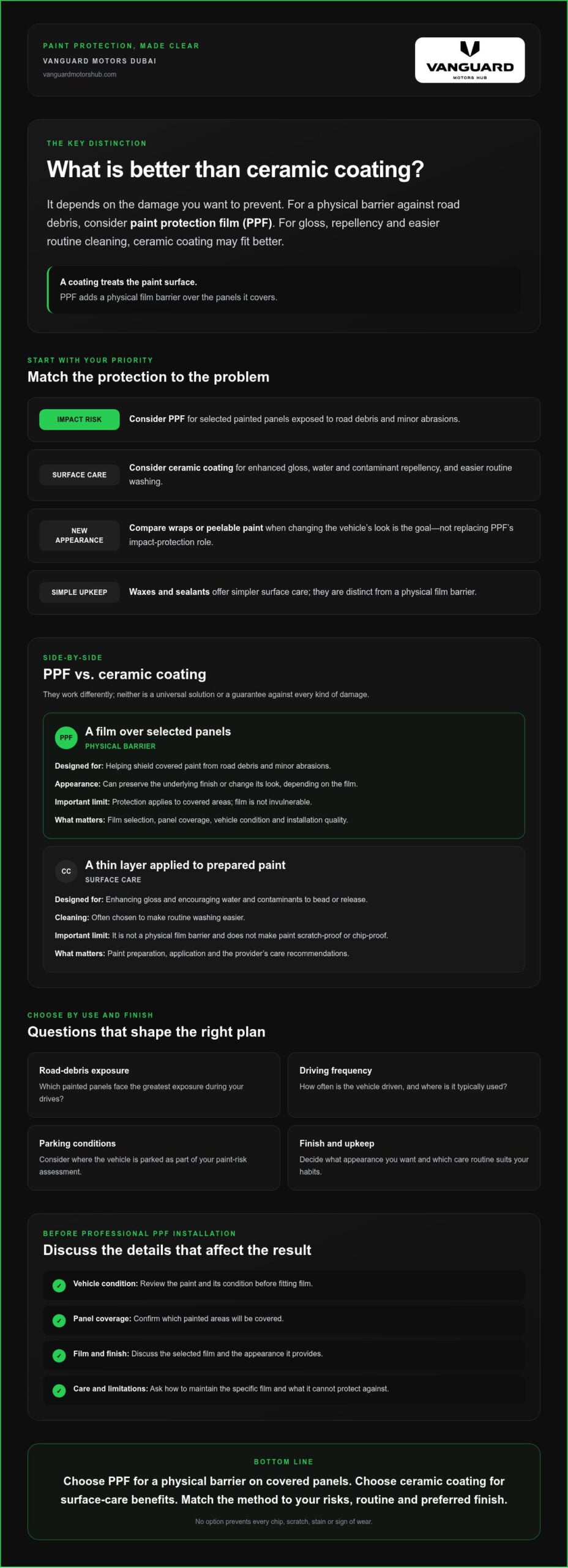
If your priority is protecting paint from road debris and minor impacts, paint protection film (PPF) can be a better choice than ceramic coating. If you want a glossy finish, easier cleaning, and surface repellency, a coating may suit your priorities better. The answer to “what is better than ceramic coating” depends on the damage you want to guard against and the finish you want to maintain.
A coating treats the paint surface; PPF adds a physical film barrier over it.
PPF is a clear or colored film installed over selected painted panels, creating a physical layer between the paint and some external contact. For a neutral overview of its materials and application, see Paint protection film (PPF). A film can help reduce the risk of impact damage, but it isn’t invulnerable. Neither PPF nor a coating prevents every chip, scratch, stain, or sign of wear.
What ceramic coating is designed to do
Ceramic coating is a thin surface layer applied to prepared vehicle paint. Drivers commonly choose it to enhance gloss, encourage water and contaminants to bead or release from the surface, and make routine washing easier. These benefits support surface care, but they don’t make paint scratch-proof or chip-proof. A coating isn’t a substitute for a physical barrier when flying debris is the main concern.
What drivers usually mean by “better” protection
“Better” can mean stronger defense against impacts, less effort during cleaning, a particular appearance, the ability to change or remove a finish, or a maintenance routine that fits your habits. Start with the risk you encounter most often. A vehicle frequently driven where it may encounter loose debris could need a different approach from one whose owner mainly wants a refined shine and easier washing.
- Impact resistance: Consider PPF for selected painted panels exposed to road debris.
- Cleaning and surface care: A coating is often chosen for repellency and easier routine cleaning.
- Appearance and reversibility: Compare the finish you want and whether you may want to change it later.
- Upkeep: Choose an option whose care requirements suit how you use and maintain the vehicle.
Parking conditions, driving frequency, vehicle use, and finish preferences all shape the decision. Identify your most frequent paint risks first, then compare methods by what they’re designed to do, not by claims that suggest one option can prevent every kind of damage.
How PPF and Ceramic Coating Protect Vehicle Paint Differently
The key difference is how each option interacts with the paint. PPF is a film installed over the surface, while ceramic coating is applied as a thin layer that changes the surface’s characteristics. If you’re asking what is better than ceramic coating for chip protection, PPF is generally the more relevant option because it creates a physical barrier over the panels it covers.
Not every film or coating performs identically. Results depend on the product, vehicle condition, preparation, application quality, chosen coverage, and ongoing care. Use the comparison as a guide, then ask an installer to confirm the properties of the specific products and process being considered.
| Factor | PPF | Ceramic coating |
|---|---|---|
| Impact protection | Can help shield covered paint from road debris and minor abrasions; protection depends on the film and installation. | Not a physical film barrier, so it isn’t the comparable choice for impact protection. |
| Surface appearance | Can preserve the underlying finish or change its look, depending on the film selected. | Often chosen to enhance gloss and create a refined surface appearance. |
| Cleaning | Care needs depend on the film and its installation guidance. | Often selected to make routine cleaning easier and encourage water repellency. |
| Upkeep | Follow the installer’s instructions and check how to care for the specific film. | Maintenance depends on the coating and the care routine recommended by its provider. |
| Installation | Film is fitted to selected panels, so coverage and application matter. | Applied to prepared paint; surface condition and application affect the result. |
When paint protection film has the advantage
PPF can help shield covered paint from road debris and minor abrasions, making it worth considering for panels that face greater exposure. Protection is limited to the areas covered, and installation affects how the film sits on the vehicle. PPF can reduce certain risks, not make paint immune to damage. Confirm the proposed coverage and film properties rather than assuming every product offers the same performance.
When ceramic coating may still suit the owner
A coating may suit owners who prioritize gloss and easier routine cleaning over a physical barrier. It doesn’t replace PPF for impact protection. An installer may discuss using a coating with film where appropriate, but ask them to verify compatibility and explain application and care requirements. When evaluating protection add-ons, focus on what each product is designed to do, not broad promises.
If selected panels need a physical layer, discuss your PPF installation goals with an installer. Clarify coverage, finish, and realistic limitations before deciding.
PPF, Ceramic Coating, Wax, and Wraps: Which Alternative Fits?
The right option depends on whether you want physical protection, easier surface care, or a different look. PPF is a film installed over selected panels to help shield covered paint from road debris and minor abrasions. Ceramic coating is a surface treatment; wax and sealant are surface-care options. Neither wax nor sealant creates a physical film barrier like PPF.
Use this comparison to narrow your choice:
- PPF: Consider it when physical protection for selected painted panels is the priority. Coverage and results depend on the film and installation.
- Ceramic coating: A possible fit if you’re focused on gloss, surface repellency, and easier routine cleaning rather than impact protection.
- Wax or sealant: Surface-care choices for maintaining the finish. Application and care instructions vary, and they don’t provide a film barrier.
- Vinyl wrap: Primarily an appearance change. Don’t assume every wrap provides the same protection as PPF; ask what the specific material is designed to do.
- Colored PPF: A film category that can combine a changed finish with physical film protection. Confirm the properties, finish, and coverage of the specific option.
PPF versus wax, sealant, and ceramic coating
Wax and sealant are applied to the paint surface as part of a care routine. Ceramic coating is another surface treatment, with its own preparation and maintenance requirements. Professional PPF installation takes a different approach by placing film over selected areas. Each system has distinct instructions, so confirm product-specific care rather than assuming one routine suits them all. If you’re weighing paint protection film installation, clarify which panels are covered and what the film is intended to protect against.
PPF versus vinyl wrap and colored PPF
Choose an appearance-led wrap when changing the vehicle’s look is the main objective. Vanguard Motors Dubai offers colored sticker wraps and peelable paint applications, which are appearance-focused alternatives, not equivalents to PPF for impact protection. Colored PPF may combine appearance customization with a film layer, but its performance depends on the product and installation. Ask about finish, coverage, care, and limitations before choosing. For a wrap, confirm its intended use instead of treating the word “wrap” as a promise of chip protection.
So, what is better than ceramic coating? PPF may be a stronger match for physical protection on covered panels; wraps suit a style change, while waxes, sealants, and coatings address surface care. Compare the purpose first, then choose the system that matches your vehicle, driving risks, and desired finish.
How to Choose the Right Paint Protection for Your Driving and Ownership
The right protection plan starts with your driving and ownership habits, not a claim that one product suits every vehicle. If you’re deciding what is better than ceramic coating, first identify whether your main concern is impact damage, routine cleaning, or changing the car’s appearance. Use these steps to narrow the options.
- Identify your paint risks. Think about how often you drive and where the paint is most exposed to road debris. Frequent driving may mean more opportunities for debris to reach the front of the vehicle. Consider parking conditions, too, and note any areas that are regularly exposed or vulnerable.
- Choose your priority. For concerns about chips and physical abrasion, evaluate PPF for the panels most at risk. If easier cleaning and surface appearance matter more, a ceramic coating may be worth discussing. For a visual transformation, consider colored wraps or colored film, while keeping their appearance goals distinct from clear protection.
- Assess the coverage you need. Protection only addresses the areas treated or covered. Decide whether your concern is limited to particular panels or extends across more of the vehicle, then ask how the proposed coverage will look and function on its shape and finish.
- Consult an installer about your specific car. An inspection can help account for existing paint condition, panel contours, and your goals. Seek a tailored recommendation rather than assuming one method or coverage plan is right for every owner.
For example, a driver who regularly encounters loose road debris may want to ask about PPF on exposed painted panels. An owner primarily seeking a polished appearance and simpler routine cleaning may instead ask whether a coating fits those goals. Someone who wants a new visual identity should compare appearance-led wraps with colored PPF, while confirming the specific product’s intended protection.
Questions to ask before professional installation
Get clear on the details before committing. Ask which panels are included, how the installer will handle edges, curves, and complex surfaces, and what preparation the vehicle needs. Request product-specific aftercare instructions and ask about limitations, including what the chosen method isn’t designed to prevent. The answers should relate to your vehicle’s condition and the proposed coverage.
Environmental and maintenance guidance can vary by product. Ask the installer to explain any relevant care instructions using information for the specific film or coating. For broader vehicle-care planning, consider how your protection choice fits with your regular detailing needs.
Discuss your vehicle, driving exposure, and preferred finish with Vanguard Motors before choosing a coverage plan. Ask about PPF for your vehicle and clarify which panels and goals should guide the recommendation.
When Professional PPF Installation Is the Better Next Step
Professional PPF installation is worth considering when your priority is a physical layer over selected painted panels, especially areas you’re concerned may face road debris or minor abrasions. It isn’t automatically the right choice for every owner, and it can’t prevent every form of paint damage. The value lies in matching the film and coverage to your vehicle and priorities.
Vanguard Motors provides PPF installation, making it a relevant service to discuss if impact-focused protection is your goal. Start with the vehicle’s current condition and the panels you want covered, not a one-size-fits-all package or a promise that film makes paint invulnerable.
What to expect from a PPF consultation
Be ready to describe your vehicle, how you use it, its paint condition, and the risks you want to address. Ask the installer to explain which panels are included, how the film will be fitted around edges and complex shapes, and what finish to expect. Request care instructions for the specific film and ask about its limitations. A useful recommendation should reflect the actual vehicle and selected installation.
- Vehicle condition: Discuss existing paint concerns and whether they need attention before installation.
- Coverage: Confirm exactly which panels will receive film and how exposed areas are addressed.
- Finish and fit: Ask how the selected film will look on your paint and how installation details will be handled.
- Care and limitations: Get product-specific aftercare guidance and a clear explanation of what the film is not designed to prevent.
Choose protection with confidence
PPF isn’t universally better than ceramic coating. It’s better suited to owners prioritizing a physical barrier over chosen panels, while coating is generally considered for surface appearance and routine care. If your main goal is impact-focused paint protection, compare coverage and installation details rather than relying on broad claims. If you’re still asking what is better than ceramic coating, begin with the risk you want to manage, then confirm which option is designed for it.
Vanguard Motors’ PPF installation is a practical next step for owners who want to explore film protection. Discuss your vehicle and goals, then ask for a recommendation based on its condition and the coverage you’re considering: Discuss PPF protection for your vehicle.
Choose Paint Protection That Fits Your Priorities
The answer to what is better than ceramic coating depends on the result you want. PPF is the more relevant option when physical protection for selected painted panels matters most. Coatings focus on surface appearance and care, while colored wraps and peelable paint offer ways to change the vehicle’s look. Match the method to your priorities, then confirm coverage, care requirements, and limitations with an installer.
Vanguard Motors’ services include PPF installation, colored sticker wraps, and peelable paint applications. To explore protection that suits your vehicle and goals, discuss PPF protection for your vehicle.
With a clear priority and a tailored recommendation, you can make a confident choice for your car’s finish and the way you drive.
Frequently Asked Questions
Is PPF better than ceramic coating?
PPF is better suited to owners prioritizing a physical barrier against road debris on selected painted panels. Ceramic coating is generally chosen for surface appearance, repellency, and easier routine cleaning. They serve different purposes, so neither is universally better. Consider your vehicle’s use, paint condition, desired finish, and the risks you want to address, then ask an installer about coverage and product-specific care.
What protects car paint better than ceramic coating?
Paint protection film is a relevant option if you want physical protection against some impact-related damage, such as stone chips on covered panels. If you’re asking what is better than ceramic coating, start by identifying the threat: a surface treatment isn’t a physical film barrier. PPF also has limitations, so ask which panels it covers and what the specific film is designed to protect against.
Can you apply ceramic coating over PPF?
A ceramic coating may be applied over PPF if the specific products are compatible and the film is ready for treatment. Compatibility, preparation, and application instructions can vary, so don’t assume every coating is suitable for every film. Ask the PPF installer or coating provider to confirm the combination and explain any required waiting period, surface preparation, or aftercare before proceeding.
Does PPF prevent scratches and stone chips completely?
No, PPF can’t prevent every scratch, stone chip, or other form of damage. It creates a physical layer over the panels where it’s installed and may help reduce certain risks, but outcomes depend on the film, installation, coverage, and the impact itself. Confirm the film’s limitations with the installer, especially for exposed areas or panels with complex shapes and edges.
Is ceramic coating worth it if my car already has PPF?
It may be worth considering if you want surface-care benefits, such as easier routine cleaning or added gloss, but it isn’t essential for every vehicle with PPF. Ask whether the coating is compatible with your film and whether it can be applied to uncovered painted areas as well. Follow product-specific instructions, and weigh the added maintenance against the benefit you expect.
Is a car wrap better than ceramic coating for protection?
A vinyl wrap is primarily an appearance change, so it shouldn’t automatically be treated as a stronger protection choice than ceramic coating. Its properties depend on the material and installation, and it isn’t equivalent to PPF for impact protection. Colored PPF is a distinct category that combines a finish change with a film layer. Ask what the selected product is designed to protect against.
Can PPF and ceramic coating be used together?
Yes, they may be used together when the selected products are compatible and applied according to their instructions. PPF can provide a physical film layer on covered panels, while a coating may be considered for surface appearance and care. Before combining them, ask the installers to confirm compatibility, application sequence, preparation, and aftercare. The best setup depends on your vehicle, coverage, and priorities.