
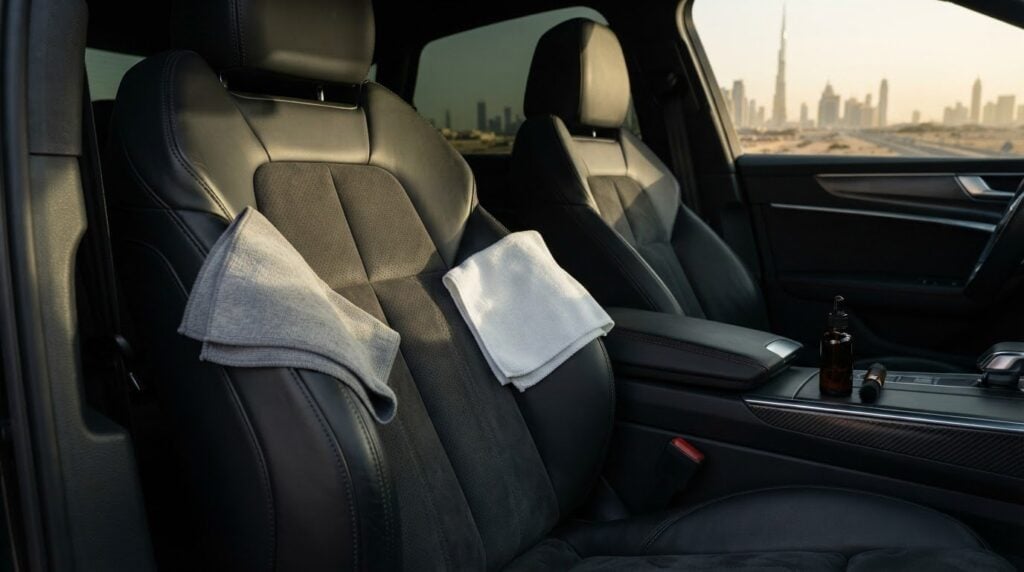
A mixed interior needs two care routines, not one. Caring for custom leather and Alcantara interiors means cleaning each material with a method suited to its surface, using separate cloths, and keeping leather conditioner off Alcantara. In the UAE, heat and sun also make careful, consistent protection important.
It makes sense to treat the cabin as one space, but leather and Alcantara respond differently to moisture, cleaners, and friction. The right approach helps preserve leather’s finish and Alcantara’s soft texture without making routine cleaning a source of damage.
Here’s how to care for each surface, deal with stubborn stains, reduce heat and UV exposure, and recognise when professional interior detailing is the better next step.
Key Takeaways
- Give leather and Alcantara separate cleaning routines, and use different cloths to prevent conditioner from transferring between surfaces.
- For a stubborn Alcantara stain, gentle blotting and a material-appropriate cleaner come first; low-setting steam may help with tougher dirt.
- Reduce prolonged sun exposure with shaded parking or a sunshade, and protect cleaned leather with a suitable protectant.
- Look for persistent stains, embedded dirt, or flattened Alcantara nap as signs that careful professional detailing may be the better option.
- Learn how the surfaces differ, so your maintenance choices preserve both leather’s finish and Alcantara’s distinctive texture.
1. Differences in care between interior materials
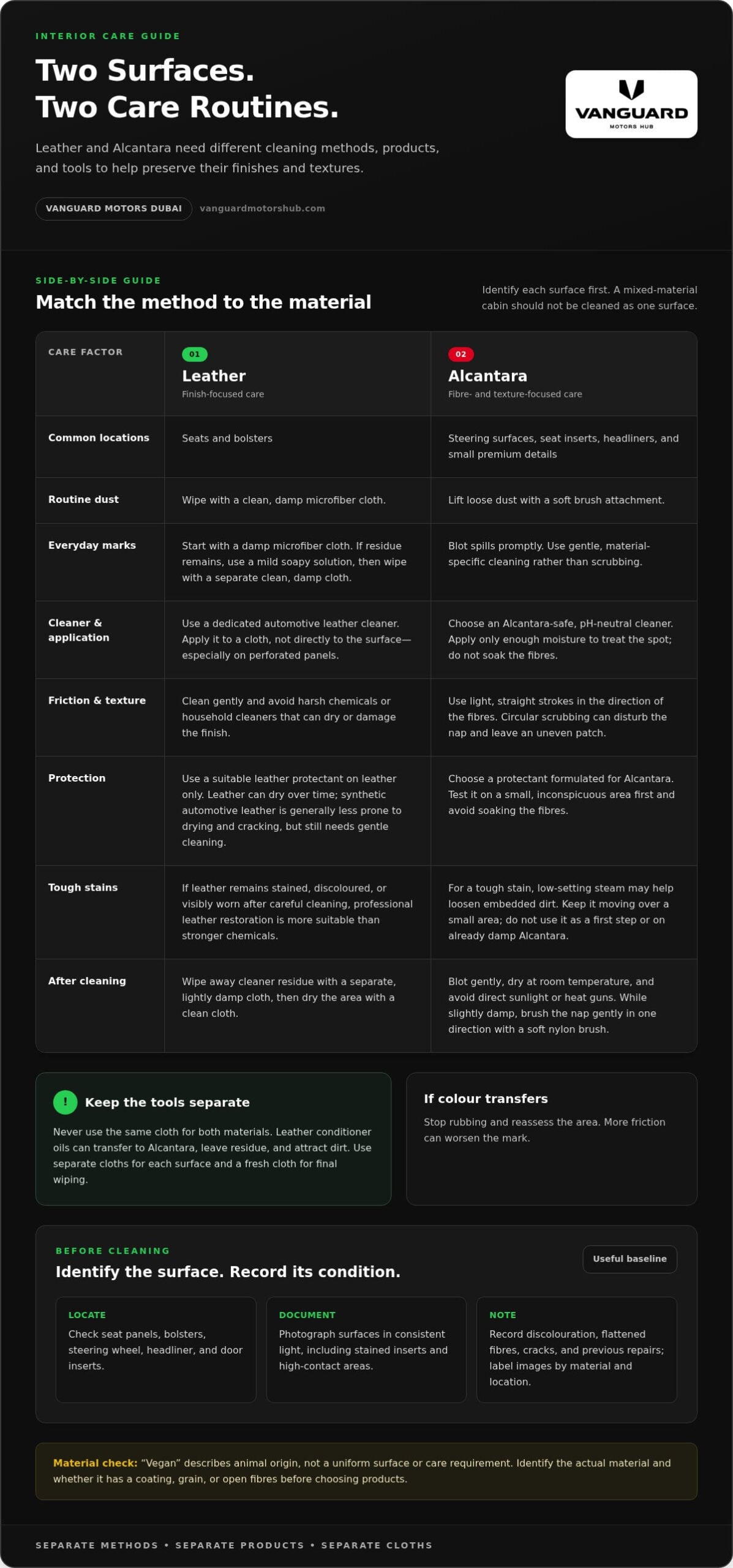
A mixed-material cabin needs separate cleaning methods because leather and Alcantara respond differently to moisture, friction, and products. Leather can dry over time, contributing to cracks and fading. Synthetic automotive leather is generally less prone to drying and cracking than genuine leather, but it still needs gentle cleaning. Alcantara’s textured, open-fibre surface can be harmed by excess moisture or unsuitable chemicals. Treating both surfaces alike can transfer conditioner oils or leave residue where it doesn’t belong.
Start by identifying the material at each touchpoint: seat panels, bolsters, steering wheel, headliner, and door inserts. Leather is common on seats and needs an appropriate cleaner and conditioner. Alcantara is often used on steering surfaces, seat inserts, headliners, and small premium details. Its texture can provide grip on a steering wheel, but this high-contact area also collects oils. Use a soft brush attachment to lift loose dust from Alcantara and a separate, clean cloth for leather.
For a leather mark, start with a damp microfiber cloth. If residue remains, use a mild soapy solution, then wipe it away with a clean, damp cloth. Avoid harsh chemicals and household cleaners, which can dry or damage the finish. Keep cleaner out of perforated leather openings by applying it to a cloth rather than directly to the seat. Blot Alcantara spills promptly and use gentle, material-specific cleaning, not leather conditioner. Never use the same cloth for both materials.
Documenting the interior’s condition before cleaning creates a useful baseline. Photograph each surface in consistent light, including the driver’s seat bolster, steering wheel, and any stained insert. Note existing discolouration, flattened fibres, cracks, and previous repairs. Label each image with the material and its location. This helps distinguish pre-existing wear from changes after maintenance and directs attention to delicate or already damaged areas.
Choose protective sprays for the specific material. Select a protectant formulated for Alcantara and test it on a small, inconspicuous area before broader use. Follow the label and avoid soaking the fibres. Keep leather protectant on leather, not Alcantara. On mixed surfaces, use separate application tools and prevent overspray from reaching neighbouring trim.
“Vegan” describes animal origin, not a uniform surface or care requirement. A synthetic label also doesn’t tell you whether a material has a coating, grain, or open fibres. Identify the actual surface before choosing products. Match the method to the touchpoint: preserve leather’s finish on seats, keep Alcantara fibres clean on steering surfaces, and use a light touch on headliners. This distinction is central to caring for custom leather and Alcantara interiors while preserving texture and durability.
2. Using low-setting steam cleaning for tough Alcantara stains
For stains or dye transfer, gently blot Alcantara with a microfiber cloth and an Alcantara-safe, pH-neutral cleaner. Never scrub. For leather, use a dedicated automotive leather cleaner. To address odours, clean the affected area rather than masking them with fragrance.
Start with the least aggressive method. Lift loose particles with a soft brush, then blot the mark from the outside edge towards the centre. This helps contain the stain instead of spreading it. Apply cleaner to a microfiber cloth, not directly to the upholstery, and use only enough moisture to treat the spot. Household detergents, bleach, and harsh chemicals can discolour or damage automotive materials.
If a tough Alcantara stain remains, a steam cleaner on a low setting may help loosen embedded dirt without saturating the fibres. Work in a small area, keep the steam moving, and don’t linger over one spot. Excess moisture can harm Alcantara, so don’t use steam as a first step on a light mark or a surface that is already damp. Finish by gently blotting with a clean cloth.
Respect the nap. Clean Alcantara with light, straight strokes in the direction of the fibres, rather than scrubbing in circles. Circular friction can disturb the texture and leave a visibly uneven patch. After treatment, let the material dry at room temperature. Avoid direct sunlight and heat guns, which can affect the fibres. While the surface is still slightly damp, brush the nap gently in one direction with a soft nylon brush.
Leather needs a different sequence. Remove dust from seams with a soft brush attachment, then apply a dedicated leather cleaner to a clean microfiber cloth. Choose a product labelled pH-neutral and intended for automotive leather rather than a household cleaner. Work gently, especially on perforated panels, and keep liquid out of the holes. Wipe away residue with a separate, lightly damp cloth, then dry the area with a clean one.
Keep tools separate for each material. A cloth that has touched leather conditioner can transfer oils onto Alcantara, leaving residue that attracts dirt. Use one cloth for leather cleaner, another for Alcantara, and a fresh cloth for final wiping. If colour transfers onto the cloth, stop rubbing and reassess the area; more friction can worsen the mark.
For leather that remains stained, discoloured, or visibly worn after careful cleaning, professional leather restoration is a more suitable next step than stronger chemicals. That distinction keeps stain removal focused: use controlled cleaning for surface dirt, and restoration for damage that routine care cannot address.
3. Protecting leather from UV damage and staining
In the UAE, heat and prolonged sun exposure can dry leather, fade upholstery, and affect Alcantara’s texture. Park in shade when possible, use a sunshade, and remove dust with a soft brush or clean microfiber cloth before it accumulates. These habits reduce exposure and abrasion, two everyday sources of interior wear.
Protect leather after cleaning and conditioning. Apply an automotive leather protectant with a clean cloth, following the label and keeping the product away from Alcantara. A protective layer can help reduce UV damage, stains, cracking, and fading. Treat it as a maintenance step, not a substitute for shaded parking or prompt spill cleanup.
Alcantara needs its own fabric protection. Choose a protectant formulated specifically for Alcantara, test it on a small, inconspicuous area, and apply it evenly without soaking the fibres. Reapply every few months or after each deep clean. If a drink spills, blot promptly with a clean cloth rather than rubbing; friction can push residue into the fabric and disturb its surface.
Dashboard and trim protection matters because these surfaces face direct sunlight through the windscreen. After cleaning, apply a suitable protective product to the dashboard, door trim, and high-touch surfaces. Keep products off adjacent upholstery unless the label identifies that material as suitable. A sunshade also reduces direct exposure across the dashboard, steering wheel, and front seats while the vehicle is parked.
Perforated leather requires precise application. Put a small amount of a suitable, relatively dry product on a cloth, then clean the surface gently. Never spray cleaner or protectant directly onto perforations, where liquid can enter and leave residue beneath the surface. Use a clean cloth to remove excess product, especially around stitched panels and ventilation holes.
Respond to stains carefully. Blot liquid spills promptly, then use a cleaner suited to the material; avoid rubbing fabric or applying harsh household chemicals. On leather, clean first and protect afterward. On Alcantara, use its designated cleaner and protectant. One all-purpose product can leave one surface greasy while failing to protect another, so keep separate products and cloths for each material.
A well-kept interior can also contribute to a more complete resale presentation. Clean seats, protected trim, and documented maintenance help show how the cabin has been cared for, though they can’t guarantee a particular resale value. Photographing the upholstery after cleaning gives you a useful condition record. If UV exposure has already caused fading, cracking, or persistent stains, restoring damaged leather is different from routine protection; stronger products won’t reverse material damage.
4. When to seek professional interior detailing
Book professional interior detailing when a stain remains after careful spot cleaning, Alcantara fibres look matted, or leather feels dry and appears faded. Persistent odours, dust embedded in seat seams, and grime around a steering wheel also signal that surface wiping is no longer enough. In Dubai, dust and heat place regular demands on a luxury vehicle’s cabin.
Most vehicles in Dubai benefit from professional interior detailing every three to four months because of constant dust and high temperatures. That interval is a useful maintenance rhythm, not a substitute for responding to spills promptly. A vehicle used frequently, parked outdoors, or carrying passengers and pets may show dirt sooner, particularly on driver-seat bolsters, floor mats, and high-touch trim.
Choose the work according to the materials and their condition. A maintenance clean can address loose dust and everyday marks; a deeper treatment may suit embedded dirt across upholstery and carpets. Mixed leather and Alcantara interiors need separate, material-appropriate methods. Tell the detailer which areas are affected, such as a stained seat insert, dirty headliner, or greasy steering surface, so the cleaning plan can target them.
Professional methods can include soft-brush vacuuming, fabric-safe cleaning solutions, controlled steam, and extraction for suitable upholstery. Alcantara requires specialised cleaning methods to remove dirt without harming its fibres. Leather needs its own cleaning and conditioning approach. The technician should adjust moisture and agitation to suit the material, especially around perforated leather, seams, and delicate trim.
Drying is part of the process. Upholstery should be fully dry before the vehicle returns to regular use, and humid conditions can extend drying time. Excess moisture left in fabric can affect the finish and cabin comfort. Ask for a cleaning plan based on the affected materials, not a single method applied across every surface.
Pricing depends on the vehicle’s condition, material mix, stain severity, and detailing scope, with the amount provided after a quote request. Those factors matter: cleaning one Alcantara insert differs from treating a mixed-material cabin with embedded dirt. A clear description of stains, odours, and affected areas helps define the work before it begins.
After detailing, maintain the result with prompt spill blotting, regular vacuuming, and separate care products for leather and Alcantara. Seek professional attention if stains persist, fibres remain flattened, or leather shows cracking that cleaning can’t correct. Damaged leather needs restoration, which is different from routine interior detailing.
5. Differences between coated leather and open-fibre Alcantara
Coated leather has a surface finish over its grain, while Alcantara is a textile with exposed fibres. This difference affects how each material handles spills, friction, and cleaning products. A coated seat panel may release a fresh mark with gentle wiping; Alcantara fibres can hold dust and residue between them. Identify the surface before choosing a cleaner, even when both materials are on the same seat.
Alcantara is a synthetic material made from 68% polyester and 32% polyurethane. It is 50% lighter than traditional leather fabric and often feels less slippery. It can also reflect less light than smoother leather, giving a cabin a different appearance. Those properties suit steering wheels and seat inserts where tactile grip and a low-glare finish matter, but they also call for careful fibre maintenance.
Coated leather’s smoother surface makes product placement important. Put a dedicated, neutral-pH automotive leather cleaner on a microfiber cloth, then work gently across a small area. Avoid applying liquid directly, especially near perforations or seams. Excess product can collect in openings or leave a visible film. A fresh cloth for final wiping helps remove residue without transferring conditioner to adjacent Alcantara.
For Alcantara, blot rather than rub. Apply a cleaner made for the fabric to a separate microfiber cloth, then use light strokes that follow the nap. Abrasive pads and circular scrubbing can disturb the fibres, leaving the cleaned patch with a different texture. After cleaning, a soft brush can lift the nap evenly. Keep cloths separate so leather products don’t leave oils on the textile.
Check wear by touch as well as appearance. A steering wheel that feels slick may have accumulated skin oils; a flattened seat insert may need gentle brushing after cleaning. On coated leather, inspect high-contact bolsters for cracking, peeling, or colour loss. A stain that remains after appropriate spot care is different from loose surface dirt. Recognising the difference helps prevent aggressive cleaning from worsening existing wear.
Match care to the material, not simply the cabin’s colour or trim pattern. A dark leather bolster beside a lighter Alcantara insert still requires two cleaning approaches and separate tools. If coated leather has cracks, peeling, or persistent discolouration, surface cleaning won’t restore damaged finish. Arrange professional leather restoration for damaged leather rather than increasing cleaner strength or friction.
Vanguard Motors Dubai: Paint Protection Film (PPF) Installation
Vanguard Motors Dubai offers Paint Protection Film (PPF) Installation for drivers looking to protect their vehicle’s exterior paint. PPF is a complement to interior care, not a treatment for leather or Alcantara. Continue using material-specific cleaning and protection inside the cabin, while considering PPF for exterior paint protection. This is a relevant next step if you’re maintaining a customized vehicle and want to address its exterior as well as its upholstery. The right approach keeps each surface matched to its purpose: careful cleaning for the cabin, and film installation for painted exterior panels. To discuss Paint Protection Film (PPF) Installation, visit Vanguard Motors Dubai online.
Keep Your Cabin and Exterior in Harmony
A carefully maintained interior can shape how the vehicle feels every time you get behind the wheel. Make its upkeep part of a wider plan to preserve your car’s character, from cabin materials to exterior finish. Caring for custom leather and Alcantara interiors is one part of that considered approach; exterior work can complement the vehicle’s style and use.
Vanguard Motors Dubai offers Paint Protection Film (PPF) Installation, Colored Sticker Wraps, and Peelable Paint Applications. These options serve different exterior goals, from protecting paint to changing the vehicle’s appearance. Choose an approach that complements your vehicle, rather than treating interior care and exterior customization as competing priorities.
If you’re ready to discuss an exterior project, contact Vanguard Motors Dubai. Take the next step toward a vehicle that feels considered throughout, inside and out.
Frequently Asked Questions
What If You Have a Mixed Interior?
Map the cabin by material, then maintain each area according to its surface. For example, a leather seat bolster and Alcantara centre insert need different products and separate cloths, even when they form one seat. Note where each material appears, including the steering wheel, door panels, and headliner. This helps prevent using a cleaner chosen for one surface on another by mistake.
What about maintenance?
Use a light, consistent routine instead of waiting until dirt becomes visible. After a dusty drive, remove loose debris from seams and seat edges before it gets pressed into the upholstery. Deal with spills promptly, and inspect frequently touched areas such as the driver’s bolster and steering wheel for changes in texture or finish. Label products by material to keep leather care items separate from Alcantara supplies.
How do you clean custom leather car interiors safely?
Check the vehicle’s care manual first, since custom finishes and coatings may have specific restrictions. Remove loose grit before wiping, then test the leather cleaner on a hidden area, such as the lower seat side. Use a clean microfiber cloth and light pressure. If colour transfers to the cloth or the finish looks uneven, stop rather than repeatedly treating the spot. This helps avoid turning a stain into surface damage.
How do you clean and maintain Alcantara interiors?
Use a soft brush attachment to lift dry dust from Alcantara, especially around seat seams and steering-wheel grips. For a small mark, treat only the affected area with a product intended for Alcantara, without soaking the textile. Let the surface dry naturally before judging the result, as damp fibres can look temporarily darker. If the nap still appears uneven, gently brush it in a consistent direction.
What products are safe for automotive leather and Alcantara?
Choose cleaners labelled for automotive leather or specifically for Alcantara, and follow the product directions. A neutral-pH leather cleaner may suit leather, but it isn’t automatically appropriate for Alcantara. Avoid bleach, solvent-based household cleaners, and products that leave a greasy film. Keep a dedicated microfiber cloth for each material, and test any new product on a concealed patch before treating a prominent seat panel.
How often should leather and Alcantara car seats be cleaned and conditioned?
Clean high-contact Alcantara areas every two to four weeks to help prevent oil saturation, and condition leather every four to six weeks for most vehicles. Adjust your routine to cabin use: frequent passengers, children, or regular steering-wheel contact can mean more visible soil. For professional interior detailing in Dubai, a three-to-four-month interval is a useful general rhythm, with spot care between sessions.
Can leather cleaner or conditioner damage Alcantara?
Yes. Leather conditioner can leave oils on Alcantara, changing its feel and attracting dirt, while an unsuitable cleaner can affect the fibres or colour. Keep application cloths separate and prevent liquid or spray from crossing onto adjoining inserts. If product lands on Alcantara accidentally, blot it gently with a clean cloth rather than rubbing. Don’t add another chemical to “neutralise” it, as that may compound the residue.
Should you use a professional detailer for custom leather and Alcantara, and what does it cost in the UAE?
Professional detailing is useful for embedded dirt, persistent stains, or mixed-material areas that need separate treatment. Cost depends on the vehicle’s condition, materials, affected areas, and scope of work; pricing is provided after a quote request. For leather damage beyond routine cleaning, Vanguard Motors Dubai offers Leather Restoration. Share which surfaces need attention and describe any stains or wear when requesting a quote.