

The right exterior styling mods for performance cars do more than make a vehicle stand out. They shape its character while keeping airflow and function in mind. Body kits, vents and spoilers can create a more purposeful profile, while paint, wraps and graphics give it a distinct identity. The goal is to complement the car without compromising its intended use.
A bold finish can transform a performance car, but each choice has different implications for appearance, practicality and airflow. This guide explains what body kits, vents and spoilers can contribute, which smaller upgrades can sharpen the details, and how paint and wraps change the overall look. Use these points to choose modifications that suit your car and how you drive it.
Key Takeaways
- Choose styling upgrades that complement your car’s purpose and preserve its airflow, rather than selecting parts on appearance alone.
- Compare body kits, vents and spoilers by how they shape the car’s profile and fit with its existing design.
- Build the look step by step: smaller exterior details can make a noticeable difference without changing the whole car.
- Use paint, wraps and graphics to create a distinctive finish, while considering how each option affects the original paint.
- For a refreshed finish or added paint protection, explore options such as colored wraps, peelable paint and PPF installation.
1. Airflow and performance considerations
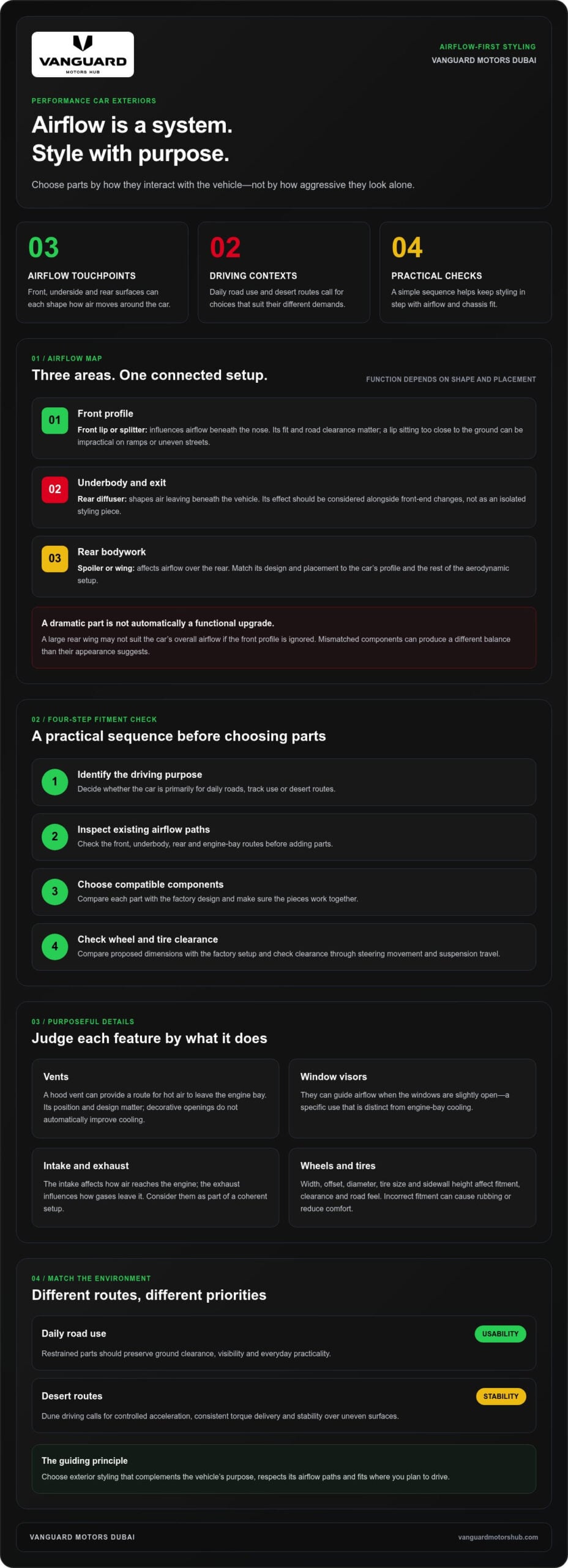
Exterior styling can influence how air moves around a car, so assess function as well as appearance. A front splitter, side skirt or rear spoiler changes the surfaces air meets as the vehicle moves. Shape and placement matter more than an aggressive look alone. Poorly matched parts can disturb airflow rather than support the car’s intended balance. Compare each proposed modification with the factory design and consider how you use the vehicle.
Aerodynamic parts work as a system. A front lip can influence airflow beneath the nose, while a rear diffuser shapes the air leaving under the vehicle. A spoiler affects flow over the rear bodywork. Changing one area alone may produce a different balance from changing several parts together. For example, a large rear wing may look striking but fail to suit the car’s overall airflow if the front profile is not considered. Choose parts designed to complement the vehicle’s shape.
Vents also need a clear purpose. A hood vent can provide a route for hot air to leave the engine bay, but its position and design determine how it works with the vehicle’s airflow. Decorative openings do not automatically improve cooling. Window visors, by contrast, can guide airflow when the windows are slightly open, making them useful for that specific purpose. Judge each feature by its function, not its name or appearance.
Airflow upgrades can extend beyond bodywork. Improved intake and exhaust systems can help an engine perform more efficiently under load. The intake affects how air reaches the engine, while the exhaust system influences how gases leave it. These components should be considered as part of a coherent setup, rather than isolated cosmetic additions. A styling choice should not obstruct an intake opening or interfere with the intended route of air through the engine bay.
Aftermarket wheels and tires can change fitment, performance and ride quality. Wheel width, offset and diameter affect how a wheel sits; tire size and sidewall height influence clearance and road feel. A wider setup may alter grip and steering response, but incorrect fitment can cause rubbing or reduce comfort. Compare proposed dimensions with the factory setup, then check clearance through steering movement and suspension travel.
For driving in the UAE, distinguish daily road use from desert routes. Dune driving calls for controlled acceleration, consistent torque delivery and stability over uneven surfaces. A visual modification that restricts airflow or disrupts vehicle balance may not suit both environments. Consider where you plan to drive before choosing parts, then assess whether each change supports that use.
A practical sequence is straightforward: identify the driving purpose, inspect existing airflow paths, choose compatible parts, then check wheel and tire clearance. This helps keep exterior styling in step with the engine and chassis. The best exterior styling mods for performance cars make a vehicle more distinctive without treating airflow as an afterthought.
2. Body kits, vents and spoilers
A body kit reshapes a car’s profile with components such as front lips, side skirts and rear diffusers. Some front lips and rear diffusers are bolt-on parts that require no cutting, unlike permanent body alterations. Their value depends on fit and design, not simply how low or aggressive they look. A front lip that sits too close to the road can also be impractical on steep ramps or uneven streets.
For track use, prioritize well-fitted aerodynamic components designed to work together at speed. For street use, choose restrained parts that preserve ground clearance, visibility and everyday usability. The right choice depends on the car’s intended environment, rather than a universal track-versus-road rule.
Splitters, diffusers and wings change how air moves around and beneath a vehicle. A splitter can manage airflow at the front, a diffuser shapes the air exiting under the rear, and a wing can influence airflow over the back. Together, these parts can affect aerodynamic balance and handling, but the result depends on design, placement and speed. A mismatched combination may not deliver the balance its appearance suggests.
Vents add function when their placement supports airflow through the engine bay. Hood vents can help release engine heat, but decorative openings alone do not establish a cooling benefit. Consider the vent’s position alongside the hood’s shape and the airflow path. On a performance car, a purposeful opening and a visual imitation can look similar from the outside.
Rear spoilers range from a subtle boot lip to a prominent wing. A boot lip spoiler adds a raised edge to the trunk line, creating a restrained upgrade for drivers who want a more defined rear profile. Roof spoilers extend the roofline above the rear window and can visually connect the roof with the hatch or boot. Match the spoiler’s proportions to the body, glass and existing trim.
Material also shapes the result. Carbon body kits can offer a distinctive styling option, but material choice alone does not establish a particular weight or durability benefit. The carbon weave can become a visible design feature, while painted components create a more integrated appearance. Whichever finish you choose, consistent panel gaps and secure attachment matter more than adding extra pieces.
Assess a kit in stages: compare its profile with the factory body, review clearance at the front and sides, then consider how the rear components work together. Check how a roof spoiler, boot lip or wing follows the vehicle’s existing lines. For Chinese car brands, model-specific styling helps maintain a good fit and visual coherence. These checks make upgrades deliberate rather than a collection of unrelated parts.
If you’re weighing a body-kit direction against your car’s design and intended use, discuss your exterior styling goals before settling on a combination.
3. Quick and inexpensive exterior modifications
Small changes can refresh a vehicle without committing to a complete body kit. Consider coordinated valve caps, a subtle badge or contrasting mirror finish. These details work best when their colour and material suit the factory paint and trim. Start with one change, assess the result, then decide whether another detail adds cohesion or visual clutter.
In the UAE, the cost of an exterior modification depends on the part, vehicle-specific fitment, finish and installation complexity. A simple trim accent differs from a custom-finished component or a change that requires paintwork. Compare the full scope, including preparation and fitting, rather than judging a modification by the part alone.
For road use in the UAE, consider applicable local requirements before installing a modification. Avoid changes that obstruct lights, number plates, windows or other vehicle features. Requirements can depend on the modification and vehicle, so include compliance in your plan rather than treating it as a finishing step.
Insurance, warranty and resale effects depend on the specific change, policy terms and vehicle condition. A visible body alteration can influence a buyer’s impression, while records of the work and retained original parts can help explain what has changed. Keep records of installed components and finishes, and review how the modification relates to the vehicle’s existing coverage.
Poorly fitted or low-quality parts can loosen, create uneven gaps, damage paint or interfere with an opening or light. For example, an adhesive trim piece applied to a dirty surface may lift at the edges. Check the part’s fit against the vehicle, prepare the mounting area properly, and inspect the finished installation from several angles.
A gradual approach makes choices easier to assess. First, choose one low-impact detail, such as a badge or mirror accent. Next, check how it looks in daylight beside the car’s paint and trim. Consider a second change only if it complements the first. This sequence helps avoid mismatched finishes and maintain a consistent design.
Suspension changes deserve more care than a visual trim update. Lowering a vehicle can alter ground clearance, ride comfort and the relationship between its wheels and bodywork. On UAE roads, consider ramps, speed humps and uneven surfaces before changing ride height. Keep suspension decisions separate from quick cosmetic updates, and assess how each change affects everyday use.
Fender flares can help shield paint from rocks and debris, while coloured wheel details can refresh a car’s side profile. Any exterior change should preserve intended airflow and performance, rather than obstructing openings or adding poorly fitted pieces. A step-by-step plan keeps the vehicle balanced: start with reversible details, review fit and finish, then move on to more involved modifications.
4. Custom paint, vinyl wraps and graphics
Custom paint, vinyl wraps and graphics change a car’s visual identity without altering its basic shape. A deep gloss finish can emphasize sculpted bodywork, while satin colour gives the same panels a softer appearance. Choose a direction that complements the car’s wheels, trim and cabin details. For example, a restrained stripe can sharpen a performance coupe without covering its factory colour.
Paint creates a finish directly on the vehicle, so colour choice and preparation are central to the result. A full repaint can create a unified appearance across panels, while contrasting accents highlight specific areas, such as a bonnet or mirror caps. Decide whether the design should follow body lines or cross them. Clear reference images help communicate the intended shade, finish and placement.
Vinyl wrapping offers another route to a new colour or visual effect. It is easier to remove than traditional paint and can help protect the vehicle’s original paint. A wrap can cover the full exterior or selected panels, such as the roof and bonnet. Graphics add another layer of personalisation, from a narrow side stripe to a geometric pattern across the doors.
Panel shape affects how a design looks. A stripe that appears straight on a flat door may seem to bend across a sculpted rear quarter. Before committing, map the graphic across adjoining panels and check where it meets door gaps, handles and trim. On a car with strong shoulder lines, aligning a graphic with that contour can make the layout feel integrated.
Finish also changes the visual effect. Gloss reflects light and highlights curves, while matte or satin finishes reduce reflections. A contrasting roof can make the car’s profile appear lower; a single accent colour can connect the wheels and exterior trim. Keep the palette deliberate, then assess the design from the front, side and rear.
Preparation is essential for both paint and wraps. Clean the surface, inspect existing marks, and plan around badges, sensors and panel edges. Dirt or damaged paint can affect the finished appearance, while rushed alignment can leave graphics uneven across the vehicle. A careful layout plan helps keep colour transitions consistent from one panel to the next.
For a reversible visual change, consider a vinyl wrap; for a lasting colour transformation, consider custom paint. Peelable paint is another way to change the exterior finish. Choose based on how long you want the look to remain and whether retaining the original paint matters. With aftermarket colour and graphics, precise placement separates a deliberate design from disconnected accents.
5. What are the most popular exterior styling mods for performance cars?
Drivers often combine a few defining upgrades rather than changing every exterior surface. A front lip, side skirts and rear diffuser create a coordinated lower profile. A boot lip or rear wing then adds emphasis at the back. These pieces work best when their proportions suit the vehicle instead of competing for attention. Treat them as one design, not separate additions.
Wheels and finish can make that design feel complete. A contrasting wheel colour draws attention to the car’s stance, while a body-colour finish creates a more understated effect. Dark wheels with bright paint give a different visual balance from wheels that match the body. Wheel and tyre fitment still matter, so appearance should not come at the expense of clearance or ride quality.
Paint, wraps and graphics offer another popular route to personalisation. A full-colour wrap changes the vehicle’s overall impression, while a roof accent or side stripe makes a smaller statement. Graphics can follow the body’s existing lines, such as a stripe running along the door and rear quarter. Choose colour and placement together, then view the design from the front, side and rear.
Spoilers and wings are familiar choices for drivers seeking a more purposeful rear profile. A subtle boot lip defines the trunk edge; a larger wing creates a stronger focal point. Hood vents add a performance-inspired detail, and functional vents can help release engine heat. Match each part to the car’s proportions and intended use, rather than automatically choosing the most prominent option.
Smaller finishing details can sharpen a build without changing its overall silhouette. Consider coordinated mirror accents, fender flares, or a distinctive exhaust tip. Exhaust tips with diameters of 100 mm or more can fill diffuser cutouts, according to the stated styling recommendation. The tip should still look proportionate to the rear bumper and exhaust layout. Repeating one colour or material across wheels, trim and tips can make separate details feel intentional.
For a balanced result, choose one dominant feature first, such as a wrap colour or wheel finish. Add components that support it, then review the complete exterior before making further changes. A bright wrap with restrained trim creates a different effect from exposed carbon details and a large rear wing. This approach keeps exterior styling mods for performance cars cohesive, distinctive and suited to the vehicle.
Ready to shape a cohesive exterior look? Discuss your styling direction and the finish you want to achieve.
Vanguard Motors Dubai: Paint Protection Film (PPF) Installation
Vanguard Motors Dubai offers Paint Protection Film (PPF) Installation for performance-car owners who want a protective layer over their vehicle’s paint. It can suit a freshly finished car or one you want to preserve while enjoying daily drives. For a visual transformation, Colored Sticker Wraps and Peelable Paint Applications offer alternative ways to change the finish. The right option depends on whether your priority is paint protection, a new colour or a change you can later remove. Consider how your chosen finish works with the car’s existing styling. Contact Vanguard Motors Dubai to discuss the finish and exterior protection that suit your car.
Make your next modification feel intentional
Start by choosing what you want the car to express: a sharper identity, a refreshed colour or added paint protection. Then decide how lasting you want the change to be and how it will work with the vehicle’s existing design. A clear direction makes it easier to select exterior styling mods for performance cars that feel considered rather than simply added on.
Vanguard Motors Dubai offers Paint Protection Film (PPF) Installation, Colored Sticker Wraps and Peelable Paint Applications. Each option serves a different priority, from protecting painted surfaces to changing the exterior’s visual character. Share your preferred finish and the look you’re aiming for to start a focused conversation about your car.
Contact Vanguard Motors Dubai about your car, and take the next step towards a finish that feels distinctly yours.
Frequently Asked Questions
What is the purpose of automotive styling?
Automotive styling lets owners shape a vehicle’s visual identity and make its design personal. It can also support practical priorities, such as protecting painted surfaces or managing airflow. For example, a subtle colour change can distinguish a daily-driven coupe without altering its silhouette. The strongest choices suit the car’s intended use, preserve functional features and create a consistent look across exterior details.
What are the UAE rules for modifying a car’s exterior and passing vehicle inspection?
There is no single rule for every exterior modification; requirements can depend on the vehicle and the alteration. For a smoother inspection, keep lights, number plates, windows and other required vehicle features visible and unobstructed. Ensure fitted parts are secure and do not create sharp or loose edges. Before making a substantial change, establish how it affects the vehicle’s inspection requirements and road-use status in your emirate.
How can I choose compatible body kits and aero parts for my car model?
Choose parts designed for your exact make, model, body style and model year, then compare their mounting points with the vehicle. A bumper lip made for a different trim may leave gaps or interfere with sensors. Review how the front, sides and rear pieces work together, and assess ground clearance on your usual routes. For a cohesive build, match the finish and proportions to the car’s existing lines.