

What if your luxury vehicle’s greatest enemy isn’t a high-speed collision, but a microscopic grain of silica? In harsh desert environments, a single windstorm acts like a high-pressure sandblaster, stripping away the prestige of your investment in minutes. We understand that for owners of high-performance machinery, a sandblasted appearance or a pitted windshield isn’t just an eyesore; it’s a significant blow to your vehicle’s soul and its market value. Finding the right sand damage protection for cars is no longer a luxury. It’s a fundamental requirement for maintaining mechanical integrity and aesthetic perfection.
You deserve a defensive strategy that matches the engineering excellence of your car. This 2026 guide reveals the elite defensive strategies and professional-grade technologies required to shield your vehicle from abrasive forces. We explore how self-healing Paint Protection Film (PPF) acts as an ultimate shield, why peelable paint offers a dual-purpose solution for aesthetics, and how the Vanguard Premium Package provides a holistic barrier. From protecting your engine from overheating to ensuring your paint maintains a showroom-quality finish, this is your roadmap to absolute vehicle resilience.
Key Takeaways
- Understand how high-velocity silica particles cause microscopic pitting and why immediate defensive measures are essential for preserving luxury finishes.
- Evaluate the performance of self-healing PPF and peelable paint as the ultimate sand damage protection for cars to maintain a showroom-quality gloss.
- Learn to safeguard critical mechanical components like air intakes and radiators from catastrophic overheating caused by desert sand infiltration.
- Master the professional two-step cleaning protocol using touchless pre-rinsing and snow foam to prevent scratching during maintenance.
- Discover how the Vanguard Premium Package provides a holistic defensive infrastructure, combining physical barriers with expert mechanical care.
The Science of Sand Damage: Why Desert Environments Are Hostile to Luxury Finishes
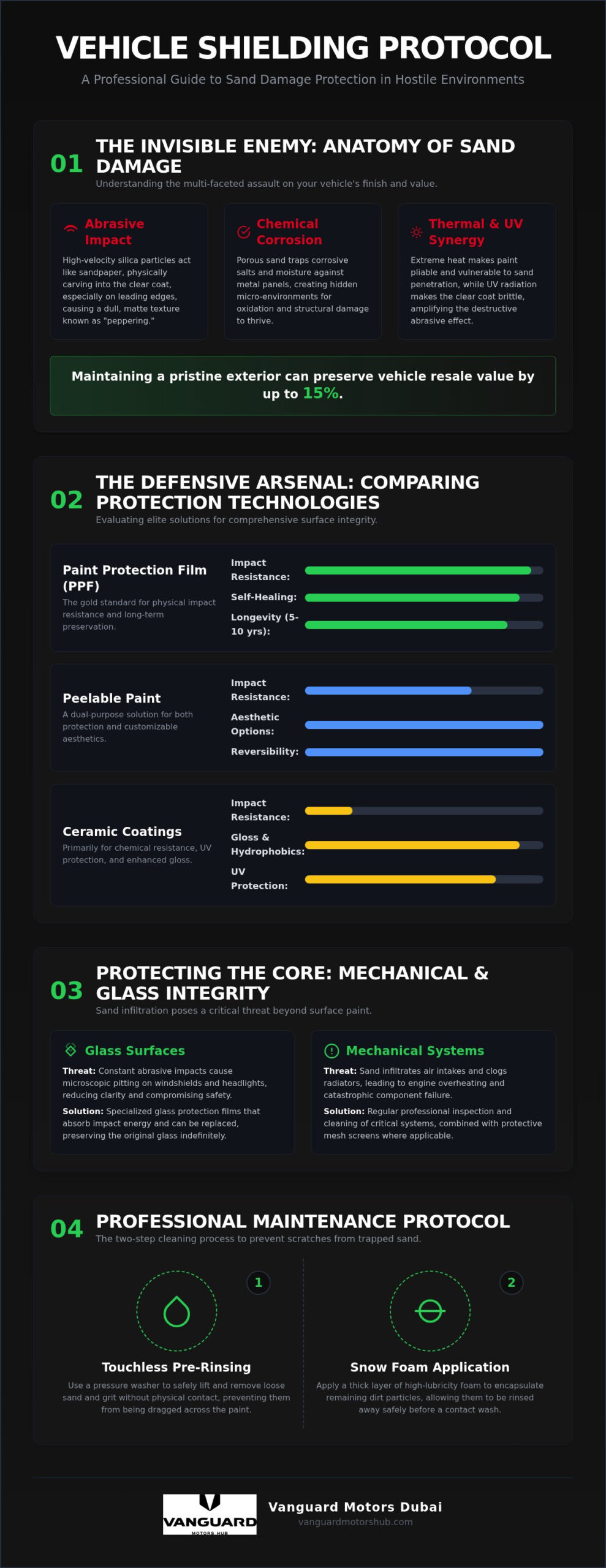
Desert environments transform ordinary silica into a relentless abrasive force. When your vehicle travels at highway speeds, airborne sand particles function like high-grit sandpaper, striking the exterior with immense kinetic energy. This high-velocity abrasion doesn’t just dirty the surface; it physically carves into the clear coat. For owners seeking effective sand damage protection for cars, understanding this mechanical assault is the first step toward preservation. The impact is most visible on leading edges, where the constant bombardment strips away the factory finish, leaving a dull, matte texture in its wake.
Beyond the immediate impact, sand is highly porous and frequently carries corrosive salts or mineral deposits. These particles lodge themselves into crevices, trim lines, and panel gaps, trapping moisture directly against the metal body. This creates a localized micro-environment where oxidation thrives, often hidden from view until the damage becomes structural. The financial reality is stark. A “sandblasted” aesthetic can significantly diminish a vehicle’s prestige. Industry data suggests that maintaining a pristine exterior can preserve resale value by up to 15%, making professional-grade protection a sound fiscal decision.
Microscopic Pitting and Surface Erosion
The front fascia, hood, and side mirrors often suffer from “peppering,” a phenomenon where thousands of microscopic craters are blasted into the paint. These tiny pits create a jagged surface that disrupts specular reflection, causing your car to lose its deep, mirror-like gloss and appear permanently hazy. Once the clear coat is compromised, these craters harbor environmental contaminants that accelerate paint failure. Sand erosion is a cumulative mechanical process that degrades factory clear coats.
The Role of Heat and UV in Sand Damage
Extreme desert heat compounds the physical threat. Intense thermal expansion causes the vehicle’s paint and metal panels to expand, making the clear coat more pliable and vulnerable to sand penetration. When combined with UV radiation, which makes factory finishes brittle over time, the abrasive impact of sand becomes even more destructive. Standard waxes and temporary sealants lack the structural integrity to withstand this synergetic assault. Modern solutions like Paint protection film (PPF) were originally engineered for harsh, sandy environments to prevent exactly this type of surface degradation. Investing in professional sand damage protection for cars ensures your finish remains resilient against both thermal stress and physical erosion.
Premium Exterior Shields: Evaluating PPF, Peelable Paint, and Ceramic Coatings
High-performance protection requires more than a surface-level application. It demands an engineered barrier. When evaluating sand damage protection for cars, three primary technologies dominate the elite sector: Paint Protection Film (PPF), peelable paint, and ceramic coatings. Each serves a distinct purpose in your defensive infrastructure. Choosing the right one depends on your aesthetic goals and the intensity of your driving environment.
Paint Protection Film (PPF) as the Ultimate Shield
PPF remains the undisputed gold standard for high-impact resistance. These films utilize Thermoplastic Polyurethane (TPU), a material specifically chosen for its ability to dissipate kinetic energy. When a sand particle strikes the film, the TPU layer absorbs the force. This prevents the impact from reaching the factory clear coat. With a lifespan typically ranging from five to ten years, it is a long-term investment in vehicle preservation.
One of the most impressive features of modern PPF is its self-healing capability. Microscopic swirl marks and abrasions caused by wind-driven sand disappear when exposed to heat. This restorative process occurs because the top layer of the film is composed of an elastomeric polymer. It returns to its original shape after being deformed. For a deeper dive into these technologies, explore The Ultimate Shield: Why Paint Protection Film is the Standard for Excellence in 2026.
Peelable Paint: The Innovative Alternative
Peelable paint has emerged as a sophisticated competitor to traditional wraps. Unlike vinyl, which can show seams or lift at the edges in extreme heat, peelable paint is applied as a liquid. This results in a seamless, edge-to-edge protective membrane. It is indistinguishable from factory paint. It offers a unique advantage: you can change your vehicle’s color while preserving the original finish underneath.
This technology is vastly superior to the temporary “sand sprays” often discussed in enthusiast forums. Those sprays provide inconsistent coverage and are often difficult to remove. Professional peelable paint offers a durable, multi-year solution that withstands high-velocity sand without degrading. It provides a level of precision that temporary alternatives simply cannot match.
Professional installations offer a permanent defensive layer compared to temporary road wraps. While temporary solutions might serve for a single trip, they lack the UV stability and impact resistance required for long-term reliability. While ceramic coatings are excellent for enhancing hydrophobicity and preventing sand from clinging to the surface, they lack the physical thickness required to stop heavy pitting. They are best used as a top-tier enhancement over PPF or peelable paint. If you’re ready to upgrade your vehicle’s defenses, you can speak with our protection specialists today.
Protecting the Core: Guarding Mechanical Systems and Glass from Sand Infiltration
While the exterior aesthetic of your vehicle is vital, the mechanical health of your car is what ensures high-performance reliability. Sand is an insidious intruder. It doesn’t just rest on the surface; it permeates the engine bay and clogs critical cooling systems. Comprehensive sand damage protection for cars must extend beneath the hood and behind the glass. Without a proactive strategy, microscopic silica particles can cause catastrophic failures that far exceed the cost of preventative maintenance.
The underbody of your vehicle is particularly vulnerable. Abrasive buildup on the drivetrain and suspension components can accelerate wear on bushings and seals. Modern luxury vehicles often feature complex underbody shielding, but these panels can also trap sand against heat-sensitive components. Regular inspections of the chassis and drivetrain are essential to ensure that abrasive grit isn’t grinding away at your vehicle’s mechanical foundation.
Maintaining Mechanical Integrity
Your engine requires massive volumes of clean air to function. In desert climates, standard air filters can become saturated with fine dust in a matter of days. High-efficiency filtration isn’t an option; it’s a necessity. We recommend inspecting your air intake system immediately after any significant sandstorm. A clogged filter restricts airflow, forcing the engine to work harder and increasing internal temperatures.
Radiator and cooling fins are equally at risk. Sand accumulation in these delicate aluminum structures blocks airflow, leading to rapid overheating. When cleaning these areas, you must avoid high-pressure water that can bend the fins. A low-pressure, meticulous rinse is the only way to restore cooling efficiency without causing structural damage. Additionally, sand can infiltrate the braking system. Grit trapped between the pad and the rotor creates deep grooves, reducing stopping power and necessitating premature Car Damage Repair or component replacement.
Glass Preservation and Window Seal Care
Glass damage is often the most frustrating result of desert driving. The “etched” or pitted look on a windshield isn’t just an aesthetic flaw; it’s a safety hazard that impairs visibility. You should never use your wipers on a dry, sand-covered windshield. This action effectively turns your wiper blades into sanding blocks, causing permanent scratches across the glass surface. Always rinse the glass thoroughly before engaging the wipers.
Window seals require equal attention. Sand particles lodge themselves into the rubber felt, creating a sandpaper-like surface that scratches the glass every time you operate the windows. Regular cleaning of these seals with a soft brush and water is vital. To further protect your interior and reduce thermal stress on the glass itself, professional Car Window Tinting provides a secondary layer of defense. These specialized films help maintain glass integrity while shielding your leather upholstery from the intense UV radiation that often accompanies sandy, high-heat environments.
Professional Maintenance Protocols: Avoiding Common Cleaning Mistakes
Your defensive layers are only as effective as the maintenance you provide. Even the most advanced sand damage protection for cars can be compromised by poor washing techniques. When sand sits on your paint, it remains a latent abrasive. The goal of a professional protocol is to remove these particles without ever dragging them across the clear coat or film surface. This requires a touchless-first approach that prioritizes encapsulation over friction.
The process begins with a high-pressure, touchless pre-rinse. This step uses water velocity to dislodge the majority of loose particulates from the bodywork, wheels, and wheel wells. Following the rinse, we apply a thick layer of snow foam. This specialized surfactant is designed to encapsulate remaining sand grains, lifting them away from the surface so they can be safely rinsed away. Once the car is largely clear of grit, the two-bucket method with grit guards ensures that any remaining debris on the wash mitt is trapped at the bottom of the rinse bucket, preventing re-contamination. Finally, specialized air-drying eliminates the need for physical contact. This prevents towel-induced marring that occurs when even the softest microfiber traps a stray grain of sand.
The Dangers of Improper Washing
Standard automatic car washes aren’t suitable for luxury vehicles; they are essentially sandpaper machines. These systems often use recycled water and heavy brushes that harbor grit from every previous vehicle. The result is a “sandblasting” effect that quickly dulls your finish. Similarly, dry-wiping a dusty car is a recipe for disaster. It creates permanent swirl marks that require intensive paint correction to fix. For a deeper understanding of these meticulous standards, consult our guide on Supercar Detailing: The 2026 Reference Guide to Meticulous Automotive Preservation.
Mobile Detailing for Post-Storm Recovery
A major environmental event, such as a severe sandstorm, requires a comprehensive recovery plan. Sand penetrates deeper than the exterior panels; it finds its way into door jambs, fuel filler caps, and engine bays. Professional mobile detailing is the most efficient way to address this. Our Mobile Detailing Van brings high-end equipment directly to you, ensuring every crevice is cleared of abrasive grit. Interior care is equally critical. Fine dust can settle into the pores of your leather seats, leading to premature cracking and wear. Maintaining consistent sand damage protection for cars means addressing these microscopic contaminants before they cause permanent damage. If your vehicle has recently weathered a storm, book our mobile detailing team for a professional recovery service.
The Vanguard Advantage: Customizing Your Vehicle’s Defensive Infrastructure
Standard solutions often fail because they don’t account for individual driving habits or specific vehicle aerodynamics. Effective sand damage protection for cars requires a bespoke infrastructure tailored to the unique stresses of your environment. The Vanguard Premium Package represents our most comprehensive answer to desert threats. It integrates elite physical shielding with meticulous mechanical and interior oversight. This holistic approach ensures that no part of your vehicle remains vulnerable to the abrasive forces of wind-driven silica.
We utilize bespoke PPF patterns designed specifically for high-impact zones. This precision ensures that the front clip, rocker panels, and mirrors receive maximum coverage without unsightly seams. You don’t have to choose between a custom aesthetic and a protected finish. We frequently integrate aesthetic upgrades with functional defense, such as applying clear PPF over colored sticker wraps or custom peelable paint. This multi-layered strategy allows for creative expression while locking in factory-fresh quality for the long term.
Tailored Protection Packages
Every project begins with a professional consultation to analyze your driving profile. A vehicle used for high-speed desert touring requires a different defensive tier than a city-based luxury sedan. Our experts guide you through selecting the necessary level of shielding to ensure your sand damage protection for cars is both efficient and effective. This customization extends to the cabin. We combine professional leather restoration with advanced interior sealants to combat the fine dust ingress that characterizes harsh climates. If your vehicle has already suffered from environmental exposure, our expertise in Cosmetic Car Repair in 2026: The Definitive Guide to Luxury Automotive Restoration can restore its original prestige before we apply permanent defensive layers.
The Future of Automotive Preservation
Vanguard Motors Dubai remains a visionary leader in automotive preservation. We stay ahead of climate-driven challenges by continuously validating new materials and application techniques. Our commitment to using only elite-tier materials ensures that supercar applications meet the highest standards of excellence. We act as a sophisticated guide for owners who value form and function in equal measure. Don’t wait for environmental damage to diminish your vehicle’s soul. Consult with Vanguard Motors Dubai for a bespoke protection plan and secure your automotive legacy today.
Securing Your Automotive Legacy in a Desert Climate
Preserving a high-performance vehicle in harsh environments requires more than occasional care; it demands a strategic defensive infrastructure. We’ve explored how high-velocity silica compromises clear coats and why mechanical systems need high-efficiency filtration to survive. From the self-healing resilience of TPU-based films to professional two-bucket washing protocols, every layer of protection serves to maintain your car’s soul and resale value. Expert sand damage protection for cars is the ultimate differentiator between a depreciating machine and a timeless masterpiece.
As specialists in supercar and luxury vehicle preservation, we utilize advanced self-healing PPF technology to lock in showroom quality. Our professional national mobile detailing services ensure that even the finest dust is cleared from your engine bay and interior leather after a storm. You don’t have to let the elements dictate your vehicle’s condition. Protect your investment with Vanguard’s Premium Protection Packages. Your vehicle is engineered for excellence; we’ll ensure it stays that way for years to come.
Frequently Asked Questions
How do I remove sand from my car without scratching the paint?
Start with a touchless high-pressure rinse to dislodge loose grit. Never use a dry cloth or sponge initially, as this grinds silica into the clear coat. Use a snow foam application to encapsulate remaining particles before a contact wash. This meticulous process ensures that abrasive grains are lifted away from the surface rather than dragged across it, preserving the mirror-like finish of your luxury vehicle.
Does car wax actually protect against sand damage in a sandstorm?
Standard car wax provides negligible protection against the high-velocity kinetic energy of a sandstorm. While it creates a hydrophobic surface, wax is a thin, soft layer that cannot dissipate the impact of abrasive particles. For genuine sand damage protection for cars, you require a physical barrier like Paint Protection Film (PPF). Wax is an aesthetic enhancement, whereas PPF is an engineered defensive shield designed for high-impact resistance.
Can sand damage the engine of my car?
Yes, sand infiltration can lead to catastrophic mechanical failure if left unaddressed. Microscopic silica particles can bypass compromised seals, contaminating engine oil and causing internal abrasion on cylinders and bearings. Additionally, sand accumulation in radiator fins blocks airflow, which often results in rapid overheating. Regular engine carbon cleaning and frequent inspections of the cooling system are essential protocols for maintaining high-performance reliability in desert climates.
Is Paint Protection Film (PPF) better than a ceramic coating for sand?
PPF is significantly superior to ceramic coatings for physical impact protection. While ceramic coatings offer excellent UV resistance and make the surface easier to clean, they lack the thickness required to absorb the energy of flying sand. Professional PPF, such as the self-healing films used at Vanguard Motors Dubai, provides a durable TPU-based layer that physically blocks pitting. For the ultimate defense, we recommend applying a ceramic coating over the PPF.
How often should I change my air filter in a sandy environment?
You should inspect your air filter every 5,000 kilometers or immediately after a major sandstorm. In extreme desert conditions, filters can become saturated with fine dust much faster than the manufacturer’s standard service interval suggests. A clogged filter restricts oxygen flow, forcing the engine to work harder and increasing fuel consumption. Replacing your filter proactively ensures your drivetrain remains efficient and protected from internal silica contamination.
Can sandstorms cause permanent damage to my car’s windshield?
High-velocity sand causes microscopic pitting and sandblasting on glass surfaces that is often permanent. These tiny craters impair visibility by catching light, creating a dangerous glare during night driving. While minor surface haze can sometimes be polished, deep pitting usually requires a full windshield replacement. We suggest applying a clear windshield protection film to act as a sacrificial barrier, preserving the original glass integrity against abrasive environmental forces.
What is the best way to clean sand out of a car’s interior leather?
Use a high-powered vacuum with a soft brush attachment to remove loose grit from the seams and pores. Avoid wiping the leather with a damp cloth initially, as this can push fine dust deeper into the material. Once the surface is clear, apply a dedicated leather cleaner and conditioner. This process prevents the abrasive sand from causing premature cracking. Professional sand damage protection for cars includes these meticulous interior restoration protocols.
Are temporary ‘road wraps’ effective for long desert drives?
Temporary road wraps offer a baseline level of defense for a single journey, but they lack the structural integrity of professional installations. These thin films can lift at the edges in extreme heat, potentially trapping abrasive sand against the paint. While better than no protection, they don’t offer the self-healing properties or UV stability found in the Vanguard Premium Package. For consistent results, a permanent, professionally applied shield is the superior choice.