
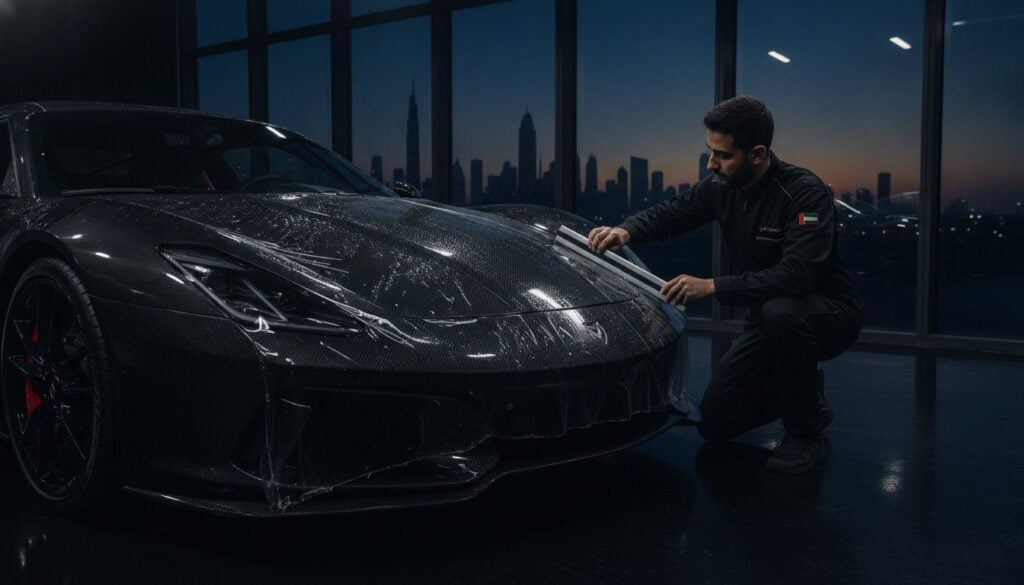
Last Tuesday, Omar discovered that a single spirited drive left his supercar’s hood looking like it had been sandblasted. For any automotive enthusiast, that sight isn’t just a nuisance; it’s the audible and visual erosion of a significant investment. You already know that harsh environmental elements and high-velocity road debris are relentless enemies of a pristine finish. It’s frustrating to curate a masterpiece only to watch swirl marks and rock chips mar its surface after a few exhilarating journeys.
This article explores why premium paint protection film has evolved into the definitive standard for automotive excellence in 2026. You’ll discover how the latest 10-mil aliphatic TPU technology provides an invisible, self-healing barrier that keeps your car looking factory-fresh regardless of the environment. We’ll examine how this investment simplifies your maintenance routine and secures a higher resale value in the competitive automotive market. From integrated ceramic top coats to the precision of professional installation, learn why PPF is the only way to ensure your vehicle remains a protected work of art.
Key Takeaways
- Understand how advanced thermoplastic polyurethane (TPU) provides an impenetrable, military-grade barrier for your vehicle’s aesthetics.
- Discover the science behind self-healing technology that allows your finish to recover from minor abrasions and swirl marks automatically.
- Learn why stacking paint protection film with ceramic coatings offers the ultimate dual-layer defense against both physical impacts and chemical contaminants.
- Identify the critical differences between standard pre-cut kits and the precision of custom bulk installations following professional paint correction.
- Explore how professional protection preserves the integrity of high-end carbon fiber and bespoke body kit conversions like Brabus and Mansory.
Defining Paint Protection Film: The Elite Standard for Surface Preservation
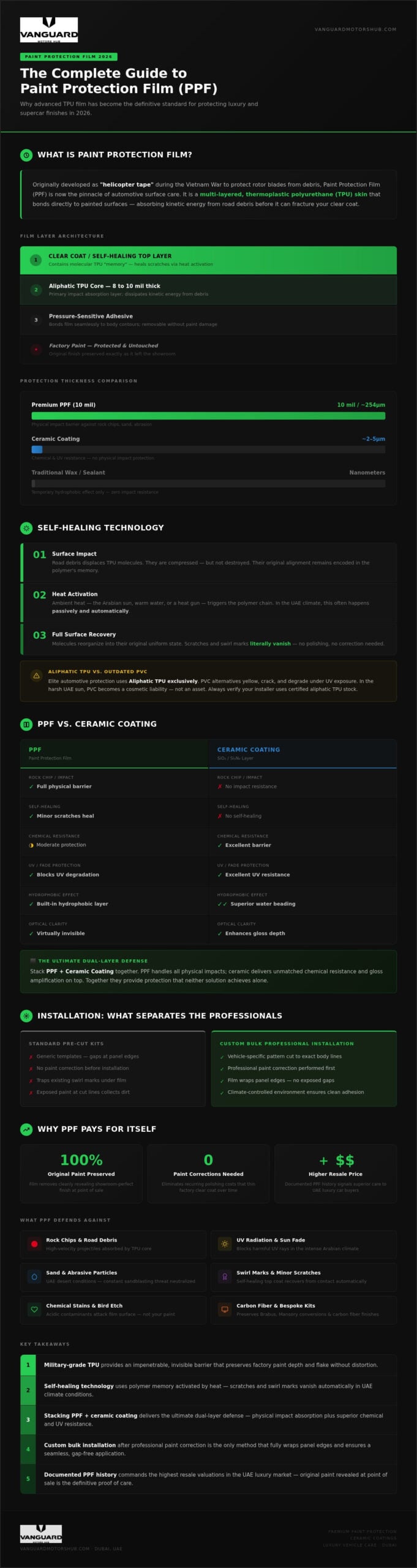
Precision engineering meets aesthetic preservation in the form of Paint Protection Film (PPF). This high-impact, thermoplastic polyurethane (TPU) layer is far more than a simple plastic wrap. It’s a sophisticated, multi-layered skin designed to bond with your vehicle’s painted surfaces. Originally developed as “helicopter tape” during the Vietnam War to protect rotor blades from debris, this technology has evolved into the pinnacle of automotive care. In the high-performance environment of the UAE, where sandblasting and road grit are constant threats, PPF acts as a sacrificial barrier that absorbs kinetic energy before it can fracture your clear coat. At Vanguard Motors Dubai, we view this material as the essential foundation for any luxury vehicle’s longevity.
Modern paint protection film is virtually invisible. It’s engineered with optical clarity that allows the depth and flake of your factory paint to shine through without distortion. Whether you’re driving a bespoke supercar or a daily driver, the film maintains the vehicle’s original design language while providing an impenetrable shield. It doesn’t just sit on the surface; it integrates with the curves of the body, ensuring that the only thing people see is the flawless finish of your car. This seamless integration is why the world’s most prestigious manufacturers and collectors consider it the industry standard for preservation.
Why Paint Protection Film Outperforms Traditional Waxes
Traditional waxes and sealants offer a microscopic layer of protection, often measured in nanometers. While they provide a temporary hydrophobic effect, they’re powerless against physical impacts. In contrast, premium PPF typically measures between 8 and 10 mils in thickness. This significant physical mass allows the film to dissipate the force of a flying pebble or abrasive sand particles. While wax might help water bead, PPF prevents the actual destruction of the substrate. By investing in this physical defense, you eliminate the need for frequent, aggressive paint corrections that eventually thin your factory clear coat. It’s a proactive strategy that replaces recurring detailing costs with a long-term, durable solution.
The Role of PPF in Preserving Resale Value
In the competitive UAE luxury car market, the condition of the factory paint is a primary driver of valuation. Collectors and enthusiasts view a vehicle with documented PPF history as a safer, more prestigious investment. Because the original paint remains untouched under the film, the car avoids the depreciation associated with rock chips, swirl marks, and UV-induced fading. Think of it as “invisible insurance” for limited-edition models or vehicles featuring carbon fiber components. When the time comes to sell or upgrade, removing the film reveals a finish that is exactly as it was the day it left the showroom, ensuring you command the highest possible price in the secondary market.
The Science of Self-Healing: How Modern PPF Technology Operates
The magic of a high-end paint protection film lies in its multi-layered architecture. It isn’t a single material. Instead, it’s a complex stack consisting of a pressure-sensitive adhesive, a central Thermoplastic Polyurethane (TPU) core, and a top clear coat. This top layer is where the self-healing technology occurs. At a molecular level, the TPU possesses a “memory” effect. When the surface is scratched or compressed by road debris, the molecules are displaced but not destroyed. They remain ready to return to their original alignment.
Triggered by ambient heat, such as the intense Arabian sun or a splash of warm water, these molecules reorganize into their original, uniform state. The scratches literally vanish before your eyes. This isn’t marketing fluff; it’s polymer science designed to maintain a showroom shine without constant polishing. To understand the full depth of this technology and how thermal activation creates an immortal automotive finish, explore our detailed guide on self-healing paint protection film and the science behind its molecular memory. Beyond healing, modern films incorporate advanced hydrophobic properties. These layers repel water, oil, and the fine desert dust that often clings to unprotected paint. This makes your weekly maintenance significantly more efficient and keeps the vehicle cleaner for longer periods between professional details.
Thermoplastic Polyurethane (TPU) vs. Outdated PVC
Elite automotive protection relies exclusively on Aliphatic TPU. This material is vastly superior to the cheaper Polyvinyl Chloride (PVC) films used in lower-end applications. TPU offers exceptional optical clarity and remains flexible over time, allowing it to contour perfectly to complex body lines. Unlike PVC, which is prone to yellowing, cracking, and becoming brittle under thermal stress, TPU remains stable and clear. Professional facilities avoid PVC because it lacks the durability required for high-performance vehicles. For those seeking the gold standard in preservation, the Vanguard Motors Dubai premium package ensures only the highest grade of TPU is applied to your investment.
UV Resistance and Oxidation Defense
The UAE climate presents a unique challenge. Relentless UV radiation can cause paint to oxidize and lose its luster rapidly. Modern film acts as a high-SPF sunscreen for your car’s clear coat. By filtering out harmful rays, it prevents the chemical breakdown that leads to a dull, “chalky” appearance on hoods and roofs. In the United Arab Emirates, where summer temperatures regularly exceed 45°C, UV stability is a functional necessity for long-term aesthetic integrity. This invisible shield ensures that the vibrant pigments of your factory paint remain as deep and rich as the day they were sprayed.
PPF vs. Ceramic Coating: Debunking Myths and Choosing the Right Defense
A common misconception among automotive enthusiasts in the Emirates is that a ceramic coating provides sufficient protection against road debris. This is a dangerous myth. While ceramic coatings offer exceptional chemical resistance and a hydrophobic finish, they’re essentially a liquid polymer that hardens on the paint. They don’t have the physical mass to stop a stone at highway speeds. Paint protection film, however, is a substantial urethane barrier designed specifically for impact absorption. If you’re looking for a shield against rock chips and sandblasting, film is the only solution that delivers results.
You don’t have to choose between these two technologies. In fact, the most elite vehicles in Dubai and Abu Dhabi utilize a “stacked” approach. Applying a ceramic coating over your film combines the physical durability of the urethane with the slick, easy-to-clean properties of the coating. This synergy creates a surface that’s both impenetrable and effortless to maintain. Durability timelines also differ significantly. A high-end ceramic coating typically lasts between 2 and 5 years before requiring a refresh. A premium installation of paint protection film often carries a lifespan of 5 to 10 years, making it a much more permanent investment in your vehicle’s future.
When PPF is Non-Negotiable
For certain vehicles and driving habits, film isn’t just an upgrade; it’s a requirement. If your weekends involve high-speed runs on Sheikh Zayed Road or navigating the gravel-strewn climbs of Jebel Jais, your front bumper and hood are under constant fire. High-impact zones like the side mirrors and fenders bear the brunt of the UAE’s harsh environment. Furthermore, owners of vehicles with “frozen” or matte factory paint must prioritize film. These finishes are notoriously impossible to repair; you can’t polish out a scratch on a matte surface without ruining the texture. In these cases, the film acts as the only viable way to preserve the factory look. For maximum coverage against these relentless threats, a full body PPF treatment delivering a 360-degree shield ensures no panel is left vulnerable.
The Synergy: Ceramic Coating over PPF
Applying a ceramic layer on top of your film enhances the overall experience by making the surface incredibly slick. This prevents brake dust and road grime from bonding to the film, which simplifies your washing routine. While the film provides the structural defense, the ceramic coating enhances the “aesthetic pop” by adding a mirror-like depth to the finish. This combination ensures your car doesn’t just stay protected; it maintains a high-gloss, liquid appearance that stands out under the bright desert sun. It’s the ultimate dual-layer strategy for those who refuse to compromise on either form or function.
The Precision Installation Process: What Distinguishes Professional Application
Many owners focus solely on the brand of paint protection film, but the material is only half the equation. The installation process is where technical skill transforms a high-tech polymer into an invisible shield. A master-level application begins long before the film touches the car. It starts with comprehensive paint correction. Even brand-new vehicles delivered in the Emirates often possess factory orange peel, sanding marks, or light transit scratches. Sealing these defects under film makes them permanent. Professional technicians ensure the substrate is flawless, creating a mirror-finish foundation that maximizes the film’s optical clarity.
In the UAE, the environment is a constant adversary. A professional facility must be a climate-controlled, sterile environment. Dust, hair, or lint trapped under the film leads to “silvering” or visible bubbles that compromise the aesthetic. High-end centers use advanced filtration systems to maintain a static-free, purified atmosphere. This level of control is non-negotiable when protecting an asset worth millions of dirhams. The final inspection is a multi-stage audit. Technicians use high-intensity LED lighting to scan every square centimeter for imperfections, ensuring that every tucked edge is securely bonded and the finish is indistinguishable from the original factory paint.
Edge Wrapping and Seamless Aesthetics
Tucking edges behind panels is the hallmark of a master installer. This technique prevents “lift,” where the film begins to peel at the corners due to pressure washing or high-speed wind resistance. While many shops use standard pre-cut kits that stop short of the panel edge, a custom bulk installation allows for 100% coverage. This is particularly vital for complex body kit conversions where the film must follow aggressive aerodynamic lines without visible seams. A truly professional installation remains hidden, following the car’s natural contours so perfectly that the protection becomes part of the vehicle’s design language.
The Role of Decontamination
Meticulous surface preparation includes both chemical and mechanical decontamination. Clay bars and iron removers extract embedded contaminants that a standard wash misses. For paint protection film to bond perfectly, the surface must be surgically clean. Even a single speck of desert sand can cause a “tenting” effect, ruining an entire panel’s integrity. Supercar detailing requires this level of obsession because the stakes are higher. Every square inch of the vehicle is scrubbed and stripped of oils to ensure the pressure-sensitive adhesive creates a permanent, crystal-clear bond. Ready to secure your vehicle’s future? Explore the precision installation standards at Vanguard Motors Dubai today.
Elevating Vehicle Integrity with Vanguard Motors’ Protection Solutions
The Vanguard Premium Package represents a holistic ecosystem for the discerning owner who demands total aesthetic security. It isn’t merely a service; it’s a comprehensive strategy designed to maintain the peak condition of your vehicle through every kilometer driven in the Emirates. By choosing this package, you align your asset with a standard of care that mirrors the engineering of the vehicle itself. This integrated approach ensures that every surface, from the leading edge of the bumper to the intricate rear diffuser, remains shielded from the environmental variables that threaten a factory finish.
Integrating paint protection film with high-end carbon fiber components is a functional necessity in the UAE. Exposed carbon fiber is susceptible to UV-induced resin yellowing and delamination when subjected to relentless solar radiation. Applying a premium TPU layer creates a permanent UV filter that preserves the deep, three-dimensional weave of the carbon. To ensure the longevity of this barrier, our Mobile Detailing Van brings professional maintenance directly to your residence. This service provides the specialized care required to keep the film in pristine condition, ensuring it remains invisible and effective for years to come.
Bespoke Protection for High-End Conversions
Precision is paramount when dealing with the aggressive aerodynamics of Brabus and Mansory body kits. These conversions feature complex splitters, enlarged intakes, and sharp contours that require a master’s touch to wrap successfully. We specialize in applying film to these intricate shapes, protecting vulnerable carbon fiber hoods and splitters from high-speed impact and road rash. If you’re planning or have recently completed a Brabus body kit installation, understanding how PPF integrates with these bespoke aerodynamic components is essential to preserving both their appearance and structural integrity. Owners can further customize their protection by selecting between high-gloss finishes that enhance factory depth or matte films that transform the vehicle’s persona into a stealth-inspired masterpiece. This tailored approach ensures that your bespoke modifications remain as striking as the day they were installed.
The Vanguard Commitment to Precision
Our philosophy combines high-octane passion for automotive art with professional technical precision. We understand that a supercar is more than transportation; it’s a masterpiece of mechanical expression. This perspective drives our commitment to meticulous care for every vehicle that enters our facility, from limited-edition exotics to luxury daily drivers. We don’t just apply film; we preserve your car’s soul against the elements. Experience the pinnacle of vehicle protection with Vanguard Motors Dubai and secure the future of your automotive investment today.
Secure the Future of Your Automotive Investment
Protecting a high-performance vehicle in the UAE requires more than just occasional maintenance; it demands a proactive defense strategy. You’ve seen how modern paint protection film acts as a self-healing skin that absorbs the kinetic energy of road debris while preserving the factory clear coat. By choosing the right material and a meticulous installation process, you ensure that your investment remains immune to the desert’s harsh variables. It’s the difference between a car that ages and one that remains timeless.
Vanguard Motors specializes in the complex art of protecting elite conversions like Brabus and Mansory kits. Our dedicated climate-controlled installation facility provides the sterile environment necessary for a flawless, invisible finish. Whether you’re opting for the comprehensive Vanguard Premium Package or targeted protection for exposed carbon fiber, our team delivers the technical precision your vehicle deserves. It’s time to stop worrying about rock chips and start enjoying the drive. Secure Your Vehicle’s Legacy with Vanguard Motors Hub today.
Frequently Asked Questions
How much does professional paint protection film installation cost?
The total investment for professional application is determined by the vehicle’s surface area, the complexity of its aerodynamic features, and the specific coverage package you select. Factors like the level of paint correction required and the integration of protection for bespoke body kits also play a role. A tailored quote ensures that your specific supercar receives the precise amount of material and labor needed for a seamless finish.
Will paint protection film yellow or peel over time?
High-quality paint protection film engineered from aliphatic TPU is specifically designed to resist yellowing and oxidation. Unlike outdated PVC films, modern TPU remains optically clear even under the intense UV radiation found in the UAE. Peeling is typically a result of poor edge-wrapping or improper surface preparation; professional installation in a climate-controlled facility ensures a permanent, secure bond that lasts for years.
Can you apply ceramic coating on top of PPF?
You can absolutely apply a ceramic coating over your film to enhance its hydrophobic properties and aesthetic depth. This combination provides a dual-layer defense where the film handles physical impacts and the coating repels chemical contaminants and road grime. It’s a standard practice for luxury vehicle owners who want a mirror-like finish that stays cleaner for longer periods between professional maintenance sessions.
How do I maintain my car after PPF has been installed?
Maintain your protected vehicle by using a pH-neutral car shampoo and avoiding high-pressure washers directly on the film’s edges. While the film is incredibly durable, using soft microfiber mitts and drying towels prevents unnecessary friction and preserves the top coat. For those with busy schedules, utilizing a mobile detailing van is an efficient way to ensure the film receives professional care without leaving your residence.
Is it possible to remove PPF without damaging the original paint?
Professional-grade film can be removed safely without damaging the original factory paint as long as it was applied to a sound, cured surface. The pressure-sensitive adhesive is designed to bond securely but release cleanly when professional heat is applied during the removal process. This leaves the paint underneath in the same factory-fresh condition it was in the day the film was first installed.
Does PPF protect against door dings and major scratches?
Paint protection film is primarily designed to absorb kinetic energy from road debris, sand, and minor abrasions encountered during high-speed driving. While it offers a significant layer of defense, it may not prevent structural metal damage from heavy door dings or high-impact collisions. Its self-healing paint protection film properties excel at erasing swirl marks and light scratches that occur during regular use or improper cleaning techniques.
How long does the installation process typically take for a full-body wrap?
A full-body wrap typically requires three to five days of dedicated labor in a professional, dust-free facility. This timeframe allows for meticulous paint correction, chemical decontamination, and the precision application of the film to every individual panel. Rushing this process compromises the integrity of the bond; taking the necessary time ensures that every edge is perfectly tucked and the final finish is flawless. For a deeper understanding of what comprehensive coverage entails, our guide on full body PPF as the ultimate 360-degree shield for luxury vehicles outlines every stage of the process in detail.
Can PPF be applied to matte or satin paint finishes?
Specialist films are available specifically for matte and satin paint finishes to preserve their unique texture without adding unwanted gloss. These films allow you to protect “frozen” factory paints that are otherwise impossible to polish or repair if they become scratched. Using a dedicated matte film ensures the vehicle’s original aesthetic remains intact while gaining the same high-impact protection as a traditional glossy finish.