
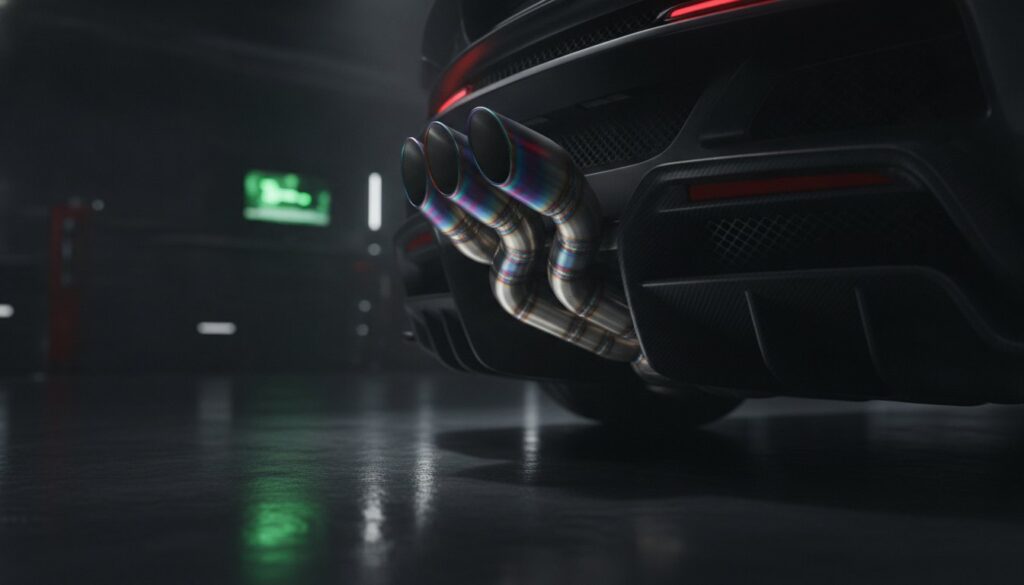
Your supercar’s factory exhaust isn’t a performance component; it is a regulatory compromise that silences the very soul of your engine. With the first stage of Euro 7 standards taking effect on November 29, 2026, manufacturers are forced to prioritize emissions and decibel limits over the raw, emotive experience of driving. It’s frustrating to own a high-revving masterpiece that sounds more like a whisper than a roar. This is why custom exhaust systems for supercars have become the essential final step for enthusiasts who refuse to settle for a muted soundtrack.
You shouldn’t have to choose between a refined daily drive and an aggressive track-day presence. By upgrading to elite materials like titanium or Inconel 625, you can achieve a unique, exotic F1 sound while simultaneously stripping away the dead weight of stock steel systems. This guide explores how bespoke engineering transforms your vehicle’s performance, weight, and sonic profile through elite craftsmanship. We’ll break down the technical advantages of advanced heat management for the UAE’s demanding climate and show you how to secure measurable horsepower gains through precision airflow optimization.
Key Takeaways
- Understand how high-flow engineering reduces backpressure to unlock horsepower while significantly cutting weight compared to factory steel systems.
- Compare aerospace-grade materials like Titanium and Inconel to find the perfect balance between weight reduction and extreme heat resistance.
- Master your vehicle’s acoustic signature with Valvetronic technology, allowing you to switch between refined street driving and a raw, track-inspired roar.
- Identify the essential role of custom exhaust systems for supercars in managing engine bay temperatures within the demanding climate of the UAE.
- Learn how to achieve a flawless finish by integrating bespoke exhaust components with elite conversion kits from brands like Brabus and Mansory.
The Engineering of Performance: Why Upgrade to a Custom Supercar Exhaust?
The factory Exhaust system on a modern supercar is a masterpiece of compromise. Manufacturers must balance global emissions compliance, drive-by noise regulations, and cost-effective production. For the discerning owner, these restrictions act as a mechanical bottleneck that stifles the engine’s true potential. Investing in custom exhaust systems for supercars isn’t merely an aesthetic choice; it’s a fundamental upgrade in fluid dynamics. By replacing restrictive factory piping with high-flow, mandrel-bent alternatives, you allow the engine to breathe with newfound urgency. This optimization enhances the scavenging effect, where the velocity of exiting gases creates a vacuum that pulls the next combustion cycle’s waste out more efficiently, resulting in sharper throttle response and measurable gains in both horsepower and torque.
Weight Savings and Power-to-Weight Ratios
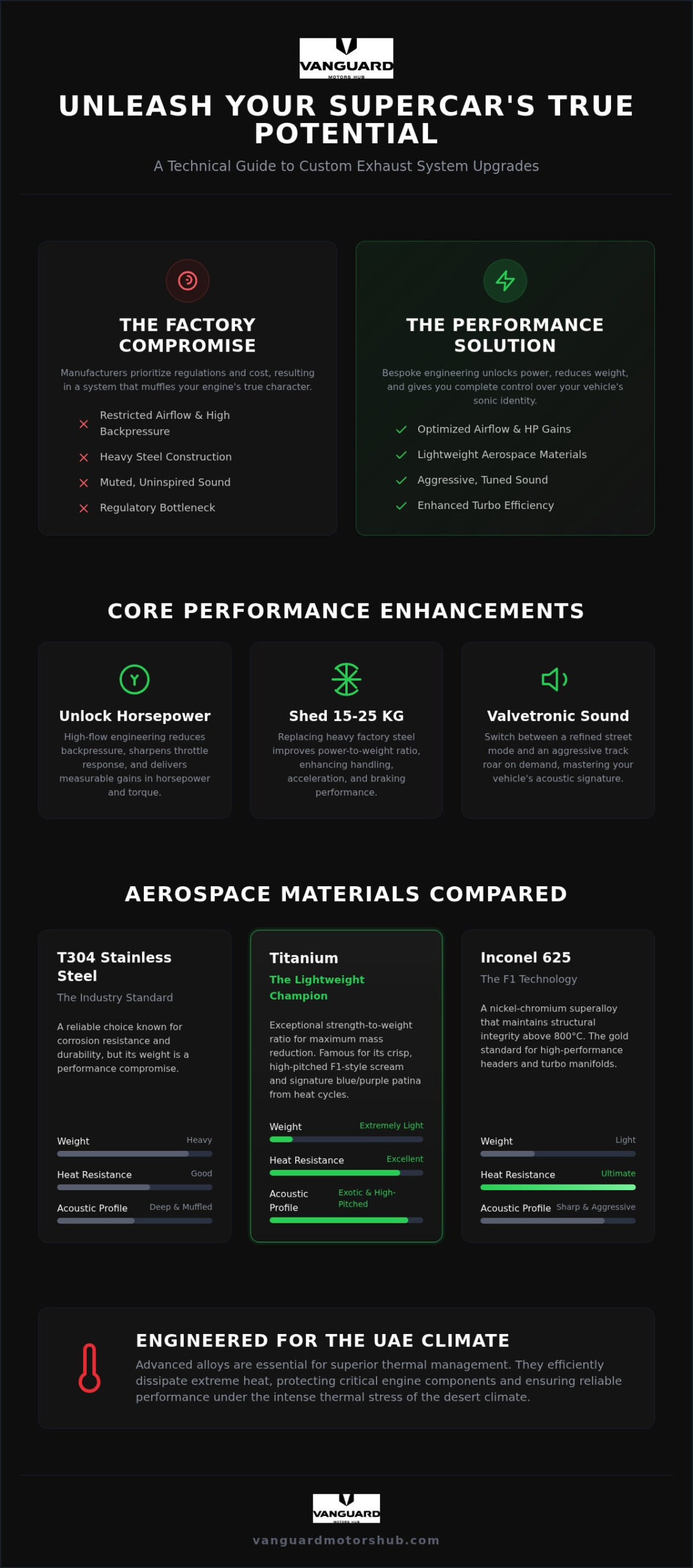
Every kilogram counts when you’re chasing elite performance metrics. Standard factory systems often rely on heavy stainless steel or thick-walled cast iron components that add significant bulk to the chassis. Transitioning to a bespoke titanium or Inconel configuration can shed between 15kg and 25kg from the vehicle’s rear. Since most supercars are mid or rear-engined, removing this mass directly improves weight distribution and reduces the pendulum effect during aggressive cornering. This reduction in gross vehicle weight translates into better handling, improved braking distances, and a more favorable power-to-weight ratio. It’s a transformative change that you’ll feel the moment you turn the wheel at high speeds.
Backpressure and Turbocharged Efficiency
Modern turbocharged powerplants require a delicate balance of backpressure to maintain low-end driveability. However, excessive restriction is the enemy of turbocharger efficiency. Custom downpipes and high-flow catalytic converters allow turbos to spool significantly faster, virtually eliminating lag and providing immediate power delivery. At Vanguard Motors Dubai, we understand that engineering these systems requires surgical precision. Our installations ensure that flow rates are perfectly calibrated with the engine management system (ECU) parameters. This technical synergy prevents “over-boosting” while maximizing top-end output, ensuring your performance gains remain reliable even under the intense thermal stress of the UAE’s desert climate. The result is a vehicle that feels lighter, reacts faster, and delivers power with uncompromising consistency.
Aerospace Materials: Titanium, Inconel, and Stainless Steel Compared
Selecting the right alloy is the most critical decision when commissioning custom exhaust systems for supercars. While T304 stainless steel remains the industry standard for its corrosion resistance and cost-effectiveness, it often lacks the extreme properties required for elite track applications or the intense heat of the UAE. To truly understand How Automotive Exhaust Systems Work at the highest level, we must look toward aerospace-grade materials that redefine thermal management and acoustics. These specialized metals don’t just change how your car sounds; they dictate how it handles thermal radiation and structural stress during high-velocity runs.
Titanium Systems: The Lightweight Champion
Titanium’s exceptional strength-to-weight ratio allows for a significant reduction in vehicle mass without sacrificing structural integrity. Beyond the weight savings, titanium offers a distinct aesthetic appeal through the iconic “blueing” effect. As the metal cycles through intense heat, it develops a vibrant purple and blue patina that signals high-performance use. Acoustically, titanium is prized for its crisp and metallic resonance. It generates a higher-pitched, exotic scream that differs significantly from the deeper, more muffled tones of traditional steel. If you’re looking for that signature wail often associated with legendary Italian V12s, titanium is the definitive choice for your configuration.
Inconel 625: Formula 1 Technology for the Street
Inconel 625 is a nickel-chromium superalloy specifically engineered for environments where temperatures regularly exceed 800°C. This material is the gold standard for high-performance headers and manifolds because it maintains its structural strength under thermal loads that would cause stainless steel to fatigue or warp. Because Inconel is so incredibly strong, manufacturers can use much thinner walls, often as thin as 0.4mm to 0.6mm. This thin-wall advantage provides maximum exhaust flow and incredible weight savings while remaining durable enough for daily use. It’s the same technology found in Formula 1 exhaust manifolds, offering a unique “hollow” and aggressive acoustic signature that is unmistakable on the road.
Choosing between these materials involves balancing your desired acoustic signature with your vehicle’s specific thermal requirements. Whether you prefer the raw metallic edge of titanium or the relentless durability of Inconel, the right material transforms your supercar into a precision instrument. If you want to discuss which material suits your driving style, our specialists are ready to guide your selection and ensure your upgrade meets the highest standards of excellence.
Defining Your Acoustic Signature: Valvetronic Sound Control
Modern supercar owners demand a dual personality from their vehicles. You require a neighbor-friendly “Silent” mode for early morning starts in residential areas and a raw, uninhibited roar for expansive highways and challenging routes. This versatility is achieved through Valvetronic technology, a cornerstone of high-end custom exhaust systems for supercars. These systems utilize precision-engineered bypass valves that physically reroute exhaust gases based on driver input or engine load. In quiet mode, the valves remain closed, forcing gases through internal muffler baffles to dampen sound. When switched to race mode, the valves open to provide a direct, unobstructed path that maximizes both volume and flow velocity.
Beyond volume, the geometry of the piping allows for the customization of the engine’s “overrun” characteristics. By manipulating the internal dimensions and gas speed, engineers can emphasize the burbles and crackles that occur during downshifts. This provides a visceral, tactile connection to the machine that factory systems often lack. At Vanguard Motors Dubai, we focus on delivering this emotional feedback without compromising the luxury experience, ensuring a drone-free cabin during long-distance national touring across diverse national landscapes.
The Science of Frequency and Resonators
Tuning an exhaust is an exercise in acoustic engineering. Resonators are strategically placed to eliminate specific low-frequency sound waves that cause “drone,” the annoying hum often felt at highway speeds. The choice between an X-pipe and an H-pipe also dictates the final voice of the engine. An X-pipe typically creates a higher-pitched, smoother F1-style scream by merging the exhaust pulses from both cylinder banks. Conversely, an H-pipe maintains a deeper, more traditional muscle car growl. Understanding how an exhaust system works at this level allows for the surgical removal of “dirty” frequencies, leaving behind only the pure, desirable notes of the powerplant.
Smart Integration with Drive Modes
The most advanced systems integrate directly with the vehicle’s factory electronics. By linking the exhaust valves to the car’s Sport+ or Corsa settings, the soundtrack automatically adjusts to match your driving intensity. Some configurations even offer mobile app integration, allowing you to create bespoke sound profiles for different environments. Crucially, these systems include safety overrides. If the engine management system detects excessive heat or high-RPM load, the valves will automatically open to prevent backpressure buildup and overheating. This failsafe is vital for maintaining engine health during high-performance runs in challenging environments, where thermal management is as important as the acoustic results.
Thermal Management and Engine Protection for National Climates
Operating a high-performance vehicle in the United Arab Emirates presents a unique set of thermal challenges that factory configurations often struggle to meet. Ambient temperatures regularly exceeding 40°C create a hostile environment where “heat soak” can rapidly degrade engine efficiency and damage sensitive electronics. Integrating advanced custom exhaust systems for supercars is as much about mechanical preservation as it is about power. High-speed runs on the E11 or idling in Dubai traffic both generate immense radiant heat. Without precision-engineered thermal management, this energy can warp body panels, melt wiring looms, and compromise the structural integrity of carbon fiber components.
Precision fitment is non-negotiable in these conditions. Metal expands significantly when subjected to the extreme temperatures of a high-revving engine. If an exhaust system isn’t aligned with millimeter accuracy, this thermal expansion can lead to stress fractures or unwanted contact with the chassis. At Vanguard Motors Hub, we prioritize the synergy between airflow and insulation to ensure your vehicle remains reliable under the most demanding national climate conditions.
Ceramic Thermal Barriers
Applying aerospace-grade ceramic coatings to your exhaust components provides a dual benefit. These coatings act as a molecular shield, reducing surface temperatures by up to 30% while simultaneously keeping heat trapped inside the pipes. This internal heat retention improves exhaust gas velocity, which aids in turbo spooling and overall scavenging. Beyond performance, these barriers are essential for protecting your vehicle’s exterior. High-intensity radiant heat can cause bubbling or yellowing of your paintwork and paint protection film. In the arid UAE climate, where UV exposure is already extreme, ceramic finishes provide a durable, long-term solution that maintains its effectiveness through thousands of heat cycles.
Gold Leaf and Inconel Heat Wrapping
For the most demanding applications, we utilize gold-foiled heat shields and bespoke Inconel heat blankets. Gold leaf is the premier choice for infrared reflection, effectively bouncing radiant energy away from the fuel system and intake components. This is particularly vital for mid-engined layouts where the exhaust sits in close proximity to the intake plenum. Additionally, custom-fitted heat blankets for turbochargers and manifolds ensure that thermal energy is contained where it belongs. This protection is critical for maintaining the structural integrity of surrounding carbon fiber parts, which can become brittle if repeatedly exposed to high temperatures. Consult with our technical team today to optimize your vehicle’s thermal profile and ensure peak performance regardless of the mercury.
Precision Integration with Bespoke Conversions
A supercar is a masterpiece of engineering and design, but a factory-standard appearance rarely satisfies the elite enthusiast. When you commit to a comprehensive aesthetic overhaul, the exhaust system must serve as the audible signature of that transformation. At Vanguard Motors Hub, we view custom exhaust systems for supercars as the essential “voice” of a bespoke conversion. It isn’t enough for the system to perform; it must integrate flawlessly with the vehicle’s new silhouette. Whether you’re opting for a Mansory widebody or a Jetour kit, the mechanical components must respect the lines of the bodywork to create a unified, high-performance machine.
Successful integration requires navigating the complex geometries of aftermarket aerodynamics. A Brabus body kit installation, for example, often features specific rear apron designs that demand custom-routed tailpipes. Generic bolt-on solutions frequently fail to fill these spaces correctly, leading to unsightly gaps or, worse, thermal damage to expensive carbon fiber panels. We eliminate these risks through precision fitment and custom-fabricated hangers that ensure your exhaust tips sit perfectly centered within their surrounds, even under the stress of thermal expansion during high-speed runs.
Bespoke Tailpipe Design and Finish
The final aesthetic touch lies in the tailpipe selection. We offer an array of premium finishes designed to complement your vehicle’s color palette and trim. You can choose from the raw, industrial appeal of polished titanium, the stealthy sophistication of matte black, or the intricate textures of forged carbon fiber. These choices allow you to brand the sound of your car to match its visual presence. An aggressive, wide-bodied conversion deserves a tailpipe finish that reflects its track-ready intent, ensuring every angle of the car communicates elite quality and meticulous care.
The Vanguard Motors Hub Standard
Our facility is more than a workshop; it’s a center of mechanical excellence where form and function intersect. We understand that modifying a high-value asset requires a proactive and organized approach. Expert installation is critical not just for aesthetics, but for maintaining vehicle safety and ensuring that aftermarket components don’t interfere with factory sensors or warranty-sensitive electronics. We bridge the gap between bold innovation and technical reliability, providing a sophisticated guide for owners who value perfection. If you’re ready to transform your supercar’s profile, our specialists are available to consult on your next evolution.
Master Your Supercar’s Performance and Acoustic Identity
Choosing the right configuration is more than a mechanical upgrade; it is the final step in perfecting your vehicle’s character. By utilizing aerospace-grade materials like Inconel 625 and titanium, you can achieve substantial weight savings and superior heat management essential for the UAE’s demanding climate. These precision-engineered custom exhaust systems for supercars don’t just unlock horsepower; they provide the exotic, valved soundtrack that defines your presence on the road. You deserve a machine that reacts with urgency and speaks with authority.
At Vanguard Motors Hub, we specialize in the technical precision required for elite supercars. As specialists in Brabus and Mansory conversions, we ensure your exhaust modification integrates seamlessly with your vehicle’s aesthetic and aerodynamic profile. Whether you’re chasing a specific F1-style wail or need advanced thermal protection for your carbon fiber bodywork, our team delivers results that exceed factory standards. Don’t let a restrictive stock system silence your engine’s potential any longer. It’s time to redefine your driving experience with a solution built for excellence.
Connect with Vanguard Motors Hub for a Bespoke Exhaust Consultation and take the first step toward a transformative performance evolution.
Frequently Asked Questions
Will a custom exhaust system void my supercar’s manufacturer warranty?
A custom exhaust modification typically only affects the warranty for the specific components replaced or those directly impacted by the change. Under UAE consumer protection principles, a manufacturer cannot void your entire vehicle warranty unless they prove the aftermarket part caused the specific failure. We always recommend consulting with your service advisor to understand how your specific brand handles high-performance modifications.
What is the difference between a cat-back and a turbo-back exhaust system?
A cat-back system replaces everything from the catalytic converter to the tailpipes, focusing primarily on sound enhancement and moderate weight reduction. In contrast, a turbo-back system starts at the turbocharger outlet and includes high-flow downpipes. This more comprehensive upgrade offers much larger performance gains and faster turbo spooling, making it the preferred choice for forced-induction supercars.
How much horsepower can I realistically gain from a custom exhaust?
You can realistically expect gains of 15 to 40 horsepower depending on your vehicle’s engine configuration and the restrictiveness of the stock system. These gains come from reducing backpressure and improving the engine’s volumetric efficiency. When you combine custom exhaust systems for supercars with optimized ECU parameters, the power delivery becomes significantly more linear and aggressive across the entire rev range.
Is a titanium exhaust better than stainless steel for high-heat climates?
Titanium offers incredible weight savings and a unique exotic wail, but Inconel 625 is the definitive choice for the UAE’s extreme high-heat environments. While titanium is durable, Inconel maintains its structural integrity at temperatures where stainless steel begins to fatigue. It provides the best thermal protection for sensitive engine bay components when ambient temperatures regularly exceed 40°C during the summer months.
Can I control the loudness of my custom exhaust while driving?
Yes, you can manage the volume using Valvetronic technology integrated into most modern performance systems. This allows you to toggle between a refined, quiet mode for residential areas and an aggressive, open-valve roar for the open road. Control is usually handled via a dedicated remote, a mobile app, or by linking the valves directly to your car’s factory Sport and Corsa drive-mode buttons.
Does a custom exhaust require a re-map of the car’s ECU?
A simple cat-back system usually doesn’t require an ECU re-map because it doesn’t significantly alter the engine’s air-fuel ratios. However, if you install high-flow downpipes or a full turbo-back configuration, a re-map is highly recommended. This ensures the car’s computer accounts for the increased airflow and prevents “check engine” lights related to the catalytic converter’s efficiency sensors.
Will a custom exhaust system pass national vehicle inspections and emissions tests?
Most high-quality systems featuring 200-cell or 400-cell high-flow catalytic converters will pass standard UAE RTA inspections and emissions tests. However, “de-cat” or straight-pipe systems that remove emissions control devices entirely are not road-legal for street use. We recommend choosing a configuration that balances aggressive sound with national compliance to ensure your registration renewals remain a seamless process every year.
How long does the installation of a bespoke supercar exhaust system typically take?
A standard cat-back installation typically takes 4 to 8 hours to complete with precision fitment and alignment. If your project involves complex turbo-back components or integration with a Brabus or Mansory body kit, the process can take 1 to 2 business days. This timeframe allows our technicians to ensure every bracket is perfectly aligned and that all thermal shielding is positioned for maximum protection.