
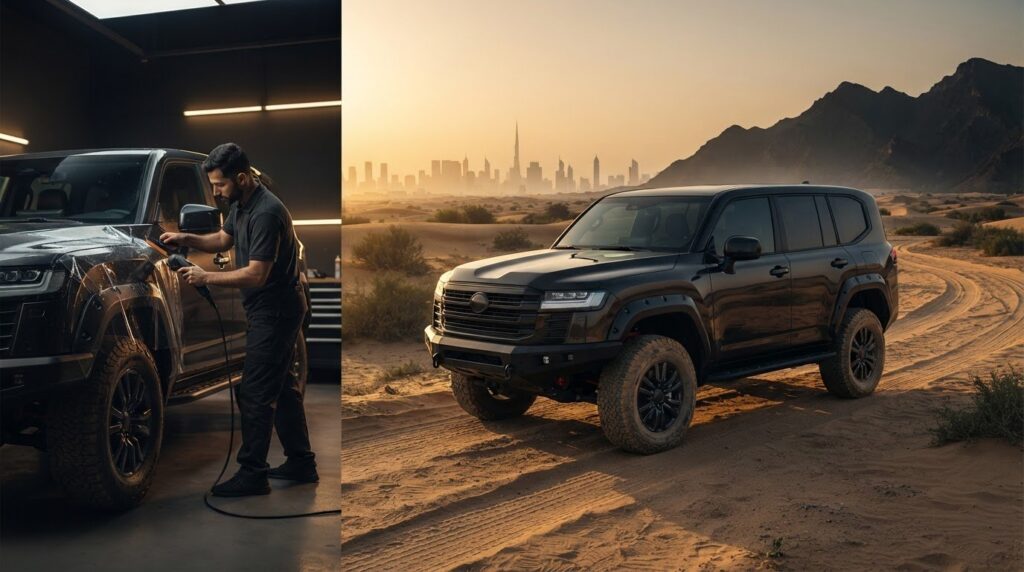
A tougher-looking setup isn’t automatically better protection. The right BAIC BJ40 off-road protection package depends on where you drive and which parts of the vehicle face the risk. Exposed paint needs a different solution from vulnerable underbody components.
Protection can mean anything from preserving a finish to helping shield components from trail impacts, so start by separating those priorities. There’s no single official package that suits every BJ40. Plan around your vehicle’s model year and trim, your regular routes, and the areas most exposed during your driving.
This guide will help you identify those areas and understand what each measure is designed to do. You’ll see where professionally installed Paint Protection Film (PPF) can help preserve selected painted surfaces, and why it isn’t a substitute for underbody or impact protection. Whether your BJ40 mainly sees paved roads, gravel tracks, or more demanding off-road terrain, match each measure to the risk it addresses.
Key Takeaways
- Build a BAIC BJ40 off-road protection package around your routes and the parts most exposed, not a one-size-fits-all list.
- Record your BJ40’s model year, trim, and existing accessories before assessing fitment or planning changes.
- Use Paint Protection Film to help preserve selected painted surfaces, while treating underbody and impact protection as separate needs.
- Compare options by their purpose, target area, and limitations so each choice addresses a real exposure.
- Plan paint protection around your driving and vehicle with Vanguard Motors Dubai, keeping paint preservation distinct from impact protection.
What Should a BAIC BJ40 Off-Road Protection Package Protect?
A BAIC BJ40 off-road protection package is best understood as a coordinated set of measures chosen for the vehicle’s configuration and the conditions it encounters. It isn’t one universal bundle. The BJ40 comes in different editions, so the model year and trim matter when assessing body panels and potential fitment. For general background on the vehicle and its editions, see the Beijing BJ40.
Start by separating two goals: preserving the exterior finish and protecting components from physical impacts. Paint Protection Film (PPF) is applied to selected painted panels. Underbody guards and other purpose-built components address different exposure points. Consider your routes, how often you leave paved roads, and the vehicle’s existing configuration instead of assuming every BJ40 needs the same additions.
Paint protection versus underbody and impact protection
PPF can help preserve selected painted panels from surface abrasion; it cannot prevent heavy impacts, dents, structural damage, or underbody damage. It’s a paint-preservation measure, not armour. Painted bodywork exposed to sand, loose debris, or brushing branches may be a candidate for film, depending on the vehicle and intended coverage.
Impacts beneath the vehicle or against exposed components call for a different type of protection. Purpose-built underbody or impact-oriented components address those risks. Keep the functions distinct: film helps preserve the finish, while suitable hardware addresses physical exposure. One doesn’t replace the other.
Why driving conditions change the protection plan
An occasional drive on a maintained gravel road can create a different pattern of exposure from regular travel over rocky or brush-lined routes. Gravel and loose debris can strike lower painted panels; sand may contribute to surface abrasion, while branches can brush against exposed bodywork. Repeated contact changes which areas deserve priority.
Think in zones before choosing measures:
- Painted exterior: note panels likely to meet debris, sand, or vegetation, then consider whether PPF suits your paint-preservation goal.
- Lower body and underbody: identify components more exposed on your routes and consider whether purpose-built impact protection is appropriate.
- Existing configuration: record the BJ40’s model year, trim, and installed accessories, since these can affect which areas are exposed and how protection may fit.
This exposure-led assessment gives each part of the plan a clear purpose. Protect the finish where abrasion is the concern, and assess impact risk separately based on the terrain you drive.
Which BAIC BJ40 Areas Need the Most Off-Road Protection?
Assess the BJ40 by zone instead of shopping from a universal accessory list. The surface that collects debris, the component exposed beneath the body, and the type of contact each may face call for different approaches. Start with the vehicle’s exact model year and trim, then compare likely exposure with its actual panels, components, and existing accessories.
Terrain, contact risk, and each part’s function should determine its protection priority. This keeps paint preservation focused on painted surfaces and reserves impact planning for areas where physical contact is the concern.
Painted panels exposed to gravel, sand, and brush
Start with the front-facing painted surfaces and other panels most likely to meet kicked-up gravel, loose sand, or roadside vegetation on your regular routes. Look for repeated exposure rather than assuming every panel needs equal coverage. Frequent brush contact may call for different paint-preservation priorities from occasional travel on open gravel.
Paint Protection Film (PPF) can help preserve selected painted panels from surface abrasion. It isn’t impact-proof protection and shouldn’t be treated as a solution for dents or heavy contact. For more detail on its purpose, explore this paint protection film guide. Consider coverage against the BJ40’s actual body-panel shapes and your intended use.
Lower body and underbody areas to assess separately
Lower-mounted areas and components beneath the vehicle face different exposure from painted body panels. Their priority depends on the route and the specific vehicle layout, so don’t assume a part is vulnerable, or that an accessory will fit, based on another BJ40 edition. Record the model year, trim, and existing accessories, then identify the areas relevant to that configuration.
Use a practical inspection checklist:
- Painted surfaces: note panels exposed to debris or vegetation and decide whether preserving their finish is a priority.
- Lower areas: identify components that may face contact on your regular terrain.
- Vehicle configuration: compare your notes with the exact BJ40 version before evaluating accessory fitment.
Vanguard Motors Dubai installs PPF for paint preservation on selected painted areas. For a focused discussion of those areas, share your BJ40 protection priorities. Keep impact or underbody needs as a separate assessment; PPF does not replace purpose-built protection for those risks.
How Do PPF and Other Off-Road Protection Options Compare?
Compare each option by the job it performs, not by how rugged it looks. For a BAIC BJ40 off-road protection package, paint preservation and impact resistance are separate objectives. PPF is intended for exposed painted surfaces; impact-focused and underbody protection address potential physical contact with different parts of the vehicle. No single surface treatment should be treated as complete off-road armour.
| Protection category | Purpose | Target area and likely exposure | Limitations |
|---|---|---|---|
| Paint Protection Film (PPF) | Help preserve selected painted surfaces. | Painted panels exposed to loose debris, sand, or brush contact. | Doesn’t prevent heavy impacts, dents, structural damage, or underbody damage. |
| Impact-oriented protection | Address physical contact risk to the areas it’s designed to cover. | Vehicle areas exposed to contact on the intended terrain. | Doesn’t preserve painted panels in the same way as PPF; suitability depends on design and installation. |
| Underbody protection | Help shield relevant components beneath the vehicle from exposure to impacts. | Lower components that may encounter obstacles on a route. | Must suit the BJ40’s exact version and intended use; it isn’t a paint-protection measure. |
When paint protection film is the right part of the plan
PPF is worth considering when preserving the finish on selected, exposed panels is a priority. If your routes regularly involve gravel, sand, or vegetation, identify which painted areas face the greatest surface-abrasion risk. Vanguard Motors installs PPF for this paint-preservation purpose. Film isn’t impact armour, and its presence shouldn’t be taken as protection against every trail hazard.
When impact-focused protection needs a different solution
Potential contact with obstacles calls for a separate assessment of the relevant lower or underbody areas. Suitability depends on the BJ40’s design, model year and trim, installation, and the terrain the vehicle will encounter. Avoid assuming an accessory fits across different versions, or that a factory-fitted feature serves every off-road purpose. Include factory accessories in your comparison only after verifying their compatibility and intended use for your vehicle.
Use the comparison to identify the outcome you need first: preserve paint, address a specific impact risk, or assess underbody exposure. Then evaluate options against that purpose. A tailored plan can combine different categories, but each should have a clear role and limitation.
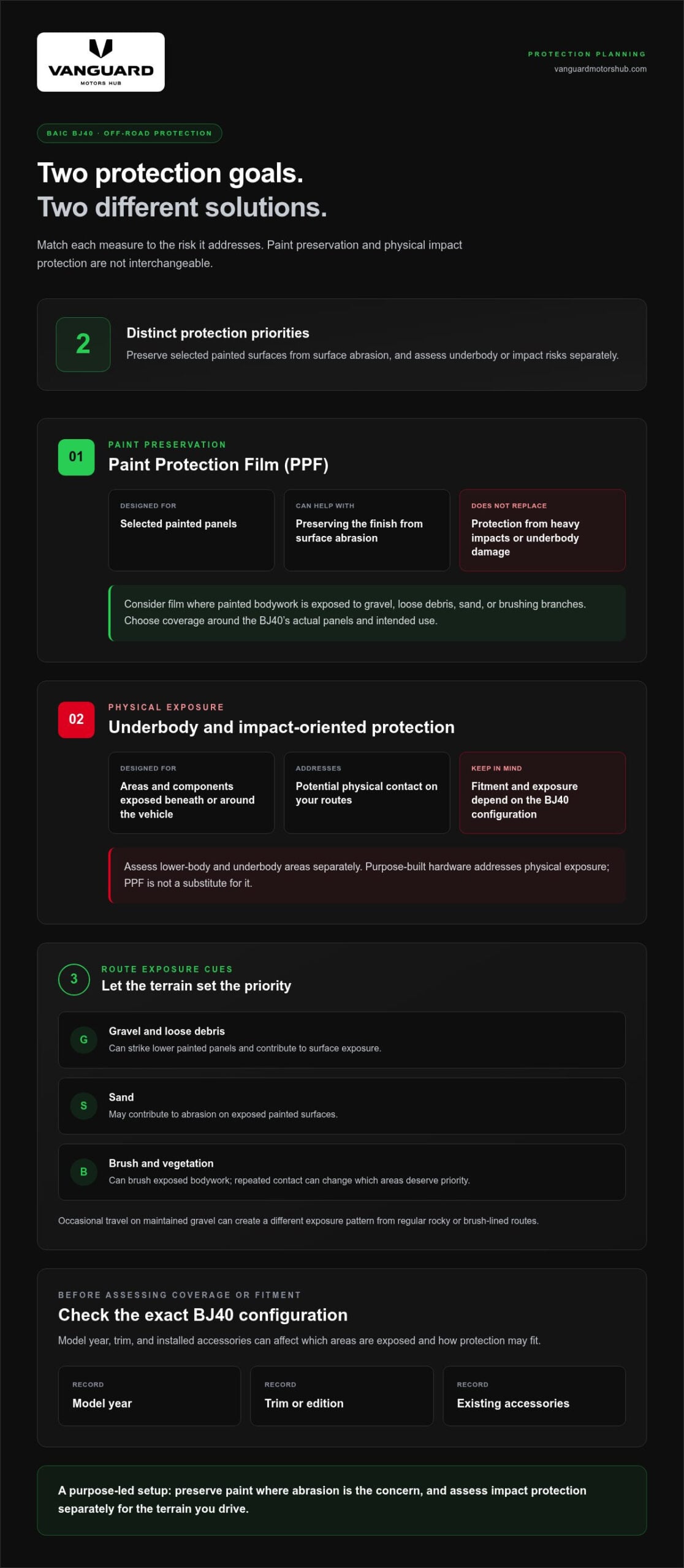
How to Choose a BAIC BJ40 Protection Setup for Your Driving
Build your setup from evidence, not from the length of an accessory list. A practical BAIC BJ40 off-road protection package starts with your regular routes, the areas exposed on your vehicle, and the kind of damage you want to reduce. Follow these steps, then prioritise measures that match your actual use.
- Identify your terrain. Separate daily road use from occasional gravel access and regular off-road driving. Note how often you use each type of route.
- Inspect exposure. Look for painted panels likely to meet loose debris or brush, then separately identify lower or underbody areas that may face contact.
- Define the goal. Decide whether your priority is preserving paint, addressing a specific impact risk, or both. These call for distinct protection categories.
- Select options selectively. Choose measures that address the risks you’ve identified rather than adding every available accessory.
Match protection priorities to terrain and usage
For a BJ40 used mainly on daily roads, paint preservation may be the leading concern if exposed surfaces regularly encounter road debris. Gravel access routes can raise the priority of surface abrasion. Frequent off-road driving may also make brush contact or underbody impact more relevant, depending on the route and vehicle configuration.
Rank each risk separately: surface abrasion, brush contact, and underbody impact aren’t interchangeable. If your routes change or you begin using the vehicle more often off-road, review the plan. Protection should reflect how you drive now, not an old assumption.
Check BJ40 version, fitment, and installation scope
Before evaluating fitment, record the BJ40’s model year, trim, and existing accessories or modifications. Differences in body panels and configuration can affect which surfaces are exposed and how an option may fit. Don’t assume that a part or coverage layout suited to one version will suit another.
For paint preservation, Vanguard Motors installs PPF on selected painted surfaces. Plan the installation scope around the panels you want to preserve and your intended use, while keeping impact and underbody needs distinct from film coverage.
Use your notes to make the next step specific. Discuss a tailored PPF plan for your BJ40’s painted surfaces and driving priorities.
Plan Your BAIC BJ40 Protection with Vanguard Motors
A considered BAIC BJ40 off-road protection package starts with a clear brief: what you drive over, which areas concern you, and what result you want. Vanguard Motors installs PPF as a paint-preservation measure within a broader protection plan. PPF can help preserve selected painted surfaces, but it doesn’t replace purpose-built protection for impact or underbody risks. Keeping those roles distinct makes it easier to choose coverage that fits your priorities.
What to prepare before discussing a PPF project
A few details make the project discussion more specific and help focus it on your vehicle rather than an assumed standard setup. Gather:
- BJ40 details: model year and trim, which can matter when assessing body panels and fitment.
- Driving patterns: typical routes, how often you drive off-road, and whether gravel, sand, or brush is part of the routine.
- Areas of concern: painted panels you want to preserve, based on the exposure you’ve noticed.
- Existing condition and changes: any wraps, previous repairs, or modifications that may affect the PPF project.
These details help distinguish an everyday paint-preservation goal from repeated exposure on more demanding routes. They also provide useful context for planning coverage around the BJ40’s configuration and intended use.
Turn protection priorities into a clear next step
State your goal plainly: paint preservation, impact protection, or both. If preserving selected painted panels is the priority, Vanguard’s PPF installation can form that part of the plan. If underbody or impact risks are also a concern, keep them as separate requirements; film isn’t designed to serve as mechanical or structural protection.
You don’t need to arrive with a predetermined list of accessories. Share the vehicle details, routes, frequency of off-road use, and panels you want to preserve. That gives the PPF project a focused starting point without confusing appearance protection with impact protection.
Talk with Vanguard Motors on WhatsApp to discuss your BAIC BJ40 and intended use.
Build Protection Around the Way You Drive
A well-planned BAIC BJ40 off-road protection package starts with your routes, vehicle version, and the areas most exposed. Prioritise painted panels for preservation, then assess lower and underbody areas separately for impact risks. The right setup is focused, not simply a collection of accessories.
Professional Paint Protection Film installation can help preserve selected painted surfaces, but it doesn’t prevent heavy impacts or replace purpose-built underbody protection. Vanguard Motors installs PPF as part of a paint-preservation plan, with coverage based on the vehicle and intended use.
Have your BJ40’s model year, trim, existing modifications, and typical driving conditions ready. Discuss your BAIC BJ40 PPF project on WhatsApp and define a paint-preservation plan around your priorities.
Frequently Asked Questions
What should a BAIC BJ40 off-road protection package include?
A BAIC BJ40 off-road protection package should combine measures selected for the vehicle’s configuration and the routes it regularly encounters. It may include Paint Protection Film (PPF) to help preserve selected painted panels, alongside separate impact or underbody protection options where those risks apply. There’s no single setup for every BJ40. Base your choices on terrain, exposure, model year, trim, and existing accessories.
Does paint protection film protect a BAIC BJ40 from off-road impacts?
No. PPF is a surface film intended to help preserve selected painted panels from surface abrasion. It isn’t designed to prevent heavy impacts, dents, structural damage, or damage to components beneath the vehicle. If your routes create impact or underbody risks, assess those separately and consider purpose-built protection appropriate to the vehicle. Keep each measure tied to its actual function.
Can PPF be installed on a BAIC BJ40?
PPF can be installed on selected painted areas of a BAIC BJ40. Suitable coverage depends on the vehicle’s model year, trim, and body-panel details, so don’t assume the same fit across every version. Vanguard Motors provides professional PPF installation. Film supports paint preservation, not mechanical or underbody protection.
Which parts of a BAIC BJ40 are most exposed off-road?
Exposure depends on the route and the specific BJ40 version. Start by assessing front-facing and other painted panels that may encounter gravel, loose sand, or brush. Then inspect lower body and underbody areas separately for potential contact with terrain. Record the model year, trim, and existing accessories before evaluating fitment. Don’t assume every version has the same exposed areas or protection needs.
Is PPF enough protection for regular off-road driving?
PPF alone isn’t enough if your regular routes also present impact or underbody risks. It can help preserve selected painted surfaces, but it doesn’t provide mechanical or structural protection. Assess paint abrasion, brush contact, and potential contact beneath the vehicle as distinct concerns. A well-planned setup may address more than one risk, with each measure selected for its purpose and the BJ40’s configuration.
How do I choose protection for my BAIC BJ40’s terrain?
Begin with your usual routes: daily roads, gravel access tracks, or frequent off-road driving. Note how often you encounter loose debris, sand, brush, or terrain that could contact lower areas. Next, identify the painted panels and components exposed on your specific vehicle, then decide whether your priority is paint preservation, impact protection, or both. Record the BJ40’s year, trim, and existing accessories before assessing options.
How much does a BAIC BJ40 protection package cost?
There isn’t one standard cost for a BAIC BJ40 protection setup because the scope depends on the measures selected, the vehicle’s configuration, and the areas to be addressed. PPF coverage is a separate paint-preservation project from impact or underbody protection. To define the scope, first decide on the coverage you want and note the BJ40’s model year, trim, and any existing modifications.