
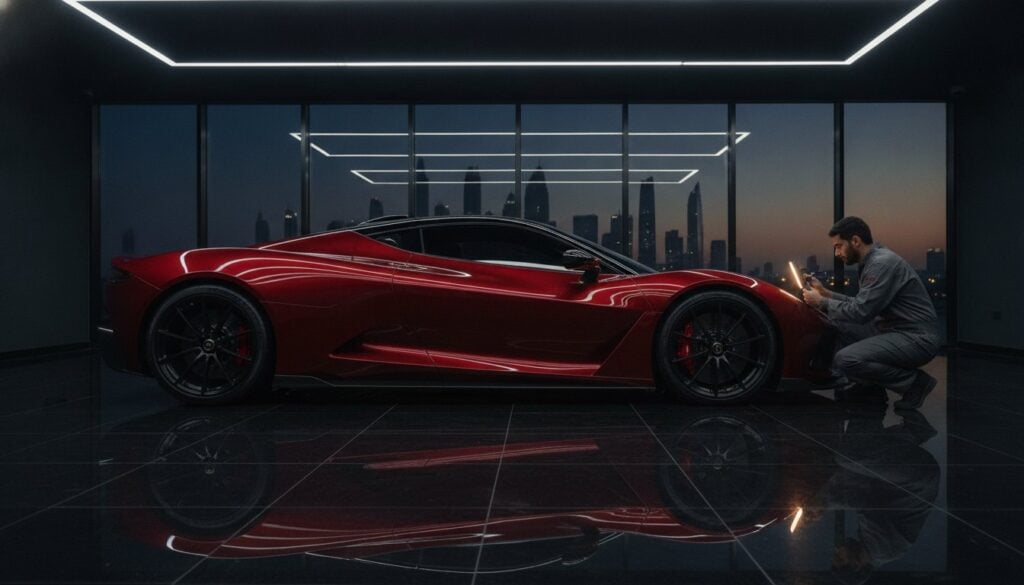
If you’re still choosing traditional vinyl wraps for a color change in 2026, you’re essentially applying a temporary sticker to a high-performance investment. Most owners crave the deep, mirror-like finish of custom paint but fear the inevitable rock chips that come with real-world driving. You shouldn’t have to choose between a stunning aesthetic and long-term durability. Understanding the high gloss colored PPF benefits is the first step toward achieving a “no-compromise” finish that looks like it rolled off a bespoke assembly line.
We know the frustration of seeing “orange peel” texture on a fresh wrap or worrying about environmental damage during every weekend cruise. This article explores how high gloss colored PPF combines supercar-grade protection with a factory-quality color transformation that outlasts traditional alternatives. You’ll discover how this advanced TPU technology offers self-healing properties and over a decade of defense. We’re diving into the technical precision behind this elite film, from its near-zero orange peel finish to its ability to preserve your vehicle’s original paint for maximum resale value.
Key Takeaways
- Learn why modern TPU technology provides a mirror-like finish that eliminates the orange peel texture common in traditional wraps.
- Discover the primary high gloss colored PPF benefits, including advanced self-healing properties that erase minor scratches using only ambient heat.
- Understand the strategic shift from vinyl to PPF, offering a decade of durability compared to the limited lifespan of standard PVC films.
- See how protective color films safeguard your factory paint to maintain peak resale value while avoiding the need for permanent resprays.
- Explore how to integrate elite color protection with bespoke Brabus or Mansory kit conversions for a seamless, professional aesthetic.
What is High Gloss Colored PPF? Defining the 2026 Standard
The automotive industry has moved past the era where protection and style were separate choices. In 2026, the elite standard is defined by high gloss colored PPF. This material represents a massive leap from the original clear films used to prevent rock chips. It’s a structural transformation. By infusing rich pigments directly into the film’s core, manufacturers have created a solution that offers the depth of a multi-stage factory respray with the impact resistance of industrial-grade armor. One of the primary high gloss colored PPF benefits is this dual-purpose nature. It doesn’t just sit on the paint; it becomes a secondary skin.
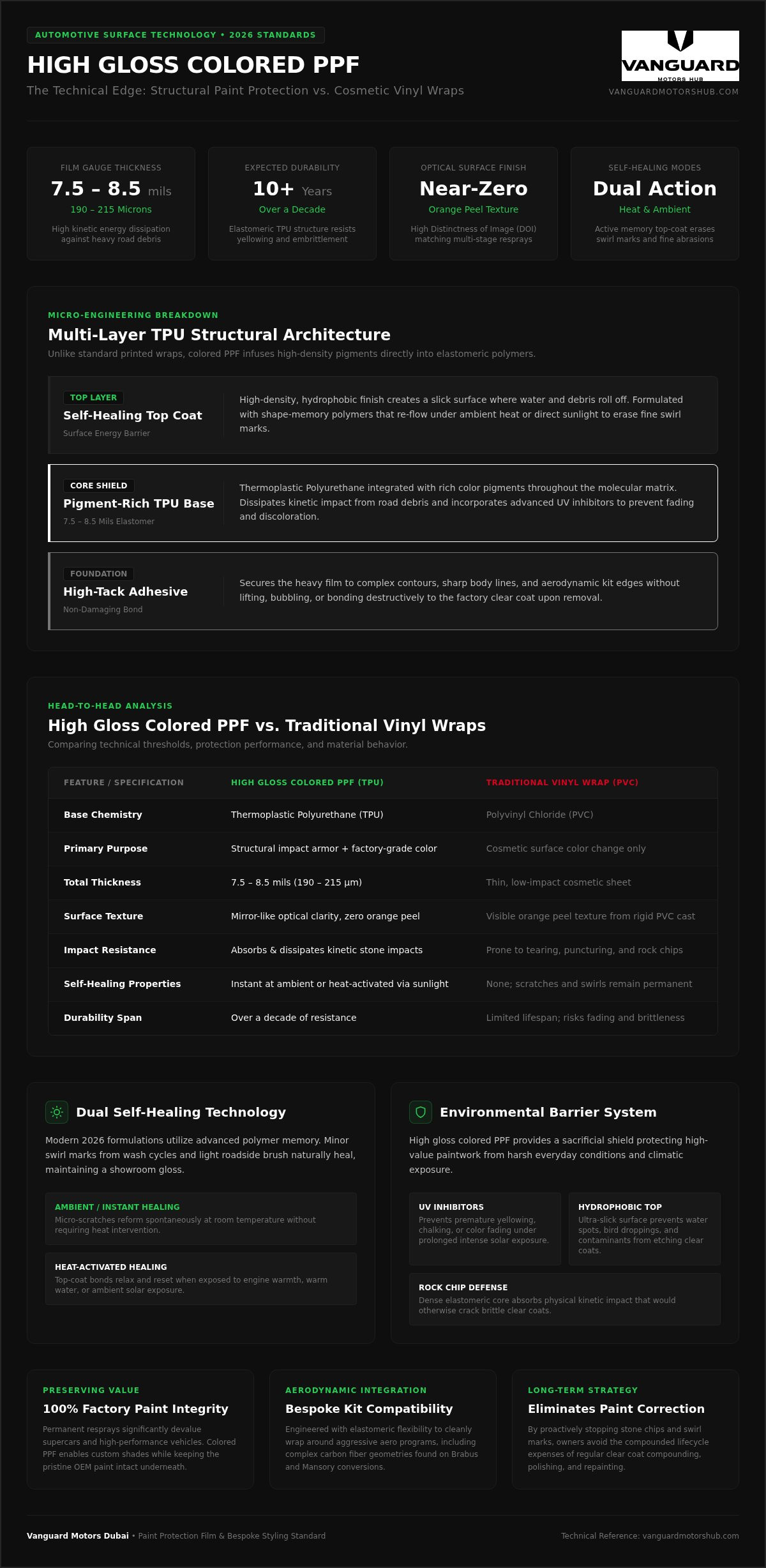
The construction of these films is a marvel of material science. High-end versions typically measure between 7.5 and 8.5 mils, which translates to approximately 190 to 215 microns. This thickness is critical. While a standard vinyl wrap is thin and purely cosmetic, these multi-layer TPU systems are designed to dissipate kinetic energy from road debris. The structure consists of a high-tack adhesive layer, a pigment-rich TPU base, and a specialized self-healing top coat. This layered approach ensures that the vehicle remains shielded from environmental hazards while maintaining a flawless aesthetic.
The Science of Color-Infused TPU
The core of this technology lies in the use of thermoplastic polyurethane paint protection film. Unlike traditional vinyl where color is often printed on the surface, elite PPF integrates the pigments within the elastomeric polymer. This ensures the color remains vibrant even if the surface faces heavy abrasion or UV exposure. TPU is naturally rubber-like, allowing it to stretch and conform to the aggressive contours of modern supercars without losing its structural integrity or color consistency. It’s a durable solution that resists the yellowing and brittleness seen in lower-quality materials.
Gloss Levels and Optical Clarity
Achieving a true mirror finish requires more than just a shiny surface. It requires optical clarity. Traditional vinyl often suffers from “orange peel” texture because of its rigid PVC composition. High gloss colored PPF eliminates this issue through advanced casting methods that prioritize Distinctness of Image (DOI). The result is a finish that enhances the sharp body lines and aerodynamic curves of luxury vehicles. The top-coat technology doesn’t just provide shine; it creates a hydrophobic barrier that ensures the high gloss colored PPF benefits remain visible through rain, dust, and daily wear. It’s the difference between a temporary covering and a permanent aesthetic upgrade.
The Technical Edge: Primary Benefits of Colored PPF
Moving beyond the visual depth of the film, the true value lies in its functional performance. The high gloss colored PPF benefits extend far beyond a simple color change. This material acts as a sacrificial layer that actively maintains the vehicle’s integrity. Unlike paint, which is brittle and prone to fracturing, colored PPF is a dynamic polymer. It absorbs the energy of impacts and resists environmental contaminants that would otherwise etch into a clear coat. It’s a proactive shield rather than a reactive fix.
The engineering behind these films focuses on surface energy and material memory. High-density top coats ensure that the finish remains slick, making it difficult for debris to bond to the surface. This creates a hydrophobic effect where water and contaminants bead up and roll off with ease. When evaluating the investment, it’s useful to consult a Kelley Blue Book vehicle wrap and protection cost guide to see how these protective layers compare to the long-term expenses of paint correction and resprays.
Self-Healing Innovation in 2026
One of the most impressive features of modern TPU is its ability to self-heal. The elastomeric top coat possesses a “memory” that allows it to return to its original, smooth state after being marred. Minor swirl marks from improper washing or light abrasions from roadside brush simply vanish. In 2026, the technology has split into two primary categories. Heat-activated films require sunlight or warm water to trigger the healing process. Instant-healing variants work at ambient temperatures. For daily-driven high-performance vehicles, this means the finish stays showroom-fresh without constant detailing.
Armor Against the Elements
High-exposure environments demand superior UV stability. Modern colored PPF utilizes advanced UV inhibitors that prevent the film from yellowing or the pigments from fading over time. This is especially vital in regions with intense sunlight where traditional paint often loses its luster. Additionally, the film provides essential resistance against common chemical stressors. These include:
- Acid rain and industrial fallout
- Bird droppings and aggressive tree sap
- Road oils and accidental fuel spills
- Magnesium chloride and corrosive road salts
The 8-mil thickness of premium PPF also provides a crucial cushion against sandblasting. On national highways, fine grit and gravel can act like sandpaper on a vehicle’s front fascia. Colored PPF absorbs these micro-impacts, keeping the underlying paint in mint condition. You can learn more about why this has become the standard for excellence in automotive care. If you’re ready to upgrade your vehicle’s defense, you can consult with our technical experts today to find the perfect shade for your project.
Colored PPF vs. Vinyl Wraps: The Strategic Choice
Choosing between vinyl and PPF isn’t just about the initial price. It’s about the lifecycle of your vehicle’s aesthetic and its structural integrity. Traditional vinyl wraps provide a temporary color change, but they lack the density to withstand high-velocity impacts. One of the standout high gloss colored PPF benefits is its ability to serve as a long-term asset. While vinyl typically requires replacement every 3 to 5 years due to edge lifting and UV degradation, premium TPU-based colored PPF is engineered to last 7 to 10 years or more. This longevity fundamentally shifts the total cost of ownership in favor of PPF.
The visual difference is immediate. Vinyl is essentially a thin PVC sticker, often measuring only 3.0 to 4.0 mils. Because it’s so thin, it telegraphs every minor imperfection of the underlying surface. In contrast, the 8-mil thickness of colored PPF acts as a leveling agent. It fills in micro-imperfections, resulting in a finish that mimics the depth and clarity of a factory clear coat. This thickness isn’t just for show; it provides the structural impact defense necessary to prevent rock chips from reaching the paint, a feat vinyl simply cannot achieve.
The ‘Orange Peel’ Factor
Vinyl’s biggest aesthetic drawback is “orange peel,” a dimpled texture that betrays its plastic origins. Because vinyl is applied dry and lacks the elastomeric properties of TPU, it cannot achieve the liquid-smooth reflection of paint. High gloss colored PPF solves this through advanced casting methods. The result is a high-DOI (Distinctness of Image) finish that looks identical to a custom wet-sanded paint job. For a deeper dive into selecting the right aesthetic for your vehicle, explore The 2026 Car Wrap Buying Guide.
Installation and Removal
The installation techniques further separate these two categories. Vinyl uses a dry-application method with air-release channels, which is faster but offers less surface protection. Colored PPF requires a meticulous wet-application process. This allows technicians to float the film into place, ensuring a perfect bond without trapped debris. More importantly, the removal process for PPF is significantly safer. Vinyl can become brittle over time, potentially pulling clear coat or leaving aggressive adhesive residue. TPU remains flexible, allowing it to be peeled back cleanly even after a decade, leaving the factory paint in pristine, untouched condition.
Preserving Value: ROI of High Gloss Protection
Investing in a vehicle’s exterior isn’t just about personal expression. It’s a calculated financial strategy. For owners of luxury and high-performance assets, the high gloss colored PPF benefits translate directly into equity. Traditional color changes through repainting are permanent and often detrimental to a vehicle’s history. A high-quality full vehicle repaint that meets or exceeds OEM specifications can cost between $8,000 and $20,000; however, it permanently alters the car’s original state. Colored PPF offers a reversible alternative that provides the same aesthetic impact while shielding the underlying asset from depreciation.
The psychological impact of driving a vehicle that looks showroom-fresh cannot be overstated. Even years into ownership, the self-healing properties of the film maintain that “new car feel” by erasing the micro-scratches that usually dull a car’s luster. You’re effectively freezing the vehicle’s condition in time. This allows for bold color choices, such as transitioning a factory white finish to a deep metallic red, without the risk of narrowing your future buyer pool. When it’s time to sell, the film can be removed to reveal untouched factory paint.
Resale Value and Paint Integrity
Collectors and auction houses prioritize original factory paint above almost all other factors. According to trade and auction data from August 2026, unaddressed rock chips and front-fascia pitting can degrade the resale value of late-model premium vehicles by up to 10%. By documenting a professional PPF installation, you’re providing proof of meticulous maintenance. This protection is vital on national highways where the “sandblasting” effect of road grit is a constant threat. The film absorbs these micro-impacts, ensuring that the car’s digital coating thickness remains consistent with factory standards, a key metric for discerning buyers.
Maintenance Efficiency
The ROI of high-end film also manifests in reduced operating costs. Modern hydrophobic top coats significantly decrease the time and resources required for cleaning. Because contaminants like bird droppings and road oils cannot easily bond to the surface, the need for aggressive detailing is minimized. For those who demand perfection, there is a clear synergy between colored PPF and professional ceramic maintenance. You can explore the technical nuances of these processes in our Supercar Detailing: The 2026 Reference Guide. To ensure your investment is protected by the highest industry standards, book a technical consultation with our team and secure your vehicle’s future value today.
The Vanguard Approach: Bespoke Color & Protection
At Vanguard Motors, we view colored PPF as the cornerstone of a complete vehicle reimagining. It isn’t just about defense; it’s about the synergy between technical precision and creative expression. One of the high gloss colored PPF benefits we emphasize is its role as the foundation for a full bespoke conversion. When you’re investing in a high-performance machine, the finish should match the caliber of the engineering beneath. Our process ensures that the transformation is total, leaving no trace of the original color while providing a level of durability that traditional paint cannot match.
The Vanguard Premium Package represents our commitment to this dual focus on aesthetics and performance. This isn’t a simple film application. It’s a comprehensive service tier that combines advanced material science with meticulous cosmetic care. We understand that our clients value their time as much as their vehicles, which is why we offer a national concierge service. From professional consultations to our mobile detailing van, we provide a seamless experience across the UAE, ensuring your vehicle remains in peak condition without disrupting your lifestyle.
Beyond the Film: Holistic Customization
Our expertise extends to the seamless integration of protective films with high-end aerodynamic enhancements. We specialize in matching your chosen hue with a Brabus body kit installation or a Mansory conversion. This holistic approach ensures that every component, from the widebody fenders to the carbon fiber accents, is protected and visually cohesive. Our services include:
- Carbon fiber protection and repair to maintain structural weave integrity
- Bespoke color matching for unique supercar palettes and limited editions
- Integration with Jetour, Rox, and other elite car kit conversions
- Precision film application on complex aerodynamic surfaces and intakes
Precision Installation Standards
Achieving a true paint-like finish requires a level of detail that goes far beyond standard application. Our technicians perform a meticulous de-trimming process, carefully removing badges, door handles, and light clusters. This allows for precision edge-wrapping, where the film is tucked deep into panel gaps for a seamless, invisible installation. All work is conducted in a strictly climate-controlled environment to eliminate dust contamination and ensure perfect adhesion of the TPU layers.
Final quality control is the most rigorous stage of our process. Before any vehicle handover, the film undergoes a multi-point inspection and a professional detailing session to maximize the high gloss colored PPF benefits. We verify the optical clarity and surface slickness of the top coat, ensuring that the finish meets our authoritative standards for excellence. The result is a vehicle that doesn’t just look new; it looks better than factory, protected by a decade-long shield of elite-grade polyurethane.
Secure the Future of Your Automotive Investment
The transition to advanced TPU technology marks a definitive shift in automotive preservation. Choosing this elite solution means you’re opting for more than a cosmetic update. You’re investing in structural armor that delivers liquid-smooth clarity and industrial-grade durability. The high gloss colored PPF benefits include a decade of environmental defense and the absolute preservation of factory paint. This ensures your vehicle remains a pristine asset, whether it’s a high-performance daily driver or a rare collector’s piece.
Vanguard Motors specializes in the seamless integration of these films with bespoke Brabus and Mansory conversions. Our elite supercar detailing expertise ensures that every edge-wrapped panel meets authoritative standards of precision. Utilizing advanced 2026 self-healing film technology, we guarantee a finish that resists the elements and maintains its luster through years of ownership.
Transform your vehicle with Vanguard’s Premium Colored PPF and experience the perfect balance of aesthetic transformation and technical protection. Your vehicle’s next chapter begins with a finish that’s built to last and designed to impress.
Frequently Asked Questions
How long does high gloss colored PPF typically last?
High gloss colored PPF typically lasts between 7 and 10 years when professionally installed. Unlike traditional vinyl wraps that often degrade within 3 to 5 years, these advanced TPU films are engineered for long-term durability. They resist edge lifting and UV fading, ensuring your vehicle maintains its premium aesthetic for a decade. Proper maintenance and regular detailing can further extend this lifespan, making it a superior investment for luxury car owners across the UAE.
Can I apply ceramic coating over my colored PPF for extra shine?
Yes, applying a ceramic coating over your colored PPF is a highly recommended practice for maximizing shine and protection. While modern films often feature infused ceramic nanotechnology, an additional professional coating enhances the hydrophobic properties and surface slickness. This combination simplifies maintenance by preventing contaminants from bonding to the film. It creates a synergistic effect that amplifies the mirror finish, ensuring your vehicle remains in showroom condition for years.
Is colored PPF thick enough to stop rock chips on the highway?
Colored PPF is specifically engineered to stop rock chips and high-velocity road debris. With a standard thickness of 7.5 to 8.5 mils, it provides a structural barrier that is twice as thick as traditional vinyl wraps. This elastomeric layer absorbs and dissipates the kinetic energy of ballistic impacts on national highways. It prevents the underlying factory paint from fracturing, which is one of the primary high gloss colored PPF benefits for high-performance drivers.
Will the color fade if the car is parked in high-heat sun every day?
High gloss colored PPF is designed to resist fading even under the intense UV exposure of high-heat environments. The pigments are integrated into the TPU core rather than printed on the surface, which prevents the color degradation common in lower-end films. Advanced UV inhibitors are built into the material to stop yellowing and maintain pigment vibrancy. This ensures your vehicle’s bespoke color remains deep and saturated throughout its entire service life.
Can I change back to my original paint color easily later?
Yes, colored PPF is 100% reversible and can be removed safely without damaging your factory clear coat. The specialized adhesive is designed to bond securely for years while remaining flexible enough for a clean de-installation. This allows you to return the vehicle to its original factory state whenever you choose. It’s an ideal solution for lease returns or preserving the original paint integrity for future resale or collection purposes without permanent modification.
What is the difference between colored PPF and peelable paint?
The primary difference lies in the application method and material structure. Colored PPF is a multi-layered thermoplastic polyurethane film that is wet-applied to the vehicle panels for maximum impact protection. Peelable paint is a spray-on coating that provides a seamless, paint-like finish without the visible edges associated with some films. While both are reversible, PPF offers superior defense against heavy rock chips and physical abrasions due to its specific 8-mil thickness and elastomeric properties.
Does colored PPF require special car wash shampoos or waxes?
Maintaining high gloss colored PPF benefits requires using pH-neutral car wash shampoos and avoiding abrasive waxes. You should steer clear of petroleum-based products or aggressive chemicals that could degrade the self-healing top coat. Using a high-quality microfiber wash mitt and a dedicated drying towel prevents swirl marks. While the film is highly durable, using products specifically formulated for paint protection films ensures the hydrophobic surface and optical clarity remain intact for the long term.
How does the cost of colored PPF compare to a high-end respray?
Colored PPF is a more cost-effective and value-preserving alternative to a high-end professional respray. A factory-quality repaint often involves permanent modification that can decrease a luxury vehicle’s resale value by up to 10%. PPF provides the same aesthetic transformation while acting as a protective shield. Because it’s reversible and prevents rock chips, it safeguards your initial investment rather than altering it, offering a much higher return on investment over time.