
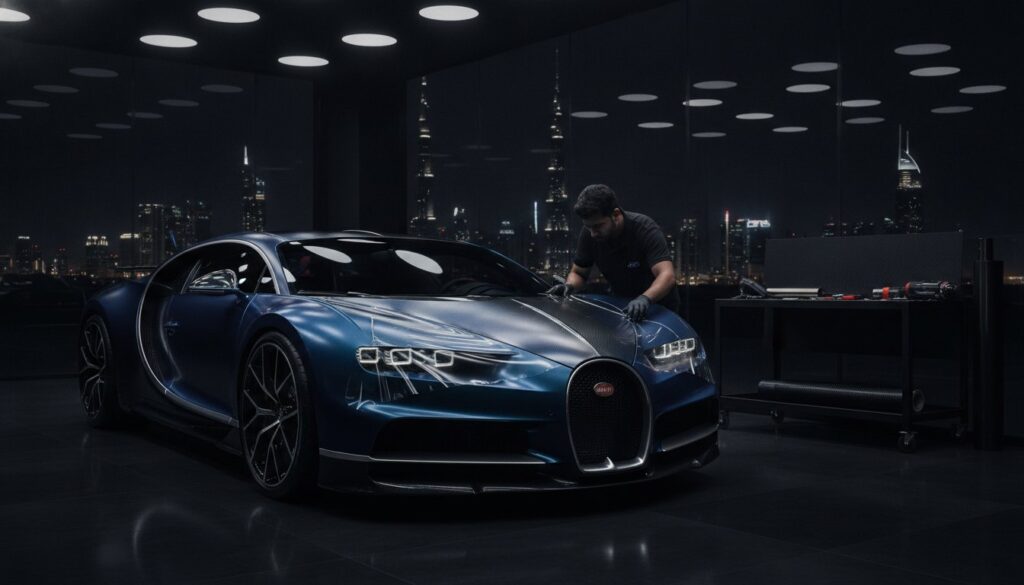
Why settle for a stunning aesthetic that begins to degrade the moment you leave the garage? You’ve likely asked yourself: can you put PPF over a vinyl wrap to stop those inevitable stone chips from piercing your finish? It’s a question that separates the casual enthusiast from the owner who demands absolute perfection. While a high-quality vinyl wrap delivers the bespoke color you crave, it often lacks the heavy-duty durability needed to survive the road’s harsh realities.
We understand the frustration of seeing a custom wrap lose its luster to minor scratches, swirl marks, or UV fading. You want a finish that stays showroom-fresh for five years, not just five months. This guide reveals the technical reality of the double-shield strategy, outlining how layering Paint Protection Film over vinyl creates a self-healing, high-gloss barrier. We will explore the precise chemistry required for success, the potential risks of improper installation, and why this elite approach is the ultimate way to maximize your vehicle’s resale value and aesthetic impact.
Key Takeaways
- Yes, you can put PPF over a vinyl wrap, but the technical success of this double-shield depends on specific film chemistry and professional-grade adhesives.
- Discover how layering films can extend your wrap’s lifespan to over five years while adding elite self-healing properties to a custom color.
- Understand the visual and financial trade-offs, including how to avoid the “orange peel” effect that often plagues low-quality attempts.
- Explore the paint safety alternative where PPF is applied beneath the vinyl to safeguard sensitive factory finishes on high-performance vehicles.
- Learn why a dust-free, climate-controlled facility is the only environment where a multi-layer installation should be performed to ensure peak results.
Can You Put PPF Over a Vinyl Wrap? The Technical Verdict
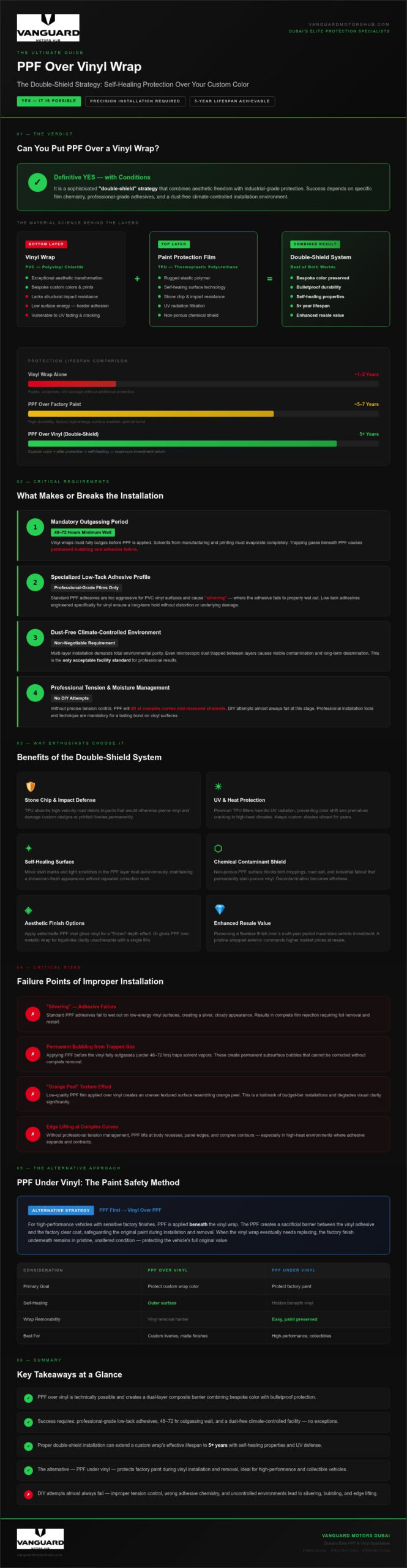
The technical answer is a definitive yes. It’s a sophisticated “double-shield” strategy that combines aesthetic freedom with industrial-grade protection. However, this isn’t a standard installation. It’s a precision-engineered layering process that demands a deep understanding of material science. If you are wondering can you put PPF over a vinyl wrap to save a custom finish, the answer lies in the chemistry of the films involved.
Vinyl wraps are primarily composed of PVC (Polyvinyl Chloride). This material is exceptional for aesthetic transformation but lacks the structural integrity to survive high-velocity impacts. Paint Protection Film (PPF) uses TPU (Thermoplastic Polyurethane), a rugged, elastic polymer designed for impact resistance and self-healing. When you layer TPU over PVC, you create a composite barrier that offers the best of both worlds: bespoke color and bulletproof durability. The challenge lies in the surface energy. Factory clear coat is a high-energy surface that bonds easily with PPF adhesives. Vinyl is a lower-energy surface, meaning the bond requires specific professional-grade films to ensure a long-term hold.
The Science of Adhesive Compatibility
Achieving a permanent bond on a vinyl surface requires a specialized adhesive profile. Standard PPF adhesives can be too aggressive for PVC, leading to “silvering,” which occurs when the adhesive doesn’t wet out properly on the vinyl surface. DIY attempts almost always fail here. Without professional-grade tension control and moisture management, the PPF will likely lift, especially around complex curves or recessed channels. We utilize low-tack adhesives specifically engineered to grip the vinyl without compromising the underlying finish or creating visual distortion.
Ideal Timing for Layered Application
Precision timing is the difference between a flawless finish and a bubbled mess. Vinyl wraps require an outgassing period where the solvents used in the manufacturing and printing of the film evaporate. Trapping these gases beneath a layer of PPF leads to permanent bubbling and adhesive failure. We typically recommend a waiting period of 48 to 72 hours after the initial wrap before layering the protection film. For those seeking the elite tier of protection, our Vanguard Premium Package approach involves performing both installations in a strictly climate-controlled facility to maintain total environmental purity. The cure time is the essential duration required for the vinyl’s residual solvents to fully evaporate and the adhesive to reach its peak structural bond.
Why Enthusiasts Choose to Layer PPF Over Vinyl
Choosing a custom color is an investment in your vehicle’s identity. However, traditional vinyl wraps are vulnerable. They scratch easily and fade under intense sunlight. The elite strategy of layering creates a high-performance barrier that preserves your aesthetic vision. Many owners ask can you put PPF over a vinyl wrap because they want the self-healing properties typically reserved for factory paint. By adding this second skin, you transform a standard color change into a durable, five-year solution that resists stone chips and environmental fallout.
The technical benefits extend far beyond simple impact resistance. High-heat climates present a significant challenge for PVC films, often leading to premature cracking or color shift. A premium TPU layer filters out harmful UV radiation, keeping your custom shade vibrant and deep. It also provides a superior defense against chemical contaminants. Bird droppings, road salt, and industrial grime can permanently stain porous vinyl; a top layer of PPF creates a non-porous shield that makes decontamination effortless.
Aesthetic Transformations: Gloss vs. Matte
Layering allows for creative finishes that are impossible to achieve with a single film. Applying a satin or matte PPF over a gloss vinyl wrap creates a “frozen” effect with incredible depth. This combination mimics the look of high-end peelable paint applications but with the added benefit of physical impact protection. If you prefer a deep, liquid-like shine, a gloss PPF layer can enhance the metallic flakes in a wrap, providing a clarity and richness that standard vinyl cannot match on its own.
The Armor Effect for Custom Designs
Complex printed wraps and bespoke liveries are expensive to replace if a single panel gets damaged. Layering PPF acts as a transparent suit of armor, ensuring that road debris never reaches the printed surface. This is particularly valuable for matte finishes, which are notoriously difficult to clean and cannot be polished if they get scratched. A protective layer simplifies maintenance, allowing you to enjoy a flawless look without the constant stress of minor abrasions. For a deeper look at why this technology is essential, explore The Ultimate Shield: Why Paint Protection Film is the Standard for Excellence in 2026. If you’re ready to elevate your car’s protection, consult with our expert technicians to discuss your custom project.
Critical Risks and Challenges of Layering Films
Layering protection is an elite choice, but it introduces technical complexities that can compromise the final result if not handled with extreme precision. If you are asking can you put PPF over a vinyl wrap, you must also ask if your installer can manage the increased material thickness. A standard vinyl wrap paired with a premium PPF results in a total thickness of approximately 12 to 15 mil. This added bulk is significant. It can alter tight panel gaps and change the tactile response of door handles or parking sensor cutouts.
The financial aspect is a primary consideration for many owners. You are essentially commissioning two separate, full-vehicle installations. This requires double the labor and double the premium material costs, making it a serious investment for the discerning owner. It’s not a decision to take lightly. Beyond the initial cost, the “permanent” nature of the bond creates a challenge during the eventual removal phase. PPF adhesives are designed to be aggressive to ensure longevity. If the removal isn’t performed by a professional using controlled heat, the PPF can pull the underlying vinyl away from the paint, potentially ruining the wrap you intended to preserve.
Adhesion and Edge Failure
Edges are the most vulnerable points in any multi-layer application. PPF edges are notoriously difficult to “tuck” when they aren’t bonding to a smooth factory clear coat. Vinyl surfaces have a different surface energy that can lead to “fingering” or lifting, especially in high-recess areas like front bumpers or side mirrors. A bulk installation is often superior to pre-cut kits in this scenario because it allows the technician to custom-trim the film for maximum coverage and edge security on the vinyl surface.
Visual Distortions and Texture
Texture is another hurdle that requires expert management. Every layer of film has some inherent “orange peel” or surface grain. When you stack TPU on top of PVC, that texture is amplified, potentially dulling the visual clarity of your custom color. High-quality, low-orange-peel PPF is mandatory to maintain a premium look. Managing expectations is vital here. Even with the best materials, the final finish may not achieve the same mirror-like clarity as a single layer of film applied directly to glass-smooth paint. Success depends entirely on the quality of the underlying wrap and the precision of the top-layer application.
The Alternative: PPF Under Vinyl Wrap
While we have focused on the benefits of layering protection on top, it’s equally vital to consider the inverse strategy. Often called the “Paint Safety” method, this approach prioritizes the long-term preservation of the factory clear coat above all else. For owners of supercars or vehicles with sensitive, hand-sprayed finishes, the adhesives in some vinyl wraps can be surprisingly aggressive. By applying a layer of high-quality PPF first, you create a permanent, invisible barrier. This ensures that when you eventually decide to change your vehicle’s color, the vinyl peels away from the film rather than the delicate paintwork, effectively eliminating the nightmare scenario of “paint pulling.”
However, this strategy comes with a distinct trade-off. Because the vinyl is the outermost layer, it remains fully exposed to the environment. Road debris will still pierce the thin PVC, and road grime can still cause staining. You are essentially sacrificing the appearance of the wrap to guarantee the integrity of the paint beneath. This is why the decision between layering over or under depends entirely on your long-term goals for the vehicle and how often you plan to refresh its look.
Choosing Your Strategy: Over vs. Under
The decision hinges on your primary objective. If you’ve wondered can you put PPF over a vinyl wrap to shield a specific, expensive custom color or a complex livery, the “over” method is your best bet for keeping the aesthetic flawless. Conversely, if you enjoy changing your car’s color every season but want to ensure the factory paint remains in pristine condition, applying PPF under the wrap is the superior move. The cost-benefit analysis favors the “under” method for those focused strictly on maximum resale value, while the “over” method is for those who demand a self-healing finish on their current color.
The Vanguard Motors Dubai Standard
At our facility, we often guide clients toward a more modern solution. High-end Peelable Paint Applications provide a one-step alternative that combines the color depth of real paint with the protection of a film. For those who prefer traditional methods, our Vanguard Premium Package integrates these technologies to provide maximum coverage tailored to how you actually drive. Vanguard Motors Dubai doesn’t believe in a one-size-fits-all approach. Speak with our protection specialists to determine which layering strategy aligns with your automotive lifestyle.
Precision Execution: The Vanguard Motors Dubai Standard
Execution is the final frontier of automotive protection. When you research can you put PPF over a vinyl wrap, the environment is just as vital as the film quality. Multi-layering acts as a magnet for microscopic contaminants. A single speck of dust trapped between the vinyl and the TPU becomes a permanent blemish on a high-performance vehicle. At Vanguard Motors Dubai, we operate within a strictly temperature-controlled, dust-free facility. This ensures every application meets our elite standards of clarity. This controlled climate is essential for managing film elasticity during the complex installation process.
Our technicians follow a meticulous decontamination protocol between layers. Even a freshly applied wrap can collect surface oils that compromise the secondary bond. Once the PPF is perfectly positioned, we utilize advanced post-heating protocols. This ensures both the vinyl and PPF adhesives reach their full structural activation. It prevents the films from shrinking or pulling back from the edges over time. Our team is specifically trained in the complex geometry of modern supercars, ensuring that the added thickness of layered protection doesn’t interfere with functional sensors or cooling vents.
Bespoke Customization and Protection
Luxury vehicles often feature aggressive aerodynamic components from manufacturers like Brabus or Mansory. These kits demand a master’s touch. We specialize in custom trimming techniques that ensure “invisible” seams. The transition between the vinyl and the protective top layer should be undetectable to the naked eye. We guarantee zero bubbles, silvering, or lifting across the entire silhouette of your car, maintaining a finish that stands up to the closest inspection.
Your Next Steps in Automotive Excellence
Every project begins with a technical assessment. Because film chemistries vary between manufacturers, Vanguard Motors Dubai performs a material compatibility test for your specific vehicle and wrap choice. This proactive step ensures the longevity of your investment. Ready to transform your car into a protected masterpiece? Book a consultation with the specialists at Vanguard Motors Dubai to design your custom double-shield solution.
Elevate Your Automotive Protection Strategy
Achieving the ultimate automotive finish requires a balance of visual transformation and technical defense. We’ve established that the answer to can you put PPF over a vinyl wrap is a resounding yes, provided the installation occurs in a controlled environment with compatible film chemistry. This double-shield strategy doesn’t just extend the lifespan of your custom color; it introduces self-healing properties that standard vinyl simply can’t offer. Whether you prioritize shielding an expensive livery or ensuring your factory paint remains pristine for future resale, the layering method provides a versatile solution for the discerning enthusiast.
At Vanguard Motors Dubai, we specialize in the meticulous care required for supercar detailing and elite body kit integration, including Brabus and Mansory configurations. Our expertise in advanced PPF and peelable paint technology ensures that your vehicle receives a finish that’s both breathtaking and bulletproof. Don’t leave your investment to chance when you can command absolute protection through professional precision. Secure Your Vehicle’s Legacy with Vanguard Motors Dubai. Your journey toward automotive perfection starts with a single, precise decision.
Frequently Asked Questions
Does PPF stick to vinyl wrap effectively?
Yes, PPF bonds effectively to vinyl when using professional-grade films with compatible adhesive chemistry. Because vinyl is a lower-energy surface than factory clear coat, the bond requires precise tension and moisture management. Our technicians use specific low-tack adhesives that grip the PVC surface without causing visual distortion or “silvering.” This ensures the layered protection remains secure even at high speeds or during rigorous maintenance.
Will removing the PPF damage the underlying vinyl wrap?
Removing PPF from a vinyl wrap carries a higher risk than removing it from paint. Because the PPF adhesive is designed for permanent durability, it can potentially pull the underlying vinyl if removed aggressively. Professionals mitigate this by using controlled heat and specific pull angles to soften the bond. If the initial installation used high-quality materials and followed proper cure times, the layers can usually be separated without destroying the wrap.
How long should I wait after wrapping my car to apply PPF?
You must wait a minimum of 48 to 72 hours before layering films. This duration allows the vinyl to “outgas,” a process where residual solvents from the manufacturing or printing phase evaporate fully. If you apply PPF too early, these trapped gases will form permanent bubbles between the layers. For the best results, the vehicle should remain in a climate-controlled environment during this critical setting period.
Is it better to put PPF over or under the vinyl wrap?
The ideal strategy depends on whether you value the wrap’s appearance or the car’s paint more. If you want to protect a specific custom color and add self-healing properties, you should put PPF over the vinyl. If your priority is ensuring the factory paint is never touched by vinyl adhesives, applying PPF under the wrap is the safer choice. Most owners asking can you put PPF over a vinyl wrap choose the “over” method for its aesthetic longevity.
Can you put ceramic coating over PPF that is over vinyl?
Yes, applying a ceramic coating over the top layer of PPF is highly recommended. While the PPF provides impact resistance and self-healing, the ceramic coating adds a hydrophobic layer that repels water and dirt. This makes the multi-layer stack significantly easier to wash and provides an extra shield against UV-induced fading. It’s the final step in achieving a truly low-maintenance, high-performance finish.
Is the ‘double layer’ of PPF and vinyl worth the investment?
A double layer is a premium investment reserved for those who demand absolute perfection. You are essentially paying for two full installations, but the benefits include extending a wrap’s life to over five years and gaining industrial-grade impact protection. For supercars with bespoke liveries or expensive custom colors, the cost is justified by the massive reduction in wear and the preservation of the vehicle’s resale value.
What happens if a stone chip goes through both the PPF and the vinyl?
If a stone chip manages to pierce both layers, the impact has likely been significantly decelerated. While the aesthetic finish will need repair, the factory paint usually remains untouched due to the combined 12 to 15 mil thickness of the films. In most cases, you only need to replace the film on the affected panel rather than repainting the car, which saves time and maintains the vehicle’s original integrity.
Can I use a matte PPF to change a gloss wrap into a satin finish?
Using a matte or satin PPF over a gloss wrap is an excellent way to achieve a bespoke “frozen” look. This technique adds a sophisticated, non-reflective texture to your chosen color while providing all the protective benefits of TPU. It creates a visual depth and quality that standard matte vinyl wraps often lack. This transformation is a signature service for owners looking to stand out with a unique, high-end aesthetic.