
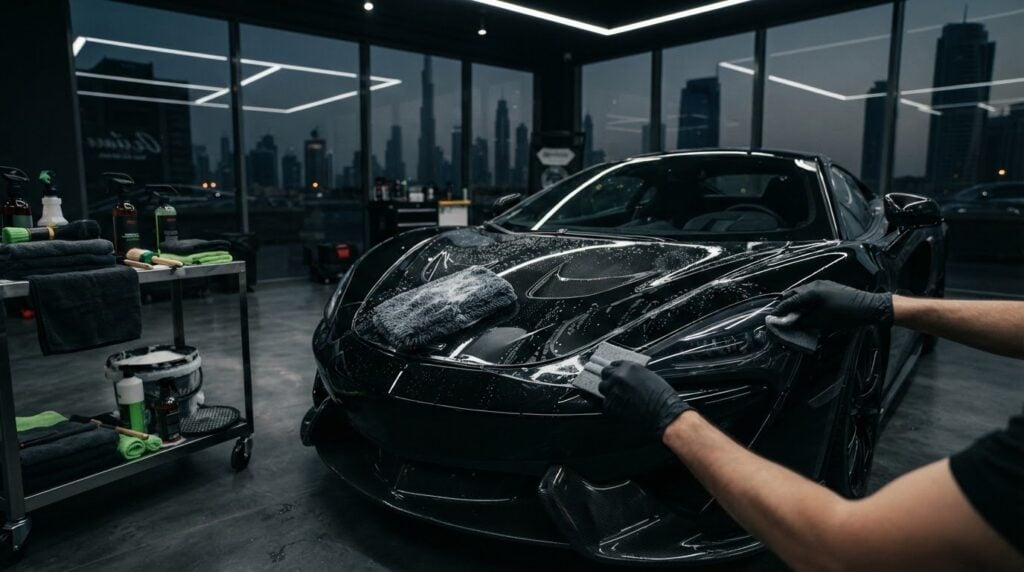
Your weekly wash routine might be the very thing destroying your clear coat. While frequent washing feels like disciplined ownership, standard cleaning only eliminates topical dirt; without engineered defense, improper mechanical contact inflicts micro-swirls and dulls factory depth. True car paint maintenance demands far more than off-the-shelf soap and a two-bucket rinse. It requires a calibrated strategy to protect vulnerable clear coats against intense UV radiation, environmental fallout, and gradual oxidation.
You shouldn’t have to garage a high-performance machine indefinitely just to preserve its mirror gloss. We understand the frustration of seeing micro-scratches mar an otherwise pristine panel, and you can achieve uncompromising, durable protection. In this definitive guide, you’ll master professional wash regimens, targeted contamination removal, and the exact technical criteria for choosing between restorative polishing and resilient Paint Protection Film (PPF). Here is your complete roadmap to maintaining a flawless automotive finish and safeguarding your vehicle’s long-term resale value.
Key Takeaways
- Understand the microscopic vulnerabilities of factory clear coats to prevent UV oxidation and chemical etching before damage starts.
- Eliminate wash-induced swirl marks entirely by deploying a touchless foam pre-wash alongside a calibrated two-bucket contact technique.
- Discover the mechanical distinctions between cosmetic polish and precision multistage paint correction for restoring deep optical clarity.
- Evaluate the defense thresholds of ceramic coatings versus Paint Protection Film (PPF) to engineer the ultimate car paint maintenance strategy.
- Establish a structured maintenance regimen that seamlessly pairs routine preventative care with professional studio detailing to lock in resale value.
Understanding Clear Coat Vulnerabilities and Paint Degradation Factors
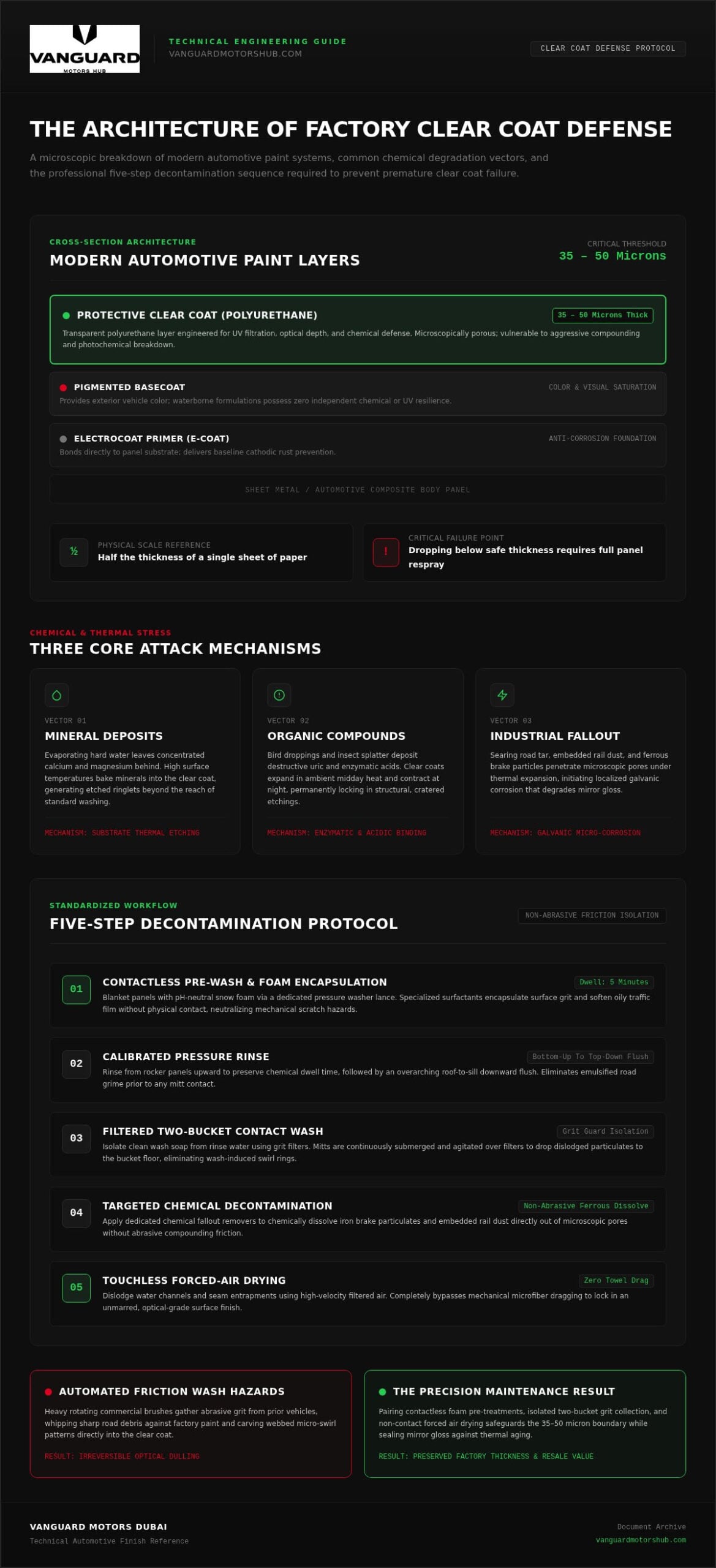
Every pristine mirror finish relies on an incredibly fragile barrier. Understanding the technical composition of modern automotive paint reveals why standard cleaning often fails. Factory paint systems stack an electrocoat primer, a color-bearing basecoat, and a protective transparent clear coat over sheet metal or composite panels. This final clear polyurethane layer typically measures between 35 and 50 microns thick, roughly equivalent to half the thickness of a single sheet of paper. Preserving this microscopically thin boundary represents the central challenge of proactive car paint maintenance.
Paint degradation begins at the molecular level. Solar radiation relentlessly batters external panels, breaking down polymer cross-links within the polyurethane matrix. Over time, photochemical breakdown turns the transparent shell porous, chalky, and brittle. Without rigorous car paint maintenance, oxidation robs the vehicle of optical depth, while ambient thermal cycles soften the substrate and leave it defenseless against everyday mechanical friction and chemical fallout.
The Anatomy of Modern Factory Finishes
While the pigmented basecoat establishes hue and visual saturation, the clear coat provides chemical resistance, depth, and UV filtration. Modern waterborne finishes are microscopically porous rather than completely solid. High ambient heat expands these pores, trapping microscopic moisture, brake dust, and atmospheric pollution deep within the surface. Aggressive, unmeasured machine compounding shaves away irreplaceable microns. Once that 35-to-50-micron barrier drops below safe thresholds, clear coat failure occurs, requiring expensive repainting rather than non-invasive surface restoration.
Environmental Contaminants That Destroy Automotive Finishes
External contaminants actively compromise paint through rapid chemical corrosion and thermal bonding. Each threat attacks the clear coat through distinct degradation mechanisms:
- Mineral Deposits: Evaporating hard water leaves concentrated calcium and magnesium deposits. High panel temperatures bake these minerals into the substrate, creating etched ringlets that standard hand washing cannot dislodge.
- Organic Compounds: Bird droppings and insect splatter carry potent uric and enzymatic acids. As clear coats expand under midday heat and contract during nighttime cooling, these compounds create permanent, crater-like structural etchings.
- Industrial Fallout and Tar: Searing road tar, embedded rail dust, and airborne brake particles melt directly into microscopic paint pores, triggering localized galvanic corrosion that dulls high-gloss clarity.
The Essential Five-Step Car Wash and Decontamination Protocol
Automated friction car washes are devastating to automotive clear coats. Their heavy rotating bristles collect grit from hundreds of vehicles, whipping abrasive road dirt against paint panels and inflicting deep webbed swirl marks. True car paint maintenance begins with an uncompromising hands-on protocol designed to isolate abrasive particulates before a wash mitt ever touches the finish.
Following a comprehensive car care guide ensures that mechanical friction is eliminated wherever possible. Mastering this five-step sequence keeps your clear coat mirror-smooth and free from micro-scratches:
- Contactless Pre-Wash: Blanket panels with high-lubricity foam to soften surface dirt.
- Pressure Rinse: Flush emulsified grime downward from roof to sills before physical contact.
- Filtered Two-Bucket Wash: Clean individual sections using isolated wash and rinse buckets.
- Targeted Decontamination: Chemically dissolve ferrous brake fallout without abrasive compounding.
- Touchless Drying: Dislodge water channels with filtered forced air to eliminate towel drag.
Contactless Pre-Wash and Foaming Strategies
Direct mechanical contact on dry dirt guarantees micro-scratches. Blanket the vehicle in a thick layer of pH-neutral snow foam via a dedicated pressure washer lance. Allow the suds to dwell for five minutes so specialized surfactants can encapsulate grit and soften oily traffic film. Rinse thoroughly, working from the bottom rocker panels upward to maintain maximum chemical contact time before a final top-down flush.
Two-Bucket Contact Washing and Grit Filtration
Contact washing demands strict isolation of abrasive grit. Set up two dedicated wash buckets equipped with bottom grit guards: one filled with pH-balanced shampoo, the other with clear rinse water. Dip a plush microfiber mitt into the soapy solution, glide it across one panel using straight, light overlapping lines, and rinse it thoroughly against the grit guard before reloading suds. Never wipe in circular patterns, which create visible concentric swirl rings under direct light.
Chemical vs Mechanical Surface Decontamination
Standard washing removes topical debris, but metallic particles remain embedded inside clear coat pores. Spray a specialized iron-dissolving chemical across wheels and lower rocker panels; the solution turns vibrant purple as it breaks down sintered brake dust. Reserve physical clay bar treatments strictly for surfaces scheduled for corrective machine compounding, as claying introduces subtle surface marring that requires finishing polish.
For high-value exotic vehicles demanding studio precision without the weekend labor, you can book professional luxury car detailing to maintain showroom clarity through certified wash and decontamination standards.
Paint Correction vs Polishing: Restoring True Optical Depth
Surface polishing refines gloss, but paint correction levels the clear coat. Many vehicle owners mistake single-stage hand glazes for genuine restoration. Typical glazes simply fill micro-grooves with temporary silicones that wash away within weeks. Genuine car paint maintenance relies on multi-stage machine compounding to eliminate subsurface imperfections permanently, re-establishing an ultra-flat, optically pure plane across exterior body panels.
Precision paint correction demands rigorous diagnosis. Industry specialists utilize high-intensity LED inspection lamps and dual-action polishers to read true surface topography. To see how expert technicians balance paint preservation with maximum gloss on exotic finishes, explore professional supercar detailing methodologies that eliminate defects without jeopardizing structural substrate integrity.
Diagnosing Paint Defects and Measuring Clear Coat
Every corrective pass removes clear coat. Technicians deploy digital ultrasonic gauges to map total film thickness across steel, aluminum, and carbon composite panels before touching paint. This calibration ensures safe working margins. Light wash swirls require only mild polishing pads, while deep chemical etching demands aggressive micro-abrasive compounding. When clear coat fractures run through the basecoat down to primer, machine compounding cannot repair the flaw. In those severe scenarios, drivers should consult specialized cosmetic car repair solutions to restore structural panel aesthetics safely.
Dual-Action Machines, Foam Pads, and Compound Graduations
Mastering mechanical paint correction requires dialing in specific pad and chemical pairings. The process executes in systematic stages:
- Defect Leveling: High-throw dual-action polishers combined with microfiber cutting discs and heavy diminishing abrasives level micro-peaks and valleys around deep scratches.
- Haze Refinement: Intermediate open-cell foam pads paired with medium-cut compounds clear away the micro-marring and haze left by the initial aggressive cutting phase.
- Jeweling Finish: Ultra-soft finishing pads and sub-micron finishing polishes burnish the clear coat, creating mirror reflectivity and zero rotary buffer trails.
Dual-action machines distribute heat evenly across panel contours, preventing dangerous edge burns. Once microscopic clarity is fully restored, clear coats demand immediate synthetic or film defense to prevent renewed surface oxidation.
Comparing Long-Term Paint Protection: Sealants, Coatings, and PPF
Every protective layer functions on distinct chemical and mechanical principles. Traditional carnauba waxes produce a warm glow, yet their low melting points break down rapidly beneath scorching ambient heat. Modern car paint maintenance relies instead on engineered barriers that deliver verifiable endurance under severe thermal and environmental stress.
Selecting the right defense requires balancing chemical resistance against physical impact absorption. While liquid applications seal clear coat pores against environmental acids, they cannot prevent high-velocity stone impacts. Discerning vehicle owners evaluate their specific road exposure to determine where fluid nanotechnology ends and solid film defense begins.
Synthetic Polymer Sealants vs Ceramic Nanotechnology
Synthetic polymer sealants cross-link across paint to deliver several months of artificial gloss and basic water beading. Ceramic coatings take durability significantly further. Formulated with liquid silicon dioxide or graphene, professional coatings chemically bond with the clear coat to produce a quartz-hard sacrificial surface. This dense lattice generates water contact angles exceeding 110 degrees, forcing rain and road grime to slide off cleanly. While ceramic barriers offer exceptional defense against chemical etching, UV radiation, and mineral staining, their microscopic thickness cannot stop flying gravel from fracturing underlying clear coats.
Paint Protection Film (PPF) as the Ultimate Physical Shield
Physical kinetic defense requires an elastomeric barrier. Installing computer-cut paint protection film places a high-grade polyurethane armor over vulnerable leading panels. Its integrated memory polymers possess self-healing properties that make minor wash swirl marks and micro-scratches vanish under engine heat or direct sunlight. Expert installers wrap edges seamlessly around body contours to ensure invisible perimeter alignment. Layering ceramic coatings over PPF creates the ultimate hybrid defense, combining rugged kinetic impact shielding with ultra-slick hydrophobic cleaning ease.
Selecting the Optimal Defense for Your Driving Profile
Your driving environment dictates the ideal level of protection. City-driven exotics benefit from high-gloss ceramic coatings, whereas highway commuters and track vehicles require heavy impact shielding across hoods, front splitters, and rocker panels. Those seeking both rock-chip defense and complete color customization can also explore a high-performance car wrap to transform exterior styling while safeguarding OEM clear coats underneath.
Protect your automotive investment before road rash begins. You can connect with Vanguard Motors Dubai specialists to install bespoke Paint Protection Film and ceramic coating systems engineered for long-term finish preservation.
Implementing an Ongoing Maintenance Routine for Long-Term Value
Precision protection requires disciplined upkeep. Even advanced nanotech coatings and self-healing films degrade prematurely if neglected under daily driving grime. Preserving deep showroom clarity over years requires a synchronized balance between routine preventative home washing and calibrated studio care. Establishing a verified car paint maintenance schedule protects sensitive clear coats while documenting an unbroken chain of surface provenance that maximizes future resale value.
A systematic maintenance framework eliminates guesswork. Structuring care intervals ensures that traffic film never hardens into stubborn chemical defects:
- Bi-Weekly Maintenance: Execute two-bucket contact washes alongside forced-air drying to safely clear highway fallout.
- Monthly Spot Decontamination: Clear rocker panel tar, inspect wheel drums, and apply high-lubricity detailing sprays.
- Quarterly Hydrophobic Boosts: Infuse specialized ceramic booster mists across surfaces to rejuvenate self-cleaning contact angles.
- Annual Studio Audits: Complete chemical matrix decon washes and ultrasonic panel gauge inspections at a certified detailing center.
Bi-Weekly and Monthly Upkeep Checklists
Consistency safeguards delicate finishes. Every two weeks, conduct a gentle wash using dedicated microfiber towels with borderless edges to eliminate contact friction. Keep a premium quick-detailer spray and plush 500-GSM towel in your vehicle for emergency spot removal. Tree resin and bird droppings demand instantaneous neutralization before daytime solar heat bakes active enzymes into the clear coat pores.
Professional Concierge Detailing and Annual Inspections
Quarterly road miles inevitably embed fine road film into surface protection layers. Scheduling annual decontamination at a dedicated studio allows technicians to flush industrial traffic oils using pH-balanced chemical decon baths without abrading the underlying topcoat. Between studio appointments, high-end mobile detailing van services deliver studio-grade wash regimens right to your private garage, protecting flawless finishes without interrupting demanding personal schedules.
Partner with Vanguard Motors Dubai for Precision Protection
Maintaining high-performance automotive finishes demands specialized technical expertise. Vanguard Motors Dubai provides comprehensive aesthetic care, pairing custom computer-cut Paint Protection Film installations and precision paint correction with tailored luxury car detailing. Whether you require bespoke peelable paint applications, aerodynamic carbon fiber integration, or elite vehicle body preservation, our specialists deliver unmatched craftsmanship. Protect your vehicle’s legacy by booking a bespoke consultation with our master technicians today.
Elevate Your Vehicle’s Finish Beyond Factory Standards
Preserving an authentic showroom shine requires moving past outdated wash habits and embracing engineered defense. Consistent car paint maintenance protects microscopic clear coat boundaries against UV breakdown, environmental acid etching, and destructive wash marring. When you master touchless pre-washing, select precision paint correction over temporary glazes, and deploy high-grade Paint Protection Film, your vehicle retains flawless depth and lasting market value.
Your vehicle deserves uncompromising protection tailored to elite standards. Vanguard Motors Dubai operates an advanced technical facility specializing in luxury vehicles and supercars, offering expert computer-cut Paint Protection Film installations, precision surface restoration, and bespoke styling upgrades. Secure your vehicle’s paint with Vanguard Motors Dubai today to protect its exterior with championship-level craftsmanship.
Frequently Asked Questions
How often should I wash my car to maintain optimal clear coat health?
Wash your vehicle every one to two weeks using touchless pre-rinse and two-bucket methods. Routine washing prevents highway grime, brake dust, and organic acids from baking into clear coat pores. If your vehicle faces heavy highway driving or extreme environmental dust, weekly maintenance washing is ideal to neutralize contaminants before chemical bonding and permanent etching occur.
Can a ceramic coating prevent stone chips and scratches on car paint?
No, ceramic coatings cannot prevent stone chips or deep physical gouges. While coatings create an ultra-slick, quartz-hard layer measuring mere microns thick, they’re engineered for chemical resistance, UV filtration, and extreme hydrophobicity. Absorbing kinetic impacts from flying road gravel requires the heavy polyurethane barrier of Paint Protection Film (PPF). Pairing both systems delivers total surface defense.
What is the difference between car polishing and paint correction?
Polishing enhances superficial gloss, while paint correction physically levels damaged clear coat. Standard polishing uses mild finishing compounds to clean the surface and boost reflection temporarily. In contrast, multi-stage paint correction measures microscopic clear coat thickness and uses diminishing abrasives with dual-action polishers to remove swirl marks, scratches, and oxidation permanently. Incorporating precision correction into your car paint maintenance routine restores authentic optical clarity.
Does Paint Protection Film require special car paint maintenance products?
Yes, PPF requires pH-neutral cleaning agents and sealants that don’t contain aggressive petroleum distillates. Harsh solvents and abrasive rubbing compounds can degrade polyurethane edges or haze the film’s clarity. Routine car paint maintenance on wrapped panels requires gentle snow foams, dedicated ceramic detailers, and plush microfiber towels to support the film’s self-healing topcoat without inflicting damage.
Why do automated car washes ruin automotive clear coats?
Automated brush washes inflict severe paint marring because their rotating synthetic bristles trap abrasive road grit from earlier vehicles. As these heavy brushes spin against your exterior panels at high speed, they grind trapped dirt into your clear coat, leaving thousands of micro-scratches and circular swirl marks. Over time, this constant mechanical friction strips away gloss, dulling factory depth and accelerating clear coat oxidation.
How do I remove hard water spot etching from modern car paint?
Dissolve fresh mineral deposits with dedicated water spot removers before they chemically etch the finish. If mineral rings have baked under intense sunlight, topical cleaners won’t eliminate them. You’ll need a light machine polish or targeted compounding stage to level the microscopic craters etched by dried calcium and magnesium. Always apply ceramic spray or film immediately afterward to seal exposed pores.
Will regular paint maintenance increase the resale value of luxury vehicles?
Yes, documented surface maintenance significantly boosts resale value and accelerates vehicle sales. Discerning buyers and exotic collectors inspect clear coat condition and depth gauge readings before negotiating. Preserving an unblemished factory finish free of panel repaints, rock rash, and swirl marks provides verifiable provenance, proving the car received meticulous mechanical and aesthetic care throughout its lifespan.