
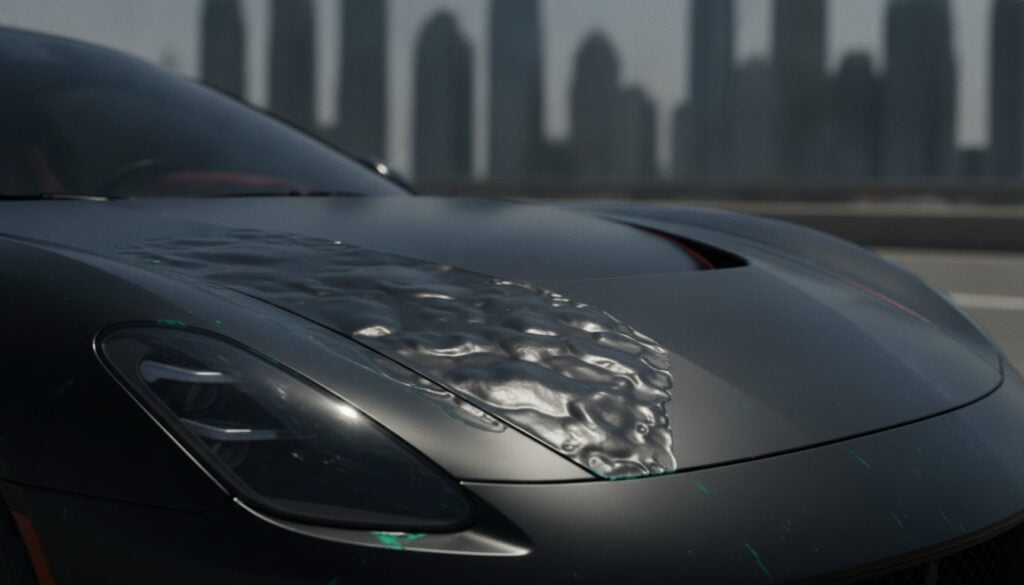
A bubbling car wrap is more than a minor blemish; it’s a structural failure of your vehicle’s aesthetic identity. When you see your car wrap bubbling in the sun, you’re witnessing the physical breakdown of a bond that was meant to be ironclad. For owners of high-performance vehicles, this visual degradation is unacceptable. You invested in a premium finish to stand out, not to watch it blister and lift under the relentless midday heat. It’s frustrating to see elite quality compromised by environmental stress or subpar installation techniques.
Discover why automotive wraps fail in extreme heat and how to protect your vehicle’s aesthetic with professional-grade materials and precision installation. Vanguard Motors Dubai provides this guide to help you understand the root causes of adhesive failure and the superior protection offered by modern Paint Protection Film. We’ll preview the science of thermal expansion, compare the durability of various materials, and outline the professional restoration options available in 2026 to ensure your finish remains flawless regardless of the temperature.
Key Takeaways
- Understand the science of thermal expansion and why metal and vinyl react differently to extreme heat.
- Identify the critical warning signs of car wrap bubbling in the sun before they lead to costly paint repairs.
- Compare the heat-resistant performance of traditional vinyl against advanced solutions like PPF and peelable paint.
- Learn how professional installation techniques and ceramic coatings create a robust shield against UV degradation.
- Discover how Vanguard’s precision-controlled environments ensure a flawless, long-lasting bond for high-performance vehicles.
Understanding Car Wrap Bubbling: Why the Sun is Your Vinyl’s Worst Enemy
Bubbling isn’t just a minor cosmetic flaw; it’s a structural failure of your vehicle’s aesthetic shield. At its core, bubbling is the physical separation of the vinyl film from the vehicle’s paint surface. While amateur installers might blame trapped air, the reality is more complex. The sun acts as a relentless catalyst for both physical and chemical failure, forcing materials to perform beyond their engineered limits. When you see your car wrap bubbling in the sun, you’re witnessing the adhesive’s inability to maintain a bond under thermal stress.
Professional installers distinguish between two primary types of failure. “Fingering” typically occurs at the edges of panels, where the vinyl pulls back and creates small, tunnel-like ridges. In contrast, “surface bubbles” emerge in the center of large panels like the hood or roof. A standard Vehicle vinyl wrap is significantly more susceptible to these issues than premium Paint Protection Film (PPF). While vinyl is relatively thin and rigid, high-end PPF is engineered with advanced polymers that offer superior thermal stability and a stronger initial bond, making it the preferred choice for elite vehicles in high-heat environments.
The Role of UV Radiation in Adhesive Failure
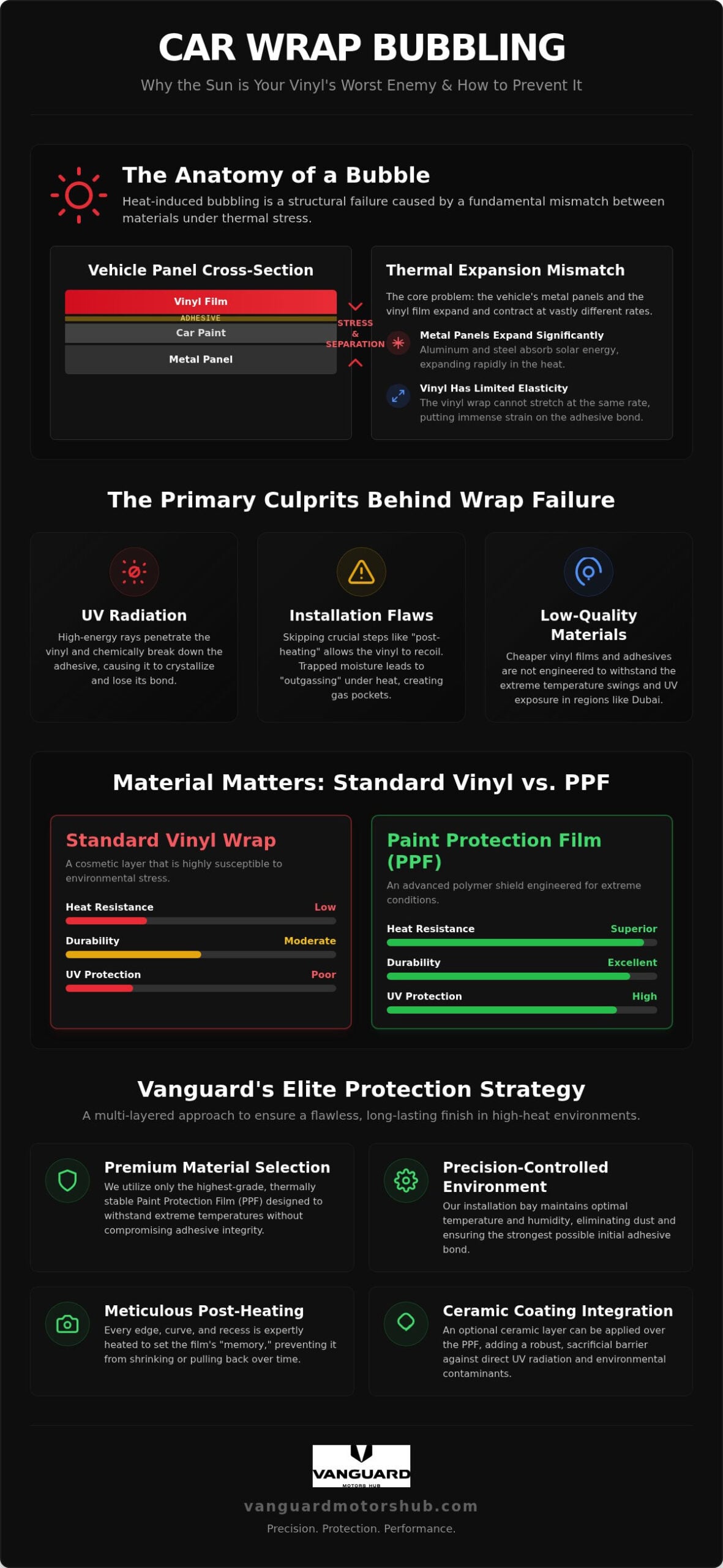
UV radiation is a silent predator for automotive wraps. These high-energy rays penetrate the vinyl layer and directly attack the chemical bonds of low-grade adhesives, causing them to crystallize and lose their tack. This process is accelerated by the “greenhouse effect” beneath the film. On dark-colored cars, temperatures between the paint and the wrap can spike far beyond ambient air levels, essentially cooking the adhesive from the inside out. UV-induced delamination is a primary cause of wrap failure.
Common Symptoms of Sun-Damaged Wraps
Identifying the early warning signs can save your paint. Visual cues often begin with a slight clouding or a milky appearance in the film, followed by lifting edges and rapidly expanding air pockets. As the sun leaches plasticizers from the material, the texture changes. The once-supple vinyl becomes brittle and may even crack or “shatter” when touched. You’ll notice that horizontal surfaces, such as the hood and roof, fail much faster than vertical door panels. These areas receive direct, perpendicular UV exposure for the majority of the day, making them the front lines in the battle against heat. If your vehicle is showing these signs, it’s time to consult the experts at Vanguard Motors Dubai to discuss professional restoration and superior protection options.
The Science of Adhesion Failure: Outgassing and Thermal Expansion
Physics dictates the lifespan of a vehicle wrap. While many attribute failure to poor quality, the primary culprit is often a lack of understanding regarding material science. The coefficient of thermal expansion explains why your car wrap bubbling in the sun occurs. Simply put, the metal panels of your car and the vinyl film covering them expand and contract at vastly different rates when exposed to intense heat. This mechanical stress tests the limits of the adhesive every time your vehicle sits in the driveway.
Thermal Expansion Mismatch
Aluminum and steel panels react differently to solar energy. Aluminum, common in modern luxury vehicles, dissipates heat quickly but also expands significantly. When a vehicle moves from a cool, climate-controlled garage to intense afternoon sunlight, the rapid expansion of the substrate puts immense stress on the vinyl’s adhesive bond. Tension is highest at recessed areas or sharp body lines where the material was stretched during installation. These tension points become the first failure points during peak daylight hours, especially if the material was “bridged” over a gap rather than properly recessed.
Adhesive Chemistry in 2026
Modern wrap technology has evolved. In 2026, we primarily use high-performance pressure-activated adhesives that allow for repositioning during the build. However, these systems rely on a process called “post-heating” to set the material’s memory. If an installer skips this step, the vinyl naturally wants to return to its original flat shape. The sun provides the energy needed for the vinyl to “recoil,” pulling away from deep curves and creating the pockets you see as bubbles.
Another critical factor is outgassing. This phenomenon occurs when trapped solvents or moisture beneath the film are forced into a gaseous state by rising temperatures. If the film hasn’t been applied using a precision dry-install method, or if the paint wasn’t fully cured, these gases have nowhere to go. They expand, creating the unsightly pockets associated with car wrap bubbling in the sun. While premium films feature microscopic air release channels to help gas escape, they aren’t a substitute for the meticulous surface preparation found at Vanguard Motors Dubai.
Managing these microscopic variables requires an expert hand and a controlled environment. If you’re seeing signs of lifting or tension failure on your panels, it’s vital to consult with a specialist regarding corrective measures before the damage becomes permanent. Precision installation isn’t just about aesthetics; it’s about mastering the chemistry of the bond to ensure long-term durability.
Material Matters: Comparing Vinyl Wraps, PPF, and Peelable Paint
The material you choose is the foundation of your vehicle’s endurance. While aesthetic preference often drives the initial decision, technical specifications dictate how that finish handles the environment. Traditional vinyl wraps are the industry standard for color changes, but they possess a lower thermal threshold than modern alternatives. Because vinyl is a relatively thin material, it absorbs and transfers heat rapidly to the adhesive layer. This makes car wrap bubbling in the sun a significant risk for vehicles stored outdoors in high-temperature climates.
Vinyl vs. PPF: The Durability Gap
The difference between standard vinyl and Paint Protection Film (PPF) is primarily found in their physical composition. Most vinyl wraps measure between 3 and 4 mils in thickness. In contrast, premium PPF typically ranges from 8 to 10 mils. This extra mass acts as a thermal insulator, protecting the adhesive from the direct energy of the sun. More importantly, PPF is engineered with a self-healing top coat. Instead of distorting or lifting when temperatures rise, the polymer structure uses heat to flow back into its original state, effectively repairing minor surface swirls rather than failing. For those seeking the pinnacle of protection, understanding The Ultimate Shield: Why PPF is the Standard for Excellence is essential for long-term vehicle preservation.
Peelable Paint: The Ultimate Heat Solution
For owners who demand a flawless factory finish without the risks associated with traditional films, Peelable Paint represents the cutting edge of automotive styling. Unlike vinyl, which is a pre-cast sheet applied with pressure, peelable paint is a liquid-applied coating. This application method eliminates the possibility of air pockets or “bridging” over complex recesses. Since there’s no trapped air or tension-filled edges, the risk of car wrap bubbling in the sun is entirely removed from the equation.
Peelable paint offers a seamless aesthetic that is indistinguishable from high-end OEM paint. It provides a robust UV barrier that doesn’t lift, peel, or crack under intense solar exposure. This makes it an ideal solution for supercars and luxury vehicles where precision is non-negotiable. While a professional vinyl wrap can last five to seven years under ideal conditions, peelable paint and PPF offer superior longevity in high-heat environments, ensuring your vehicle’s transformation remains as sharp as the day it left our studio.
How to Prevent and Manage Sun-Induced Wrap Damage
Defending your vehicle against the elements requires a proactive strategy that begins long before the first heatwave. While parking in the shade is a helpful habit, it’s an insufficient defense for a high-performance machine. Preventing your car wrap bubbling in the sun involves a combination of technical installation standards and meticulous surface maintenance. By treating your wrap as a sophisticated component rather than a simple sticker, you ensure its aesthetic and structural integrity for years to come.
Professional Installation Techniques
Elite protection starts in a controlled environment. A critical step often overlooked by budget installers is 90-degree post-heating. This process involves using an infrared thermometer to ensure the vinyl reaches its specific “memory-kill” temperature, typically between 85 and 95 degrees Celsius. This resets the material’s physical memory to its new contoured shape, effectively neutralizing the tension that leads to lifting. Furthermore, edge wrapping and the targeted use of adhesive primers on complex recesses are non-negotiable standards. For a deeper look at these technical requirements, consult The 2026 Car Wrap Buying Guide.
Beyond the initial application, adding a sacrificial layer is the most effective way to combat UV degradation. Applying a specialized ceramic coating over the film creates a hydrophobic, UV-resistant shield. This layer absorbs the brunt of solar radiation, preserving the underlying adhesive’s chemical bonds. It also prevents contaminants like bird droppings or industrial fallout from etching into the film, which can create localized hot spots that accelerate bubbling.
Maintenance for Longevity
Your cleaning regimen directly impacts the film’s elasticity. Use UV-inhibiting detail sprays between washes to keep the vinyl supple. Avoid automatic car washes at all costs; the aggressive mechanical brushes are notorious for catching edges and forcing water into microscopic gaps, which eventually leads to delamination. Instead, prioritize professional hand washing or touchless methods. Incorporating Supercar Detailing into your vehicle’s schedule ensures that every inch of the wrap is inspected for early signs of failure.
If you spot the first sign of a pocket forming, resist the urge to intervene yourself. Popping a bubble with a needle creates a permanent entry point for moisture and dirt. Immediate professional intervention can often save the panel through controlled heat application and precision re-sealing. Don’t wait for a minor lift to become a full-panel failure. If you notice your car wrap bubbling in the sun, contact our technical team immediately for a professional assessment and restoration plan.
Vanguard’s Elite Protection: Precision Installation for High-Heat Environments
Elite vehicle protection is a game of millimeters and atmospheric control. At Vanguard Motors, we understand that a flawless finish is impossible in a dusty or humid garage. Our studio is a meticulously controlled environment designed to eliminate the variables that cause a car wrap bubbling in the sun. By regulating temperature and air purity, we ensure the adhesive bonds perfectly to the substrate from the first second of contact. This level of precision is what separates a standard color change from a professional-grade automotive transformation.
Before any film is applied, the foundation must be perfect. Wrapping over rock chips, oxidation, or minor scratches is a recipe for failure, as these imperfections create microscopic air gaps that the sun will eventually exploit. We prioritize Cosmetic Car Repair to restore the paint’s surface to a factory-fresh state. This holistic approach ensures that the wrap or PPF sits flush against the panel, removing the pockets of air that lead to lifting and delamination.
The Vanguard Precision Protocol
Our protocol begins with a multi-stage decontamination process to remove every trace of wax, grease, and fallout. We then utilize custom-fit plotting technology rather than traditional hand-cutting on the vehicle. This precision reduces the need for excessive stretching, which is a primary cause of tension-induced failure. In our 2026 quality assurance phase, every vehicle undergoes a simulated heat-test. This ensures the material’s memory is properly set and the bond is ironclad, preventing your car wrap bubbling in the sun after you leave our facility.
Bespoke Aesthetic Enhancements
We don’t just protect; we transform. Our expertise extends to integrating complex modifications like Brabus Body Kits with our premium protection packages. Whether it’s ensuring a seamless wrap around aggressive aerodynamic components or providing carbon fiber restoration and protection, our team maintains the highest supercar standards. We treat every vehicle as a unique engineering challenge, combining technical skill with creative vision to deliver results that exceed expectations.
Your vehicle represents a significant investment in both performance and style. Don’t let inferior materials or amateur installation compromise its value or its aesthetic impact. Secure your vehicle’s future with Vanguard Motors and experience the peace of mind that comes with elite-tier automotive preservation. Our commitment to excellence ensures your vehicle remains a masterpiece on the road, regardless of the heat.
Master the Heat: Your Vehicle’s Future Starts Here
Your vehicle is a statement of performance and precision. It shouldn’t be compromised by the environment. We’ve explored how thermal expansion and UV radiation lead to a car wrap bubbling in the sun, proving that the bond is only as strong as the science behind the installation. By prioritizing advanced materials like self-healing PPF or seamless peelable paint, you move beyond temporary fixes toward permanent automotive excellence.
Vanguard Motors specializes in luxury and supercar detailing, utilizing climate-controlled facilities to ensure every application meets the highest standards of precision. Whether you’re opting for elite PPF or a bespoke peelable paint transformation, the result is a finish that defies the elements. Don’t let the heat dictate your vehicle’s aesthetic lifespan. It’s time to invest in a shield that matches your car’s caliber.
Protect your supercar from the sun at Vanguard Motors. We look forward to preserving your masterpiece.
Frequently Asked Questions
Can a bubbled car wrap be fixed without replacing the whole panel?
Minor bubbles can often be addressed if they are caught early. If the adhesive hasn’t failed completely, a professional can use controlled heat and specialized tools to reseal the material. However, if the bubble is caused by outgassing or underlying contamination, the structural bond is lost. In these scenarios, replacing the panel is the only way to ensure a flawless finish and prevent further visual degradation of your vehicle.
How long should a professional car wrap last in high-heat climates?
A high-quality professional wrap typically lasts between five to seven years with meticulous maintenance. In extreme high-heat environments, constant solar exposure can accelerate adhesive breakdown. Utilizing advanced materials like Paint Protection Film or peelable paint can extend this lifespan significantly. These premium solutions offer superior UV resistance compared to standard vinyl, ensuring your vehicle’s aesthetic remains sharp and protected throughout the years despite intense sun exposure.
Does the sun damage the paint underneath a bubbling wrap?
The sun can indirectly cause damage if the wrap fails. When car wrap bubbling in the sun occurs, it creates small pockets where moisture and heat are trapped against the clear coat. This greenhouse effect can lead to paint discoloration or clear coat failure over time. Maintaining the integrity of the film is essential to prevent these localized hot spots from compromising your vehicle’s original factory finish and resale value.
Is it better to use PPF or vinyl if my car is parked outside?
Paint Protection Film is the superior choice for vehicles frequently exposed to direct sunlight. PPF is significantly thicker than vinyl and features self-healing properties that use solar heat to repair surface swirls rather than allowing the material to lift. While vinyl is excellent for aesthetic color changes, PPF provides a more robust thermal barrier that resists bubbling and UV degradation far more effectively over long periods of outdoor storage.
Why do bubbles only appear on the hood and roof of my car?
Horizontal surfaces like the hood and roof receive the most direct, perpendicular UV exposure throughout the day. These panels absorb significantly more solar energy than vertical door panels, leading to higher surface temperatures. This intense heat causes the metal to expand rapidly and tests the limits of the adhesive bond. Consequently, these areas are the primary front lines where car wrap bubbling in the sun is most likely to manifest.
What is the best color wrap to choose for maximum sun resistance?
Lighter colors and metallic finishes generally offer better sun resistance because they reflect a higher percentage of solar radiation. Darker shades like deep black or navy blue absorb heat, leading to higher panel temperatures that can stress the adhesive layer. For those seeking a dark aesthetic with maximum durability, we recommend peelable paint or colored PPF. These are engineered to handle thermal stress without the risks associated with traditional vinyl.
Can I use a heat gun to fix bubbles myself?
We strongly advise against DIY heat gun repairs for premium vehicles. Professional-grade vinyl and PPF require precise temperature control to reset the material’s memory without scorching the film or damaging the underlying paint. Amateur attempts often lead to overstretched material or permanent surface scarring. Our technicians use infrared thermometers and calibrated equipment to ensure the material reaches the exact threshold required for a successful, long-lasting bond that won’t fail again.
Does ceramic coating prevent a wrap from bubbling in the sun?
Ceramic coating acts as a vital sacrificial layer but doesn’t replace the need for professional installation. It provides a robust UV-resistant shield that preserves the film’s elasticity and prevents the adhesive from becoming brittle. While it won’t fix existing bubbles, it significantly reduces the rate of chemical degradation caused by solar energy. Integrating a ceramic coating into your protection strategy is a proactive way to ensure your wrap remains flawless and durable.