
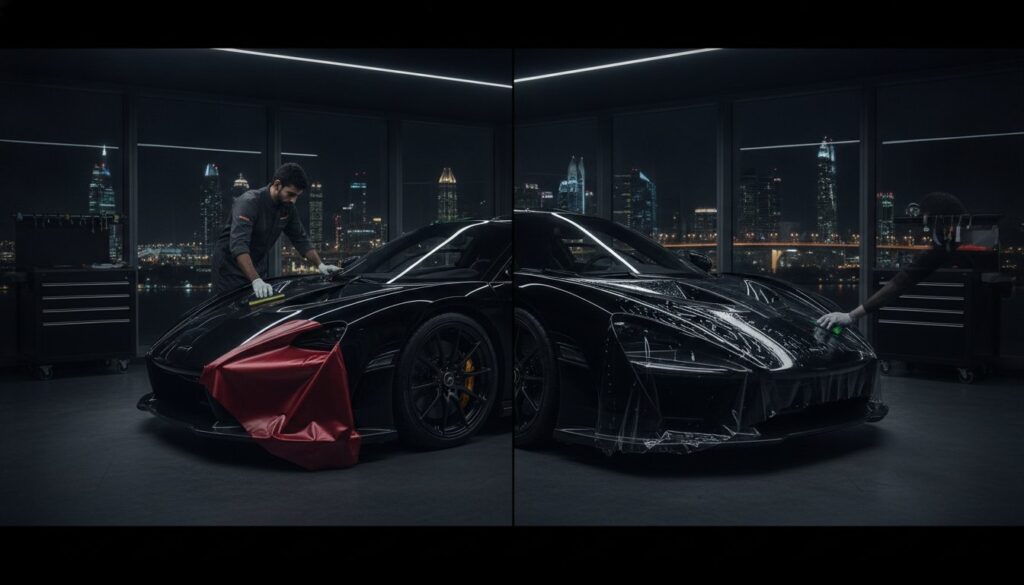
Your factory paint is under constant assault the moment you leave the showroom. Relying on traditional waxes to defend a high-performance investment is a strategy of the past. You likely want your vehicle to command attention with a unique finish while demanding it stays in pristine, showroom condition. It’s a common tension for owners who fear that a single gravel spray could ruin a perfect hood or that harsh UV exposure will fade their finish. Deciding on a car wrap vs ppf no longer means sacrificing one priority for another. It is about selecting the specific polymer technology that matches your driving lifestyle.
We understand that maintaining an elite automotive aesthetic requires both technical precision and creative vision. This guide serves as your professional roadmap to navigating these advanced protection and styling tiers. You’ll discover exactly how a premium vinyl wrap or an advanced paint protection film serves your defensive needs and aesthetic goals. We will analyze the long-term ROI of different installations, explain the maintenance required for 2026’s latest self-healing films, and help you determine which solution ensures your vehicle remains a masterpiece on the road.
Key Takeaways
- Master the distinction between aesthetic transformations and the ‘invisible armor’ required to mitigate physical road damage.
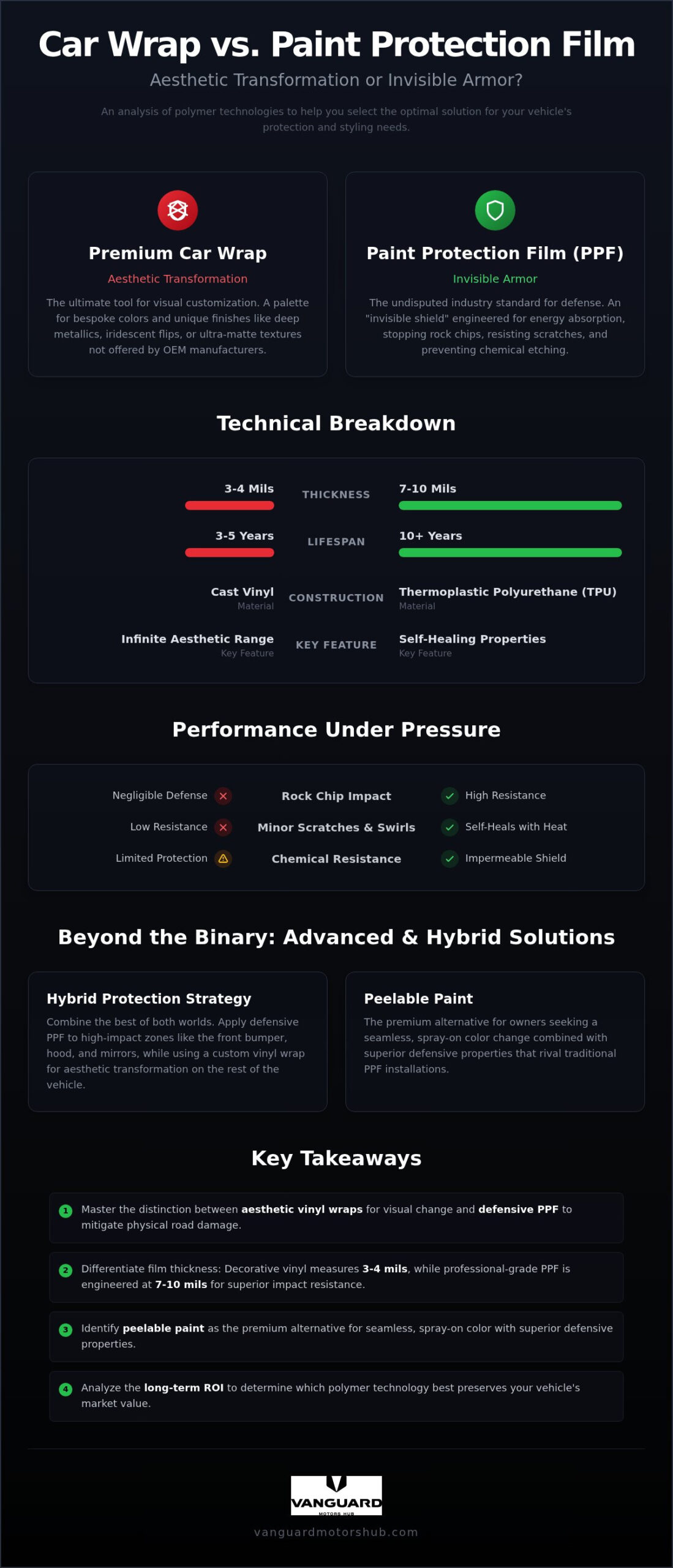
- Differentiate between the 3-4 mil thickness of decorative vinyl and the 7-10 mil engineering of professional-grade PPF for impact resistance.
- Identify peelable paint as the premium alternative for owners seeking seamless, spray-on color with superior defensive properties.
- Analyze the long-term ROI of a car wrap vs ppf to determine which polymer technology best preserves your vehicle’s market value.
- Learn why a professional assessment is critical for integrating protective films with bespoke enhancements like carbon fiber or Brabus kit conversions.
Understanding the Core Objectives: Aesthetic Transformation vs. Invisible Armor
Selecting the right finish for an elite vehicle is an exercise in balancing performance with personality. The debate of car wrap vs ppf often centers on whether you want to change how the world sees your car or how the world affects it. Vinyl is your palette; PPF is your armor. In 2026, the gap between these technologies is narrowing as manufacturers develop hybrid solutions that attempt to do both. However, the professional decision still rests on your primary objective. You must decide if you are looking to preserve resale value through invisible defense or if you are ready to redefine your vehicle’s identity with a bespoke color.
Determining your goal requires a look at the long term. If you plan to sell the vehicle in two years, preserving the factory paint is a financial priority. If you find the standard OEM color palette uninspired, transformation is the goal. Modern owners often choose a tiered approach, applying protection to high-impact areas while using aesthetic films for the rest of the body. This strategic mindset ensures that your investment remains protected without compromising on your creative vision.
What is a Premium Car Wrap?
High-grade vinyl wraps are the ultimate tool for visual transformation. We utilize professional cast vinyl because of its superior conformability. This material is poured as a liquid and then baked, resulting in a thin, stable film that flows over complex curves and aggressive body lines without lifting. These colored sticker wraps allow you to experiment with finishes that OEM manufacturers simply don’t offer, such as deep metallics, iridescent flips, or ultra-matte textures.
While the aesthetic range is nearly infinite, vinyl is a temporary modification. In regions with extreme UV exposure, even the highest quality car wrap for luxury performance vehicles has a finite lifespan. You can typically expect three to five years of peak performance before the pigments begin to lose their luster or the adhesive reaches the end of its service life. It is an ideal choice for those who view their vehicle as a canvas for evolving style.
What is Paint Protection Film (PPF)?
If your priority is defense, Paint Protection Film is the undisputed industry standard. It is constructed from Thermoplastic Polyurethane (TPU), a resilient and flexible material engineered specifically for energy absorption. This is why many enthusiasts refer to it as the Ultimate Shield for high-value assets. Unlike vinyl, PPF is thick enough to stop rock chips, prevent chemical etching from bird droppings, and resist swirl marks from improper washing.
Modern 2026 technology offers incredible variety in finishes. You can choose a high-gloss film to enhance factory depth, a matte finish for a modern look, or a ‘stealth’ film that transforms your existing paint into a satin masterpiece. The primary advantage remains its self-healing properties. Minor abrasions disappear when exposed to heat, ensuring the surface remains flawless for years.
The Technical Breakdown: Material Engineering and Durability
The technical superiority of these films lies in their molecular construction. When evaluating a car wrap vs ppf, the most immediate metric of performance is thickness. Standard vinyl wraps measure between 3 and 4 mils. This is sufficient for aesthetic transformation but offers negligible defense against physical impact. In contrast, professional-grade PPF ranges from 7 to 10 mils. This additional mass acts as a sacrificial barrier that absorbs and dissipates the kinetic energy of road debris before it reaches the clear coat.
Premium PPF utilizes Thermoplastic Polyurethane (TPU) which possesses inherent self-healing properties. When the surface is marred by micro-scratches or swirl marks, the polymer chains reorganize when exposed to heat from the sun or warm water. This ensures the finish remains optically clear. Beyond physical impacts, these films provide critical chemical resistance. They create an impermeable shield against acidic bird droppings, industrial fallout, and fuel spills that would otherwise etch into factory paint.
Durability and Longevity Expectancy
High-performance PPF is engineered for a decade of service. Most elite installations carry warranties up to 10 years, covering yellowing, cracking, or bubbling. Vinyl has a more accelerated aging process. It typically requires removal or replacement within three to five years. Neglecting this removal can lead to adhesive failure, making the film difficult to strip without damaging the substrate. Regular maintenance with dedicated sealant sprays is essential to preserve the hydrophobicity of both materials.
Installation Precision and Complexity
The application methods for these two materials are fundamentally different. Vinyl is a ‘dry’ application, relying on air-release channels in the adhesive to achieve a bubble-free finish. PPF requires a ‘wet’ installation using a specialized slip solution. This allows the technician to slide the film into perfect alignment before squeegeeing the liquid out. Amateur attempts often result in ‘silvering’ or lift lines where the adhesive has been compromised. Professional bulk-cut methods ensure that every edge is wrapped behind panels for a truly invisible look.
Achieving this level of precision requires a facility equipped with climate control and expert technicians. If you are ready to discuss the specific defensive needs of your vehicle, consult with our technical team today to explore our Vanguard Premium Package options.
Performance Under Pressure: Defeating High Heat and Abrasive Elements
Driving in extreme climates demands more than just a standard finish. Intense UV radiation and high-speed sand abrasion are constant threats to your vehicle’s surface. Choosing between a car wrap vs ppf often comes down to how well the material survives these abrasive elements. Low-grade films often fail under relentless heat, leading to adhesive melting or unsightly shrinkage around panel edges. Professional installations prioritize thermal stability to ensure that your investment doesn’t degrade when the mercury rises.
High-speed travel in desert or coastal environments turns fine sand into a micro-abrasive that can effectively sandblast a factory finish. While vinyl provides a temporary barrier, it lacks the density required to prevent deep sand-pitting over time. Professional PPF utilizes a dense TPU structure that remains stable even when surface temperatures climb, ensuring the impact energy is neutralized before it reaches the substrate. This level of defense is essential for maintaining the sharp, clean lines of a performance vehicle.
Arid environments lead to rapid dust accumulation which can dull a vehicle’s appearance in hours. Modern films feature advanced hydrophobic top-coats that repel fine particulates and moisture alike. This creates a low-energy surface where grime cannot easily bond, allowing for a simplified cleaning process that maintains the vehicle’s elite luster without aggressive scrubbing. These properties ensure that your car looks freshly detailed even between professional maintenance sessions.
UV Protection and Color Fade Resistance
Premium wraps serve as a sacrificial layer, absorbing UV energy that would otherwise oxidize your clear coat. Unlike the cheap films of the past, 2026-generation PPF products utilize aliphatic polyurethane to prevent the yellowing caused by solar exposure. The UV inhibitors are chemically integrated into the TPU matrix to ensure permanent molecular stability rather than relying on a temporary surface coating. This ensures your finish remains optically clear for the life of the film, preserving the original depth of your factory paint.
Managing Heat Rejection and Surface Temps
Thicker films provide a subtle insulating effect that can help manage surface temperatures on dark-colored vehicles. Integrating these protective layers with luxury detailing creates a comprehensive preservation strategy that covers both the exterior and the cabin environment. You should avoid high-pressure washes when the panels are hot to prevent thermal shock to the adhesive. Parking in shaded areas whenever possible will extend the life of any automotive film by reducing the total cumulative UV load on the polymers.
Beyond the Binary: Peelable Paint and Hybrid Protection Strategies
The automotive landscape is no longer limited to a binary choice. While the traditional debate of car wrap vs ppf remains central, 2026 technology offers sophisticated middle grounds. You don’t have to choose between the 10-mil defense of a film and the vibrant palette of a wrap. Innovation has birthed hybrid strategies and sprayable polymers that redefine vehicle preservation. These advanced solutions allow you to customize your level of defense based on how you actually use your vehicle.
Peelable Car Paint represents the premier evolution of this sector. It is applied through a precision spray process rather than a dry or wet film application. This method allows for a thickness that rivals professional PPF. It delivers the exact pigment depth of a custom paint job. It is the definitive choice for those who demand a seamless finish without the inherent limitations of traditional vinyl adhesives. Additionally, the rise of colored PPF provides a new frontier. This material offers maximum impact protection in a variety of custom hues, effectively providing the ultimate shield with the aesthetic flair of a premium wrap.
The Advantages of Peelable Paint
Peelable paint eliminates visible seams and relief cuts. These are common points of failure in standard vinyl installations where the film might lift or trap dirt. Because it is a liquid-applied polymer, it can be polished and ceramic coated exactly like a factory finish. This makes it the superior option for complex bespoke car conversions where panel shapes are too aggressive for traditional film. It provides a level of depth and clarity that sticker wraps cannot replicate.
Strategic Hybrid Applications
Many enthusiasts opt for a ‘Track Pack’ hybrid strategy to maximize their ROI. This involves applying high-performance PPF to the hood, front bumper, and mirrors while using a colored wrap for the rest of the body. This approach focuses your budget on high-velocity impact zones. It allows for maximum creative expression on the side panels and rear. Our technicians can design a custom protection map for your vehicle, ensuring that every square inch is guarded according to its risk profile.
Customizing your protection strategy ensures your vehicle remains a masterpiece while staying within your desired investment tier. Consult with our specialists to design your custom hybrid protection plan today.
Selecting Your Signature Finish: The Vanguard Motors Dubai Approach to Automotive Excellence
The final selection between a car wrap vs ppf isn’t merely a choice of material. It’s the culmination of a rigorous technical assessment at Vanguard Motors Dubai. We begin every project by evaluating your vehicle’s paint health to ensure a permanent bond. Applying high-performance films over compromised surfaces is a recipe for failure. We identify micro-fractures, oxidation, and deep etchings that must be addressed before the surface is sealed. This ensures the bond is permanent and the visual output is flawless.
The Vanguard Premium Package simplifies long-term vehicle maintenance by integrating protection with a holistic care ecosystem. We don’t just apply film; we perform multi-stage paint correction to achieve a mirror-like finish. This clarity is what makes a ‘stealth’ PPF look sophisticated rather than just dull. By preparing the substrate to an elite standard, Vanguard Motors Dubai ensures the film enhances the vehicle’s lines rather than masking imperfections. It’s about creating a foundation that supports the high-octane aesthetic you demand.
The Pre-Installation Standard
Elite results require an uncompromising environment. Our process at Vanguard Motors Dubai starts with intensive decontamination and a mechanical clay bar treatment. This removes industrial fallout and bonded contaminants that a standard wash misses. We then perform the installation in a climate-controlled, dust-free facility. Static and airborne particulates are the enemies of a perfect finish. Maintaining a regulated environment is non-negotiable for achieving the edge-to-edge precision our clients expect. We repair minor cosmetic damage before the first layer is applied, ensuring no flaws are trapped beneath the polymer.
Bespoke Customization and Beyond
Your vehicle’s transformation often extends beyond the body panels. Vanguard Motors Dubai specializes in integrating protection with aggressive aesthetic upgrades. This includes installing carbon fiber components or executing full Brabus and Mansory kit conversions. A custom protection map ensures these high-value additions are guarded as effectively as the factory steel. You can further refine the look with a car chrome delete to replace dated reflective trim with a cohesive, aggressive satin or gloss black finish, or with custom exhaust modifications to create a truly singular machine. This intersection of technical skill and creative expression is where your vehicle becomes a masterpiece.
Maintaining this excellence is simplified through our Mobile Detailing Van service. We bring professional care to your location, ensuring your film remains hydrophobic and free of abrasive build-up. Once the final inspection is complete, we initiate your warranty and provide a specific maintenance protocol. This proactive approach at Vanguard Motors Dubai secures your investment and guarantees that your vehicle remains in showroom condition for years to come. You leave our center with more than just a protected car; you leave with a performance asset engineered to endure.
Secure Your Automotive Legacy
Your vehicle is more than a mode of transport; it’s a high-performance asset that demands meticulous care. The choice of car wrap vs ppf ultimately depends on your specific vision for protection and styling. While traditional vinyl offers rapid aesthetic evolution, advanced 2026-spec PPF provides the ultimate shield against physical road hazards. For those seeking the absolute pinnacle of finish, our advanced peelable paint offers a seamless alternative that combines the best of both worlds. Vanguard Motors Dubai specializes in high-end Brabus and Mansory conversions, ensuring your bespoke upgrades are integrated with elite-tier defense.
Maintaining a showroom finish is a continuous commitment. Our comprehensive luxury detailing and mobile concierge services ensure your investment remains in peak condition without disrupting your schedule. It’s time to elevate your vehicle’s presence while securing its long-term market value. Our team is ready to guide you through every technical specification and creative possibility. We provide the expertise needed to navigate these advanced polymers with confidence. For a deeper dive into evaluating your options, our 2026 car wrap buying guide for luxury performance aesthetics covers the full spectrum of premium vinyl finishes and innovative peelable paint solutions.
Design your bespoke vehicle protection plan at Vanguard Motors Dubai today. We look forward to transforming your vehicle into a resilient masterpiece.
Frequently Asked Questions
Can I apply ceramic coating over a car wrap or PPF?
Yes, applying a specialized ceramic coating over your film is highly recommended. It enhances the hydrophobic properties of the surface and provides an additional layer of UV defense. This combination makes maintenance significantly easier while preventing environmental contaminants from bonding to the material. Professional application ensures the coating bonds correctly without compromising the adhesive or the self-healing properties of the underlying film.
How long does it take to install a full body PPF vs a vinyl wrap?
A full body PPF installation typically requires five to seven days, while a standard vinyl wrap can be completed in three to five days. The wet application method for PPF necessitates a longer drying period to ensure all edges are perfectly secured. We prioritize precision over speed to ensure no lift lines or silvering occur. Complex body kits or bespoke conversions may extend these timelines to accommodate detailed panel work.
Will removing a wrap or PPF damage my vehicle’s original paint?
Professional removal of high-grade films will not damage factory paint. Problems only arise if the film is left beyond its service life or applied over poor-quality aftermarket paint. We use specialized heat sources and adhesive removers to ensure the substrate remains pristine. Maintaining the original finish is the primary goal of the car wrap vs ppf decision, and a clean removal is essential for preserving resale value.
Is PPF worth the investment for a daily driver compared to a supercar?
PPF is an essential investment for any vehicle you intend to keep in showroom condition. Daily drivers are often exposed to more road debris, gravel, and environmental hazards than supercars kept in climate-controlled storage. Protecting the front-facing surfaces ensures your daily commute doesn’t result in permanent sand-pitting or stone chips. It pays for itself by maintaining a significantly higher trade-in or resale value over time.
How do I wash my car after it has been wrapped or filmed?
You should hand wash your vehicle using a pH-neutral soap and the two-bucket method. Avoid automated car washes with aggressive brushes that can mar the film’s surface. If you use a pressure washer, keep the nozzle at least 30 centimeters away from the edges to prevent lifting. We recommend utilizing our mobile detailing van for professional maintenance that preserves the film’s integrity and hydrophobic top-coat.
Does PPF really heal itself from scratches?
Modern thermoplastic polyurethane (TPU) films possess a specialized top-coat that reorganizes at a molecular level when exposed to heat. Minor swirl marks and light abrasions will vanish if the car is left in the sun or rinsed with warm water. This self-healing capability is a key differentiator in the car wrap vs ppf debate. It ensures your vehicle maintains a flawless, glass-like finish without the need for constant paint correction.
What is the price difference between a high-quality wrap and full body PPF?
Professional PPF typically requires a higher investment than a standard vinyl wrap. This is due to the advanced material engineering of TPU and the complex wet-installation process required for a seamless finish. While vinyl focuses on aesthetic transformation, PPF is a long-term defensive asset with a lifespan of up to ten years. You are investing in durability and paint preservation rather than just a temporary color change.
Can I change the color of my car using PPF instead of vinyl?
You can achieve a full color change using colored PPF or peelable paint applications. These advanced solutions offer the same 10-mil impact protection as clear film while providing the vibrant finishes associated with vinyl. This hybrid technology is perfect for owners who refuse to compromise between elite styling and maximum defense. It allows you to select a bespoke hue while maintaining the ultimate shield for your factory paint.