
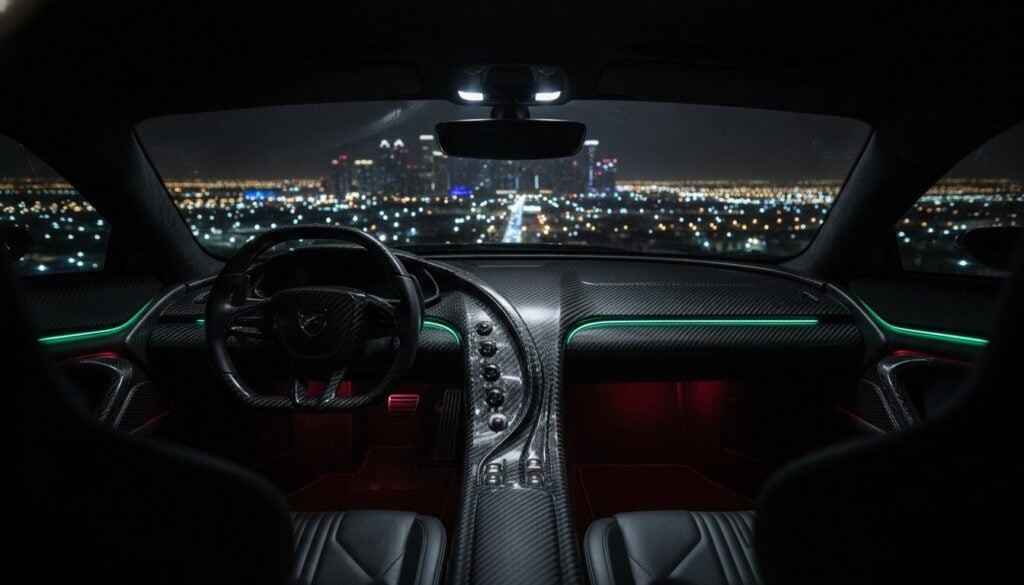
A masterfully executed carbon fiber cabin represents the ultimate intersection of aerospace technology and automotive artistry. While a cheap vinyl wrap might mimic the pattern, it cannot replicate the depth, rigidity, or prestige of authentic dry carbon. Understanding the carbon fiber interior trim cost requires looking beyond the raw materials to the specialized labor required for a flawless fit. You have likely felt the frustration of seeing generic upgrades yellow in the sun or hearing the dreaded snap of a plastic clip during a DIY attempt. You deserve an interior that reflects the elite performance of your vehicle.
This 2026 premium guide clarifies the investment required for genuine upgrades, from entry-level accents to bespoke forged carbon conversions. We will examine how material purity and professional installation protect your luxury asset from the common pitfalls of cracking and heat damage. You will gain the technical knowledge to choose a professional installer with confidence and understand the maintenance protocols that keep your finish immaculate. Whether you are upgrading a Jetour T2 or a Mansory-spec supercar, we will show you how to achieve a result that is as durable as it is striking.
Key Takeaways
- Distinguish between autoclave-cured Pre-Preg and standard wet-lay carbon to ensure your interior withstands high-heat environments without yellowing.
- Evaluate the total carbon fiber interior trim cost by accounting for project complexity, including the replacement of specialized clips and electronic sensor recalibration.
- Recognize why high-end alternatives like vinyl wraps or hydro-dipping fall short of the structural depth and “chatoyancy” found in authentic carbon fiber weaves.
- Prioritize professional installation to safeguard sensitive cabin components and ensure seamless integration with critical safety systems like dashboard-mounted airbags.
- Leverage the expertise of specialists in Brabus and Mansory kit conversions to maintain the structural integrity and elite aesthetic of your luxury vehicle.
Understanding the Investment: Why Authentic Carbon Fiber Costs More
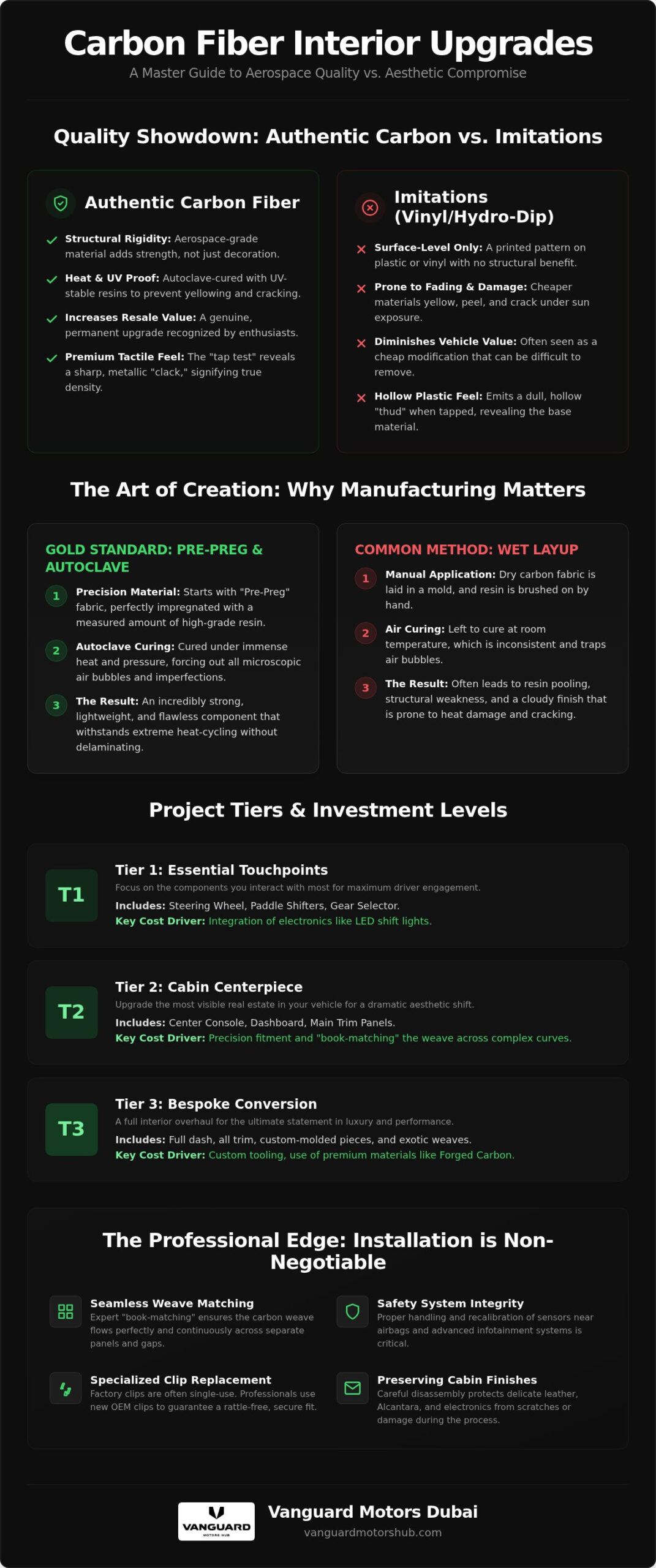
Elite performance begins with the purity of the build. When you analyze the carbon fiber interior trim cost, you aren’t just paying for a pattern; you’re investing in a sophisticated manufacturing cycle. Most entry-level components use “wet lay” techniques, where resin is brushed over fabric manually. This often leads to resin pooling and structural weakness. In contrast, Carbon fibers processed via the “Pre-Preg” method involve fabric that’s already impregnated with a precise amount of resin. Pre-Preg carbon fiber is the gold standard for structural interior trim due to its strength-to-weight ratio. These parts are cured in an autoclave under immense pressure and heat. This process removes microscopic air bubbles that would otherwise cause the trim to crack or delaminate during intense heat-cycling.
The national sun is unforgiving. Premium carbon components utilize medical-grade, UV-stable resins to prevent the dreaded yellowing that plagues cheaper alternatives. This ensures the deep, three-dimensional “chatoyancy” of the weave remains crisp for the life of the vehicle. Cheaper resins can’t withstand the thermal expansion of the UAE climate, leading to cloudiness or surface fractures that compromise the cabin’s aesthetic integrity.
Material Grades and Weave Patterns
The aesthetic choice defines the cabin’s personality. While 2×2 Twill remains the classic choice for Brabus and Mansory conversions, Forged Carbon has emerged as the 2026 favorite for its marbled, organic appearance. Achieving a seamless look requires “book-matching,” a labor-intensive process where the weave pattern is perfectly aligned across panel gaps. Whether you prefer a deep gloss, a stealthy matte, or a refined satin finish, the precision of the weave alignment is a primary driver of the total carbon fiber interior trim cost.
Durability vs. Aesthetics
Authentic carbon fiber is a permanent upgrade that maintains its structural integrity far better than plastic-backed overlays. In high-temperature environments, low-quality resins expand at different rates than the substrate, leading to ripples. You can verify authenticity through the “tap test.” Real carbon produces a sharp, metallic “clack” when tapped, whereas imitation pieces emit a dull, hollow thud. This density is why genuine carbon adds tangible value to a supercar’s resale profile.
Tiered Project Scopes: What Drives Carbon Fiber Trim Costs?
Project scope determines the final investment. A single gear selector is a minor modification; a full dash reconstruction is a surgical procedure. While industry experts at Oak Ridge National Laboratory explore a low-cost carbon fiber process for mass production, the high-performance market remains focused on Grade-A precursors. This material choice, combined with the number of complex geometries in a cockpit, drives the carbon fiber interior trim cost. Bespoke pieces for rare models require custom-molded tooling, which adds significant labor hours compared to off-the-shelf kits.
Beyond the visible weave, hidden expenses often include the replacement of one-time-use interior clips. Luxury cabins are engineered with tight tolerances. Once a factory panel is removed, the original clips rarely provide the same rattle-free tension. Professional installers also factor in electronic sensor recalibration, especially when working near advanced infotainment or safety systems. Precision is the only way to avoid the persistent squeaks that plague low-quality installations.
Level 1: Driver Touchpoints
Focusing on the steering wheel, paddle shifters, and gear selector provides the most immediate return on engagement. These components require the highest tactile quality because they’re in constant contact with the driver. Integrating LED shift lights or custom-molded grips increases the complexity of the internal wiring. This requires a technician who understands both mechanical aesthetics and electrical architecture to ensure every shift is signaled with perfect timing.
Level 2: The Center Console and Dashboard
This is the most visible real estate in your vehicle. Fitting carbon fiber around curved infotainment screens and climate control vents requires extreme precision. A single millimeter of misalignment can disrupt the entire visual flow of the weave. Once installed, these high-gloss surfaces benefit from specialized Supercar Detailing to maintain their mirror-like finish and prevent micro-scratching from daily use.
Level 3: Full Cabin Conversion
A complete conversion includes door inserts, seat backs, and overhead consoles. This creates a cohesive motorsport atmosphere that transforms the driving experience. It’s an intensive logistical undertaking that involves a complete interior teardown. Many owners choose this level of transformation when installing other elite upgrades, such as Brabus body kits, to ensure the interior matches the aggressive exterior profile. If you’re ready to define your project scope, discuss your vision with our technical team today.
Real Carbon Fiber vs. Alternatives: A Long-Term Value Analysis
Authentic carbon fiber possesses a unique optical property known as chatoyancy. This effect allows light to play across the individual fibers, creating a shifting, three-dimensional depth that imitation materials simply cannot match. Vinyl wraps, despite being marketed as 3D or 4D, are essentially printed patterns on a thin film. They lack the structural rigidity and the light-refractive qualities of a genuine resin-infused weave. Similarly, hydro-dipping is a water-transfer process that’s rarely utilized in high-end supercar customization. It lacks the tactile density of real composites and frequently appears pixelated when viewed under the sharp lighting of a luxury cabin.
The decision to invest in genuine materials is a strategic move for long-term vehicle valuation. Evaluating the total carbon fiber interior trim cost involves more than the sticker price; it’s about the enduring value of the asset. Enthusiast buyers and collectors prioritize “OEM-plus” modifications that utilize authentic materials. Carbon fiber wraps are considered a temporary aesthetic rather than a permanent automotive upgrade. Authentic trim is an integrated component, while a wrap is a surface-level mask that sophisticated buyers will likely negotiate against during a resale.
The Limitations of Interior Wraps
Interior wraps are prone to failure under the intense thermal cycles of the national climate. High temperatures cause the vinyl to lose its memory, leading to “fingering” or peeling around complex curves and recessed infotainment controls. These films lack the physical texture of a dry carbon piece and provide no structural reinforcement. They don’t offer the premium sound or density of high-performance materials and often feel soft to the touch. A wrap is a suitable choice for a short-term color experiment, but it’s not a substitute for the permanence of a Mansory or Brabus-spec interior.
Forged Carbon: The New Frontier of Luxury
Forged carbon has redefined the aesthetic of the modern supercar cabin. Unlike traditional 2×2 twill, forged composites feature a marbled look created by compressing chopped fibers with resin. This material is now a staple in the latest Lamborghini and Ferrari design languages. Finishing these pieces to a mirror-like shine is more labor-intensive than finishing standard weaves. The random orientation of the fibers requires multiple stages of precision sanding and high-build clear coats to achieve a perfectly level surface. It’s a bold, innovator’s choice that signals a move toward the future of automotive aesthetics.
The Installation Factor: Why Professional Labour is Mandatory
Professional installation is the dividing line between a motorsport-inspired cabin and a series of persistent rattles. When calculating the carbon fiber interior trim cost, the expertise required for surgical interior disassembly is a critical variable that many owners overlook. High-performance vehicles utilize complex, interlocking panels held by proprietary fasteners. Forcing these components without specialized knowledge often results in broken clips and misaligned seams. The Vanguard Standard ensures that every piece of trim returns to its factory position with the exact tension required for a silent, high-end experience.
Safety integration is the most significant reason to avoid DIY attempts. A-pillars and dashboard panels are engineered break-away points for airbag deployment. Covering these surfaces with improperly bonded carbon or blocking deployment paths can have catastrophic consequences. Professional technicians understand these tolerances. They ensure the material thickness and adhesive patterns do not interfere with safety systems. The national climate also demands precision bonding. Interior temperatures can exceed 70 degrees Celsius in the sun. Without industrial-grade decontaminants and high-temperature resins, carbon overlays will delaminate. This causes the material to lift or ripple, ruining the aesthetic and requiring costly corrections.
Disassembly and Surface Preparation
Our technicians utilize non-marring nylon pry tools and precision drivers to protect sensitive leather and Alcantara surfaces. Surface decontamination is the first step in ensuring a permanent bond. We remove all traces of factory oils and silicone-based interior cleaners that would otherwise compromise the adhesive. Managing the complex wiring harnesses found in modern center consoles requires a deep understanding of automotive electronics. Every sensor and connector must be mapped during the teardown to ensure a seamless reassembly without trigger codes or electrical faults.
Final Fitment and Quality Control
Gap management is an art form. We ensure consistent tolerances across all interior panels, matching the original manufacturer’s specifications for a flush finish. After the carbon is secured, we conduct rigorous testing on every button, dial, and touchscreen to confirm full functionality. If a project suffers from minor pre-existing damage or a previous poor installation, we utilize specialized Carbon Fiber Repair techniques to restore structural integrity. This level of meticulous care is what separates a premium conversion from a basic modification. Schedule your professional carbon fiber installation with our expert team today.
Bespoke Carbon Fiber Mastery at Vanguard Motors Dubai
Elite performance demands an uncompromising approach to cabin aesthetics. At Vanguard Motors Dubai, we don’t just fit parts; we orchestrate complete interior transformations for the world’s most prestigious marques. Our technicians specialize in high-stakes kit conversions, including world-renowned Brabus, Mansory, and Jetour packages. We curate the finest carbon weaves from global suppliers to ensure that every replacement panel or overlay matches your vehicle’s specific model and production year. This meticulous attention to detail is what defines a true luxury upgrade in the modern automotive landscape.
Optimizing your carbon fiber interior trim cost doesn’t mean cutting corners; it means choosing a partner who offers a comprehensive ecosystem of services. Vanguard Motors Dubai operates as a one-stop-shop for installation, repair, and long-term protection. By centralizing these services, we eliminate the logistical risks of moving your vehicle between multiple vendors. You can elevate your entire ownership experience by integrating your new trim with the Vanguard Premium Package. This holistic approach ensures that your investment is protected from the moment it leaves our facility, maintaining that showroom finish against the elements.
Beyond Installation: Carbon Fiber Restoration
Many owners assume that scratched, clouded, or heat-damaged carbon requires a total replacement. Vanguard Motors Dubai offers a more strategic alternative through our specialized restoration services. We can restore original equipment (OE) carbon to a finish that often surpasses factory standards. This provides significant cost-saving benefits compared to the price of sourcing entirely new panels from overseas. We often pair these services with professional leather restoration to ensure the entire cabin feels cohesive and immaculate. Repairing structural or cosmetic flaws in your existing carbon is a sustainable way to maintain your vehicle’s elite status without the extensive lead times of international part shipping.
The Vanguard Consultation Process
Every project begins with a personalized material consultation at our facility. We guide you through the selection of weaves, from traditional 2×2 twill to modern forged composites, ensuring the palette complements your existing Alcantara or premium leather surfaces. Our experts provide technical guidance on how to balance carbon accents for maximum visual impact without overwhelming the cabin’s design language. Once your vision is defined, we handle the logistics of your national UAE service appointment with proactive efficiency. We are committed to maintaining the highest standards of excellence for every Ferrari, Lamborghini, and Mercedes-Brabus that enters our care. Take the next step in your vehicle’s transformation by speaking with our technical advisors today.
Define Your Automotive Legacy
Your vehicle’s interior is a private sanctuary where high-octane performance meets personal expression. We’ve analyzed how authentic Pre-Preg materials and surgical installation precision define the ultimate carbon fiber interior trim cost. Choosing genuine composites over temporary wraps ensures your cabin retains its structural integrity while maximizing the asset’s long-term resale value. Vanguard Motors Dubai serves as your authorized expert for elite Brabus and Mansory conversions, delivering a level of meticulous care that exceeds factory standards. Our specialized carbon fiber repair facility can also breathe new life into existing components, ensuring a mirror-like finish that defines modern luxury. With national UAE pickup and delivery available, your vehicle’s transformation is managed with total efficiency and proactive care. It’s time to replace generic factory plastics with the three-dimensional depth of high-performance carbon composites.
Request a Bespoke Carbon Fiber Installation Quote from Vanguard Motors Dubai and secure your position at the peak of automotive excellence. We look forward to realizing your vision.
Frequently Asked Questions
Is real carbon fiber interior trim worth the cost compared to a wrap?
Authentic carbon fiber is a permanent structural upgrade that offers unique optical depth and chatoyancy that vinyl cannot replicate. While a wrap is a surface-level print, genuine composites are integrated components. When you calculate the carbon fiber interior trim cost, factor in the long-term resale value. Collectors and enthusiast buyers view authentic modifications as tangible value-adds, whereas wraps are often seen as temporary masks that require removal before a professional sale.
How long does a professional carbon fiber interior installation take?
A standard interior installation typically ranges from two to five business days depending on the project’s complexity. Minor touchpoints like gear selectors or steering wheels might be completed within a day. However, full cabin conversions involving door cards and dashboards require extensive teardowns. This timeline ensures every proprietary clip is secured and every electronic sensor is recalibrated to maintain the silent, rattle-free experience expected in a luxury vehicle.
Can damaged carbon fiber interior trim be repaired or must it be replaced?
Specialized facilities can often restore scratched or clouded carbon fiber to a better-than-factory finish. Structural repairs are possible if the fiber layers remain intact. Vanguard Motors Hub specializes in cosmetic restoration, which is a strategic way to manage your carbon fiber interior trim cost without sourcing entirely new panels. We utilize high-build clear coats and precision sanding to eliminate surface imperfections and restore the material’s original optical depth and clarity.
Will the intense heat in the UAE cause my carbon fiber to yellow or crack?
High-quality carbon fiber using UV-stable resins and autoclave curing is engineered to withstand extreme thermal cycles. Cheaper alternatives often yellow because they use low-grade resins that degrade under intense sun exposure. We protect new installations through the Vanguard Premium Package, which includes specialized detailing and protection layers. This proactive approach ensures your interior remains pristine despite the national climate’s harsh heat and the constant presence of intense UV radiation.
What is the difference between dry carbon and wet carbon interior pieces?
Dry carbon, or Pre-Preg, is the non-negotiable standard for supercar interiors because it uses pre-impregnated resin and autoclave curing. This results in a lighter, stronger part with a consistent weave pattern. Wet carbon is produced by manually brushing resin over the fabric, which often leads to excess weight and microscopic air bubbles. For a luxury cabin, dry carbon provides the superior tactile quality and long-term durability required for high-performance environments.
Does installing carbon fiber trim void my vehicle’s factory warranty?
Cosmetic interior upgrades generally don’t void the entire vehicle warranty, but they can affect specific components. If an aftermarket installation interferes with electronic sensors or airbag deployment paths, the manufacturer might deny related claims. Choosing an authorized installer for Brabus or Mansory conversions ensures that the work meets stringent engineering standards. It’s always advisable to consult with your service advisor regarding specific modifications to ensure your factory coverage remains fully intact.
How do I clean and maintain my carbon fiber interior to prevent scratches?
Maintenance requires a pH-neutral cleaner and high-quality microfiber towels to prevent micro-marring. Avoid using abrasive brushes or silicone-based dressings that can leave a greasy residue or trap dust in the weave. For high-gloss surfaces, applying a dedicated ceramic coating or interior protection film can provide an extra layer of defense against fingernail scratches and UV damage. Regular professional detailing helps preserve the mirror-like finish and structural integrity for the life of the vehicle.
Can I install carbon fiber trim myself on a luxury vehicle?
DIY installation isn’t recommended for luxury cabins due to the complexity of modern interior architecture. Forcing proprietary clips or mismanaging sensitive wiring harnesses can lead to expensive repairs and persistent cabin rattles. Dashboard and A-pillar panels are also critical for airbag deployment. Professional technicians ensure that material thickness and bonding patterns never compromise these safety systems, providing a result that is both aesthetically perfect and functionally secure for all occupants.