
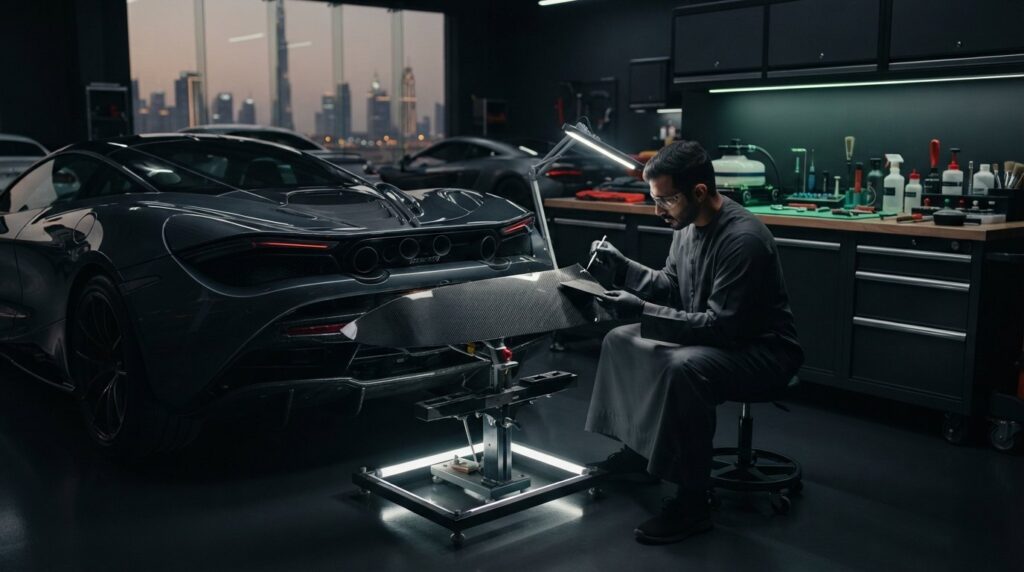
What if the hairline fracture on your Mansory rear diffuser isn’t a death sentence for your vehicle’s resale value, but an opportunity for elite precision engineering? You’ve invested heavily in a high-performance aesthetic, and the fear of a visible “patch job” or a five-figure replacement bill for a Brabus component is enough to stall any enthusiast. It’s a common frustration for owners who demand perfection but face the reality of road debris and high-speed wear. Choosing a professional carbon fiber rear diffuser repair ensures your car maintains its aggressive profile without the lead times of ordering new parts.
We agree that your vehicle deserves better than a compromise. This 2026 professional restoration guide will show you how expert composite care can save your elite vehicle’s aesthetics and structural integrity while offering up to 85% cost savings over full OEM replacement. You’ll discover the meticulous techniques used to achieve an invisible finish that remains stable even under intense aerodynamic buffeting at track speeds. It’s about restoring confidence alongside the carbon weave.
We’ll preview the latest aerospace-grade standards, including the critical 20:1 scarf taper ratios and UV-resistant resin systems that define modern composite care. From weave-matching precision for 2×2 twill to structural bonding for forged carbon, this is your roadmap to preserving the soul of your supercar.
Key Takeaways
- Understand the critical aerodynamic role of your rear diffuser and how heat or road debris can compromise both its form and high-speed function.
- Learn to identify the threshold between superficial clear coat scratches and deep structural fractures that require advanced composite reconstruction.
- Discover how a professional carbon fiber rear diffuser repair offers a seamless restoration with significant cost savings and faster turnaround than sourcing rare international components.
- Gain insight into the precision engineering techniques, such as aerospace-grade scarf tapering and UV-resistant resin infusion, that ensure an invisible, durable finish.
- See why specialized expertise is essential for restoring bespoke Brabus, Mansory, and Jetour kits to maintain your vehicle’s elite aesthetics and resale value.
Understanding Carbon Fiber Rear Diffuser Damage
The rear diffuser isn’t just a styling element; it’s a high-performance engineering tool. For supercars equipped with Brabus or Mansory kits, automotive rear diffusers are essential for managing underbody airflow to create downforce. Damage to these components disrupts the laminar flow, potentially leading to instability at high speeds. Unlike plastic or metal, carbon fiber is a composite material where the resin matrix holds the structural fibers in tension. This means a simple scratch often masks deeper micro-fractures that require a specialized carbon fiber rear diffuser repair to restore the part’s integrity. Metal panels dent and plastic deforms, but carbon fiber shatters or delaminates, demanding a precision-based approach to restoration.
The Vulnerability of Low-Profile Aerodynamics
Ground-effect components live in a high-risk zone. Positioned just inches from the tarmac, they face constant bombardment from road-surface impact and gravel. A steep driveway or a speed bump can easily cause a compression fracture in the laminate. Once a crack forms, high-velocity airflow acts as a wedge, forcing the layers apart through a process called delamination. Because the diffuser serves as a critical aesthetic anchor for your vehicle’s rear profile, even minor road rash can diminish the entire supercar’s visual impact. For owners of bespoke Jetour or Rox kits, maintaining these low-hanging strakes is essential for both performance and prestige.
Environmental Stressors: Heat and UV Degradation
The UAE climate presents unique challenges for composite materials in 2026. Intense solar radiation and high ambient temperatures accelerate the degradation of standard epoxy resins. This often manifests as a “milky” or yellowing clear coat, which signals that the UV inhibitors are failing. Exhaust heat adds another layer of stress. As high-performance engines vent heat directly above or through the diffuser, the thermal cycling can cause the carbon layers to expand and contract at different rates than the resin. Early intervention is vital. Professional carbon fiber repair prevents these environmental stressors from turning a cosmetic blemish into irreversible structural failure. Protecting your investment requires a holistic strategy that combines expert resin infusion with high-solid UV-blocking finishes.
Cosmetic vs. Structural Damage: When Can You Repair?
Precision diagnostics separate enthusiasts from experts. A surface scratch might look identical to a structural fracture to the untrained eye; however, the implications for high-speed stability are vastly different. Categorizing damage is the first step in a successful carbon fiber rear diffuser repair. We differentiate between surface-level clear coat defects and deep-rooted structural failures that compromise the component’s load-bearing capacity. High-octane performance demands a zero-compromise approach to safety, especially for vehicles generating significant downforce.
Professionals utilize a “tap test” to listen for dull thuds that indicate internal delamination. This involves tapping a specialized tool across the surface to find voids where the resin has separated from the carbon fabric. A crisp, sharp sound confirms a solid bond, while a hollow tone signals trouble. We follow the rigorous methodologies found in the SAE Composite Materials Handbook to ensure every repair substantiation meets elite safety standards. If you’re unsure about the severity of a crack, speak with a composite specialist for a digital assessment of your kit.
Clear Coat Restoration for Surface Imperfections
Cosmetic damage typically stays within the 2K urethane top layer. Swirls, oxidation, and stone chips are common in the UAE’s harsh environment. We determine the depth of the scratch using a microscopic inspection; if your fingernail doesn’t catch on the groove, it hasn’t breached the carbon weave. We restore the mirror finish using carbon-specific polishing compounds designed to minimize heat buildup. Excessive heat during polishing can soften the underlying resin, leading to permanent surface distortion or “ghosting” of the weave pattern.
Structural Integrity and Weave Realignment
Fractured weaves and impact holes represent a higher tier of complexity. Repairing these requires bridging gaps in the fabric without adding excessive weight or thickness. We align the replacement fibers meticulously to match the original 2×2 twill or forged carbon pattern, ensuring the repair is invisible under direct sunlight. Safety thresholds are critical here. If more than 25% of the panel is delaminated or mounting tabs are shattered, the internal load paths are disrupted. In these extreme cases, the structural integrity is too compromised for a safe restoration, and a full component replacement becomes mandatory to ensure vehicle safety at track speeds.
- Scratches and Swirls: Repairable via precision polishing.
- Deep Gouges: Repairable through resin filling and clear coat leveling.
- Fractured Fibers: Repairable using scarfing and weave matching.
- Shattered Mounting Points: Often necessitates component replacement for safety.
Professional Restoration vs. Component Replacement
Choosing between restoration and replacement isn’t merely a financial decision; it’s a choice about momentum and vehicle pedigree. For owners of supercars featuring Brabus, Mansory, or Jetour enhancements, the rear diffuser is a signature piece of the car’s identity. While some enthusiasts believe that a fresh part is the only way to maintain a factory finish, opting for a professional carbon fiber rear diffuser repair often yields superior results. It allows you to retain the original component that was precision-fitted to your chassis, ensuring that the tight tolerances of your kit remain undisturbed. Beyond aesthetics, restoration is a more sustainable choice, as it bypasses the energy-intensive manufacturing process required for new carbon fiber reinforced polymers.
The Economics of Bespoke Carbon Kits
The financial logic for restoration is compelling. Industry data indicates that OEM replacement diffusers for high-performance models can range from $3,700 to over $11,000, particularly for brands like Ferrari, Porsche, or Audi. In contrast, professional restoration typically achieves 70% to 85% cost savings over full replacement. This budget efficiency doesn’t come at the cost of quality. While some owners consider aftermarket replicas to save money, these often suffer from poor weave alignment and inferior resin stability. Restoring your existing carbon fiber component preserves the elite standards of the original manufacturer while protecting your vehicle’s long-term resale value. It ensures your car remains original rather than a patchwork of mixed-quality parts.
Time-to-Road: Avoiding Global Supply Chain Delays
Time is the ultimate luxury. The reality of 2026 involves sourcing specialized carbon components from Europe or Asia, which can lead to wait times of three to six months. Your vehicle remains grounded while you wait for shipping and customs clearance. Professional composite specialists deliver a different reality. A complex carbon fiber rear diffuser repair, involving multi-stage scarfing and UV-clear refinishing, typically requires only 7 to 14 business days. This efficient turnaround minimizes vehicle downtime, getting you back on the road with a component that is indistinguishable from new. We prioritize a proactive workflow that balances technical precision with the speed required by high-performance lifestyles.
The Precision Engineering Behind Carbon Fiber Repair
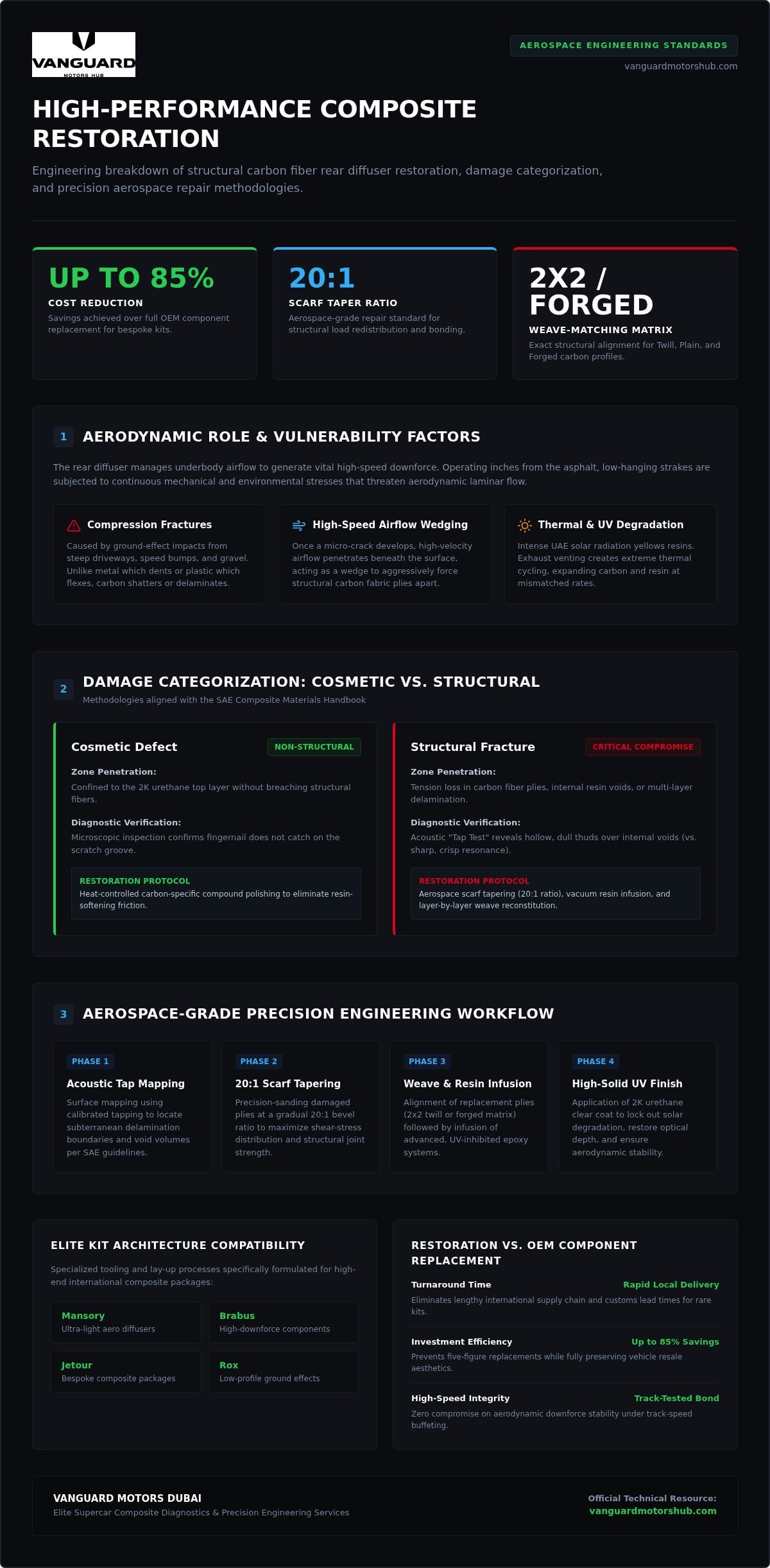
Executing a professional carbon fiber rear diffuser repair requires a sophisticated blend of chemical engineering and manual artistry. It begins with meticulous surface preparation. At Vanguard Motors Dubai, we utilize high-precision micro-grinding to remove the damaged matrix while protecting the subsurface dry fibers. To ensure structural stability at high speeds, we implement a 20:1 scarf taper ratio, which distributes shear loads gradually across the repair joint. This aerospace-grade technique prevents the stress concentration cracking common in inferior repairs. By step-sanding the laminate wall thickness, which typically ranges from 1.5 mm to 3.0 mm, we create a landing zone where new carbon plies can integrate with the original component’s geometry.
Advanced Resin Technology for the UAE Climate
Standard resins frequently fail when subjected to the UAE’s 45°C+ ambient temperatures and the intense thermal radiation from supercar exhaust tips. We mitigate this by selecting high-TG (glass transition temperature) epoxies that maintain their structural stiffness under extreme heat. These resins are processed through vacuum debulking to match the factory 60:40 fiber-to-resin ratio, effectively eliminating the air voids that lead to delamination. In 2026, the chemical bonding required for carbon repair relies on high-performance polymer cross-linking that fuses the new laminate to the existing matrix at a molecular level.
Achieving the Invisible Finish
The final aesthetic result depends on precise weave matching. Whether your vehicle features a 3K 2×2 twill, a plain weave, or chopped forged carbon, our technicians align replacement fibers at exact 0°/90° or ±45° angles. This ensures the reflection remains consistent across the entire panel. Following the structural cure, we apply a multi-stage finishing protocol including wet sanding from 800 to 3000 grit and the application of high-solid 2K urethane clear coats. These coatings are engineered with benzotriazole UV inhibitors to prevent the yellowing or chalking that plagues standard finishes. Our final inspection confirms zero distortion in the carbon weave reflection, delivering a factory-perfect finish. If your aero kit demands this level of attention, contact our specialists to begin your restoration.
Vanguard Motors Dubai: Elite Carbon Fiber Restoration Services
Elite owners don’t settle for average results. When dealing with bespoke components like a Mansory kit or a Brabus conversion, the stakes for quality and safety are exceptionally high. Vanguard Motors Dubai stands as a visionary leader in the UAE for 2026, offering a level of precision that mirrors original manufacturing standards. Our facility is designed exclusively for supercars, ensuring that every carbon fiber rear diffuser repair meets the rigorous demands of high-velocity performance and elite aesthetics. We don’t just fix the surface; we restore the component’s internal matrix and visual DNA. This commitment to meticulous care reassures our clients that their vehicle remains in the hands of reliable technical experts who understand the intersection of form and function.
Bespoke Care for High-Performance Kits
Restoring a Jetour T2 kit or a Rox car kit requires more than just standard epoxy and a steady hand. It demands an intimate understanding of unique weave styles and forged carbon textures. We specialize in Carbon Fibre Car Parts Repair, providing a structural backbone to every cosmetic fix. Whether it’s a Mercedes Brabus kit or a Lamborghini Mansory kit, our technicians ensure that the aggressive styling and geometric accuracy remain intact. We handle everything from custom carbon modifications to complex kit conversions, maintaining the seamless flow of your car’s conversion kit. This holistic approach preserves the vehicle’s resale value and ensures the component won’t flutter or fail during high-speed maneuvers on the open road.
Comprehensive Protection After Repair
A successful restoration is only the first step in a long-term protection strategy. To future-proof your investment against the UAE’s harsh road conditions, we integrate our repair services with professional Paint Protection Film (PPF) installation. Applying PPF immediately after a carbon fiber rear diffuser repair creates a robust sacrificial layer that absorbs impact from road debris and gravel rash. This synergy prevents the micro-pitting that leads to resin degradation and UV yellowing over time. It’s an efficient, proactive strategy for maintaining a mirror finish long after the car leaves our facility. Elite performance requires elite protection, and our mobile detailing van or in-house team ensures your vehicle receives the highest standard of care.
Book your carbon fiber consultation at Vanguard Motors Dubai to experience the intersection of technical skill and creative expression. Let our team restore your vehicle to its peak condition with the precision it deserves.
Secure Your Supercar’s Aesthetic Legacy
Your vehicle’s aerodynamic profile and visual impact shouldn’t be compromised by road-surface damage. A professional carbon fiber rear diffuser repair is a precision engineering solution that preserves structural integrity while offering a superior alternative to costly replacements. By choosing restoration, you retain the original fitment of your Brabus or Mansory kit and bypass the long lead times common in today’s global supply chain. It’s a strategic move for any owner who values both performance and resale value.
Vanguard Motors Dubai specializes in the technical artistry required for Jetour conversions and bespoke forged carbon. We utilize advanced UV-resistant resin technology and meticulous weave matching to ensure every repair remains invisible under the intense UAE sun. Our holistic approach guarantees that your aero components perform as intended at high speeds. Don’t let clear coat oxidation or structural fractures diminish your driving experience. Trust our experts to restore the aggressive soul of your supercar with meticulous care.
Restore Your Supercar’s Perfection with Vanguard Motors Dubai and reclaim the flawless finish your vehicle deserves.
Frequently Asked Questions
Can a cracked carbon fiber diffuser be repaired safely?
Yes, a cracked diffuser can be repaired safely if the damage is localized and hasn’t shattered primary mounting points. We utilize aerospace-grade scarfing techniques to distribute shear loads across the repair zone, ensuring the component remains stable at track speeds. This process restores the structural integrity of the laminate without adding unnecessary weight. For owners of high-performance kits, this precision engineering approach guarantees that the part functions exactly as the manufacturer intended.
How much does it cost to repair a carbon fiber rear diffuser in 2026?
Professional carbon fiber rear diffuser repair typically offers a cost saving of 70% to 85% when compared to the high price of OEM replacements. While clear coat scratches are more affordable to fix, deep structural fractures requiring weave realignment represent a higher tier of investment. Restoring a bespoke Mansory or Brabus component preserves your vehicle’s value while avoiding the extreme dealer markups associated with ordering new international body kit parts.
How long does the professional carbon fiber repair process take?
You can expect a professional restoration to take between 7 and 14 business days. This timeframe accounts for the meticulous multi-stage process of resin infusion, vacuum debulking, and infrared curing. Unlike the 3 to 6 month wait times often associated with sourcing rare carbon components from Europe or Asia, our local restoration workflow minimizes your vehicle’s downtime. We prioritize an efficient turnaround that gets your supercar back on the road without compromising quality.
Will the repair be visible on my Mansory or Brabus body kit?
An elite repair is virtually invisible because we prioritize exact weave matching and fiber alignment. Whether your kit features a traditional 2×2 twill or a modern forged carbon finish, our technicians align replacement fibers to match the original pattern’s 0°/90° or ±45° angles. This attention to detail, combined with multi-stage wet sanding and high-solid UV-protective clear coats, ensures that the repaired area shows zero distortion even under direct sunlight.
Is it better to repair carbon fiber or replace it with a new part?
Repairing is often the better option for bespoke kits because it preserves the original fitment and maintains the vehicle’s pedigree. Sourcing a new part for a limited-edition conversion can be difficult and expensive, whereas a professional restoration delivers factory-level results in a fraction of the time. We only recommend a full replacement if more than 25% of the panel is delaminated or if the internal load paths are fundamentally shattered beyond safe limits.
Can you repair forged carbon diffusers as well as traditional weave?
Yes, we specialize in the restoration of both traditional weaves and modern forged carbon textures. Repairing forged carbon involves a unique process of replicating the randomized chopped-fiber aesthetic to ensure a seamless visual match. This artistry is essential for maintaining the aggressive styling of luxury SUV and supercar conversions. Our high-TG resin systems bond perfectly with the existing forged matrix, providing a durable and high-gloss finish that matches the original component.
What happens if I leave a carbon fiber scratch unrepaired?
Neglecting a scratch exposes the raw carbon fibers to moisture and contaminants, which eventually leads to delamination. In the high-pressure environment of a rear diffuser, high-velocity airflow can act as a wedge, forcing existing cracks to expand during high-speed driving. Early intervention with a carbon fiber rear diffuser repair prevents these minor cosmetic issues from evolving into expensive structural failures that could compromise your vehicle’s safety and aerodynamic performance.
How does the UAE heat affect carbon fiber repairs over time?
The intense UAE heat can cause standard resins to soften or turn yellow if they aren’t engineered for high-temperature stability. We mitigate this risk by using specialized high-TG (glass transition temperature) epoxies that maintain their structural stiffness even in 45°C+ conditions. Additionally, our clear coats contain advanced benzotriazole UV inhibitors. These materials ensure that your restoration remains crystal clear and structurally sound despite the extreme thermal cycling and solar radiation found nationally.