
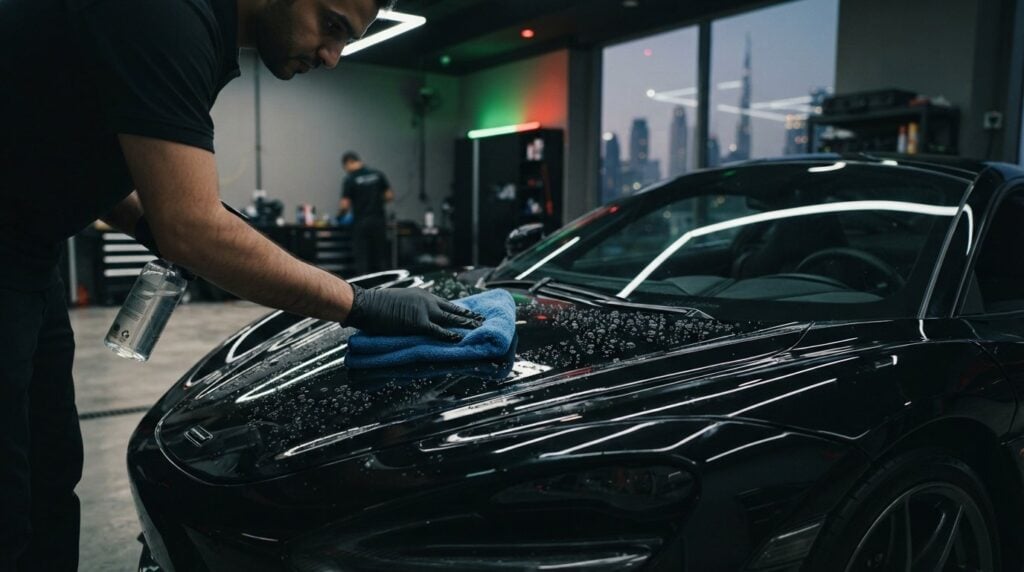
Your supercar’s pristine finish faces its most aggressive adversary not on the open road, but from the sky. In the intense UAE climate, the acidic nature of avian deposits can compromise even the most advanced protective layers within minutes. We understand the immediate anxiety that follows the discovery of a blemish, leading many owners to search for how to clean bird droppings off PPF without causing permanent damage. You invested in a high-performance shield to maintain a flawless aesthetic, and it’s clear that the fear of etching or ruining the sophisticated self-healing top coat is a valid concern for any discerning driver.
Safely removing these contaminants requires more than just a quick wipe; it demands a precise understanding of chemical neutralization and material science. This 2026 guide provides the professional protocols necessary to eliminate acidic residue without risking the film’s structural integrity. You will learn the exact techniques used by elite detailers to restore a mirror-like finish and preserve the hydrophobic properties of your investment. We cover everything from safe pH-neutral solutions to the heat-activation methods that ensure your protection remains as resilient as the day it was installed.
Key Takeaways
- Understand how the UAE’s intense heat causes PPF pores to expand, allowing acidic bird droppings with a pH as low as 3.0 to penetrate and etch the surface quickly.
- Master the precise professional protocol for how to clean bird droppings off PPF using pH-neutral solutions that preserve the film’s sophisticated self-healing top coat.
- Identify critical maintenance errors to avoid, such as dry scrubbing or using boiling water, which can lead to permanent micro-marring or adhesive delamination.
- Learn why utilizing high-density 500+ GSM microfiber towels and working in shaded environments are mandatory requirements for safe decontamination.
- Discover how professional detailing and the Vanguard Premium Package provide the deep rejuvenation necessary to maintain the elite gloss and hydrophobic performance of your film at Vanguard Motors Dubai.
The Science of Bird Droppings and PPF Integrity
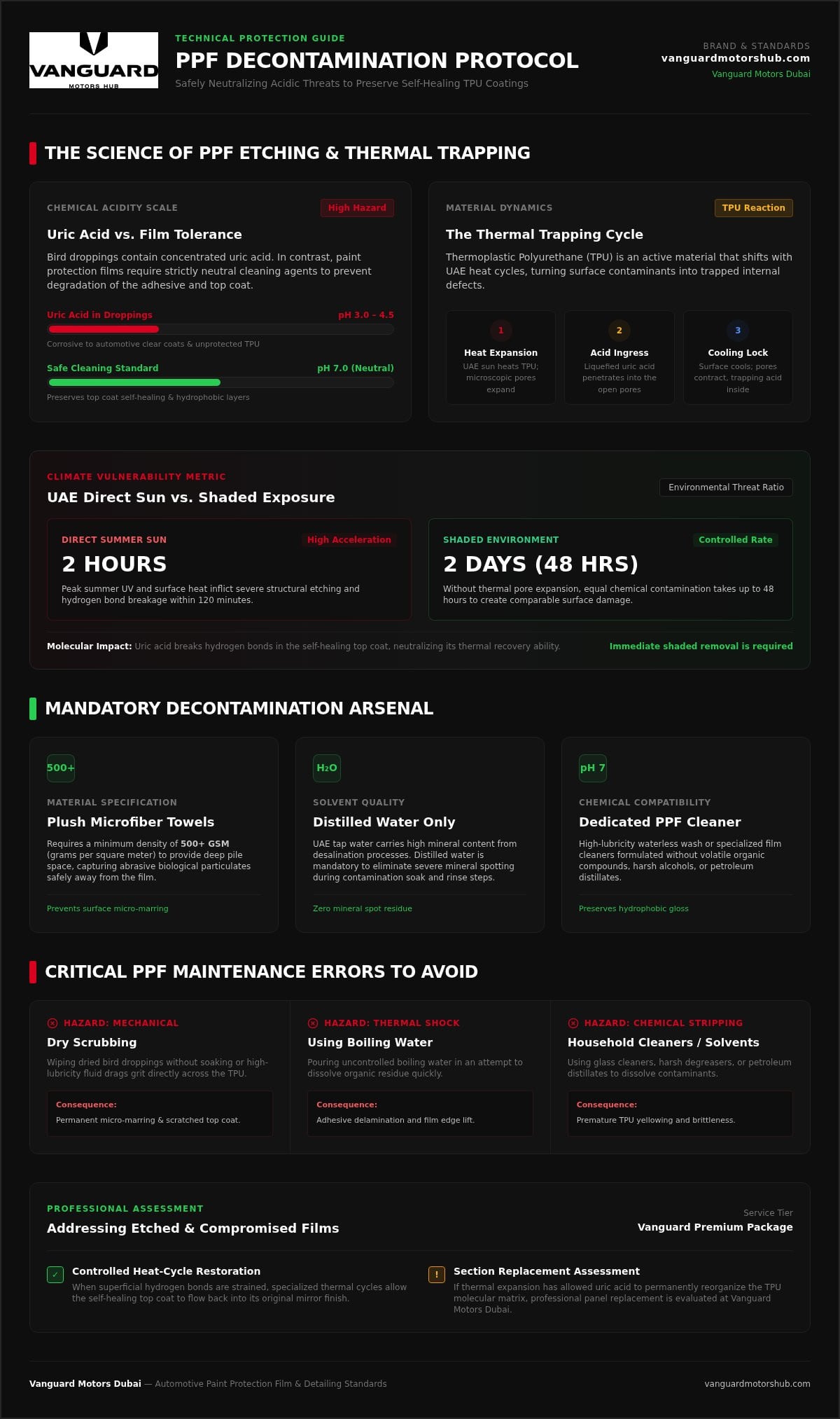
Bird droppings represent a significant biological threat to your vehicle’s aesthetic perfection. These deposits contain concentrated levels of uric acid, typically ranging from pH 3.0 to 4.5. This high acidity makes the substance exceptionally corrosive to automotive finishes. While modern paint protection film is engineered from resilient thermoplastic polyurethane (TPU), it remains a “living” material that reacts to environmental shifts. Understanding this molecular behavior is the first step in mastering how to clean bird droppings off PPF without leaving a trace behind.
The danger lies in the cycle of thermal expansion. When your car sits under the intense UAE sun, the TPU layer warms and expands, causing the microscopic pores of the film to open. This expansion allows the liquefied uric acid to penetrate deep into the film’s structure. As the surface cools, the film contracts and tightens around the contaminants, effectively trapping the acid within the TPU. This process is why immediate intervention is vital to prevent permanent damage to the film’s clarity.
How Acid Affects the Self-Healing Top Coat
The elite performance of premium PPF depends on a sophisticated self-healing top coat. This layer utilizes hydrogen bonding to “flow” back into its original state when exposed to heat, effectively erasing swirl marks. However, uric acid is a potent chemical disruptor. It can break these essential hydrogen bonds, permanently scarring the film and stripping it of its ability to repair itself. Etching is the chemical reorganization of the film’s surface due to acidic exposure. Once this molecular structure is altered, the gloss and self-healing properties of the affected area are compromised.
The Role of Heat and UV Exposure
In the United Arab Emirates, the climate acts as a catalyst for chemical damage. Intense UV rays accelerate the reaction between the droppings and the TPU layer. During the peak 2026 summer months, a single dropping left for just two hours in direct sun can inflict more structural damage than two days in a shaded environment. Thermal expansion is the primary enemy of a contaminated surface; it creates a pathway for toxins to bypass the surface protection. If you are dealing with stubborn residue that has already begun to etch, professional intervention from Vanguard Motors Hub may be required to assess if the film can be rejuvenated through controlled heat cycles or if a section replacement is necessary.
Essential Tools for Safe PPF Decontamination
Maintaining the integrity of your TPU shield requires a specialized arsenal. Using household glass cleaners or aggressive degreasers is a common mistake that leads to premature yellowing or top-coat failure. To master how to clean bird droppings off PPF effectively, you must prioritize chemical compatibility over raw cleaning power. High-performance films are sensitive to harsh solvents that can strip away the hydrophobic properties you rely on for that signature deep gloss.
Your detailing kit should include the following mandatory items for safe removal:
- Plush Microfiber Towels: Use towels with at least 500 GSM (grams per square meter). These provide the necessary pile depth to trap abrasive particles away from the film surface.
- Distilled Water: UAE tap water often contains high mineral content from desalination processes. Using distilled water prevents unsightly mineral spotting during the decontamination process.
- Dedicated PPF Cleaner: A high-lubricity waterless wash or a specific film cleaner is the only safe choice for regular maintenance.
Selecting a pH-Neutral Solution
Precision detailing begins with chemical balance. A pH-neutral standard (pH 7.0) is the only safe benchmark for premium automotive films. Unlike aggressive decontaminants, pH-neutral cleaners remove biological waste without degrading the film’s adhesive or top coat. When selecting your products, look for formulas utilizing safer cleaning ingredients that exclude petroleum distillates or harsh alcohols. These volatile organic compounds can cause the TPU to become brittle over time, compromising the very protection you installed to preserve your vehicle.
The Importance of Lubrication
Lubrication acts as a critical barrier between abrasive biological waste and your delicate film. Modern professional-grade cleaners utilize encapsulation technology. This process involves specialized polymers that surround and lift acidic particles, holding them in suspension so they can be wiped away without scratching. Never use a dry paper towel or a stiff brush on your film; these will create micro-marring that exceeds the self-healing depth of the TPU. If you’re unsure about the chemical safety of your current detailing kit, consult with an expert at Vanguard Motors Hub via WhatsApp to ensure your protection remains uncompromised.
Step-by-Step Guide: How to Clean Bird Droppings Off PPF
Mastering the physical removal process is where technical precision meets the science of film preservation. Before you touch the surface, ensure the vehicle is in a temperature-controlled environment or a shaded bay. The intense UAE heat causes the film to expand; working on a hot surface risks trapping contaminants deeper into the TPU pores. Once the surface is cool to the touch, you’ve established the right conditions for how to clean bird droppings off PPF without risking permanent etching.
Saturate the affected area thoroughly with a pH-neutral cleaner to begin the chemical breakdown. This is where many owners fail by rushing the process. Instead of immediate agitation, apply the “Soak Method.” Saturate a clean, plush microfiber towel with your chosen solution and drape it directly over the contaminant. Let it dwell for two to three minutes. This dwell time allows the cleaner to penetrate the hardened uric acid, breaking the bond between the waste and the top coat. It’s a critical phase that aligns with EPA safer cleaning ingredients guidelines by allowing chemistry to do the heavy lifting rather than mechanical force.
After the soak, lift the towel gently in a single, straight-line direction. Never use a circular scrubbing motion; this creates multi-directional swirl marks that are harder for the film to self-heal. If residue remains, repeat the soak rather than increasing pressure. Finish with a final rinse using distilled water to neutralize any remaining surfactants and pat the area dry with a fresh 500+ GSM towel. Avoid any dragging motion during the drying phase to maintain the film’s mirror-like finish.
The Soften-and-Lift Technique
Patience is the most effective tool in your detailing kit. You can tell the residue is sufficiently softened when the edges of the dropping begin to appear translucent or jelly-like. If the mass feels brittle, it’s still a threat to your film’s surface and requires more lubrication. Occasionally, you might notice ghosting, a faint, matte outline where the acid began to interact with the TPU. In many cases, this is temporary and will vanish once the film is exposed to moderate heat, allowing the hydrogen bonds to reorganize and the surface to level itself out.
Post-Removal Inspection
After the area is dry, use a high-output detailing light to inspect the surface from multiple angles. Look for texture changes or physical depressions in the film that indicate deeper acid penetration. If the surface appears compromised, applying a dedicated PPF sealant can help restore the hydrophobic barrier. For those managing high-value collections, referencing our guide on Supercar Detailing provides deeper insights into professional-grade inspection protocols and advanced film rejuvenation techniques.
Critical Mistakes to Avoid During PPF Maintenance
Many owners inadvertently compromise their TPU investment through well-intentioned but destructive maintenance habits. Speed is essential, but the wrong technique can turn a temporary nuisance into a permanent scar. Mastering the nuances of how to clean bird droppings off PPF requires a commitment to professional-grade caution and the rejection of common detailing myths.
Adopting a “more is better” approach to physical force or heat often leads to irreversible damage. Avoid these critical errors to preserve the clarity of your film:
- Scrubbing Dry Droppings: Never attempt to remove hardened waste without prior saturation. This creates deep mechanical scratches that penetrate the TPU’s top coat, often exceeding the depth required for the self-healing properties to function.
- Using Boiling Water: While heat is often associated with film repair, boiling water is a dangerous shortcut. Excessive temperatures can compromise the adhesive bond between the film and the paint, leading to delamination or unsightly edge lifting.
- Waiting for the Next Wash: In the UAE, procrastination is the enemy of clarity. Every hour an acidic deposit remains on the surface increases the likelihood of permanent yellowing or molecular etching. You shouldn’t wait for your weekly wash cycle to address localized contaminants.
- Automatic Car Washes: Stiff, nylon brushes in automated facilities are disastrous for PPF. They can catch on the edges of the film and drive microscopic contaminants deeper into the material’s pores.
Why You Should Never Use Household Chemicals
Avoid the temptation to use dish soap, glass cleaners, or industrial degreasers on your vehicle. These formulations often contain aggressive surfactants that strip the film’s hydrophobic coating or cause the TPU to become brittle and lose its transparency over time. Certain household chemicals can even lead to premature yellowing when exposed to the intense UV radiation found across the UAE. Stick exclusively to products clearly labeled “PPF Safe” or “Wrap Care” when researching how to clean bird droppings off PPF.
The Myth of ‘Immediate’ Heat Healing
A common misconception in the automotive community is that a heat gun can “fix” an etched spot instantly. If you apply high heat to a contaminated area before it’s chemically clean, you risk “baking” the stain into the film’s molecular structure. Heat is a tool for repair, not a substitute for cleaning. Proper heat application, whether through natural sunlight or warm water, should only occur once the surface is fully decontaminated and neutral. If you’ve already noticed signs of staining or edge lifting, professional intervention is necessary. Contact the experts at Vanguard Motors Hub via WhatsApp to schedule a technical inspection and restoration.
Professional Maintenance for Long-Lasting Paint Protection
Professional maintenance is the final pillar of automotive preservation. While the previous sections detailed how to clean bird droppings off PPF at home, high-performance films benefit significantly from scheduled technical audits. Annual inspections allow specialists to identify microscopic degradation before it compromises the paint beneath. These sessions involve deep decontamination and, when necessary, the application of specialized rejuvenators that restore the film’s molecular elasticity. In the harsh environment of the UAE, proactive care is the difference between a film that lasts a decade and one that fails in three years.
There are moments when localized cleaning isn’t enough to restore the mirror-like finish you expect. If an acidic stain has sat for too long in the sun, it may require professional machine polishing with film-specific compounds. Our Vanguard Premium Package utilizes this holistic approach, combining deep cleaning with film rejuvenation to ensure the TPU remains clear and resilient. However, you must recognize when etching has reached the “point of no return.” If the acid has eaten through the top coat and into the base TPU layer, a section replacement is the only way to maintain the vehicle’s aesthetic integrity.
Enhancing PPF with Ceramic Topping
Applying a ceramic coating over your film creates a powerful synergy of protection. While PPF provides the essential impact resistance needed for UAE roads, a ceramic layer offers superior chemical defense. This secondary sacrificial layer increases surface tension, making bird dropping removal significantly easier because the contaminants can’t “grip” the surface. You can learn more about this integrated approach in our guide to The Ultimate Shield. By combining these technologies, you ensure that biological waste slides off during a basic rinse, reducing the need for mechanical agitation.
The Vanguard Motors Hub Standard
Our commitment to excellence begins with the materials we select. We utilize only the highest-grade TPU films specifically engineered to withstand the extreme UV and thermal cycles common in the region. Our technicians are experts in handling complex cosmetic repairs and full-scale film restoration for supercars and luxury SUVs alike. We don’t just install film; we manage the long-term health of your vehicle’s finish. If your film shows signs of permanent etching or you’re struggling with how to clean bird droppings off PPF safely, contact our specialists on WhatsApp for a professional assessment. We provide the technical precision required to keep your investment in showroom condition.
Secure the Future of Your Vehicle’s Finish
Mastering the science of film preservation ensures your supercar remains a testament to aesthetic excellence. You now understand that the secret to how to clean bird droppings off PPF lies in chemical neutralization rather than aggressive physical force. By prioritizing pH-neutral solutions and the patient soak-and-lift technique, you protect the sophisticated hydrogen bonds that allow your film to heal. These protocols are essential for maintaining the deep gloss and resilient barrier that define elite automotive standards.
While immediate intervention is your first line of defense, professional technical audits provide the ultimate assurance of longevity. It’s time to leverage our expertise in high-end luxury vehicle protection and the expert removal of deep chemical etching or environmental staining. As a leader in national UAE service for elite automotive care, our team is ready to rejuvenate your TPU shield and restore its original brilliance. Book a Professional PPF Maintenance Session via WhatsApp today. Your commitment to meticulous care ensures your vehicle remains in showroom condition regardless of the environment.
Frequently Asked Questions
How long can I leave bird poop on my PPF before it causes damage?
In the UAE’s intense heat, damage can begin in as little as 30 to 60 minutes. While premium TPU films are resilient, the sun acts as a catalyst that accelerates the chemical reaction of the uric acid. If the vehicle is parked in direct sunlight, the film’s pores expand, allowing contaminants to penetrate quickly. Immediate removal is always the safest protocol to prevent permanent molecular etching on your high-end finish.
Will bird droppings stain a matte or satin finish PPF differently?
Yes, matte and satin finishes are more susceptible to visible staining because you cannot easily polish them to restore the finish. Unlike gloss film, where light machine polishing might remove a surface etch, any aggressive cleaning on a matte surface can create a permanent shiny spot. This makes learning how to clean bird droppings off PPF particularly critical for owners of matte-finish vehicles to avoid ruining the uniform texture.
Can I use a pressure washer to remove bird droppings from my car film?
You can use a pressure washer, but you must maintain a safe distance of at least 30 to 50 centimeters from the surface. High-pressure water can drive the acidic contaminants deeper into the film’s pores if not used correctly. Always use a wide fan tip rather than a narrow jet; never aim the nozzle directly at the edges of the film, as this can cause the adhesive to lift or delaminate.
Is it safe to use detailer’s clay on PPF to remove stubborn residue?
Detailer’s clay is generally safe for PPF if used with an abundance of high-quality lubricant. However, it should only be a last resort for bonded contaminants that haven’t responded to the soak method. Because clay is slightly abrasive, it can create fine marring on the film. If the film’s self-healing properties are healthy, these marks may vanish with heat, but professional oversight is recommended for luxury finishes to ensure structural integrity.
What should I do if the bird dropping has already left a ‘ghost’ mark?
First, try applying gentle heat to the area using warm water or leaving the vehicle in the sun for several hours. This often triggers the self-healing TPU to reorganize its hydrogen bonds and level the surface naturally. If the mark remains, the acid has likely penetrated the top coat. In these cases, a professional inspection at a specialized center is necessary to determine if machine polishing or a section replacement is required.
Does ceramic coating on top of PPF completely prevent acid etching?
A ceramic coating doesn’t make the film bulletproof, but it acts as a vital sacrificial barrier. It significantly increases the surface tension, which prevents the uric acid from bonding as tightly to the TPU. This extra layer provides you with a much larger window of time to address the contamination. While it doesn’t eliminate the risk entirely, it makes the process of how to clean bird droppings off PPF much faster and safer.
Are there specific bird types whose droppings are more corrosive to automotive film?
Droppings from birds with diets high in berries or seeds, such as pigeons or seagulls common in coastal UAE areas, tend to be more acidic and abrasive. These deposits often contain undigested seeds or grit that can physically scratch the film if wiped away without proper lubrication. Regardless of the species, the chemical composition of avian waste is universally aggressive toward thermoplastic polyurethane and requires immediate neutralization to preserve clarity.
Can I use isopropyl alcohol (IPA) to clean bird droppings off my car wrap?
You can use a diluted solution of isopropyl alcohol for localized cleaning, but use it sparingly. IPA is an effective solvent for breaking down organic matter, yet repeated use can dry out the TPU film and lead to premature brittleness. Always follow an IPA wipe with a thorough rinse of distilled water. This ensures no solvent residue remains on the surface to degrade the film’s top coat or compromise the hydrophobic properties.