
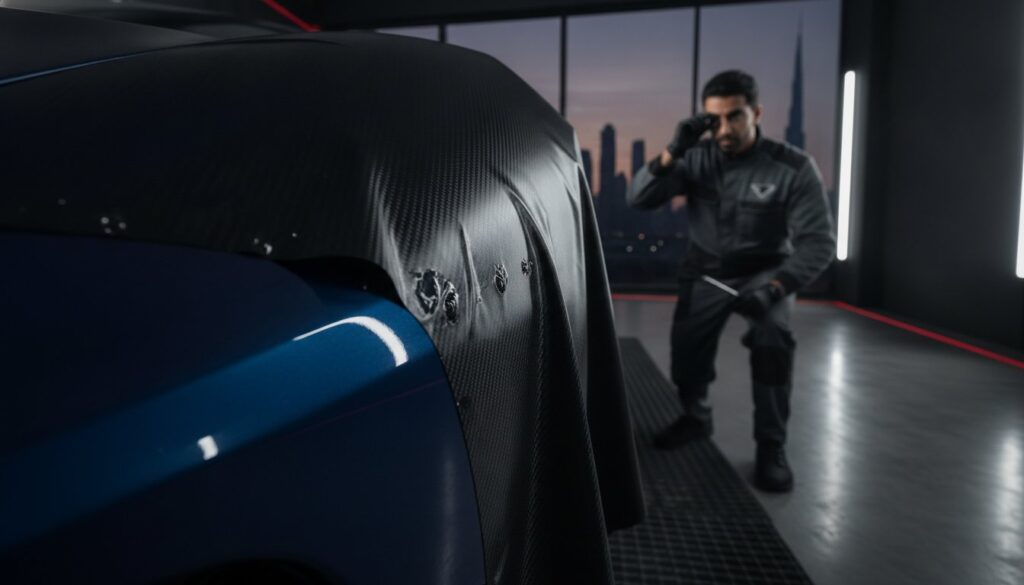
A world-class car wrap is far more than a simple aesthetic upgrade; it is a high-stakes engineering project where a single millimeter of error can compromise your vehicle’s integrity. You likely feel the excitement of a potential transformation, yet you’re held back by the anxiety of bubbling edges or the nightmare of discovering permanent damage to your factory paint during removal. It is a common tension for luxury owners who demand perfection but fear the technical pitfalls of inferior applications. Understanding the common car wrap mistakes to avoid is the first step toward achieving a finish that rivals a factory paint job while shielding your investment.
We’ve compiled the 2026 professional checklist to help you master the art of vehicle aesthetics with absolute confidence. You’ll learn how to distinguish between high-performance films and substandard materials that fail under intense environmental heat. We will also reveal the critical installation protocols and curing requirements that ensure your wrap remains flawless for years. This guide provides the clarity you need to identify an elite service provider and protect your car’s resale value through meticulous care and informed decision-making.
Key Takeaways
- Identify why microscopic surface decontamination is the essential first step to preventing premature edge lifting and peeling.
- Select high-performance film grades specifically engineered to resist UV degradation and silvering in extreme high-heat environments.
- Recognize the common car wrap mistakes to avoid during technical execution, such as overstretching vinyl across deep recesses and body lines.
- Implement a professional maintenance routine that avoids abrasive automated washes to preserve the finish and durability of your wrap.
- Understand the critical role of climate-controlled installation environments in achieving a seamless, factory-level aesthetic for luxury vehicles.
The Foundation of Failure: Overlooking Surface Preparation
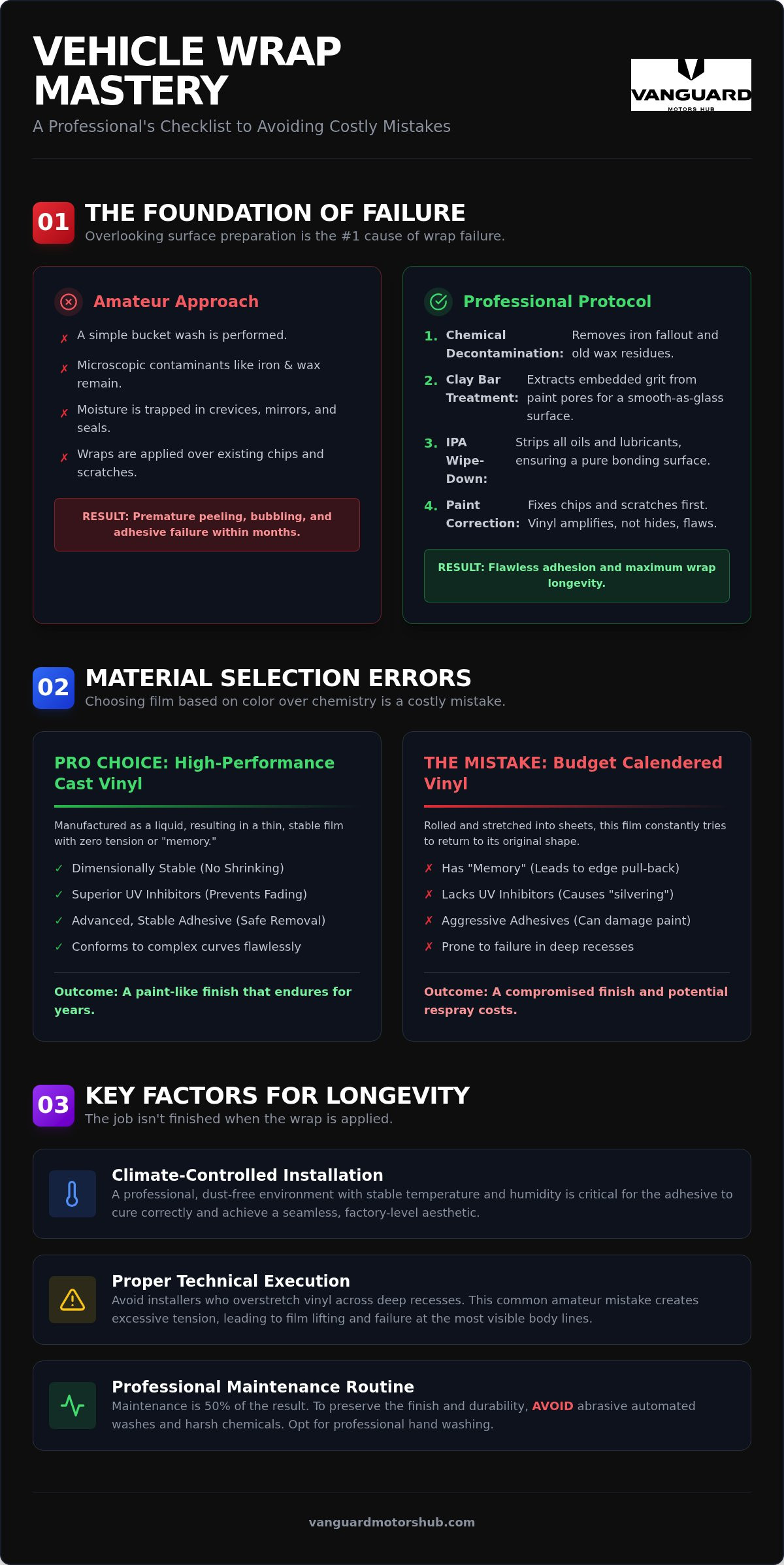
Precision engineering requires a flawless canvas. While many focus on the final aesthetic of what a vehicle wrap is, the true elite results are won or lost in the preparation phase. Overlooking surface decontamination is among the most common car wrap mistakes to avoid if you value longevity. Microscopic contaminants like iron fallout and wax residue are silent killers of adhesive performance. They create a physical barrier that prevents the vinyl from bonding directly to the clear coat. Without a surgically clean surface, even the most expensive film will fail within months.
Moisture management is equally critical. Professional detailing must precede any application to ensure every crevice is bone dry. If water remains trapped behind a trim piece or under a rubber seal, it eventually migrates. This leads to oxidation under the film and catastrophic adhesive failure. Trapped moisture doesn’t just cause bubbles; it creates a greenhouse effect that can degrade the clear coat over time. Elite shops use compressed air and heat guns to purge every drop of water from mirrors, door handles, and weather stripping. If an installer rushes this stage, the wrap’s life is halved before the car even leaves the bay.
Chemical Decontamination vs. Basic Washing
A standard bucket wash is never enough. To achieve a professional-grade finish, you must utilize clay bar treatments to extract embedded grit from the paint’s pores. This mechanical decontamination ensures the surface is smooth to the touch. Following the clay process, isopropyl alcohol (IPA) wipes are non-negotiable. These wipes strip away any remaining oils or lubricants left behind by polishes. For “low energy” surfaces like textured plastics or specific trim pieces, we utilize specialized adhesive promoters to guarantee that the edges remain secure under high-speed aerodynamic stress.
Addressing Existing Paint Damage
It’s a common misconception that vinyl hides flaws. In reality, premium films are so thin that they amplify every rock chip, scratch, and clear coat failure. If you wrap over unstable paint, you’re essentially building on sand. This is why thorough paint correction is a vital step for any luxury project. Smoothing out the substrate ensures the film lays perfectly flat without “ghosting” the damage underneath. When dealing with significant existing damage or high-impact areas, we often recommend Paint Protection Film (PPF). PPF offers a thicker construction that can better mask minor surface irregularities while providing superior impact resistance compared to standard colored wraps.
Material Selection Errors: Climate and Durability Conflicts
Choosing the wrong material is a shortcut to a compromised finish. Many owners prioritize color over chemistry, which is one of the most significant common car wrap mistakes to avoid. In high-performance automotive environments, the distinction between cast and calendered vinyl is absolute. Cast vinyl is manufactured by pouring a liquid mixture onto a casting sheet, resulting in a thin, dimensionally stable film with no “memory.” It stays exactly where it is placed. Conversely, calendered vinyl is rolled out like dough. Under intense thermal stress, calendered films attempt to return to their original, smaller shape, leading to edge pull-back and unsightly gaps.
Budget-grade, unbranded films present a dual threat. First, they lack the UV inhibitors necessary to prevent “silvering,” a phenomenon where the adhesive crystallizes and creates a hazy, metallic appearance under the film. Second, these films often utilize aggressive, high-tack adhesives to compensate for poor film flexibility. When it’s time for removal, these adhesives can bond permanently to your clear coat, turning a simple color change into a costly respray. Selecting a premium, branded film ensures that the adhesive remains stable and the color stays vibrant despite heavy environmental exposure.
The High-Heat Factor: Vinyl vs. Peelable Paint
Traditional vinyl expands and contracts with every temperature swing. This constant movement eventually fatigues the adhesive bond. For those seeking the ultimate in heat resistance and a truly seamless aesthetic, peelable paint applications offer a superior alternative. Unlike vinyl, peelable paint is sprayed on, allowing it to flow into every contour without the tension inherent in a physical film. This makes it exceptionally durable in the national climate where surface temperatures can skyrocket. If you prefer colored sticker wraps, ensure the material features a specific UV-stable topcoat to prevent premature fading.
Finish-Specific Pitfalls
Your choice of finish dictates your maintenance schedule. Chrome and high-gloss metallic wraps are stunning but demand obsessive care; even a soft cloth can leave micro-scratches on a delicate chrome surface. Matte finishes present a different challenge. They cannot be buffed or polished, meaning any bird droppings or fuel spills must be cleaned immediately to avoid permanent staining. If you want a matte look with lower stress, look for materials that offer self-healing properties similar to premium PPF. These advanced films use heat to “reset” the surface, erasing light swirls automatically. If you’re unsure which material suits your driving habits, you should speak with our material specialists to find the perfect match.
Technical Execution Failures: How to Spot Amateur Work
Precision in application is what separates a temporary color change from a factory-level transformation. Amateur work leaves a trail of technical errors that compromise the vehicle’s long-term aesthetics and structural integrity. Overstretching is a fundamental physics failure. Every vinyl film has a “memory” of its original flat state. When an installer forces the material too far to cover a complex curve, the polymer chains are stressed beyond their limit. As the car sits in the sun, the vinyl attempts to return to its original shape, causing it to pull away from the edges. Mastering the physics of tension helps you recognize the common car wrap mistakes to avoid during a professional inspection.
Bridge wrapping is another hallmark of substandard technique. This occurs when an installer spans the film across a deep recess or body line rather than meticulously tucking it into the contour. Without direct contact with the substrate, the adhesive has nothing to hold onto. Eventually, the air trapped in that “bridge” expands under heat, resulting in a visible pop-out. Beyond aesthetics, the safety of your factory paint is at risk during the trimming phase. Inexperienced technicians often cut directly on the vehicle’s surface. This leads to deep score marks in the clear coat that remain hidden until the wrap is eventually removed, permanently devaluing the car.
The Art of the Seamless Edge
Elite installers prioritize hardware removal over quick trimming. Removing door handles, side markers, and light assemblies allows the film to be tucked deep behind the panels for a seamless finish. If you see “fingering” at the edges; small, vertical wrinkles in the vinyl; it indicates that the tension was not distributed correctly during the lay-down. For complex bumpers, professional shops utilize inlay techniques. By using multiple pieces of film joined at natural body lines, they reduce the overall stress on the material. This strategy ensures that the wrap stays secure even under high-speed aerodynamic pressure.
Post-Heating: The Most Skipped Step
Post-heating is the invisible line between a professional result and a looming failure. Once the film is applied, it must be heated to a specific “break point” temperature, usually between 85°C and 95°C. This process kills the vinyl’s memory, forcing it to accept its new contoured shape as the permanent baseline. Skipping this phase is among the most frequent common car wrap mistakes to avoid, as it guarantees that mirrors and door handles will eventually lift. Professionals use infrared thermometers to verify that every recessed area has reached the required thermal threshold for structural adhesion.
Post-Installation Neglect: Why Maintenance is 50% of the Result
Maintenance dictates the lifespan of your investment. One of the most common car wrap mistakes to avoid is treating your new finish like factory paint. While vinyl is durable, it’s essentially a high-tech skin that requires specific care protocols to maintain its aesthetic integrity. Automatic car washes are the primary threat. The high-speed abrasive brushes are designed for hard clear coats, not flexible vinyl. They leave visible swirl marks on gloss finishes and can permanently burnish matte surfaces, destroying the uniform look you paid to achieve.
Pressure management is equally vital. High-pressure washers can easily force water under the edges of the film if used incorrectly. If the nozzle is held too close or at a sharp angle to a seam, it creates edge lift. Once water ingress begins, the adhesive bond is compromised beyond repair. Beyond mechanical damage, biological contaminants pose a chemical risk. Bird droppings and tree sap are highly acidic. Failure to account for environmental etching is another of the common car wrap mistakes to avoid, as vinyl is more porous than automotive paint and absorbs these acids faster under the intense national sun.
To ensure your wrap remains as vibrant as the day it was installed, you must utilize specialized sealants. These products are engineered to provide the UV protection that vinyl lacks inherently. Without this barrier, the film will eventually become brittle and crack, making removal a nightmare process that could damage the underlying surface. Proper maintenance is not an option; it’s a requirement for high-performance results.
The Safe Wash Protocol
Precision cleaning starts with the two-bucket hand wash method. One bucket contains your pH-neutral soap solution, while the second is dedicated to rinsing your wash mitt. This prevents the transfer of abrasive grit back onto the wrap. You must avoid soaps containing heavy waxes or silicones; these can interfere with the film’s breathability or create uneven patches on satin finishes. Always finish with a deep-pile microfiber towel to dry the surface. This prevents water spots and minimizes the risk of micro-marring on delicate gloss films.
Climate-Specific Protection
In regions prone to dust storms, maintenance becomes a daily priority. Fine sand particles act as sandpaper on a wrapped car, slowly eroding the top layer of the film. We recommend applying a ceramic coating specifically formulated for vinyl. This adds a hydrophobic layer that repels dust and provides an extra barrier against UV radiation. Regular inspections are the final piece of the puzzle. Catching a tiny corner lift early allows for a simple heat-seal fix before it develops into a full panel failure. If you need a professional assessment of your wrap’s condition, book a maintenance inspection with our detailing team to ensure your finish remains flawless.
The Strategic Advantage of Professional Execution
Professional execution is a strategic investment in your vehicle’s future. While DIY attempts or discount shops often lead to the common car wrap mistakes to avoid discussed earlier; such as premature peeling or paint damage; elite facilities prioritize long-term preservation. A masterfully applied wrap serves as a sacrificial layer. It shields the factory clear coat from intense UV rays and abrasive road debris. For supercars, this meticulous care directly translates to higher resale value. Buyers in the secondary market demand pristine original paint. A professional removal after years of protection at Vanguard Motors Dubai ensures the car looks as if it just rolled off the assembly line.
The environment where the application occurs is just as critical as the technician’s hands. We utilize precision climate-controlled installation environments to eliminate the risk of dust contamination. This controlled atmosphere ensures that the adhesive bonds perfectly at the molecular level, preventing the microscopic bubbles that plague lesser installations. The Vanguard Premium Package at Vanguard Motors Dubai integrates this protection with a holistic approach to aesthetics and maintenance, ensuring your vehicle remains a benchmark of excellence on the road.
Integrating Wraps with Body Kits
High-end conversions require more than just standard film application. Wrapping complex Brabus body kits or Mansory components involves navigating extreme angles and aggressive ducting. These parts often feature intricate carbon fiber elements that demand expert film transitions to maintain a cohesive look. If the wrap isn’t perfectly integrated with the aerodynamic profile of the kit, high performance speeds can create lift at the leading edges. Professionals at Vanguard Motors Dubai ensure that every seam is strategically placed to maintain both aesthetic flow and structural stability under intense wind pressure.
The Vanguard Difference
Our commitment to excellence starts with using only elite-tier, nationally-proven materials. We understand that your vehicle is an expression of your lifestyle. Our facility offers a unified approach to transformation, providing everything from leather restoration to custom exhaust modifications under one roof. This holistic capability ensures that every element of your car, from the interior textures to the exterior finish, meets the highest standards of luxury and performance. You aren’t just getting a color change; you’re receiving a visionary upgrade backed by technical mastery at Vanguard Motors Dubai.
Choosing an expert partner means choosing peace of mind. You gain access to a team that understands the intersection of technical skill and creative expression. Don’t leave your vehicle’s finish to chance or settle for anything less than perfection. Consult with our master technicians at Vanguard Motors Dubai for your bespoke vehicle transformation today.
Secure Your Automotive Legacy
Mastering vehicle aesthetics requires a relentless commitment to technical precision and material excellence. You’ve seen how overlooking surface preparation or choosing substandard films leads to catastrophic failures. By understanding the common car wrap mistakes to avoid, you’re no longer just a spectator; you’re an informed owner capable of protecting your vehicle’s resale value and factory finish. Success lies in the details, from surgically clean decontamination to the critical post-heating phase that sets the final result.
We’re the national leader in luxury vehicle customization, specializing in the complex integration of Brabus and Mansory kits with advanced peelable paint technology. Our team ensures that every edge is seamless and every contour is aerodynamically stable. Don’t settle for amateur applications that compromise your investment. It’s time to transform your vision into a high-performance reality with a partner that values form as much as function. Elevate Your Vehicle with Vanguard Motors Professional Wrapping Services and experience the standard of elite automotive care.
Frequently Asked Questions
Will a car wrap damage my original factory paint during removal?
A professional wrap will not damage original factory paint, provided the surface was in good condition before application. Damage typically occurs when films are applied over poor-quality aftermarket resprays or if the wrap is left on past its intended lifespan. Using high-quality branded adhesives and professional removal techniques ensures the film releases cleanly without compromising the underlying clear coat or leaving permanent residue.
How long does a high-quality car wrap typically last in extreme heat?
Premium cast vinyl wraps generally last between three to five years when exposed to intense national heat and UV radiation. Environmental factors like constant sun exposure and dust storms can accelerate the degradation of the film’s plasticizers. To maximize longevity, you must use UV-stable sealants and follow a strict maintenance routine that prevents the material from becoming brittle or fading over time.
Can I wrap a car that has ceramic coating already applied?
You cannot apply a wrap directly over a ceramic coating because the coating’s hydrophobic properties prevent the adhesive from forming a secure bond. The ceramic layer must be mechanically removed through professional polishing before the installation process begins. Attempting to wrap over a coated surface is a technical failure that leads to immediate edge lifting and total adhesive rejection across the panels.
What is the difference between a vinyl wrap and peelable paint?
Vinyl wrap is a physical film applied using pressure-sensitive adhesive, whereas peelable paint is a liquid coating sprayed directly onto the vehicle. Peelable paint provides a truly seamless finish without the tension points or visible seams found in traditional vinyl. It offers superior heat resistance in extreme climates and can be sanded or polished to achieve a factory-level gloss that vinyl cannot match.
Is it legal to change my car’s color with a wrap nationally?
Changing your vehicle’s color with a wrap is legal, but you must update your registration details with the relevant transport authorities. The official vehicle documents must accurately reflect the current aesthetic to avoid legal issues during inspections or resale. It’s a straightforward administrative process that ensures your bespoke transformation remains fully compliant with national automotive regulations and insurance requirements.
How do I fix a small bubble or lifting edge in my car wrap?
Small bubbles or lifting edges require professional attention to prevent moisture from becoming trapped beneath the film. You should never attempt to pop a bubble with a needle, as this creates a permanent entry point for water and contaminants. Most minor imperfections can be resolved using controlled heat and specialized squeegees to reactivate the adhesive and reset the film’s structural bond to the substrate.
Should I choose PPF or a colored wrap for my new supercar?
Choose Paint Protection Film (PPF) if your priority is maximum impact resistance and preserving the factory paint’s original hue. If you want a bold aesthetic change, a colored wrap is the superior choice for creative expression. Many elite owners opt for a hybrid approach by applying clear PPF over a colored wrap to achieve a bespoke look with the highest level of stone chip protection.
Can a car wrap be polished if it gets minor scratches?
Gloss wraps can be lightly polished using non-abrasive compounds specifically formulated for vinyl materials to remove micro-scratches. However, matte and satin finishes can never be polished, as any friction will create permanent shiny patches and ruin the uniform texture. Understanding these material constraints is essential to identifying common car wrap mistakes to avoid when performing routine detailing or paint correction on your wrapped vehicle.