
Is your convertible top a masterpiece of automotive engineering or a ticking clock of UV-induced degradation? For many enthusiasts, the thrill of open-air driving is shadowed by the sight of deep, factory-fresh fabric fading into a weathered grey. You’ve likely experienced the frustration of stubborn water spots and bird dropping stains that refuse to budge. We agree that watching a luxury asset lose its aesthetic depth is unacceptable. The sun is relentless, making professional convertible roof protection and sealing a structural necessity for any high-performance vehicle.
This 2026 masterclass reveals the professional protocols required to shield your fabric from the elements. We promise to guide you through the high-performance technologies that deliver permanent hydrophobic water-beading and total UV defense. Our preview covers the transition from traditional waxes to advanced ceramic fabric coatings that survive 1,500-hour xenon arc stability tests. You’ll learn how meticulous precision and professional-grade sealants can preserve your roof’s structural integrity. It’s time to restore your vehicle’s silhouette to its rightful, showroom-quality state.
Key Takeaways
- Understand the science of photodegradation and how to prevent the structural breakdown of textile polymers in high-UV environments.
- Compare the technical advantages of nano-ceramic coatings against traditional polymer sealants to achieve the 2026 standard of fabric care.
- Master the ‘Dry-Deep’ cleaning method to ensure your roof is free from embedded contaminants before applying any protective layers.
- Learn why convertible roof protection and sealing is the essential missing link in a comprehensive luxury detailing and paint protection strategy.
- Discover the professional techniques required to maintain permanent hydrophobic performance and safeguard your roof against industrial fallout.
The Vulnerability of Convertible Tops in High-UV Environments
The sun is a silent predator for the luxury convertible. While the vehicle’s chassis remains shielded by advanced paint systems, the soft top bears the brunt of atmospheric aggression. Owners must recognize that Convertible top materials vary significantly in their molecular resistance to heat and radiation. Whether your vehicle features high-tensile canvas or modern vinyl, the primary threat is photodegradation. This chemical process involves UV photons physically severing the bonds within textile polymers. Once these bonds fail, the fabric loses its elasticity, structural integrity, and deep color saturation.
High ambient temperatures accelerate this decay. In extreme climates, heat doesn’t just discomfort the driver; it forces the rapid evaporation of essential oils and factory-applied sealants. Many enthusiasts exacerbate the problem by using standard car soaps during routine maintenance. These detergents often contain harsh surfactants designed for non-porous metal surfaces. They aggressively strip away remaining water repellency, leaving fibers exposed to acidic environmental fallout. Professional convertible roof protection and sealing provides the necessary intervention to halt this cycle of degradation.
Defining Convertible Roof Sealing
Roof sealing is the application of a hydrophobic, UV-blocking barrier specifically engineered to penetrate and bond with porous automotive textiles. It is critical to distinguish between cleaning and protecting. Cleaning merely removes surface debris, while protecting creates a microscopic shield that prevents future contaminants from embedding. By 2026, synthetic blends have become the industry standard, requiring specialized chemical bonding agents that integrate with the fibers rather than simply sitting on the surface. This level of precision is a hallmark of the detailing services found at Vanguard Motors Dubai, where technical expertise meets high-octane passion.
The Cost of Neglect: Fading and Fiber Breakdown
Neglecting your soft top leads to a predictable and expensive cascade of failure. Constant UV exposure creates micro-cracks in individual fibers. These tiny fractures allow moisture to seep into the core of the material, creating a hidden breeding ground for mold and mildew. Bird droppings and industrial fallout are equally destructive. Their acidic composition can eat through unsealed fabric in a matter of days, leaving permanent, unsightly scars. When you compare the manageable cost of routine maintenance to the staggering expense of a full roof replacement, the value is obvious. Consistent convertible roof protection and sealing preserves both the aesthetic silhouette and the long-term resale value of your high-performance asset.
Material Science: Fabric vs. Vinyl Roof Protection
Precision starts with identifying the substrate. Stayfast and Mohair fabrics are high-performance textiles characterized by extreme porosity. Unlike paint, these surfaces “wick” moisture and contaminants deep into the weave. Effective convertible roof protection and sealing must account for this capillary action. If a sealant only sits on the surface, it fails to protect the core fibers. In 2026, textile innovations have introduced tighter synthetic weaves that require higher-grade bonding agents for maximum adhesion. The goal is to create a hydrophobic shield that doesn’t compromise the fabric’s natural movement.
Vinyl (PVC) tops operate on a different chemical principle. They rely on internal plasticizers to maintain flexibility. When UV radiation depletes these plasticizers, the material becomes brittle and cracks. Protection here focuses on nutrient replenishment and UV inhibition. For those seeking expert advice, these Convertible Top Care Tips highlight the importance of material-specific maintenance. Maintaining the chemical balance of the PVC is the only way to prevent the shrinkage that plagues neglected vehicles.
Synthetic Canvas and Mohair Care
Fabric requires a breathable barrier. If you trap moisture inside the fibers with a non-breathable sealant, you invite internal rot and structural failure. We use pH-neutral cleaners to ensure the fabric’s integrity remains uncompromised before sealing. This preparation is non-negotiable for 2026-era synthetic blends. Avoid silicone-based products at all costs. These outdated formulas often lead to fabric yellowing and attract dust rather than repelling it. A professional convertible roof protection and sealing strategy ensures the weave remains supple while rejecting liquid contaminants. Key focus areas include:
- Eliminating the ‘wicking’ effect that pulls acids into the fibers.
- Maintaining a neutral pH balance to prevent chemical burns on mohair.
- Applying deep-penetrating fluoropolymers that bond at a molecular level.
Vinyl and Hard-Shell Convertible Maintenance
The grain of a vinyl top is a magnet for industrial fallout and fine dust. Without a dedicated sealant, these particles act as an abrasive, wearing down the surface every time the roof operates. UV inhibitors are essential here to prevent the shrinkage that leads to poor fitment and leaks. Even retractable hard-tops benefit from ceramic sealing to protect the complex mechanical seals and paint finishes. This holistic approach ensures every component of the roof system remains resilient against environmental stress. If you’re unsure which treatment your vehicle requires, you can consult our technical specialists today for a bespoke protection plan.
Comparing Protection Technologies: Ceramic vs. Polymer Sealants
The evolution of automotive chemistry has transformed convertible roof protection and sealing from a temporary seasonal task into a multi-year preservation strategy. In 2026, the industry is sharply divided between traditional fluoropolymer sealants and the newer generation of nano-ceramic coatings. Choosing the right technology requires a precise evaluation of performance metrics such as contact angle, UV absorption, and abrasion resistance. While polymers offer a reliable, cost-effective barrier, ceramic technologies provide a molecular bond that fundamentally redefines fabric durability. Professional application at Vanguard Motors Dubai ensures these high-performance materials are applied with the precision they demand.
Evaluating solvent-based versus water-based application methods is vital for achieving a professional finish. Solvent-based formulas often provide deeper penetration into dense synthetic weaves, though they require meticulous ventilation and extended drying times. Water-based options have improved significantly by 2026, offering a safer environmental profile without sacrificing the hydrophobic performance expected by luxury owners. For a deeper technical dive, this scientific review of protective coatings details how different chemical compositions resist environmental stressors. Matching the carrier solvent to the specific textile density is where technical expertise meets high-octane results.
The Rise of Ceramic Fabric Coatings
Nano-ceramic coatings, specifically those utilizing SiO2 (silicon dioxide), represent the elite standard for 2026. These coatings don’t just sit on top of the material; they bond to individual fabric fibers at a microscopic level. This creates a permanent hydrophobic shield with an extreme contact angle, causing water to bead and roll off instantly. This ‘self-cleaning’ property ensures that road salt, industrial fallout, and heavy rainfall are easily repelled before they can cause damage. Ceramic coatings offer superior resistance to aggressive chemical cleaners, ensuring the protection remains intact even after repeated maintenance washes. This distinction is why convertible roof protection and sealing is now considered a specialized detailing discipline.
Traditional Sealants: When to Choose Them
Traditional polymer-based sealants still hold a specific place in the high-end detailing world. They are often the ideal choice for vintage convertible materials where modern ceramic bonding might be incompatible with older, natural fibers. For DIY enthusiasts, these sealants provide a more forgiving application process and lower initial costs. They allow for shorter protection cycles, which some owners prefer for vehicles that are strictly seasonal or stored in climate-controlled environments. While they lack the multi-year lifespan of ceramic, their ease of re-application makes them a viable entry-level option.
- Fluoropolymers: Reliable barrier performance but requires semi-annual re-application.
- Nano-Ceramics: Provides 2 to 3 years of durability with professional-grade application.
- Solvent-Based: Offers maximum penetration for modern 2026 synthetic weaves.
- Water-Based: Environmentally conscious formulas with rapid curing times.
The Professional Sealing Process: A Step-by-Step Restoration Guide
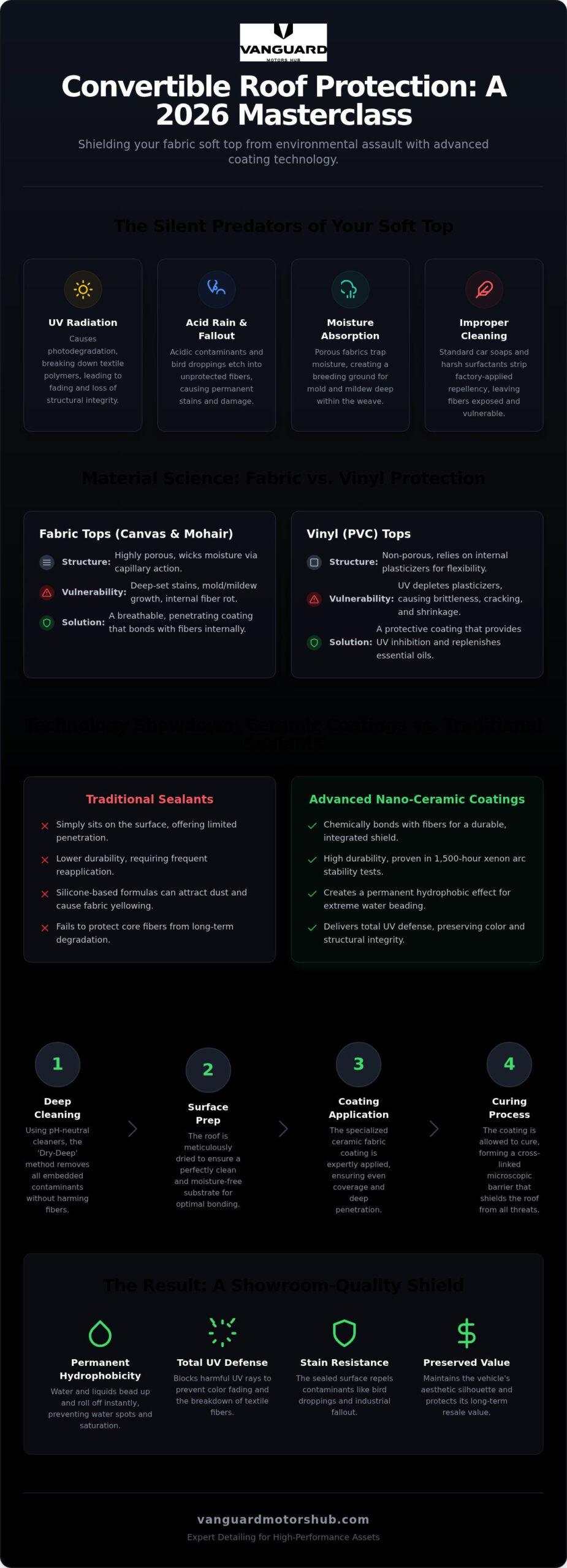
Achieving a factory-fresh finish requires more than a simple spray-and-wipe routine. Professional convertible roof protection and sealing is a multi-stage operation where preparation dictates the final performance. We utilize the ‘Dry-Deep’ cleaning method to ensure that every microscopic pore of the fabric is purged of industrial fallout and organic debris. This meticulous groundwork ensures the chemical bond of the sealant is absolute, providing a shield that lasts years rather than weeks. Precision is our baseline.
Step 1: Decontamination and Deep Cleaning
We begin with soft-bristle horsehair brushes to safely agitate the fibers. This process lifts embedded dirt without causing the pilling or fraying associated with cheaper nylon brushes. Our team adapts the ‘two-bucket’ method for textile tops, ensuring that contaminants removed from the weave aren’t reintroduced during the scrub. Stubborn tree sap and calcium deposits from hard water are neutralized with pH-balanced agents, removing them without the need for aggressive abrasion that might damage the fabric’s structural integrity.
Step 2: Precision Application and Curing
Surface preparation is only half the battle. We ensure zero moisture retention before any sealant touches the roof, as trapped water can lead to internal rot. Precision masking is the hallmark of our elite service. We protect all glass surfaces, rubber seals, and surrounding paintwork to prevent solvent overspray. Our technicians apply the sealant using a cross-hatch spray pattern, ensuring total coverage and deep penetration into the weave. In 2026, we utilize climate-controlled environments to manage temperature and humidity, ensuring the curing process meets the rigorous standards required for high-performance bonding.
Step 3: Post-Protection Inspection
The final stage involves a rigorous verification of the hydrophobic barrier. We conduct a water-beading test to confirm the contact angle meets our elite performance metrics. We also perform a comprehensive check for overspray on your vehicle’s Paint Protection Film and trim. This integrated approach ensures that your roof protection complements the rest of your vehicle’s aesthetic. To maintain this level of excellence, we establish a bespoke maintenance schedule tailored to your driving habits. If you’re ready to secure your vehicle’s future, book your professional roof sealing consultation now.
Integrating Roof Care into a Total Vehicle Protection Strategy
A truly elite detailing strategy leaves no surface vulnerable. While paint protection film and ceramic body coatings are now industry standards, professional convertible roof protection and sealing remains the critical missing link in a total preservation plan. A hydrophobic roof creates a seamless protective envelope. It ensures that water and contaminants are repelled from the highest point of the vehicle downward. This synergy prevents “run-off” staining where acidic water from an unsealed roof streaks across ceramic-coated paintwork, potentially etching the finish over time.
The stakes are higher than exterior aesthetics. A compromised soft top allows moisture to infiltrate the cabin, which can be devastating for high-end leather restoration projects. Mold and mildew thrive in the damp environments created by slow-seeping leaks, often leading to irreversible damage to delicate hides and sensitive cabin electronics. By sealing the roof, you aren’t just protecting the fabric; you’re safeguarding the entire interior environment. This proactive measure preserves the sensory experience of a luxury cabin, from the scent of the leather to the integrity of the stitching.
The Vanguard Premium Package Advantage
We believe in a holistic approach to supercar preservation. Our Vanguard Premium Package incorporates specialized roof care alongside our most advanced protection tiers. By combining roof sealing with supercar detailing, we achieve a uniform, showroom-quality finish that resists the elements. Our facility uses professional-grade tools and climate-controlled application zones to ensure every sealant bonds with absolute precision. This controlled environment is critical for 2026-era nano-coatings to reach their maximum rated durability and hydrophobic performance.
Long-Term Value Preservation
Long-term value is built on meticulous maintenance and documented care. A well-maintained, sealed roof significantly impacts vehicle resale value, signaling to future buyers that the car has been kept to the highest standards. At Vanguard Motors Dubai, we provide detailed documentation of all protection services, creating a record of provenance that is essential for high-end vehicle valuations. This transparency is a cornerstone of the elite automotive lifestyle. It’s time to elevate your maintenance standards. Secure your vehicle’s future with Vanguard Motors Dubai today and ensure your masterpiece remains protected for years to come.
Securing the Future of Your Automotive Masterpiece
Preserving the silhouette of a high-performance convertible requires more than occasional maintenance; it demands a technical commitment to material science. Photodegradation and industrial fallout are relentless forces that compromise even the finest synthetic weaves. By adopting advanced 2026 ceramic fabric technologies, you ensure your roof remains a resilient barrier against the elements. Meticulous professional application is the only way to achieve the permanent hydrophobic performance and UV defense your vehicle deserves.
As specialists in supercar preservation, we understand that every detail contributes to the long-term provenance of your asset. Integrating convertible roof protection and sealing into your broader detailing strategy isn’t just an aesthetic choice; it’s a structural necessity for holistic excellence. It’s time to experience the synergy of elite protection and professional precision.
Protect Your Luxury Convertible at Vanguard Motors Hub. Your journey toward ultimate automotive preservation starts with a single professional decision. Drive with the confidence that your masterpiece is shielded by the pinnacle of 2026 technology.
Frequently Asked Questions
How often should I apply convertible roof protection and sealing?
You should typically schedule convertible roof protection and sealing every 12 to 24 months to maintain peak hydrophobic performance. While traditional polymer sealants often require re-application every six months, our advanced 2026 ceramic fabric coatings are engineered for multi-year durability. Factors like intense national UV exposure and frequent maintenance washes can accelerate the degradation of the barrier. Regular inspections during your luxury detailing appointments will ensure the protection remains absolute and effective.
Can I use a pressure washer to clean my fabric convertible top?
We strongly advise against using high-pressure washers directly on fabric convertible tops. The concentrated force can physically fray textile fibers and force moisture through the weave, which often leads to internal rot or mold. Instead, use a low-pressure garden hose and a soft horsehair brush for agitation. If you must use a pressure washer, maintain a distance of at least one meter. Using a wide fan spray pattern helps minimize mechanical stress on the delicate canvas.
Will sealing my roof change the color or texture of the fabric?
Professional-grade sealants are designed to be invisible once fully cured, preserving the original factory texture. You’ll likely notice a slight increase in color depth, which enthusiasts describe as a “richer” appearance, but the physical feel of the fabric remains soft and pliable. Our 2026-era nano-coatings bond at a molecular level rather than coating the surface in a thick film. This ensures the roof retains its natural matte finish without becoming stiff, oily, or unnatural.
Is ceramic coating for fabric better than traditional spray sealants?
Ceramic coatings represent the elite standard for 2026 because they offer superior chemical resistance and longevity compared to traditional spray sealants. While polymer sprays provide a temporary barrier, ceramic SiO2 technology bonds to individual fibers. This creates a permanent hydrophobic shield that withstands aggressive detergents and heavy rainfall. For supercar owners, the multi-year durability and self-cleaning properties of ceramic make it the superior choice for a total vehicle protection strategy that lasts for years.
How long does the professional sealing process take to cure?
The professional sealing process typically requires a 12 to 24-hour curing period in a climate-controlled environment. While the surface often feels dry to the touch within a few hours, the chemical bonding agents need time to fully stabilize. We recommend keeping the vehicle indoors and away from moisture during this window to ensure the barrier reaches its maximum rated durability. Rushing this stage can compromise the longevity of the hydrophobic effect and its overall UV resistance.
Can I seal a roof that is already showing signs of fading?
You can certainly seal a roof that shows signs of fading, but it’s important to understand that sealants are preventative rather than restorative. While the treatment may slightly darken the fabric and restore a uniform look, it can’t reverse the physical photodegradation of the fibers. Sealing a faded roof is a proactive decision to halt further UV damage and prevent structural breakdown. For severe cases, we recommend a professional deep clean before sealing to maximize results.
Does convertible roof sealing protect against bird droppings?
Yes, effective convertible roof protection and sealing provides a critical defense against the acidic nature of bird droppings and industrial fallout. The hydrophobic barrier prevents these contaminants from soaking into the porous fibers, allowing them to be rinsed away with minimal effort. Without this shield, acids can etch into the fabric within hours, causing permanent staining. Our 2026 coatings ensure that even the most aggressive environmental contaminants remain on the surface for safe and efficient removal.
Is it necessary to seal a brand-new convertible roof?
Sealing a brand-new convertible roof is highly recommended to establish a baseline of elite protection from day one. Factory-applied repellents are often designed for short-term shelf life rather than long-term resilience against extreme national UV radiation. Applying a professional ceramic coating immediately ensures that the fabric never begins the cycle of photodegradation. This proactive step is a core component of our Vanguard Premium Package, designed to preserve your vehicle’s showroom-quality finish for the long haul.